
Nudibranchs in Komodo: Identification and Reef Habitats
A practical introduction to Komodo nudibranchs, their habitats, identification limits and responsible macro photography.
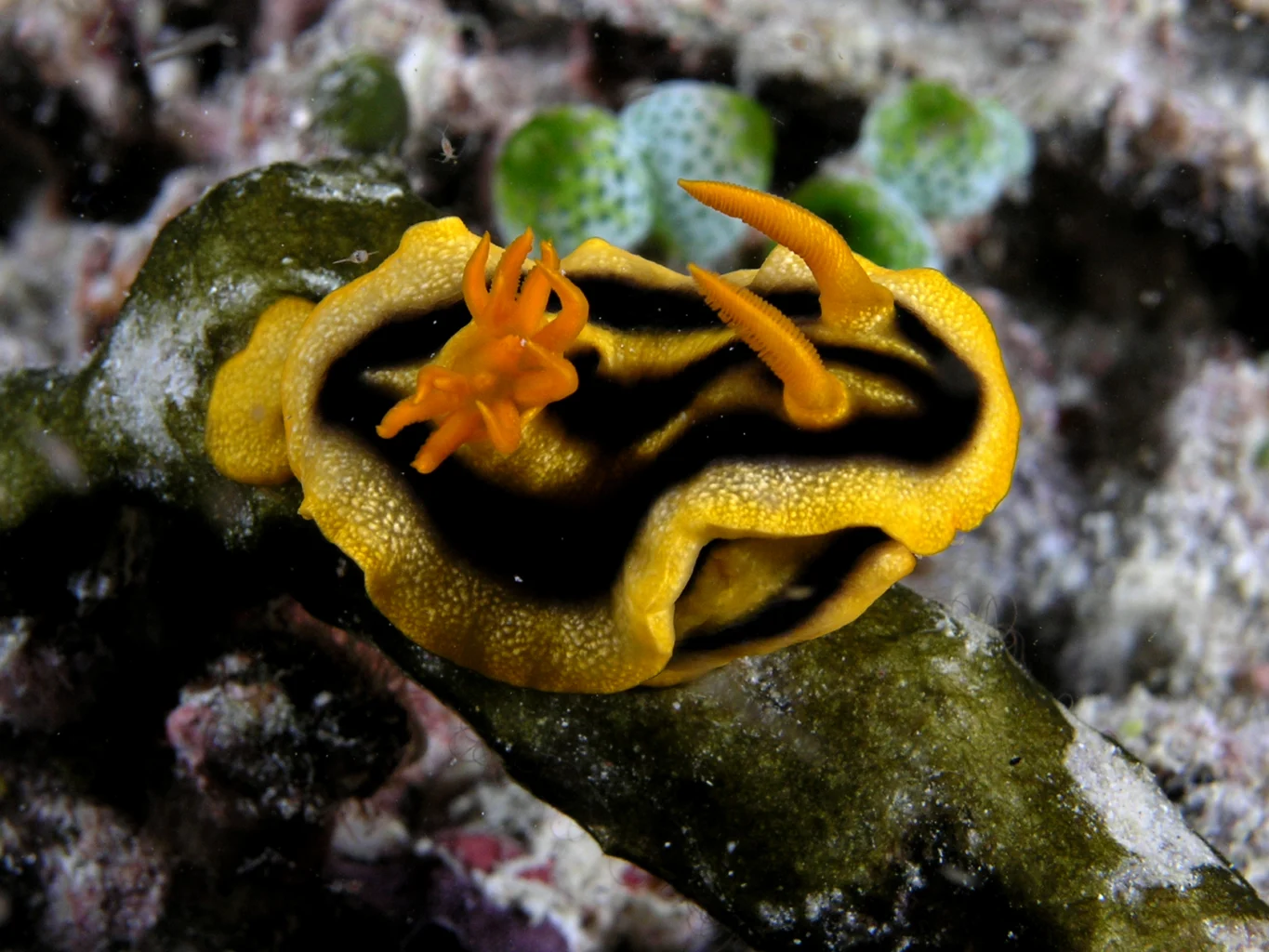
Nudibranchs are shell-less marine gastropods, often called sea slugs, but not every sea slug is a nudibranch. Komodo’s reefs, soft-coral zones and rubble habitats support many forms. Identification should be based on body shape, rhinophores, gills, colour pattern, prey and location—not colour alone. Photograph the animal in place and never move it onto a cleaner background.
What Exactly Is a Nudibranch?
Nudibranchs are a group of marine gastropod molluscs that lose the external shell during development. Their name refers to exposed breathing structures: many dorid nudibranchs carry a plume of gills on the back, while aeolids have rows of finger-like cerata.
“Sea slug” is a broader informal label. It includes animals outside the nudibranch group, so a colourful slug should not automatically be captioned as a nudibranch. Accurate identification starts by deciding which major body plan is visible.
This guide focuses on nudibranch identification and observation. For broader site and trip planning, start with our Komodo diving guide, then confirm the programme and conditions with your operator.
Three Useful Body Plans for Divers
| Visual group | What to look for | Identification caution |
|---|---|---|
| Dorid-type nudibranch | Two rhinophores at the front and a gill plume toward the rear | Similar colour patterns occur in different species |
| Aeolid-type nudibranch | Rows or clusters of cerata along the back | Cerata colour changes with food and lighting |
| Other sea slug | Different mantle, head shield, side flaps or internal shell form | Do not force it into a nudibranch label |
Why Are They So Colourful?
Colour can provide camouflage, warning or species recognition. Some nudibranchs obtain defensive chemicals from prey, and some aeolids can retain stinging cells from cnidarians in their cerata. The visual result is spectacular, but colour is not a universal code that a diver can decode from one photograph.
Underwater strobes also alter appearance. Reds and oranges that look muted at depth return in the photograph, while white balance and editing can shift diagnostic tones. Keep the original frame when asking for identification.
Where Macro Divers Look in Komodo
Nudibranchs are found across reef and rubble habitats, but slower dives make them easier to notice. Local macro guides repeatedly highlight Wainilu and southern sites such as Cannibal Rock. Soft corals, hydroids, sponges and rubble each support different prey and therefore different slugs.
A site list cannot replace recent local observation. Water movement, food availability and life cycles change what is visible. Ask which habitat is currently productive, not which site has the longest species checklist.
How Guides Find Nudibranchs
- Look for food first. Sponges, hydroids and other prey narrow the search.
- Check for egg ribbons. Eggs can indicate adults nearby, but should not be touched.
- Read scale. A tiny colour break on a hydroid may be an animal rather than debris.
- Search into gentle flow. Rhinophores and cerata can reveal themselves through movement.
- Revisit without crowding. One patient second look beats five divers surrounding the subject.
A Better Identification Workflow
Record several views: the whole body, rhinophores, rear gills or cerata, and the substrate or prey. Note the date, approximate depth, site and size. Start with family or genus when the evidence is incomplete.
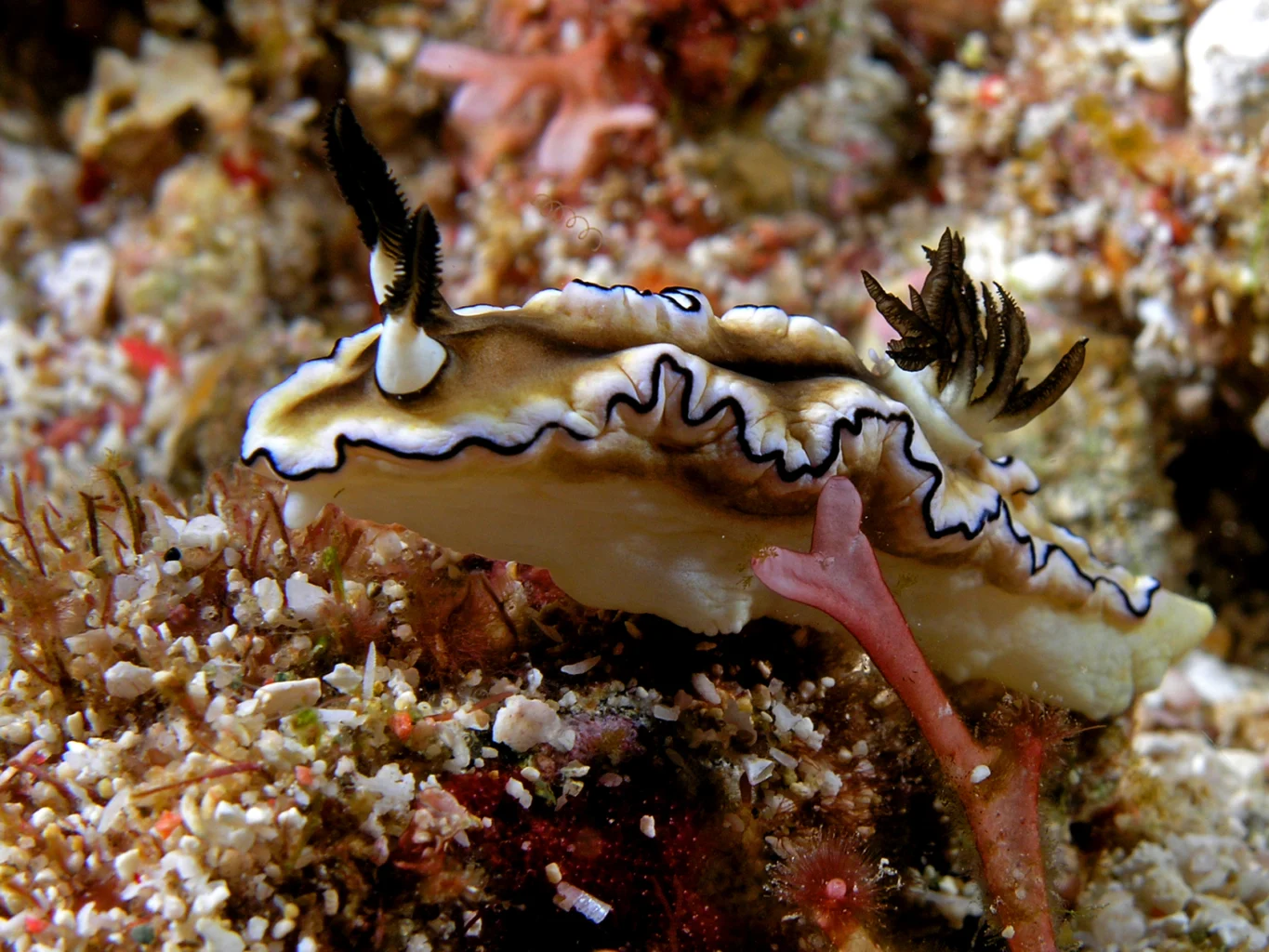
Names change as taxonomy improves. A responsible article should make room for correction instead of presenting every old field-guide label as permanent. Specialist databases such as the Australian Museum’s Sea Slug Forum and curated observation resources help, but a photograph can still remain unidentified.
Macro Photography Without Moving the Animal
Set focus mode, aperture and strobe position before approaching. Compose from the animal’s natural direction of travel and avoid blocking it with the housing. If the background is untidy, document the habitat rather than lifting the subject onto coral.
Do not remove debris that may be food, shelter or eggs. Avoid repeated high-power flashes, and allow other divers to observe before returning for another frame.
Nudibranchs and Their Neighbours
A slow search may also reveal pygmy seahorses on gorgonians, frogfish beside sponges or mantis shrimp at a burrow. Each animal uses different habitat clues; never move one to improve a photograph.
Feeding Clues Are Better Than Colour
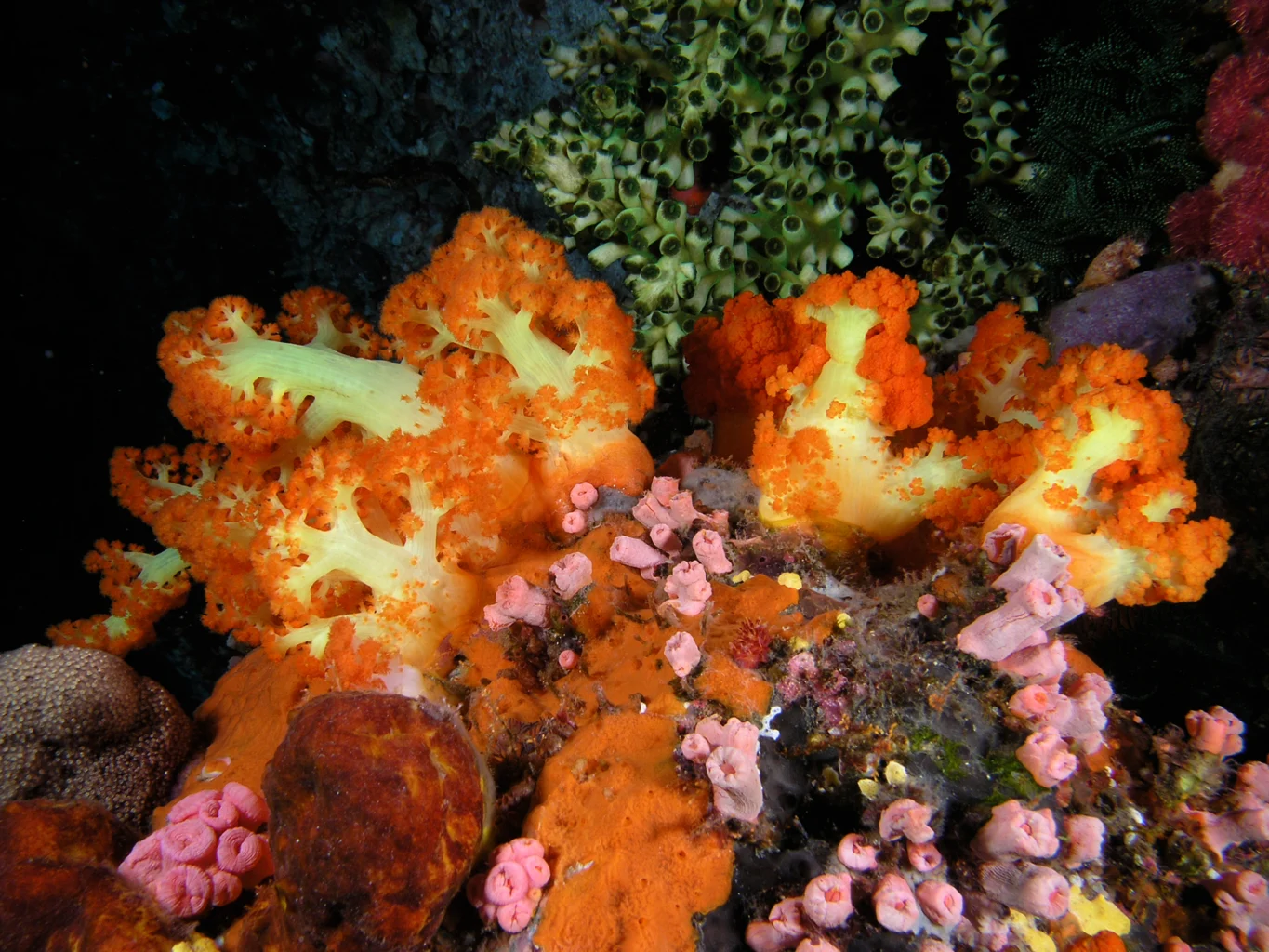
Many nudibranchs specialise on particular prey such as sponges, hydroids, bryozoans or other invertebrates. Finding the food colony can therefore be more productive than scanning open substrate for bright colours. A guide may notice a feeding trail or egg ribbon before the adult animal.
Prey also explains why moving a nudibranch is harmful. An animal placed on attractive coral for a photograph may be separated from the food it was actively eating.
Egg Ribbons and Reproduction
Nudibranchs are hermaphrodites, and many lay coiled or ribbon-like egg masses near suitable habitat. The shape and colour can be visually striking, but eggs should never be lifted or rearranged. Photograph the ribbon and surrounding food colony in place.
An egg mass is not always identifiable to species from appearance. Record it as evidence of activity without assigning a name unless a specialist confirms the association.
Day Dive or Night Dive?
Some sea slugs and their prey are easier to notice at night, while daytime light helps the guide scan larger areas and manage fragile habitat. Night diving adds navigation and task loading, so it should only be chosen when the group already has suitable control.
A torch beam should move slowly and avoid pinning one animal under intense light. The same encounter limits apply after dark.
Five Details to Photograph
- The whole body from above or slightly to the side.
- Rhinophore shape and colour.
- Gill plume or cerata arrangement.
- Mantle-edge pattern and tail.
- The food or substrate immediately beneath the animal.
Choosing a Nudibranch-Focused Trip
Ask whether the itinerary includes dedicated macro dives, how large the group is and whether a guide can work slowly with photographers. A current-heavy big-animal itinerary may be excellent but poorly matched to a sea-slug goal.
Use the Komodo diving trips page to compare published vessel records, then verify the exact route. No boat can guarantee a particular nudibranch species.
A correct genus-level or family-level record is more useful than a confident species name unsupported by the photograph.
Do not confuse resemblance with a species identification
A photograph that looks like a nudibranch can instead show a flatworm or another sea-slug group. Before searching by colour, look for a three-dimensional body, paired rhinophores, a gill plume or rows of cerata. Some details will be hidden by angle, motion or size. An uncertain result is more accurate than forcing the closest image-search match.
Retain three separate labels in a dive log: the name suggested underwater, the features visible in the photographs, and any later specialist identification. If a taxonomic revision changes the name, the original image and observation remain useful. Editing the label should not erase the evidence that supported it.
Egg ribbons also require restraint. A ribbon next to a slug does not by itself prove that individual laid it, and an egg mass cannot always be assigned to species from shape. Photograph the association as observed without moving either organism or inventing a breeding narrative.
For a Komodo record, the location matters as much as the name. An online gallery may contain valuable historical records, but check the observer, locality and identification history. A gallery image from another destination is a comparison aid, not proof that the same species occurs at the site your boat will visit. No image in a guide should be treated as a current sightings forecast.
Match the wildlife interest to your trip
Use the dive komodo listing to compare dedicated diving options, then confirm the route, recent habitat observations and guide arrangements with the operator. Wildlife and daily site access remain conditional.
Frequently Asked Questions
Is every sea slug a nudibranch?
No. Nudibranchs are one group within a wider range of shell-reduced or shell-less marine gastropods.
What are rhinophores?
They are sensory structures on the head that help the animal detect chemical information in the water.
Can I move a nudibranch for a photograph?
No. Moving it can separate the animal from food, eggs or shelter and creates a false record of its habitat.
When is the best nudibranch season in Komodo?
Different species have different life cycles. Recent guide observations and suitable habitat are more useful than one universal month.
