
Mantis Shrimp in Komodo: Identification and Behaviour
A Komodo-first guide to mantis shrimp identification, habitat, behaviour, sightings and responsible underwater observation.
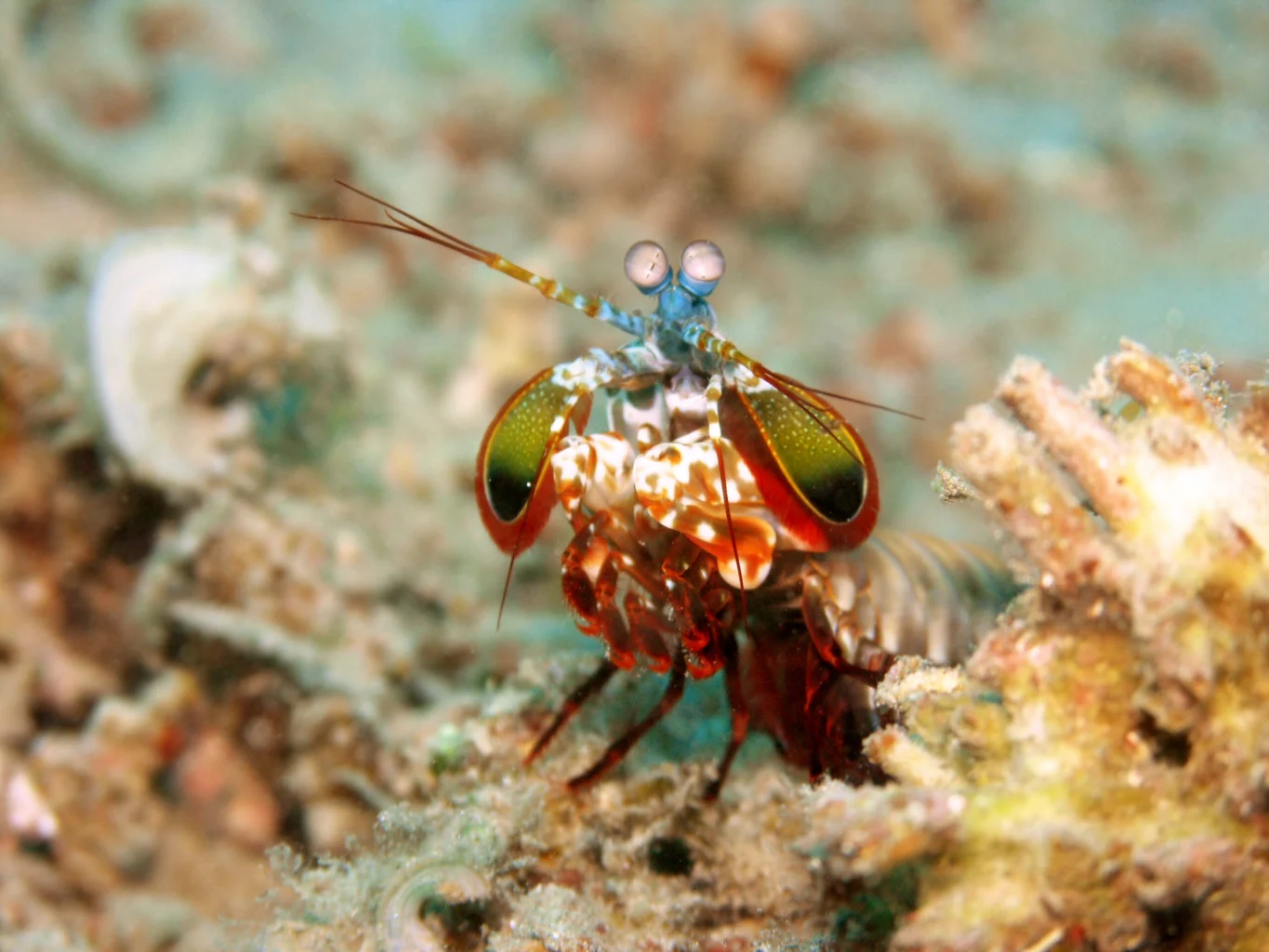
Mantis shrimp are stomatopod crustaceans rather than true shrimp. Divers in Komodo may find them watching from burrows or moving across rubble and reef habitat, but sightings are easy to miss and never guaranteed. Look for independently moving stalked eyes, a compact armoured body and enlarged raptorial limbs. Never put fingers, a pointer or a camera port into a burrow.
What Is a Mantis Shrimp?
Mantis shrimp belong to the order Stomatopoda. Their common name comes from the folded, prey-catching limbs that resemble those of a praying mantis, but they are not the same animals sold as ordinary shrimp. Hundreds of stomatopod species occupy tropical and subtropical marine habitats, and they vary substantially in colour, size and hunting style.
That variety matters underwater. A vivid peacock mantis shrimp is only one possibility; many stomatopods are muted, remain partly hidden or show little more than their eyes at a burrow entrance. A diver searching only for an internet-famous rainbow animal can swim over the real encounter.
This guide focuses on mantis shrimp observation. For broader site and trip planning, start with our Komodo diving guide, then confirm the programme and conditions with your operator.
Smasher or Spearer?
| Hunting form | Raptorial limb | Typical prey | Where a diver may notice it |
|---|---|---|---|
| Smasher | Club-like striking surface | Hard-shelled prey such as snails and crabs | Reef holes, rubble and solid burrows |
| Spearer | Spined, folding limb | Fish and other softer moving prey | Sand or mud burrows used for ambush |
The distinction describes a broad feeding strategy, not a reliable species identification. Do not label an animal from one quick view of its colour. A photograph showing the whole body, habitat and raptorial limb is more useful than a close crop of the eyes.
How Powerful Is the Famous Strike?
Smashing species accelerate their clubs extremely quickly. Research on peacock mantis shrimp has measured both the direct impact and cavitation produced when the strike causes a low-pressure bubble that collapses. The prey can therefore experience the physical blow and the effect of the collapsing bubble.
The biology is remarkable without turning it into a superhero story. Claims such as “every mantis shrimp can break aquarium glass” flatten hundreds of species into one anecdote. The safest conclusion for a diver is simpler: the limbs are specialised weapons used at very close range, so a burrow should never be probed or blocked.
Do Mantis Shrimp Really See More Colours Than Humans?
Stomatopod eyes are among the most complex visual systems studied. Their stalked eyes move independently, and different species can detect ultraviolet light and forms of polarisation humans cannot see. However, having more photoreceptor types does not automatically mean they discriminate every colour better than humans. Experiments suggest their visual system processes information in a different way rather than operating as a simple “more colours equals better vision” scale.
Where Are Mantis Shrimp Reported in Komodo?
Local sightings are associated with reef openings, rubble and slower macro habitats. Wet Frog Divers specifically reports seeing mantis shrimp at Mawan and Sebayur. Other Komodo macro guides mention rubble and sheltered sites such as Wainilu. These are reports of suitable habitat and past encounters, not a guarantee that a given dive will produce one.
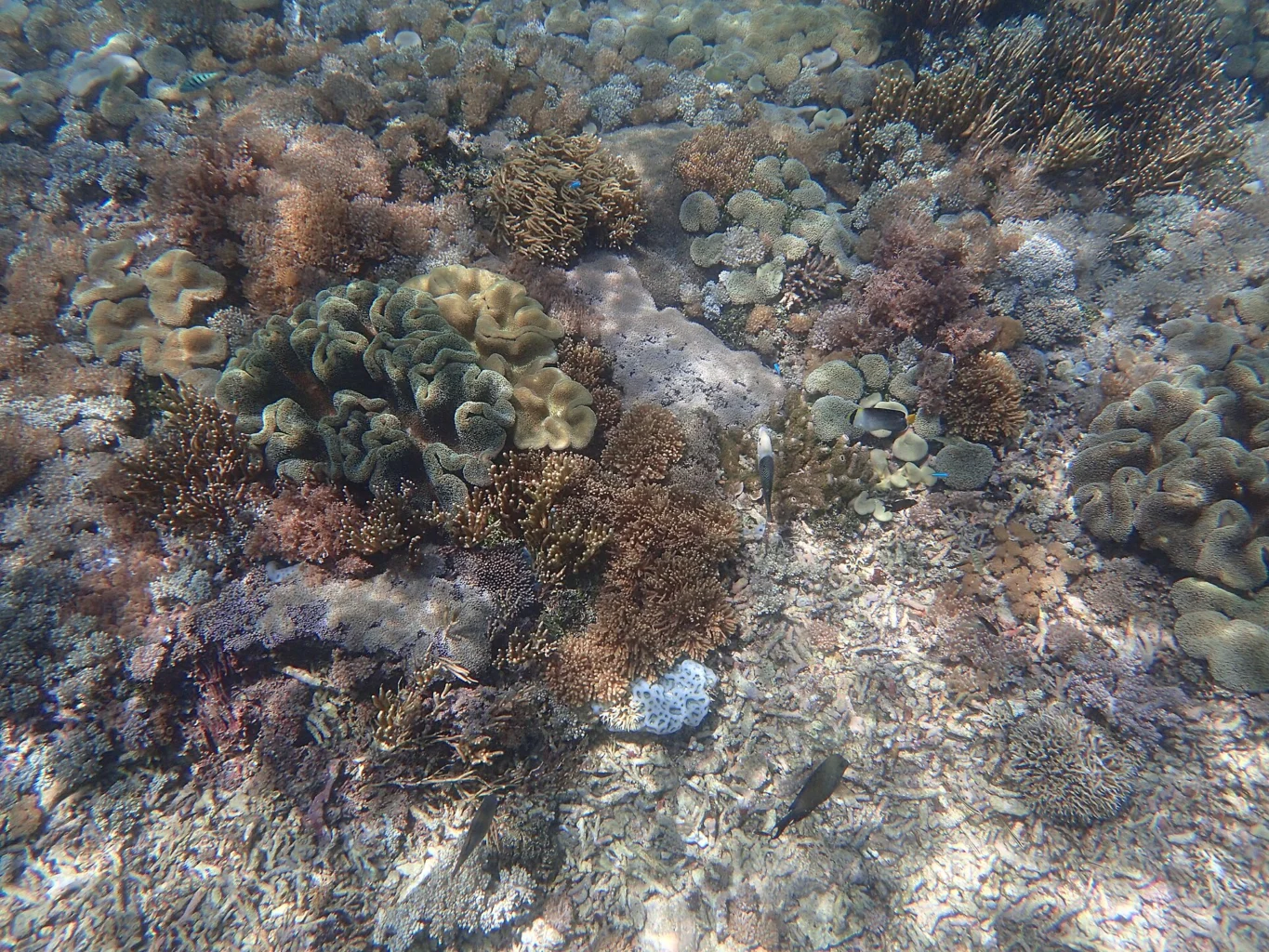
Ask a guide where mantis shrimp have been seen recently and whether the planned site suits a slow search. A fast drift over a current-facing pinnacle may be a brilliant dive, but it gives the group little time to inspect burrows.
How to Spot One
- Slow down over rubble and reef margins. Mantis shrimp often disappear before a fast-moving diver registers them.
- Look for paired stalked eyes. They may move independently at the mouth of a hole.
- Watch the burrow edge. Freshly arranged shell fragments or rubble can indicate an occupied opening.
- Let the guide point from a distance. A pointer should indicate direction, never enter the burrow.
- Wait without closing the exit. The animal may emerge when the group becomes still.
Photography Without Harassment
Use a macro lens or crop later rather than moving the housing into the entrance. Approach at the animal’s eye level from one side and leave an open retreat path. Take a short sequence, review the frame away from the subject and allow the next diver to observe.
A focus light at low intensity can help, but persistent light and repeated flashes may keep the animal inside. Never place shells, bait or another animal near the burrow to manufacture a predation photograph.
What Mantis Shrimp Tell You About the Site
A mantis shrimp encounter rewards observation of the substrate, burrow and movement. The same slow search can reveal camouflaged frogfish, nudibranchs and other small subjects. Do not disturb the animal or its shelter.
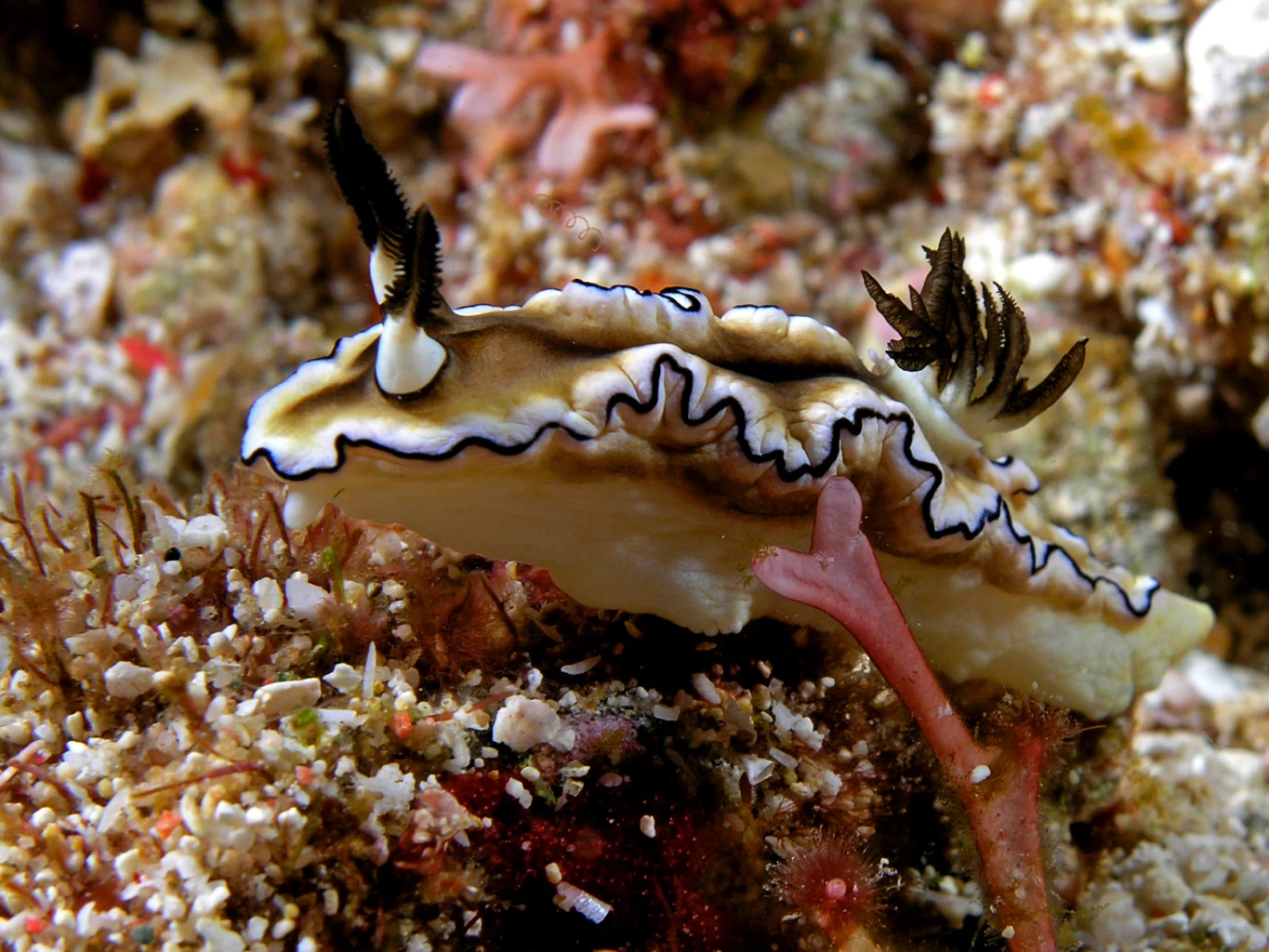
If mantis shrimp are a priority, choose a trip with genuine macro dives rather than assuming any boat tagged “diving” will stop at suitable habitat. Compare the current vessel records on the Komodo diving trips page, then ask the operator about recent sightings and guide expertise.
Common Mantis Shrimp Myths
“Every mantis shrimp is a colourful smasher”
False. Stomatopods include smasher and spearer forms in a wide range of colours. Many remain mostly hidden in sand or rubble burrows.
“More photoreceptors means it sees colour exactly like a superhuman”
Too simple. The visual system detects wavelengths and polarisation unavailable to humans, but behavioural studies show colour processing works differently from human comparison-based vision.
“It will attack a diver”
Mantis shrimp hunt prey and defend close shelter; they do not patrol reefs for people. Handling and probing manufacture the dangerous situation.
Questions for a Macro Guide
- Which planned sites contain rubble, sand or known stomatopod burrows?
- Were sightings recent, and were they smasher or spearer forms?
- How many photographers rotate through one small subject?
- Does the guide prohibit pointers from touching animals and shelters?
- What alternative macro habitat is available if the original site is unsuitable?
Never insert a finger, pointer, light or camera port into a mantis shrimp burrow. Observe from outside and let the animal control the encounter.
What makes a mantis-shrimp record useful?
A useful record shows the burrow and animal together, rather than only a colourful eye. Add the date, dive site, approximate depth and whether the substrate was sand, rubble or consolidated reef. If the striking limbs remain hidden, record “mantis shrimp, species uncertain” instead of inferring a smasher from body colour.
Observe from one position for a short interval. Eyes turning at a burrow entrance, an animal carrying material and an animal emerging to forage are different observations. Describe the movement you saw; do not turn a brief appearance into a claim about aggression or territorial behaviour. A guide’s interpretation can be recorded separately from the visible evidence.
For identifying a local encounter, an Indonesian range map is only a first filter. It does not validate a Komodo locality. A photograph with a known place and date gives a specialist something to examine; an attractive uncredited illustration does not. Museum specimens and taxonomic references explain anatomy, while local logs establish where an individual was observed.
This also keeps travel research aligned with intent. Food preparation advice about mantis shrimp does not answer how to recognise a living stomatopod or avoid damaging its shelter. A dive itinerary should be judged by the time and habitat available for observation, not by how often the animal’s name appears in the sales copy.
Match the wildlife interest to your trip
Use the dive komodo listing to compare dedicated diving options, then confirm the route, recent habitat observations and guide arrangements with the operator. Wildlife and daily site access remain conditional.
Frequently Asked Questions
Are mantis shrimp dangerous to divers?
They are not animals that hunt divers. The preventable risk comes from handling one or probing its shelter. Keep hands out and the encounter remains observational.
Is every colourful mantis shrimp a peacock mantis shrimp?
No. Colour alone is not enough for a confident species identification. Record body form, markings, habitat and location.
Can snorkellers see mantis shrimp?
It is possible in shallow habitat, but most are small, cryptic or partly hidden. A slow shallow dive with an experienced guide usually provides a better search method.
Are Mawan and Sebayur guaranteed mantis-shrimp sites?
No. They are locations where a local operator has reported encounters. Wildlife moves and hides, and the daily site choice depends on conditions.
