
Octopus and Cuttlefish in Komodo: How to Tell Them Apart
Compare octopuses and cuttlefish in Komodo by body structure, movement and camouflage, with responsible photography and local-evidence checks.
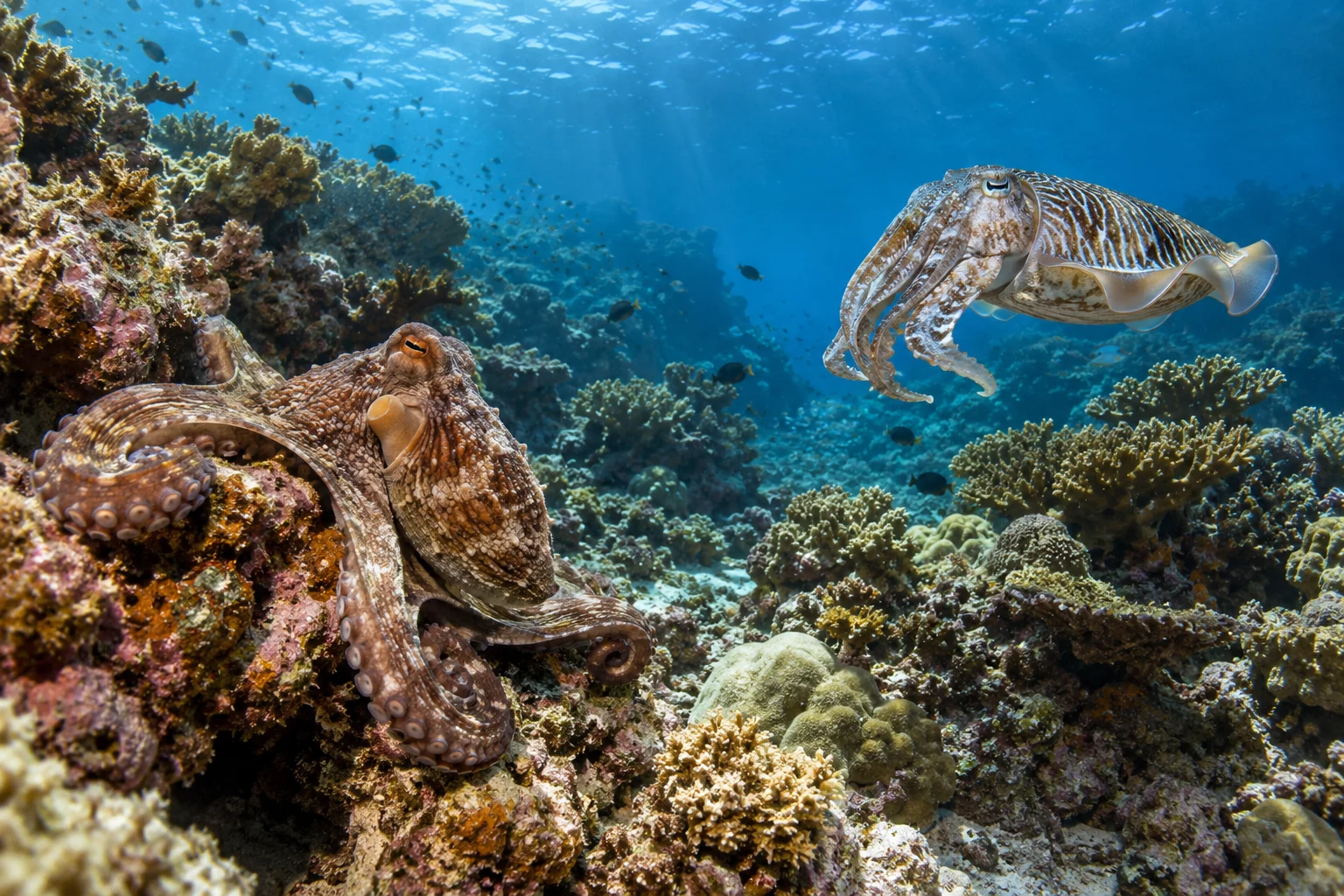
Octopuses and cuttlefish in Komodo are cephalopod molluscs, but they are not the same body plan. Octopuses have eight arms. Cuttlefish have eight arms plus two specialised feeding tentacles, a fin fringe and an internal cuttlebone. Begin with those features before trying to identify a species from colour.
Octopus or cuttlefish?
| Feature | Octopus | Cuttlefish |
|---|---|---|
| Appendages | Eight arms | Eight arms and two feeding tentacles, which may be retracted |
| Body outline | Soft mantle with arms that can spread or fold around the body | Often an oval mantle with a fin running along the sides |
| Internal support | No cuttlebone | Internal cuttlebone associated with buoyancy |
| Movement to watch | Crawling, arm movements and jet propulsion | Fin undulation and jet propulsion |
| Identification trap | A spread-arm display can greatly change the silhouette | Retracted tentacles make a simple appendage count misleading |
These are broad distinctions explained in Smithsonian’s cephalopod resources. A partly hidden animal may not show enough detail to apply every row. “Octopus, species uncertain” or “cuttlefish, species uncertain” is an acceptable field record.

Colour change does not mean one thing
Chromatophores help cephalopods change visible colour patterns. Other skin structures and body posture also contribute to their appearance. Changes can be associated with camouflage, communication or defensive responses; a colourful animal is not automatically calm or inviting attention.
Watch what happens before and after the pattern changes. Did a diver move closer? Did another animal approach? Did the subject enter different surroundings? Record that sequence rather than assigning a human emotion from a single frame.
What local reports establish
Dragon Dive publishes a Komodo guide to flamboyant cuttlefish, while Scuba Republic discusses cuttlefish biology and diving encounters. Such operator material is useful context for asking about local observations. It is not a census, a guarantee of an animal at a named site or proof that every species in an Indonesian guide occurs on a Komodo route.
Request recent information about the habitat and the evidence behind a species name. An identifiable photograph with a known place and date is more useful than a list repeated across several destinations. If a photograph came from another island, keep that provenance visible.
Look at the habitat before the close-up
A rubble margin, sandy patch and coral ledge provide different shelter. Begin with a wider view showing how the animal is positioned. Its outline may become easier to understand when you see the surrounding texture it resembles.
Do not turn rocks, lift shells or move rubbish to reveal an animal. Apart from disturbing shelter, hidden organisms can present a contact hazard. A guide’s pointer should indicate direction from open water, never force an octopus out of a crevice.
Night encounters require restraint
A light can make a subject easier to see while changing the encounter. Agree on the guide’s lighting protocol and avoid a ring of lamps aimed from every side. If the animal retreats, give it space rather than increasing brightness or blocking the opening.
Stay aware of your buddy, depth and exit plan. A cephalopod moving across the bottom can draw a photographer beyond the group before they notice. Let an animal leave instead of following it into an area that was not part of the briefing.
Keep blue-ringed octopus safety separate
Some small octopuses require particular caution. Bright rings may be a defensive display, and muted colour is not permission to touch. The visitor rule is the same regardless of a confident species label: no handling, no provoking and no collecting occupied shells.
If contact or a bite is suspected, alert the guide immediately and activate the dive team’s medical response. Do not delay action to finish an identification. This comparison guide is not a substitute for training or emergency instructions.
Choose a trip with the right pace
Ask whether the route offers appropriate macro or night-diving opportunities, how the guide manages photographers and what happens when conditions rule out a planned site. The dive komodo listing helps compare dedicated programmes; individual species remain unguaranteed.
Are cuttlefish fish?
No. The name is misleading: cuttlefish are molluscs, related to octopuses and squid.
Does a colour change identify the species?
No. Use body structure, diagnostic features and a suitable regional reference. A dramatic display alone is not enough.
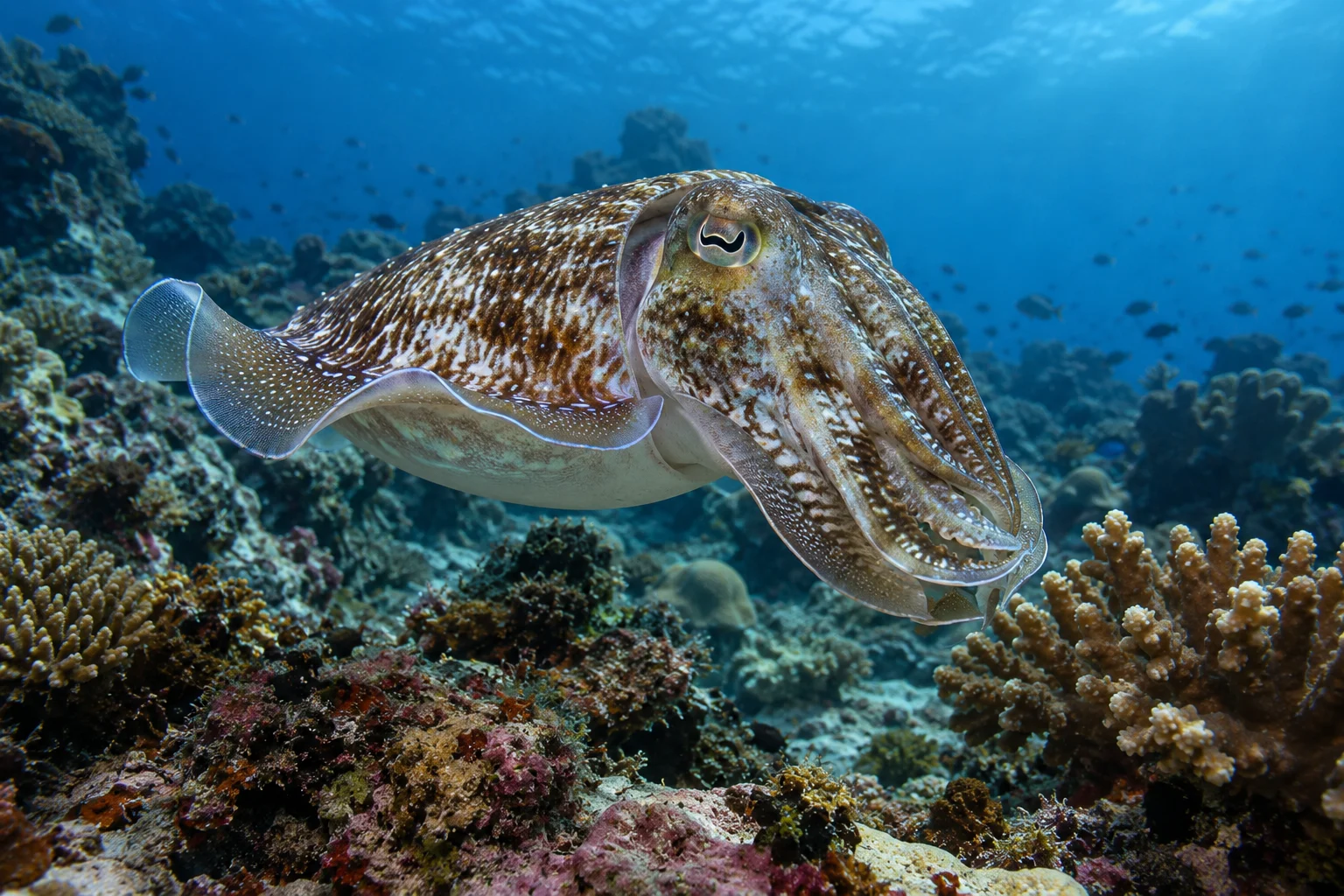
A useful cuttlefish or octopus observation
Record body shape, arms, movement and whether a cuttlefish’s lateral fin is visible. Note the habitat and time without assigning a species from colour alone. A colour change can reflect camouflage or communication, so write down what happened immediately before and after it. Avoid flash or pursuit if the animal changes direction or retreats.
Look for cephalopods with Dive Komodo, and consult the Komodo diving guide for site conditions and responsible observation practices.
Describe what the image can distinguish
An identification may rely on body form, arm arrangement, fins and movement, with some features absent in a partial photograph. State the level of confidence and retain the image rather than inventing a species-level name. Colour change alone does not establish a particular emotion or intention.
Keep hands out of holes and leave an animal’s shelter intact. A night observation should fit the guide’s lighting and group procedure. If the subject moves away or hides, end the attempt instead of manipulating the habitat for another frame.
Historical park surveys and natural-history publications are indexed in the Komodo research archive; retain each publication’s date and sampling limits rather than treating it as a current service or wildlife inventory.
