
How Many Komodo Dragons Are Left? Understanding Population Estimates
Read dated Komodo dragon estimates with park, Flores and captive populations separated, plus uncertainty and limits on comparing totals.
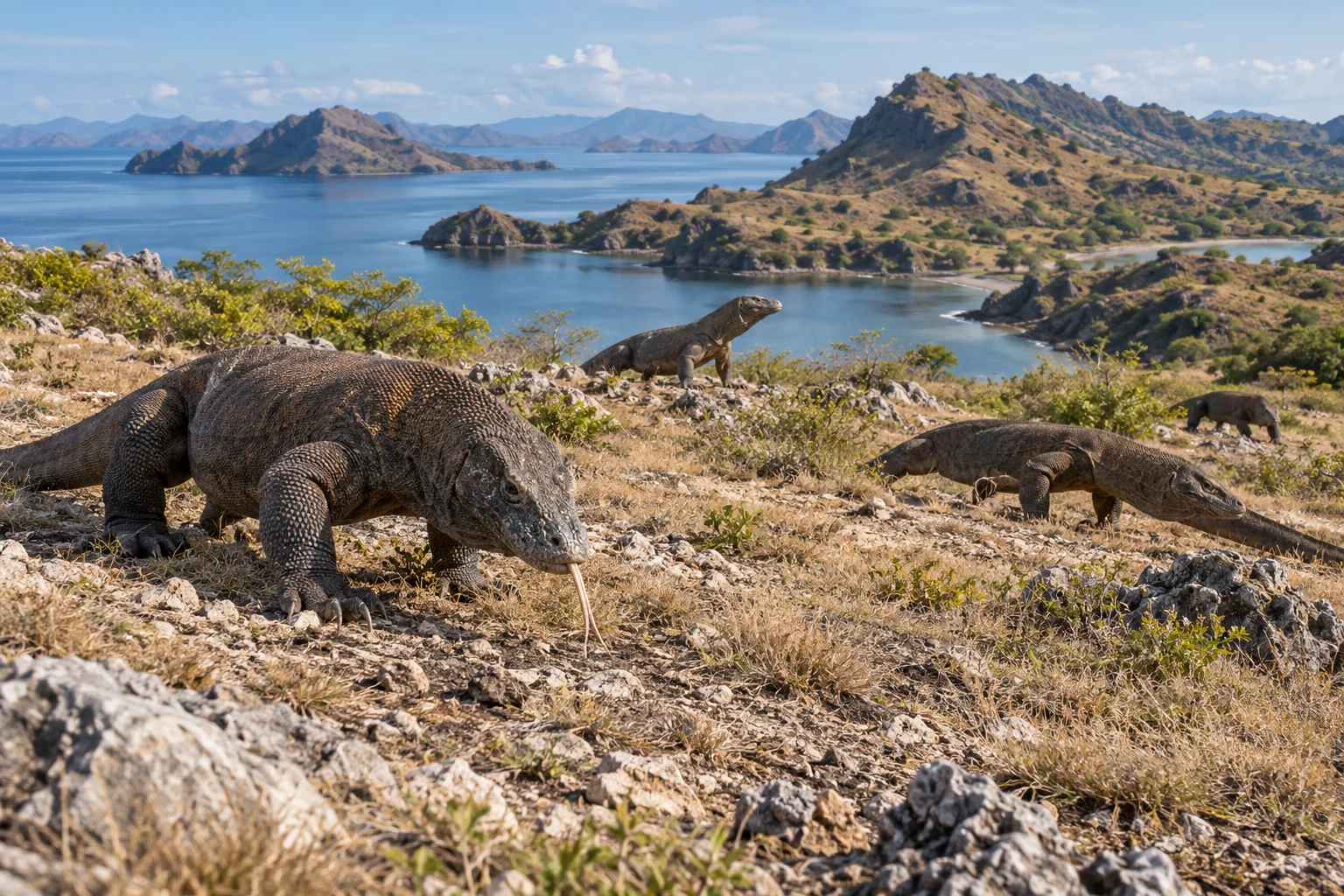
There is no single exact, timeless count of Komodo dragons. A February 2026 government conservation update reported 3,270 ± 371 individuals in Komodo National Park and about 701 ± 131 on Flores, with 177 in ex-situ facilities reported separately. These are different population categories, not interchangeable answers.
A dated answer with the right geographical scope
The figures below come from KSDAE’s IN-FLORES article published on 26 February 2026, which attributes them to the Ministry’s Director of Species and Genetic Conservation. The article publication date is clear; it should not be relabelled as a complete census carried out in 2026.
| Population described | Reported figure | How to read it |
|---|---|---|
| Komodo National Park | 3,270 ± 371 | Park estimate; not all wild dragons worldwide |
| Flores | About 701 ± 131 | Wild population reported outside the park total |
| Ex-situ conservation | 177 | Managed-care animals, reported separately from wild populations |
The article does not define the statistical meaning of its plus-or-minus values. They are retained as reported uncertainty, without labelling them a 95% confidence interval or standard error. Those interpretations require the underlying technical documentation.
Why adding the numbers needs care
The two wild central estimates add arithmetically to 3,971. That calculation is useful for understanding scale, but it is not an independently published global census. Combining uncertainty requires the methods and relationship between estimates; adding the error terms does not automatically produce a valid interval.
The captive figure answers another question. Adding it to a wild estimate creates a mixed total whose meaning must be explained. For a conservation discussion about wild habitat, keep those categories separate.
Why older articles give different totals
A number can differ because it refers to another year, another area or another class of animal. Some summaries count mature individuals; others estimate all age classes. Some quote a single island, some the national park and some the entire natural range. A rounded press summary may also omit uncertainty.
Before comparing two figures, copy the source, reporting date, survey period, geographical boundary and unit. If one of those fields is missing, describe the limitation rather than turning the difference into a trend.
| Comparison | Valid conclusion? |
|---|---|
| One year’s park estimate against a different year’s park estimate using comparable methods | Potentially informative; inspect uncertainty and survey effort first |
| A park estimate against a worldwide estimate | Not a population trend |
| Mature individuals against all ages | Not directly comparable |
| Tourist sightings on two different treks | Not a population estimate |
How researchers count an animal that is not always visible
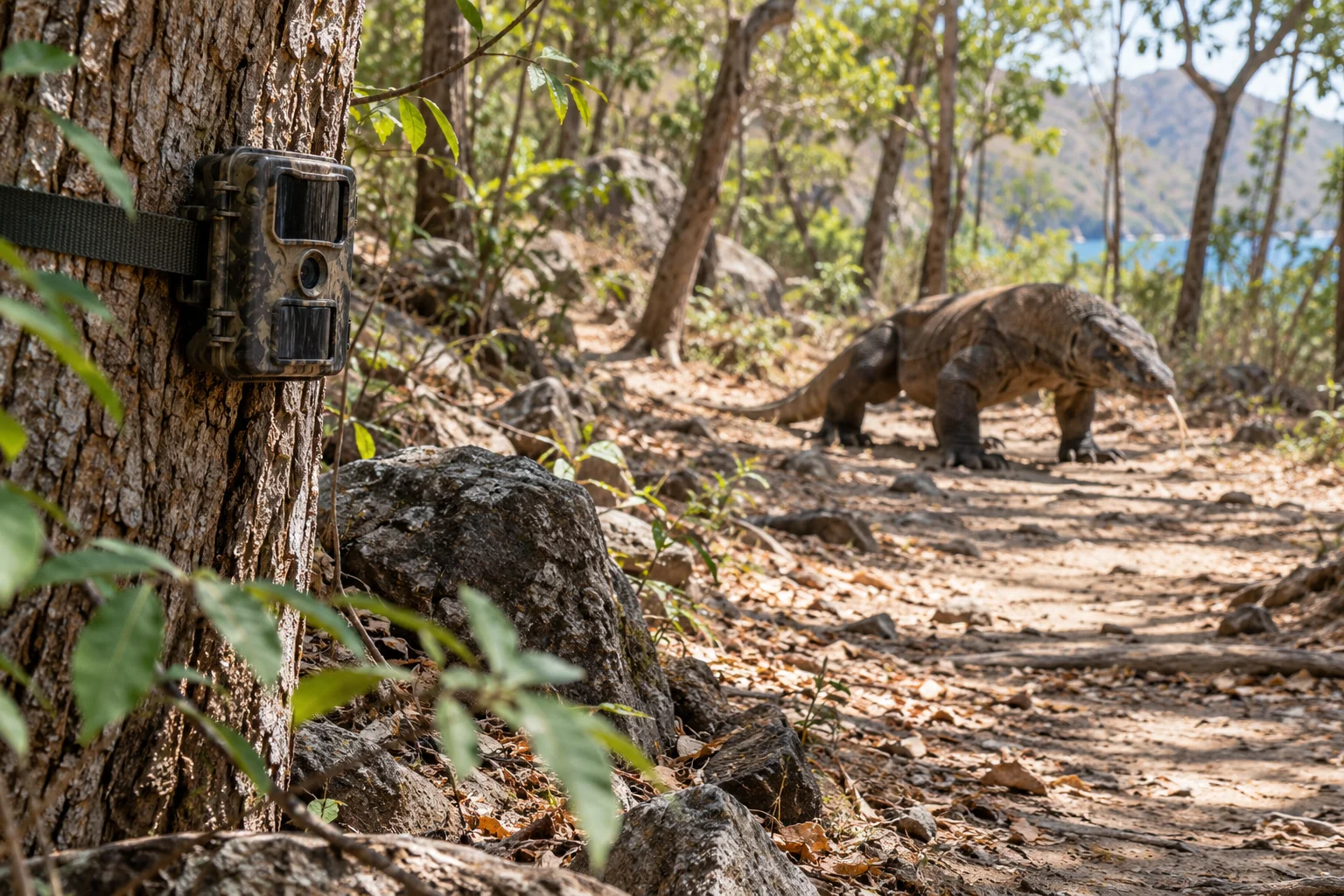
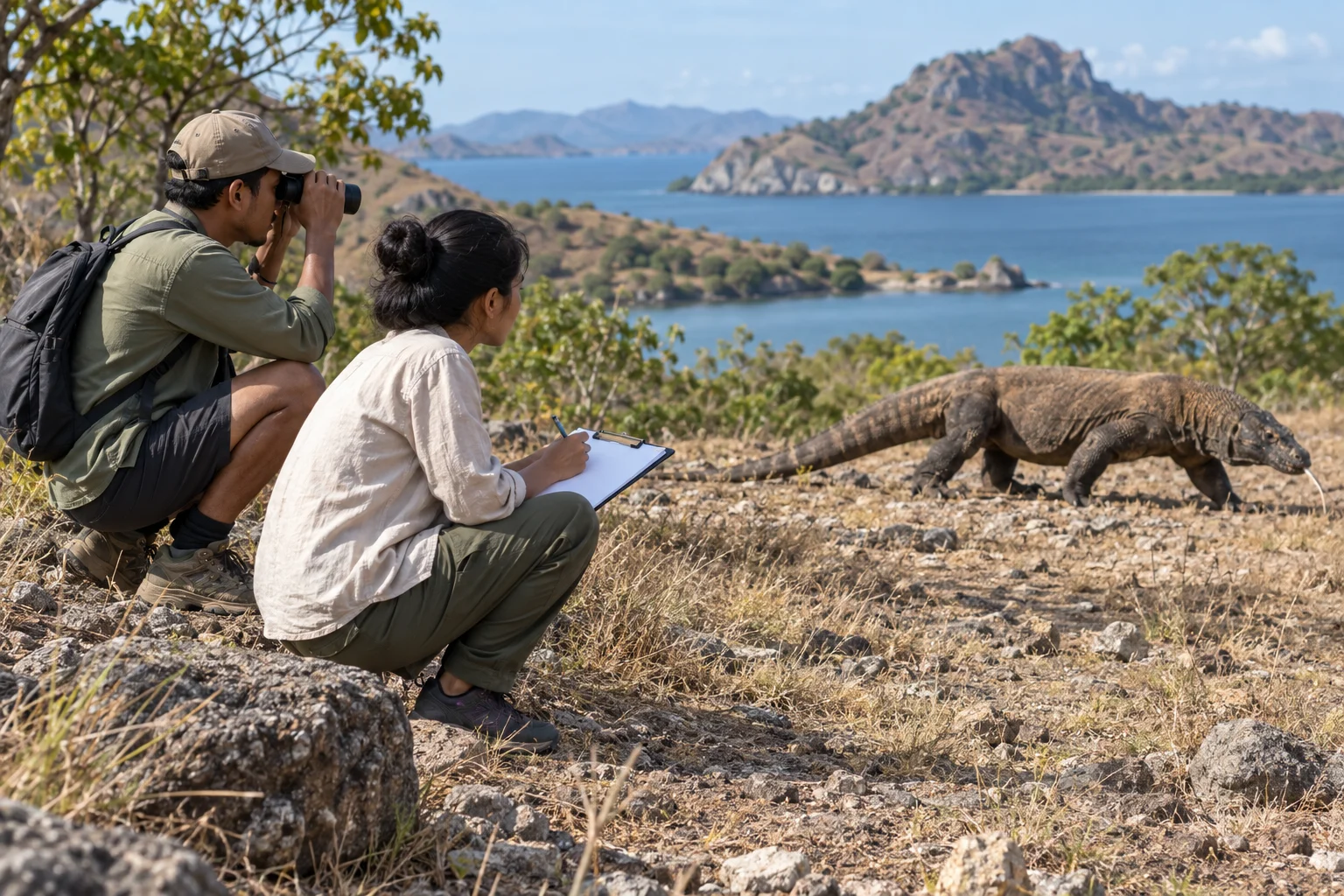
Wildlife estimates depend on sampling. Animals may remain out of sight, use different parts of their range or be detected more than once. A credible technical report explains how it accounts for these problems and how much uncertainty remains. A precise-looking number without its method can communicate less than a rounded estimate with a clear boundary.
Repeated monitoring is especially useful when methods stay comparable. An apparent increase following wider coverage could represent improved detection. A smaller count during a short visit could simply reflect when and where observers looked. Neither should be presented as recovery or collapse without analysis.
What the numbers mean for a visitor
Population size does not translate into a sighting guarantee. A guided walk samples a small area for a short time, and animals choose their own movements. Plan a komodo one day tour around the whole landscape and the operator’s authorised itinerary, with realistic expectations for the dragon stop.
Are there only 3,270 dragons in the world?
No. In the cited update that figure refers to the national park. Flores and ex-situ animals are listed separately.
Should the uncertainty be removed to make the answer simpler?
No. Keep the scope and date in a short answer, and show the uncertainty when presenting the figures in detail.
Use a population figure with a denominator
Write the place, survey period, estimate and uncertainty together. The park estimate and the Flores estimate describe different areas; an ex-situ count is another category again. Their arithmetic sum is not a newly measured global population. If a newer official survey appears, replace the dated number and methods together rather than silently editing only the headline.
Put population estimates in context before choosing Komodo tour packages, and review the Komodo National Park guide for responsible visitor expectations.
Carry the source year with every population total
Write a figure with its area, year, method and whether it is an estimate or count. A park total and a species-wide estimate can differ without either being a simple mistake. Do not add partially overlapping island figures or mix years to produce a seemingly precise new total.
For a trend, compare surveys whose methods and geographic coverage are compatible. More sightings near a visitor route may reflect observation effort or animal movement. A holiday photograph cannot determine how many dragons remain across the species.
For conservation work and attributed species information, consult Komodo Survival Program; a project description is not a substitute for a dated population estimate.
