
Why Komodo Dragons Are Endangered: Threats and Conservation Work
Understand why Komodo dragons are Endangered, how threats differ across their range, and what conservation evidence and responsible visits can show.
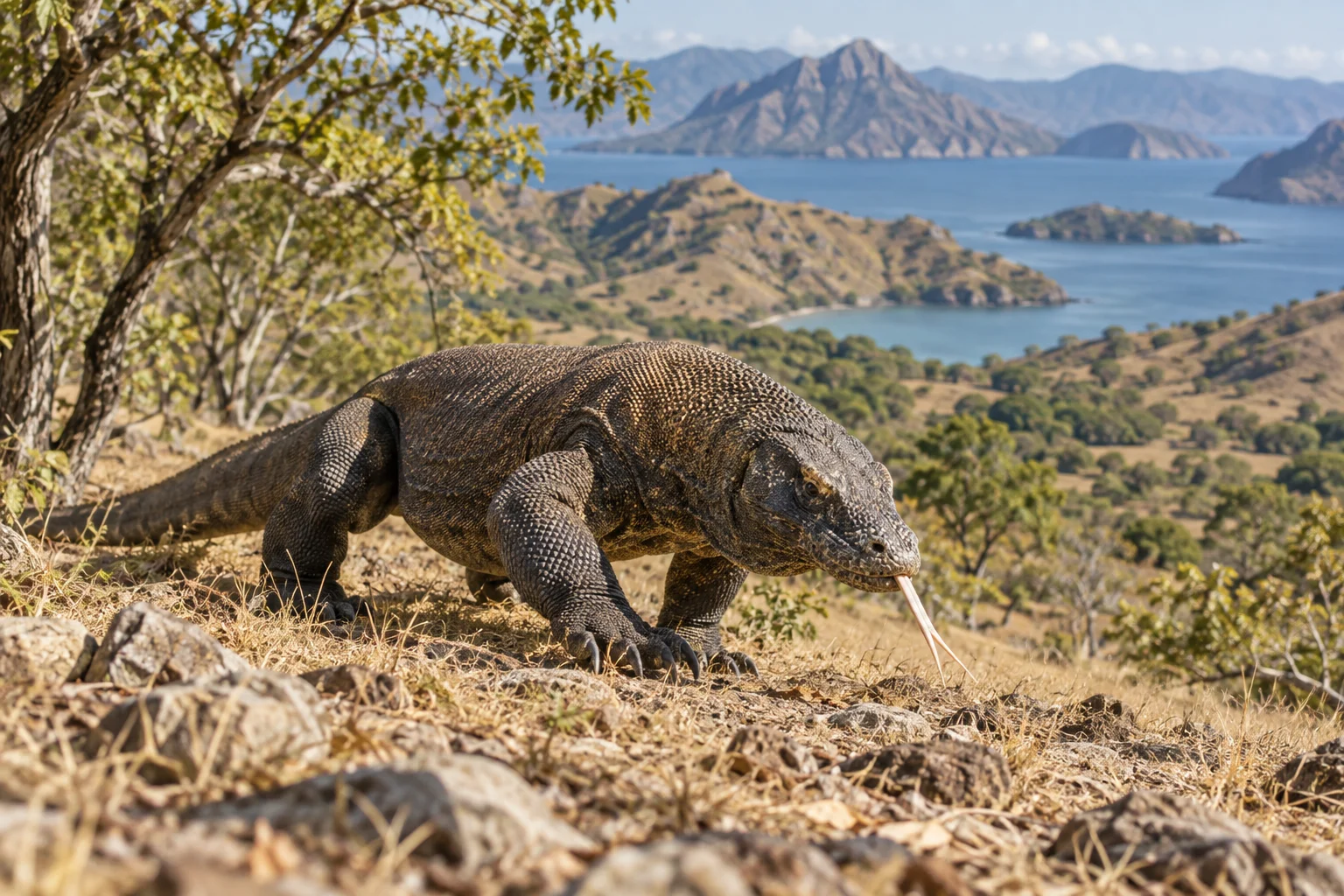
Komodo dragons are classified as Endangered on the IUCN Red List. The designation concerns extinction risk across their range, not whether a visitor can easily see one beside a ranger station. Protecting habitat, prey and connections between populations matters as much as protecting individual animals.
What changed in the assessment?
IUCN announced the move from Vulnerable to Endangered in September 2021. Its announcement highlighted climate change and rising sea levels, projecting a reduction of at least 30% in suitable habitat over the following 45 years. That is a modelled habitat risk over a stated period, not a claim that 30% of dragons had already disappeared in 2021.
Risk categories combine evidence and criteria. They are not a league table of the animals most frequently photographed. A concentrated population at a popular visitor site can coexist with a restricted range and substantial threats elsewhere.
Why the park is only part of the story
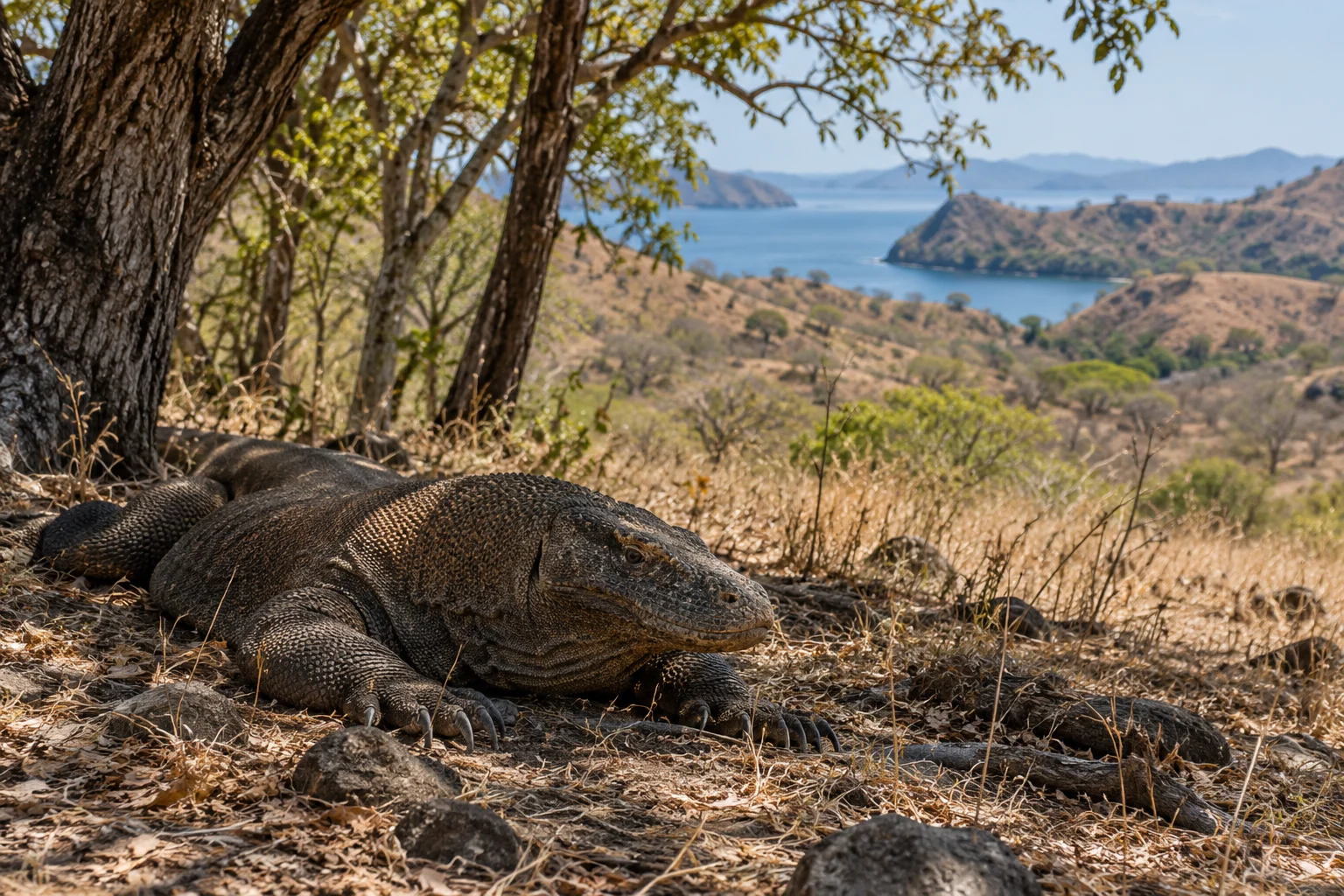
The Komodo Survival Program distinguishes relatively secure populations within the national park from vulnerable populations on Flores. Conservation therefore extends beyond the islands most tourist boats visit. An account that treats every wild dragon as a resident of Komodo Island misses both geography and management responsibilities.
Different places require different evidence. A ranger-led sighting documents an animal at a visited location. Camera trapping, repeated surveys and demographic research address distribution and population change. Neither an empty trail nor several sightings can establish the condition of the whole species.
| Pressure | Why it matters | Evidence worth asking for |
|---|---|---|
| Habitat loss and fragmentation | Reduces or separates places animals can use | Mapped habitat change and repeated occupancy surveys |
| Loss of prey | A predator needs a functioning food web | Prey monitoring alongside dragon monitoring |
| Climate and sea-level change | Can alter the amount and location of suitable habitat | Model assumptions, time horizon and uncertainty |
| Disturbance and conflict | Can affect how people and wildlife share space | Local incident records and responses, with community participation |
What useful conservation work looks like
Long-term monitoring is valuable because the same methods can be repeated. A programme should explain the area surveyed, effort, period, and uncertainty. More sightings after more survey effort do not automatically demonstrate recovery. Conversely, a one-year dip can reflect sampling variability as well as a biological change.
Habitat protection also needs people. Land-use decisions, livelihoods, access and local knowledge shape what can work over time. Paying for a guided visit supports a service; claiming that the payment produces a particular conservation outcome requires evidence about where funds go and what the programme achieves.
How to visit without adding avoidable pressure
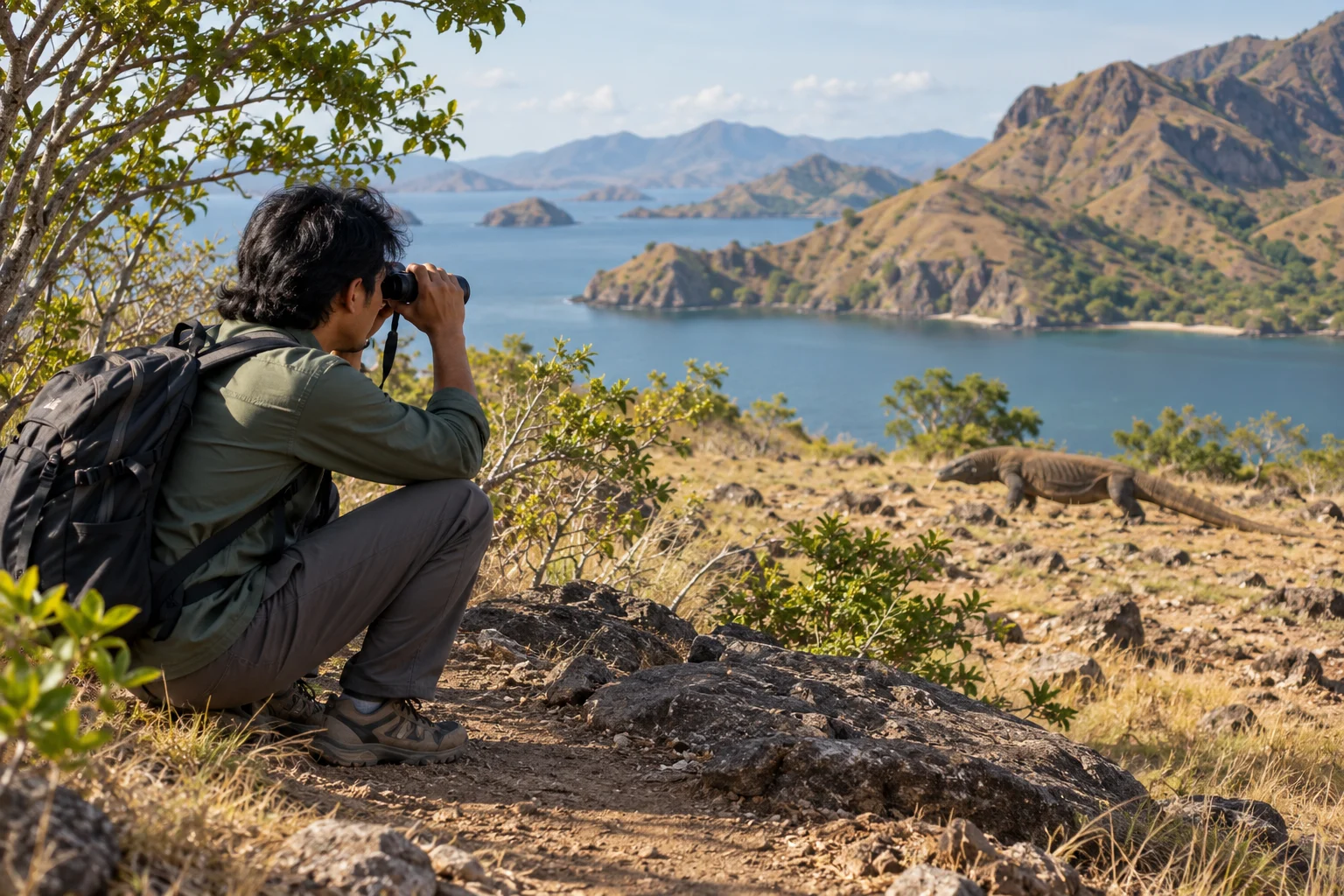
Use authorised routes and follow the assigned guide’s instructions. Never request feeding, baiting or a closer staged encounter. Keep children supervised and allow the guide to manage group position. A route closure or changed plan should be respected even if a previous traveller’s video shows access.
If comparing a komodo one day tour, ask how the operator handles park registration, group management and changes at the dragon stop. A sighting promise is not evidence of conservation quality.
Questions about endangered status
Does Endangered mean extinction is imminent?
It means a high assessed extinction risk under IUCN’s criteria. It is not a predicted extinction date. The purpose of conservation is to change the pressures and outcomes.
Does a stable park estimate mean the species is safe?
No. A park estimate covers a defined population and period. Risk also depends on range, habitat, subpopulations and future threats.
Can captive breeding replace wild habitat?
Keeping animals in managed care and maintaining a functioning wild population are different objectives. A captive count should always be separated from a wild estimate.
Keep the assessment and the trend separate
When quoting a threat category, state the assessing organisation, assessment year, species and scale. A stable estimate inside Komodo National Park cannot cancel risks to populations outside it. Likewise, a visitor seeing several dragons at a ranger station cannot infer that the wider population is increasing. Use the assessment for conservation status and local monitoring for local trend.
Choose a route that respects dragon habitat through Komodo tour packages, and use the Komodo National Park guide to understand wildlife rules and island context.
Do not use a protected area as proof that threats ended
A park designation and a species assessment answer different questions. Look at the assessment date, geographic scope, criteria and identified pressures. A protected population may still face threats, while individuals outside the park can face a different management setting.
For a donation or tour claim, ask what activity is funded, who does the work and how outcomes are reported. Visitor numbers or planted trees are outputs; a claim of reduced threat needs an appropriate measure and period. Support should follow evidence rather than a dramatic endangered label alone.
For conservation work and attributed species information, consult Komodo Survival Program; a project description is not a substitute for a dated population estimate.
