
Are Komodo Dragons Venomous? How the Venom and Bite Really Work
Komodo dragon venom explained: where the glands are, what the toxins do, how the bite works and why the bacteria myth faded.
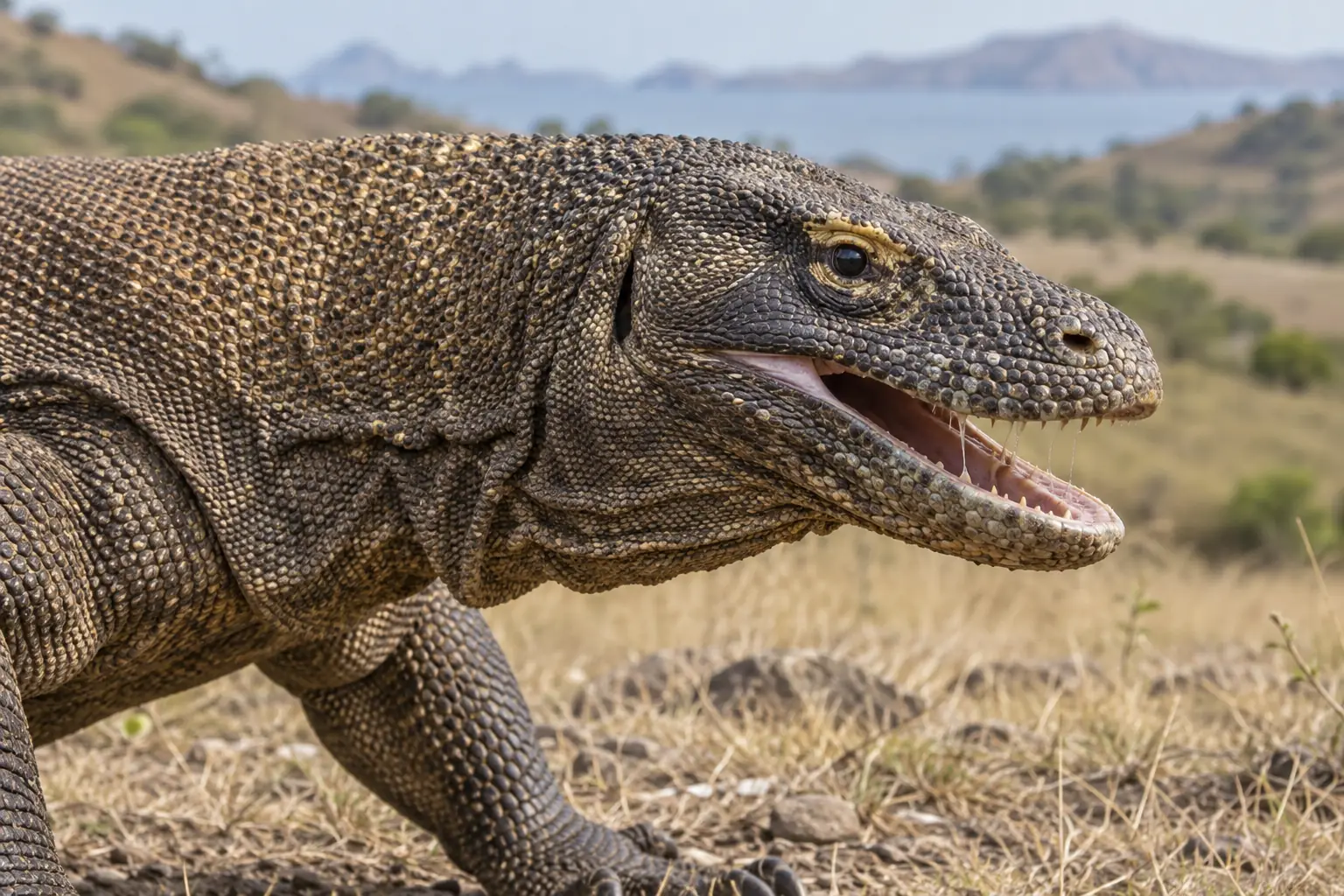
Yes, Komodo dragons have venom glands and biologically active secretions. Research supports a combined role for serrated teeth, pulling wounds and venom in predation. Laboratory effects do not predict the dose or outcome of every human bite, and bacteria can still infect a wound.
The familiar bacteria-only explanation of a Komodo dragon bite has been challenged by research on its jaw, secretions and oral bacteria. This guide separates the evidence for a venom system from questions about its contribution in the wild, and explains why none of those debates makes contact with a dragon safe.
Evidence reviewed 25 October 2026 against the research linked in this guide.
Komodo dragon venom: claims vs evidence
| Common claim | What the evidence says |
|---|---|
| Komodo dragons are venomous | True. MRI scans and dissection confirmed venom glands in the lower jaw in 2009 |
| They kill with deadly mouth bacteria | A 2013 captive study challenged the bacteria-as-venom explanation; this does not mean a bite is sterile |
| The venom kills instantly | No universal instant-kill outcome is established by the laboratory evidence |
| The bite is extremely powerful | Relatively weak for an animal of its size; teeth and pulling do the damage |
| Surviving a fight proves complete immunity | A sparring observation does not establish complete immunity to venom or wound infection |
How the Komodo dragon bite works
A Komodo dragon does not crush its prey. Skull modelling in the 2009 study showed a bite force that is weak for an animal of its size, far below a crocodile’s. Instead, the skull is built to withstand pulling. A dragon bites, then drags back with its powerful neck and body, and its curved, serrated teeth slice through flesh like a row of blades. Researchers sometimes summarise the technique as grip and rip.
The teeth are remarkable in their own right. A 2024 tooth-structure study found an orange, iron-enriched coating concentrated on the serrations and tips of Komodo dragon teeth. The enamel is thin, and the iron layer appears to keep the cutting edges sharp through the puncture-and-pull style of feeding.
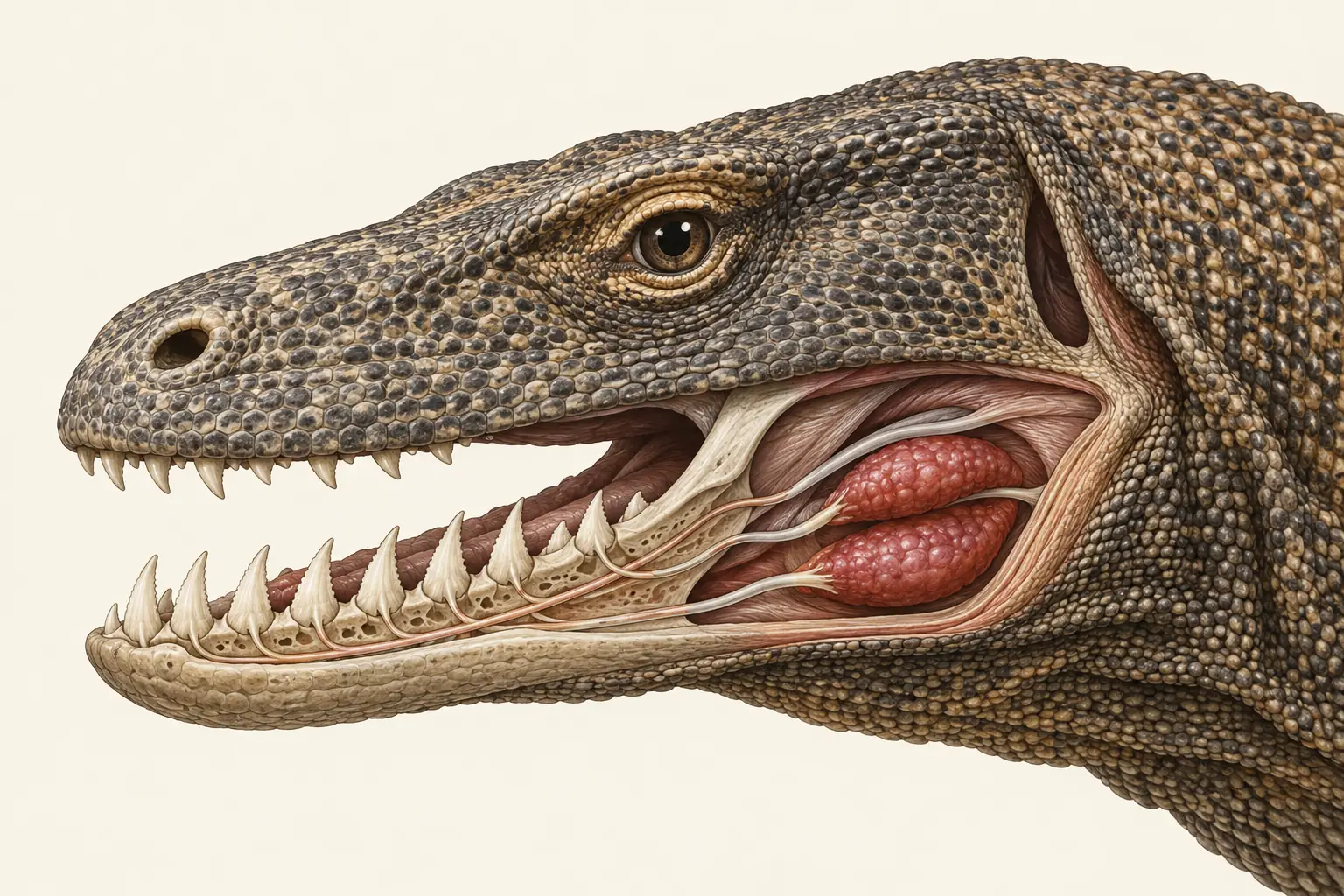
What is in Komodo dragon venom?
The 2009 study led by Bryan Fry combined jaw modelling, gland anatomy and tests of gland secretions. Its proposed hunting mechanism combines deep mechanical wounds with venom activity. Experimental findings included:
- Anticoagulant activity in experimental assays.
- Blood-pressure-lowering effects in experimental models.
- A proposed contribution to blood loss and shock alongside the physical wound.
These experiments support a mechanism; they do not measure venom delivery in every natural hunt. The condition of the prey, the wound and the amount delivered remain separate questions. Do not turn a laboratory effect into a claim that every bite follows one timetable.
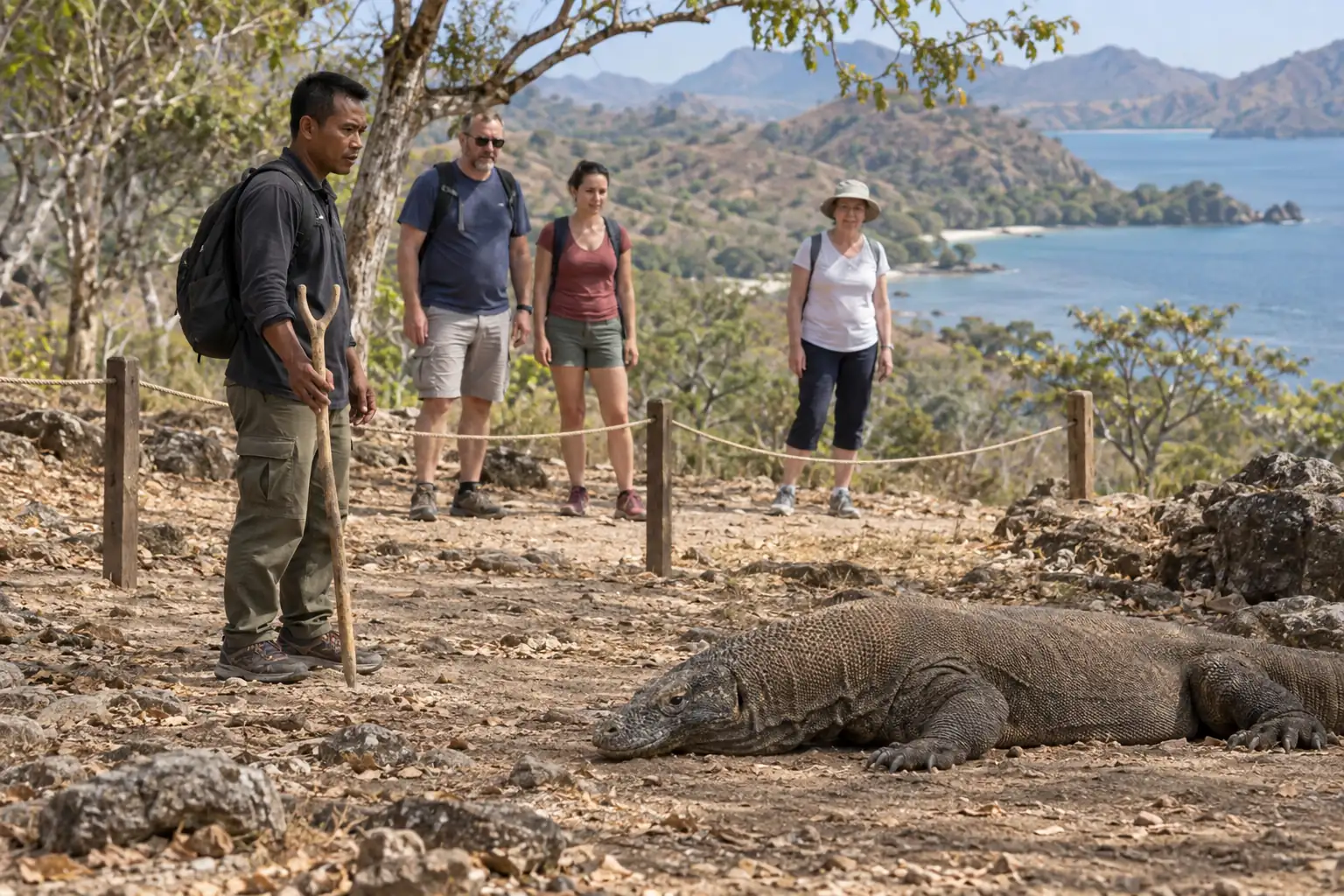
The bacteria myth: where it came from and why it faded
The septic-bite idea grew out of field observations in the 1970s and early 1980s. Researchers saw bitten water buffalo and deer sicken and die days after an attack, and bacteria cultured from dragon saliva included species known to infect wounds. The inference seemed reasonable: dragons carried pathogens from rotting carcasses and passed them on when they bit.
The 2009 work proposed venom and mechanical injury as an alternative to a bacteria-only explanation. Goldstein and colleagues’ 2013 study examined 16 captive dragons and argued against their mouth bacteria functioning as a specialised venom. Its captive sample does not describe every wild animal. Ordinary wound infection remains a concern.
Are Komodo dragons immune to their own venom?
Observations of dragons surviving fights do not establish universal immunity. Distinguish a source’s behavioural account from a tested resistance mechanism, and do not extrapolate it to human bites.
What a Komodo dragon bite means for people
A bite needs urgent professional medical assessment because the injury can involve deep tissue damage. Human case reports do not show identical systemic effects after every bite. A 2023 report of a captive zookeeper bite describes local injury without systemic signs of envenomation; one case cannot establish the outcome of another bite or a park visitor’s risk.
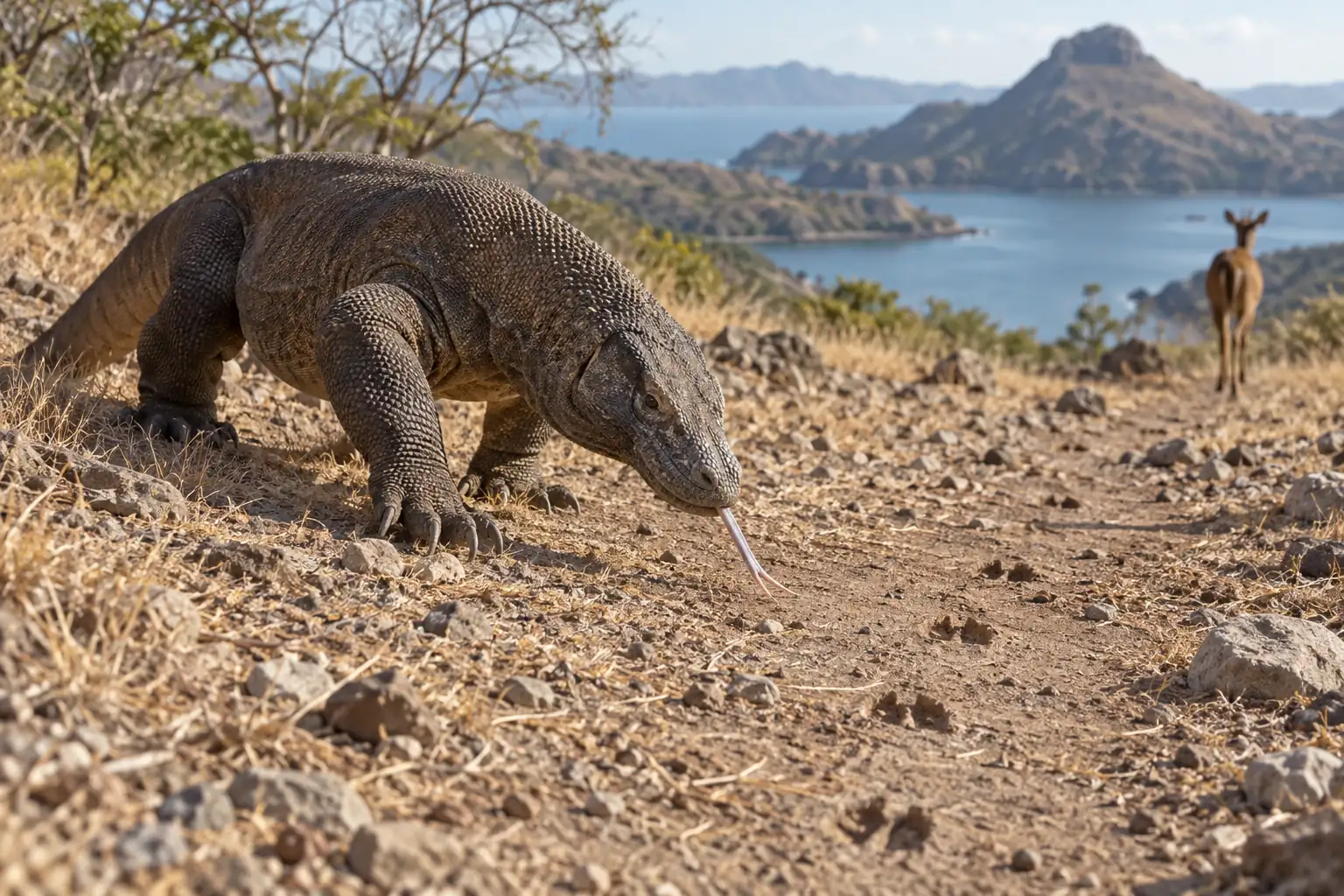
This is why the park’s rules are strict:
- Every visitor walks with a park naturalist guide, who carries a forked stick to deter a dragon that comes too close.
- Keep the distance the guide sets, and never approach a dragon for a photo.
- Stay on the marked trail or boardwalk, and do not wander off alone.
- Never feed a dragon or carry open food on the trail.
Our Komodo travel safety guide covers the wider picture. Confirm the named ranger gateway and route; a tour duration does not guarantee both Komodo and Rinca.
How venom fits into the dragon’s hunting strategy
Venom lets an animal with a relatively weak bite take prey far larger than itself. Dragons are mainly ambush hunters and heavy scavengers, and a bite that keeps bleeding means a wounded deer or buffalo does not get far. Several dragons often end up feeding on the same carcass. Our guide to what Komodo dragons eat explains the rest of the hunt, and the Komodo dragon facts guide covers their wider biology.
Frequently asked questions
Are Komodo dragons venomous or poisonous?
Venomous. Venom is injected through a bite, while a poisonous animal is harmful to touch or eat. Komodo dragons deliver venom from glands in the lower jaw when they bite.
Where is Komodo dragon venom produced?
In glands in the lower jaw. A 2009 study located them with MRI scans and analysed the toxins they produce.
What does Komodo dragon venom do?
Experimental work reports anticoagulant and blood-pressure-lowering activity. Those results support a predatory mechanism, not a prediction for every human bite.
Is the Komodo dragon bacteria theory wrong?
Bacteria can infect bite wounds. Research on venom and captive oral bacteria challenges the bacteria-only account, but it does not assign one fixed contribution to each mechanism in every wild hunt.
Can a Komodo dragon bite kill a human?
A severe bite can be life-threatening. This guide does not establish a visitor fatality rate; any bite requires urgent professional medical care.
Are Komodo dragons immune to their own venom?
Survival after a fight does not establish complete immunity to venom or wound infection. The evidence discussed here does not justify that blanket claim.
How strong is a Komodo dragon’s bite?
Relatively weak for its size. Dragons rely on serrated teeth and a hard pull-back to cut deep wounds rather than crushing force.
Keep biological evidence separate from a visitor protocol
Anatomy, molecular assays and prey effects answer different questions about venom. A result from an extract or experimental model does not establish the dose or outcome of a particular human bite. The mechanical wound also matters. Keep measured evidence, proposed mechanism and unresolved field contribution distinct.
For a visitor, the practical decision is to keep the ranger’s distance and avoid contact. Follow the park authority’s visitor protocol on wildlife disturbance and permitted routes. If an injury occurs, alert the ranger and crew and seek urgent professional care.
Read the anatomy and experimental evidence in Fry and colleagues’ 2009 anatomy and venom study.
Compare the komodo tour 3 days 2 nights format, then confirm the actual vessel, route, permissions and services with its operator.
