
Komodo Dragon Facts: Biology, Behaviour and Common Misconceptions
What the largest living lizard actually is, what it does all day, and the five things travellers most often get wrong before a dragon trek.
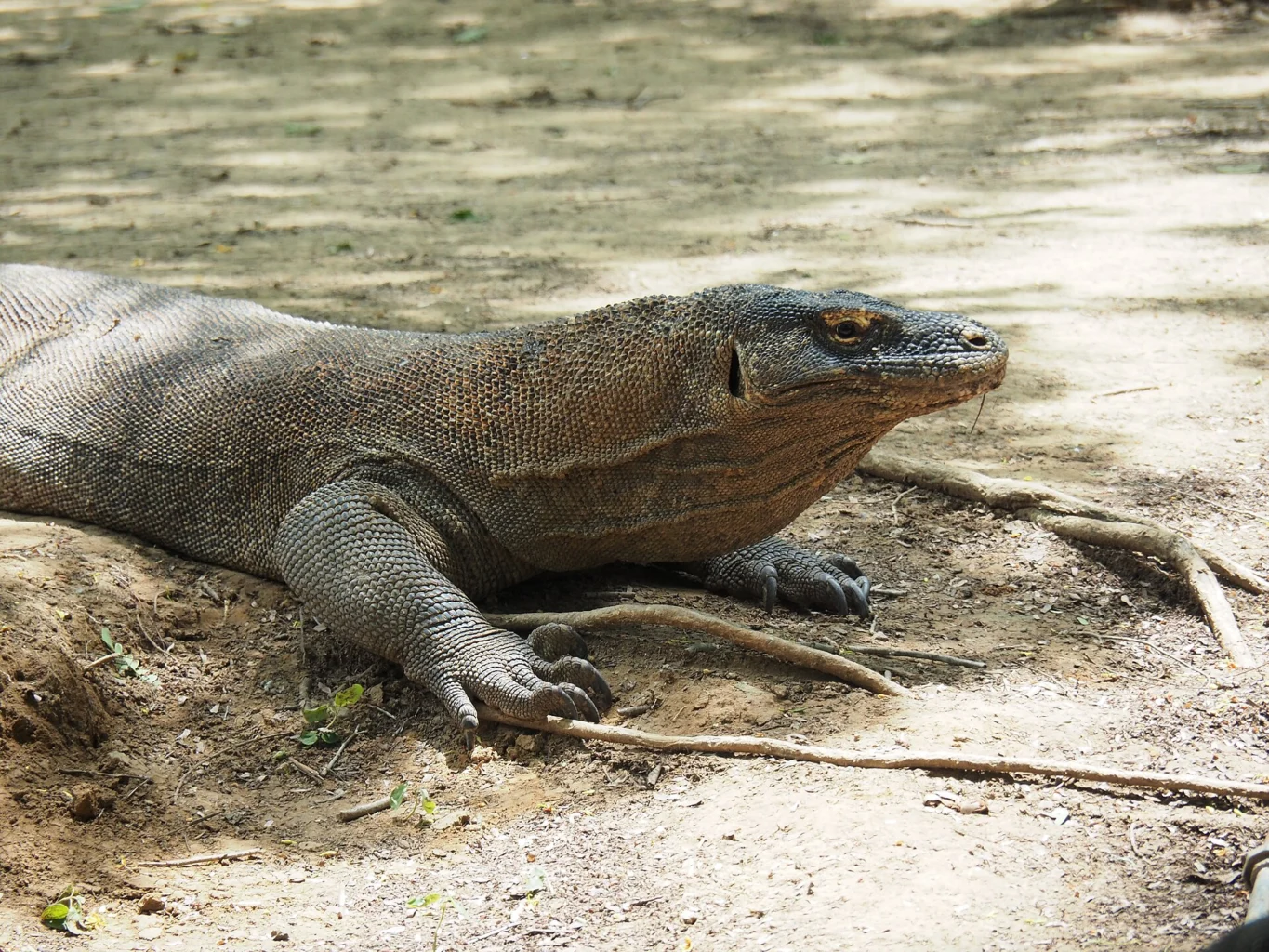
Komodo dragons are the world’s largest living lizards. They occur naturally in a small part of eastern Indonesia, including islands within Komodo National Park and parts of Flores. Their size varies by sex, age, food availability and island. A bite can cause severe injury through large serrated teeth, tissue damage and venom effects, so visitors must stay with an authorised naturalist guide and follow park instructions. Wild sightings are never guaranteed.
Komodo dragon facts are often presented as a collection of record-breaking numbers. That approach can be memorable, but it also turns old estimates, captive observations and exceptional animals into supposed rules for every dragon.
This guide separates measured evidence from travel folklore. It explains what researchers know about Varanus komodoensis, where the species lives, how its bite works and what visitors should expect on a ranger-led trek. It also identifies facts that need a date, study or location before they can be used responsibly.
Komodo dragon facts at a glance
| Question | Evidence-based answer |
|---|---|
| Scientific name | Varanus komodoensis |
| Animal group | Monitor lizard in the family Varanidae |
| Main distinction | Largest living lizard species |
| Natural range | A restricted range in eastern Indonesia, including Komodo National Park islands and parts of Flores |
| IUCN Red List category | Endangered, with the assessment date and future updates worth checking |
| Diet | Carnivorous, including scavenged and hunted prey |
| Bite | Large serrated teeth, wound-and-pull mechanics and venom effects can combine to cause severe trauma |
| Visitor viewing | Wild, ranger-led observation with no guaranteed encounter or safe selfie distance |
| Common visitor sites | Loh Liang on Komodo Island and Loh Buaya on Rinca Island, subject to current park access |
The most useful fact for trip planning is not a maximum length or speed. It is that these are free-ranging predators in a protected landscape. Trek access, guide instructions, weather and animal movement all matter more than a viral number.
How big is a Komodo dragon?
Komodo dragons are the largest living lizards, but there is no single “normal” weight that describes juveniles, females and adult males across every island. A field study involving 400 dragons at 10 sites found meaningful variation in body size and growth among island populations. Food availability and island ecology can influence those differences.
Adult males are generally larger than adult females. Exceptional individuals can be much larger than the animals commonly encountered on a visitor trail. Measurements also depend on whether researchers report snout-to-vent length, total length, body mass, sex and feeding condition.
In numbers: a typical wild adult weighs about 70 kg. The longest dragon measured in a park-wide field survey was 3.04 m long and weighed 81.5 kg, and the largest verified specimen reached 3.13 m and 166 kg, a weight that may include a recent meal. Our Komodo dragon size guide breaks down male and female size, island differences and the record animal.
Be cautious when a tour page promises a fixed size such as “every dragon is three metres long” or presents one heavy individual as the species average. A recently fed animal can also weigh more than the same animal before feeding.
Why do Komodo dragons grow so large?
The species’ evolutionary history is more complex than the simple story that a small lizard became giant only because it was isolated on an island. Fossil and biogeographic research connects giant varanid evolution across the wider region. Within the modern range, prey, competition, habitat and island area continue to shape local growth and survival.
For visitors, size should be judged from a safe distance with a guide. Forced-perspective photography can make a dragon look unrealistically enormous and can encourage unsafe positioning.
Are Komodo dragons venomous?
Yes, scientific research has identified venom glands and biologically active components in the Komodo dragon’s bite system. A 2009 study described a combined predatory system: serrated teeth make deep wounds, the animal uses a strong bite-and-pull action, and venom can contribute to blood loss and a fall in blood pressure.
That finding does not mean venom acts alone or that every outcome follows an identical timeline. Tooth injury, tissue damage, blood loss, venom effects and the condition and size of the prey can interact. It is therefore misleading to replace the old “dirty mouth bacteria” story with an equally simplistic claim that one drop of venom instantly kills everything.
A Komodo dragon bite is a medical emergency. A visitor should never approach, feed or touch a dragon to test whether it appears calm.
What do Komodo dragons eat?
Komodo dragons are carnivores and opportunistic feeders. Diet changes with body size and available prey. Younger dragons can take insects and small vertebrates, while larger animals can feed on bigger prey and carrion. Deer are an important prey item in parts of their range.
They use both active hunting and scavenging. Their forked tongue helps sample chemical particles in the environment through the vomeronasal system. This supports prey and carrion detection, but claims that every dragon can smell one exact distance away should be treated cautiously unless tied to a defined experiment and conditions.
Komodo dragons can consume large meals, yet one exceptional feeding event is not a daily intake rule. Park wildlife must never be baited to create a visitor sighting.
Where do Komodo dragons live?
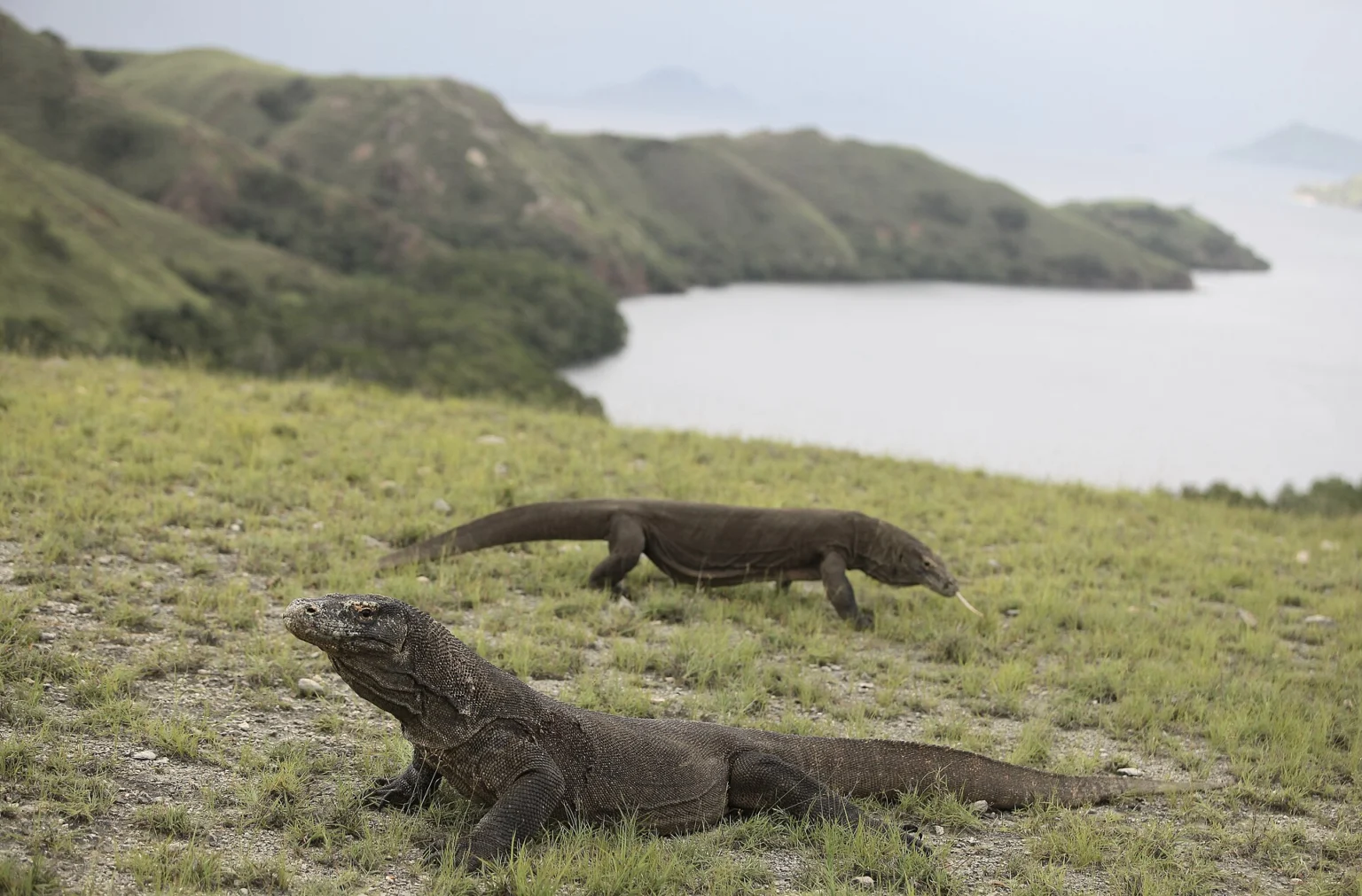
The species is endemic to a small area of Indonesia. The current national conservation strategy records populations within Komodo National Park on Komodo, Rinca, Nusa Kode, Gili Motang and Padar, as well as populations on Flores outside the park. Distribution should not be confused with routine tourist access. An island can support dragons without having an open visitor trail.
Habitats include seasonally dry savanna, open deciduous monsoon forest, coastal areas and valleys. Shade, water, prey, nest sites and vegetation structure all affect how the animals use this landscape. The park is not simply empty grassland.
Use the Komodo National Park islands guide to understand the geography. For the two primary visitor gateways, compare the route and terrain in Komodo Island vs Rinca Island.
How do Komodo dragons behave?
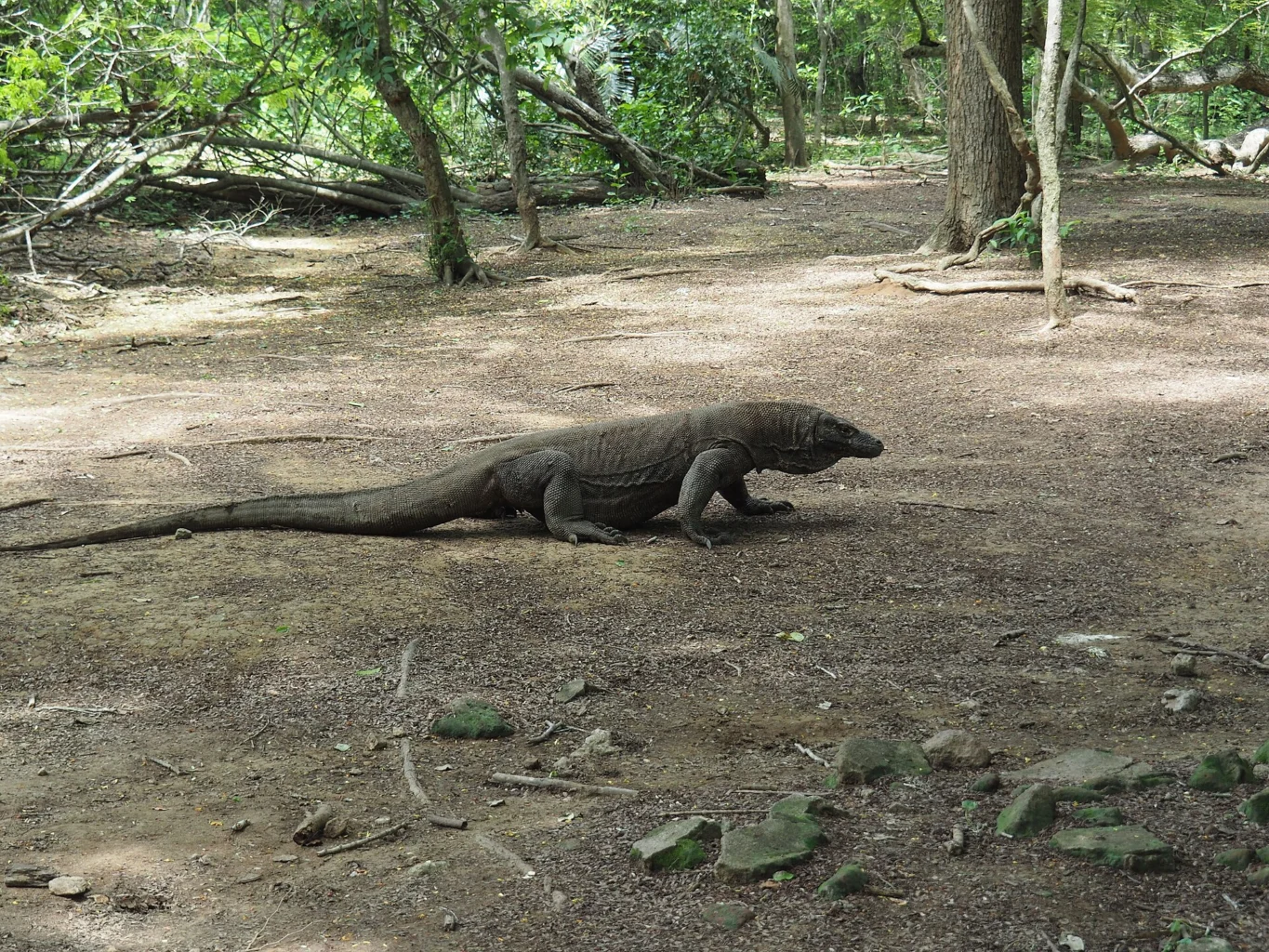
Komodo dragons are ectothermic, so body temperature, shade, sun, rain and time of day influence activity. They may bask, rest, walk, investigate scents, feed or remain concealed. A motionless animal is not tame, asleep or safe to approach.
Individuals can compete around food. Larger dragons can dominate smaller ones, and cannibalism is one risk faced by juveniles. Young animals make greater use of trees, which can help them avoid larger dragons and reach different food resources. As they grow heavier, their use of trees changes.
Are early treks always better?
Cooler conditions can support activity, but “morning guarantees more dragons” is not an evidence-based promise. Season, temperature, recent feeding, prey movement, trail choice and chance all influence an encounter. Choose a legal time slot that fits the full boat route, then treat any sighting as wildlife observation rather than a scheduled performance.
How fast can a Komodo dragon run?
Komodo dragons can make short bursts of running, but a maximum is not a normal travelling speed. The San Diego Zoo Wildlife Alliance behaviour fact sheet reports 14–18.5 km/h over short distances, separately from walking. Popular accounts often round sprint claims to about 20 km/h.
| Movement claim | How to read it | What it cannot tell you |
|---|---|---|
| Walking | A different gait from sprinting. | How quickly a resting or walking animal could suddenly move. |
| Short running burst | A reported reference range, not an all-day pace. | A maximum for every age, body size, temperature and terrain. |
| Daily movement or home range | Distance travelled or area used over a study period. | A sprint speed or a safe visitor distance. |
What was measured matters. Timing a run needs a known distance, interval and observation conditions. Tracking positions over hours or days answers a different question. The fact-sheet speed line does not supply an individual sample, course or timing protocol alongside it, so this guide does not turn the summary into a newly measured record.
Keep the position and distance set by the naturalist guide. Do not test acceleration, approach a resting animal or turn a speed comparison into an escape plan. Water and a tree are not visitor safety guarantees either. Daily movement and temperature belong to the behaviour guide, rather than a claim about a universal maximum.
Speed section reviewed: 16 October 2026. This is a cited reference range, not a field measurement by KomodoInsider.
How do Komodo dragons reproduce?
Reproduction follows seasonal patterns, but exact timing can vary. Females use nests, including mound systems associated with megapode birds and other suitable nesting sites. Eggs develop without parental guarding in the way visitors might expect from birds or mammals, and hatchlings face substantial natural risk.
Komodo dragons are also famous for parthenogenesis, reproduction without genetic contribution from a male. A 2006 Nature paper confirmed the process genetically in two captive females. It is a documented biological capability, not evidence that every female routinely reproduces alone in the wild.
Visitors should not approach nests, hatchlings or animals interacting during courtship. Naturalist instructions take priority over a closer photograph.
How long do Komodo dragons live?
Online lifespan claims often turn an estimate into an exact rule. Ageing a wild reptile is difficult unless an individual has been marked and followed over a long period. Growth also differs by sex and population. Treat any single lifespan figure as an estimate tied to its study or husbandry record, not a guaranteed biological limit.
Are Komodo dragons endangered?
The IUCN Red List moved the species to Endangered in 2021. UNESCO has highlighted climate change, habitat pressures and the need for continued monitoring and protection. A stable result in one monitored park period does not remove risk across the entire natural range.
Conservation involves more than counting dragons. It includes habitat, prey, nesting areas, fire and climate risk, disease surveillance, tourism management, research and collaboration with communities and agencies. Population figures should always state the survey year, area and method. A number copied without that context becomes obsolete quickly.
Responsible visitor behaviour helps reduce avoidable pressure. Read the responsible tourism Komodo guide before choosing a vessel and operator.
Where can visitors see Komodo dragons?
The established national-park visitor gateways are Loh Liang on Komodo Island and Loh Buaya on Rinca Island, subject to current access, quota, weather and park decisions. Visitors trek with an authorised naturalist guide. The experience is not a zoo enclosure and a sighting is not guaranteed.
| Trip format | How dragon trekking can fit | What to verify |
|---|---|---|
| Komodo one-day tour | Combines a ranger-led trek with selected island and water stops | Actual ranger site, registered route and time pressure |
| Komodo 2D1N tour | Adds an overnight position and more route flexibility | Which morning or afternoon includes the trek |
| Komodo 3D2N tour | Balances dragon habitat with Padar, beaches and snorkelling | Named island, trail option and park administration |
| Komodo 4D3N tour | Provides more route capacity and recovery time | Longer duration still does not guarantee a sighting |
| Private Komodo charter | Allows a requested pace within captain and park limits | Private vessel does not mean private wildlife access |
Compare route trade-offs in the Komodo itinerary guide. Check visitor registration, quota and changing rules in the Komodo National Park permit guide.
| What you pay | Amount | Basis |
|---|---|---|
| Park entrance, foreign visitor | Rp 250,000 ≈ $14 | per person, per day The statutory Class I entrance rate. The 150% holiday rule applies to Indonesian visitor and student rates, not this foreign visitor rate. |
| Park entrance, Indonesian visitor, normal day | Rp 50,000 ≈ $3 | per person, per day The normal-day Class I entrance rate. |
| Park entrance, Indonesian visitor, holiday or collective leave | Rp 75,000 ≈ $4 | per person, per day 150% of the normal Indonesian visitor rate on the dates covered by the statutory holiday rule. |
| Indonesian student group, normal day | Rp 25,000 ≈ $1 | per person, per day For Indonesian student groups of at least five people. |
| Indonesian student group, holiday or collective leave | Rp 37,500 ≈ $2 | per person, per day 150% of the normal student-group rate; the minimum group size remains five. |
| Scuba diving activity | Rp 25,000 ≈ $1 | per diver, per day A separate activity charge in addition to the applicable entrance fee. |
| Motorised vessel entry | Rp 100,000–200,000 per boat, per day | Rp 100,000 for 40–100 HP, Rp 150,000 for 101–500 HP, and Rp 200,000 above 500 HP. |
| Drone use | Rp 2,000,000 ≈ $112 | per unit, per day A separate special-use charge. Complete the required SiOra (the park’s official e-ticketing system) and SIMAKSI (the park’s activity-permit system) processes before travel. |
- SiOra is the park’s e-ticketing and SIMAKSI system. Reserve before travel; Ministry guidance recommends completing the reservation by H-1. An operator can assist, and self-service is available at the Komodo Visitor Center and KP3 terminal.
- Payment is cashless through the methods available in SiOra, including BRIVA or bank transfer and supported e-wallets. Keep the e-ticket and ensure the traveller details are correct.
- A 1,000-visitor daily quota has applied since 1 April 2026 to the main visitor islands and 23 dive sites. Availability therefore depends on the travel date and registered itinerary.
- The final SiOra total can include entrance, activity, vessel and special-use charges. Ask the handling operator for an itemised total before issuance.
- Official public guidance does not state one universal refund or rescheduling rule for every reservation. Confirm the current SiOra terms in writing before the ticket is issued, including treatment of weather disruption.
Statutory fees under Peraturan Pemerintah No. 36 Tahun 2024, in force since 30 October 2024. Verified 31 August 2026 against the official PP 36/2024 schedule, the Ministry of Forestry SiOra notice and the Ministry’s 2026 quota notice. Amounts are payable in rupiah; dollar figures are courtesy estimates converted at Rp 17,900 and rounded.
Komodo dragon safety rules
- Stay with the naturalist guide. Do not leave the group or choose an unofficial shortcut.
- Keep the instructed distance. The correct distance can change with terrain and animal behaviour.
- Never feed or bait wildlife. Food conditioning changes behaviour and increases risk.
- Do not crouch close for a photograph. Forced perspective is not worth entering an animal’s space.
- Avoid sudden movement. Walk and respond as the guide directs.
- Supervise children directly. Discuss age, mobility and trail suitability before booking using the Komodo with kids guide.
- Disclose relevant health or mobility needs. The operator and guide need enough information to recommend a suitable trail.
- Ask about current menstruation guidance. Do not rely on folklore or conceal information. Follow the official site’s current protocol and the assigned guide’s instructions.
- Treat a bite as an emergency. Follow crew emergency procedure and seek urgent professional medical care.
No article can provide a universal safe-selfie distance. Vegetation, trail width, multiple animals and behaviour make real-time guide judgement essential.
When is the best time to see Komodo dragons?
There is no month that guarantees a sighting. Weather, heat, breeding behaviour, trail access and boat logistics change through the year. The best date is one with a safe route, appropriate trail and realistic expectations.
Use the month-by-month Komodo guide for rainfall, landscape, marine conditions and visitor trade-offs. Ask the operator which ranger site is registered rather than booking from a generic “dragon season” slogan.
Frequently asked questions
Is a Komodo dragon a dinosaur?
No. It is a living monitor lizard, not a surviving non-avian dinosaur. The comparison describes its appearance, not its taxonomic identity.
Are Komodo dragons venomous or poisonous?
They are venomous because biologically active secretions contribute through the bite system. “Poisonous” generally refers to harm from touching or eating an organism.
Can Komodo dragons swim?
They can swim, and water is not a guaranteed barrier. Visitors must follow vessel and guide instructions rather than approaching an animal at a beach.
Can Komodo dragons climb trees?
Younger and lighter dragons use trees more readily. Their climbing behaviour changes as body size increases.
Do Komodo dragons live on Padar Island?
The current Indonesian conservation strategy includes Padar within the species’ national-park distribution. That does not mean the Padar viewpoint trail is a dragon-viewing site or that visitors should expect an encounter there.
How many Komodo dragons remain?
The answer depends on survey year, islands included and monitoring method. Use the newest dated government or conservation report rather than treating an old park estimate as a permanent global total.
Will I definitely see a dragon on Komodo or Rinca?
No. Both are wild habitats. Rangers use local knowledge, but ethical operators do not guarantee the movement of a free-ranging animal.
Is Komodo Island better than Rinca Island?
Neither is universally better. Access, route, terrain, visitor facilities and the rest of the boat itinerary determine the stronger fit. Compare them in the Komodo vs Rinca guide.
Can children join a Komodo dragon trek?
Some families can join an appropriate ranger-led route, but age alone is not enough to decide. Discuss compliance, mobility, direct supervision, heat and the current site’s rules with the operator.
Do Komodo dragons reproduce without males?
Parthenogenesis has been genetically documented in captive females. It is a real capability, but it should not be described as the normal reproductive pattern of every wild female.
For a ranger-led visit, compare the komodo one day tour, then confirm the named island, authorised route and current access with the operator.
To check a population claim, use a dated survey with its geographic scope. Komodo Survival Program’s monitoring account describes trapping, camera surveys and demographic work; the national strategy’s population chapter separates park and Flores evidence. Neither establishes a guaranteed visitor encounter. Sources checked 18 October 2026.
