
About This Place
Batu Bolong is the dive most people mean when they say they dived Komodo. It is also the site most often described wrongly. It is not a drift, not a wall, and not a rock you swim around. It is a single pinnacle standing in a strait that moves an enormous volume of water twice a day, and nearly everything about a visit — whether it can be dived at all that morning, how deep the plan goes, whether you are allowed in the water without a tank — is set by the tide and by access rules that have tightened since 2019.
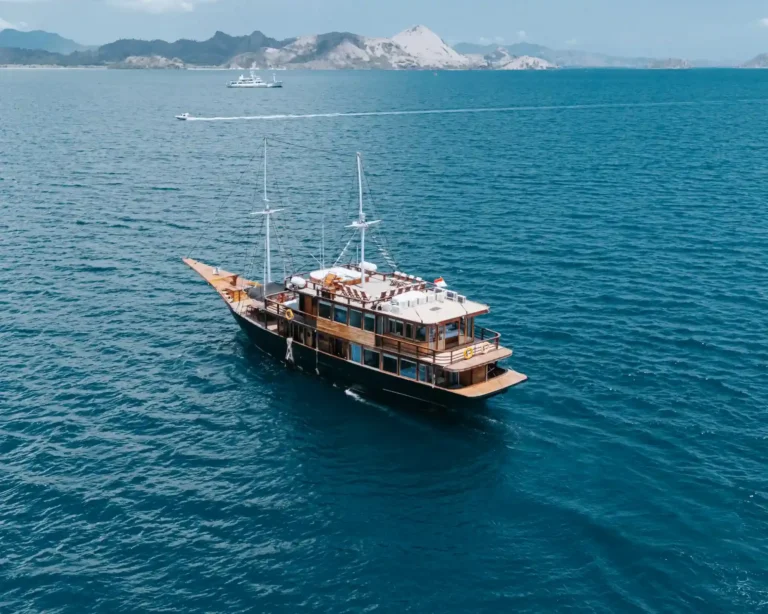
The site is an exposed rock pinnacle in the Lintah Strait off the north-east side of Komodo Island, near the Tatawa islands, inside Komodo National Park and its UNESCO World Heritage area. Published descriptions place it between Tatawa Kecil and Komodo Island, and elsewhere between Tatawa Besar and Sebayur; both point at the same stretch of channel. Boats out of Labuan Bajo need roughly one to two hours depending on the hull. The name translates as rock with a hole, and the hole is the small arch visible above the waterline. There is no tunnel through the pinnacle underwater, which is the single most repeated error about the site.
At a Glance
- Also known asBatu Bolong Komodo, Hollow Rock, Batu Bolong Dive Site
- TypeDive Site
- Inside Komodo National ParkYes
- How to get thereLiveaboard, Speedboat Day Trip, Fast Boat
- Travel time from Labuan BajoAbout 1 to 2 hours by boat, depending on the hull
- LandingMooring / dinghy
- Last checked2026-09-12
What to Expect
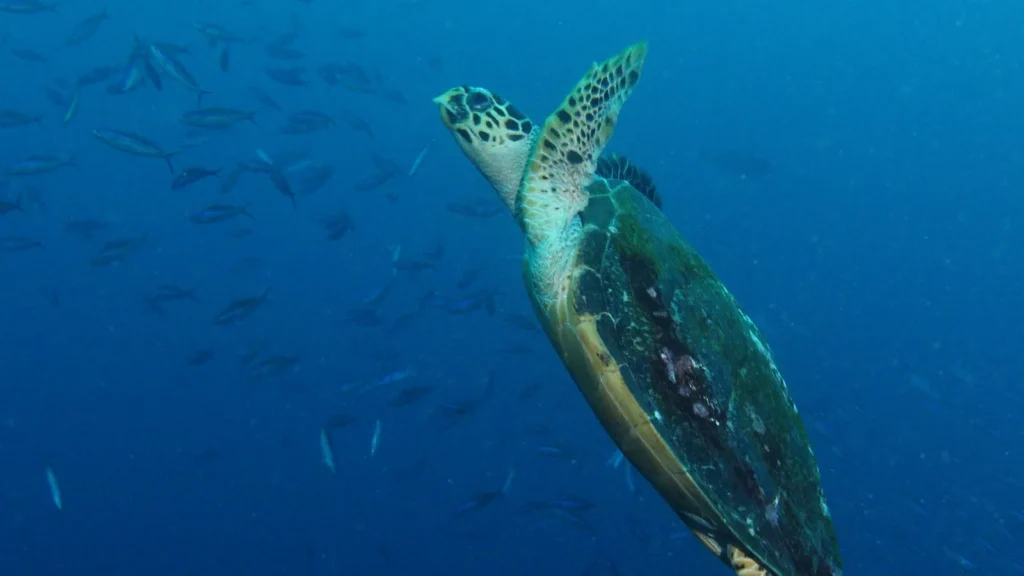
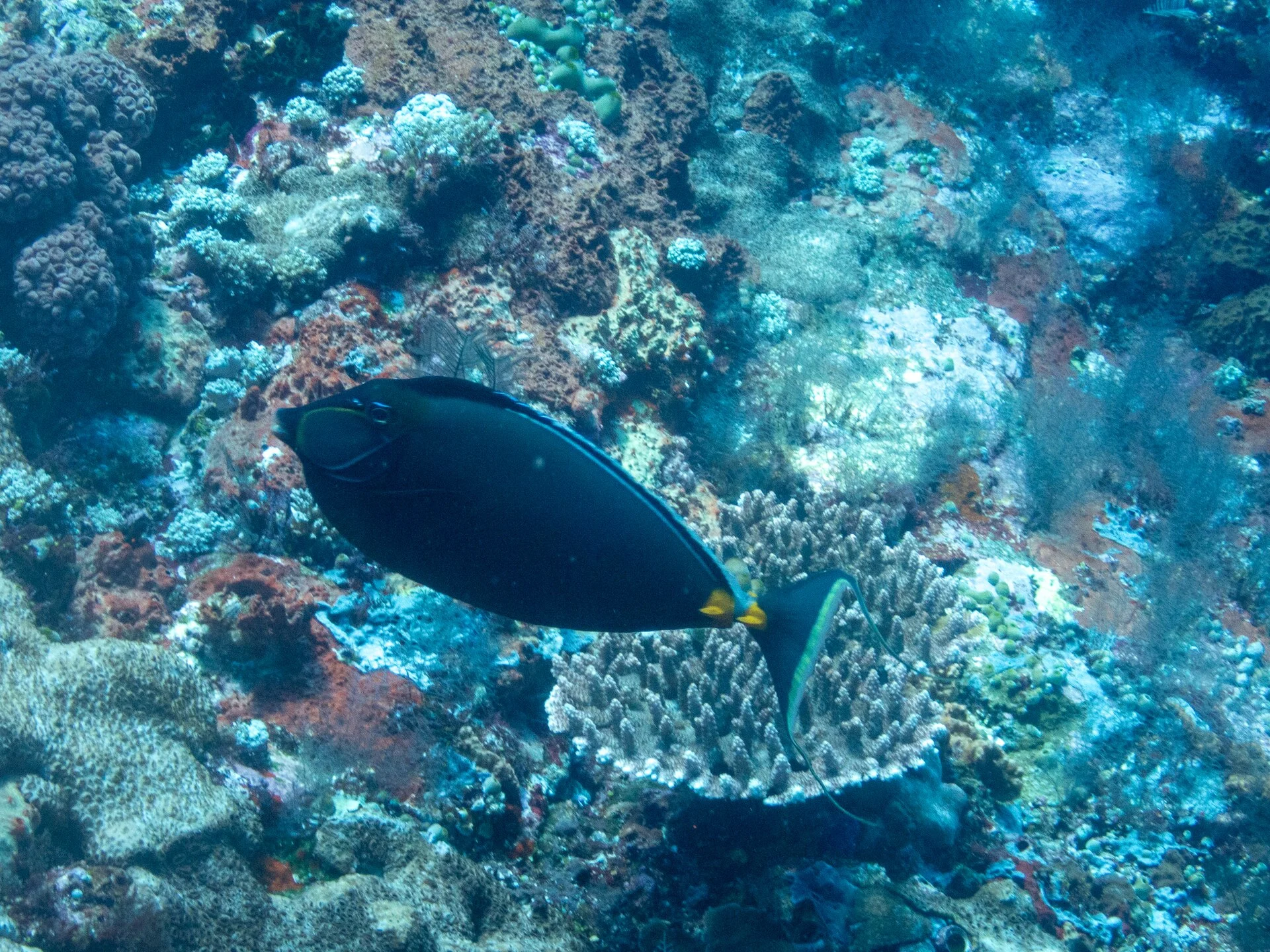
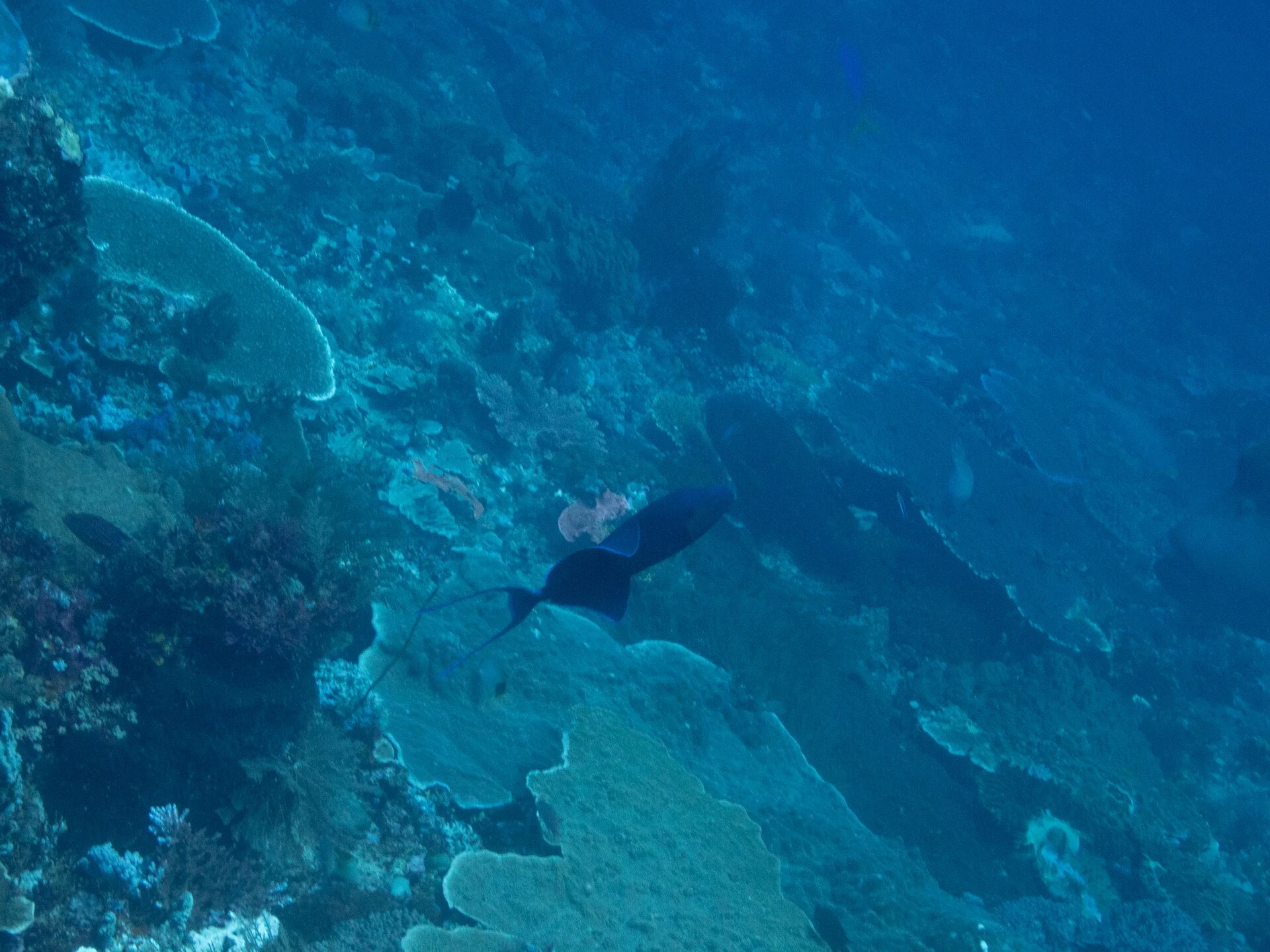
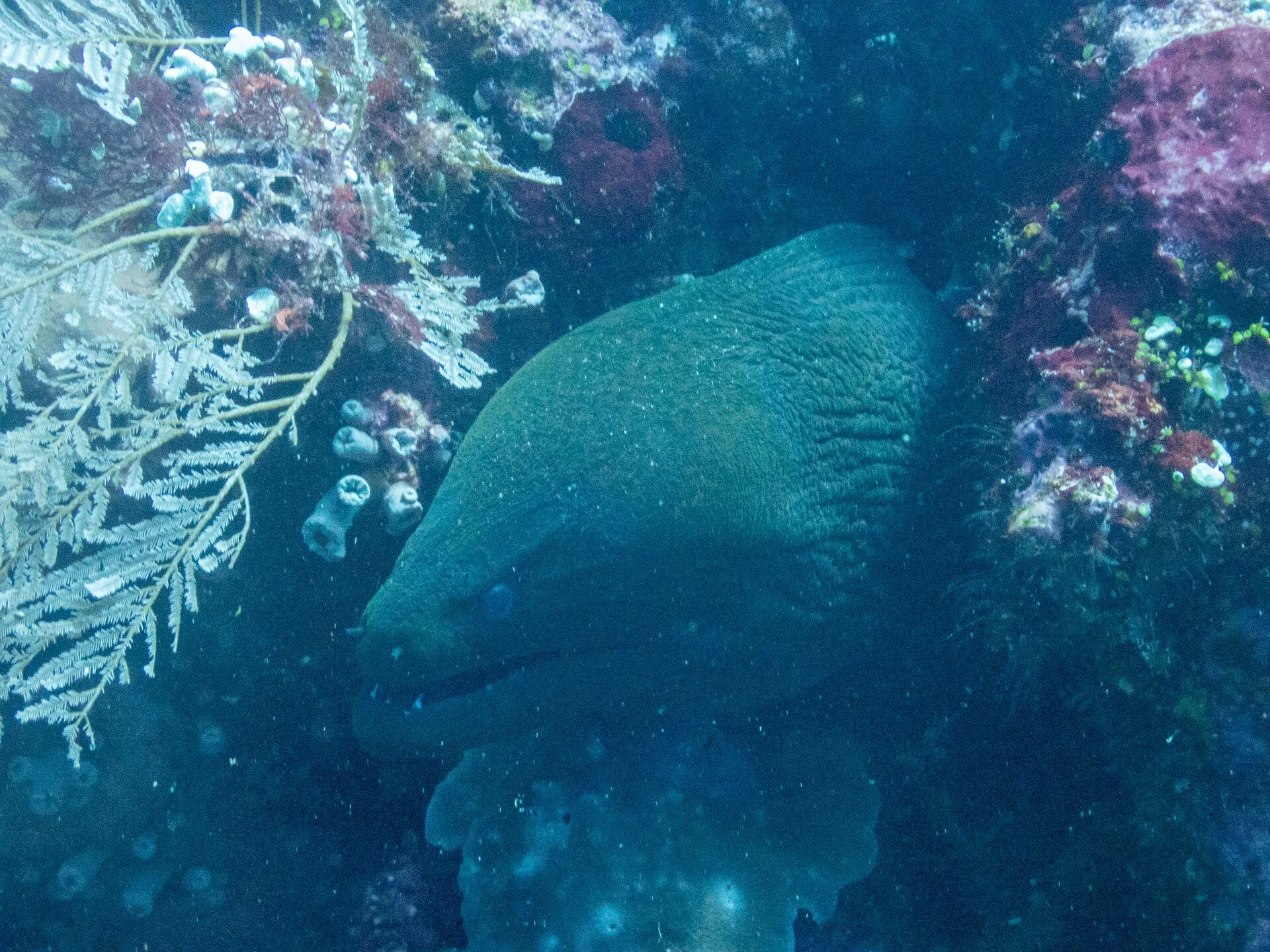
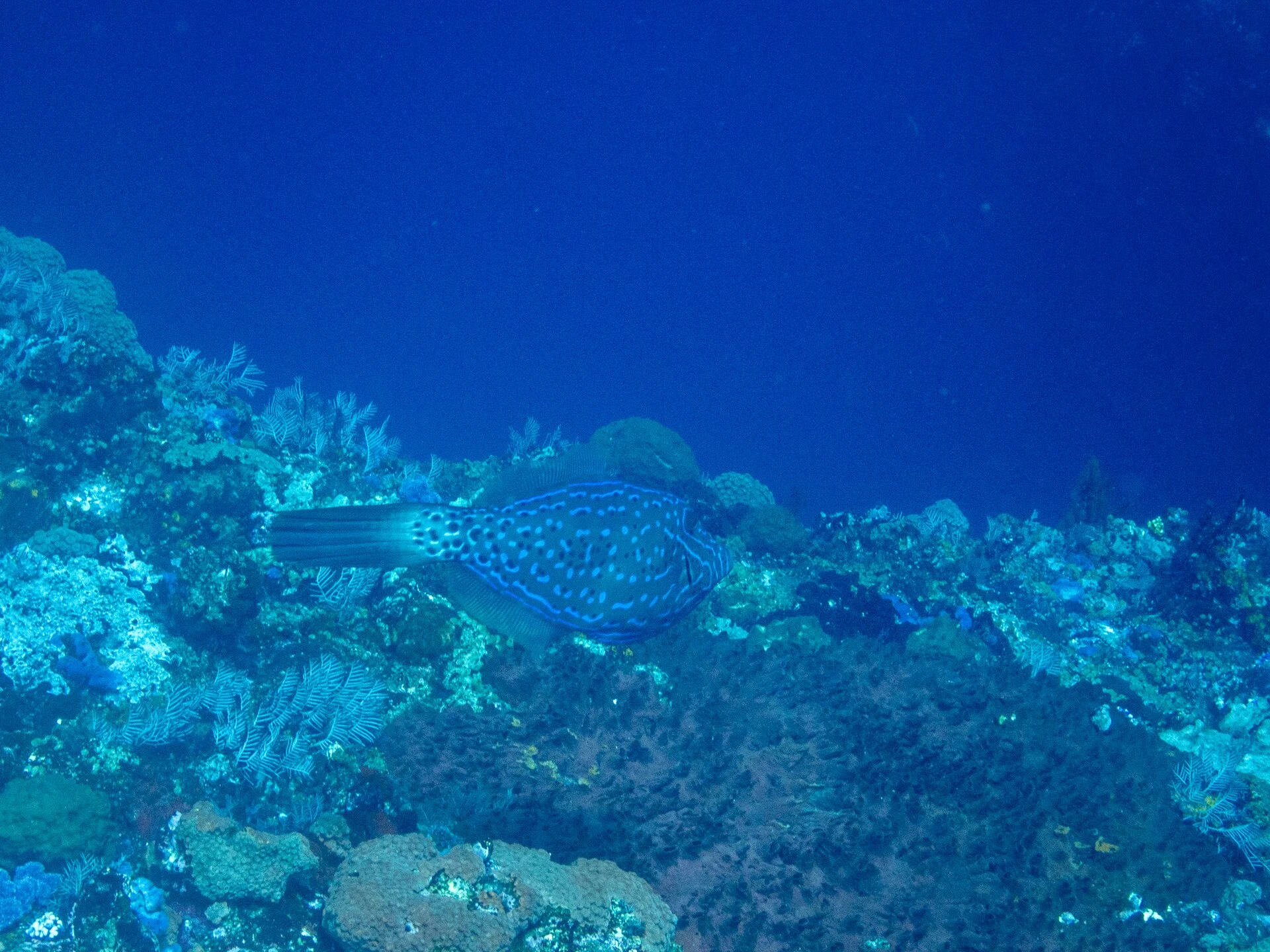
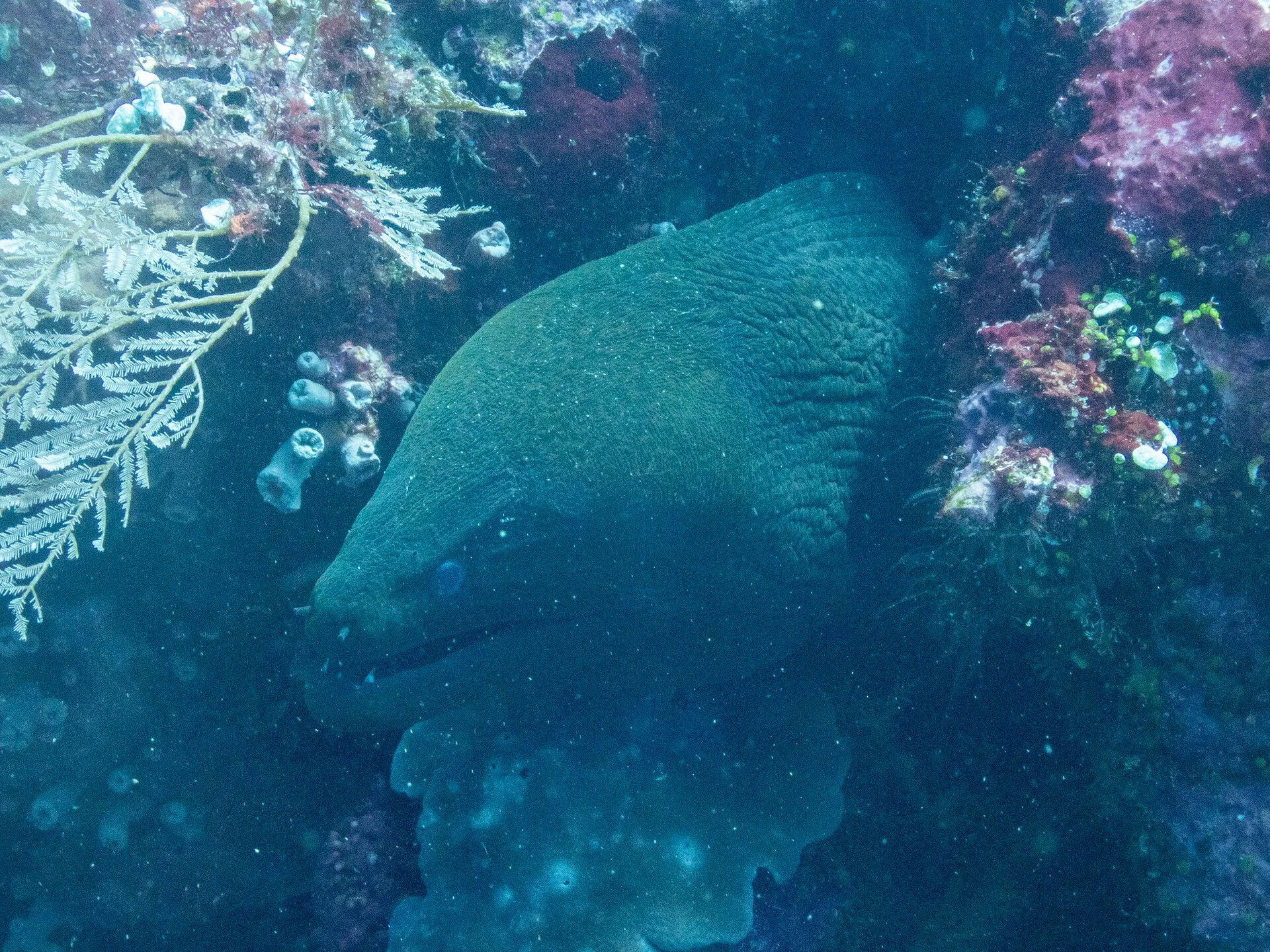
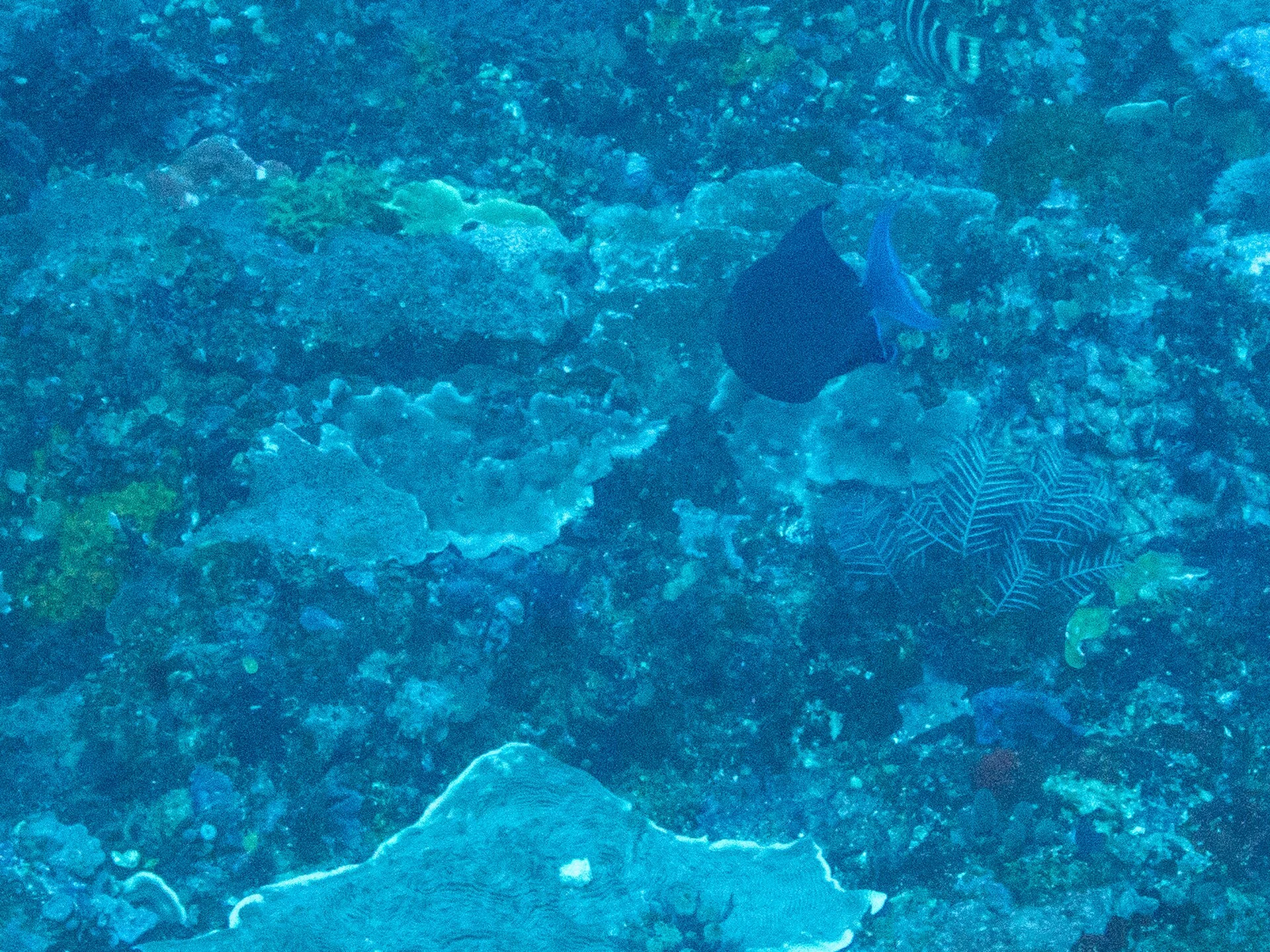
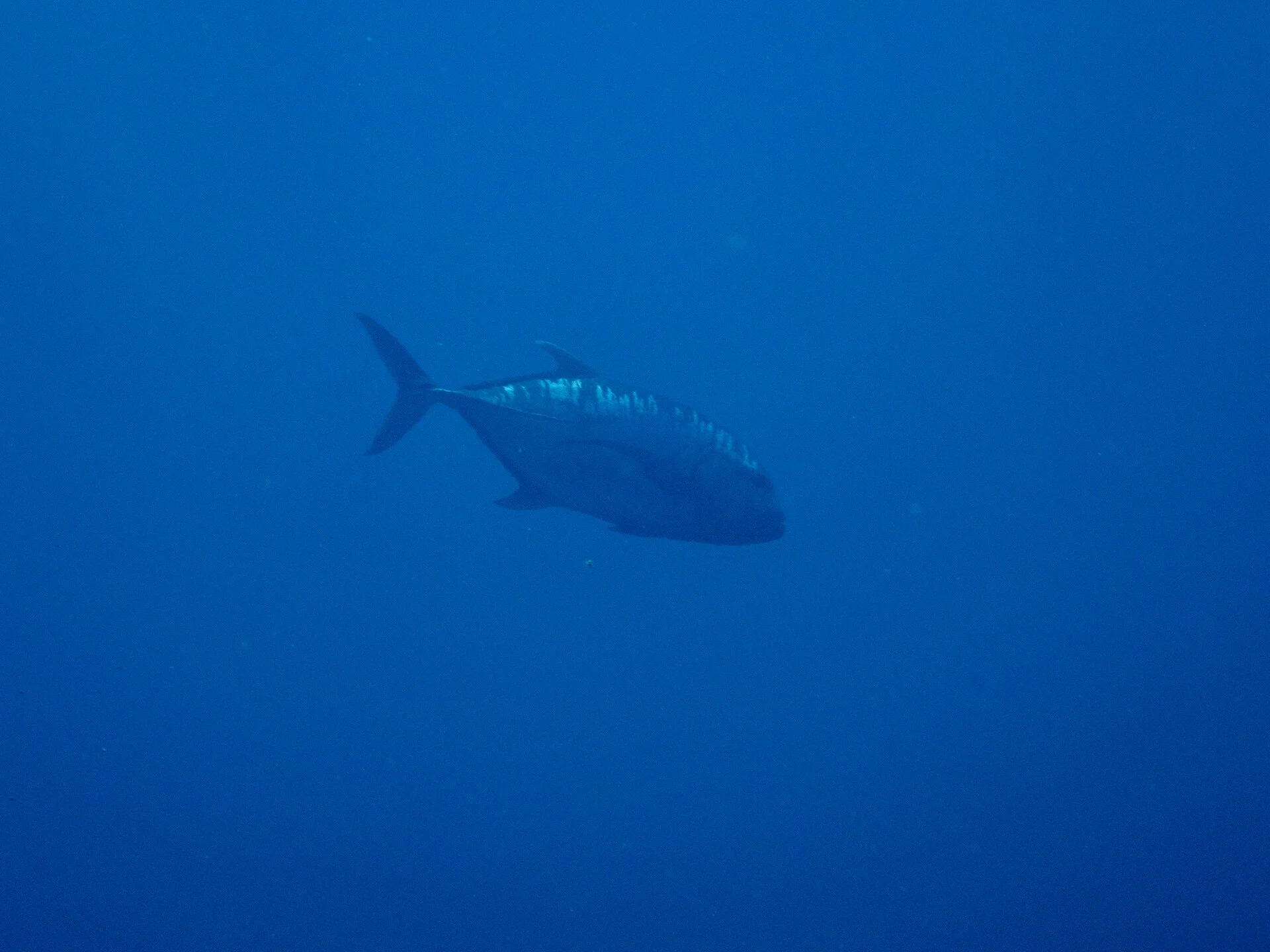
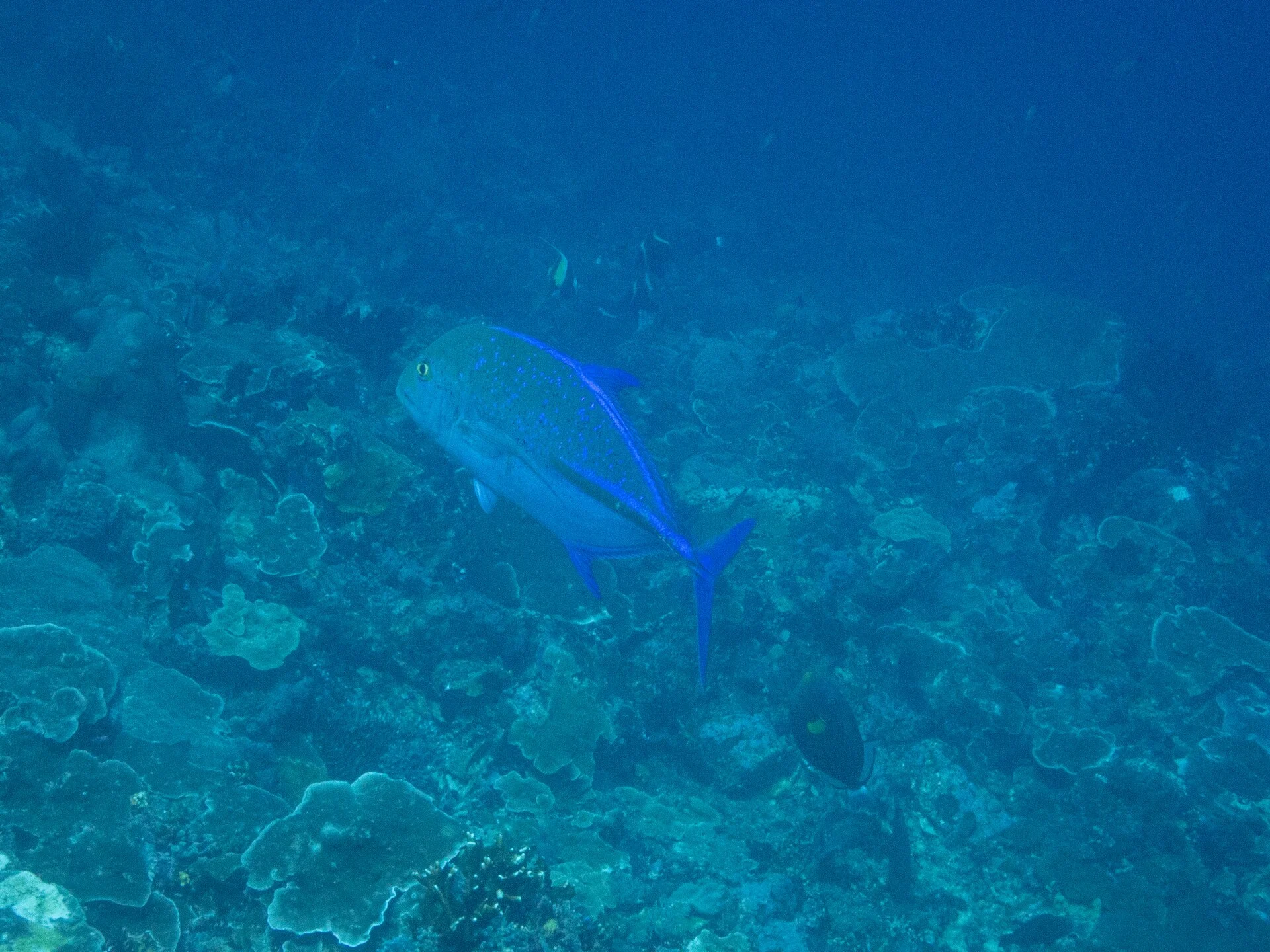
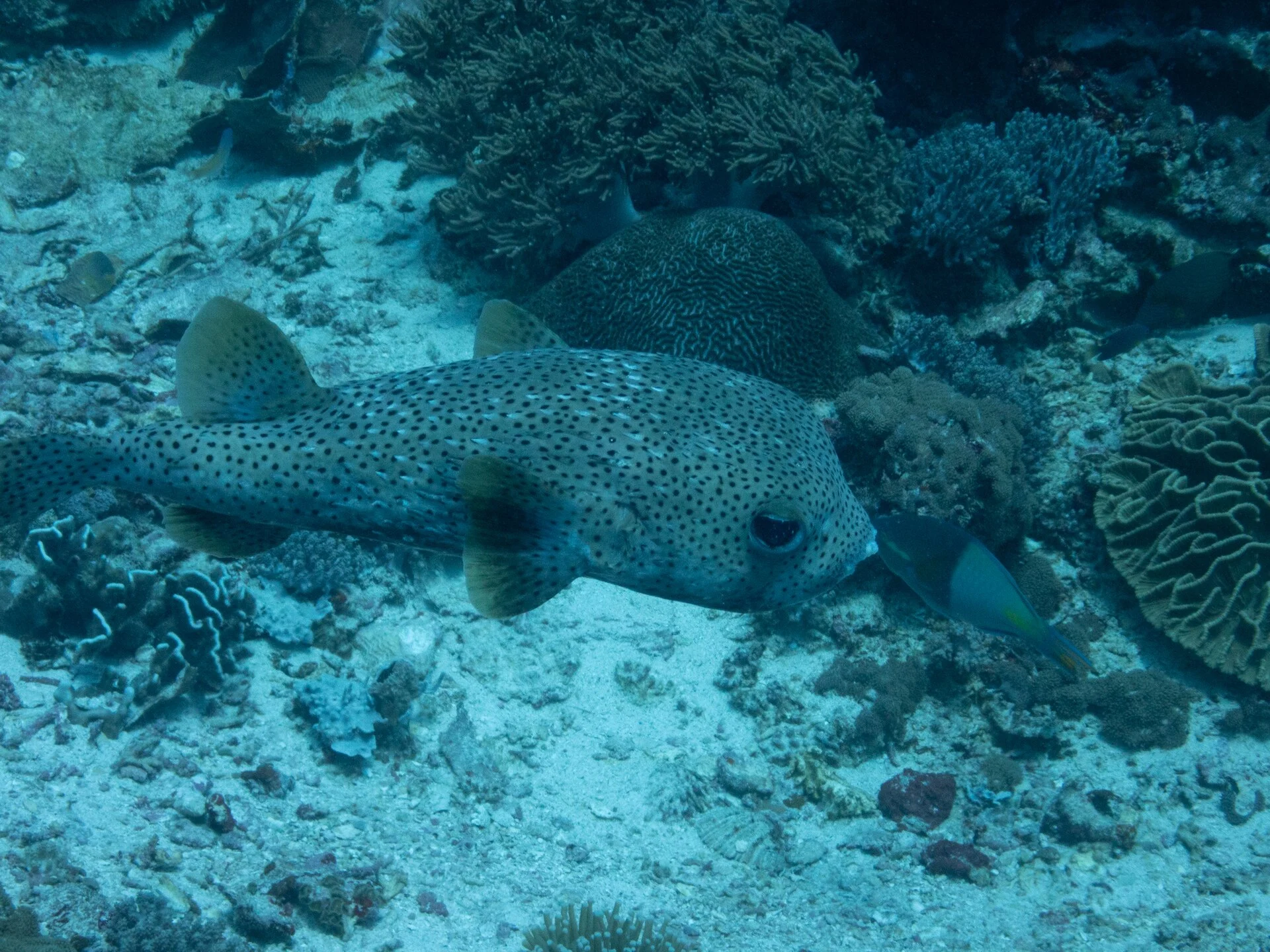
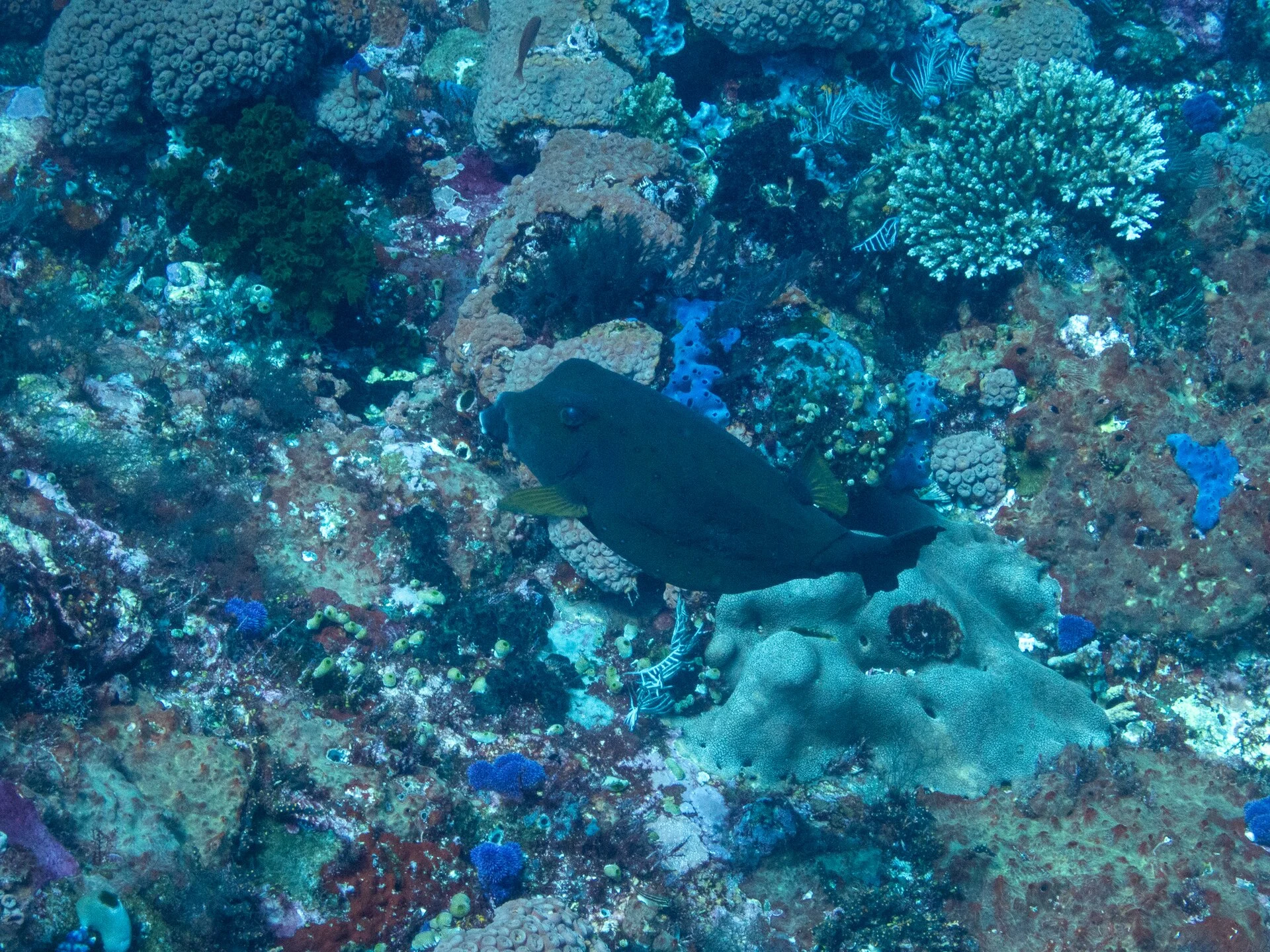
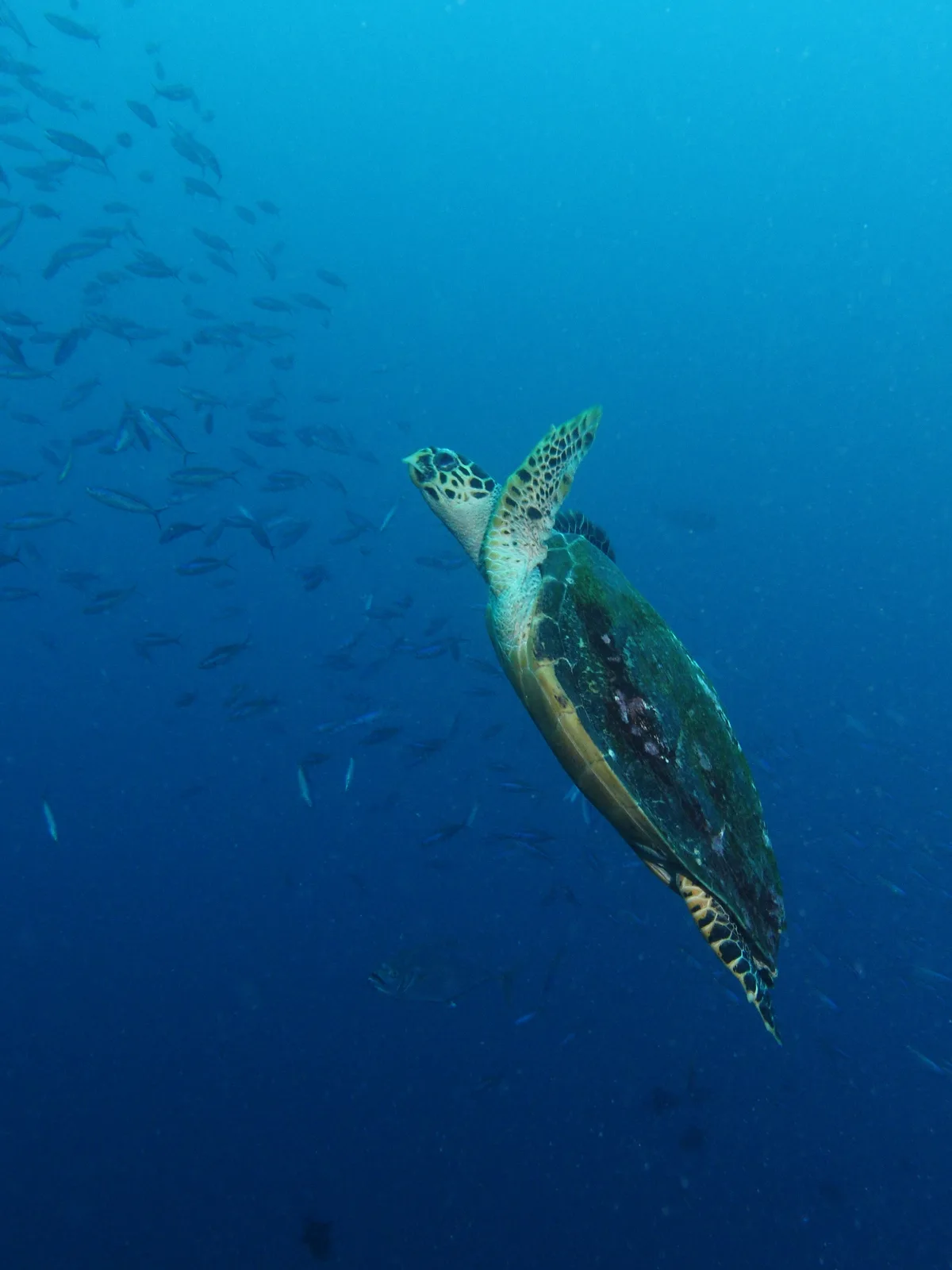
The reason divers come back is density, not scenery. The current that makes the site difficult is the same current that feeds it. Nutrient-rich water hits the rock and splits, and the pinnacle is upholstered top to bottom in hard coral, sponge and soft coral, with clouds of anthias and fusiliers thick enough to hide your own buddy. Hawksbill turtles are close to a given. Giant trevally, dogtooth tuna, Napoleon wrasse and reef sharks work the deeper structure.
You will dive one side of it, in a zigzag, and that is by design. Guides enter between the current edges, drop into the sheltered lee, and work the wall up and back. The exposed faces are off limits — not as etiquette, but because they generate down-currents that take divers deep fast. The ridge across the top looks harmless, and crossing it is one of Komodo’s best-known never-do-this rules.
Published maximum depths disagree, and the reason is worth knowing. One dive-site database lists 20 m. A resort’s logged dives report 30 m. A Labuan Bajo dive centre publishes 5–35 m and notes the reef continues past 75 m. None of them are wrong. They are describing dive plans, not the rock. The pinnacle drops into the channel well past recreational limits; what changes is where your guide decides the life is that day, which is often shallower than newcomers expect. The sunlit crown at five to eight metres is where a lot of divers say the best part of the dive actually happened.
Crowds and Timing
Batu Bolong is small, famous and tide-dependent. That is a poor combination for solitude, because every boat in central Komodo wants the same forty-minute window.
Access has been managed for years as a result. A regulation introduced in 2019 capped the number of dive boats allowed on the site per day, and operators separately run a twenty-minute spacing agreement so that two boats do not put groups in at once — the same self-regulation applied at Castle Rock and Crystal Rock. Park-wide, entry is now booked through the SIORA system in timed sessions, described in reporting as a way of spreading arrivals across the day rather than cutting them.
In practice the queue is real but managed. You are unlikely to share the water with three groups at once. You are quite likely to wait on the boat while another group clears. A crew that takes the first slack of the day instead of the mid-morning one is trading an early alarm for an emptier site, and that trade is only available to a boat that slept nearby.
Dive and Snorkel Profile
- Depth rangeCrown at about 5 m; wall continues past 70 m. Dives commonly worked at 18 to 20 m
- CurrentStrong
- Dive typePinnacle, Wall, Slope
- VisibilityAbout 10 to 30 m. Dry season 20 to 30 m; December to March plankton can drop it to 10 to 15 m
- CertificationAdvanced
- EntryNegative entry, Backroll
How to Visit
The tide decides, not the schedule. Batu Bolong is dived at slack or on the gentle exchange either side of it. A day boat from Labuan Bajo needs one to two hours to reach it and has to take whatever window falls inside its return schedule, shared with the rest of the day fleet. That is a real constraint rather than a sales line: the same site at the wrong hour is either unsafe or quietly swapped for somewhere calmer.
Day trip. Central Komodo day boats run it regularly, usually paired with Tatawa or Manta Point. See how that day is shaped on the Komodo One Day Tour.
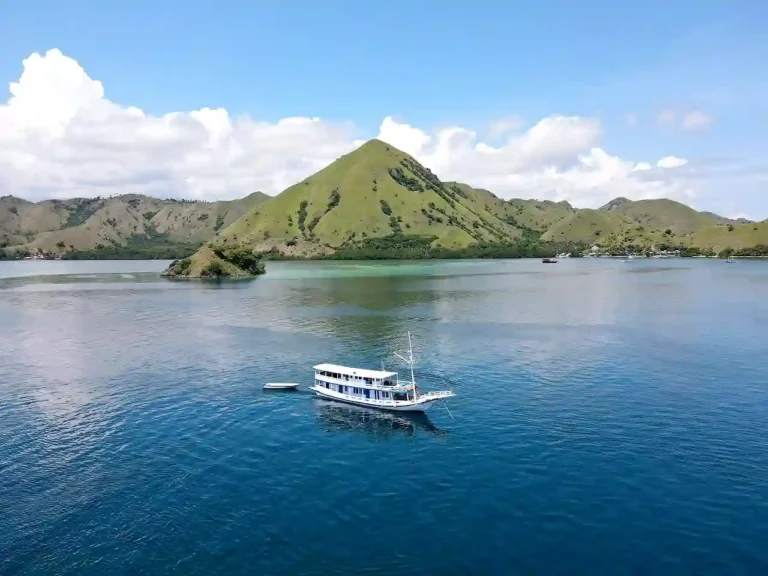
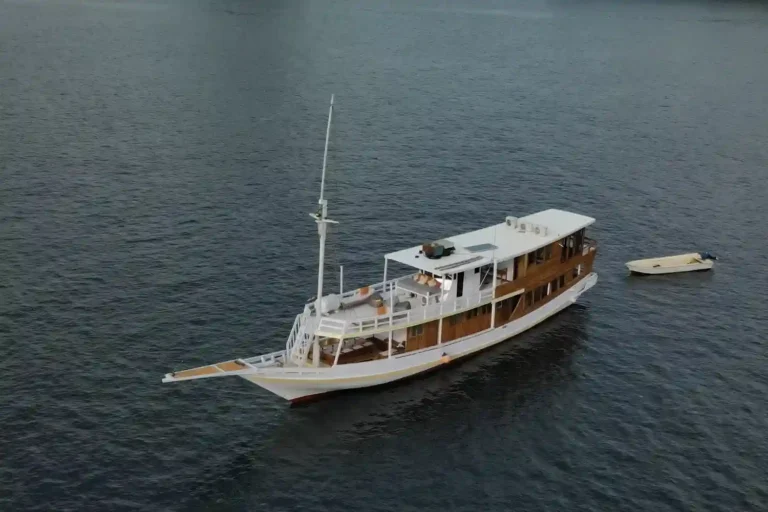
Liveaboard. A boat anchored nearby can position for a first-light slack and be gone before the day fleet arrives. If Batu Bolong is the reason you booked rather than a bonus, that is the whole argument. Dive-led itineraries are covered on Komodo Diving Liveaboard Trips, and the Komodo Tour 4 Days 3 Nights is the shortest general format that reliably reaches central Komodo sites.
The question worth asking an operator is how they choose the tidal window for this specific site. A confident, specific answer tells you a lot. So does a vague one.
Boats That Sail Here
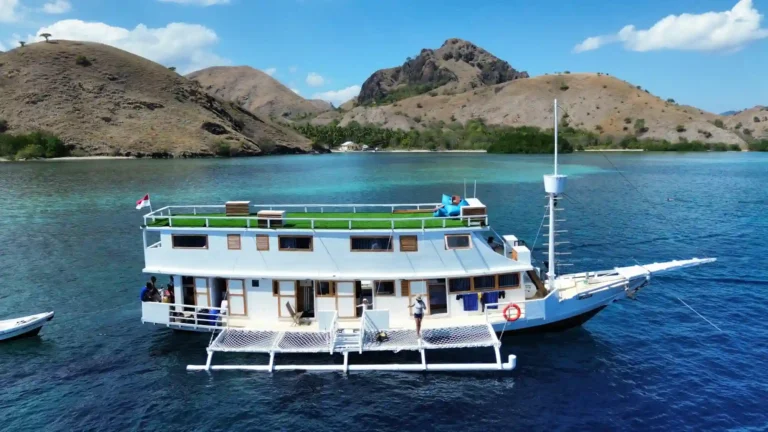
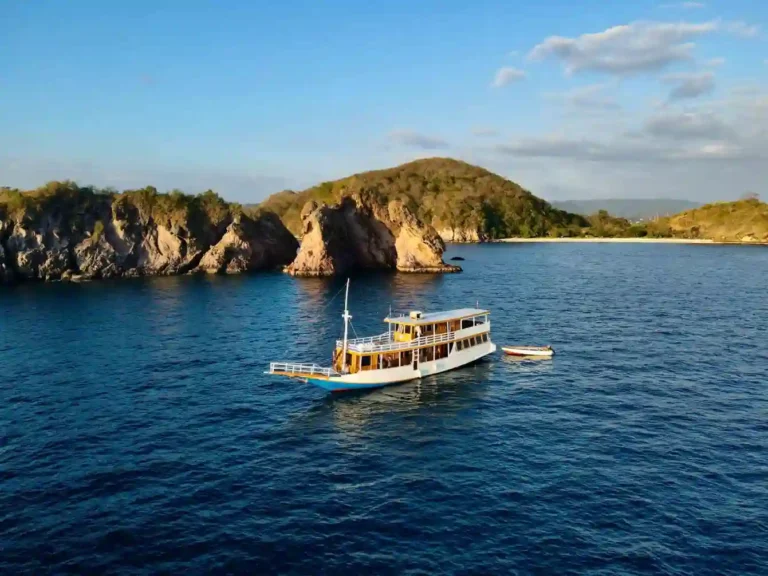
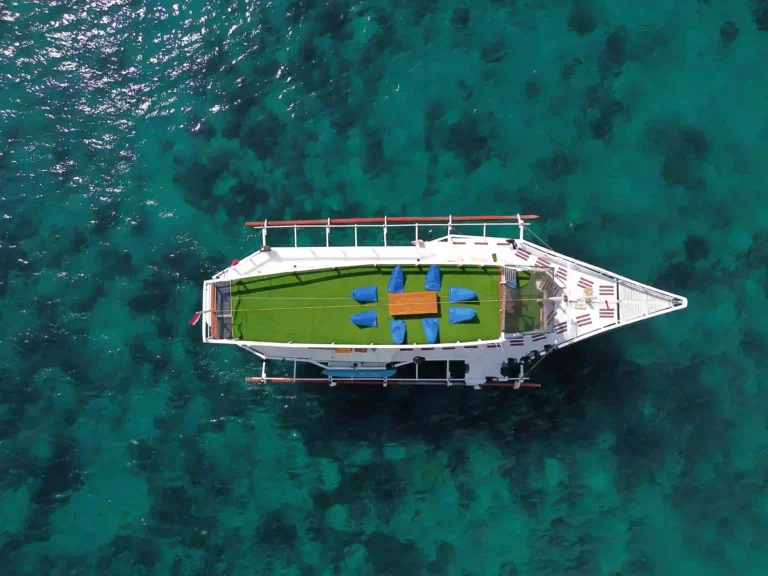
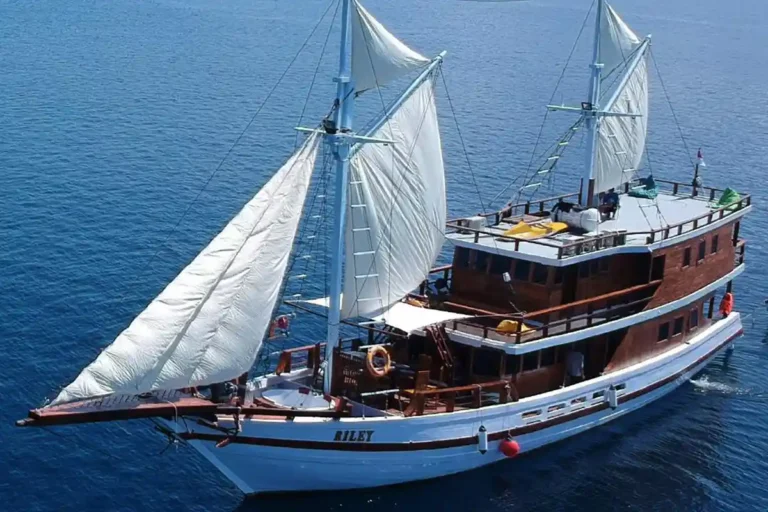
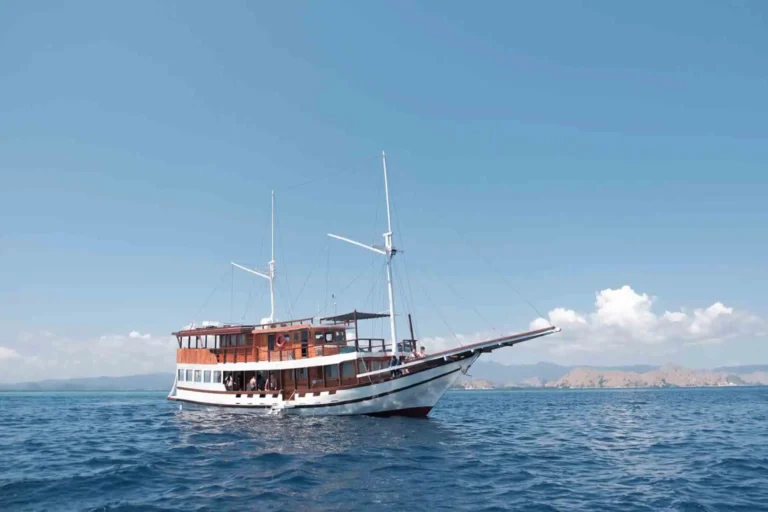
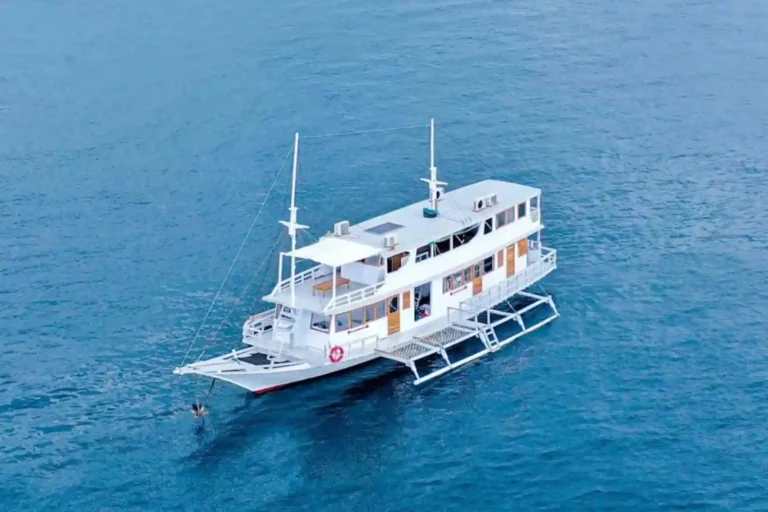
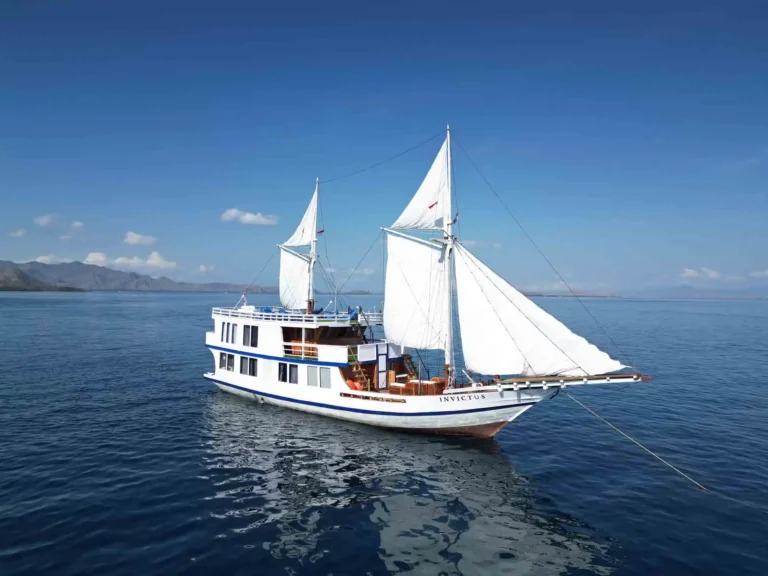
Compare 12 bookable boats that include Batu Bolong on published itineraries.


Who This Suits
Right for: certified divers whose buoyancy is automatic rather than deliberate, with some experience of moving water. You do not need to be a technical diver. You need to be able to hold a depth while distracted, because you will be distracted.
Not right for: first-time or try-dive participants. Discover Scuba participants are excluded by operators at this site, and so are snorkellers. It is also a poor choice as the first dive of a trip after a long layoff — several Labuan Bajo dive centres suggest warming up at gentler sites such as Siaba Besar, Tatawa Kecil or Manta Point first, which is sound advice rather than upselling.
Sources split on whether Open Water certification is enough. One dive centre says yes in mild to moderate current, and recommends Advanced only once tidal flow pushes past roughly two and a half to three knots. A widely used dive-site database lists the site as suited to advanced or experienced divers outright. Both positions are defensible, because it is not the same site twice.
What to Bring
- SMB and a reel or spool. Not optional here — ascents happen in a moving channel with boat traffic overhead.
- Dive computer. In variable current, depth awareness is the safety margin.
- A 3 mm full suit or shorty. Water sits in the mid to high twenties Celsius through the year, at its coolest around July to September.
- Audible surface signal — whistle or air horn — in case the group separates.
- Reef hook only if your operator briefs its use. Otherwise leave it stowed.
- Wide-angle rig if you shoot, plus the willingness to leave it aboard when the briefing suggests a working dive.
- Nothing dangling. Loose gauges and octopus hoses find coral in current.
Safety Notes
The hazard at Batu Bolong is vertical rather than horizontal. Down-currents on the exposed faces can take a diver deep quickly, and the turbulence where flow wraps the rock is what local crews call a washing machine. Being swept past the pinnacle means open channel behind it.
The rules that keep the site safe are simple and non-negotiable: stay on the lee side, never cross the saddle at the top, stay within reach of your guide, and carry an SMB. Groups spread fast in current, and an audible signal for the surface costs nothing.
Reef hooks are used here by many crews to hold position. Use one only if and how you are briefed. Hooking into live coral damages the reef and is a good way to lose both the hook and your position at once.
Watch your computer. The pinnacle is shallow at the top and very deep at the bottom, and it is easy to sink twenty metres while looking at fish.
Read Komodo Diving Currents and Best Dive Sites in Komodo before agreeing the site with your dive team.
Photography Notes
Wide-angle, and accept that you will not get a clean shot of the pinnacle itself. There is too much fish in the way. The frame that works is a diver or a turtle with the anthias wall behind, shot slightly upward into the light.
Strobes are close to useless inside a fish cloud — you light the nearest fifty fish and lose everything behind them. Drop the power, or shoot ambient in the shallows and let the sun do the work.
The crown at five to eight metres is both the most photogenic part of the site and the easiest to shoot, because you are not fighting depth, light loss or a hard time limit at the same time.
One honest note: a camera rig is drag, and in current drag is a safety item rather than a comfort one. If the briefing suggests a working dive, leaving the housing on the boat is genuinely the right call here.
Entrance Fee
Batu Bolong sits inside Komodo National Park, so park entry applies here exactly as it does at Padar or Rinca. It is normally folded into the price of a dive day or a liveaboard berth rather than paid at the site.
We do not publish the figures. The fee structure has been revised more than once in recent years, and park access now runs through the SIORA booking system in timed sessions, so a number written on this page would be wrong at some point and still read as authoritative. Ask your operator for a current breakdown — specifically whether park entry, marine tourism charges and any ranger or conservation component sit inside the quoted price — and get it before you pay a deposit.
Frequently Asked Questions
When is the best time to dive Batu Bolong?
Two answers, because that is two questions. Across the year, the dry months from roughly April to October give the clearest water: a Labuan Bajo dive centre publishes visibility of about 20 to 30 metres on northern and central sites in that window, falling to around 10 to 15 metres during the December to March plankton blooms. Water temperature stays in the mid to high twenties Celsius, coolest around July to September. Within a given day the answer is slack tide, and slack moves. Your crew picks the window from tide tables the day before. You do not get to pick it from a schedule.
How strong is the current, and how deep is the dive?
Strong enough that the entire dive plan is built around avoiding it. Current hits the pinnacle head-on and splits, and the sheltered lee that forms behind it is the only part of the rock that gets dived. Depth follows the plan rather than the rock: guides commonly work around 18 to 20 metres, published maximums range from 20 to 35 metres depending on which source you read, and the wall itself continues past 70 metres into the channel. Recreational limits apply regardless, and on days when the life is shallow the plan gets shallower with it.
Can Open Water divers dive Batu Bolong?
Sometimes, and published guidance disagrees. One Labuan Bajo dive centre states that Open Water divers can dive it in mild to moderate current, and recommends Advanced certification only once flow exceeds roughly two and a half to three knots. A widely used dive-site database describes the site as suited to advanced or experienced divers because of the currents. Both are describing the same rock on different days. What every source agrees on: buoyancy control matters more than the card, Discover Scuba participants are not permitted, and if you were certified last week this belongs later in the trip rather than on day one.
Are national park fees included when I dive Batu Bolong?
Usually, but confirm it. Dive day trips and liveaboard fares from Labuan Bajo normally include national park entry, and park access is booked through the SIORA system rather than paid at the site. What varies between operators is whether every component sits inside the headline price — park entry, marine tourism charges, ranger fees. Ask for the breakdown in writing before you pay. Fee levels have changed repeatedly, so treat any figure you find on a blog, including a recent one, as unconfirmed until your operator states it.
Can I dive Batu Bolong on a day trip, or do I need a liveaboard?
A day trip works. Central Komodo day boats from Labuan Bajo include Batu Bolong regularly when conditions allow, usually alongside Tatawa or Manta Point, with a run of roughly one to two hours each way. What a day boat cannot do is choose the tide. It arrives inside a fixed schedule and takes whatever window falls in it, along with the rest of the day fleet. A liveaboard sleeping in a nearby anchorage can be on the site for the first slack of the morning. If Batu Bolong is the reason you came to Komodo, that is the difference you are paying for.
Is this the same Batu Bolong as the one in Bali?
No, and the mix-up is common because both places genuinely carry the name. The Bali one is on the Canggu coast: a temple on a rock outcrop and the beach beside it, a surf and sunset spot with no diving involved. This page is about the Komodo pinnacle in the Lintah Strait, a flight and several islands away. The name simply means rock with a hole in Indonesian, which is why it appears in more than one place. Within Komodo itself, Batu Bolong is also regularly confused with Castle Rock and Crystal Rock — those are separate pinnacles in the north of the park, with their own conditions.
Can you snorkel at Batu Bolong?
Almost certainly not, and this is the thing most travel pages still get wrong. Several dive operators state that snorkelling is prohibited here. One describes a regulation introduced in 2019 that capped daily dive boats and stopped snorkellers swimming at the site. Another lists snorkelling and Discover Scuba as not allowed, both to protect the shallow reef and for safety. A Komodo resort states that park authorities banned it after repeated incidents. Against that, some snorkelling roundups still list Batu Bolong as accessible to strong snorkellers, at least one park-regulation summary describes it as a diving and snorkelling zone, and older travel blogs describe superb snorkels there. We have not seen the regulation text itself, so we will not call it settled law. The practical position is not ambiguous: the operators who actually work the site say no, their reason is that a snorkeller on the surface in that channel has no way to control where they end up, and a crew willing to drop you there without a tank is not a crew to reward. If you snorkel and want similar water, Manta Point and Siaba Besar are the shallow alternatives every operator does run.
How far is Batu Bolong from Labuan Bajo?
Roughly one to two hours by boat, and the spread is real rather than sloppy. A fast dive boat quotes about an hour, day-boat operators typically budget closer to two, and slower phinisi hulls take longer again. The site sits in the Lintah Strait in the central part of the park, near Tatawa and within a short run of Manta Point and Siaba Besar, which is why it is almost never dived on its own but as one tank of a two or three dive day.
What the Park Costs
| What you pay | Amount | Basis |
|---|---|---|
| Park entrance, foreign visitor | Rp 250,000 ≈ $14 | per person, per day The statutory Class I entrance rate. The 150% holiday rule applies to Indonesian visitor and student rates, not this foreign visitor rate. |
| Park entrance, Indonesian visitor, normal day | Rp 50,000 ≈ $3 | per person, per day The normal-day Class I entrance rate. |
| Park entrance, Indonesian visitor, holiday or collective leave | Rp 75,000 ≈ $4 | per person, per day 150% of the normal Indonesian visitor rate on the dates covered by the statutory holiday rule. |
| Indonesian student group, normal day | Rp 25,000 ≈ $1 | per person, per day For Indonesian student groups of at least five people. |
| Indonesian student group, holiday or collective leave | Rp 37,500 ≈ $2 | per person, per day 150% of the normal student-group rate; the minimum group size remains five. |
| Scuba diving activity | Rp 25,000 ≈ $1 | per diver, per day A separate activity charge in addition to the applicable entrance fee. |
| Motorised vessel entry | Rp 100,000–200,000 per boat, per day | Rp 100,000 for 40–100 HP, Rp 150,000 for 101–500 HP, and Rp 200,000 above 500 HP. |
| Drone use | Rp 2,000,000 ≈ $112 | per unit, per day A separate special-use charge. Complete the required SiOra/SIMAKSI process before travel. |
- SiOra is the park’s e-ticketing and SIMAKSI system. Reserve before travel; Ministry guidance recommends completing the reservation by H-1. An operator can assist, and self-service is available at the Komodo Visitor Center and KP3 terminal.
- Payment is cashless through the methods available in SiOra, including BRIVA or bank transfer and supported e-wallets. Keep the e-ticket and ensure the traveller details are correct.
- A 1,000-visitor daily quota has applied since 1 April 2026 to the main visitor islands and 23 dive sites. Availability therefore depends on the travel date and registered itinerary.
- The final SiOra total can include entrance, activity, vessel and special-use charges. Ask the handling operator for an itemised total before issuance.
- Official public guidance does not state one universal refund or rescheduling rule for every reservation. Confirm the current SiOra terms in writing before the ticket is issued, including treatment of weather disruption.
Statutory fees under Peraturan Pemerintah No. 36 Tahun 2024, in force since 30 October 2024. Verified 31 August 2026 against the official PP 36/2024 schedule, the Ministry of Forestry SiOra notice and the Ministry’s 2026 quota notice. Amounts are payable in rupiah; dollar figures are courtesy estimates converted at Rp 17,900 and rounded.
Marine Life
Activities
Cruise Areas
Location
Batu Bolong Dive Site, Manggarai Barat, East Nusa Tenggara, Indonesia










Add a review