
How Manta Photo Identification Supports Research in Komodo
Contribute useful manta photo-ID records from Komodo with accurate dates, locations and original images, without disturbing wildlife.
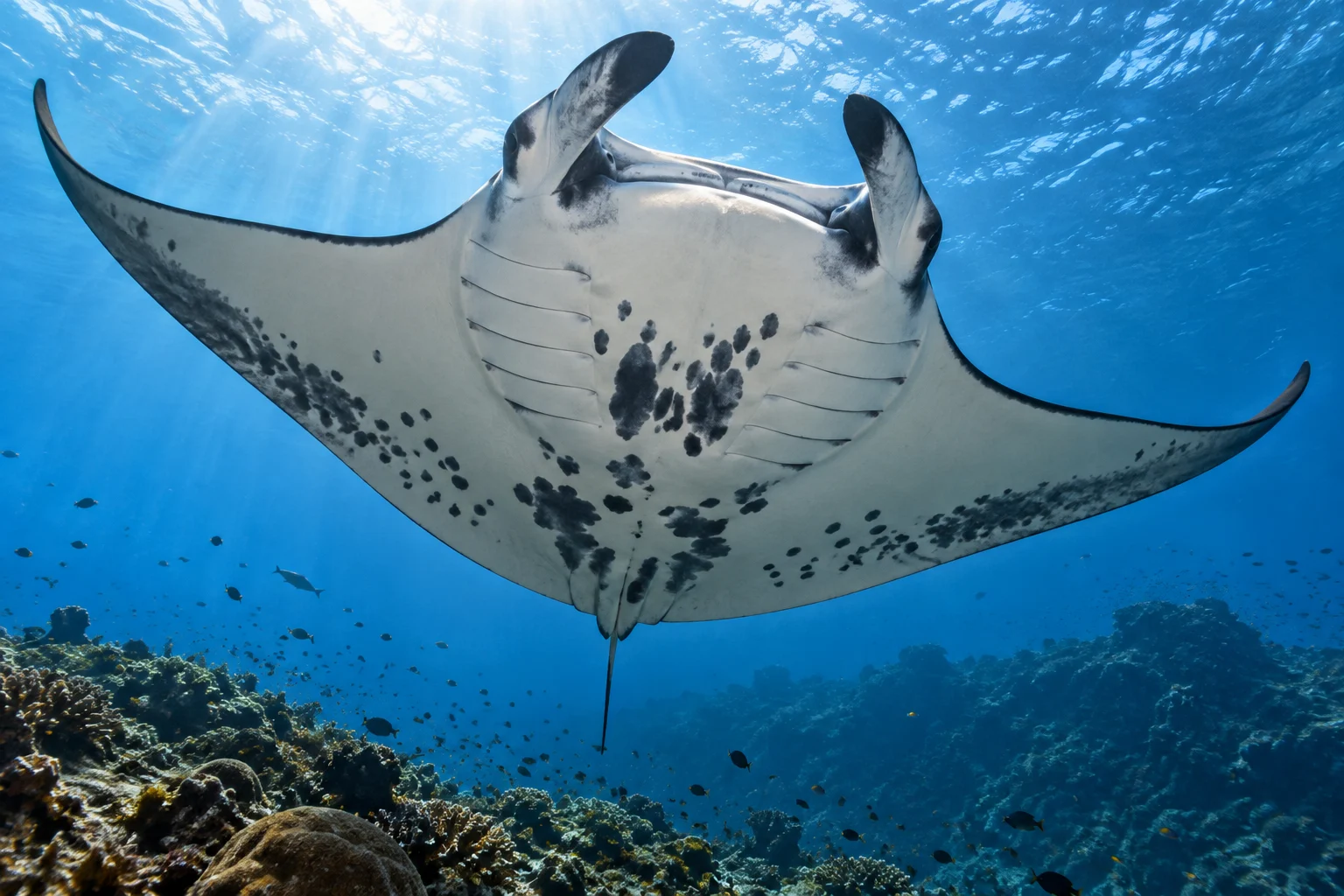
Manta photo identification compares distinctive natural markings to recognise individuals across encounters. A useful contribution combines a clear, unmanipulated image with an accurate date and location. The priority remains an undisturbed animal and a safe encounter; obtaining an identifying photograph is optional.
Species identification and individual identification are different
Recognising a reef manta identifies a species. Matching its markings to a catalogue may identify a particular animal. The second task needs photographs suitable for comparison and expert checking. An uncertain species label should remain uncertain when you submit the encounter.
A 2022 Komodo study used a photo-identification library containing 1,104 reef mantas. That number describes the study’s accumulated identified individuals. A later, larger catalogue could reflect additional years, contributors and locations, as well as newly recorded animals. The difference alone cannot measure population growth.
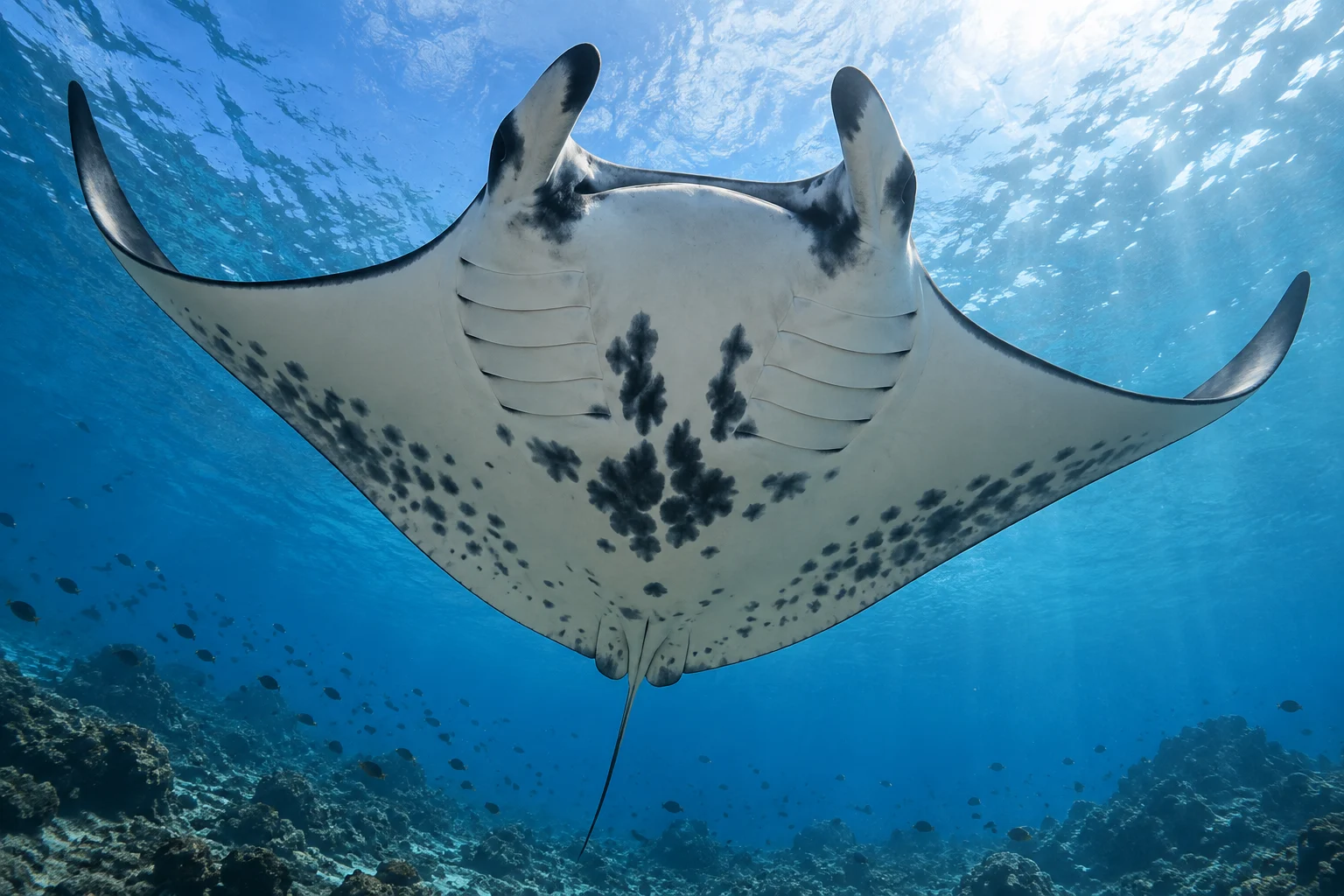
What makes a record useful?
| Record element | Useful detail | Common problem |
|---|---|---|
| Original image | Visible identifying markings with retained image quality | Heavy cropping, filters or artificial reconstruction |
| Date | Actual encounter date, with uncertainty noted | Using the upload date instead |
| Location | Correct region and site, confirmed with the guide if needed | Choosing a famous site because the real name is unknown |
| Encounter context | Observed behaviour and number distinguishable at once | Counting repeated passes as different individuals |
| Contributor permission | Your own image or explicit authority to share it | Uploading another guest’s photograph without consent |
Collect information without changing the encounter
Stay where the guide directs, keep the animal’s route open and photograph only when an appropriate view occurs naturally. Do not chase, dive beneath, block or touch a manta to obtain the ideal angle. A missed image is preferable to disturbance or separation from the group.
After returning to the boat, record the site and date while they are fresh. If your camera clock was wrong, retain the original and explain the correction in the encounter notes. Keep observation separate from interpretation: “several passes above the same coral patch” is more precise than an unsupported claim about motivation.
Submitting through an actual research route
MantaMatcher provides a public encounter submission form. Read its current fields, image requirements and terms before uploading. Enter only details you know; ask the trip team to confirm a site name instead of guessing. Submission does not mean the identification has already been verified or that the image will immediately appear in a catalogue.
If several guests photographed the same encounter, each record can provide useful angles, but multiple images are not automatically multiple animals. Include context that allows reviewers to recognise related observations. Do not invent a catalogue ID based on a resemblance you cannot confidently establish.
What researchers can and cannot infer
Repeated matches can help examine movement and site use. Non-detection is more difficult: an animal not photographed on one trip may have been elsewhere, out of view or simply missed. Observation effort matters. A busy dive site with many cameras can generate more records than an equally important place visited less often.
Photo records also have quality limits. Blur, a partial body, overlapping animals or obscured markings can prevent a match. A responsible catalogue can retain uncertainty. It should not force every uploaded image into a confident identification.
Questions before joining a manta-focused trip
Ask whether guides explain observation etiquette and can help record the correct site details. Find out whether a stated research partnership has a named organisation and a current submission process. Compare dive komodo departures on their actual suitability and guide practice, without treating a citizen-science label as a sighting promise.
Should I upload an edited social-media image?
Keep the original available. Basic presentation edits may hide information, and artificial additions or reconstructed markings undermine identification.
Will I learn the animal’s name?
Possibly, if a catalogue match and a response are available. Neither a name nor a rapid reply should be promised by a tour operator.
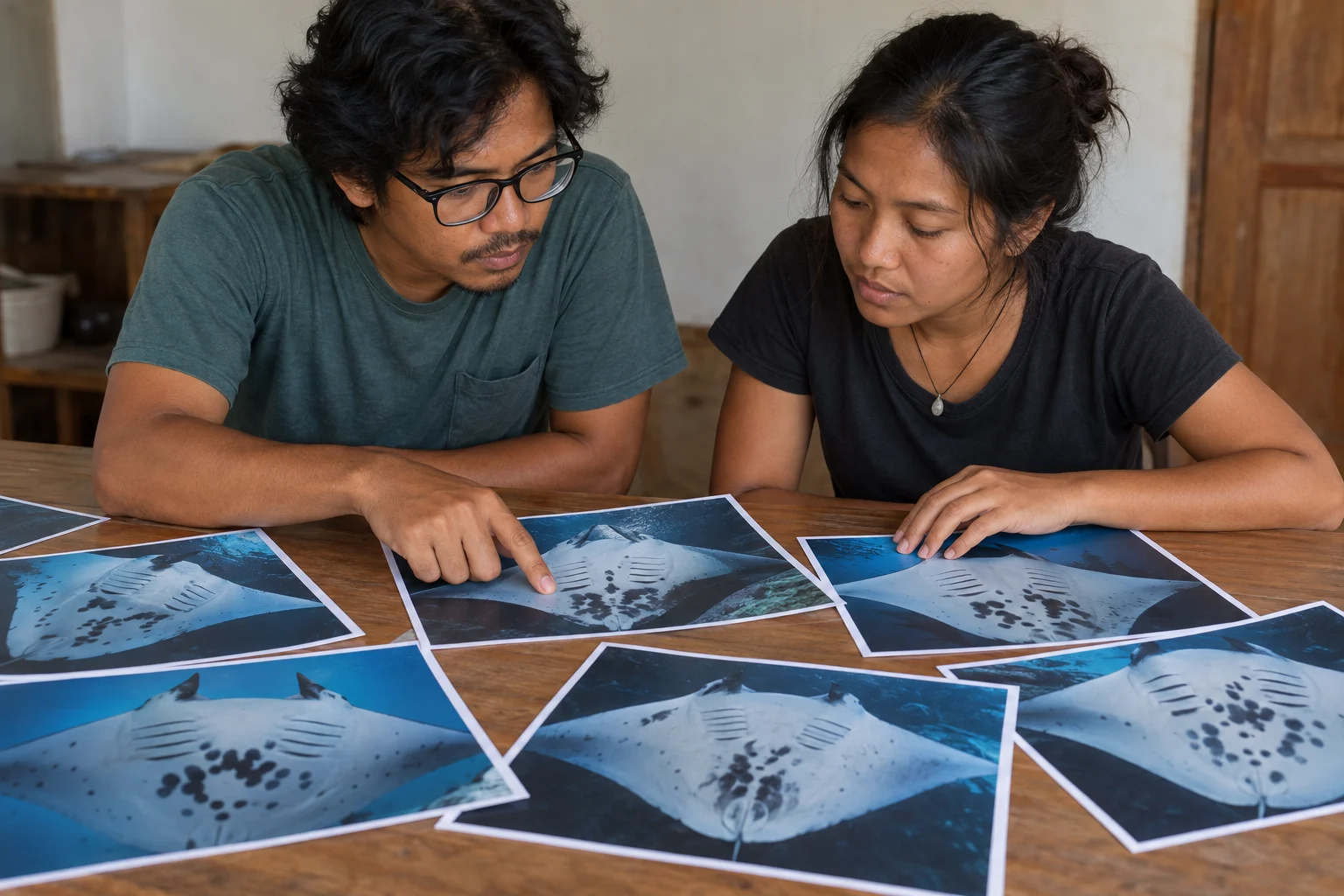
Before sending a manta photograph
Keep the original image and its date, site and approximate time. Crop only a copy if the research programme requests it, and avoid making an uncertain sighting into a definite species label. A ventral image can support individual matching; a dorsal-only image may still be a useful record if submitted with honest limits.
Support responsible manta encounters with Dive Komodo, and use the Komodo diving guide to compare conditions and wildlife practices.
Submit a record that a project can actually use
Choose an active research submission channel and follow its instructions for image angle, date, location and permission to use the image. Keep the original file if requested. A beautiful upper-body photograph may not show the markings needed for an individual identification.
Do not assume that sending a photograph produces a confirmed match or a new individual record. The project must review it under its methods. Obtain the photograph from the guide’s permitted position without blocking a cleaning station or pursuing the animal.
Historical park surveys and natural-history publications are indexed in the Komodo research archive; retain each publication’s date and sampling limits rather than treating it as a current service or wildlife inventory.
