
Seagrass in Komodo: The Habitat Beneath the Wildlife
Discover Komodo seagrass through dated local surveys, habitat connections and responsible observation. Understand what historical dugong records mean.
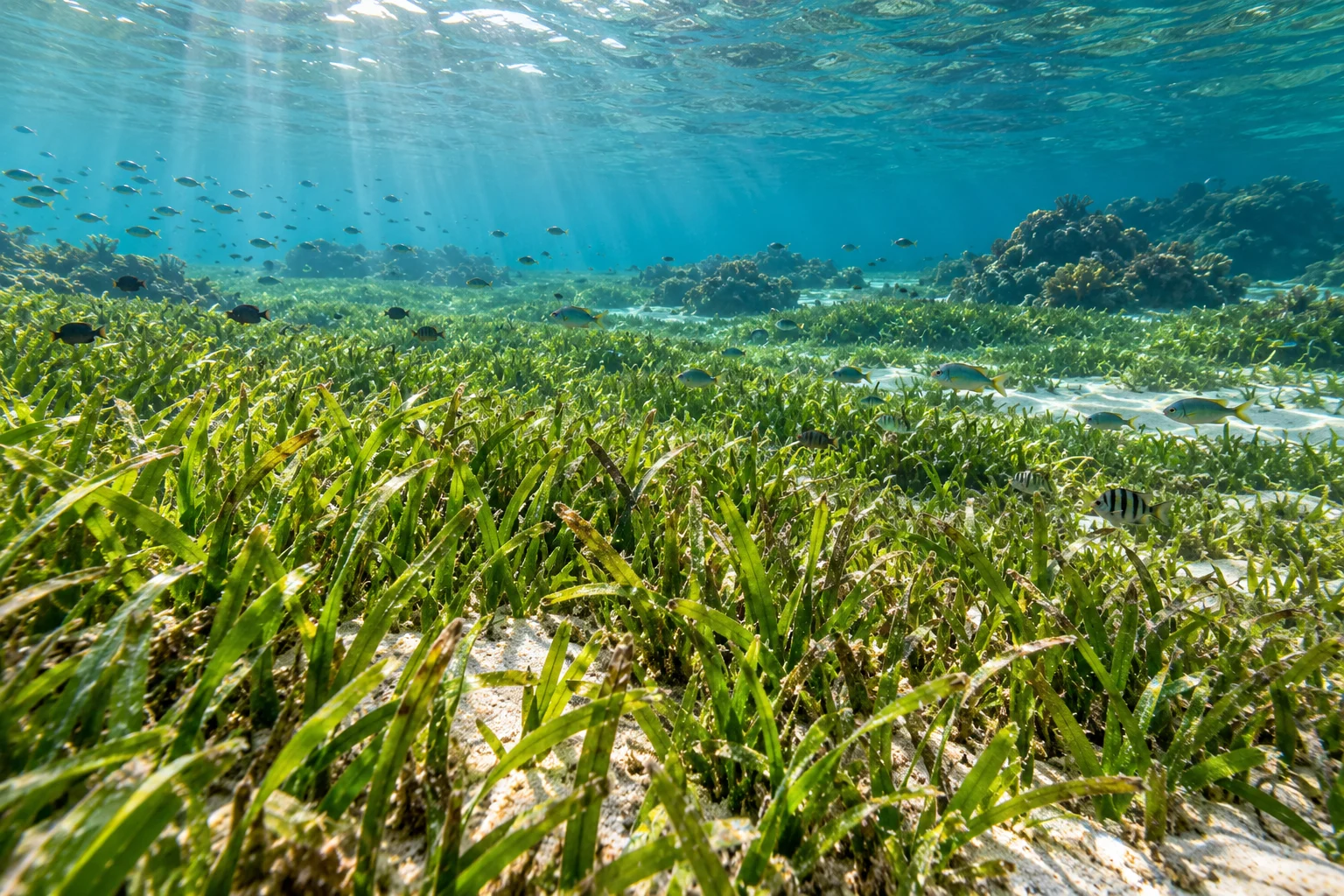
Seagrass in Komodo is living flowering-plant habitat beneath the water, not seaweed and not an empty space between reefs. Meadows can support grazing, shelter and links between mangroves and coral habitats. Historical local surveys establish that these systems exist; they do not guarantee a dugong or turtle on a particular visit.
Seagrass versus seaweed
Seagrasses are marine flowering plants with roots and underground stems. Seaweeds are algae. Both can appear green and both can support life, so colour is a poor starting point. Leaf arrangement, roots and reproductive features distinguish seagrasses, but visitors should not uproot a plant to examine them.
A patch of loose leaves on the surface is also different from a rooted meadow. Photograph the habitat in place and ask for help with identification. Do not turn a single detached leaf into a map of local seagrass distribution.
The Komodo evidence has a date
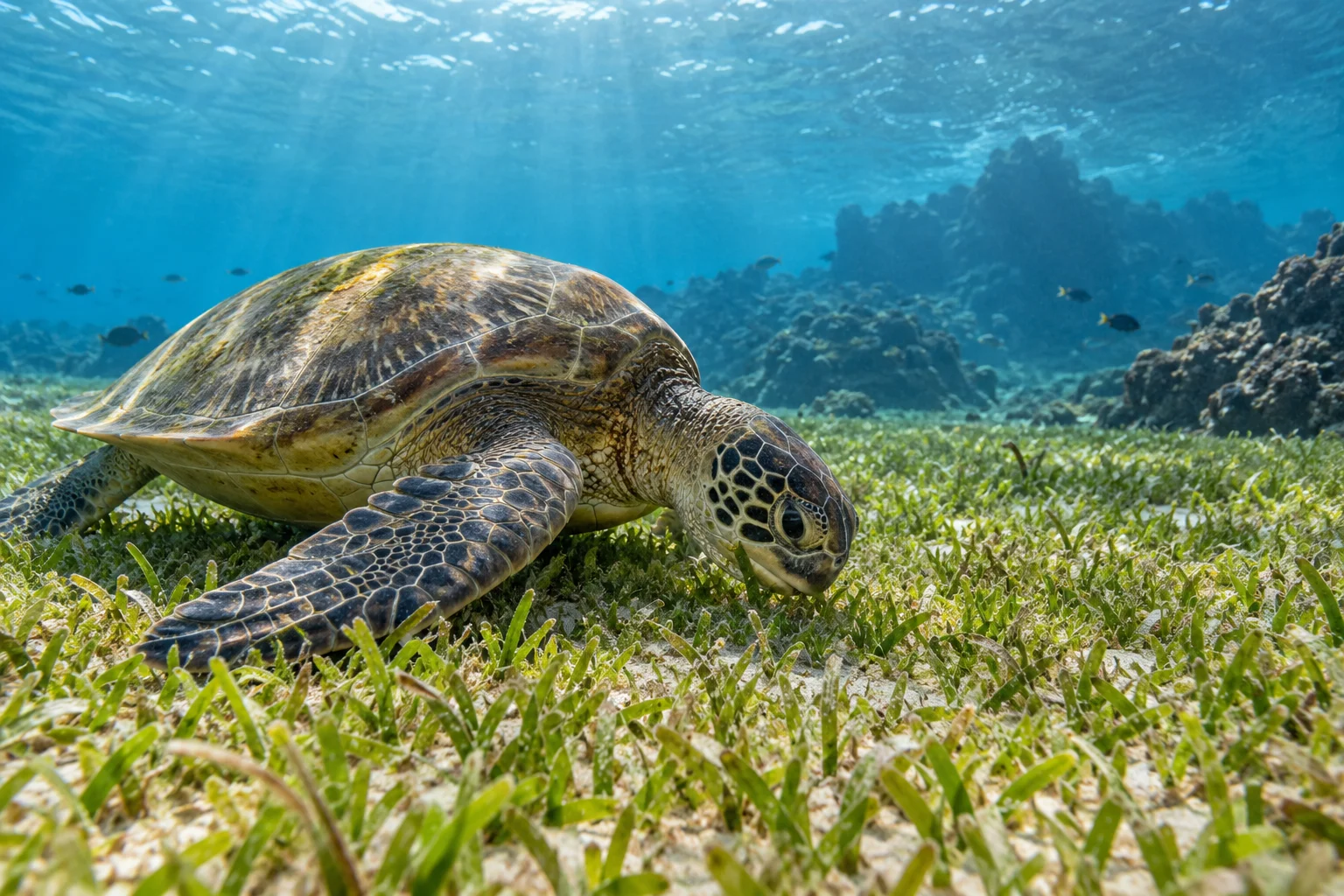
WCS reports that a survey with The Nature Conservancy mapped Komodo seagrass in June 2008. It describes Enhalus acoroides near muddy mangrove margins, Halophila ovalis in sheltered embayments and Thalassia hemprichii beds toward reefs. A dugong was encountered off Komodo Island during that work.
These are valuable local records with a historical boundary. They do not establish current meadow extent, present dugong abundance or a reliable wildlife season. Any claim about change since then needs a comparable recent survey.
| Observation | Useful interpretation | Limit |
|---|---|---|
| Rooted plants forming a meadow | Vegetated shallow-water habitat is present | Species and area require identification and mapping |
| Turtle feeding in a patch | An individual is using that patch at that time | Not a turtle-population estimate |
| A bare strip through vegetation | A feature worth documenting | Cause cannot be assigned from shape alone |
| Historical dugong record | Documented occurrence within the record’s scope | Not a guarantee of a visitor encounter today |
Why the meadow matters even without a large animal
Seagrass leaves and the spaces between them provide habitat for smaller organisms. Roots and underground stems help hold sediment. Connections with nearby reefs and mangroves can matter to animals that use different habitats during their lives. NOAA explains these mechanisms in its seagrass habitat resources; local strength and extent must still be measured locally.
Watch the smaller scene rather than waiting only for a turtle. Fish moving between leaf patches, sediment disturbed by water movement and the transition into a reef can make the habitat legible. Do not dig, lift plants or sweep leaves aside to expose hidden animals.
Carbon claims need units and boundaries
“Blue carbon” refers to carbon associated with coastal and marine vegetated ecosystems. A stock is an amount stored; a sequestration rate is an amount accumulated over time. Those are different quantities. A global average should not be presented as a measurement for a Komodo bay.
If a tour company claims to offset a trip through seagrass, ask for the project area, method, monitoring period and independent verification. Seeing a healthy-looking meadow is not evidence that your booking created an additional climate benefit.
How visitor behaviour can affect the habitat
Keep fins, feet and equipment off the bottom. A shallow meadow may look comfortable to stand in, but repeated contact can disturb plants and sediment. Follow the guide’s route and flotation instructions instead of choosing a place to stand from above.
On the boat, ask how the crew selects anchoring or mooring locations. Guests should not instruct a captain to anchor over vegetation for a closer wildlife view. Safe navigation and habitat protection need to be considered together by the trained crew.
Record a concern without inventing a cause
If a patch appears damaged, take a photograph from a safe position and note the location, tide and date. Describe what is visible: uprooted plants, a bare strip or unusually cloudy water. Do not automatically attribute it to a specific vessel or business without evidence.
For general island-and-water itineraries, compare a komodo tour 3 days 2 nights and ask which shallow habitats may be visited. Seagrass interpretation can add value to a trip even when no megafauna appears.
Can I book a guaranteed dugong stop?
No historical survey establishes such a guarantee. Evaluate a trip by its route, habitat access and responsible practice, not an animal promise.

Identify the habitat before expecting an animal
A seagrass meadow is a flowering plant community rooted in sediment, not a guarantee of turtle or dugong sightings. If a guide points out a shallow meadow, ask which part of the route passes it and how the tender avoids propeller damage. Keep the 2008 survey date with any historical observation; it cannot describe today’s meadow condition without a new survey.
Explore seagrass-connected habitats through Dive Komodo or compare broader Komodo tour packages that match your preferred mix of marine and island experiences.
Use habitat evidence before an animal expectation
A seagrass meadow can be valuable even when no turtle or other large animal is visible. Record the vegetation and the time of observation without turning an empty photograph into evidence of absence. Seagrass, algae and a sandy patch require different descriptions.
Keep historical monitoring dates visible and do not treat an old extent estimate as today’s mapped boundary. Ask the skipper about suitable anchoring or mooring arrangements. Avoid trampling or collecting plants while trying to establish a closer identification.
Historical park surveys and natural-history publications are indexed in the Komodo research archive; retain each publication’s date and sampling limits rather than treating it as a current service or wildlife inventory.
