
Reef Symbiosis in Komodo: Cleaning, Shelter and Partnerships
Explore reef partnerships in Komodo, from manta cleaning to coral symbiosis, and learn how to separate an observation from an ecological interpretation.
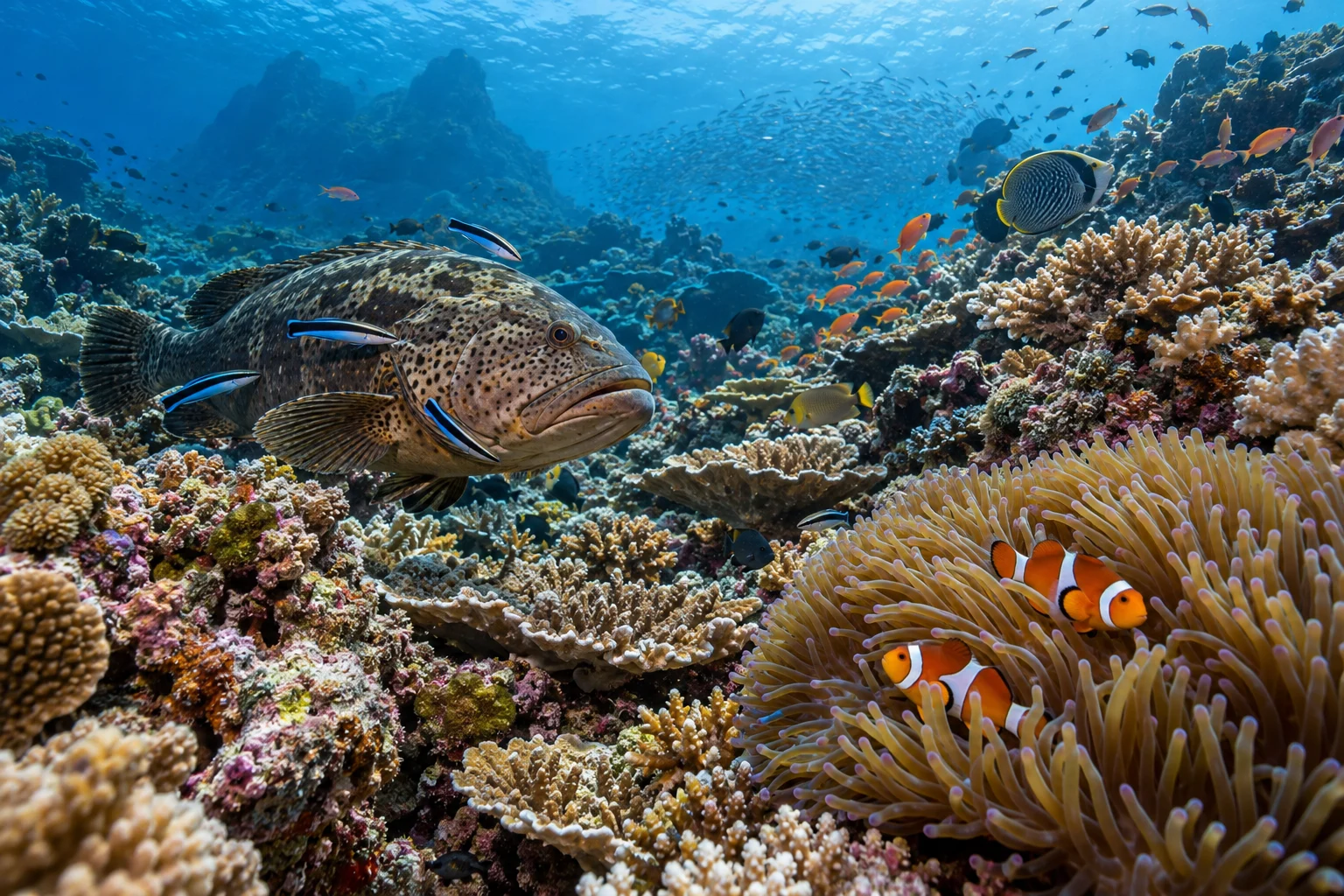
Reef symbiosis in Komodo is easiest to understand by watching relationships: a fish being cleaned, an animal sheltering in a host, or a coral living with microscopic photosynthetic partners. Not every pair of animals close together is cooperating, and not every relationship benefits both partners equally.
Separate the relationship from the photograph
Symbiosis describes a close association between organisms. Mutualism is a relationship in which both partners benefit. Other associations can benefit one partner without an obvious effect on the other, or harm one partner. Those categories describe biological relationships, not a promise that every visible interaction fits a simple story.
A still image establishes proximity. Repeated observations, feeding evidence or experimental work are needed to establish function. For a visitor, the useful habit is to write down what happened before assigning a role.
| Relationship to investigate | What to watch | Limit of one encounter |
|---|---|---|
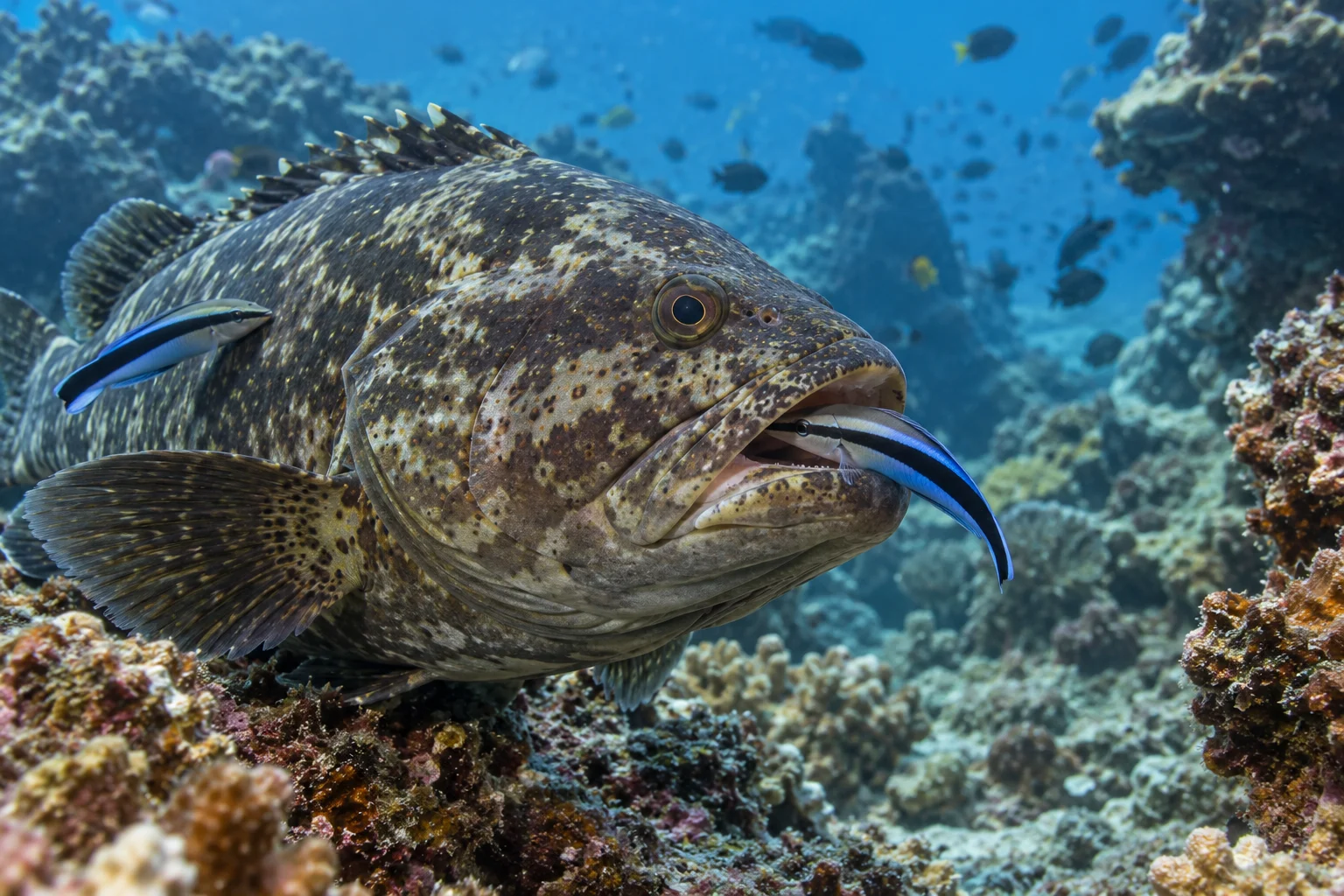
| Cleaner fish and a larger client | A client holding position while a smaller fish attends its surface | You may not see exactly what is removed or eaten |
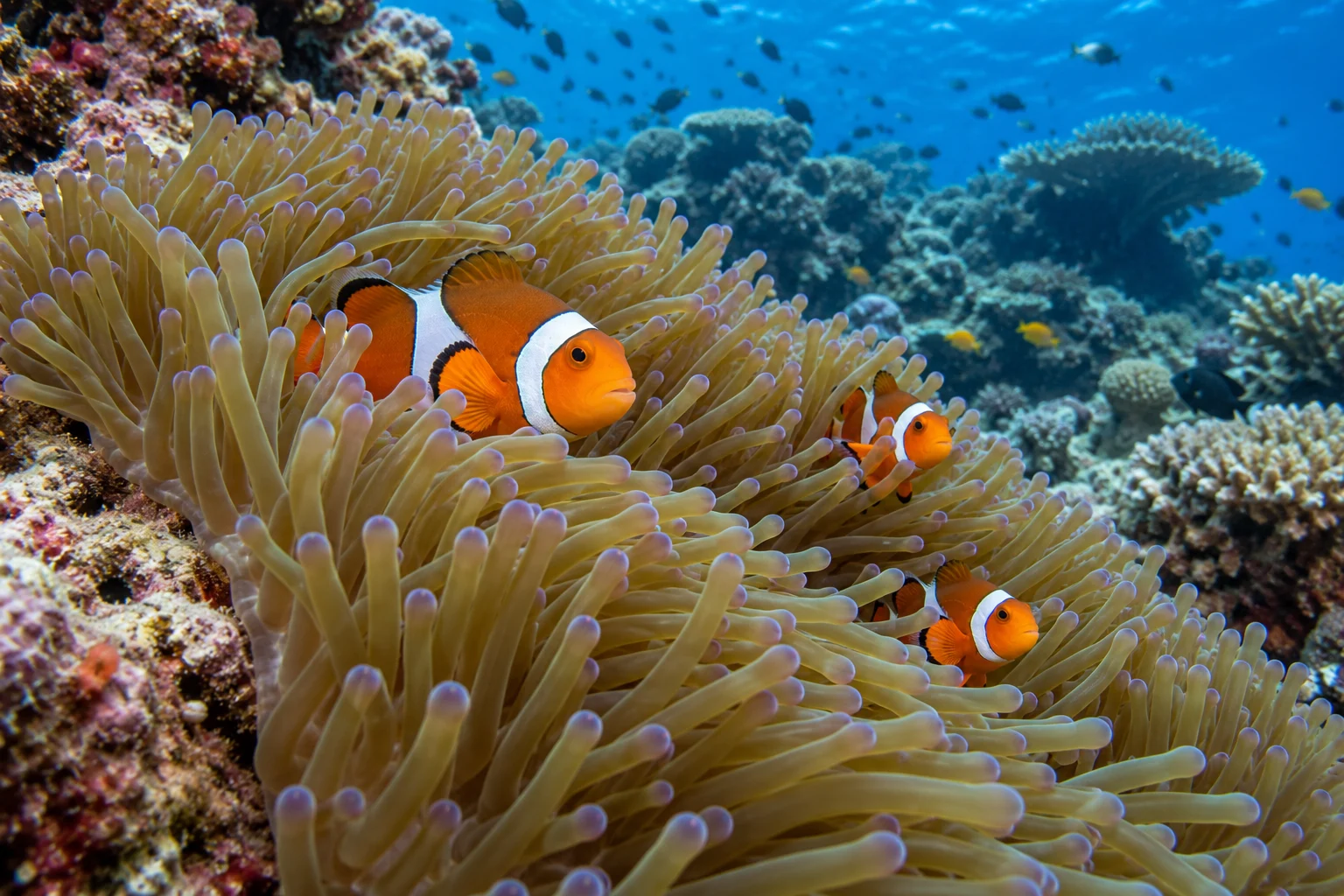
| Anemonefish and host anemone | Repeated movement between the fish and tentacles | One image does not identify every benefit or host species |
| Goby and burrowing shrimp | Shared burrow use and movements at the entrance | A partly hidden animal may not be identifiable |
| Coral and microscopic photosynthetic partners | The living colony and its condition | The partners are not individually visible to a swimmer |
Cleaning stations are working habitat
Komodo manta research documents cleaning as one component of reef-manta habitat use. A station is therefore more than a convenient place for a photograph. The animals need room to approach, interact and leave. A group positioned directly on the reef feature can interrupt the relationship it came to observe.
Stay where the guide indicates and watch from outside the interaction. Do not use food to attract either partner or interpret a manta’s departure as a reason to follow it. Feeding, cleaning and travelling should remain separate observations.
Watch a shared shelter without opening it
A burrow entrance offers a small window into a much larger structure. If a shrimp is moving sediment while a fish remains near the entrance, describe that sequence. Do not push a pointer into the opening, move rubble or block the retreat to prove that the animals share it.
The same rule applies to host anemones and sea fans. The host is living habitat, not a prop holding the smaller subject in position. A photograph that preserves the entire association can carry more ecological information than a tightly cropped portrait.
The partnership inside many reef-building corals
NOAA explains that many tropical corals live with photosynthetic organisms inside their tissues. The partners exchange resources, helping support the colony in suitable conditions. Stress can disrupt that relationship. A pale colony can raise a question about bleaching, but its appearance alone does not establish a cause or a recovery outcome.
This is general coral biology. It should not be mistaken for a new measurement of bleaching across Komodo. A local claim needs local observations with dates, coverage and a defined method.
A five-minute exercise for your next suitable reef visit
With the guide’s agreement, select one visible interaction that can be watched without changing the dive plan. Note where each animal is positioned, what each does, whether the interaction repeats and what causes it to stop. Add a short sketch or photograph afterward. Keep interpretation in a separate sentence.
For example: “A small fish approached the side of a larger fish three times while the larger fish stayed near the same coral head.” That remains useful even if neither species is identified. “They are friends” adds a human story that the observation cannot establish.
Local evidence and general ecology
The examples in this guide are mechanisms to look for, not a claim that KomodoInsider has measured all of them at every listed site. The Komodo-specific research cited here supports manta cleaning behaviour; the coral reference explains a wider biological mechanism. Burrow and anemone observations need their own local records.
Ask for a guide interested in interpretation and enough suitable observation time. Compare the dive komodo options, then discuss habitat and pacing for your experience level.
Test the behaviour before naming a partnership
If a fish appears beside a cleaner station, watch whether it pauses and adopts a posture that allows contact. If a crab shelters in coral, photograph the interaction without lifting the coral or moving the crab. Co-occurrence alone does not establish mutual benefit: a useful observation describes what both organisms actually did.
Observe reef partnerships responsibly with Dive Komodo, supported by the practical site and safety context in the Komodo diving guide.
Watch the sequence rather than naming the partnership instantly
Record which animal approaches, which part of the body is contacted and what happens next. A single frame of two species together does not demonstrate mutual benefit or a stable association. Describe the visible interaction first and compare it with a reliable identification reference later.
Do not open a shelter, prod an animal or wait where you block its movement. A useful observation keeps habitat and participants undisturbed. Local records support the places and periods actually studied; general symbiosis examples are not a complete Komodo inventory.
Historical park surveys and natural-history publications are indexed in the Komodo research archive; retain each publication’s date and sampling limits rather than treating it as a current service or wildlife inventory.
