
Pygmy Seahorses in Komodo: Species and Host Habitats
How Komodo divers find Bargibant's and Denise's pygmy seahorses, with habitat, identification and responsible photography guidance.
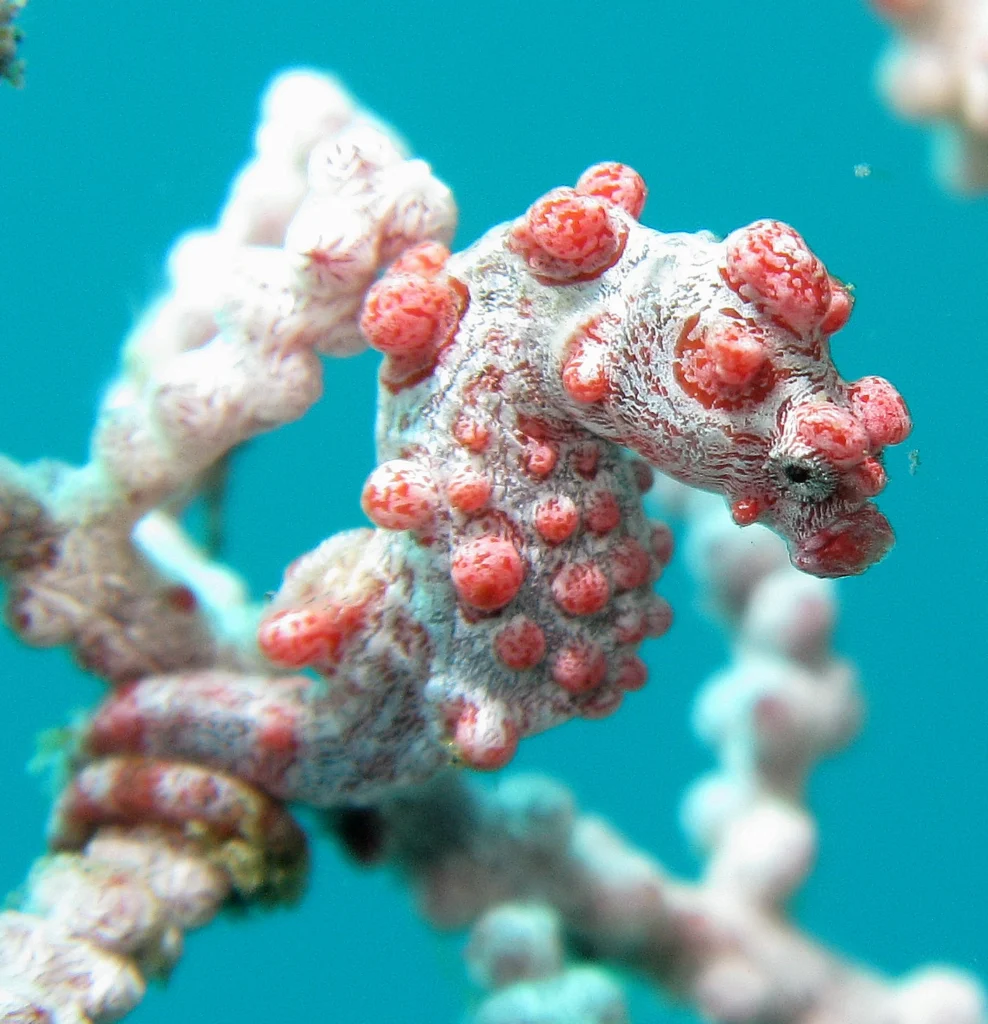
Pygmy seahorses are tiny, highly camouflaged seahorses associated with particular host organisms. Komodo divers commonly discuss Bargibant’s pygmy seahorse on Muricella gorgonian sea fans and Denise’s pygmy seahorse on several fan types. Finding one depends on healthy habitat and an experienced guide. Never touch the fan, use a pointer against it or force the animal to turn for a photograph.
Why Pygmy Seahorses Are So Difficult to See
A pygmy seahorse can disappear against the texture of its host even when a guide points directly at it. Its size is only part of the problem. Body colour and raised tubercles can closely resemble the polyps and branches of a gorgonian sea fan.
The search is therefore habitat-led. A guide first recognises an appropriate host fan, then checks the branches slowly for an eye, snout or tail that breaks the pattern. Divers who scan the whole reef for a miniature horse shape usually miss the animal.
This guide focuses on pygmy seahorse identification and observation. For broader site and trip planning, start with our Komodo diving guide, then confirm the programme and conditions with your operator.
Bargibant’s and Denise’s Pygmy Seahorses
| Feature | Bargibant’s pygmy seahorse | Denise’s pygmy seahorse |
|---|---|---|
| Scientific name | Hippocampus bargibanti | Hippocampus denise |
| Typical appearance | Rounder body with pronounced bumps matching the host | More slender profile with less prominent tubercles |
| Host association | Strongly associated with Muricella gorgonians | Recorded on several gorgonian genera |
| Underwater clue | Look for a tiny eye among large, bumpy polyps | Look for a smoother body along fine fan branches |
Colour is not enough for identification. Lighting and strobes change how pink, yellow and orange animals appear, and photographs should include enough of the host to support the record.
Where Are They Reported in Komodo?
Local dive guides report pygmy seahorses from sites with suitable gorgonians, including Wainilu, Batu Bolong, Tatawa and southern sites such as Cannibal Rock. Reliability changes with the health of a particular fan, recent disturbance and whether the route reaches the habitat.
A named site should not become a promise. Resident animals may change position, a host fan may be damaged and the daily itinerary may move because of current. Ask for recent guide knowledge rather than an old checklist.
How a Responsible Guide Finds One
- The guide identifies likely host fans without grabbing or bending them.
- The group stops far enough away to avoid fin damage and sediment.
- The guide indicates a branch or area without touching the animal.
- One diver approaches at a time with neutral buoyancy.
- The observation ends before the subject is repeatedly disturbed.
A metal pointer can show direction by remaining in open water. It should never press the gorgonian, hold a branch or prod the seahorse into a better position.
Why the Host Fan Matters
Pygmy seahorses do not live on a decorative photography prop; the fan is their habitat. Contact can damage polyps, remove protective tissue and destabilise the whole colony. Poor buoyancy is especially risky because a diver concentrating through a viewfinder may drift into the fan.
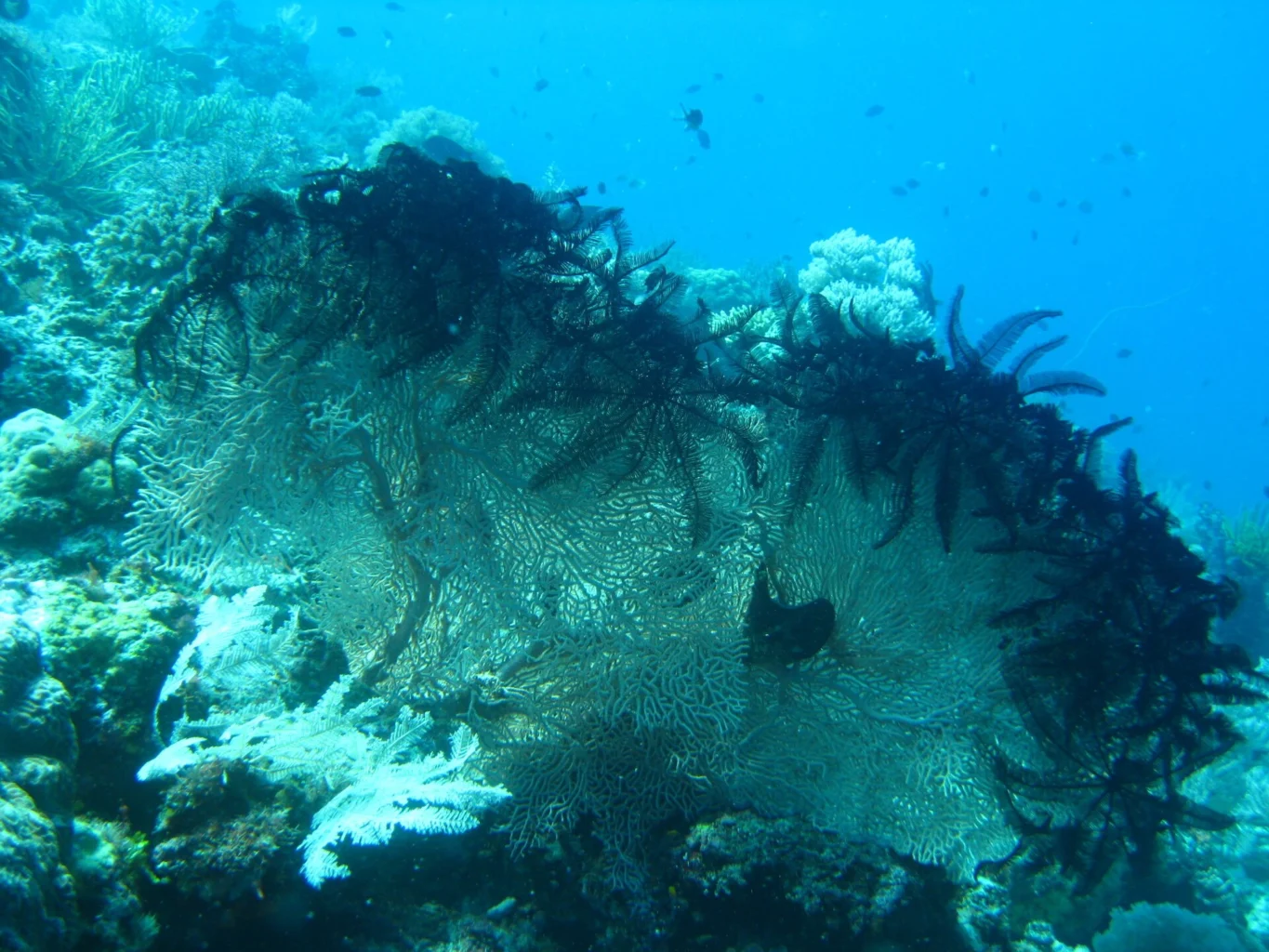
Before a macro dive, practise holding position without sculling hands or touching the reef. If current makes the shot unsafe, leave it. A blurred photograph is recoverable; a damaged host is not.
Photography Setup and Positioning
A true macro lens and a focus light make framing easier, but equipment does not replace distance discipline. Set exposure before approaching. Move in from open water, stop short of the fan and use breathing rather than hands to refine position.
Use a modest number of frames. Avoid continuous bursts, repeated bright focus light and attempts to make the animal face the camera. A photograph showing natural posture on the host has more documentary value than a forced portrait.
Can You Identify the Individual?
Species identification from a single photograph can be difficult. Record the site, depth, date, host type and several angles without extending the encounter. Those details help an experienced identifier assess the observation and keep uncertainty visible.
Do not invent a species name for social media reach. “Pygmy seahorse on a gorgonian” is a useful record when diagnostic features are missing.
Life on One Host Fan
Pygmy seahorses are closely tied to their host. That relationship explains why a guide may return to a particular fan and why the fan must not be treated as movable scenery. Camouflage develops against the host’s colour and texture, and adult movement can be extremely limited compared with free-swimming reef fish.
As in other seahorses, the male carries developing embryos in a brood pouch. This remarkable reproduction does not justify approaching a visibly pregnant animal more closely. A rounded body may also be difficult to interpret from one angle, so divers should not label behaviour without evidence.
Common Photography Failures
- Focusing on the gorgonian polyps instead of the eye.
- Blowing out the subject with a strobe set for a larger animal.
- Clipping the tail or host, removing identification context.
- Holding the fan to stop it moving in current.
- Taking dozens of frames while other divers wait.
Pre-focus at the expected working distance, use a small focus point and accept some natural movement. The host swaying in water is part of the real encounter.
When to Abandon the Photograph
Back away if the current makes the fan move violently, another diver cannot hold position, the animal repeatedly turns away or the guide signals that the rotation is over. The decision protects the habitat and often prevents the entire group from losing visibility.
What Else Appears in the Same Habitat?
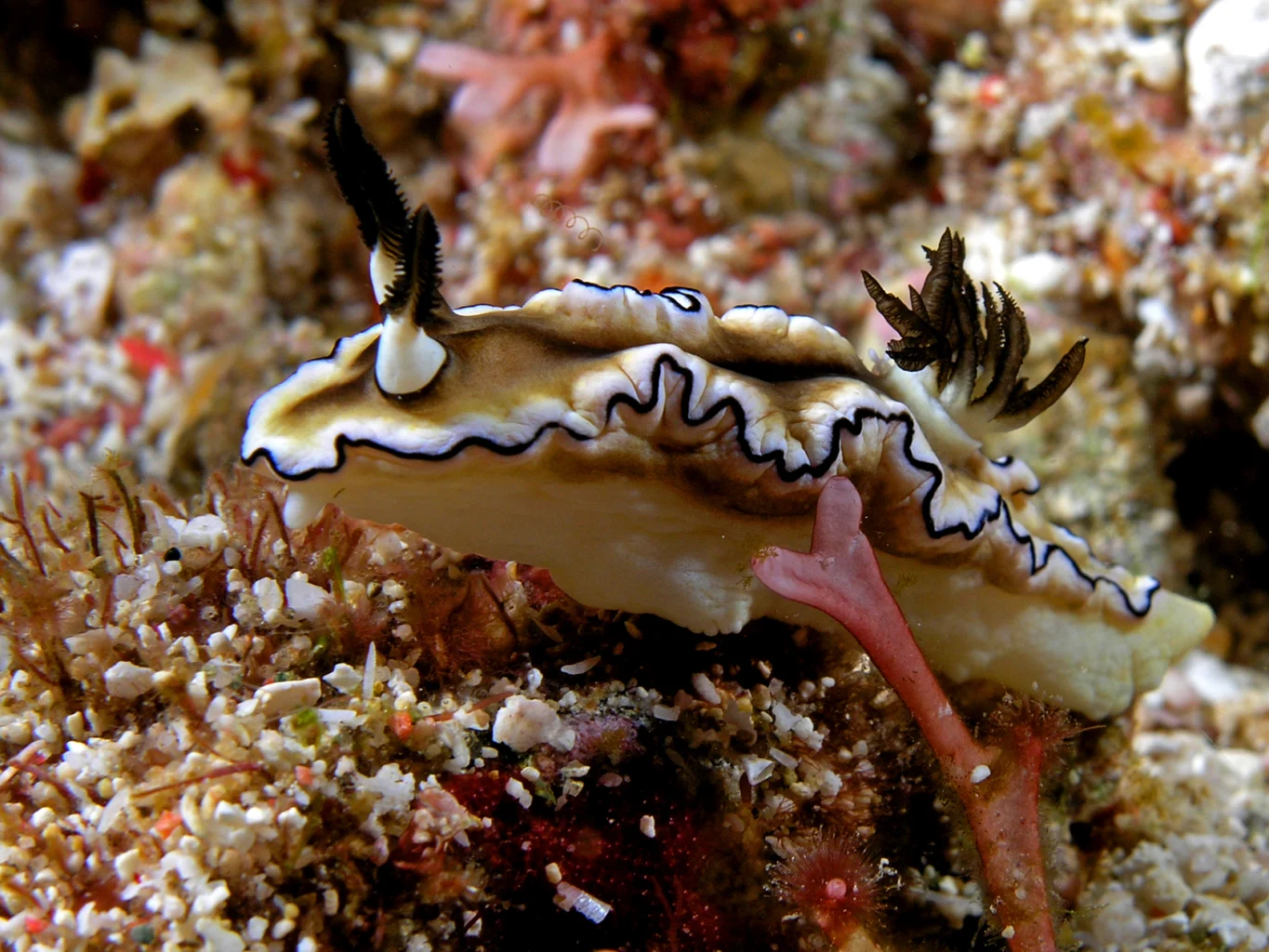
Gorgonian and soft-coral habitats can hold small crustaceans, pipefish and nudibranchs. Nearby rubble may conceal frogfish or mantis shrimp. Observe the whole microhabitat without moving or touching its inhabitants.
Choosing a Pygmy-Seahorse-Focused Trip
Ask how many macro dives the itinerary normally includes, which zones it reaches and whether the guide regularly works with small subjects. A generic diving tag does not confirm gorgonian sites or macro expertise.
Use the Komodo diving trips page to compare published vessels, then verify the exact route and guide team directly. Several opportunities are better than one promised fan.
Never touch, hold or reposition a gorgonian sea fan. Do not use a pointer to make a pygmy seahorse turn toward the camera.
A host association is a clue, not a shortcut
The Australian Museum documents Hippocampus bargibanti with Muricella gorgonians. The association helps a guide narrow the search, but a visitor should not reverse the logic and assume every similar-looking fan contains a seahorse. Nor does a photograph of one host establish the distribution of all pygmy seahorse species.
For a defensible observation, keep four items together: an unobstructed view of the animal, enough host structure for context, the approximate depth, and a privately retained location. A close portrait can omit the tail and trunk features needed to compare species. A wider contextual frame is often more useful than another extreme close-up.
Write down what remains uncertain. If the fan is unidentified, say so. If the animal’s body is partly hidden, do not identify it by matching a single bump or colour patch to a web image. A specialist may be able to suggest a genus or species; that suggestion should remain provisional until the diagnostic features are adequate.
The museum’s discovery account also makes an important geographic distinction: Bargibant’s pygmy seahorse was first noticed on collected gorgonian material from New Caledonia. That historical discovery is not a Komodo sighting. Local occurrence needs separate local records, which is why operator observations and the museum’s biology reference play different roles here.
Australian Museum: Bargibant’s pygmy seahorse.
Match the wildlife interest to your trip
Use the dive komodo listing to compare dedicated diving options, then confirm the route, recent habitat observations and guide arrangements with the operator. Wildlife and daily site access remain conditional.
Frequently Asked Questions
How small is a pygmy seahorse?
Several species are around the size of a fingernail. Perceived size varies with the animal, and camouflage makes it appear even smaller.
Are pygmy seahorses guaranteed at Batu Bolong or Wainilu?
No. They are reported from suitable habitat, but animals, host condition and the route can change.
Can beginners photograph pygmy seahorses?
Only if they can maintain stable neutral buoyancy without contacting the fan. The guide may decline the close approach when current or control is unsuitable.
Should a guide move the fan for a better view?
No. The animal’s habitat should take priority over the photograph.
