
Marine Life in Komodo: Habitats, Species and Sightings
A habitat-led guide to the marine life divers and snorkellers may encounter in Komodo, including realistic expectations and responsible viewing.
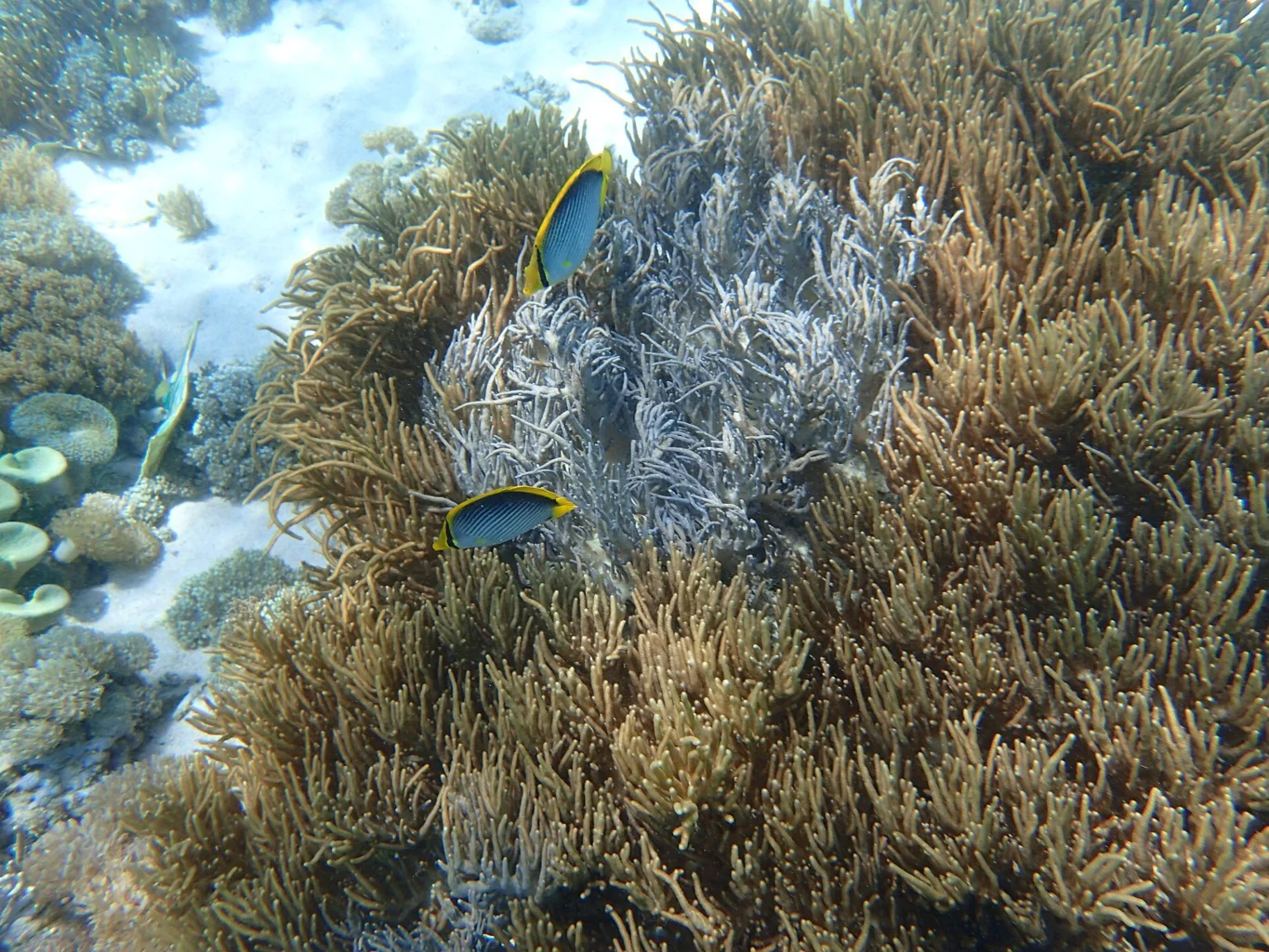
Komodo marine life changes with habitat and water movement. Current-facing pinnacles tend to concentrate schooling fish and reef sharks; cleaning stations attract manta rays; sheltered reefs support turtles; and slower macro sites reward divers who look for pygmy seahorses, nudibranchs, frogfish and mantis shrimp. No species is guaranteed. Choose a route by habitat and conditions, not by a promotional checklist.
Why Komodo Supports So Much Marine Life
Komodo National Park sits inside a chain of narrow islands where water moves between northern and southern seas. The exchange brings changing temperature, visibility and nutrients into a relatively small area. UNESCO specifically describes the park’s reefs as diverse and luxuriant, supported by clear water, sunlight and the rapid exchange of nutrient-rich deeper water.
That mechanism matters more than any single species count. It creates several underwater environments within one destination: bright coral slopes, exposed pinnacles, shallow channels, sandy rubble, mangrove edges and cooler southern reefs. Each environment rewards a different way of looking.
This guide organises wildlife by habitat. For experience, current and trip planning, use our Komodo diving guide. Compare departures on the Komodo diving trips page.
Komodo Marine Life at a Glance
| Habitat | What divers may see | What controls the encounter |
|---|---|---|
| Cleaning stations and shallow channels | Reef manta rays; other rays require identifiable local records | Plankton, current direction, cleaning activity and boat pressure |
| Current-facing pinnacles | Reef sharks, giant trevally, barracuda, tuna and dense schooling fish | Tidal window, current strength, depth and diver experience |
| Protected coral slopes | Green and hawksbill turtles, reef fish, moray eels and anemonefish | Reef condition, food availability and disturbance |
| Gorgonian walls and slopes | Pygmy seahorses and other camouflaged specialists | Healthy host fans, guide knowledge and careful buoyancy |
| Rubble, sand and sheltered macro sites | Nudibranchs, frogfish, mantis shrimp, pipefish and small octopuses | Slow search pace, season, substrate and patient observation |
The table is a realistic planning tool, not a sightings promise. Wildlife moves, resident animals hide and even a familiar site can look different after the current turns.
Manta Rays: Read the Behaviour, Not Just the Calendar
Komodo’s manta encounters happen for different reasons. At a cleaning station, a manta may circle slowly while cleaner fish remove parasites. In plankton-rich water, mantas may feed near the surface. A travelling animal may simply pass through. Those behaviours affect how long an encounter lasts and where a swimmer should position themselves.
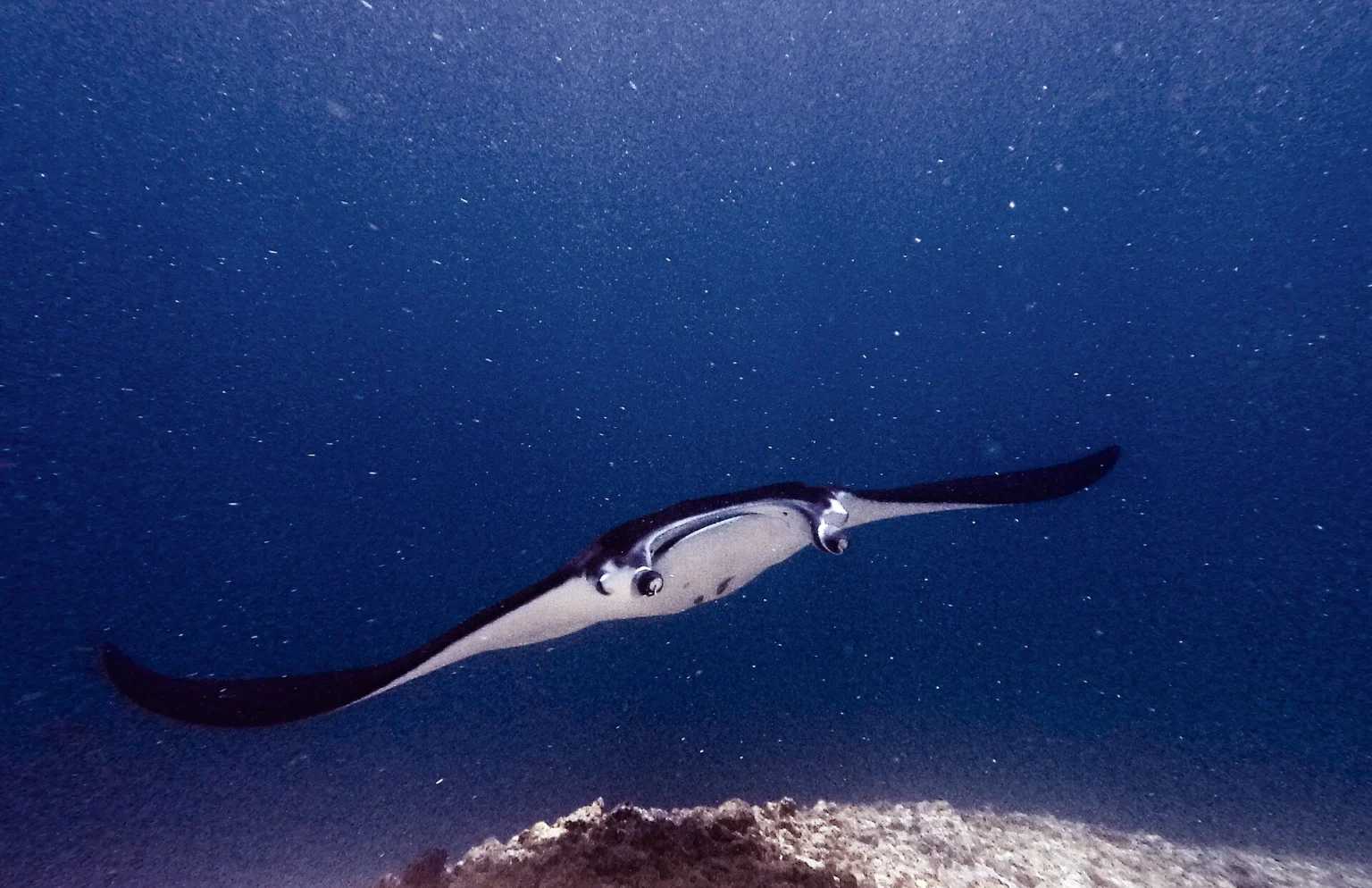
Size alone does not establish which manta species you saw. Record visible field marks without chasing the animal or forcing an underside photograph.
For the specific access, current and visitor guidance at Karang Makassar, use the Manta Point Destination page.
Reef Sharks and Open-Water Hunters
Whitetip, blacktip and grey reef sharks occupy different parts of a reef. Whitetips are often associated with the bottom and may rest in sheltered areas. Blacktips favour shallower reef habitat. Grey reef sharks are more commonly noticed patrolling current-facing edges and blue water. A distant silhouette is not always identifiable, so responsible reporting should stop at the lowest confident level.
Sharks are only one part of the hunting scene. Giant trevally, tuna and barracuda use flow and schooling prey to their advantage. The spectacle is strongest when the site and tide line up, but those same conditions can demand decisive entries and good buoyancy.
For place-specific planning, the Batu Bolong guide explains why a famous wildlife site still needs current-aware decisions.
Sea Turtles: Two Commonly Confused Species
Green and hawksbill turtles are both reported around Komodo. Their names are not reliable colour labels. A green turtle usually has a comparatively small, rounded head and a smoother shell outline. A hawksbill has a narrower beak and overlapping-looking, often serrated rear shell edges.
Habitat helps. Green turtles commonly graze in seagrass and algal areas, while hawksbills forage around reefs, particularly for sponges. Individuals may rest beneath coral ledges or surface to breathe. Chasing a surfacing turtle blocks its route and turns an observation into disturbance.
Watch turtles without blocking their route or access to the surface. Do not approach closely just to establish an identification.
Macro Life: The Komodo Story People Swim Past
Komodo is marketed through mantas, sharks and dramatic current, but its smaller wildlife can fill an entire dive. Macro subjects often depend on a specific microhabitat: a pygmy seahorse on a host gorgonian, a frogfish matching a sponge, a mantis shrimp watching from a burrow or a nudibranch feeding on one particular prey.
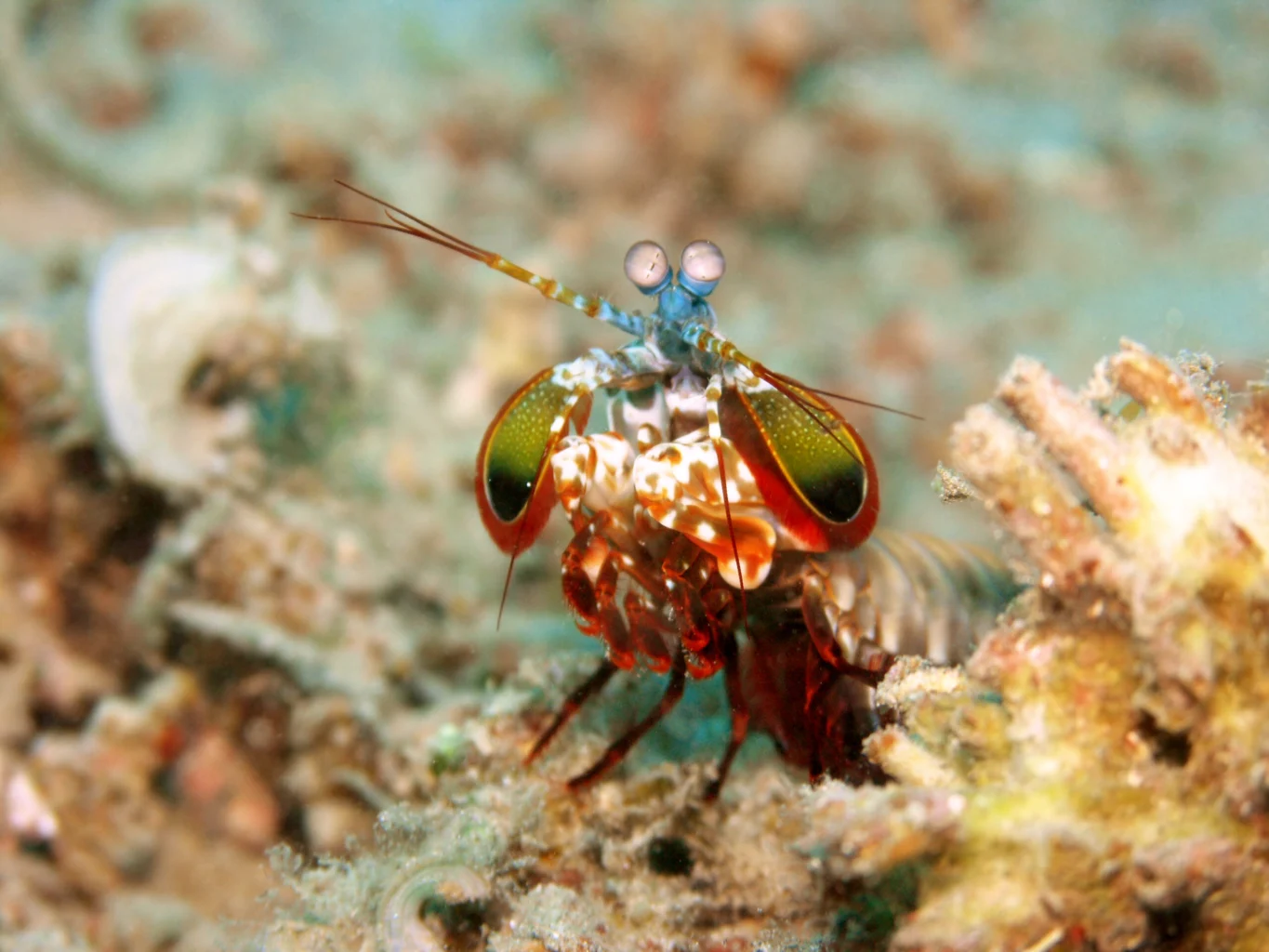
Finding these animals requires a different pace. The group covers less ground. Divers hold position without touching coral. Photographers limit repeated shots and avoid moving an animal for a cleaner background. A guide who recognises host species and feeding signs is usually more valuable than a long wildlife list.
- Macro diving in Komodo explains how to choose a route and guide.
- Pygmy seahorses in Komodo covers host fans and photography.
- Komodo nudibranchs explains careful identification.
- Frogfish in Komodo focuses on camouflage and spotting clues.
- Mantis shrimp in Komodo separates real biology from internet mythology.
- Blue-ringed octopus safety gives a cautious no-touch briefing.
Coral Is Habitat, Not Background
A wildlife checklist can make coral look like scenery behind the headline animals. In reality, reef structure creates shelter, feeding surfaces, cleaning stations and nursery habitat. Hard-coral tables protect juvenile fish and resting sharks; gorgonians hold specialised small animals; sponges feed hawksbill turtles and shelter cryptic fish; soft-coral growth supports a different community again.
That changes how a traveller should judge a dive. A site without a manta can still be the most ecologically interesting dive of the trip if the reef is healthy and the guide explains the relationships. Conversely, a rushed animal encounter over damaged habitat is not automatically a better experience.
Watch the ordinary fish as well as the rare subject. Anthias responding to current, cleaner wrasse working a station and grazing fish crossing a reef tell you how the ecosystem is functioning. They also make sightings of predators and large visitors easier to understand.
Diver and Snorkeller Encounters Are Not Identical
Snorkellers have excellent access to shallow coral, feeding turtles and surface-active mantas. They may also see blacktip reef sharks in appropriate shallow habitat. Divers can spend longer on deeper reef structure, inspect gorgonians and rubble, and observe animals that rarely appear from the surface.
A mixed trip should not pretend one route works equally for both groups. Ask whether snorkellers receive their own guide, whether the current is suitable at the surface and whether the vessel can recover each group safely. A diver-focused liveaboard with four daily dives may be a poor fit for a non-diver even when the destination is spectacular.
How to Record a Useful Wildlife Sighting
| Record | Why it matters |
|---|---|
| Date, site and approximate time | Connects the observation to season and tidal context |
| Depth or surface habitat | Separates shallow, reef and blue-water observations |
| Behaviour | Feeding, cleaning, resting and travelling mean different things |
| Photograph with habitat | Supports identification and preserves scale |
| Confidence level | Prevents a probable sighting becoming a false certainty |
Do not share the exact position of a fragile resident animal publicly without guidance from local conservation professionals. A gorgonian holding a pygmy seahorse or a small octopus shelter can be damaged when repeated groups converge on it.
Where Habitat Matters More Than a Species List
Central Komodo combines shallow channels, coral reefs and protected bays, so it can produce both large-animal and macro encounters. Northern sites are more exposed to moving water and often visited for schooling fish and reef predators. Southern sites can be cooler and richly covered in soft coral, with a reputation for both macro subjects and wide-angle scenery.
These are broad tendencies. A route description should never imply that every northern dive is fast or every southern dive is macro. The captain and dive team still choose a safe site from the conditions they see.
Seasonality Without False Promises
Komodo can be dived through much of the year, but visibility, temperature, surface conditions and plankton change. Plankton-rich water can support feeding activity while reducing clarity. Clear blue water can improve wide-angle photography without guaranteeing a particular animal.
Resident reef species may be possible year-round, yet “possible” is not the same as “predictable.” For any wildlife goal, ask an operator three questions: which habitat will the itinerary visit, how many suitable dives are planned, and what alternative will be chosen if the original site is unsafe.
How to Choose a Trip Around Wildlife
- Name the behaviour or habitat you want. “Manta cleaning station” is more useful than “big animals.”
- Check the route, not only the vessel amenities. A dive-ready boat cannot show southern macro life if the sailing never reaches the south.
- Allow more than one opportunity. Wildlife-focused trips benefit from several suitable dives rather than one rushed stop.
- Match the sites to your experience. A famous shark pinnacle is not worthwhile if the current exceeds your ability.
- Ask how guides manage photographers. Small subjects and cleaning stations both need controlled group behaviour.
Responsible Encounters
- Do not touch, feed, chase, block or reposition wildlife.
- Keep excellent buoyancy over coral and host sea fans.
- Let turtles and mantas control the distance.
- Do not surround a subject with the whole group.
- Limit repeated flash and video-light exposure on small animals.
- Record uncertainty honestly; a blurred silhouette is not a confirmed species.
Komodo is a wild ecosystem, not an aquarium. The right trip improves access to suitable habitat; it cannot guarantee a species or behaviour.
Which claims can a wildlife guide actually support?
A regional species list, a scientific survey and yesterday’s dive log answer different questions. A species recorded somewhere in eastern Indonesia has a wider evidence boundary than an identifiable animal photographed inside Komodo National Park. Neither record tells you what will appear on your departure.
| Evidence | Useful conclusion | Conclusion to avoid |
|---|---|---|
| Named Komodo survey with dates and methods | The species or habitat was documented within that study’s coverage. | The same abundance persists everywhere today. |
| Recent guide log with identifiable photograph | An encounter occurred at a particular site and time. | The animal will be there for the next group. |
| Tour brochure or regional wildlife tag | The operator markets that wildlife interest. | The selected departure has demonstrated local records. |
For example, WCS describes a seagrass survey undertaken with The Nature Conservancy in June 2008 and reports a dugong encounter off Komodo Island. That is useful historical local evidence, not a current dugong-viewing schedule. The age and coverage of the record belong beside the claim.
Use a simple route test before booking: identify the habitat, check whether the itinerary reaches it, then ask how the guide adapts the visit to conditions. A shorter list of credible opportunities is more helpful than a list mixing resident reef animals, rare offshore visitors and records from other islands.
WCS: the 2008 Komodo seagrass survey.
Match the wildlife interest to your trip
Use the dive komodo listing to compare dedicated diving options, then confirm the route, recent habitat observations and guide arrangements with the operator. Wildlife and daily site access remain conditional.
Frequently Asked Questions
What marine life is Komodo best known for?
Reef manta rays are the best-known underwater attraction, but Komodo also supports reef sharks, turtles, schooling fish, rich coral communities and diverse macro life.
Can snorkellers see the same wildlife as divers?
Snorkellers may see mantas, turtles, reef fish and shallow coral. Deep pinnacles, small camouflaged animals and some current-heavy sites are more suitable for certified divers.
Is there a best month for all Komodo marine life?
No. Different animals and habitats respond differently to plankton, temperature, current and visibility. Choose timing around your main goal while keeping expectations flexible.
Are wildlife encounters guaranteed?
No. A responsible operator can choose suitable habitat and timing, but wildlife behaviour remains unpredictable.
Do I need a liveaboard?
Not for every encounter. Day boats reach many central and northern sites. A liveaboard becomes useful for repeated tidal windows, early dives and more remote zones.
