
Sharks in Komodo: Species, Habitats and Sightings
A practical guide to Komodo's reef sharks, identification, habitat, encounter expectations and safe diving behaviour.
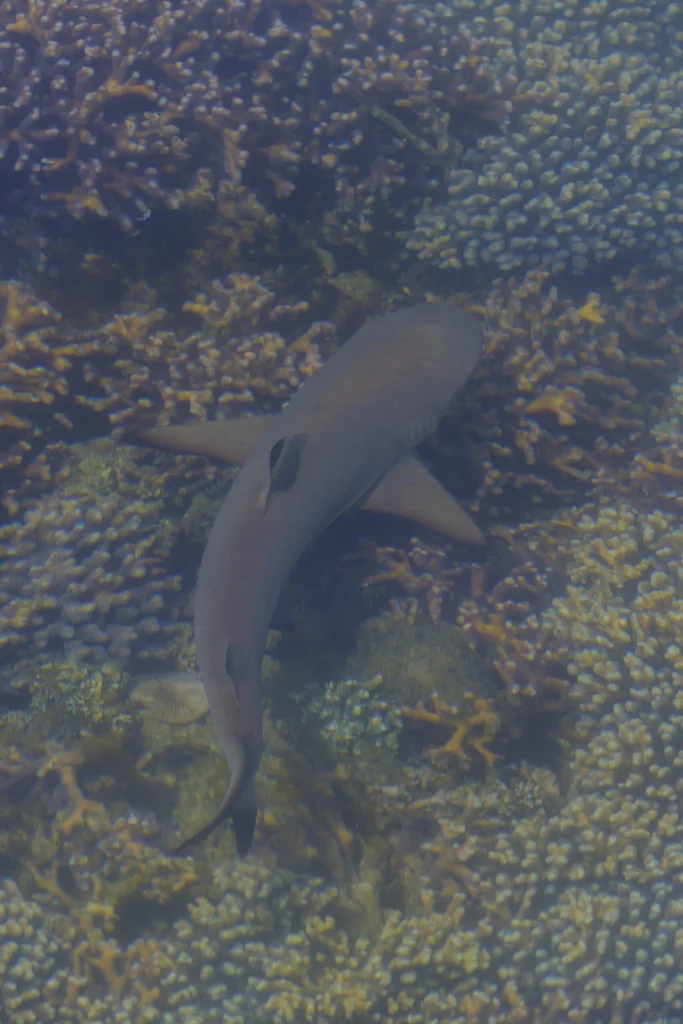
The sharks most often reported by Komodo divers are whitetip, blacktip and grey reef sharks. They are not interchangeable: whitetips commonly stay close to the bottom, blacktips favour shallower reef habitat, and grey reef sharks often patrol exposed edges. Encounters depend on site, current and diver behaviour. Give sharks space, stay with the group and never chase one for a photograph.
Which Sharks Live Around Komodo’s Reefs?
Komodo’s moving water links coral reefs, channels and deeper edges, creating habitat for several shark species. For most recreational divers, the practical identification problem is distinguishing three reef sharks: whitetip, blacktip and grey reef sharks.
A shark seen for two seconds in blue water may not be identifiable. Light, distance and angle can erase fin markings. Good wildlife reporting therefore uses cautious language: “reef shark” is better than a confident but unsupported species name.
This guide focuses on shark identification and encounter behaviour. For site planning, see Batu Bolong; our Komodo diving guide covers the wider trip.
Whitetip, Blacktip and Grey Reef Sharks Compared
| Species | Useful field marks | Typical behaviour divers notice | Common observation zone |
|---|---|---|---|
| Whitetip reef shark | White tips on the first dorsal and upper tail fin; slender body | May rest on the bottom or move through reef channels | Ledged reef, sand patches and sheltered bottom habitat |
| Blacktip reef shark | Dark fin tips with a contrasting pale area below the first dorsal tip | Often active in shallow reef water | Reef flats, lagoons and shallow edges |
| Grey reef shark | Grey upper body, pale underside and dark trailing edge on tail; no white first-dorsal tip | Patrols current-facing edges and open water | Drop-offs, pinnacles and channel mouths |
Field marks should be combined with shape and behaviour. A distant dark fin tip is not enough by itself, and local guides may choose not to name a species when the view was poor.
Why Current Changes a Shark Dive
Moving water carries scent, oxygen and prey across a reef. Sharks and hunting fish may hold near an edge where the current concentrates food. Divers can experience the same flow as a demanding entry, a fast drift or a difficult place to maintain position.
This does not mean stronger is always better. If the current exceeds the group’s ability, divers spend the dive managing position rather than observing behaviour. The right tidal window can produce a longer, calmer and more responsible encounter.
The itinerary should respond to water movement and the group’s ability, rather than promising the same site at a fixed hour.
Where Do Divers Report Sharks in Komodo?
Current-facing northern and central sites are widely associated with reef-shark sightings. Batu Bolong, Castle Rock, Crystal Rock and the Cauldron are repeatedly mentioned in operator guides, but each location has a different profile and suitability threshold.
A site name is not a sighting guarantee. Sharks move across habitat, visibility changes and a route may be altered for safety. Ask whether the operator chooses sites from tide and group experience, not whether it promises a shark.
Are Komodo Reef Sharks Dangerous?
Reef sharks normally avoid close contact with divers. Risk rises when wildlife is fed, cornered, chased or associated with fishing activity. A calm dive group that follows the guide, maintains distance and avoids erratic pursuit is easier for a shark to assess.
“Safe” should not be marketed as “risk-free.” Komodo is open water with current, boats and wild animals. The main controls are competent supervision, suitable site selection, honest diver screening and disciplined underwater behaviour.
How to Behave During an Encounter
- Stay with the guide and buddy. Do not break the route to follow an animal.
- Hold a stable position. Controlled movement is less disruptive than a rapid chase.
- Keep the shark’s path open. Never surround it against reef or surface.
- Watch more than the camera. Monitor current, depth, gas and the rest of the group.
- Do not feed or touch. Baiting changes behaviour and is not part of a normal reef encounter.
Photography: Let the Shark Approach
Wide-angle equipment works best because it lets the photographer include habitat without closing the distance. Hold a predictable line and let a curious animal choose whether to pass closer. Swimming hard behind a shark usually produces a photograph of a tail and adds stress.
Use the reef structure and schooling fish to build the frame. Avoid dropping below the group or crossing into stronger flow merely for a low angle. No image is worth separation or an uncontrolled ascent.
Sharks, Rays and Large Fish Are Different Subjects
Manta rays are rays, not sharks in everyday visitor language, although both belong to the cartilaginous-fish group. Their encounter behaviour differs. Mantas may use cleaning stations or feed on plankton, while reef sharks patrol and rest according to species and habitat.

Observe marine animals from a respectful distance. Do not approach to confirm an identification or obstruct movement and access to shelter.
Choosing a Shark-Focused Komodo Trip
Look for a genuine dive programme, recent local knowledge and a route that can reach exposed reefs when conditions allow. Ask the operator about guide ratios, experience separation, lost-diver procedure, surface support and how it decides the daily tidal window.
Compare the available vessel records on the Komodo diving trips page. A shark taxonomy tag is a discovery aid, not proof that every departure visits the same site or produces the same encounter.
How to Evaluate a Shark Claim
Separate habitat evidence from marketing language. A route that includes several current-facing reefs with recent local reports offers a rational opportunity. A page promising a rare pelagic species from one old sighting does not.
- Strong evidence: recent guide logs, identifiable photographs, named habitat and a route that actually reaches it.
- Useful but limited: a sourced vessel tag or historical operator report without departure-level confirmation.
- Weak evidence: an unsourced species list repeated across every route.
Why Sharks Matter to the Reef
Sharks occupy different levels of the food web and connect habitats through movement. Their presence should not be reduced to an adrenaline product. Observing where a reef shark holds, rests or patrols tells the diver something about flow, shelter and prey.

A good guide interprets that behaviour without feeding or crowding the animal. The result is quieter than a baited spectacle and far more relevant to the functioning reef.
Never leave the planned route to chase a shark into blue water. Current, separation and gas management remain more immediate risks than the animal itself.
Read a shark list as an evidence hierarchy
Three statements that look similar can have very different meanings: a species occurs in Indonesian waters; an operator has recorded it in Komodo; and a species is encountered regularly on a specific route. Only the last statement describes an operational pattern, and even then it needs dates, effort and clear identification.
Ask whether a report names the animal scientifically. “Whitetip reef shark” refers to Triaenodon obesus; it should not be shortened into an assumption about an oceanic whitetip. “Blacktip reef shark” and “blacktip shark” are also names that can refer to different species. Preserving the complete common name helps prevent a harmless-looking edit from changing the animal being discussed.
| What you saw | Record now | Check later |
|---|---|---|
| Resting shark with clear white fin tips | Habitat, posture and visible fins | Body shape and complete fin pattern |
| Dark fin tips on a moving silhouette | Reef shark, identification uncertain | Photograph quality and alternative species |
| Large shark far beyond the reef | Approximate distance and direction | Expert identification before publishing a rare record |
Do not request bait, chase a departing animal or leave the planned depth to improve a record. A missed identification is an acceptable result. A species name is not worth a separated buddy team or a disturbed shark.
Match the wildlife interest to your trip
Use the dive komodo listing to compare dedicated diving options, then confirm the route, recent habitat observations and guide arrangements with the operator. Wildlife and daily site access remain conditional.
Frequently Asked Questions
What is the most common shark seen by Komodo divers?
Whitetip reef sharks are frequently reported, but the answer varies by site and conditions. Blacktip and grey reef sharks are also reported.
Can beginners dive with sharks in Komodo?
Beginners can encounter reef sharks at suitable sites, but famous shark sites may involve strong current. The guide must match the site to recent experience.
Are there hammerhead sharks in Komodo?
Occasional reports do not make Komodo a dependable hammerhead destination. Do not choose a trip based on a guaranteed hammerhead encounter.
Can snorkellers see reef sharks?
Blacktip reef sharks can use shallow habitat, but sightings remain unpredictable and snorkellers should follow the guide’s distance and current instructions.
