
Why Mantas Gather in Komodo: Feeding, Cleaning and Movement
Understand manta feeding, cleaning and movement in Komodo using research evidence and practical observation clues, without seasonal sighting guarantees.
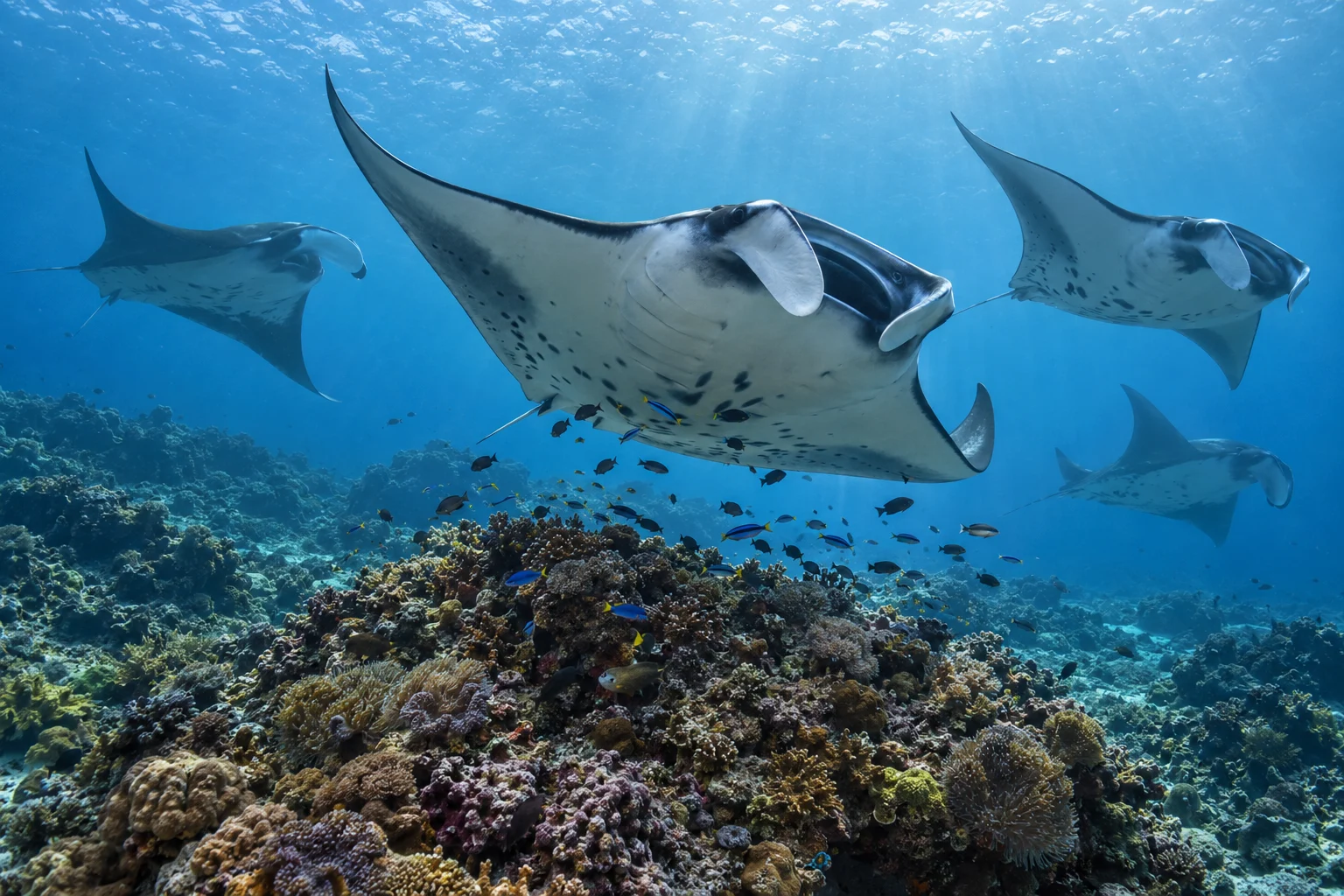
Manta ray behaviour in Komodo is best understood through three activities: feeding, cleaning and travelling. The same reef manta can use different places for different purposes, so an encounter at one site is not a permanent appointment. Watch the mouth, cephalic lobes, route and interactions with cleaner fish before deciding what the animal is doing.
Read the encounter before naming the behaviour
A manta circling above a reef may be returning to a cleaning station, moving through a feeding patch or interacting with other mantas. Circling alone does not identify the activity. Look for several clues together and describe what remains uncertain. “Repeated passes above a coral patch, with small fish approaching the body” is more informative than an unsupported claim that the manta is playing.
| Activity | Useful visible clues | What visitors should avoid |
|---|---|---|
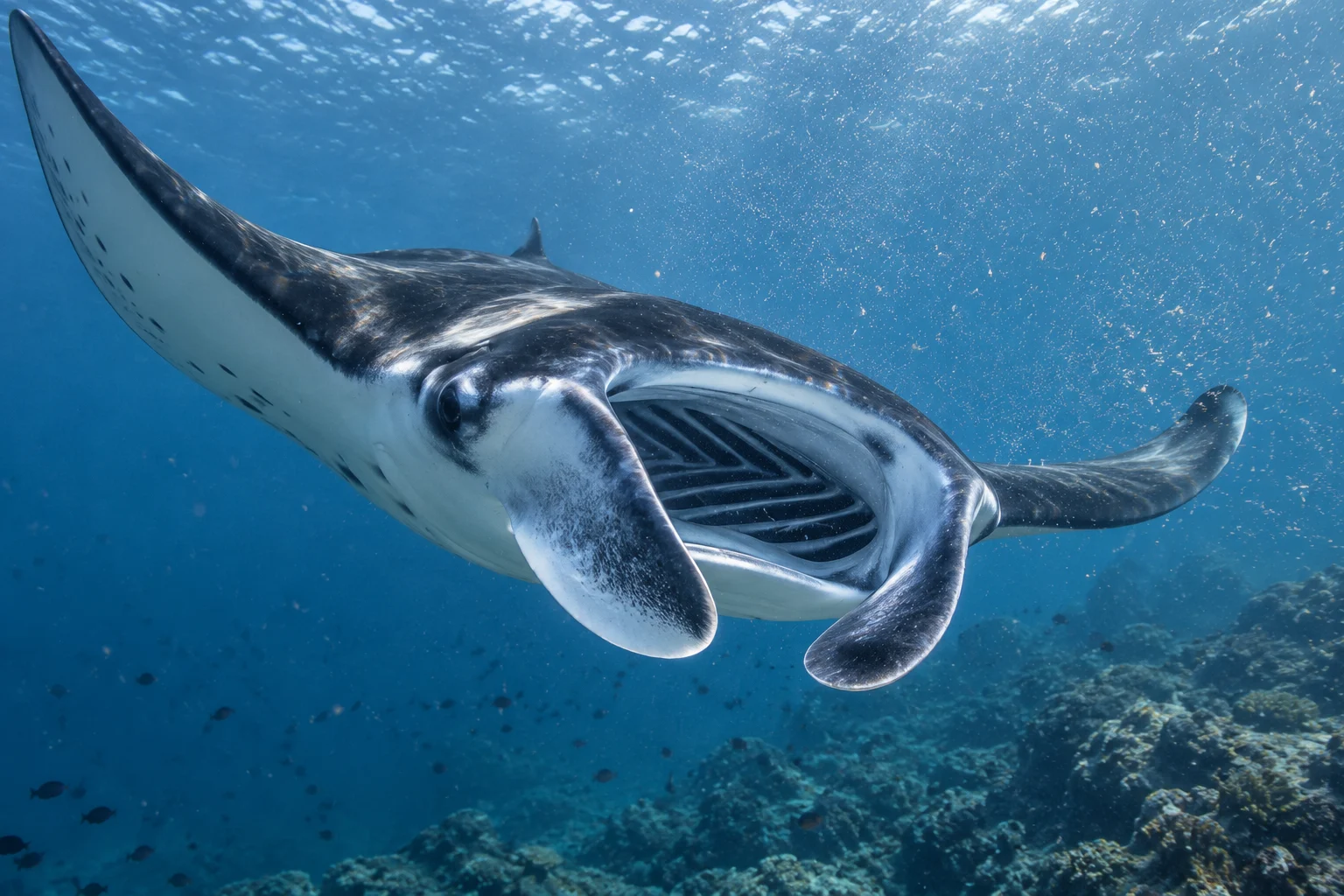
| Feeding | Open mouth; cephalic lobes helping direct water toward it; repeated movement through a patch | Swimming into the feeding path |
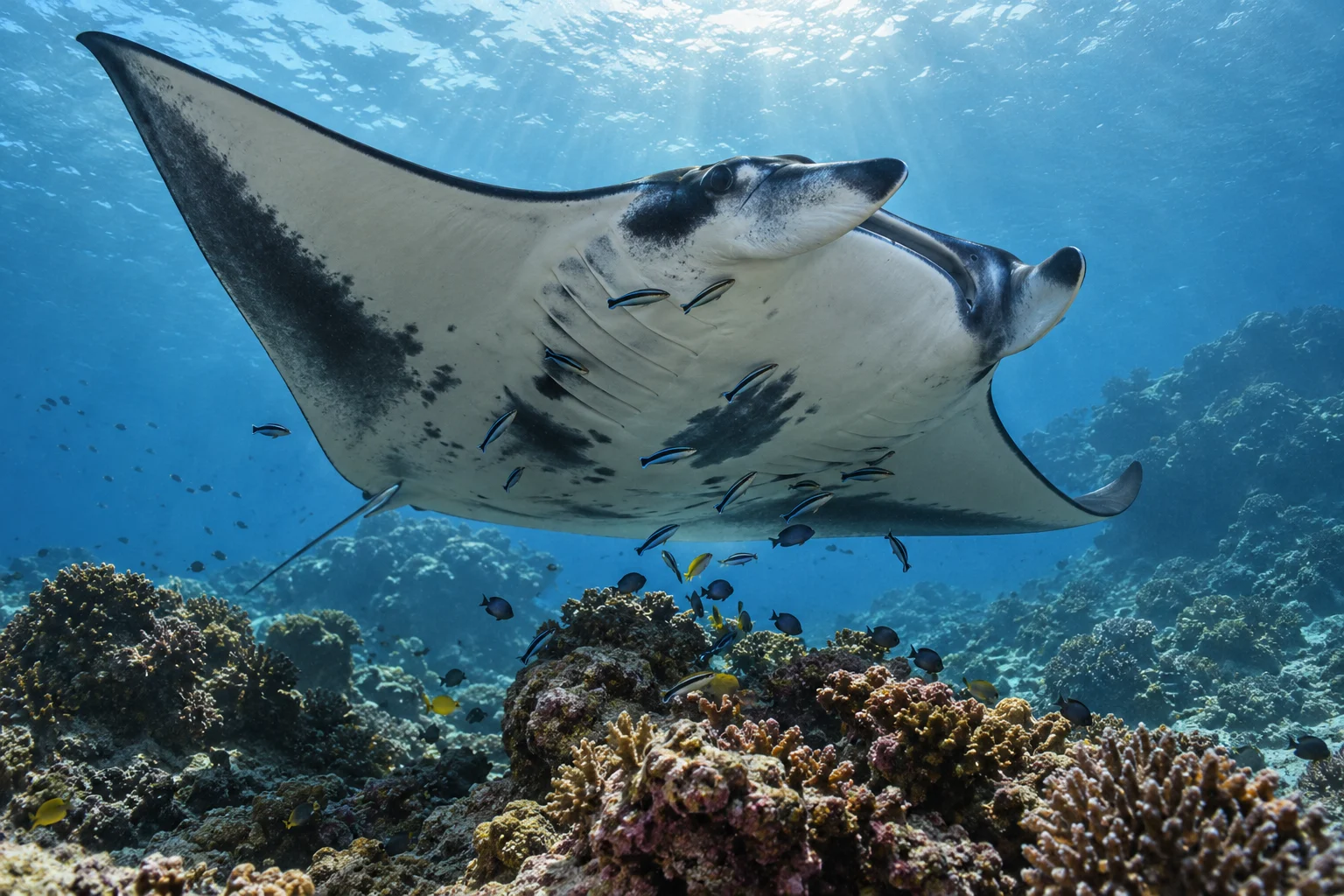
| Cleaning | Repeated use of a reef feature; cleaner fish attending the animal; slower passes or hovering | Occupying the station or surrounding the approach |
| Travelling | Sustained movement away or along a route without a clear feeding or cleaning interaction | Following into open water |
| Social or reproductive interaction | Several animals following or interacting | Declaring courtship from a brief clip without further evidence |
What Komodo research adds
Germanov and colleagues’ 2022 study analysed a photo-identification library of 1,104 reef mantas and examined residency, movement, demographics and behaviour in Komodo National Park. Its value is the link between identifiable individuals and repeated observations. It supports a view of mantas using a network of habitats, rather than each named dive site holding an isolated group.
The catalogue total is not a count of mantas present on a particular morning. It is also not a booking probability. Survey coverage, repeat observations and the years sampled define what the results can tell us. A boat visiting one site once does not reproduce the study’s observation effort.
Why feeding and cleaning need different space
At a feeding patch, the important feature may be moving water carrying plankton. The animal’s path can change as the patch changes. At a cleaning station, the important feature is the interaction with smaller fish around a reef structure. A group hovering on that structure can occupy the area the manta needs.
Ask the guide where to wait and how to keep the approach and exit open. There is no universal position that overrides a local briefing: current, depth, surface traffic and the group’s abilities matter. Snorkellers and divers may need different positions and separate supervision even when looking at the same animals.
What a seasonal pattern cannot promise
Seasonal summaries describe tendencies across observations. They cannot guarantee a manta on your chosen date, and “rainy season” does not mean every site receives the same plankton or sea conditions. A local operator’s report is useful when it states when and where the activity occurred. It is much weaker when the date and observation effort disappear.
Clear water can make an animal easier to see; plankton-rich water can support feeding while reducing visibility. Those are different objectives for a photographer. Decide whether your priority is a wide-angle image, observing feeding, or simply spending time in appropriate habitat, and discuss alternatives with the guide.
A simple observation log
Write down the date, site, approximate time and whether the encounter was at the surface or underwater. Add the number you could distinguish simultaneously, the visible behaviour and how long you watched. Keep “three animals at once” separate from “three passes”: one individual might make several passes.
Retain original photographs if they naturally show identifying marks. Do not chase an animal to complete the record. A short, uncertain observation still has value when its limits are recorded honestly. Separate your own observation from what a guide later suggested.
Choose a trip with suitable opportunities
A wildlife-focused itinerary benefits from flexibility, but extra nights alone do not establish better outcomes. Ask which habitats are realistically accessible, whether the dive team changes the plan with conditions, and how the operator handles a no-sighting visit. Compare the dive komodo options, then confirm those details for the actual departure.
Questions people ask
Does an open mouth mean aggression?
During feeding it directs water and food into the mouth. Do not interpret a feeding movement as an invitation to approach, and keep the animal’s path open.
Is every circling manta being cleaned?
No. Cleaner-fish activity and repeated use of a reef feature strengthen that interpretation. Circling without those clues remains ambiguous.
Do all sightings identify the same species?
No. This article focuses on reef manta research in Komodo. The reef versus oceanic manta comparison explains the diagnostic evidence a species claim needs; size and site name alone are insufficient.
Make one manta encounter record useful
Note the date, site, approximate time, current direction and whether the animal was feeding, being cleaned or travelling. Photograph the ventral markings only when the animal naturally exposes them. A sequence of images and an unhurried approach can distinguish one encounter from repeated passes by the same individual; an animal count made from fleeting silhouettes cannot.
Use the Komodo diving guide to assess conditions and skill requirements before choosing a manta-focused dive. A flexible route still needs to match the group’s experience and the guide’s encounter rules.
Distinguish repeated sightings from a behavioural pattern
For a useful observation, record the time, site as confirmed by the guide, visible action and duration. An open mouth alone is not enough to establish a complete feeding sequence; circling at a reef does not identify the individual or prove a cleaning event without further evidence.
Keep the guide’s encounter rules ahead of the record. Do not block the animal’s path or reposition above a station to force a close pass. Repeated photographs can show the same individual, so image counts should not be presented as animal abundance.
