
Dolphins and Whales Around Komodo: Records and Expectations
Understand documented dolphin and whale records around Komodo, changing identifications and responsible expectations for an incidental encounter.
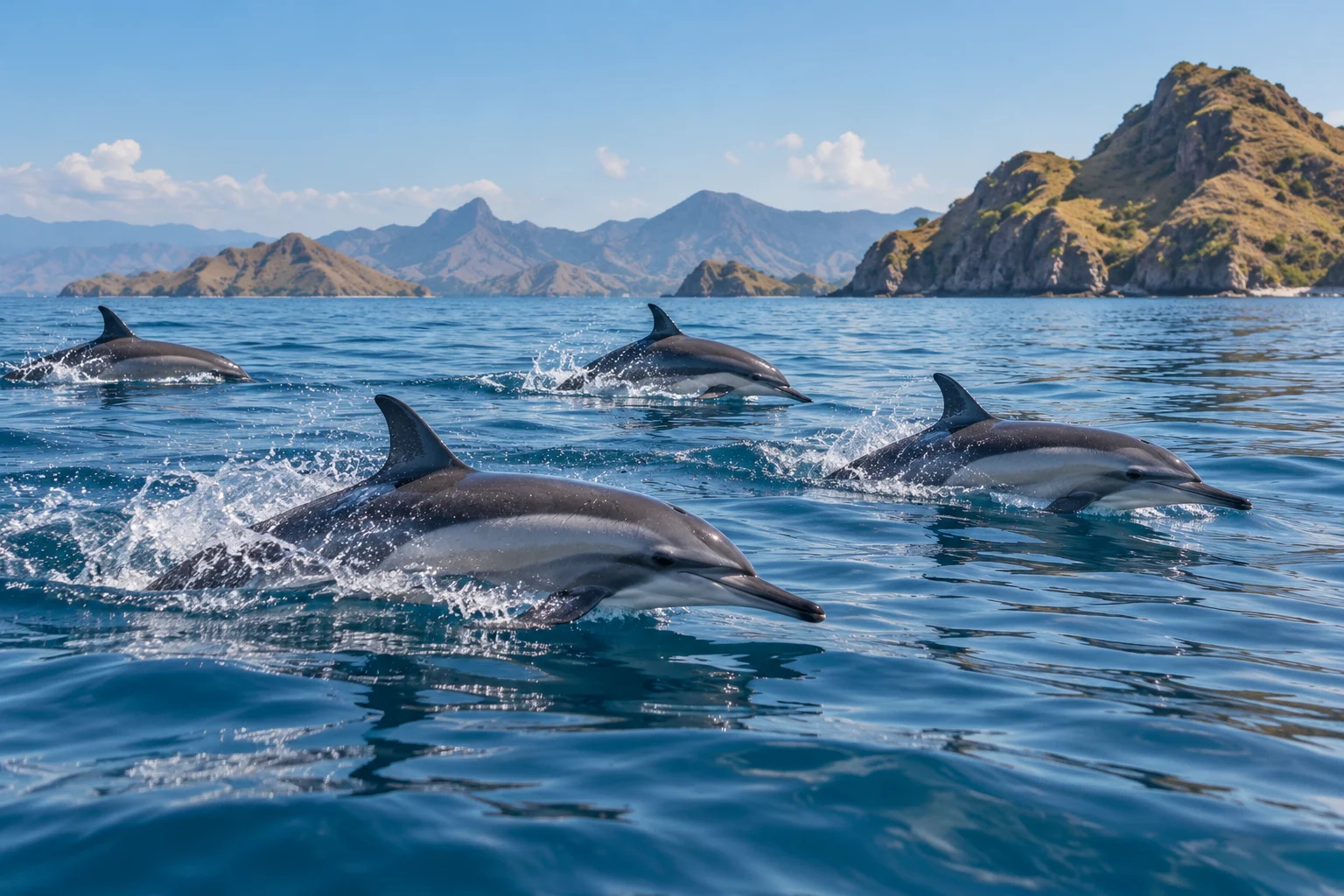
Dolphins and whales have been documented around Komodo, but a documented record is not a predictable visitor encounter. Research coverage can include the national park, nearby straits and wider Indonesian waters. Keep those boundaries visible before treating a regional species list as a Komodo whale-watching promise.
What the historical evidence says
Visual and acoustic cetacean surveys in the Komodo region were reported for the 1999–2001 period in material assembled through the Convention on Migratory Species. These investigations are evidence of research effort and recorded diversity. They are historical survey results, not a current schedule of where a tourist boat will find animals.
A useful record states the survey area and method. Acoustic detection, a distant visual sighting and a photographed individual do not provide identical information. Some records can establish presence while leaving species, group size or residence uncertain.
Why an old whale name may need review
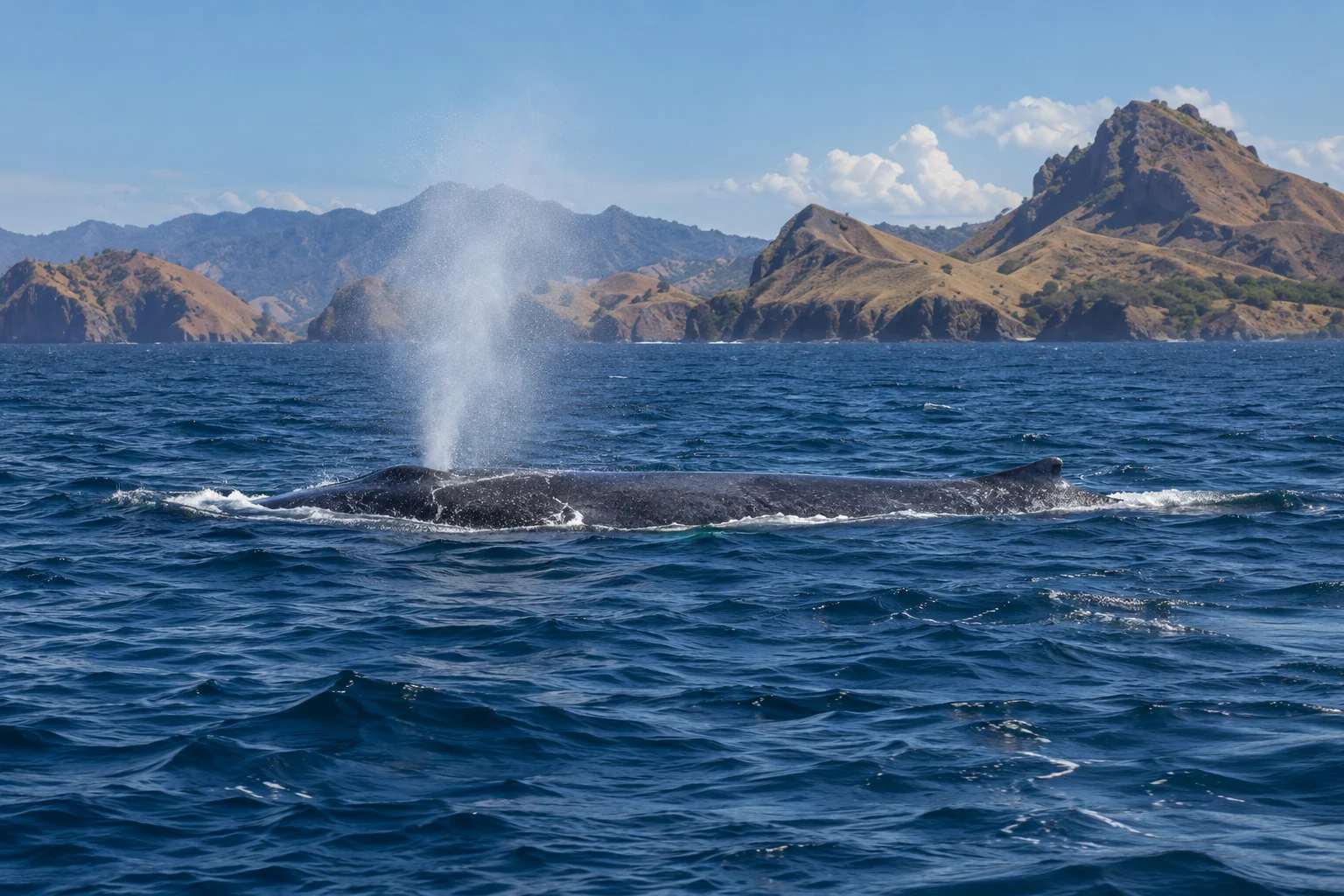
Cerchio and colleagues’ 2019 review of Omura’s whale distribution discusses historical Komodo-region observations described as “pygmy Bryde’s whales”. The authors compare the reported features with later understanding of Omura’s whales. This is a concrete example of how identification can change as taxonomy and evidence improve.
Do not rewrite every older Bryde’s-whale record as Omura’s whale. The review’s reasoning applies to the records it examines. A new tourist photograph needs its own identification rather than inheriting a name from an old site report.
| Claim | Evidence to request | Safer wording if incomplete |
|---|---|---|
| A dolphin species occurs in Komodo | Identifiable local record with location and date | Dolphin reported; species uncertain |
| A whale appears every season | Repeated observations and observation effort across seasons | Historical or occasional sightings |
| A certain number live in the park | Population study with defined area and method | Catalogue or sightings total, if that is what was measured |
| A boat will see whales | No evidence can guarantee a wild encounter | Possible incidental encounter, subject to conditions |
Dolphin identification from a moving boat
Body proportions, beak length, dorsal-fin shape, colour pattern and behaviour can all help. A splash, a partial fin or a distant leap may show too little. Keep a broad label when the diagnostic features are missing.
Photographs should be taken from the normal safe position aboard. Retain the original sequence, since one frame may hide features visible in the next. Note approximate location and time without leaning over a rail or distracting the crew from navigation.
Presence does not establish residence
A mobile animal can pass through a corridor, feed temporarily or return on several occasions. Those are different patterns. A repeated sighting might even involve different individuals unless a reliable identification method connects the records.
A visitor should therefore ask what “resident” means in a guide or brochure. Is it based on a research study, repeat photo-identification or simply frequent reports? The answer affects what can reasonably be expected from a short visit.
When an encounter happens
Let the captain control the vessel. Do not ask for a chase, a close interception or an unscheduled swim. Avoid crowding the rail, keep noise down and follow the crew’s directions. Multiple boats around one group can create pressure even when each guest thinks their own boat is behaving quietly.
Observe direction and behaviour from the position provided. If the animals move away, let them. A brief view can be a complete encounter; extending it is not automatically a better wildlife experience.
Record the encounter usefully
Save date, time, approximate position, group-size range, visible behaviour and photographs. Record the number seen at once separately from the number of surfacings. If someone later identifies the species, retain their name or reference and the level of confidence.
A responsible record can say what is unknown. Uncertainty does not make the observation worthless; it prevents a weak sighting from turning into an exaggerated distribution or abundance claim.
Book the route, not a whale guarantee
A komodo tour 4 days 3 nights can offer more time travelling through the region, but duration alone does not establish a whale encounter rate. Choose it for the route and time aboard. Treat cetaceans as a possible wild encounter, not a promised inclusion.
If dolphins or whales appear
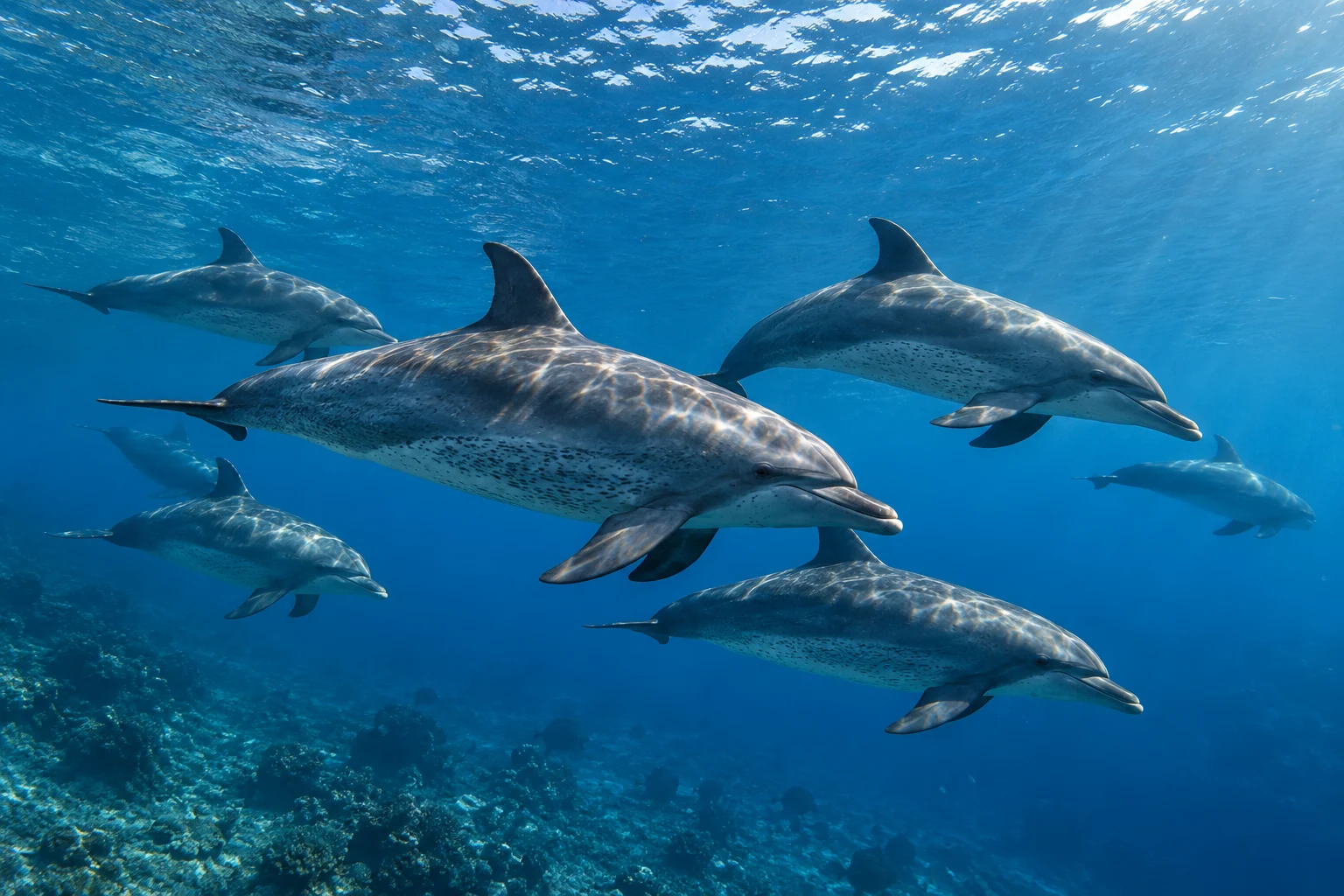
Have one person note time, location and travel direction while others watch from a respectful distance. A dorsal-fin photograph may support later identification, but an old species list is not evidence that a given pod lives permanently in the park. Ask an operator how its captain changes course around animals; do not book a fixed Komodo route as a guaranteed whale-watching departure.
Choose flexible wildlife-focused Komodo tour packages or compare Komodo liveaboards, while treating dolphin and whale sightings as possible encounters rather than guarantees.
Make a passing encounter a bounded record
Record date, approximate location privately, direction of travel, group size as an estimate and the features actually seen. A distant fin can remain unidentified. An old park survey establishes records during its sampling period, not a guaranteed migration timetable for a holiday.
Let the skipper manage speed, position and navigation under the applicable encounter procedure. Do not ask for a chase or an improvised swim. If a cetacean appears during transit, treat it as an incidental opportunity rather than evidence that the purchased route is a dedicated whale programme.
Historical park surveys and natural-history publications are indexed in the Komodo research archive; retain each publication’s date and sampling limits rather than treating it as a current service or wildlife inventory.
