
Komodo Dragon Size: How Big Wild Dragons Really Get
How big Komodo dragons really get: typical wild adults, male and female size, the 3.13 m record, island differences and what you will see on a trek.
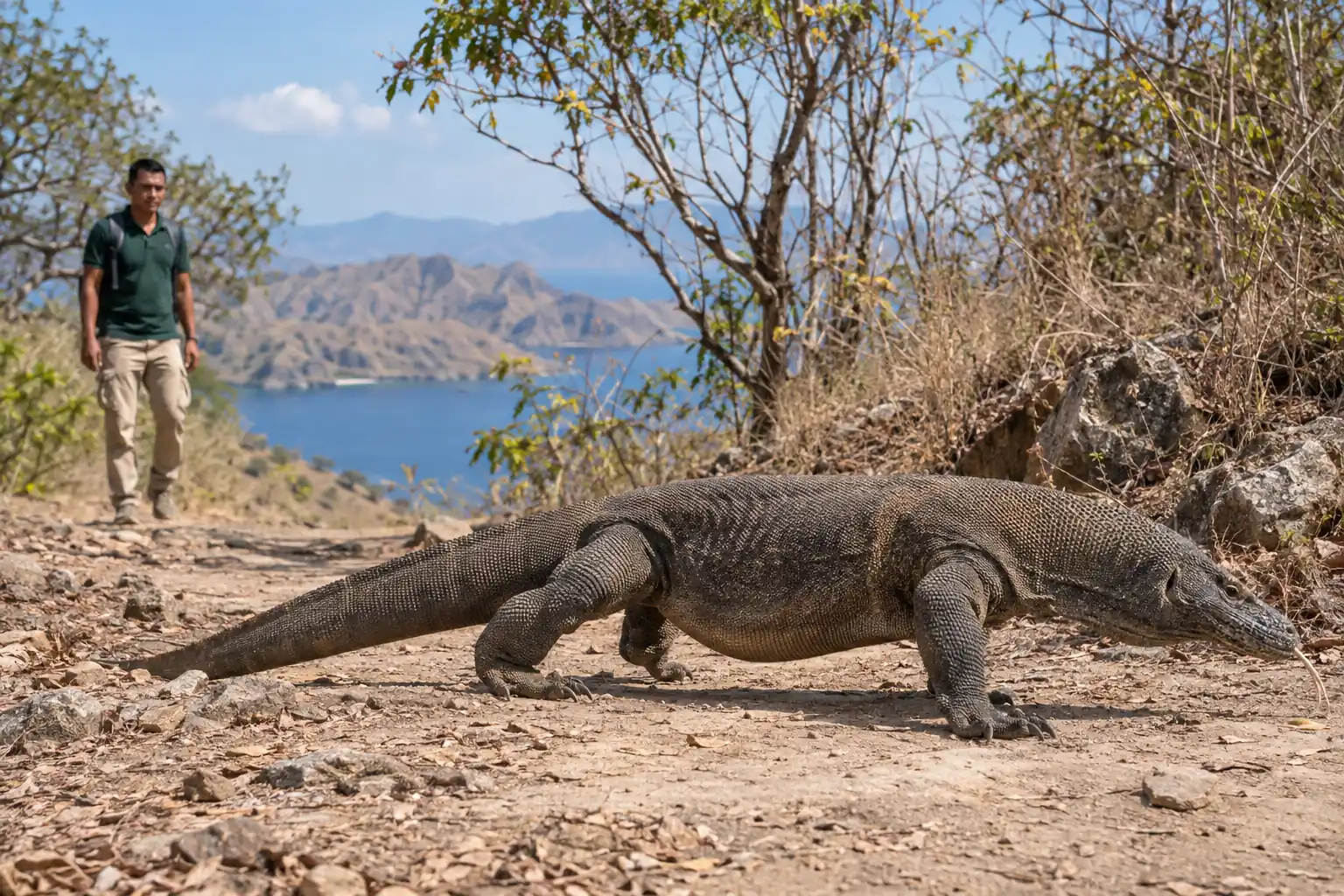
Komodo dragon size varies with sex, age, population and feeding state. Large males can approach 3 metres in total length; that maximum is not a typical size for every adult. The largest verified specimen reached 3.13 m and 166 kg, but weights like that can include a recent meal: the longest dragon measured in a Komodo National Park field survey was 3.04 m and weighed 81.5 kg. Males grow far larger than females, and Komodo dragon size also depends on the island a dragon lives on.
Most Komodo dragon size figures online are either a zoo average or a single record animal, and the two get mixed up constantly. This guide separates them using the long-term field studies run inside Komodo National Park, so you know what a wild adult actually measures, why the famous record is misleading, and what size of dragon you are likely to meet on a ranger-led trek.
Figures checked 24 September 2026 against the sources listed at the end of this guide.
Komodo dragon size at a glance
| Measure | Figure | What it describes |
|---|---|---|
| Typical wild adult weight | About 70 kg | Smithsonian’s figure for wild dragons |
| Longest dragon in the 2003–2004 park survey | 3.04 m total length, 81.5 kg | Measured at Loh Liang, Komodo Island |
| Heaviest dragon in that survey | 87.4 kg | Flagged by researchers as boosted by a recent meal |
| Largest verified specimen | 3.13 m, 166 kg | Record animal; the weight may include stomach contents |
| Male size ceiling | About 157 cm snout–vent length (roughly 3 m overall) | Reached late in life, around an estimated 62 years |
| Female size ceiling | About 117 cm snout–vent length (roughly 2.3 m overall) | The largest females caught in a 2002–2010 study |
| Hatchling | About 30–45 cm | Young dragons live in trees for their first months |
Researchers measure dragons by snout–vent length (SVL): from the tip of the snout to the vent at the base of the tail. It does not change with a meal, which makes it far more reliable than weight. For the one survey animal with both measurements published, 154 cm SVL matched 304 cm in total, so a large adult’s overall length is roughly double its SVL. That ratio is how the overall lengths in the table are estimated.
How big is an adult Komodo dragon?
The honest answer is that it depends on sex, age and island. Smithsonian’s National Zoo puts a typical wild dragon at about 70 kg. Some reference works quote around 135 kg as a general adult weight, but field data from inside the park suggest that describes an exceptional, well-fed male rather than a typical animal.
The best evidence comes from a survey in which researchers caught, measured and released 515 dragons at ten sites on Komodo, Rinca, Gili Motang and Nusa Kode in 2003 and 2004. Even among the biggest 15% of dragons on Komodo Island, the average was 145.6 cm SVL and 66.4 kg. Only three animals in the entire survey weighed 81.5 kg or more.
In practice, a large adult male on Komodo Island measures around 2.5 to 3 m and weighs roughly 60 to 90 kg on an empty stomach. Adult females are shorter, rarely much above 2.3 m overall, and noticeably lighter. Our Komodo dragon facts guide covers the rest of their biology, from venom to diet.
Male vs female Komodo dragon size
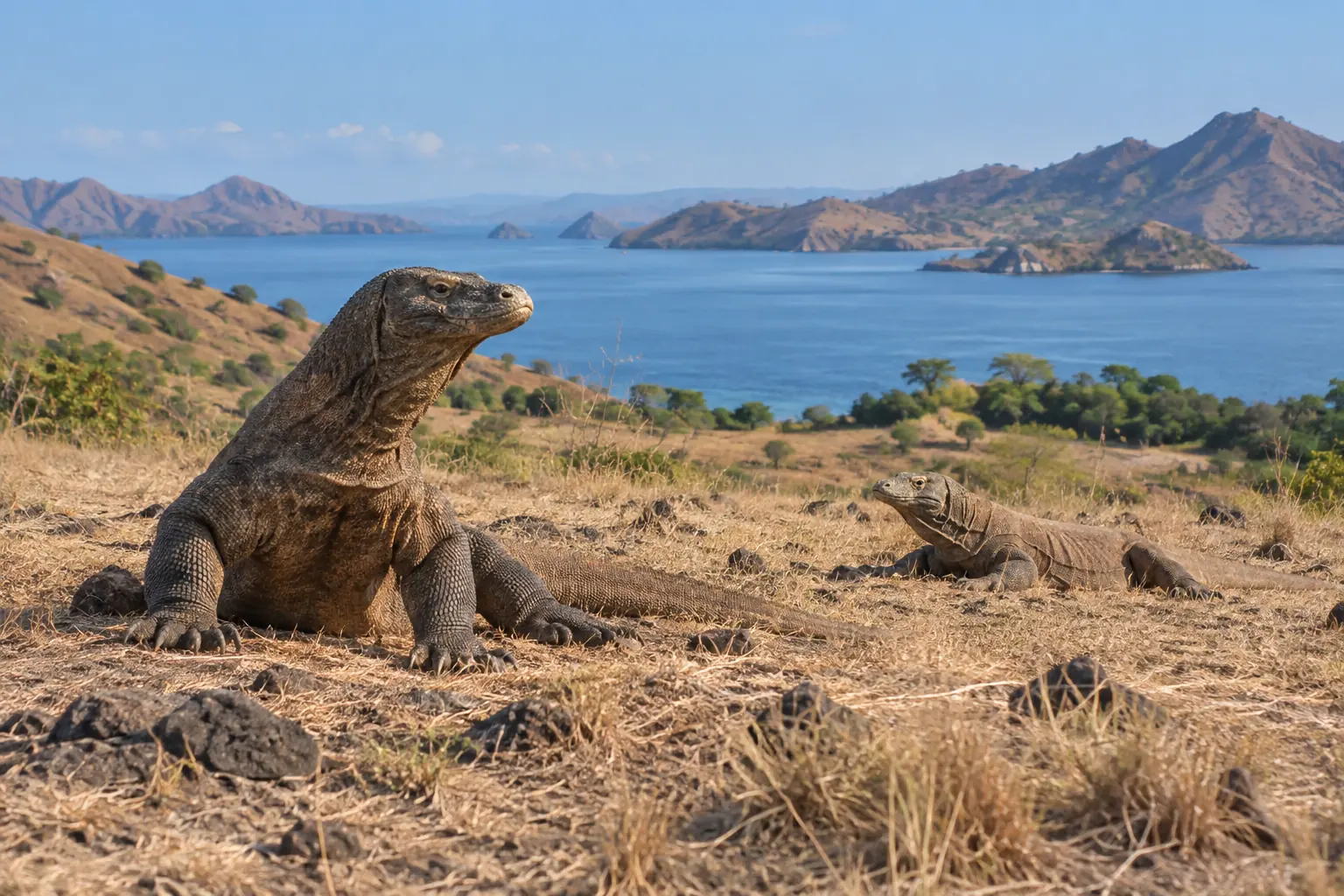
Males and females look almost identical. Smithsonian notes there is no obvious external difference, only a subtle arrangement of scales just in front of the vent. Size is the giveaway, because the two sexes grow on very different paths.
A 2012 study that tracked the growth of 400 wild dragons at ten sites between 2002 and 2010 found that females put almost all their energy into eggs once they start breeding. Researchers never caught a female longer than about 117 cm SVL, and the oldest females recorded, at around 31 years, were still growing only very slowly. Males keep investing in growth for decades: their size levels off at roughly 157 cm SVL at an estimated age of about 62 years.
- Females mature at about 8–11 years, after which growth slows sharply. The largest measure roughly 2.3 m overall.
- Males continue growing long after maturity, and bigger males tend to win fights over mates. The largest reach about 3 m overall.
- Lifespan differs too: no female older than about 31 was recorded, while the growth model suggests males can live past 60.
That is why almost every giant dragon in a photograph is an old male, and why the Komodo dragon size you hear quoted depends heavily on which sex was measured.
What was the biggest Komodo dragon ever recorded?
The figure most sources repeat, and the one Smithsonian’s National Zoo cites, is a verified specimen of 3.13 m (10.3 ft) and 166 kg (366 lb). Treat the weight with caution. A dragon’s stomach stretches enough for it to eat up to 80% of its own body weight in a single meal, and Smithsonian itself says this probably explains the exaggerated weights reported for some captured animals.
Field data make the same point. In the park survey, the heaviest dragon weighed 87.4 kg, and the researchers flagged that figure as inflated by a recent meal. They note that a big male that has just eaten a deer or pig can gain more than 20 kg and briefly top 100 kg. The longest wild dragon they measured, 3.04 m in total and caught at Loh Liang on Komodo Island, weighed 81.5 kg.
So if you are asking how big the biggest Komodo dragon gets: a little over 3 m is the realistic ceiling for length, and around 80–90 kg is a realistic ceiling for an empty-stomached wild male. Anything much heavier is a dragon that has just fed, a captive animal, or an unverified story.
Why dragons on Komodo and Rinca grow bigger
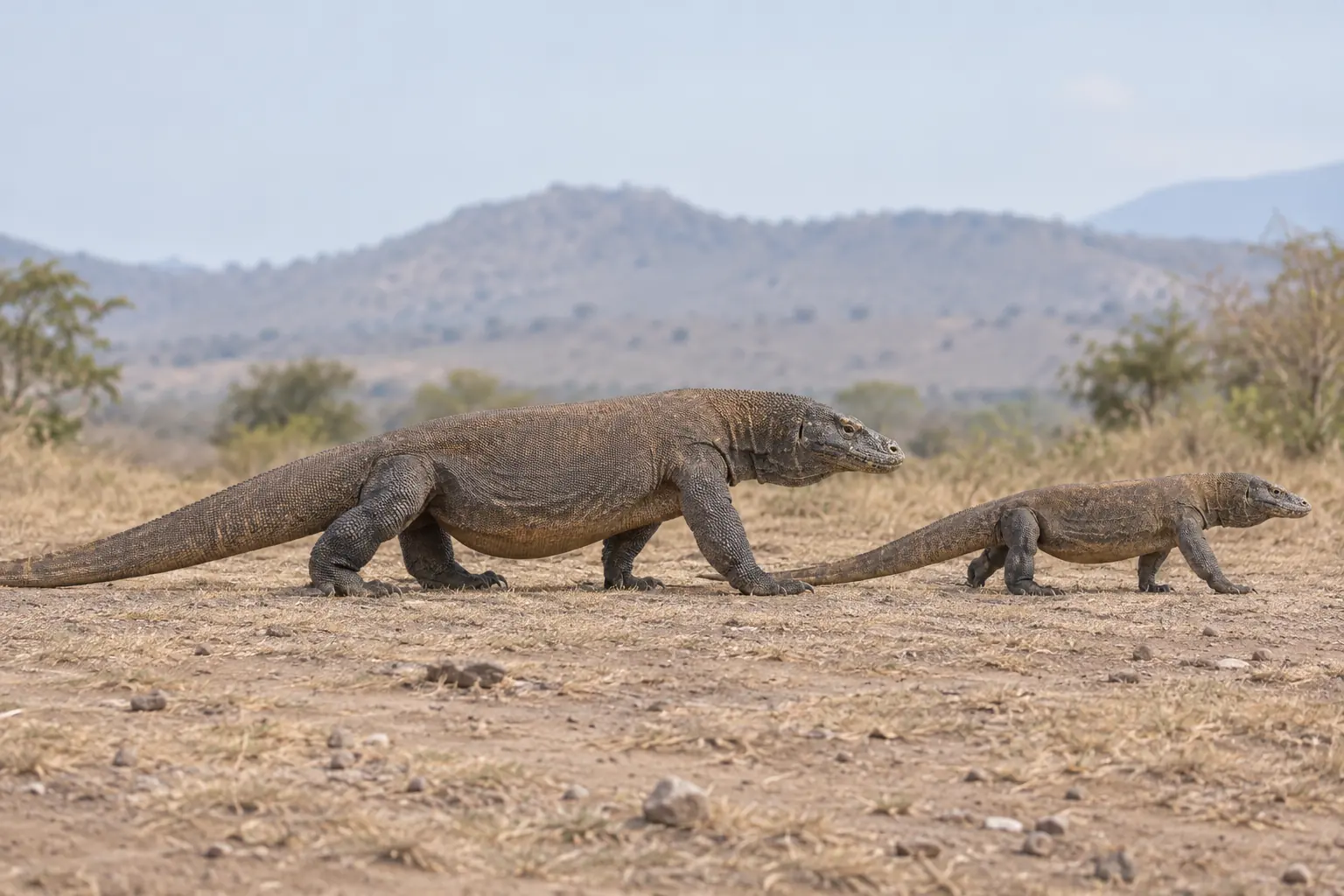
Komodo dragon size is not uniform across the park. The same 2003–2004 survey compared the four island populations inside Komodo National Park and found the biggest dragons on the two largest islands.
| Island | Island area | Average SVL | Average weight | Dragons sampled |
|---|---|---|---|---|
| Komodo | 393 km² | 92.1 cm | 23.5 kg | 226 |
| Rinca | 278 km² | 86.3 cm | 20.9 kg | 228 |
| Nusa Kode | 9.6 km² | 83.1 cm | 10.8 kg | 20 |
| Gili Motang | 10.3 km² | 74.8 cm | 7.9 kg | 39 |
These averages include juveniles, which is why they look small. They are useful for comparing islands, not for describing an adult. Looking only at the largest 15% of dragons on each island, the gap widens: 145.6 cm and 66.4 kg on Komodo against 96.9 cm and 13.6 kg on Gili Motang. The biggest Gili Motang dragons are a third shorter and roughly a fifth of the weight.
The best predictor was food. Deer droppings, used as an index of how many Timor deer an island supports, ranged from about 5.9 pellet groups per survey transect on Gili Motang to 20.7 on Komodo, and maximum dragon size tracked that index almost perfectly. Komodo and Rinca also have wild pigs and water buffalo; the two small islands have neither.
Whether small-island dragons are genetically smaller or simply underfed is still unresolved. The researchers could not separate the two, and a controlled breeding experiment to settle it would be impractical.
How fast do Komodo dragons grow?
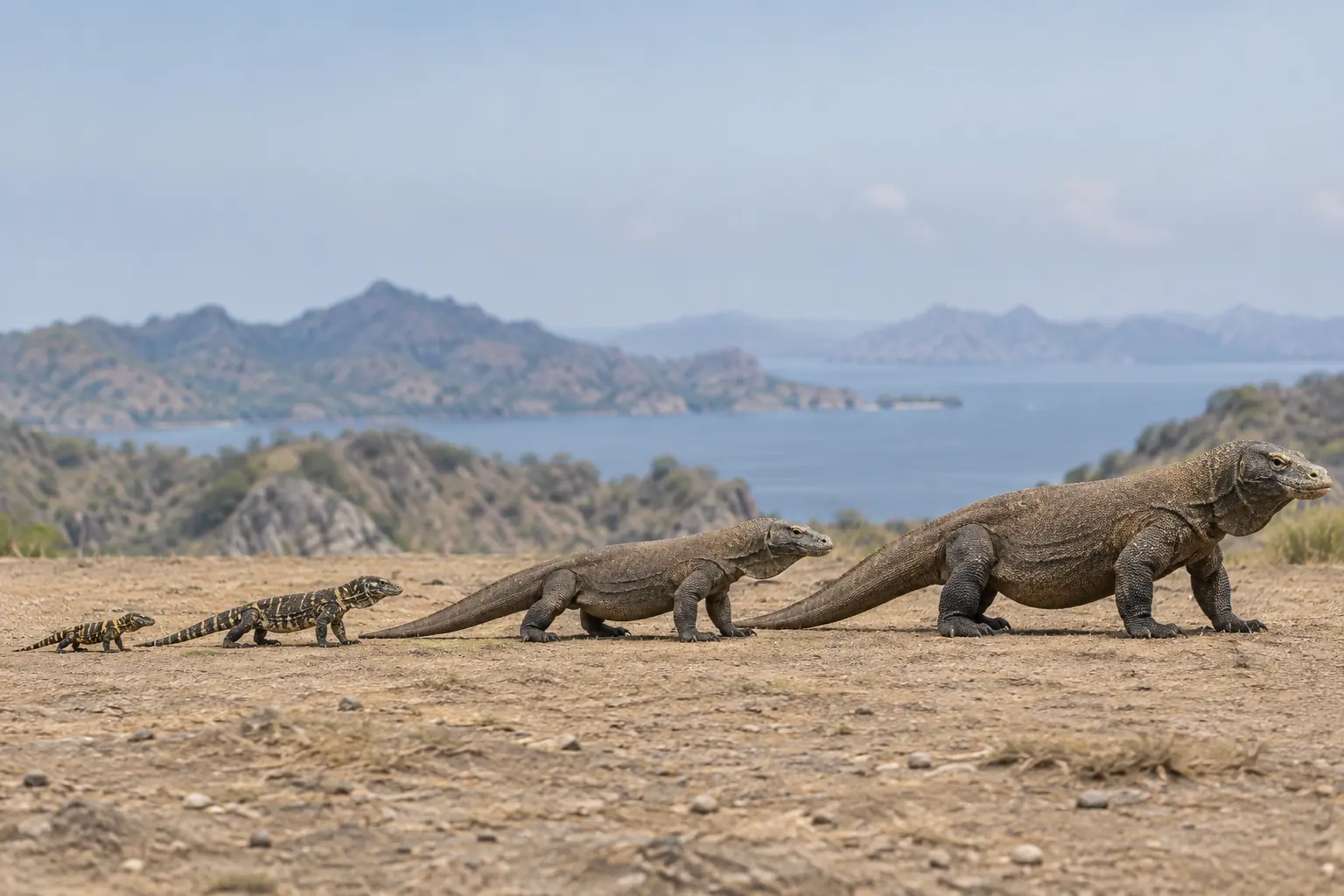
Eggs hatch around April or May, and hatchlings emerge at roughly 30 to 45 cm long. They spend their first months in trees, out of reach of adult dragons, which do eat smaller members of their own species. Most yearlings are so arboreal that ground traps rarely catch them.
Growth is fastest in the early years and slows as dragons mature. Females reach maturity at about 8–11 years and then almost stop growing; males carry on for decades. That split is the main reason Komodo dragon size varies so much between individuals of the same age.
Where a dragon lives matters as well. The 2012 growth study found the fastest growth at intermediate population densities: where dragons are packed too closely, competition for the same carcasses slows everyone down. Island prey levels, as the survey above showed, set the upper limit.
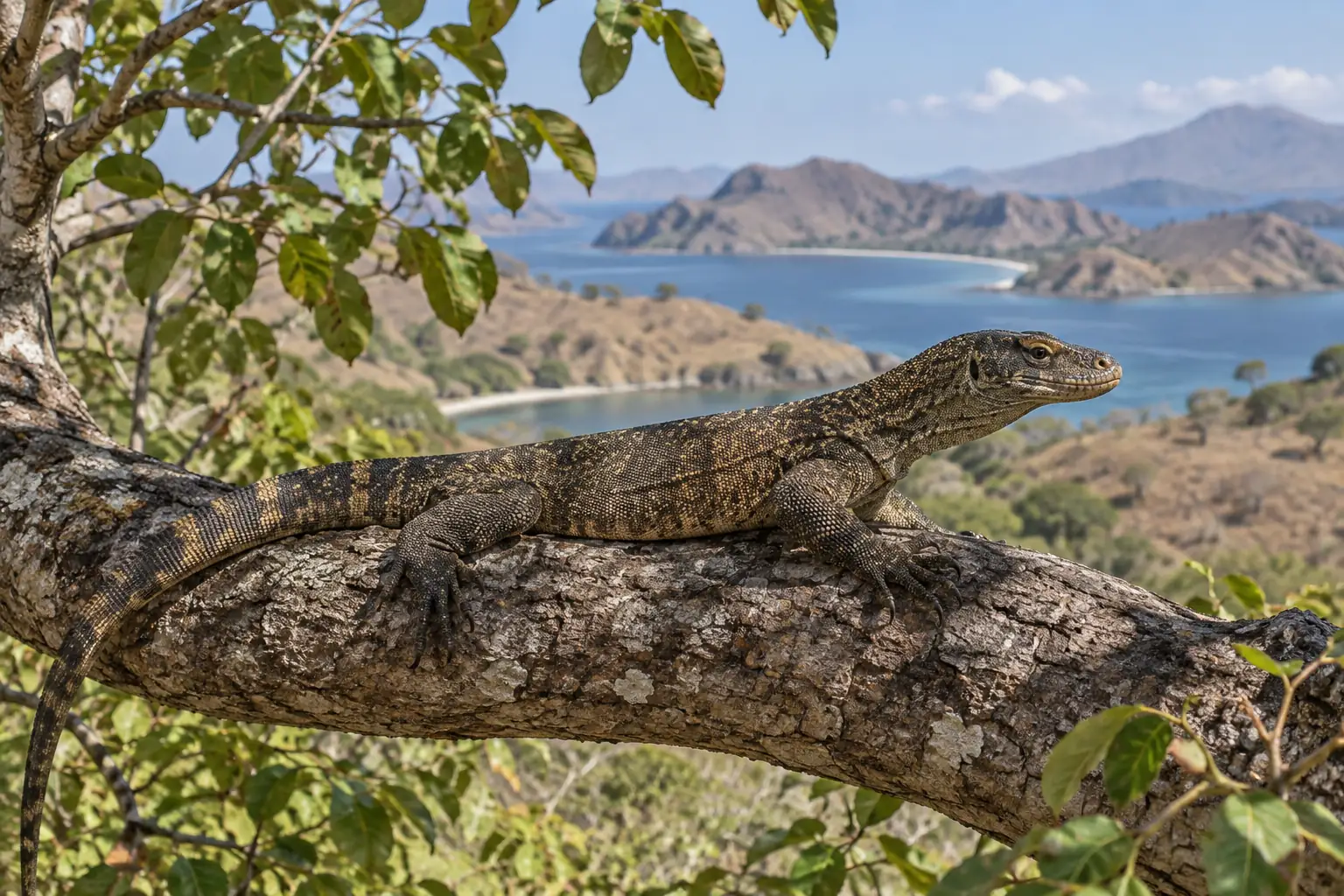
Komodo dragon size compared with humans and other lizards
A large male stretched out is longer than most people are tall, longer than many adults are tall; the exact ratio depends on the measurements, while adult weight varies substantially with sex, population and feeding state. The difference is bulk: a dragon carries that weight on a low, heavy frame with a tail roughly as long as its body.
No other living lizard comes close in mass. Other big monitor lizards can approach it in length but are far leaner, and Australia’s perentie, the largest lizard on that continent, typically reaches around 2 m. The Komodo dragon’s extinct Australian relative, Megalania, was far larger: fossil-based estimates range from about 4.5 m to 7 m. Among living reptiles, the big crocodilians are heavier still, so the Komodo dragon’s title is largest lizard, not largest reptile.
What size of dragon will you see on a trek?
Island makes a real difference to the Komodo dragon size you see on a trek. In the park survey, 28% of dragons on Komodo Island were large adults over 120 cm SVL, against 15% on Rinca. Rinca’s population is weighted towards younger animals: 38% under 60 cm SVL and 57% between 60 and 120 cm. Rinca treks often show you more young and mid-sized dragons, while Komodo Island has proportionally more heavyweights.
There is a second effect worth knowing. A 2018 study comparing sites with high and low tourist activity found that dragons around busy visitor areas were heavier, in better body condition and noticeably less wary. The authors linked this to food scraps and other human-provided food. The big, calm dragon lying near a ranger post is real, but it is not a typical wild adult.
Sightings are never guaranteed on either island, and every visit runs with a park naturalist guide. When comparing Komodo tour packages, check how much time the itinerary allows at the named ranger gateway; our Komodo Island vs Rinca comparison covers the trade-offs, and our Rinca Island guide explains the Loh Buaya treks. Check the quota rules in the permit guide before fixing dates, and see the best time to visit for seasonal conditions.
If you are short on days, the komodo tour 2d1n includes a ranger-led dragon trek, and the Komodo one day tour fits a landing into a single speedboat day. A duration label does not guarantee both islands. Confirm the named ranger gateway and actual route with the operator.
Reading a Komodo dragon size claim
Before you repeat a Komodo dragon size figure, run it past four quick checks:
- Is it total length or snout–vent length? For large adults the two differ by roughly a factor of two.
- Was the animal weighed on an empty stomach? A single meal can add 20 kg or more.
- Was it wild or captive? Captive dragons are fed regularly and can be heavier.
- Is the scale from a photo? Wide lenses and low angles make a dragon look bigger. Never step closer than the guide allows to get a scale shot.
Frequently asked questions
How big is a Komodo dragon compared to a human?
A large adult male measures about 2.5 to 3 m from snout to tail tip, longer than many adults are tall; the exact ratio depends on the measurements, and weight varies by sex, island, life stage and feeding state; a single figure does not describe every wild adult.
How much does a Komodo dragon weigh?
Wild adult weights vary substantially; distinguish a source’s adult range from an all-age sample mean. Big males on Komodo Island reach roughly 80 to 90 kg on an empty stomach and can pass 100 kg straight after a large meal.
What is the biggest Komodo dragon ever recorded?
A frequently cited exceptional specimen is reported at 3.13 m and 166 kg. Keep this historical record separate from typical wild adults; the measurement context and feeding state matter. The longest wild dragon measured in Komodo National Park’s field survey was 3.04 m and 81.5 kg.
Are male Komodo dragons bigger than females?
Yes. Males keep growing for decades and level off near 157 cm snout–vent length, about 3 m overall, while the largest females recorded reached about 117 cm, roughly 2.3 m overall.
How big are baby Komodo dragons?
Hatchlings are roughly 30 to 45 cm long. They spend their first months living in trees, partly to avoid being eaten by adult dragons.
Does Komodo dragon size differ between islands?
Yes. Dragons on Komodo and Rinca, where deer, wild pigs and water buffalo are available, grow much larger than those on the small islands of Gili Motang and Nusa Kode.
Do Komodo dragons keep growing all their lives?
Growth slows sharply with age. Females almost stop growing after they start breeding at 8 to 11 years, while males continue slowly until their size levels off late in life.
Do not compare unlike measurements
A total length includes the tail, whereas snout–vent length does not. A maximum, a sample mean and a captive record describe different quantities. Before comparing two figures, label the measurement, sex or life stage where known, setting and source. A photograph with a person behind the animal is not a calibrated measurement.
The 2002–2010 growth research followed marked animals across several sites and islands. That design helps explain variation rather than supplying one size all adults should reach. Treat an exceptional record as a record, and avoid turning a mixed-age island mean into the typical adult male weight.
For sex, age and site differences in measured growth, see Laver and colleagues’ 2012 capture–mark–recapture study.
