
Best Time to Visit Komodo National Park: A Month-by-Month Sailing Guide
The dry season runs April to October, with May to early October the strongest window for sailing Komodo. Here is what actually happens each month.
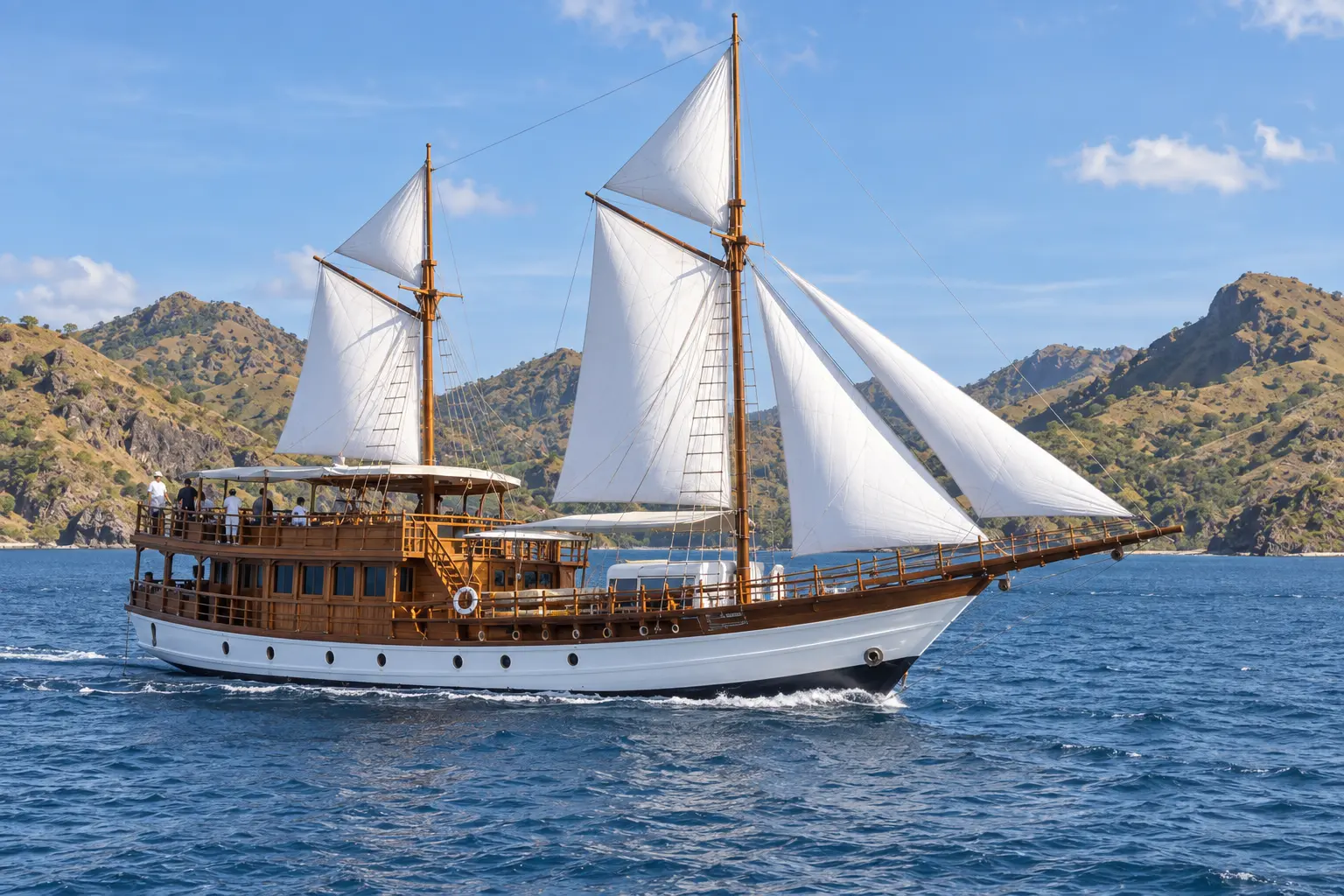
For many first visits, a drier-season month is a useful starting point, but there is no month that guarantees calm crossings, clear water or wildlife. Choose the route and activities first, then separate land rainfall, passage wind and waves, underwater conditions and current park access. The short-range forecast and operating decision control the actual departure.

Editorial review: 16 October 2026. This is a qualitative calendar, not a measured multi-year rainfall, wave or price dataset. Use the current forecast and the vessel’s operating decision for your date.
Best time to visit Komodo for what you want to do
| Your goal | Starting point | Verify for your dates |
|---|---|---|
| A first trip with classic stops | Consider the broadly drier part of the year, often around April–October. | The named route, wind, waves, boarding and access; dry does not mean calm. |
| Green hills | Look at the period after seasonal rain. | Recent conditions and photographs with a known date; the landscape does not change on a fixed day. |
| Dragon viewing | Choose an authorised ranger-led route and suitable walking conditions. | Access and the guide’s advice. Breeding or hatching dates do not guarantee an encounter. |
| Mantas or a dive-focused trip | Use the operator’s north, central or south site plan. | Current, water temperature, visibility and certification fit, separately from rainfall. |
| Fewer crowds or a lower fare | Compare actual departures outside the dates most demanded by your market. | Named cabin availability and itemised quotes. A shoulder-month label is not a price survey. |

The table is a starting point, not a sighting or sea-state guarantee. Check the actual site plan in the Manta Point guide and the ranger context in Komodo dragon facts. A tour duration alone does not confirm a visit to both Komodo and Rinca.
How to use this month-by-month Komodo guide
When planning a Komodo trip, first decide whether your dates are flexible. Then ask where the boat will sail: sheltered channels near Labuan Bajo are not the same exposure as a longer passage. Finally ask about departure times, park registration and the captain’s weather-change policy. A seasonal label can help choose a month but cannot certify a specific sea state. BMKG publishes separate information for Labuan Bajo harbour, Labuan Bajo waters and tourism locations such as Padar and Rinca; check the relevant location, not a generic city forecast.
Komodo weather and sailing, month by month
| Month | Useful planning expectation | Trade-off and check |
|---|---|---|
| January | Wet-season conditions can make exposed legs more changeable; hills may be green. | Allow a route alternative and check current maritime warnings. |
| February | Often one of the more weather-sensitive months for a fixed sailing plan. | Do not equate a cheap quote with a dependable departure; check the terms. |
| March | Transition toward drier conditions varies by year. | Do not assume the sea settles on a calendar date; examine the near-term forecast. |
| April | Early dry-season planning with greener scenery after rain. | Verify the actual boat’s route and visitor access. |
| May | A useful balance for many first-time visitors who want time ashore and on the water. | Weather remains variable; secure named dates and cabins. |
| June | Often drier, with more demand as holiday travel grows. | Check your preferred departure, cabin and park visit separately. |
| July | Popular dry-season travel window. | More demand does not mean every sea leg is calm; watch wind and site conditions. |
| August | Another popular dry-season month, with dry-looking hills. | Compare exact prices and inventory instead of assuming a universal peak surcharge. |
| September | Often attractive to travelers who want dry-season conditions after major holidays. | Ask for the current route and any wind-related alternatives. |
| October | Late dry-season option; landscape may be especially dry. | Rain timing varies between years and routes. |
| November | Transition month: weather and pricing are less predictable. | Choose flexibility over a promise that every remote stop is accessible. |
| December | Wet-season influence returns; holiday dates can be busy. | Separate early-month dates from Christmas and New Year; check live stock. |
The table is a qualitative monthly decision aid. It does not rank measured rainfall, visibility or nightly boat prices. Those require a stated station, period, route and fare sample. Competitor calendars that label an entire month “calm” or “roughest” can hide week-to-week changes and the different conditions experienced on different legs.
Rain, wind and waves answer different questions
A rain icon in Labuan Bajo does not by itself decide whether a Komodo boat sails. Check wind and wave forecast for the waters the boat crosses, ask whether the planned activities are in sheltered or exposed places, and follow the competent maritime authority and captain’s decision. A guest may tolerate a wet ranger walk while a crossing is still inappropriate, or enjoy sun on shore while wind affects the boat. For comfort aboard, add sea conditions and seasickness planning to those route-specific questions before choosing the boat.
Ask the operator: Which of our planned legs is most weather-sensitive? Are there safe alternate anchorages? What is the return plan if the chosen destination is unavailable? What happens to prepaid extras? A longer trip gives more scheduling options, but does not guarantee a particular island, snorkel site or extra day of activities. Our trip duration guide explains how usable sailing time changes the itinerary.
What a weather suspension means for your booking
A weather warning, a restriction on tourist sailings, a park-service closure and a captain’s decision are different events. Ask which notice applies to your departure, its issue time, validity, route and review point. An older closure report is not evidence that your future date is closed, and a clear town forecast is not clearance to sail.
Before paying, ask which parts of a cancellation are covered by the boat operator and which remain separate arrangements, such as flights, hotels and transfers. If conditions change:
- Build in flexible dates or extra days in Labuan Bajo.
- Get the operator’s weather-cancellation and refund terms in writing before paying.
- Check that your travel insurance covers cancellations ordered by the port authority.
- Watch KSOP and BMKG notices in the week before departure.
Wildlife: avoid a promise tied to a date
Komodo dragons are wild animals; ranger guidance and the permitted route determine an encounter, not the month on its own. Mantas move between feeding and cleaning areas and sightings change with ocean conditions. A published scientific study used photographic identification to investigate manta movement and site use in the Komodo area; that is a better reason to treat one beach or one month as uncertain than to promise a guaranteed encounter. Whale sharks should be regarded as opportunistic sightings, not a seasonal itinerary item without robust local records. The destination’s Manta Point guide gives site context without turning observations into a guarantee.
For diving, do not let a broad weather calendar override site-specific currents, visibility and the dive operator’s assessment. A traveler whose main goal is underwater conditions should ask the dive operator about the actual north, central or south itinerary and expected conditions for their certification and comfort.
Pick a month by the decision you control
| Traveler priority | Starting window | Check before paying |
|---|---|---|
| Green hills and a first overnight trip | April or May | Recent rain pattern and boat’s actual departure. |
| Dry trails and wider date choice | May to October | Cabin and park availability plus current wind forecast. |
| Fewer scheduling commitments | Shoulder months | Written weather-change terms and land buffer. |
| Fixed school-holiday dates | Your available dates | Named vessel, confirmed cabin, visitor reservation and flights. |
| Manta or dive focus | Operator’s site-specific window | Current dive plan and responsible guide; no wildlife guarantee. |
For a first overnight route, start with a komodo tour 3 days 2 nights and request the actual departure, vessel, cabin and route for your chosen month. A product page helps compare; only a date-specific confirmation tells you what is held.
Season is not the park booking rule
In a 15 April 2026 release, Indonesia’s Ministry of Forestry said a 1,000-person daily visitor quota had applied from 1 April and described an annual capacity of about 365,000. A later Ministry release said that capacity is reviewed adaptively. This is not a guarantee of a free slot or evidence that every summer date sells out. For your visit, ask whether the operator registers you through the park’s SiOra process and what confirmation you will receive. The permit booking guide covers who does what. The guide to when to book a Komodo trip separates vessel, flight and permit decisions so a seasonal choice becomes a confirmed booking.
Seven days before a sailing: the useful refresh
- Ask the operator to reconfirm its named vessel, cabin and precise boarding time.
- Confirm the park visit status, intended islands and what happens if a route changes.
- Look at BMKG’s maritime forecasts for the relevant water and destination; refresh again close to departure.
- Keep a land buffer if a missed sailing or late return would break your flight plan.
- Save the invoice, e-ticket and operator contact offline; cellular data may be intermittent at sea.
Check four different signals before departure
| Signal | Question it answers | Useful check |
|---|---|---|
| Rain and trail conditions | Will the walk be wet, exposed or uncomfortable? | Local forecast and the current ranger or guide briefing. |
| Passage wind, gusts and waves | What exposure does the boat face along the planned legs? | BMKG marine area and route forecast, with issue and validity times. |
| Water temperature, current and visibility | Does a particular snorkel or dive fit the group? | The dive or activity operator’s site assessment; a city rain icon is insufficient. |
| Access and permission | May the boat sail and may guests use the site? | Applicable maritime notice, park access and the captain’s decision. |
Compare Labuan Bajo harbour conditions with the wider Labuan Bajo waters. If the route crosses another area, use its forecast too. Harbour shelter and a regional forecast do not resolve the conditions at every beach or channel.
For each source, record the issue time, valid period, geographic area and local time zone. A saved forecast expires. Ask the operator when it will review the plan again and which stops are substitutes; do not invent a personal wave-height cutoff from a generic travel calendar.
Park capacity is a separate administrative question. The Ministry of Forestry’s 15 April 2026 release describes the quota introduced that month. Confirm current reservation arrangements through the linked permit guide rather than treating a preferred season as a reserved place.
Frequently asked questions
What is the best month to visit Komodo?
There is no universal best month. A broadly drier-season date can be a starting point, but match the route and activities to the current marine forecast, park access and your group.
When is manta season in Komodo?
Mantas can be encountered in different seasons. Ask about the actual site and recent conditions; a seasonal pattern is not a guarantee of an aggregation or sighting.
When is the rainy season in Komodo?
The broadly wetter part of the regional year is commonly around December–March, with transition timing varying. Land rainfall does not by itself establish the safety of a sea passage.
Can I visit Komodo in the rainy season?
A trip can operate only when access, sailing arrangements and the captain’s assessment permit. Keep a land buffer and understand change terms rather than assuming either automatic closure or normal operation.
When can you see baby Komodo dragons?
Ask the ranger about current observations and authorised access. Hatching is seasonal but dates and visibility vary; do not approach nests or expect a guaranteed hatchling sighting.
Is July guaranteed to be calm?
No. Dry-season patterns do not certify the wind, waves or currents on a particular date.
When should I book a Komodo trip?
Earlier if your dates or cabin choice are fixed, especially for July and August. Ask for a named, confirmed departure and park access; no single lead time fits every boat.
