
Frogfish in Komodo: Camouflage, Lures and Identification
A diver-friendly guide to frogfish camouflage, hunting behaviour, habitat and responsible spotting in Komodo.
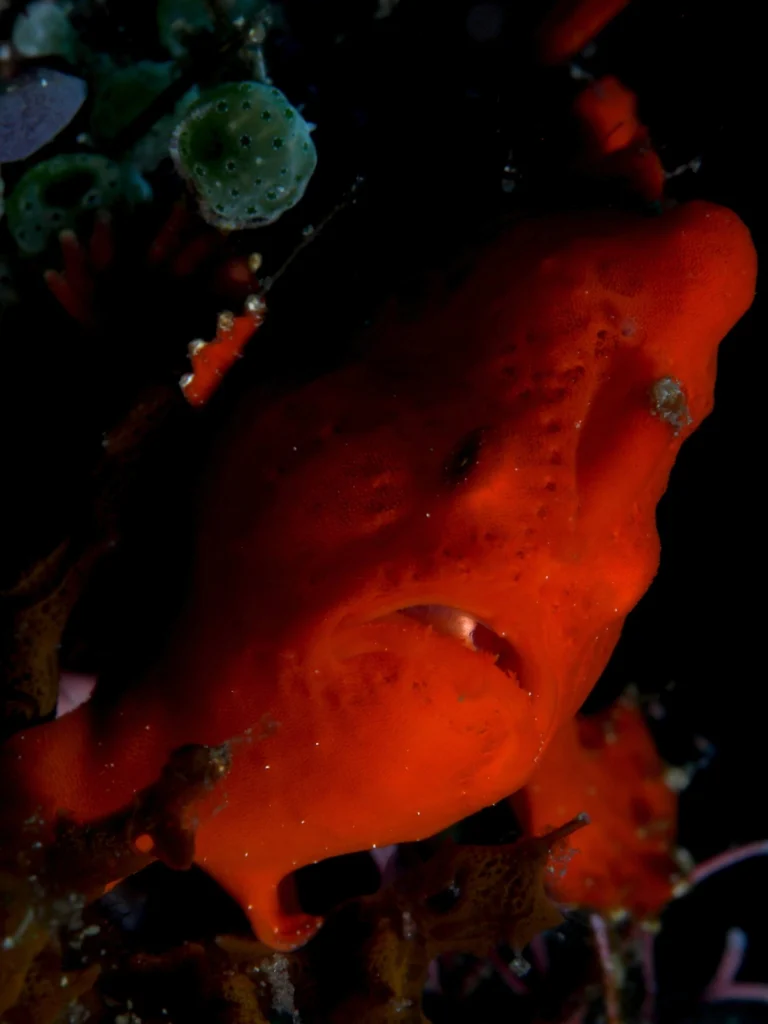
Frogfish are ambush predators related to anglerfish. They hide by matching sponges, coral, rock or algae, then use a modified dorsal-fin spine called an illicium as a fishing rod with a lure at its tip. In Komodo they are reported from macro-rich reef and rubble habitats. Look for an eye, a mouth line, limb-like pectoral fins and a lure—not a particular colour.
Why Frogfish Look Like Part of the Reef
A frogfish survives by being overlooked. Its irregular outline, textured skin and slow movement can resemble the sponge or reef growth beside it. Colour varies widely and may change over time, so “yellow frogfish” is not a useful identification by itself.
The animal’s camouflage serves both defence and hunting. Small fish or crustaceans approach without recognising the predator. The frogfish then expands its mouth rapidly and draws in the prey.
This guide focuses on frogfish camouflage and observation. For broader site and trip planning, start with our Komodo diving guide, then confirm the programme and conditions with your operator.
The Fishing Rod on Its Head
The first dorsal spine is modified into an illicium, functioning like a fishing rod. At its end is an esca, a lure that can resemble a worm, shrimp or small fish depending on the species. The frogfish moves the lure to bring prey within striking distance.
The lure is a useful spotting clue, but a resting animal may keep it folded down. A diver should never tap the frogfish or wave an object near it to force a hunting display.
Four Clues That Break the Camouflage
- The eye: a small reflective circle may be the first feature to separate from the sponge.
- The mouth line: look for a broad curved edge rather than a normal fish snout.
- Pectoral fins: they can look like elbows or feet braced against the substrate.
- The lure: the illicium may lie flat or move above the mouth.
Experienced guides also compare texture. A patch that appears almost—but not exactly—like the surrounding sponge deserves a second look.
Where Are Frogfish Reported in Komodo?
Komodo macro guides report frogfish from sheltered rubble and reef sites, including Wainilu, and from richer southern habitats. They may sit beside sponges, among encrusted growth or on mixed sand and rubble. A strong-current pinnacle can hold frogfish too, but it may be a poor place for a slow search.
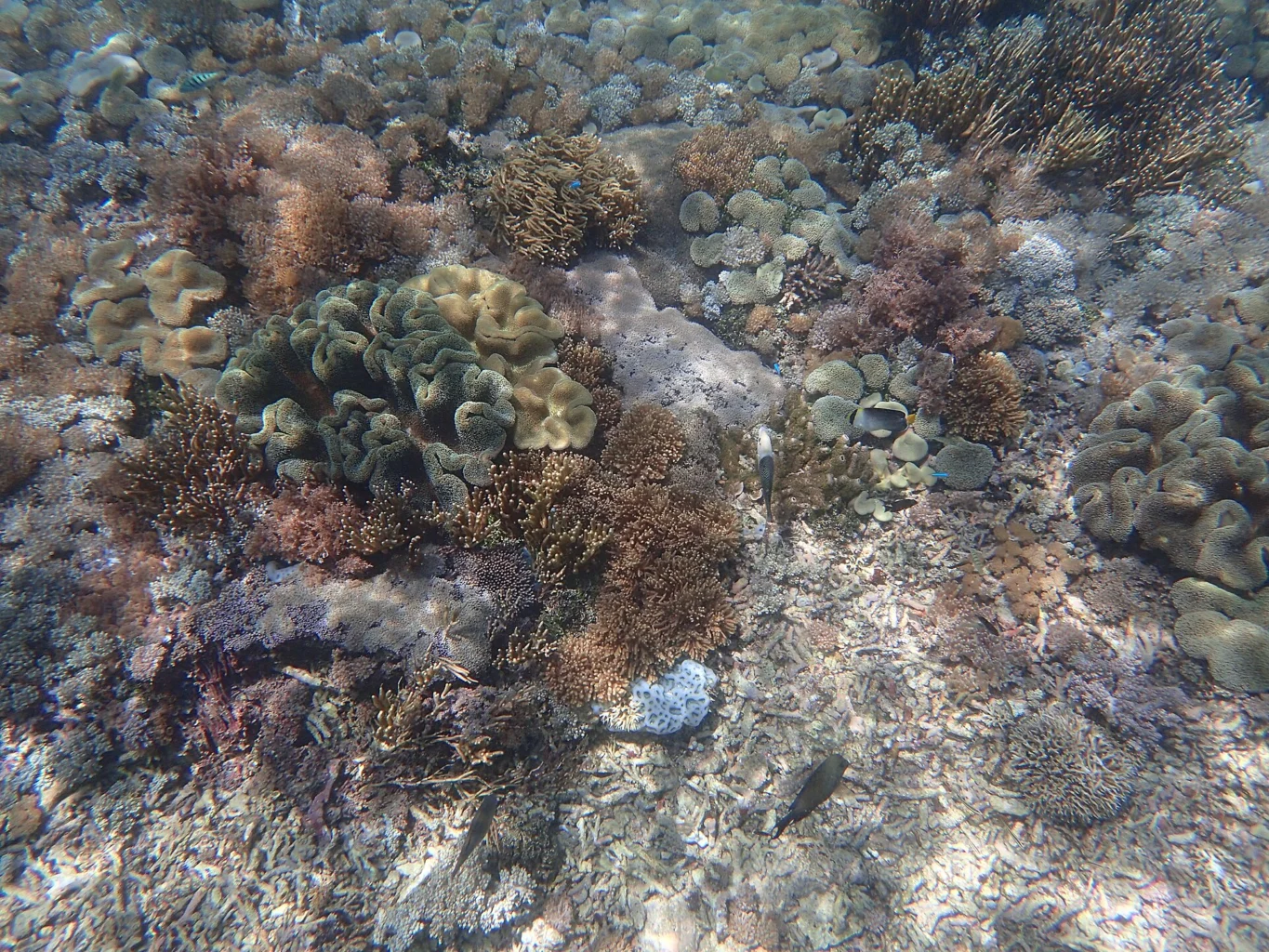
Do not treat one old sighting as a permanent resident. Frogfish move, camouflage changes and a particular sponge may no longer hold the same animal.
Frogfish Are Fish, Even When They Walk
Frogfish often use pectoral and pelvic fins to push or “walk” along the bottom instead of swimming continuously. When they need to move farther, they can swim and may use jet-like expulsion of water through the gill openings.
The unusual movement is another reason not to reposition one. A frogfish placed on exposed coral may leave immediately, wasting energy and creating a false impression of its chosen habitat.
Photography Without Manufacturing Behaviour
Begin with a habitat frame showing why the animal was difficult to see, then make a closer portrait if the position remains stable. Set the focus and strobe power before moving in. Keep the housing out of the animal’s forward space.
Do not poke the fish to reveal its outline, move it onto a colourful sponge or dangle a pointer to make it lure. Natural camouflage is the story; removing the context makes the image less honest.
Can You Identify the Species?
Species identification can require lure shape, appendages, skin pattern, fin rays and other details not visible in a single photograph. Colour changes and convergent camouflage make quick labels unreliable.
Record several angles and the habitat, then seek specialist review. “Frogfish, species uncertain” is better than choosing the most visually similar internet image.
How Frogfish Breathe Without Giving Themselves Away
Water leaves through small gill openings positioned behind or below the pectoral fins rather than through a conspicuous operculum like many familiar reef fish. The reduced visible movement helps the animal remain disguised. Watching the gill area can reveal a fish that otherwise looks like sponge.
Camouflage Is More Than Colour
Shape, texture and posture matter as much as pigment. Skin appendages can imitate algae or encrusting growth, and the frogfish positions itself to continue the pattern of the substrate. Some individuals accumulate growth on the skin, making the disguise even harder to separate.
Photographers should preserve that context. A tight portrait proves the animal is unusual; a wider habitat frame shows why the adaptation works.
Frogfish Myths to Avoid
- “They are unable to swim.” They often walk, but can move through the water when needed.
- “The colour identifies the species.” Several species vary in colour and mimic similar backgrounds.
- “A stationary frogfish is comfortable with any approach.” Remaining still is part of camouflage, not consent to crowding. For habitat context beyond frogfish, use the wider Komodo marine-life guide before building a wildlife shortlist.
- “Making it lure is harmless.” Provoking behaviour changes the encounter and may waste energy.
A Guide’s Search Pattern
A guide checks likely sponges from several angles, looks for a mouth line and eye, then confirms the lure or fin posture. The search becomes faster through familiarity with a site, but the guide should not expose or move the animal to prove it is there.
What Else Should You Look for Nearby?
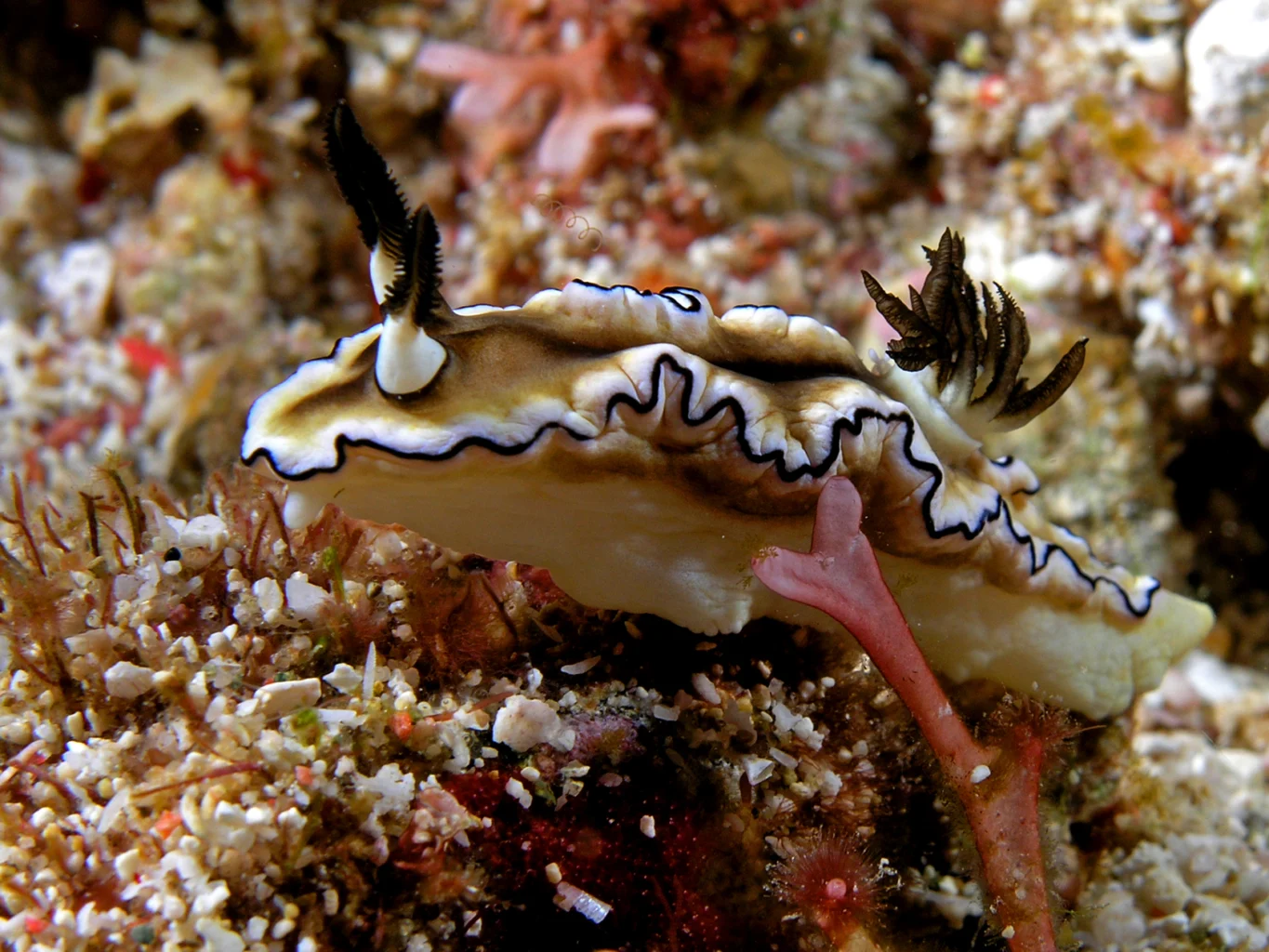
Sponge and rubble habitats can also hold nudibranchs, shrimp, pipefish and mantis shrimp. Each uses the habitat differently. If a small octopus displays blue rings, back away, avoid contact and follow the guide.
Choosing a Frogfish-Focused Dive
Ask for recent sightings, guide experience and multiple macro opportunities. Confirm that the route includes sheltered or rubble habitat rather than only manta channels and current-facing pinnacles.
Compare vessels on the Komodo diving trips page, then ask the operator how it structures photographer groups. No credible operator should guarantee one frogfish.
Never touch or move a frogfish for identification or photography. Do not use a pointer to provoke the lure or feeding response.
Build the identification around structure
A frogfish’s colour may help it blend into a sponge, but colour matching is a poor way to name the species. Start with the length and form of the fishing rod, the lure when naturally visible, the skin appendages and the arrangement of dorsal spines. A photograph that hides these features may support “frogfish” while leaving the species unresolved.
Keep a habitat photograph alongside the portrait. If a guide says the animal has remained near one sponge for several days, record that as the guide’s observation, with dates if available. It does not prove the fish will remain there next week. It also does not establish whether two photographs show the same individual.
Do not confuse a family-level adaptation with a local species record. A museum profile of a frogfish from another ocean can explain how a lure functions, but its distribution cannot be copied into a Komodo species list. For local claims, ask for site-specific images or a credible regional identification reference.
A good macro encounter can be entirely uneventful: a fish stays camouflaged while the group passes. There is no need to make it walk, yawn, hunt or expose the lure to create a worthwhile record. Leaving its posture and surroundings unchanged preserves both the encounter and the ecological information in the photograph.
Match the wildlife interest to your trip
Use the dive komodo listing to compare dedicated diving options, then confirm the route, recent habitat observations and guide arrangements with the operator. Wildlife and daily site access remain conditional.
Frequently Asked Questions
Is a frogfish poisonous or venomous?
Frogfish are ambush predators rather than animals known for injecting venom into divers. The correct approach is still no touching.
Can frogfish change colour?
Some can change colour over time, but not as an instant response like a cuttlefish. Colour alone remains poor identification evidence.
Why are frogfish difficult to see?
Their outline, texture and colour can closely match sponges, rock, coral growth or algae.
Are frogfish guaranteed at Wainilu?
No. Wainilu offers suitable macro habitat and past reports, but individual animals move and hide.
