
Sea Turtles in Komodo: Green vs Hawksbill Identification
A visual and behavioural guide to green and hawksbill sea turtles in Komodo for divers and snorkellers.
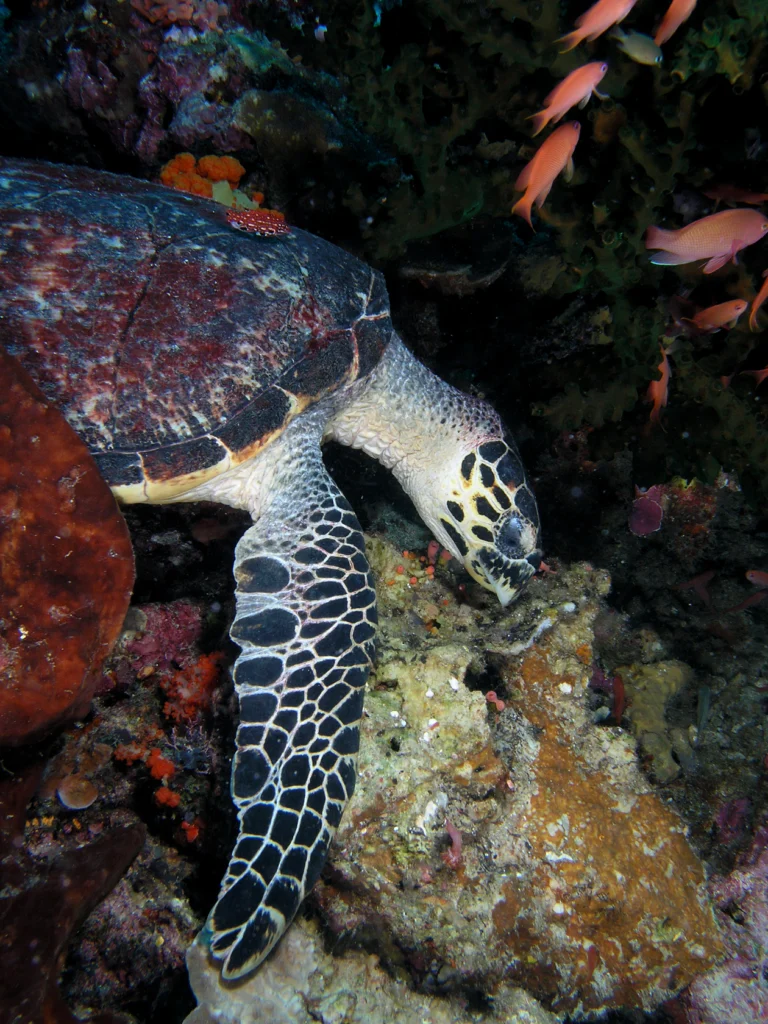
The sea turtles most commonly identified by Komodo divers and snorkellers are green turtles and hawksbills. A green turtle usually has a rounded head, smoother shell edge and one pair of scales between the eyes; a hawksbill has a narrow beak, serrated rear shell edge and two pairs of scales between the eyes. Colour alone is unreliable. Never chase a turtle or block its path to the surface.
Green or Hawksbill? Start With Shape
Common names cause confusion. A green turtle is not reliably green, and a young animal can show a patterned shell that resembles a hawksbill at a distance. Identification works better when the observer combines head shape, facial scales, shell outline and feeding behaviour.
This guide focuses on green and hawksbill turtle identification. For broader site and trip planning, start with our Komodo diving guide, then confirm the programme and conditions with your operator.
Green Turtle vs Hawksbill Turtle
| Feature | Green turtle | Hawksbill turtle |
|---|---|---|
| Head and mouth | Small, rounded head with a less pointed mouth | Narrow head with a distinct hawk-like beak |
| Scales between the eyes | One pair of prefrontal scales | Two pairs of prefrontal scales |
| Shell edge | Generally smooth and rounded | Rear edge can appear serrated; scutes may overlap |
| Typical foraging clue | Often associated with seagrass and algae | Often feeds around reefs, particularly on sponges |
Do not try to count facial scales by swimming into the animal’s path. A side photograph taken at normal encounter distance can preserve enough detail for later review.
Where Divers and Snorkellers May See Turtles
Turtles use feeding areas, resting ledges and calm shallows across Komodo. Siaba Besar is widely associated with green-turtle encounters, while reef sites such as Batu Bolong can hold both feeding and resting animals. Sightings also occur on many shallower snorkel reefs.
Habitat provides a better expectation than a branded nickname such as “Turtle City.” Seagrass and algal feeding areas suit green turtles; sponge-rich reef structures may suit hawksbills. Current, visibility, boat traffic and recent disturbance still affect the actual encounter.
What Is the Turtle Doing?
Feeding
A feeding turtle may return repeatedly to one patch. Hold off to the side and avoid hovering directly above it. If the head comes up and the animal stops feeding, the group may be too close.
Resting
Turtles sometimes rest beneath coral ledges or on sand. Do not shine a bright light into the shelter or crowd the entrance. Rest is behaviour worth observing, not an invitation to wake the animal.
Surfacing
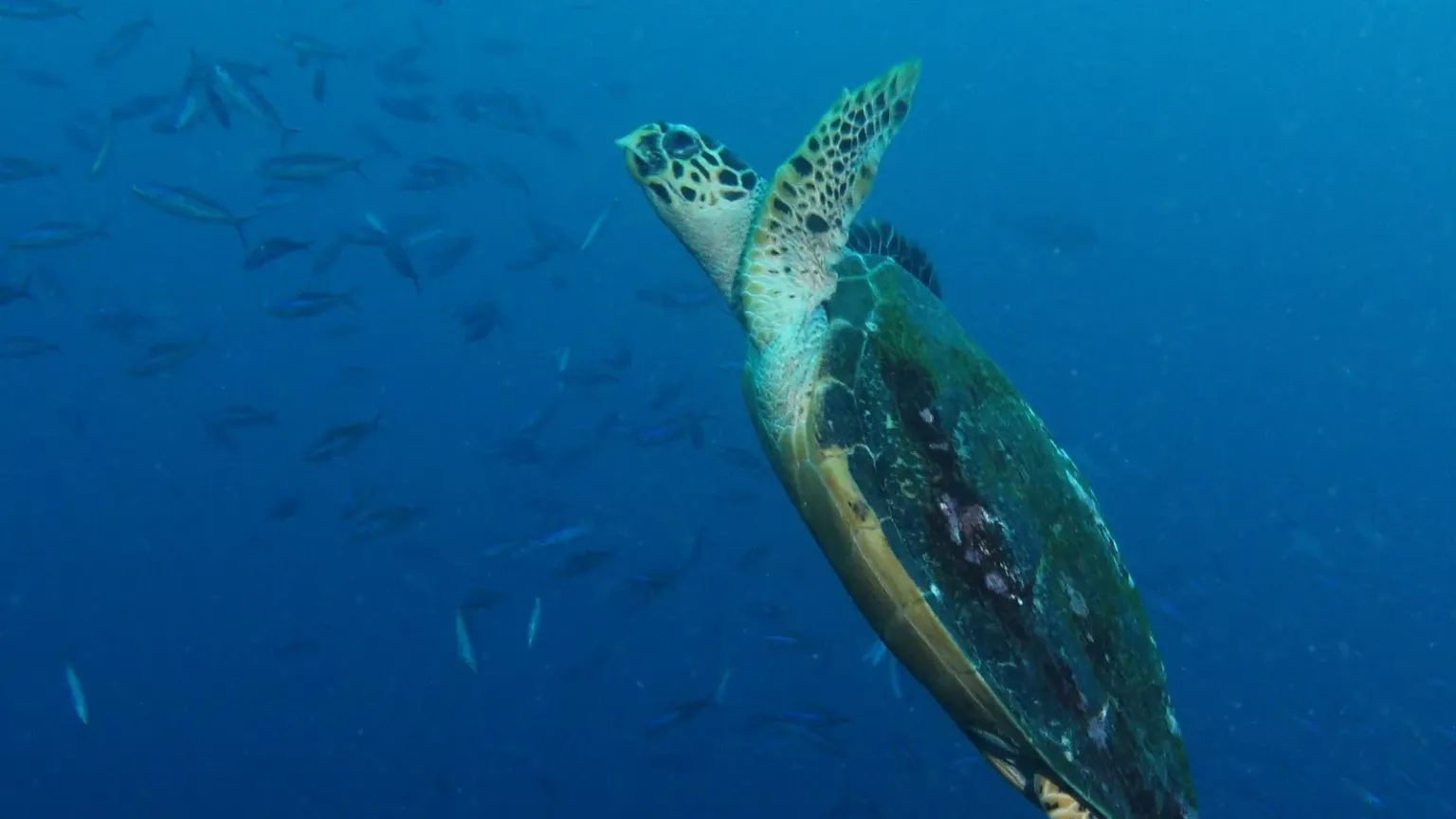
Sea turtles breathe air. A turtle beginning a direct ascent needs an unobstructed path to the surface. Divers and snorkellers should move aside rather than following closely below or above it.
Cleaning
Fish may pick algae or parasites from a turtle. Cleaning can stop when people approach too aggressively. Stay outside the interaction and let both animals set the distance.
How to Observe Turtles Responsibly
- Approach slowly from the side, never head-on.
- Keep a clear route between the turtle and the surface.
- Do not touch the shell or ride the animal.
- Avoid surrounding one turtle with the entire group.
- Do not feed it or move vegetation to create a photograph.
- If the animal changes direction repeatedly, increase distance. Follow our guidance on responsible wildlife encounters in Komodo when deciding how to approach, space the group and end the encounter.
Photography for Identification, Not Pursuit
A useful image includes the side of the head and enough shell outline to compare field marks. Wide-angle equipment lets a photographer include coral habitat while remaining farther away. Set exposure before closing the distance and let the turtle enter the frame.
Rear-chasing produces weak identification photographs and encourages the group to follow. If the turtle swims away, end the encounter.
Threats a Visitor Can Actually Reduce
Sea turtles face many pressures outside the control of one traveller, including fisheries interactions, habitat loss, pollution and climate change. Visitors still control their own disturbance, waste and choice of operator.
- Carry reusable items and secure loose waste aboard.
- Do not purchase turtle-shell products.
- Choose crews that prevent anchors from damaging reef or seagrass habitat.
- Report entanglement or injury to the guide; do not attempt an untrained rescue underwater.
Juvenile and Adult Identification
Young green turtles can have striking shell patterns, and ageing changes colour and surface wear. Hawksbill scutes may also appear less obviously overlapping on an older animal. This is another reason to use several field marks instead of one idealised illustration.
Do not attempt to identify sex on a small or distant turtle. Mature males generally develop a longer, thicker tail extending beyond the shell, while females and juveniles have shorter tails. Size and perspective can make this difficult underwater.
Current, Boats and Surface Risk
A turtle encounter often pulls attention toward the animal just as it moves into open water or approaches the surface. Snorkellers must continue watching the guide and vessel traffic. Divers should not follow above their planned depth or extend the dive beyond gas limits.
Surface markers, a visible guide and controlled boat pickup matter even at a calm-looking reef. The animal knows where it is going; the visitor still has to follow the dive plan.
How to Read Stress
No single movement proves stress, but repeated avoidance provides a clear operational signal. If a turtle stops feeding, leaves a resting ledge, changes direction away from the group or accelerates whenever people approach, give it more room.
The goal is not to remain until the turtle tolerates the group. It is to leave while normal behaviour is still visible.
Turtles for Beginners and Snorkellers
A calm, shallow turtle site may suit beginners, but the animal does not remove environmental risk. Snorkellers still need flotation, a guide and awareness of current and boats. Divers must maintain depth, gas and buddy contact rather than focusing entirely on the subject.
Discuss recent experience and comfort in moving water with the operator. Compare departures with declared diving programmes on the Komodo diving trips page.
What Often Shares Turtle Habitat?
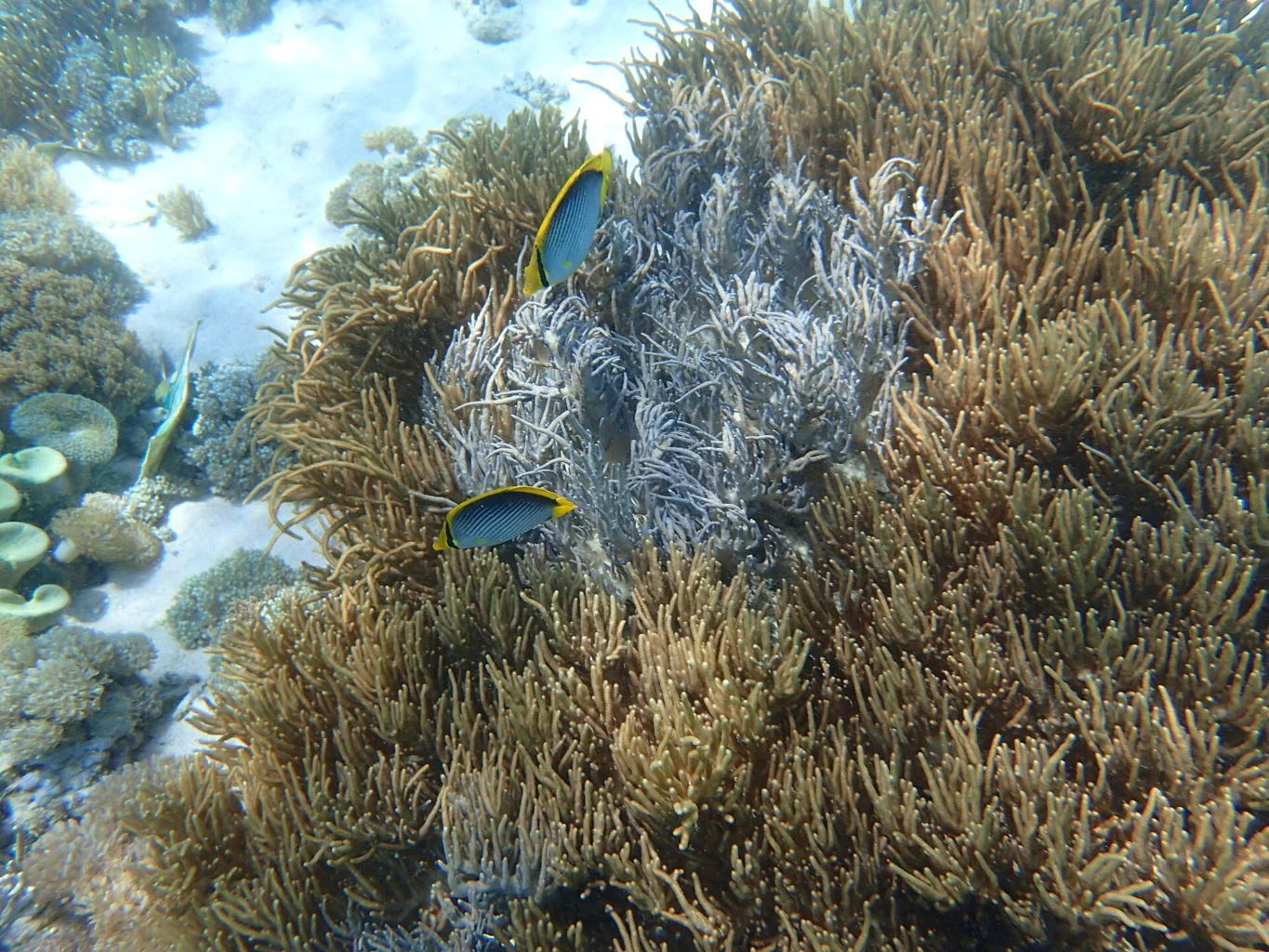
Reef encounters can include several kinds of marine life. Observe habitat patiently instead of racing between animals or trying to complete a sighting list.
A sea turtle heading upward is going to breathe. Keep its route to the surface open and do not follow directly above it.
A practical identification confidence check
Start with the view you actually have. A distant turtle over seagrass can be recorded as a sea turtle without a species label. A clear lateral image showing a pointed beak and serrated rear shell makes a hawksbill interpretation stronger. A view that also resolves the prefrontal scales offers an additional independent check.
| Available view | Reasonable label | Do not do this |
|---|---|---|
| Silhouette at the surface | Sea turtle | Assign a species from location alone |
| Head and shell edge visible | Probable green or hawksbill, with reasons | Ignore conflicting field marks |
| Diagnostic photographs reviewed together | Species identification with supporting details | Chase the animal to obtain a missing angle |
Confidence is separate from proximity. Getting closer can interrupt feeding or force a resting turtle to move, while still failing to produce a useful photograph. Keep the original image and ask for identification after the dive.
Finally, distinguish an individual encounter from habitat status. Several turtles at a feeding site do not establish how many nest nearby, whether their wider population is growing, or whether that reef is free of threats. Those are conservation questions requiring a different sampling method and a defined geographic population.
Match the wildlife interest to your trip
Use the dive komodo listing to compare dedicated diving options, then confirm the route, recent habitat observations and guide arrangements with the operator. Wildlife and daily site access remain conditional.
Frequently Asked Questions
Why is a green turtle called green?
The name refers to the greenish colour of its body fat, not a reliably green shell.
Is shell colour enough to identify a turtle?
No. Use head shape, prefrontal scales, shell edge and behaviour together.
Can I touch a sea turtle?
No. Touching causes disturbance and can interrupt feeding, resting or surfacing behaviour.
Are turtle sightings guaranteed in Komodo?
No. Suitable habitat improves the chance, but wildlife remains unpredictable.
