
About This Place
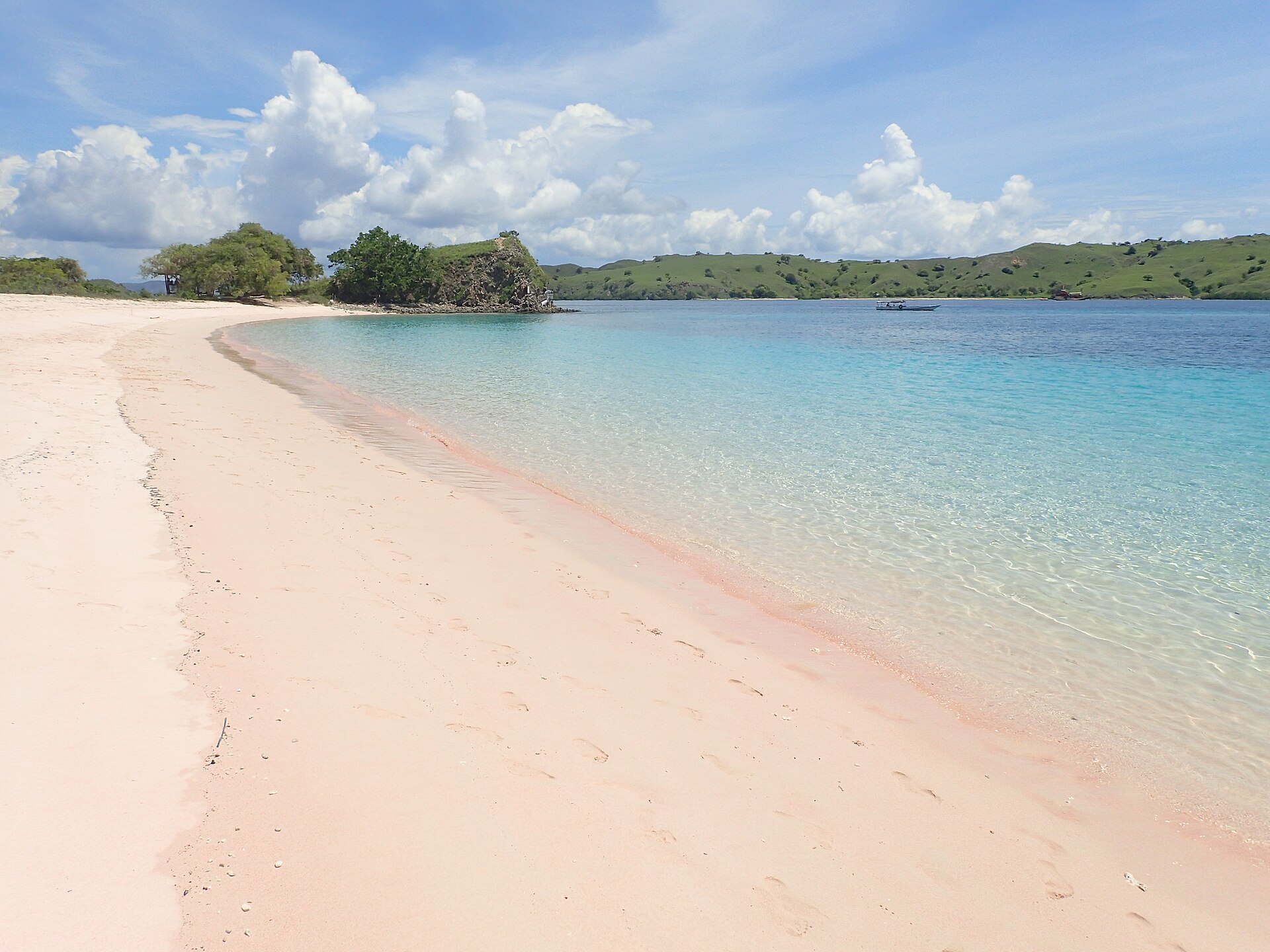
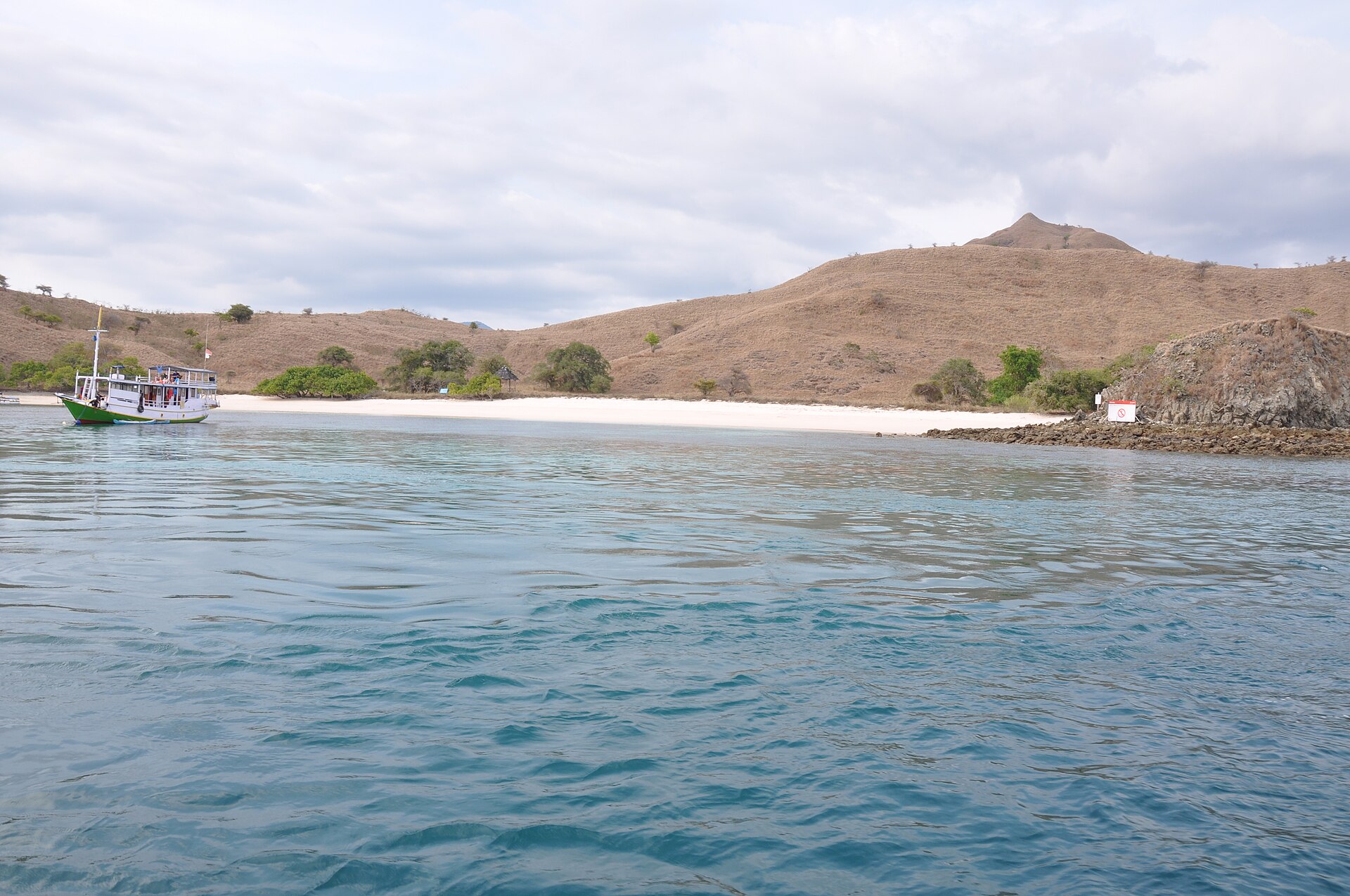
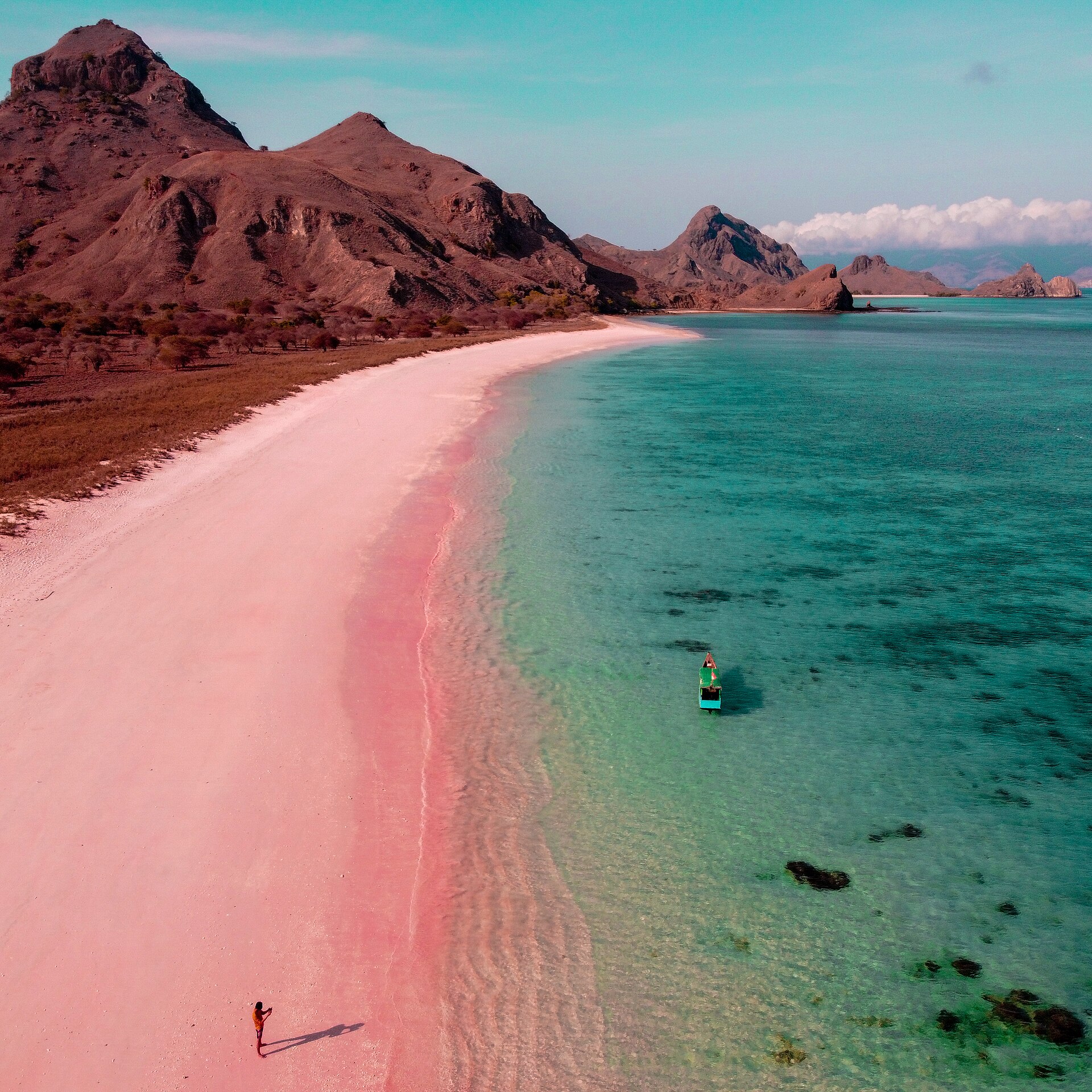
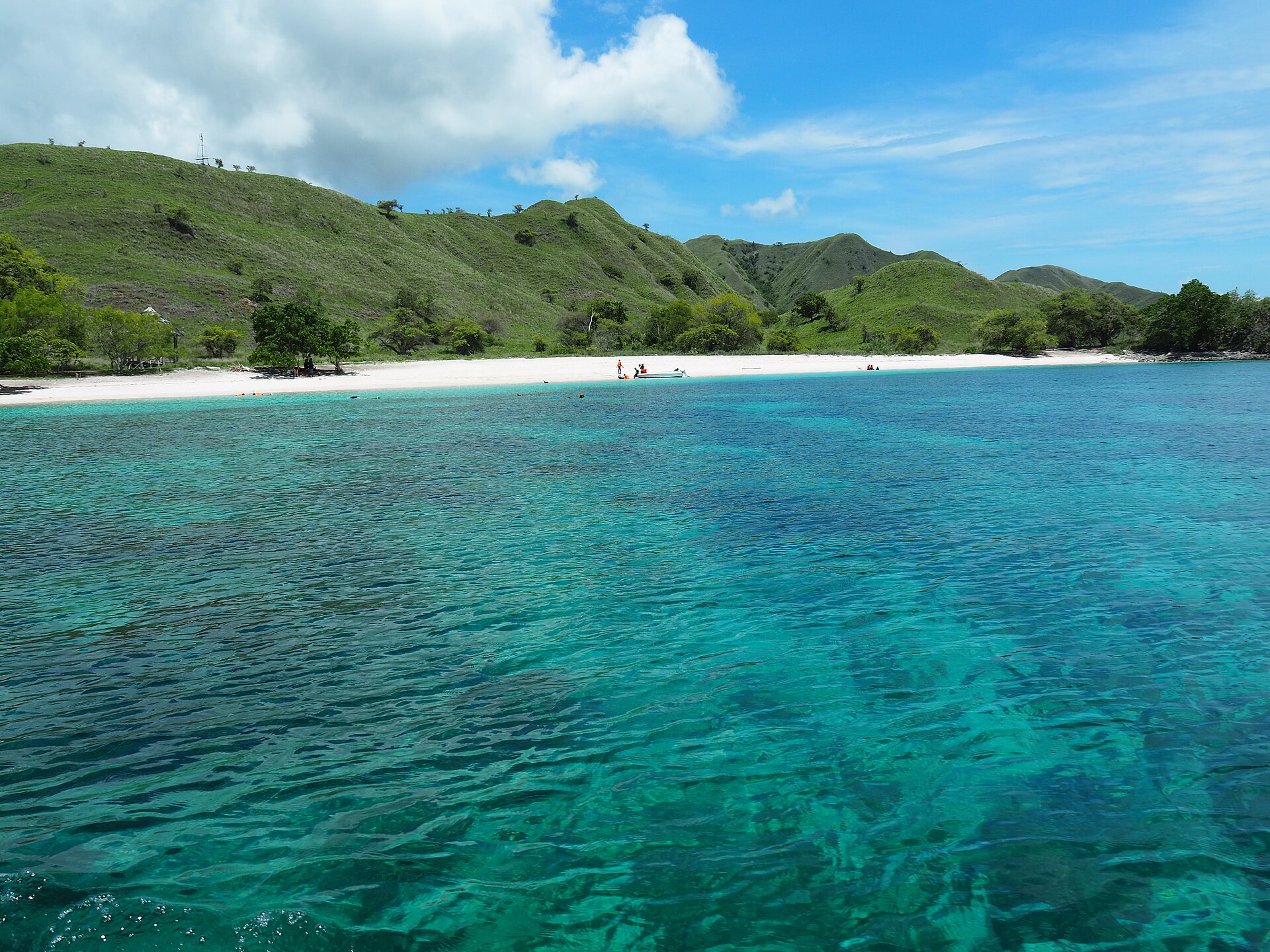
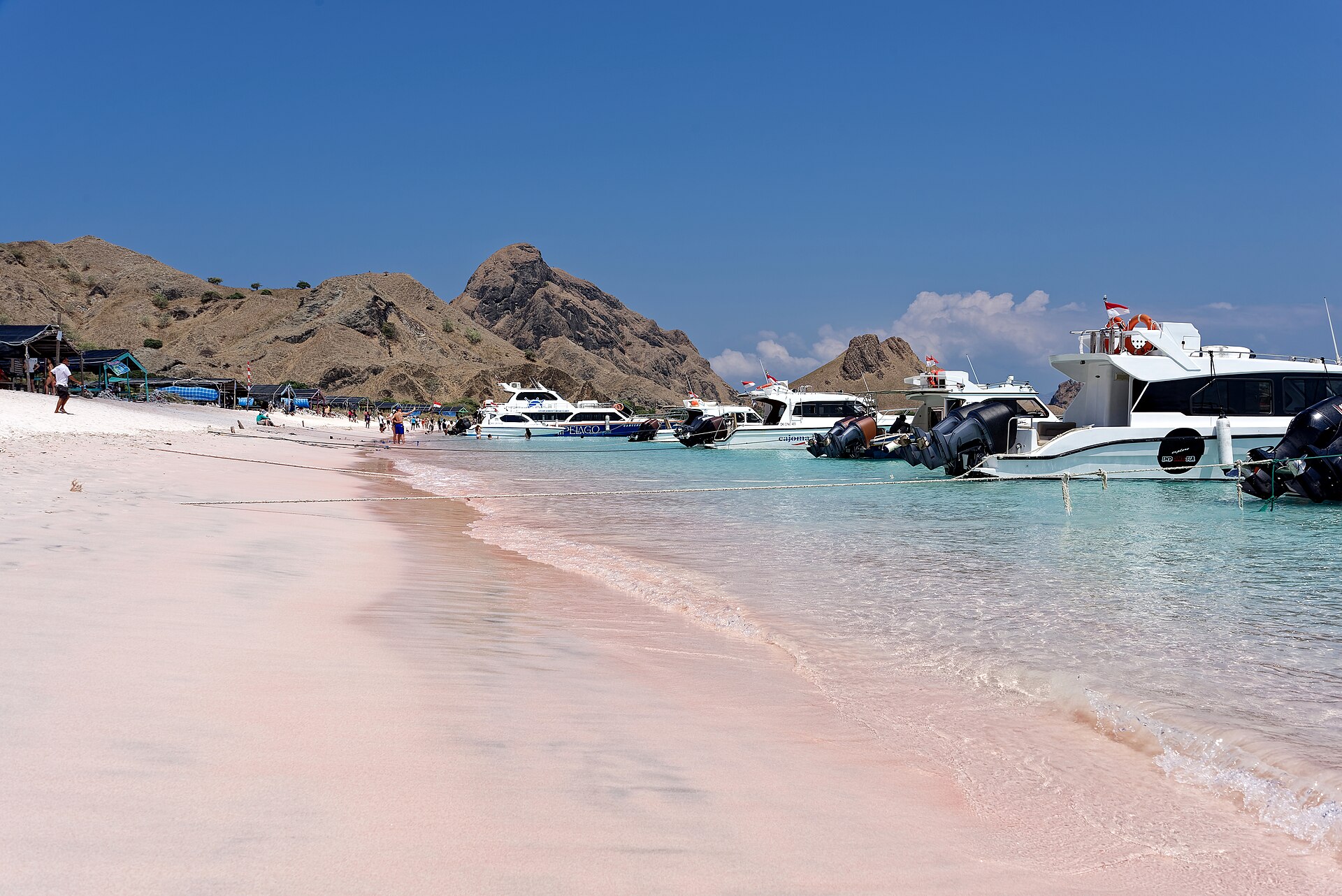
Pink Beach — Pantai Merah on every Indonesian chart — is a small cove on the eastern coast of Komodo Island, inside Komodo National Park, backed by dry savannah hills and sheltered enough that the water stays calm on days when the rest of the park is choppy. Sources place it variously on the east and the north-east shore; it is roughly 40 km by sea from Labuan Bajo, which is one hour on a speedboat and up to three and a half on a slower wooden boat.
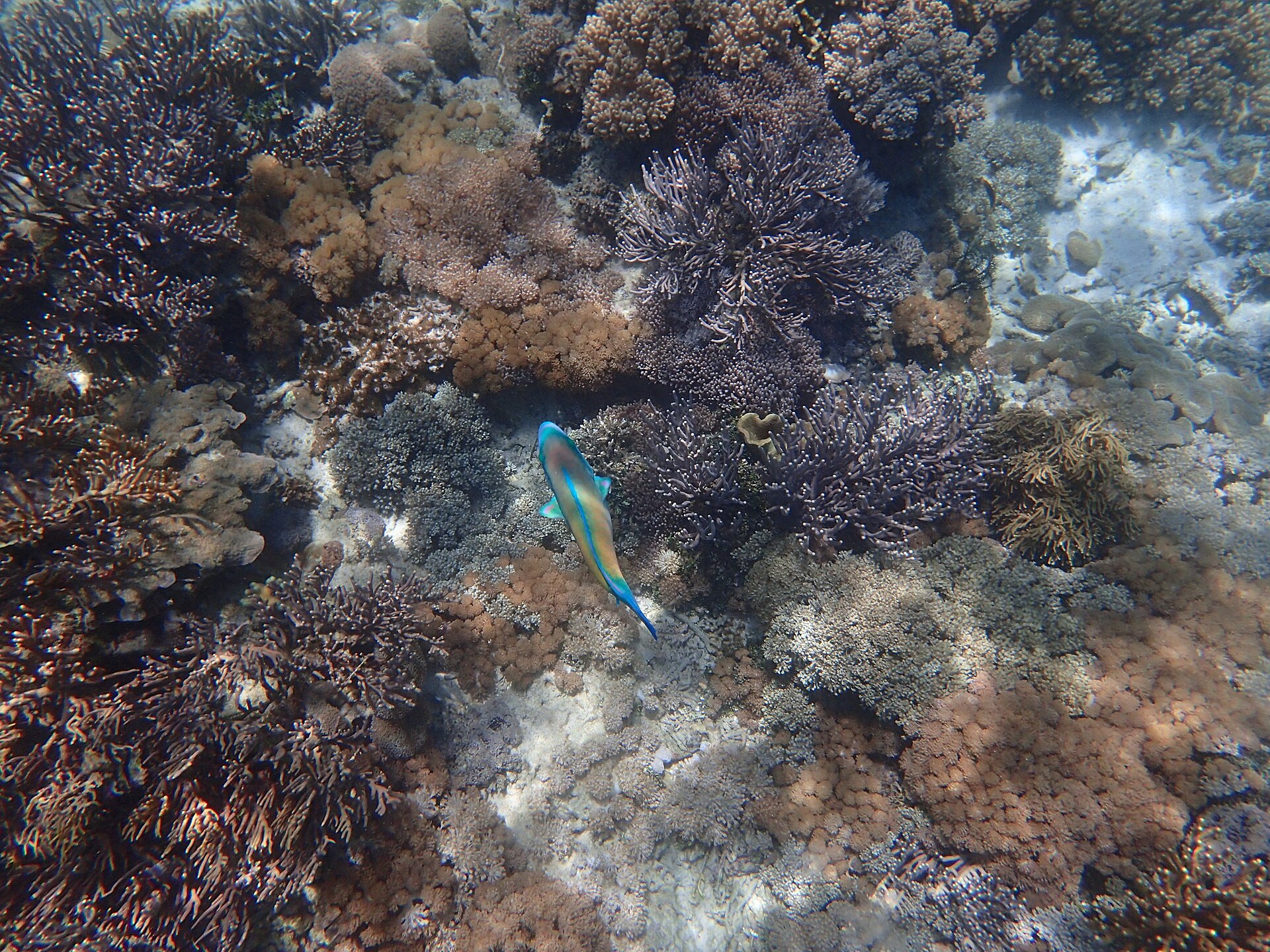
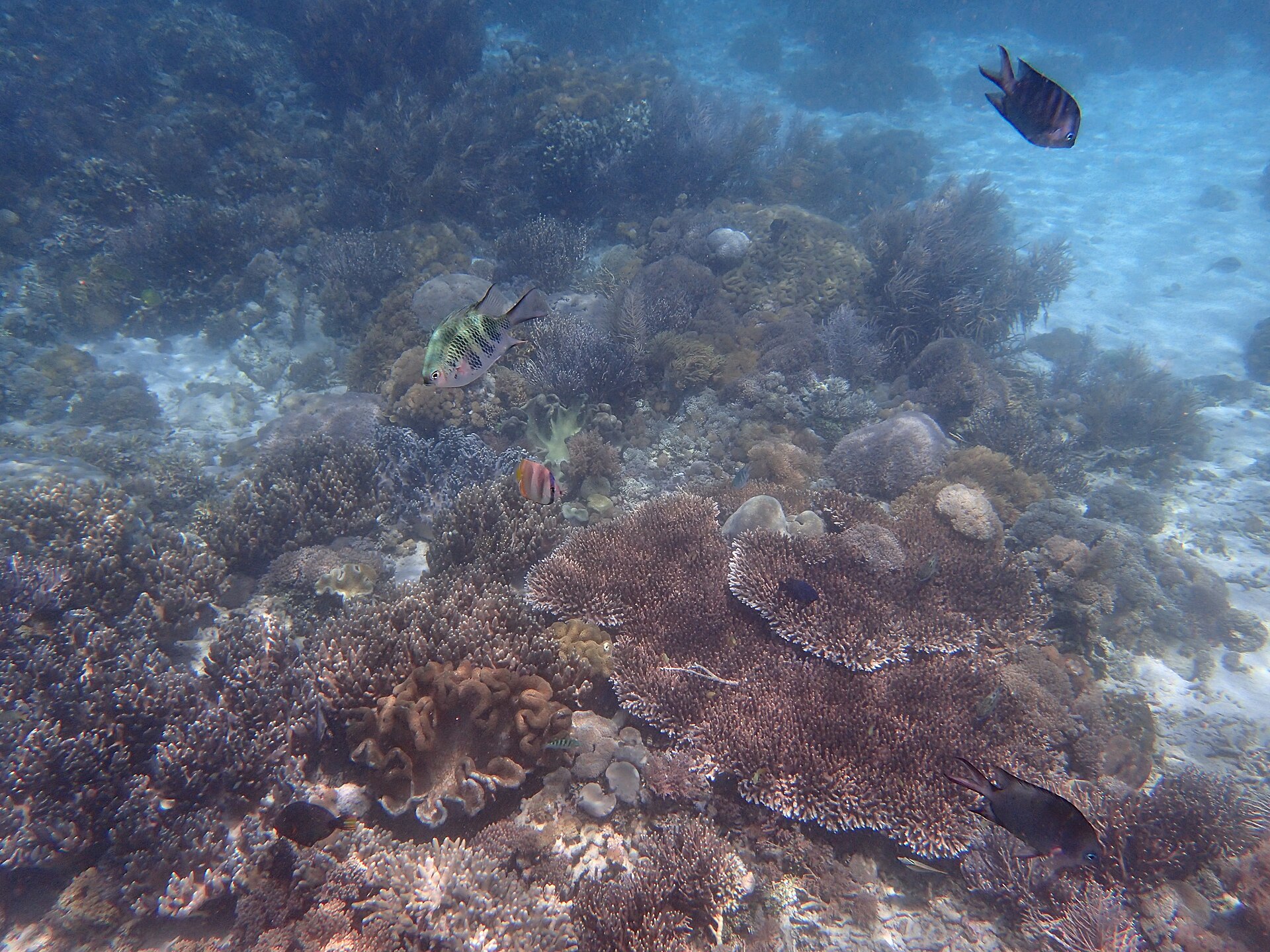
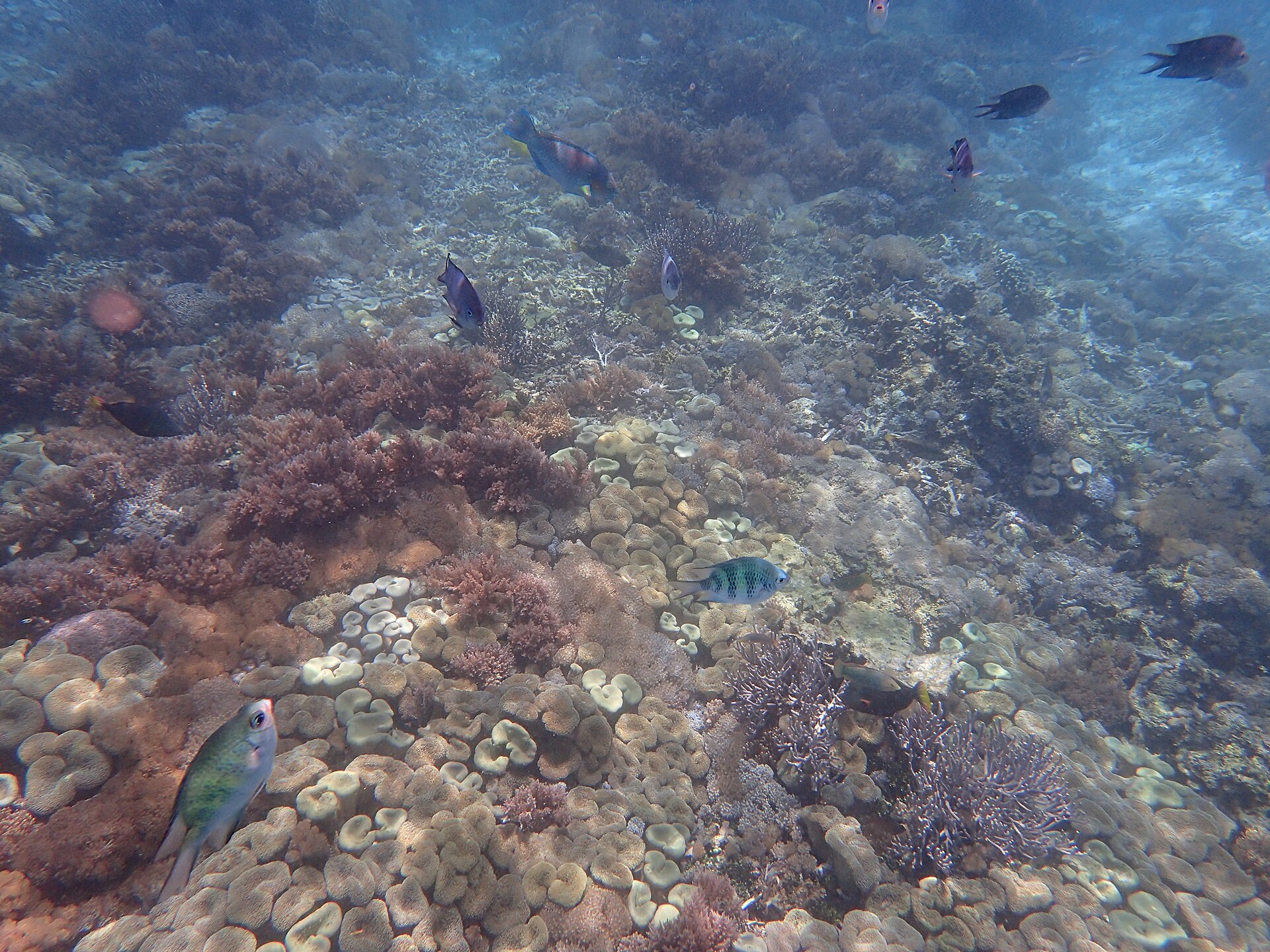
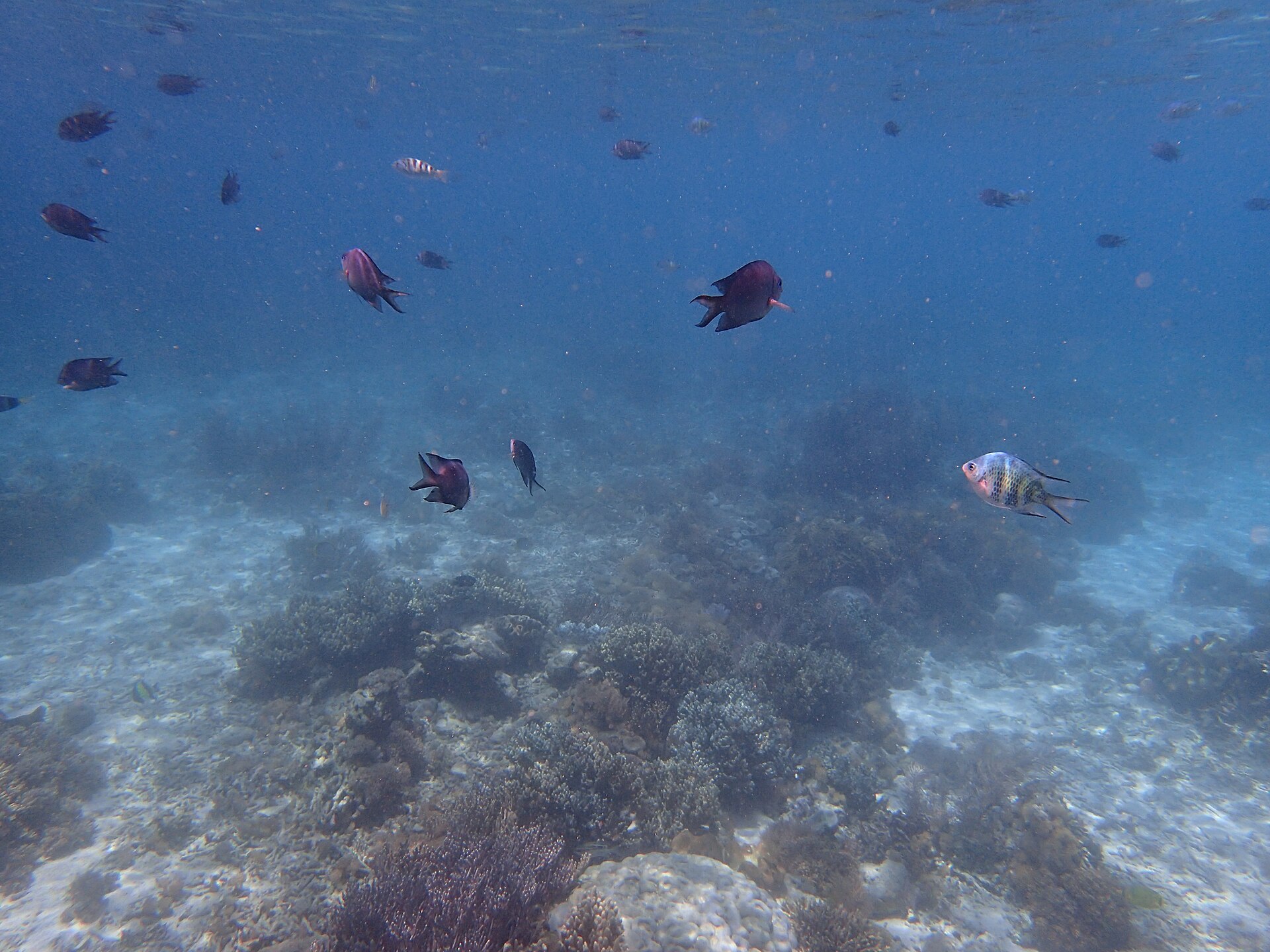
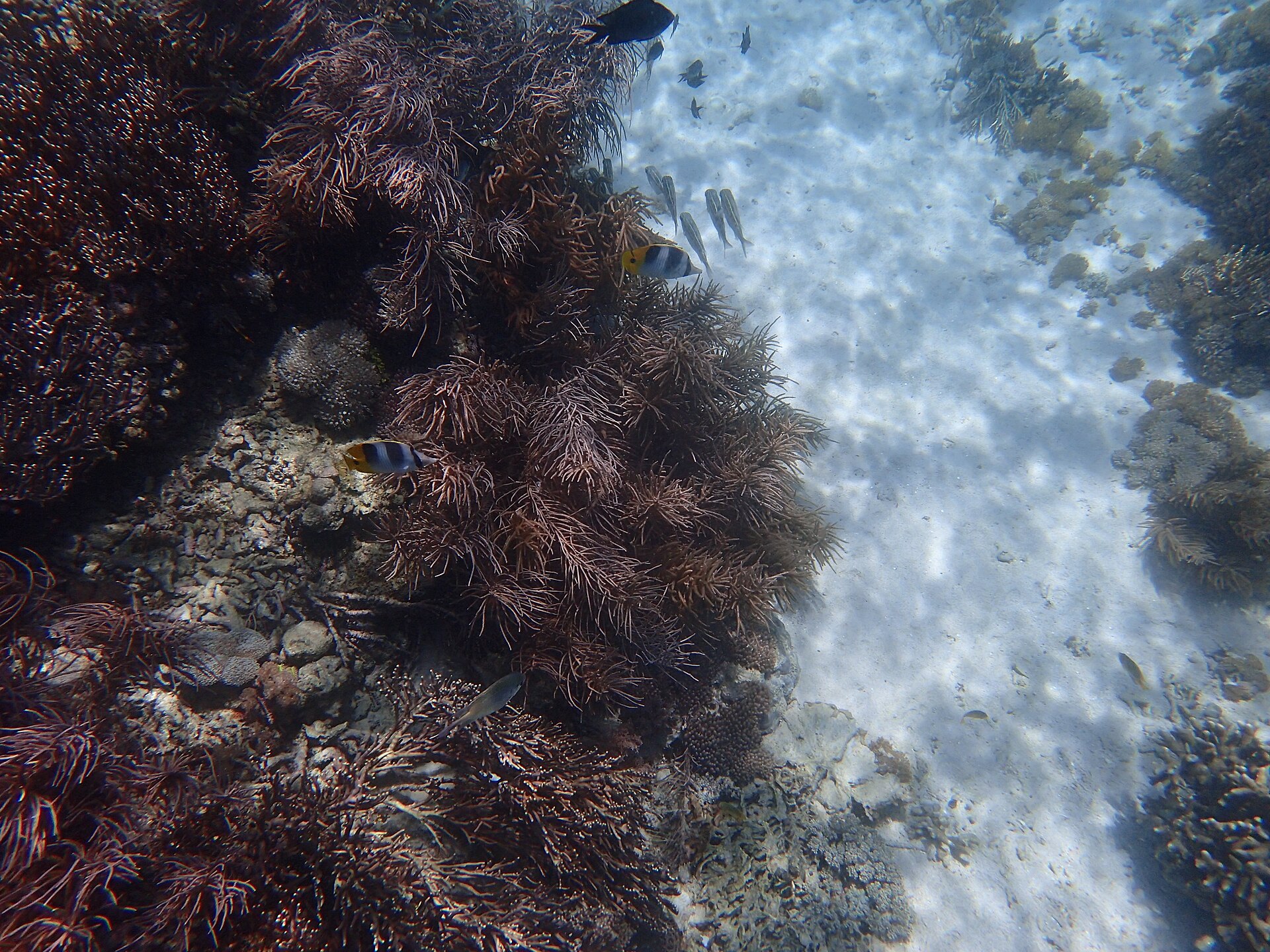
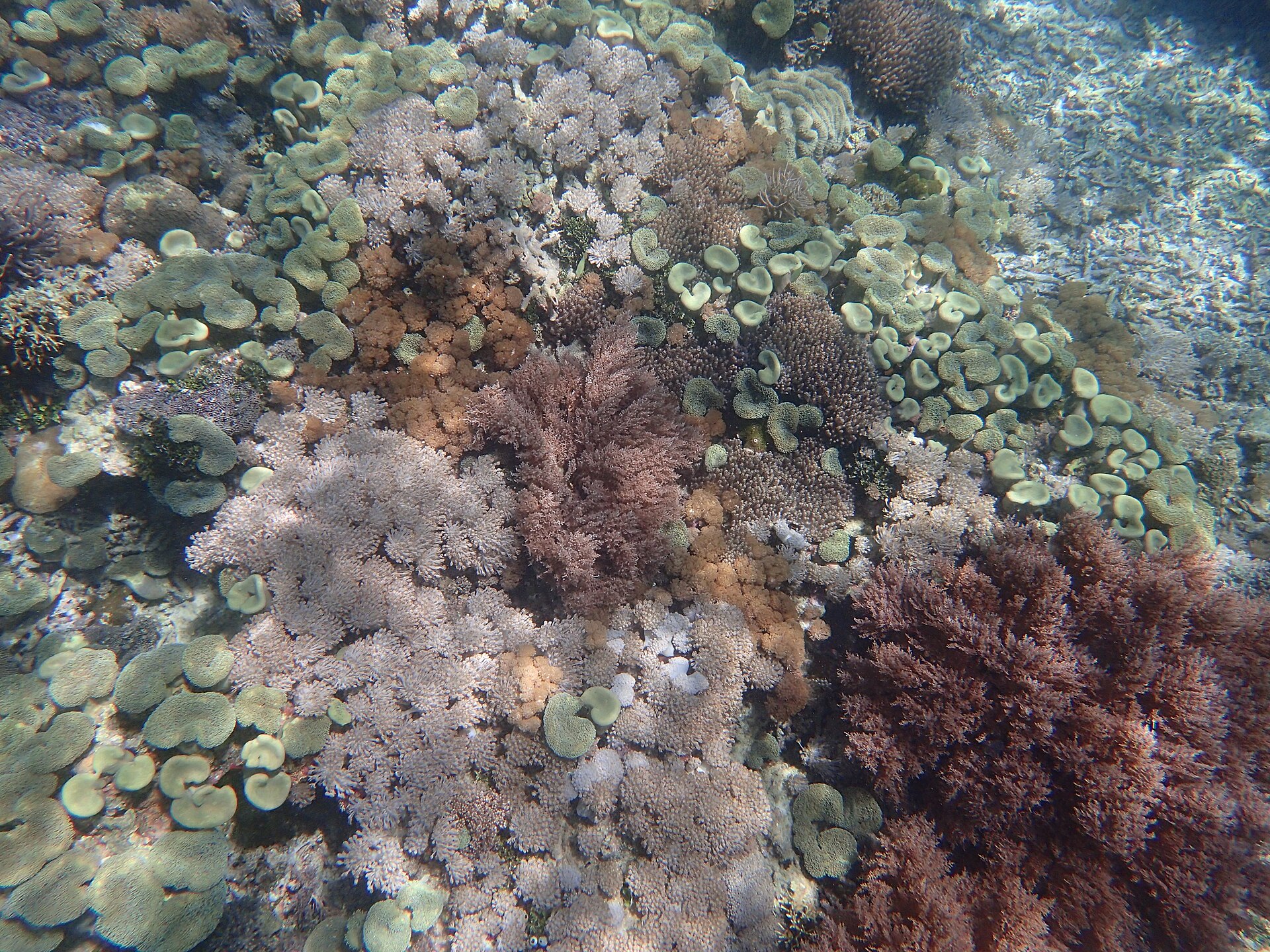
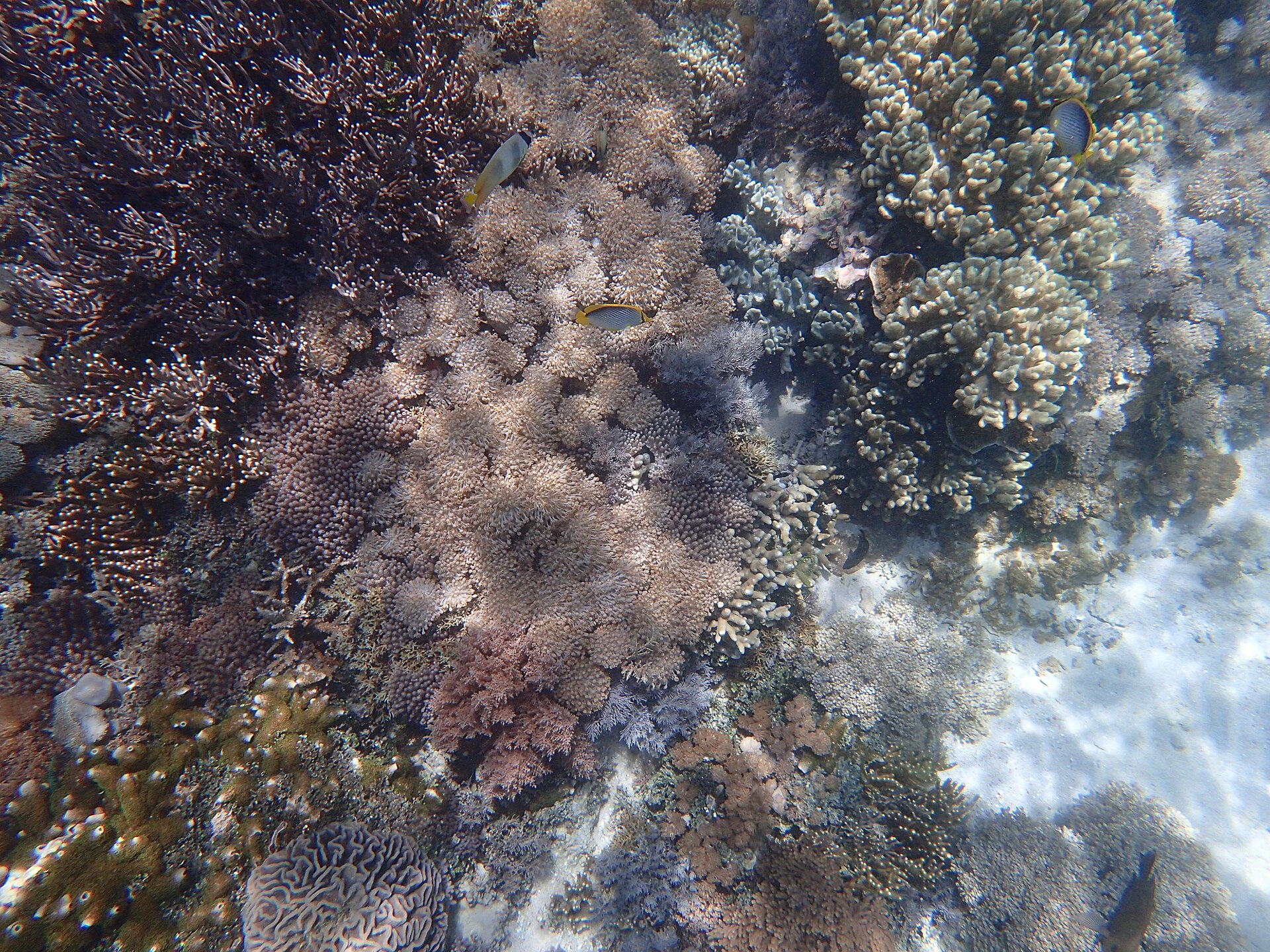
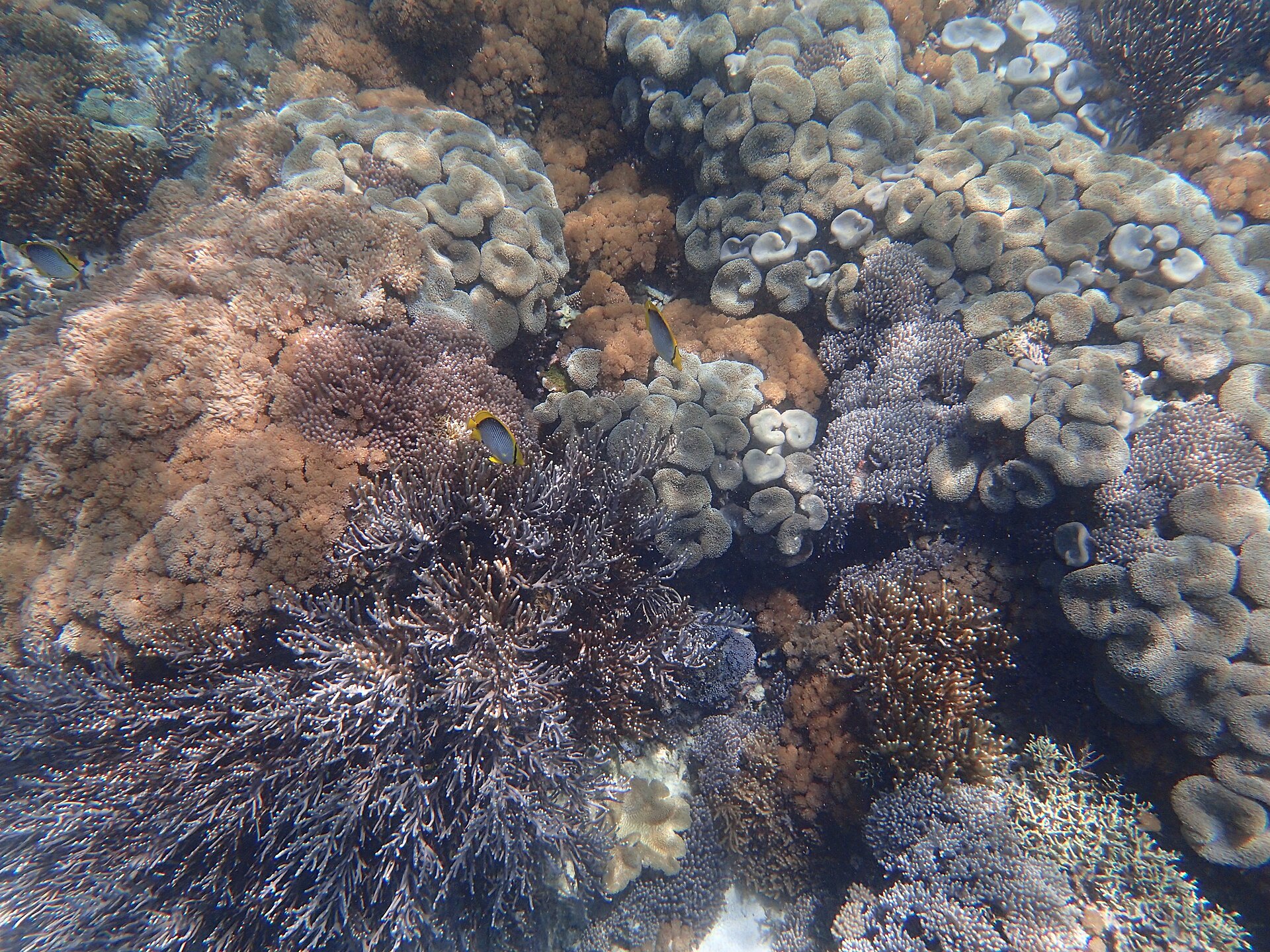
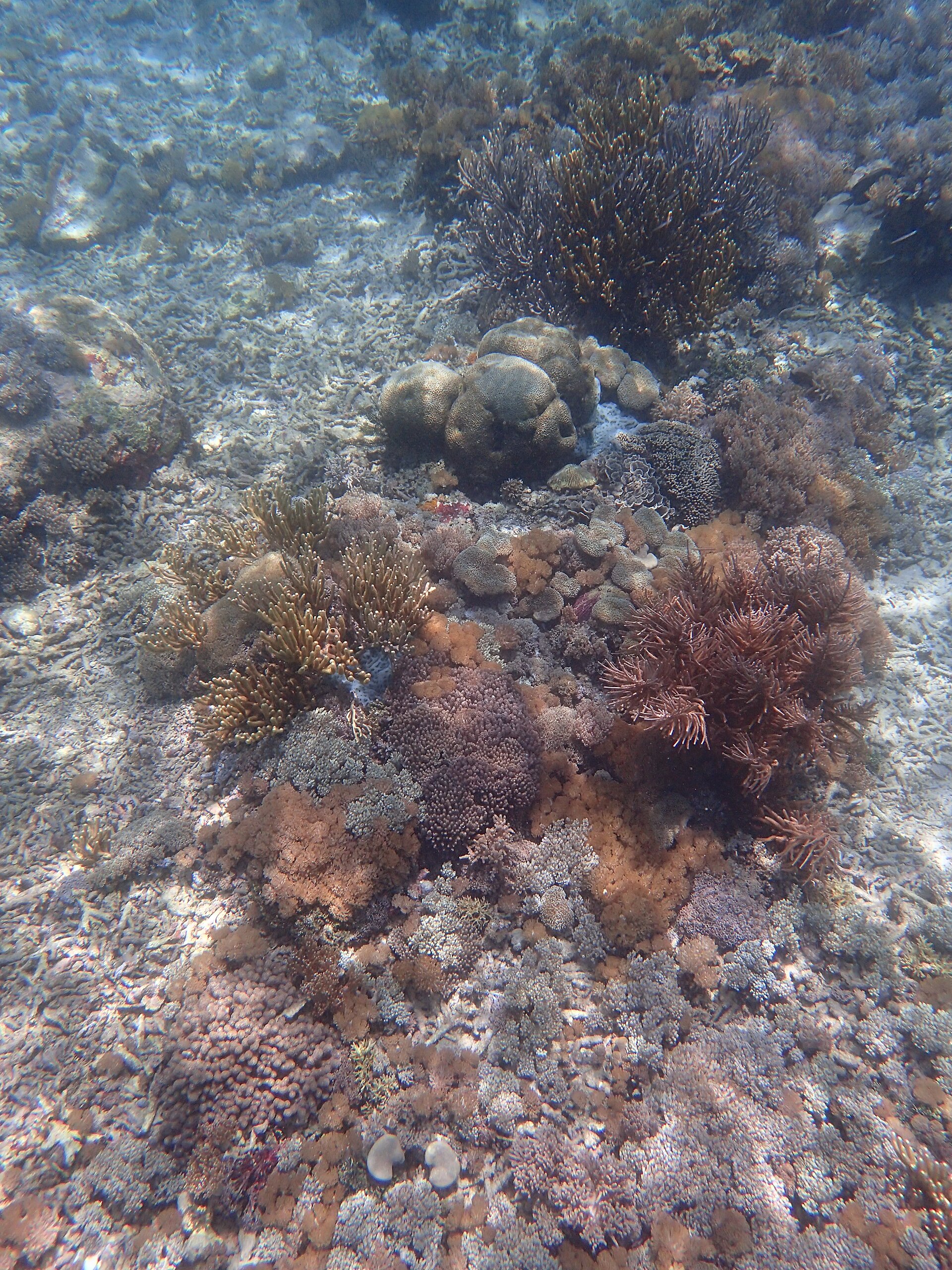
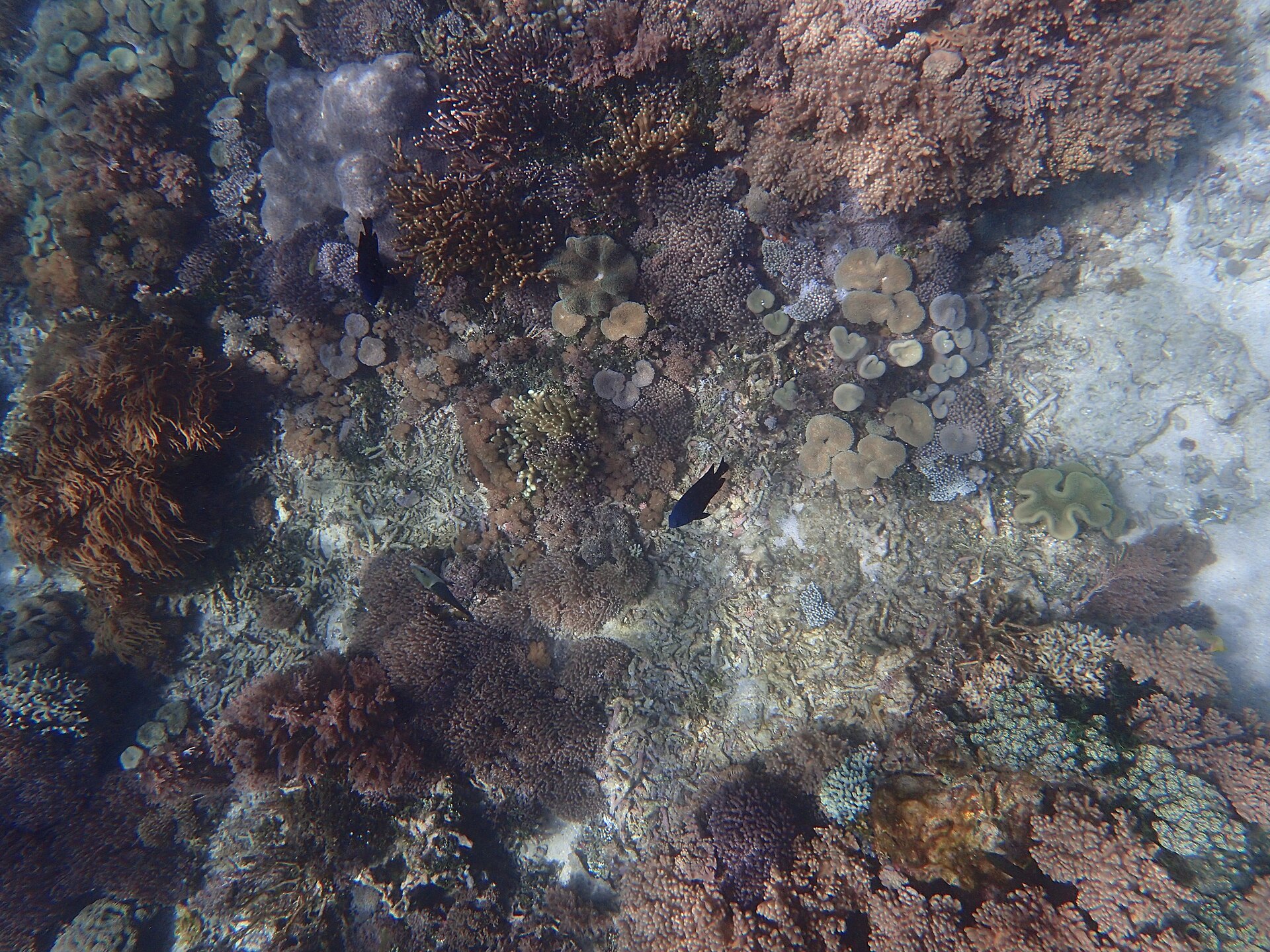
It is on almost every itinerary in Komodo for two separate reasons that most pages collapse into one. The first is the sand, which is genuinely pink and genuinely not magenta. The second, and arguably the better one, is that live reef sits a short swim off the beach, which makes this one of the easiest shore-entry snorkels anywhere in the park.
Treat those as two different visits. People who come only for the colour tend to leave slightly disappointed. People who bring a mask do not.
At a Glance
- Also known asPantai Merah, Pink Beach Komodo, Pantai Merah Muda, Red Beach Komodo
- TypeBeach, Snorkel Site
- Inside Komodo National ParkYes
- How to get thereLiveaboard, Speedboat Day Trip
- Travel time from Labuan BajoAbout 40 km by sea: roughly 1 hour by speedboat, up to 3.5 hours by wooden phinisi
- LandingBeach landing
- Last checked22 August 2026
What to Expect
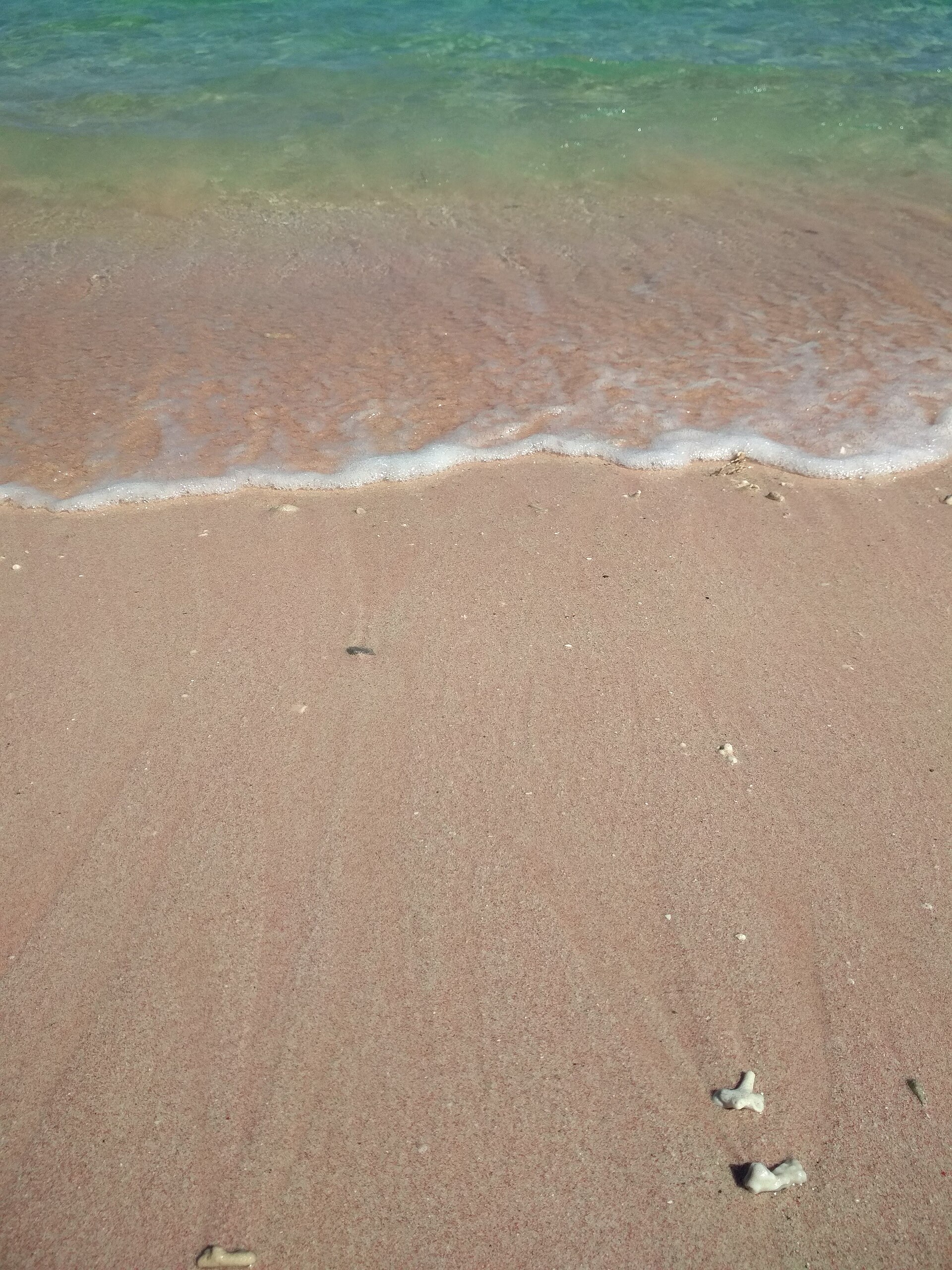
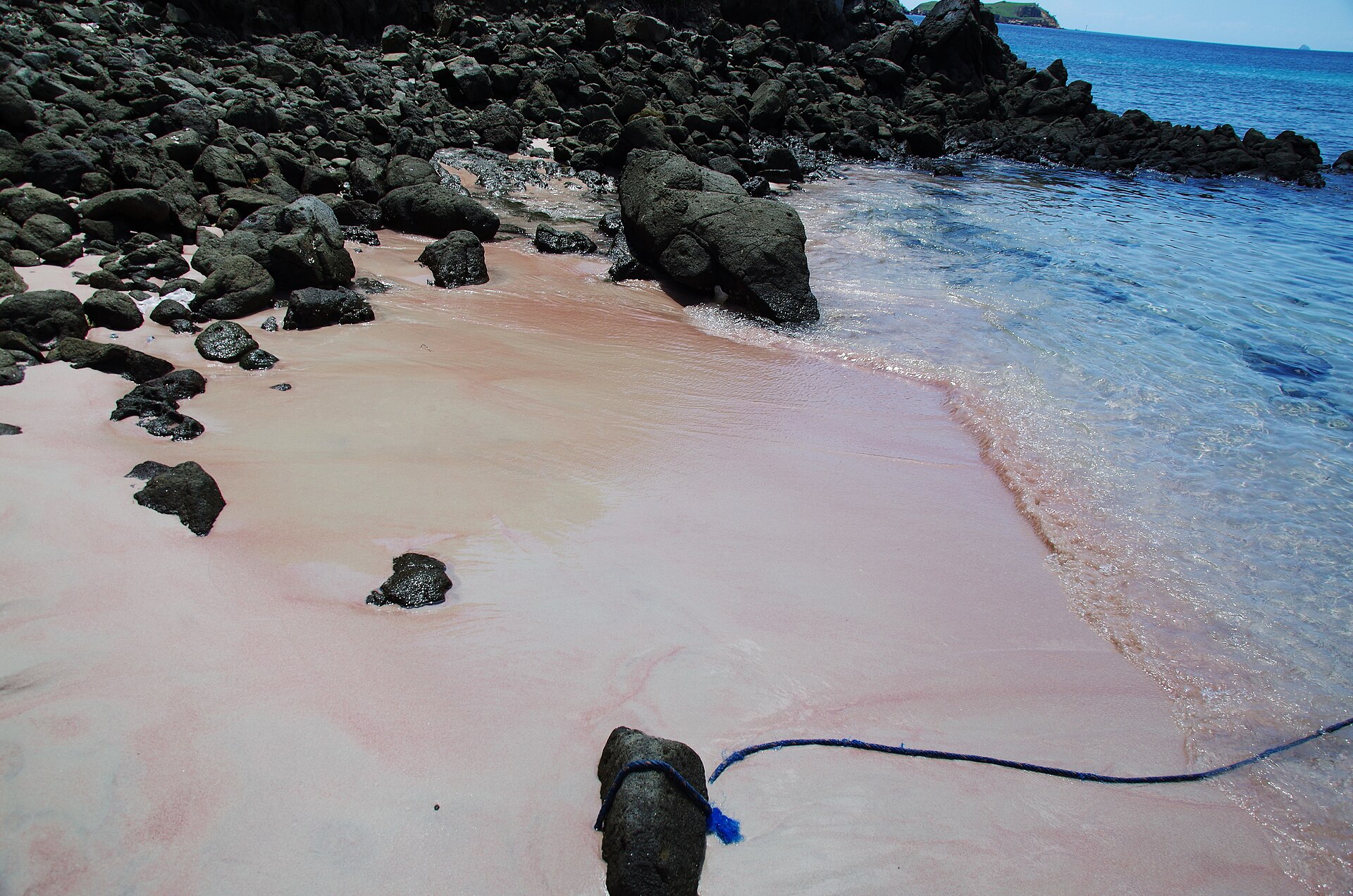
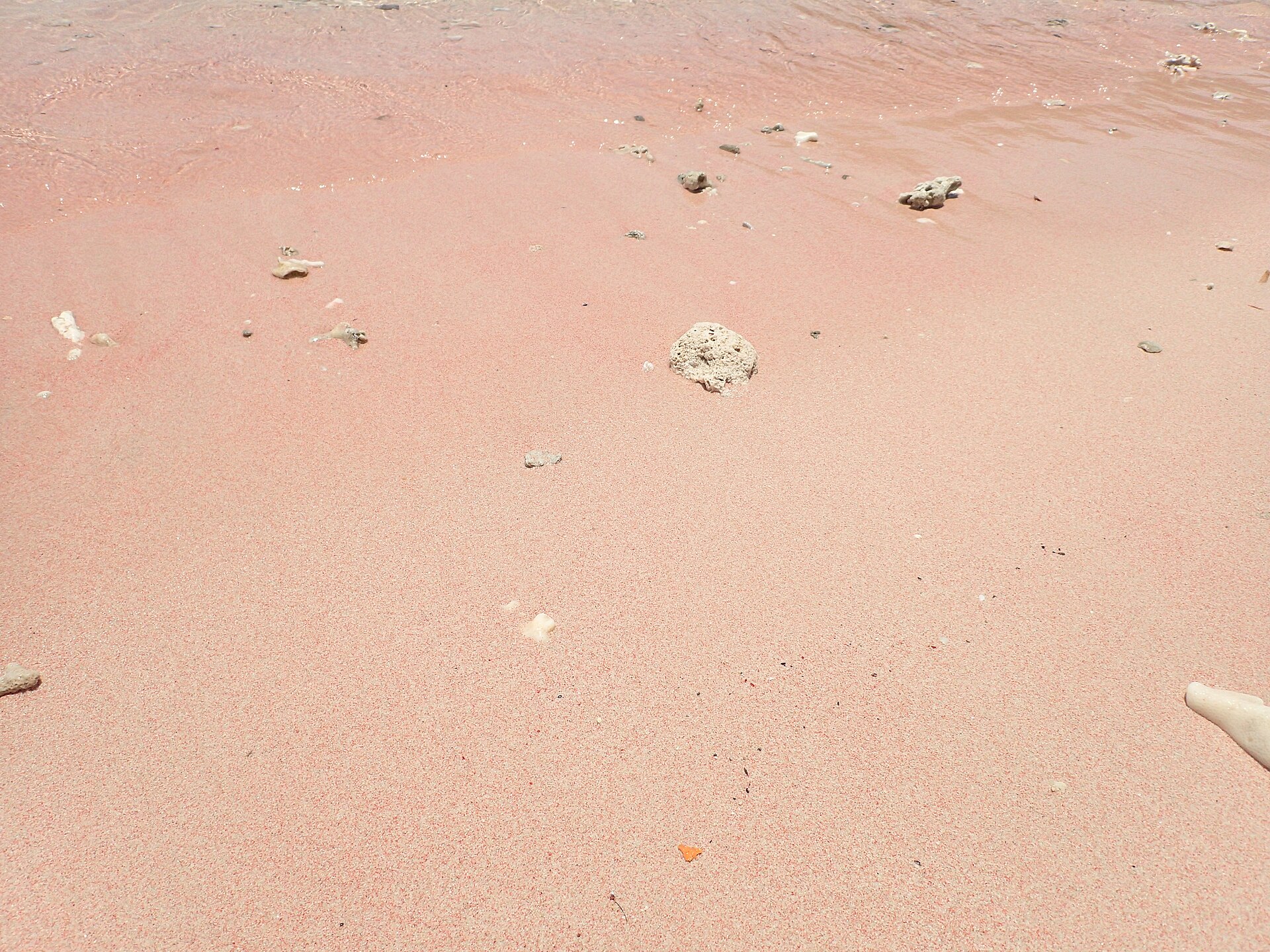
The colour comes from the reef, not from the land. Two organisms are credited and both are probably right: red-shelled foraminifera, which are single-celled marine protists rather than coral, and fragments of red organ pipe coral, Tubipora musica. Both break down and mix into white carbonate sand. The living reef keeps replenishing it, which is why reef health and beach colour are directly linked here.
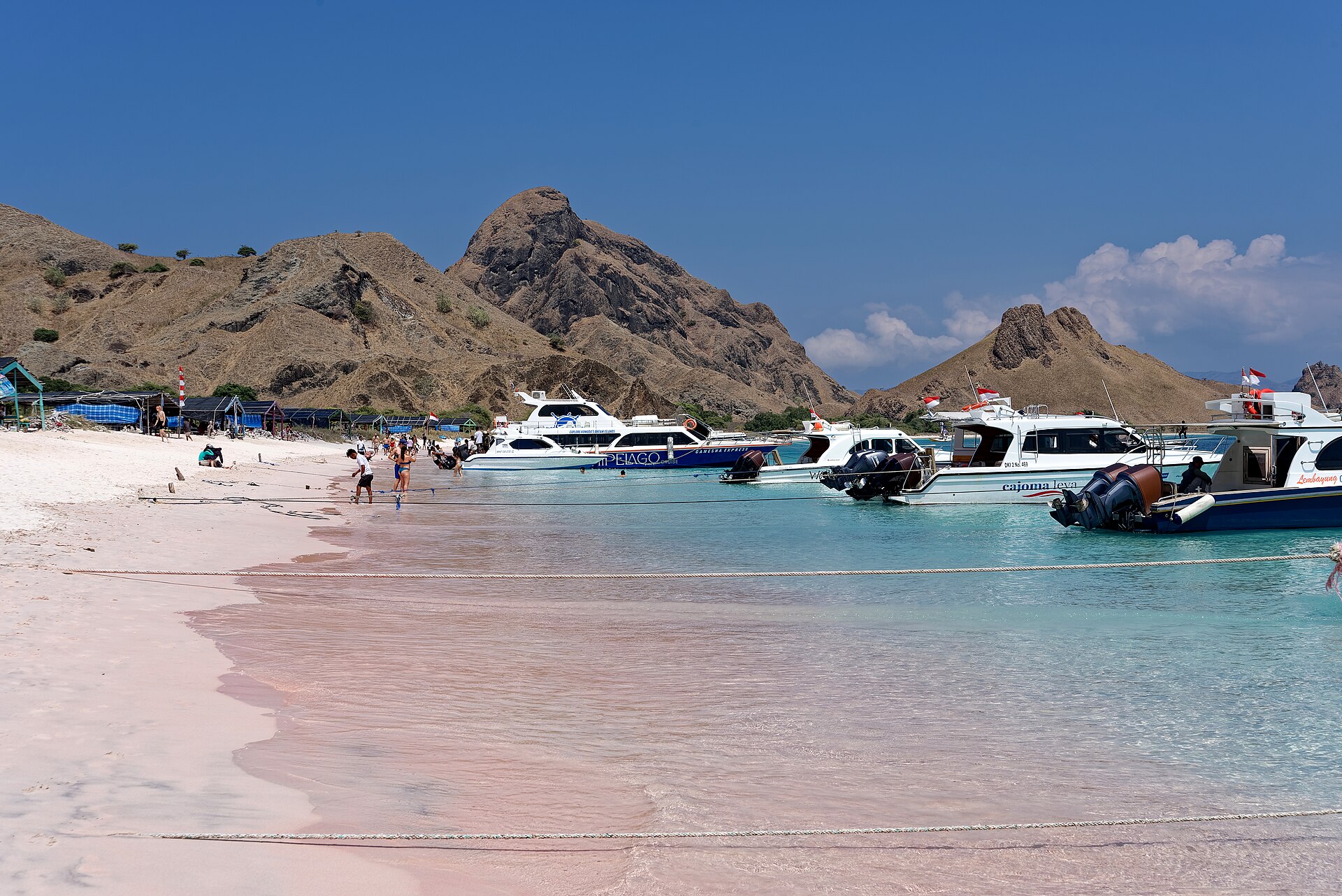
Set expectations honestly: the result is a soft blush, strongest at the waterline where the sand is wet and where wave action concentrates the red grains, patchy along the rest of the cove, and noticeably paler than the saturated images most visitors arrive with. The ratio shifts with every tide. It is real. It is just quieter than the internet suggests.
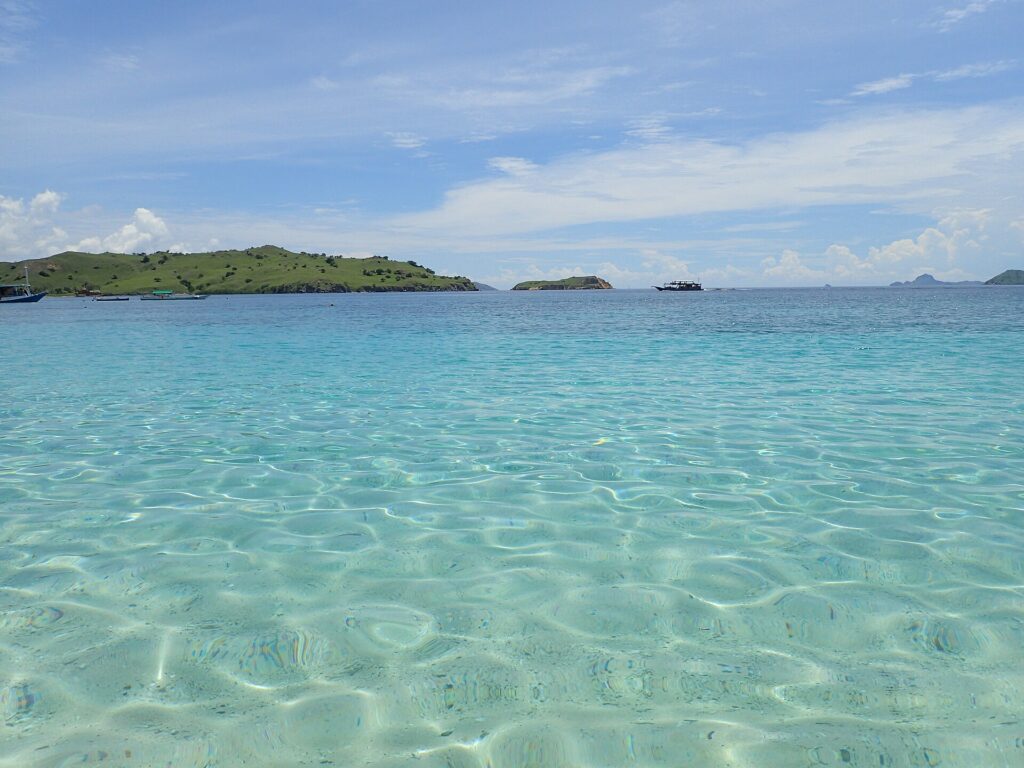
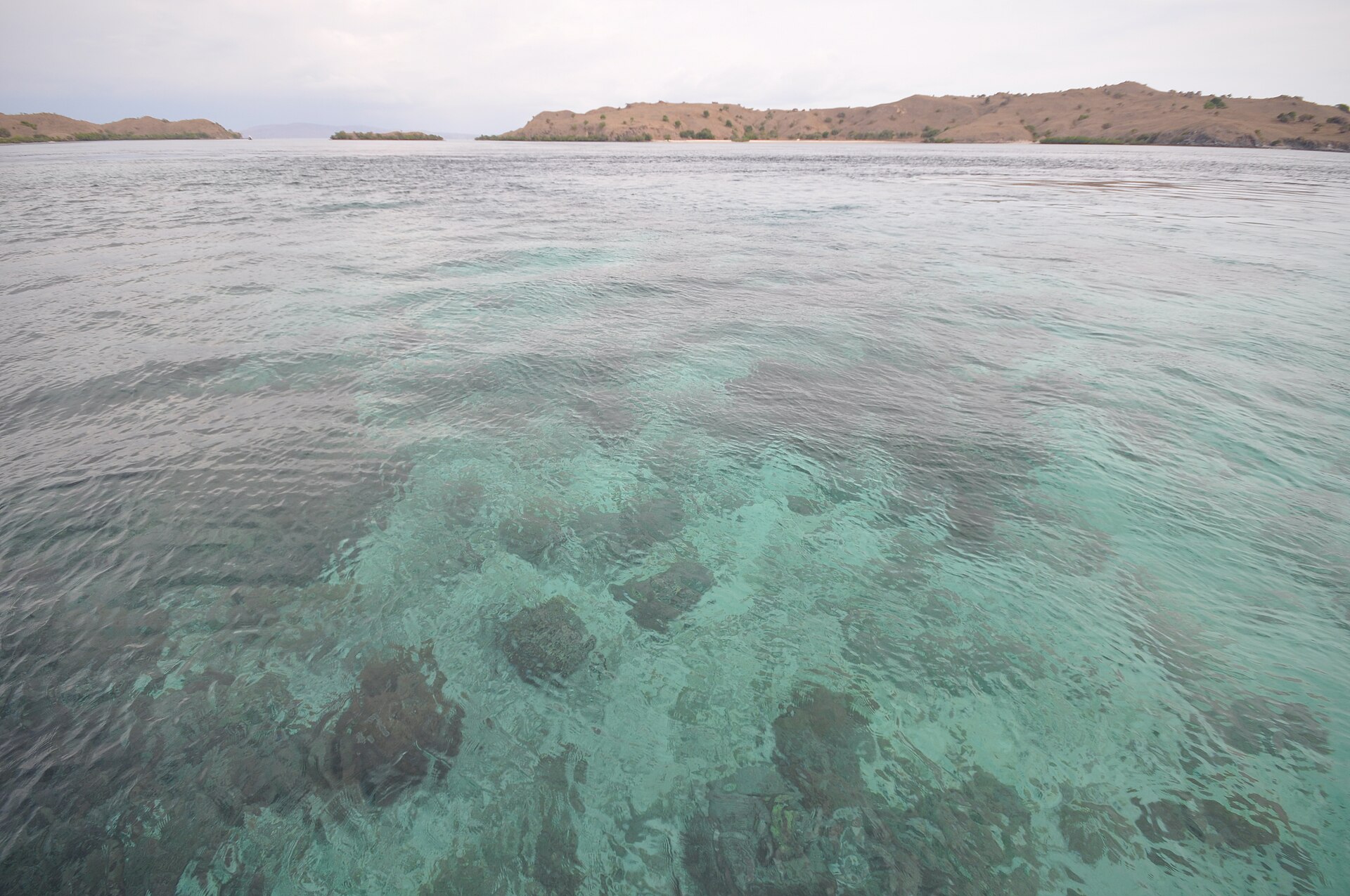
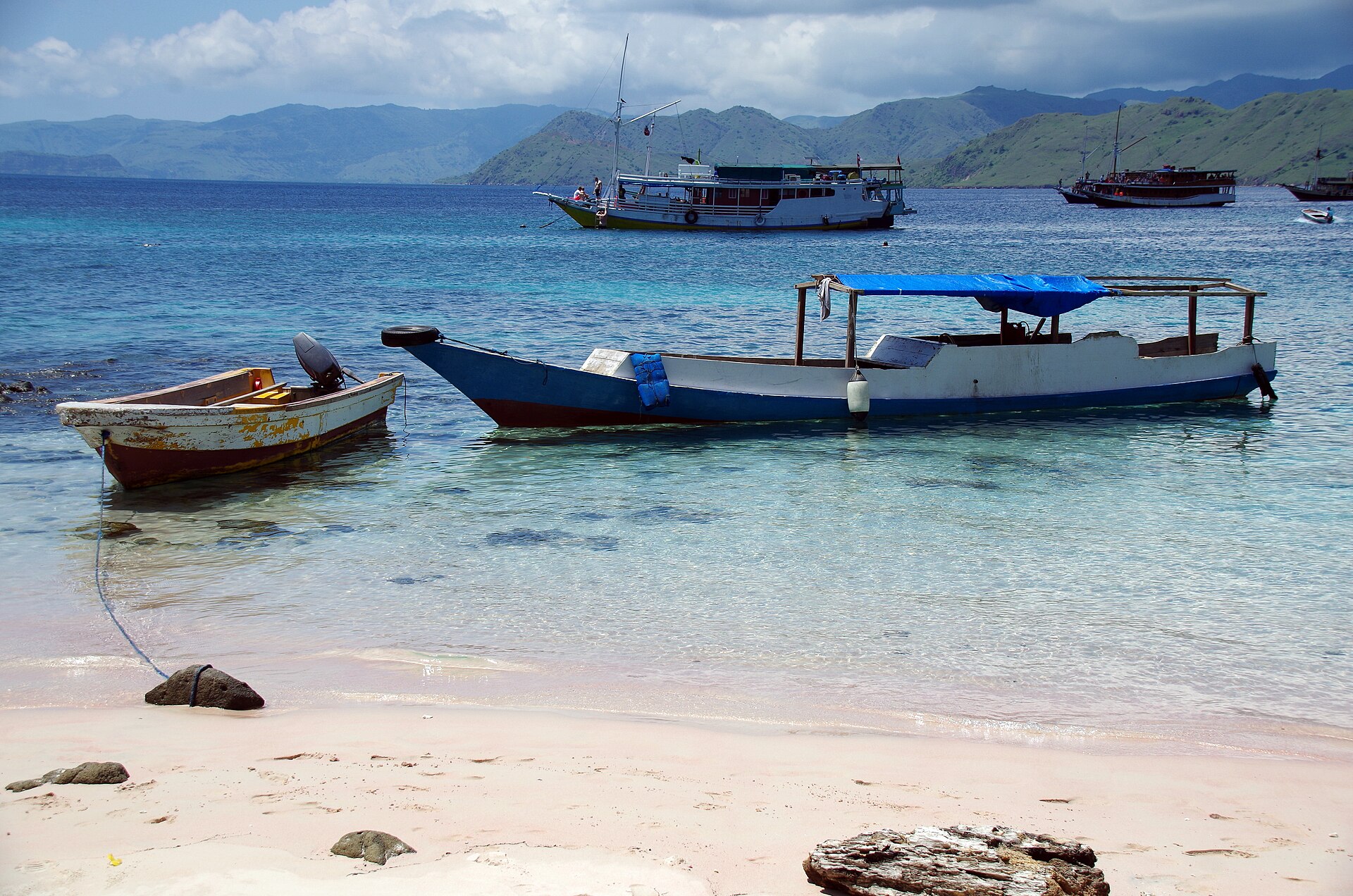
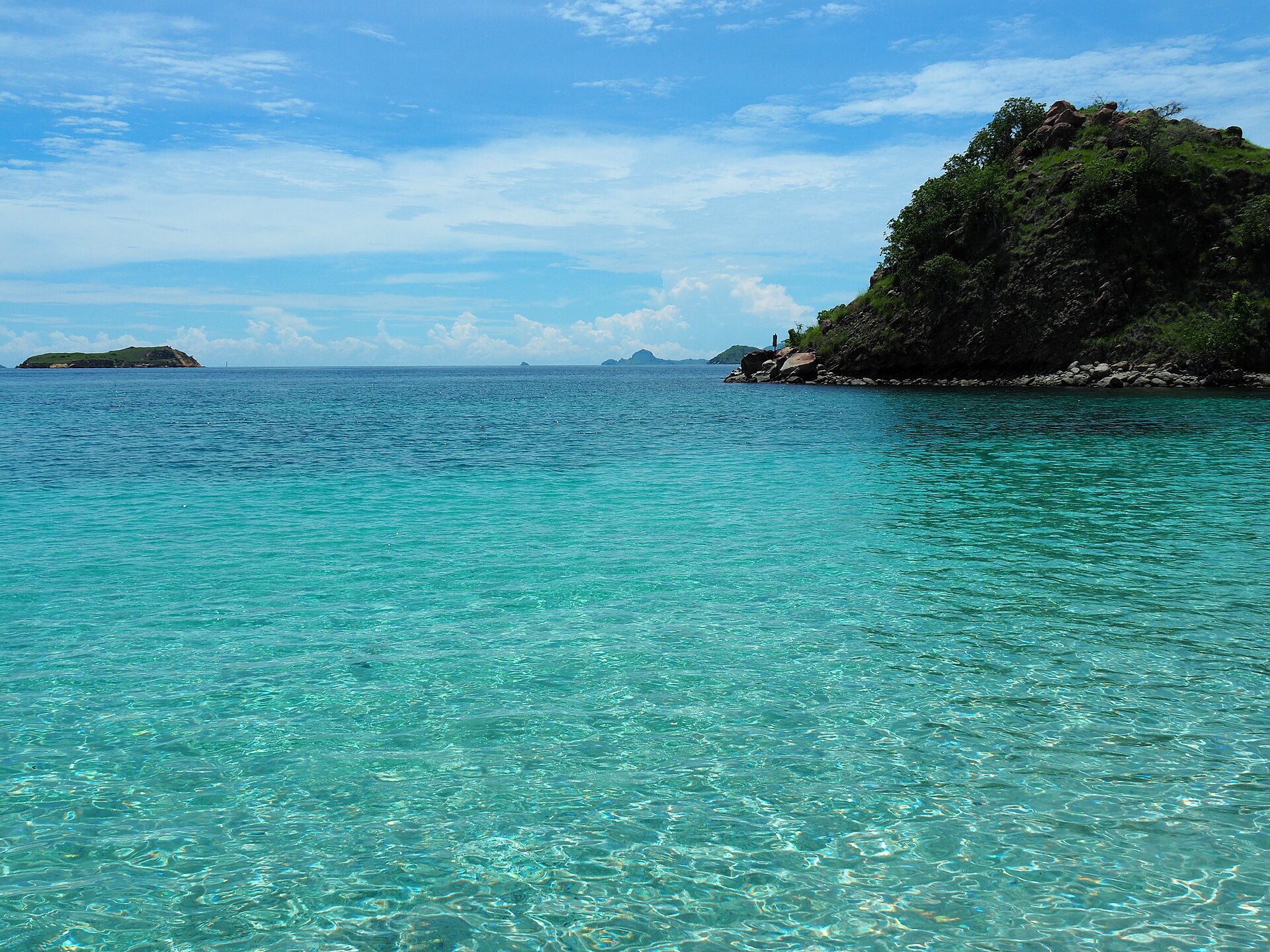
The cove is small and completely undeveloped. There is no jetty and nothing built on the sand — no stalls, no toilets, no shade. Boats anchor offshore and guests wade in or come by dinghy. The fringing reef begins roughly twenty to eighty metres out and is shallow, sheltered and unusually forgiving — widely rated among the easiest high-quality snorkels in the park.
Crowds and Timing
Two hundred metres of beach has a small effective capacity, and that is the whole story here. When the day-trip fleet converges in the middle of the day, the shoreline fills and the quiet cove in the photographs stops existing.
The first boat into the bay and the tenth boat into the bay are not visiting the same place. Operators who put Pink Beach first on the day rather than third are making a real difference to what you experience, and it is worth asking where it sits in the running order before booking.
Liveaboard guests anchored overnight get the version nobody photographs: an empty beach in the first hours of light, which happens to be exactly when the colour reads best. The outer edges of the cove, away from the main landing area, stay quieter at any hour.
Dive and Snorkel Profile
- Depth range1-5 m over the inshore reef, dropping away at the outer edge
- CurrentMild
- Dive typeShore
- VisibilityCommonly 15 m or more in dry-season conditions
- CertificationNone (snorkel)
- EntryShore entry
How to Visit
Pink Beach is almost never a destination on its own. It sits in the same day as Padar and a dragon trek on Komodo or Rinca, and the sensible way to plan it is as part of a route rather than as a stop to chase.
Speedboat day trip. Around an hour from Labuan Bajo, bundled with the other headline stops. Efficient, and it lands you here at whatever hour the fleet schedule dictates.
Liveaboard. Vessels anchor in or near the bay overnight, which converts a crowded midday stop into an empty early morning one. Wooden phinisi need two and a half to three and a half hours from Labuan Bajo.
Both of our standard routes include it: Komodo Tour 3 Days 2 Nights and Komodo Tour 4 Days 3 Nights.
Boats That Sail Here
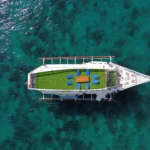
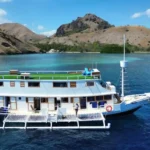
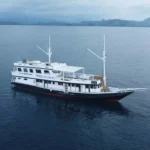
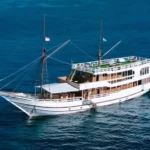
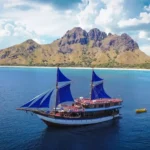
110 boats in our directory call here on their published itineraries, and the 12 with live pages are listed first. The list is generated from those itineraries, so it changes when a route changes rather than when someone remembers to edit this page.



Who This Suits
This is the easiest stop in a standard Komodo itinerary and the one that suits the widest range of people. Shore entry, shallow reef a short swim off the sand, sheltered water, no climb and no certification required. Families with young children and non-divers get the most out of it.
Weak swimmers can stay in one to two metres and still see live coral and reef fish, which is not true at most of the park’s other snorkel sites.
The one real constraint is that the beach is undeveloped: no shade, no toilets, nothing to buy. Anyone travelling with small children or anyone who needs to get out of the sun should treat this as a 60 to 90 minute stop with everything carried in, not a place to settle for an afternoon.
It suits nobody arriving expecting a dramatic landscape — that is Padar’s job — or expecting the saturated magenta of the photographs.
What to Bring
- Your own mask and snorkel if you have them. Rental sets from day boats are a lottery on fit, and fit is the whole experience.
- All your own water and food. Nothing is sold on this beach — everything you use comes off the boat.
- Reef-safe sun protection and a rash guard. There is no built shade and you will be face-down in the water for a while.
- Something dry-bag sized for valuables. There is no dock and no shelter; you will be wading in and everything you carry goes onto open sand.
Safety Notes
The bay is sheltered and conditions are usually gentle, but a surface current can run along the beach on windy afternoons and around tidal transitions. Ask the crew before entering rather than after.
The inshore reef is shallow enough that fin strikes damage coral and cut feet. Stay horizontal, keep fins up, and do not stand on the reef.
Further out the bottom drops away and reef sharks patrol the deeper edge. They are not a hazard, but the drop-off is where an unnoticed current will take you fastest, so keep the boat in sight and snorkel with someone.
Taking sand or coral fragments off the beach is prohibited, and it is also self-defeating: the red fragments are the colour.
Photography Notes
Shoot from the water towards the land, not the other way round. The colour concentrates in the wet wave-wash zone, so a low angle along the waterline gathers far more pink into the frame than a shot taken from the dry sand looking out.
Early morning is the window. Wet sand from the overnight tide plus low-angle light is what makes the blush read; by the middle of the day the sand dries, the light comes from overhead, and the colour flattens out. Late afternoon works as a second-best.
Set white balance manually. Auto white balance sees a warm cast and corrects it out, which is precisely the thing you came to photograph. And be honest in the edit — most of the images that set visitor expectations here have had saturation pushed hard.
Entrance Fee
Pink Beach lies inside Komodo National Park. Statutory entrance is charged per person, per day—not per beach or per visit. The final SiOra total depends on the registered day plus any applicable activity, vessel or special-use charges.
Reserve through SiOra before travel; Ministry guidance recommends H-1. Ask the operator for an itemised total. The verified statutory table, legal basis and source date appear in What the Park Costs below.
Frequently Asked Questions
Why is the sand pink?
Two sources, both from the reef, and guides credit them in different proportions. Foraminifera are single-celled marine organisms with red calcium carbonate shells — often miscalled a coral, which they are not — and they wash ashore when they die. Red organ pipe coral, Tubipora musica, breaks down into larger visible fragments. Both mix with white carbonate sand and the blend reads pink. It is a biological process, not a mineral one, which is why the colour depends on the reef staying healthy.
What time of day is the pink strongest?
Early morning, roughly the first two hours after sunrise. The colour lives in wet sand, so the overnight tide plus low-angle light is the combination that makes it read. By the middle of the day the sand dries and overhead light washes it out; late afternoon brings some of it back. Tide matters as much as the clock — the wave-wash zone is where the pink concentrates.
Can you swim and snorkel here?
Yes, and the snorkelling is the better half of the visit. The fringing reef starts roughly twenty to eighty metres off the sand in shallow water, sheltered from the main park currents, with hard coral, reef fish and turtles regularly seen. It is one of the few genuinely easy shore-entry snorkels in Komodo National Park, and no certification is needed.
Are there any facilities on Pink Beach?
None. Pink Beach is a natural beach with nothing built on it — no warung, no toilets, no shade structures, no jetty, no accommodation. Everything you eat, drink or use comes off your boat, and there is nowhere to buy anything you forgot.
Some travel pages describe small stalls selling drinks and coconuts here. They are wrong, and it is worth planning around the correct version rather than the optimistic one: on a hot midday stop with no shade and no water for sale, the difference matters.
How is this different from the Pink Beach in Lombok?
Different island, different province, different beach. Lombok’s pink beach is Pantai Tangsi, in West Nusa Tenggara. This one is Pantai Merah on Komodo Island in East Nusa Tenggara, inside the national park and reachable only by boat from Labuan Bajo. Confusing the two is common enough that operators get asked about it regularly.
Is this the only pink beach in Komodo National Park?
No. Padar Island has its own pink stretch, often called Long Beach, which several visitors describe as showing a brighter pink than Pantai Merah. It is not a standard landing on most itineraries, so most people see it from the Padar ridge rather than standing on it. Pantai Merah is the one meant by Pink Beach Komodo.
How busy does Pink Beach get, and when?
Roughly half past ten to half past two is the crowded window — that is when the day boats out of Labuan Bajo converge, and the cove is small enough that it fills. Early morning and late afternoon are markedly quieter, which is the same window in which the colour reads best. Guests anchored overnight on a liveaboard get the beach close to empty at first light; day trips almost never can.
How far is Pink Beach from Labuan Bajo?
About 40 km by sea. Crossing time depends entirely on the hull: roughly an hour on a speedboat, an hour and a half to two on a fast day boat, and up to three and a half on a traditional wooden phinisi. There is no land route — Pink Beach sits on Komodo Island inside the national park and is reachable only by boat.
What the Park Costs
| What you pay | Amount | Basis |
|---|---|---|
| Park entrance, foreign visitor | Rp 250,000 ≈ $14 | per person, per visit Identical on weekdays and public holidays. Already includes trekking, wildlife observation and snorkelling inside the park. |
| Park entrance, Indonesian visitor, weekday | Rp 50,000 ≈ $3 | per person, per visit Raised from Rp 35,000 in October 2024. |
| Park entrance, Indonesian visitor, weekend or public holiday | Rp 75,000 ≈ $4 | per person, per visit The holiday uplift applies to the Indonesian rate only. |
| Park entrance, Indonesian student group | Rp 25,000 ≈ $1 | per person, per day Group bookings only. |
| Scuba diving permit | Rp 25,000 ≈ $1 | per diver, per day Charged on top of the entrance fee. Snorkelling is not charged separately. |
| Vessel entry | varies | Assessed on the engine capacity of the boat, so it is normally settled by the operator rather than by passengers. |
- Booking runs through SIORA, the park's own system, and is handled by a licensed operator before arrival. There is no ticket window at the gate.
- A daily cap of 1,000 visitors applies across the park, split between Komodo, Rinca and Padar and the dive sites around them.
- Entry runs in sessions rather than all day, which is why a boat's arrival time is set by the park and not by the crew.
- A drone permit is separate, expensive, and has to be requested well in advance.
Statutory rates set by Peraturan Pemerintah No. 36 Tahun 2024, in force since 30 October 2024. Checked 25 August 2026. Amounts are payable in rupiah; dollar figures are converted at Rp 17,900 and rounded. A rise in the foreign rate was under government review in April 2026 and had not taken effect.
Marine Life
Activities
Cruise Areas
Location
Pink Beach (Pantai Merah), Komodo Island, Komodo National Park, East Nusa Tenggara, Indonesia


Add a review