
Komodo Snorkelling for Weak Swimmers: Limits and Questions to Ask
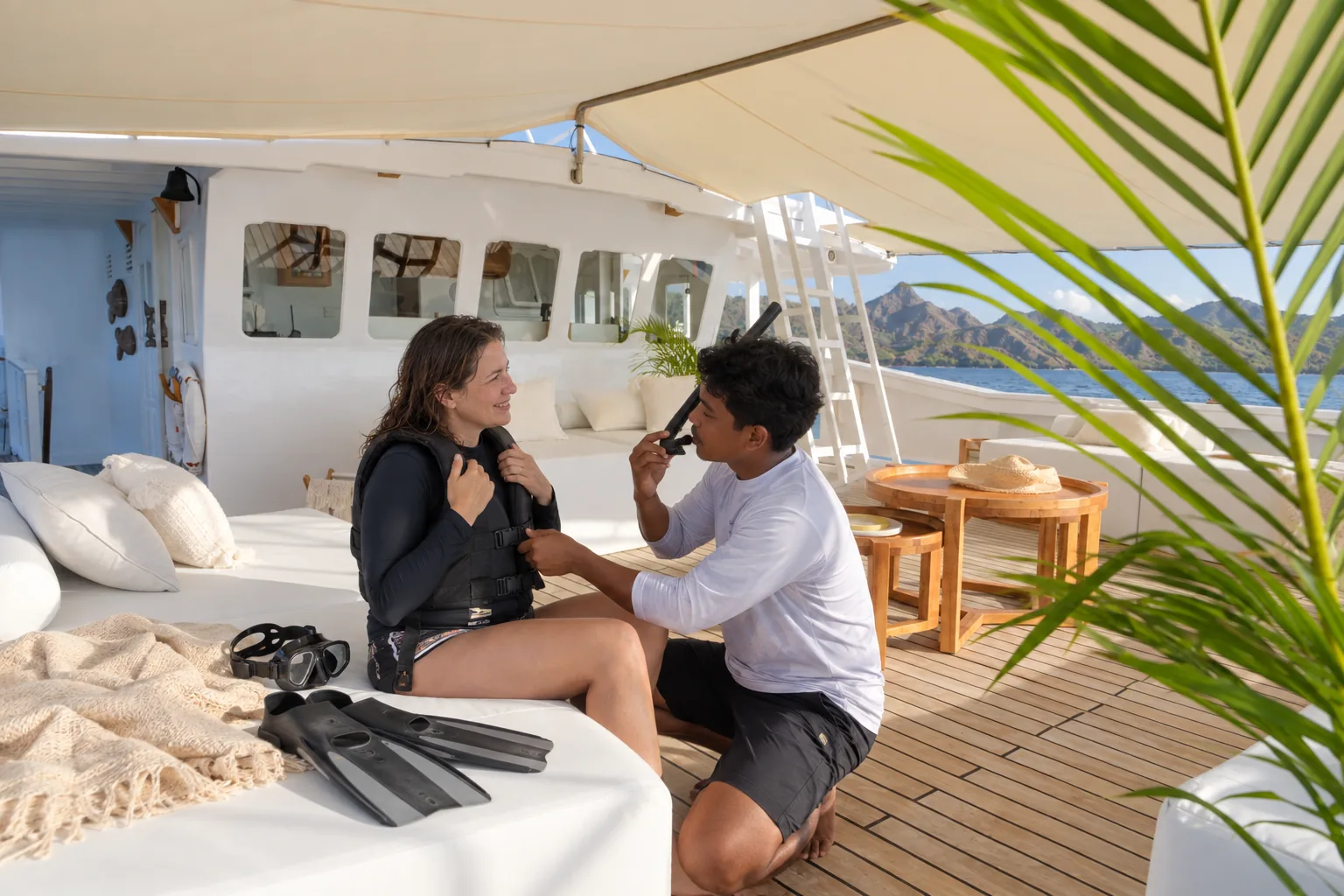
A non-swimmer can enjoy a Komodo boat trip without entering the water. Snorkelling itself requires an individual decision: a flotation aid and a calm-looking surface do not remove current, panic or exit risks. Tell the operator your actual ability before booking and ask for a specific supervision and alternative-activity plan.
Separate a boat holiday from a water activity
Some tour copy says “non-swimmers welcome” because guests can stay on deck, visit islands or join a short shore stop. That does not mean every guest can safely snorkel at every stop. DAN’s water-safety guidance calls for appropriate life jackets, understanding local hazards and not swimming unattended. A vest helps with flotation but cannot teach breathing through a snorkel, keep someone within a group or arrange rescue on its own.
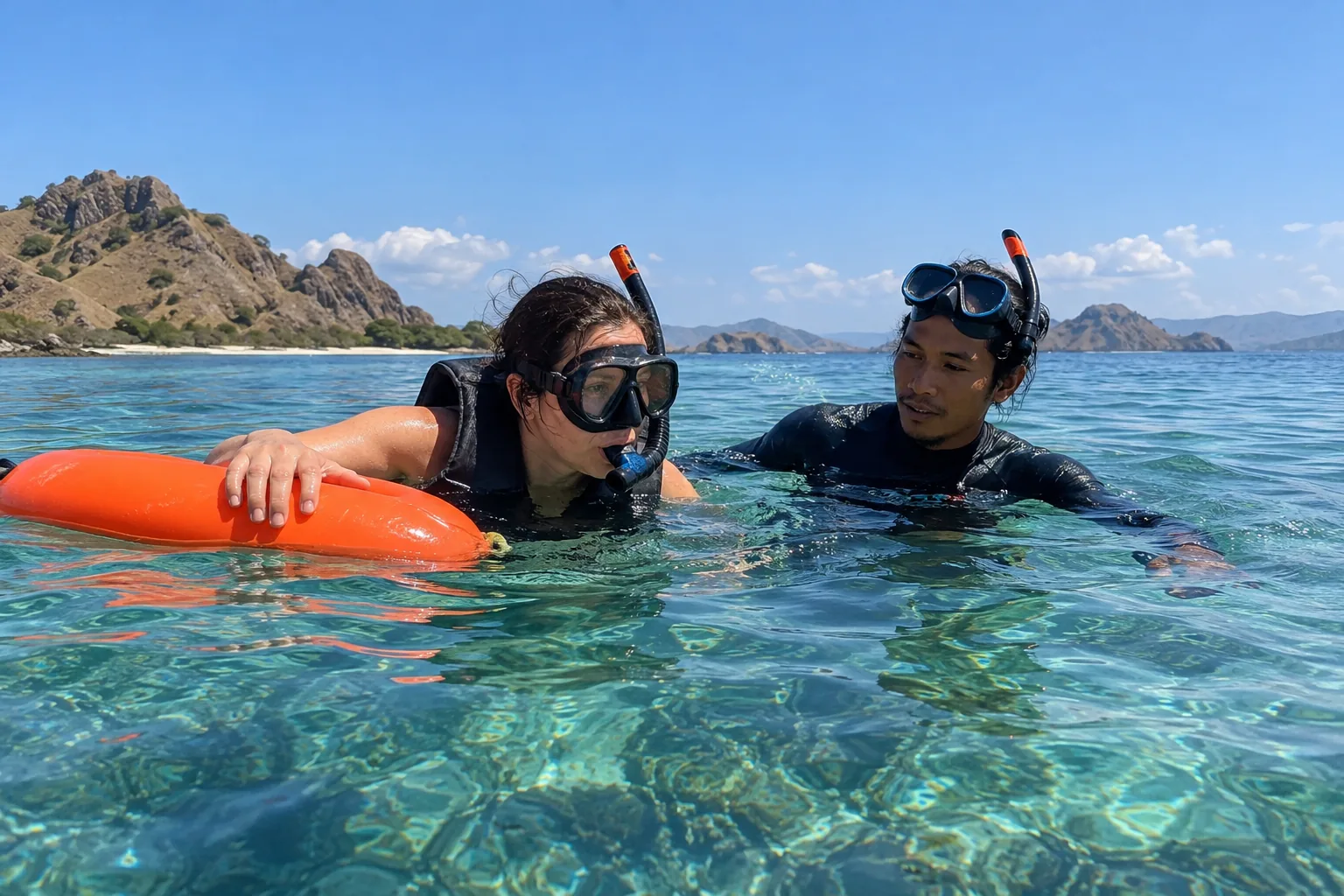
Choose a boat-only day or an individually assessed water activity
If you cannot swim, plan around the activities you can join without entering the water. Ask about tender boarding, beach landings, shade, toilets and staff contact while the rest of the group snorkels. A private or shared trip needs the same answers.
If you can swim but are new to snorkelling, tell the operator that distinction. Confirm instruction, direct supervision and a suitable entry and exit with the qualified guide before deciding whether to participate. A flotation device does not settle that assessment.
| What the itinerary says | What you must ask |
|---|---|
| “Easy snorkeling” | Where exactly will we enter and exit, and what did the guide observe at that location today? |
| “Life jackets provided” | Are approved, properly fitting devices available for each adult and child? Who checks fit? |
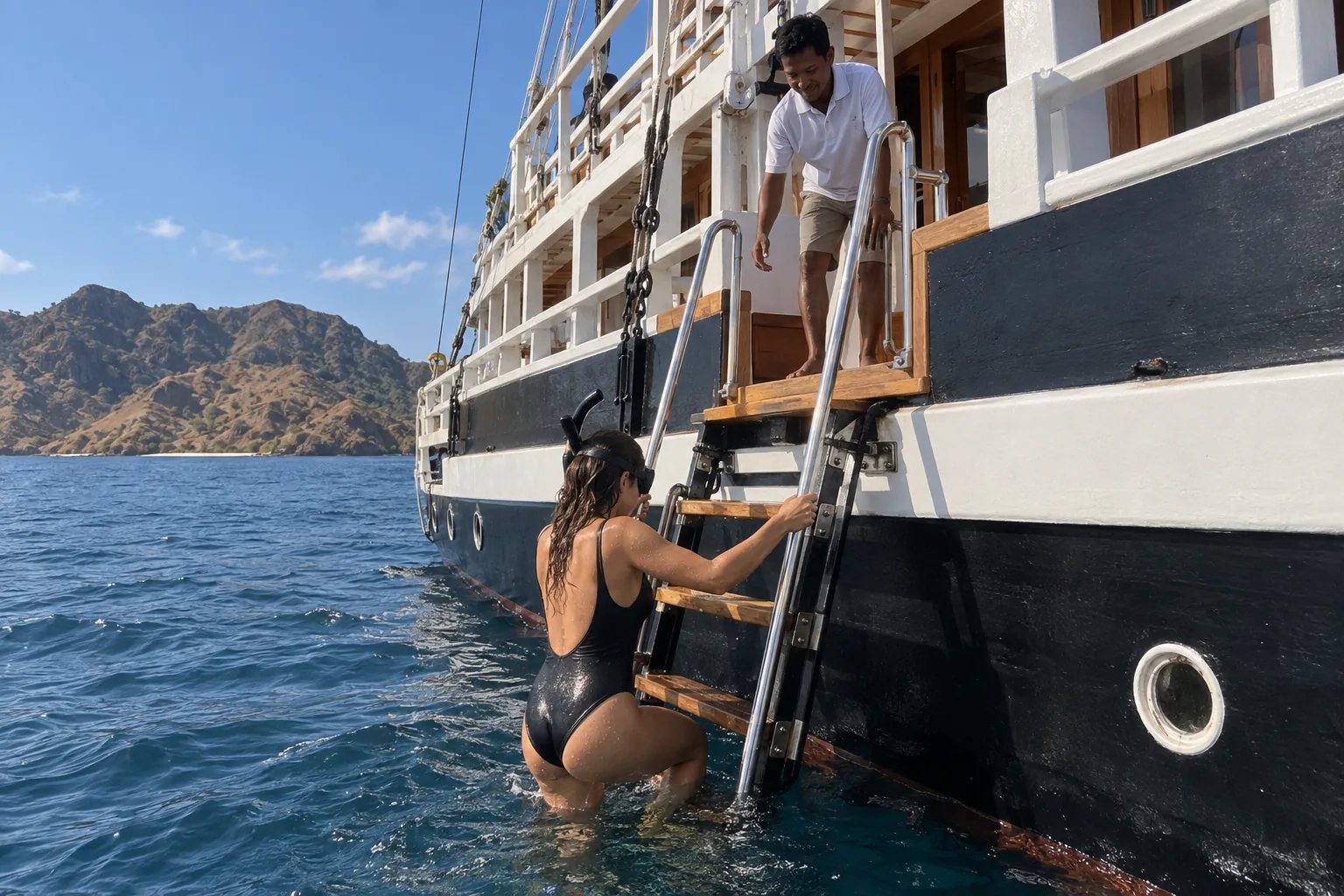
| “Guide on board” | Will a trained guide enter the water with this guest, and how many guests is that person watching? |
| “Flexible route” | Can the guest skip the swim, stay on the boat or choose a land stop without pressure or a surprise charge? |
Conditions change at the entry point
When choosing a Komodo island trip, do not infer safety from an island’s reputation or a photo of a sandbar. At a beach, ask about waves and the route back; at a tender drop, ask how guests reboard; at a drift site, ask about current and the pickup procedure. The same place can be different on another tide or windy day. If the boat cannot explain the exit and the person responsible for you, remain on board.
For someone who can swim but has little snorkelling experience, first test mask fit and snorkel breathing in genuinely sheltered water under direct supervision, with an agreed stop signal. If they are uncomfortable with their face in the water or repeatedly swallowing water, stop the activity. Never turn a wildlife sighting into a reason to enter conditions beyond your ability.
What a useful alternative plan looks like
A good operator tells the guest which island landings, viewpoint walks or deck observation are possible on the same route, and which require tender transfers or steep steps. Ask whether a guest who stays aboard has shade, drinking water, toilet access and staff contact while others swim. Plan a shore-based day if that better fits the group. This makes “you can still enjoy the trip” a checkable statement rather than a sales promise.
Send this before paying
“One guest cannot swim and may stay on board for every snorkeling stop. Which activities remain available, what flotation sizes do you carry, will a guide enter the water if the guest elects to try, and how is a guest retrieved if they signal distress? Please confirm any additional cost.” Ask again at the on-board briefing; the answer can change with conditions.
Browse a komodo tour 3 days 2 nights itinerary for the mix of land and sea activities, then verify each activity and supervision with the actual vessel operator. The existence of a stop on the itinerary is not a guarantee of a safe swim.
Compare current Komodo tour packages, then verify the water activities, supervision, vessel and alternative land stops before booking.
No island is labelled safe for every non-swimmer; a live guide assessment is essential.
Confirm the person and the stop signal
Ask who is responsible for watching this guest, how to request an immediate end to the activity, and how that person reaches the boat or shore with help. If the arrangement is vague or the guest is uncomfortable, use the agreed boat-only or shore alternative. A successful float at one stop does not establish readiness for a later current or wildlife stop.
Can I skip every snorkelling stop?
Ask the operator to confirm that choice and the available boat or authorised land activities. A swimming activity should not become an obligation because it appears in the itinerary.
For independent diving and water-safety reading, use DAN’s snorkelling guidance.
