
Blue-Ringed Octopus in Komodo: Identification and Safety
A cautious, source-backed guide to blue-ringed octopus reports, identification and safe observation in Komodo.
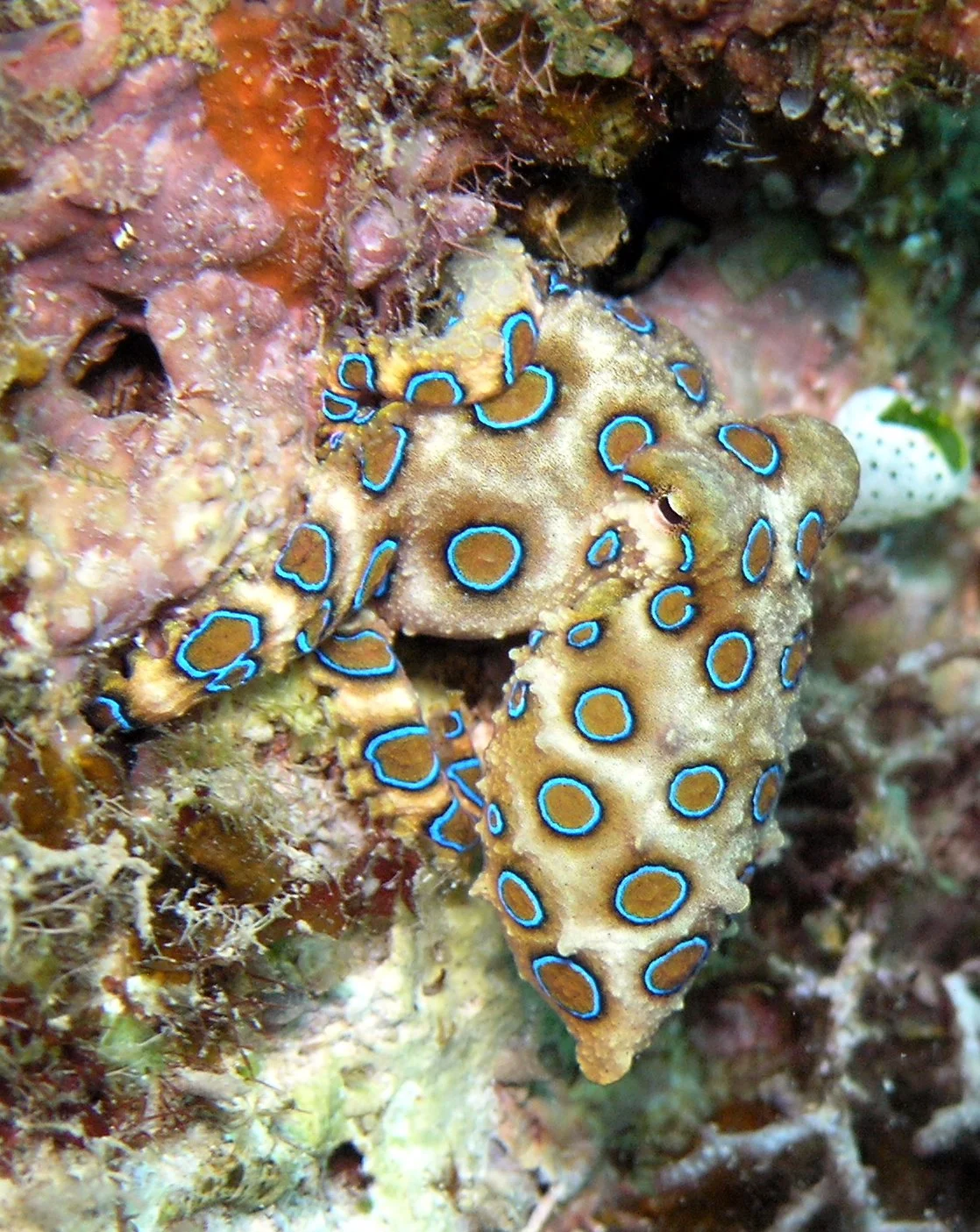
Blue-ringed octopuses are small, highly venomous members of the genus Hapalochlaena. They are usually shy and cryptic; bright blue rings are a defensive warning, not a permanent display. This guide explains recognition and avoidance for divers planning Komodo; it does not establish local sighting frequency. Never touch, corner or handle one. If a bite is suspected, alert the guide immediately and treat it as a medical emergency.
Why This Article Requires Caution
Blue-ringed octopus content is often written as spectacle: tiny animal, dramatic venom, alarming headline. That framing can encourage divers to approach too closely for a photograph. The useful question is not “how deadly is it?” but “how do I recognise a warning display and avoid creating one?”
These octopuses are generally shy and use crevices, shells and rubble as shelter. Bites are associated with handling, harassment or accidental contact. A no-touch dive already removes the most preventable risk.
For broader site and experience planning, use our Komodo diving guide. This article focuses on recognising a potentially venomous animal, avoiding contact and preparing for an emergency.
What Does a Blue-Ringed Octopus Look Like?
At rest, the animal can be beige, yellow-brown or mottled and surprisingly difficult to notice. The blue markings become much more vivid when the octopus is disturbed or threatened. Size, background and lighting vary, so the absence of bright rings does not make a small octopus safe to handle.
Species-level identification is difficult underwater. Several species belong to Hapalochlaena, and geographic assumptions should not replace diagnostic evidence. Record the animal as a blue-ringed octopus group when the photograph does not support more.
Resting Camouflage vs Warning Display
| Observation | What it may mean | What the diver should do |
|---|---|---|
| Muted, mottled body in rubble | Resting or using camouflage | Stop at distance and keep the retreat path open |
| Blue rings becoming vivid | Defensive warning or heightened disturbance | Back away immediately and reduce light |
| Body raised or arms spread | Animal may be preparing to move or defend | End the approach; do not surround it |
| Octopus entering a shell or crevice | Seeking shelter | Do not block, lift or inspect the shelter |
Are Blue-Ringed Octopuses Found in Komodo?
Local operator reports can support a possible Komodo occurrence, but they do not measure encounter frequency. Distinguish an identifiable record from a general marine-life list.
Neither suitable-looking habitat nor a vessel wildlife tag establishes encounter frequency. No departure should promise a sighting.
How to Observe One Safely
- Stop and alert the guide without placing a hand on the bottom.
- Stay at observation distance and follow the guide; do not move closer to provoke a display.
- Keep hands, pointer and camera away from the animal and its shelter.
- Leave a clear escape route.
- If blue rings intensify, back away rather than waiting for a stronger display.
- Do not collect shells or rubble that may conceal an octopus.
Venom and Bite Response
Blue-ringed octopus venom contains tetrodotoxin, a potent neurotoxin that can cause paralysis and respiratory failure. A bite may be small and not immediately painful, so uncertainty should not be used as a reason to delay action.
If a bite is suspected, alert the guide immediately and begin the dive team’s assisted exit and emergency plan. Do not wait for symptoms. Once out of the water, keep the person still, reassured and continuously observed while emergency medical help and evacuation are arranged.
ANZCOR recommends pressure immobilisation for blue-ringed octopus envenomation; a trained first aider should follow its technique guidance. If the person becomes unresponsive and is not breathing normally, begin CPR, including rescue breaths, and follow emergency instructions. Breathing support and urgent medical care are critical; oxygen equipment alone does not replace ventilation when the person cannot breathe.
A suspected blue-ringed octopus bite requires immediate emergency action. Alert the guide, follow the vessel’s emergency procedure and obtain professional medical care. There is no safe reason to handle the animal.
Photography Rules
Use a macro lens or crop instead of moving the housing close. Photograph the animal where it was found and retain the habitat context. Avoid continuous light, repeated flash and attempts to make the rings appear brighter.
A vivid warning display may produce a dramatic image, but it can also mean the photographer caused stress. The better photograph documents natural behaviour before the warning escalates.
Common Mistakes
- Assuming a muted octopus is harmless because blue rings are not visible.
- Picking up shells or cans at a rubble site without checking.
- Using a pointer to make the animal emerge.
- Surrounding it with several photographers.
- Waiting for symptoms after possible contact.
- Claiming a precise species from a blurred image.
Night-Dive and Rubble-Site Protocol
Small octopuses can shelter beneath shells, bottles, cans and loose rubble. Divers should avoid placing bare hands on the bottom or picking up an object to inspect it. Good trim keeps knees and fingers away from unseen shelter.
At night, agree on a clear signal for venomous wildlife before entering. One guide should control the approach. Multiple lights aimed from every side can remove the animal’s escape path and trigger the display the group is supposed to avoid.
What Can Be Confused With a Blue-Ringed Octopus?
Several small octopuses use mottled patterns, iridescence or spots. Camera white balance can also turn pale rings bright blue. A confident identification needs a clear pattern and an appropriate view, not a single saturated frame.
Do not test the identification through touch or provocation. If uncertainty affects safety, treat the animal as no-touch and increase distance.
What a Prepared Vessel Should Have
- An emergency oxygen supply sized and maintained for the operation.
- Staff trained in rescue, oxygen administration and basic life support.
- A working communication method and written evacuation contacts.
- A briefing that assigns roles rather than improvising after an incident.
- A route decision that considers distance from professional medical care.
The traveller does not need to diagnose an envenomation. The useful action is immediate reporting so the trained team can begin the emergency plan.
Why “No Known Antidote” Is Not “No Treatment”
There is no specific antidote that neutralises tetrodotoxin. Emergency care can still be lifesaving by supporting breathing and circulation while the toxin is cleared. This distinction is important: fatalism causes delay, while rapid rescue action creates the best available path.
Other Cephalopods and Macro Subjects
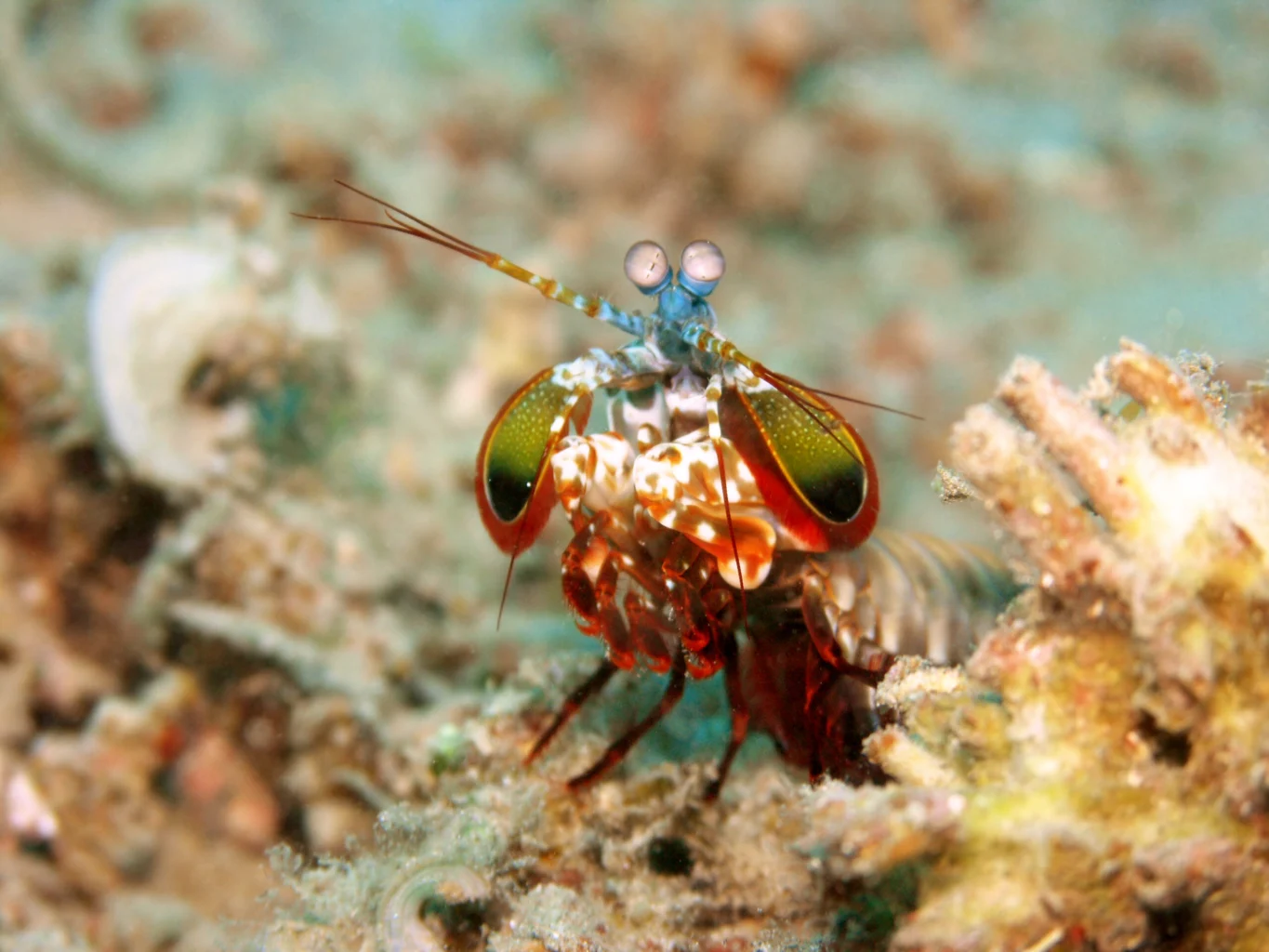
Komodo’s smaller cephalopods share habitat with crustaceans, fish and molluscs. A slow search may also reveal mantis shrimp, frogfish and nudibranchs. None should be handled or repositioned.
Choosing a Responsible Macro Operator
Ask whether the crew carries emergency oxygen, has a written evacuation plan and briefs photographers on no-touch behaviour. Also ask how the group handles night dives and rubble sites, where hands and knees must stay clear of unseen animals.
Compare published vessels through the Komodo diving trips page, then verify the safety equipment and guide protocol directly.
What the Komodo reports do and do not establish
Komodo dive operators including Scuba Junkie and Dragon Dive discuss blue-ringed octopuses in their local wildlife guides. Those are operator reports, not a systematic estimate of how often guests will encounter one. The pages should not be converted into a percentage chance, a dependable season or a guarantee for a particular dive site.
Ask for the date and location of a reported observation and whether a usable photograph supports it. If the species cannot be resolved, keep the identification at Hapalochlaena or the blue-ringed octopus group. It is not necessary to approach more closely to decide on the correct visitor behaviour: all small octopuses and occupied shelters should remain untouched.
The same distinction applies to medical preparation. A low encounter frequency does not replace an emergency plan, while dramatic venom comparisons do not improve one. The useful checks concern trained responders, assisted recovery, working communication, evacuation coordination and breathing support. Discuss those capabilities before departure.
Scuba Junkie’s Komodo wildlife reports and Dragon Dive’s blue-ringed octopus guide provide the operator context. First-aid guidance below is drawn from ANZCOR, rather than from tourism marketing.
Match the wildlife interest to your trip
Use the dive komodo listing to compare dedicated diving options, then confirm the route, recent habitat observations and guide arrangements with the operator. Wildlife and daily site access remain conditional.
Frequently Asked Questions
Are blue-ringed octopuses aggressive?
They are generally shy and prefer to hide. Handling, cornering or accidental contact creates the preventable risk.
Are the blue rings always visible?
No. The rings can become much brighter during a defensive display.
Can a bite be painless?
Yes, a bite may not feel dramatic initially. Suspected contact should be treated as an emergency.
Can an operator guarantee a sighting?
No. The animal is small, cryptic and occasional. Suitable habitat and guide knowledge do not create a guarantee.
