
Komodo Diving for Beginners: Skills, Site Selection and Honest Limits
Understand scuba certification requirements, supervised try dives and operator screening before choosing a Komodo dive trip.
Scuba diving at dive sites inside Komodo National Park requires certification under the park’s published visitor protocol. Operators also set certification-level and experience requirements for each departure. Eligible beginners can ask a qualified Labuan Bajo centre about supervised introductory training at an authorised location outside the park. Non-divers can join departures that accept boat-only or snorkelling guests; a try dive does not award certification.
What Does “Beginner” Mean?
A certification card alone is not enough to describe a diver. For a Komodo trip with diving, four details matter:
- Your certification and depth limit
- Your total logged dives
- How recently you dived
- Your real comfort with buoyancy, entries and moving water
A newly certified diver who completed training last week is different from someone with the same card who has been out of the water for several years. Tell the operator the full picture before paying.
Which Komodo Sites May Suit Newer Divers?
| Site type | Examples | Why it may fit | Important limit |
|---|---|---|---|
| Protected reef or bay | Siaba Besar, selected Sebayur sites | More options for controlled profiles and assessment dives | Conditions still vary |
| Gentle drift in the right window | Tatawa Besar or similar routes | Introduces moving-water diving with a planned pickup | Not suitable when flow accelerates |
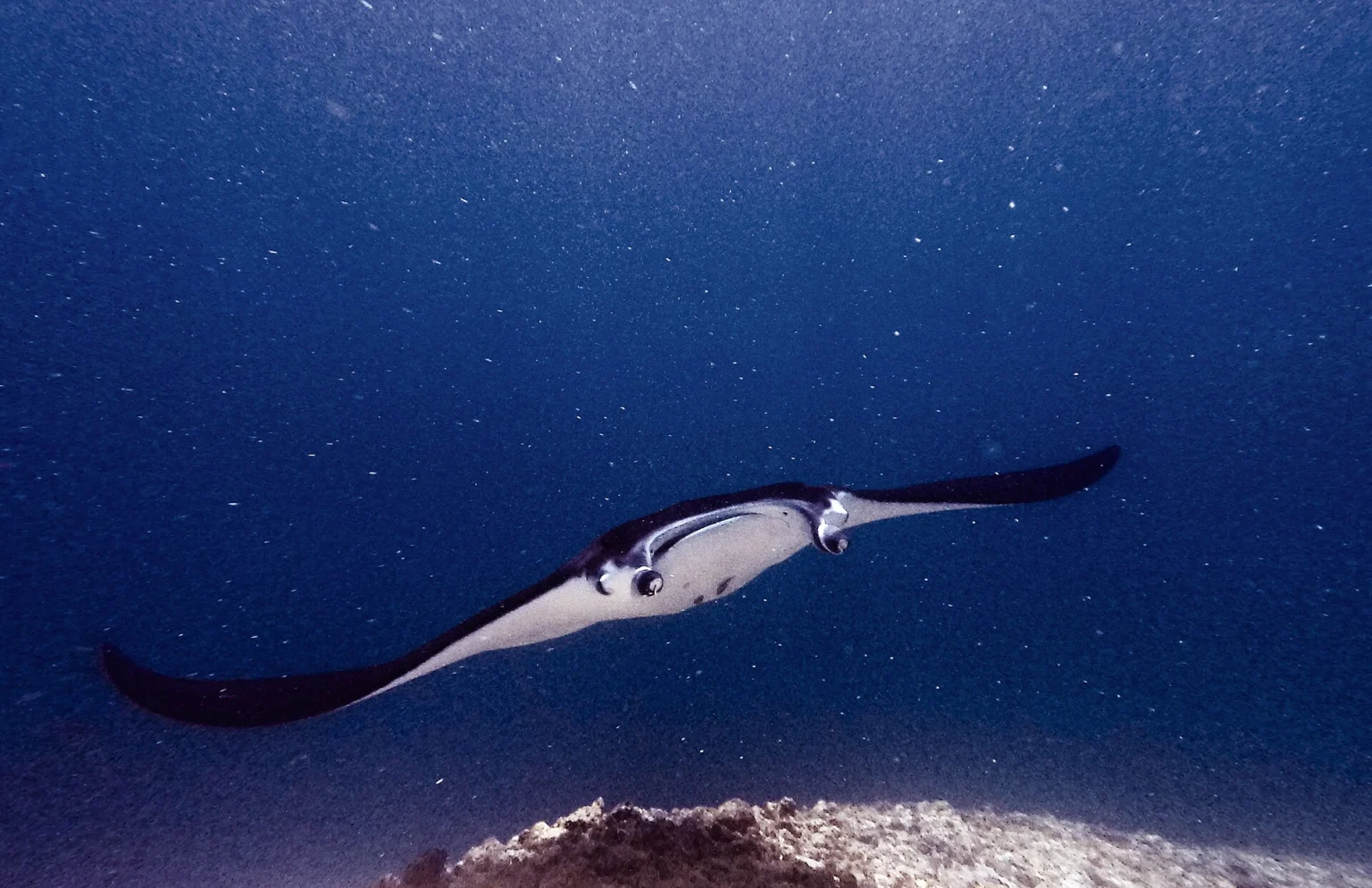
| Manta-focused site | Manta Point, Mawan | Shallow wildlife encounters are possible | Both can carry current and boat traffic |
| Exposed pinnacle | Batu Bolong, Castle Rock, Crystal Rock | Exceptional marine life | Often reserved for confident, recently active divers |
| Remote southern site | Cannibal Rock, Manta Alley | Distinct cool-water environment | Longer logistics and more demanding conditions |
No table can approve a dive. The guide must evaluate the actual current, visibility and group on the day.
Should You Learn to Dive in Komodo?
It is possible to complete entry-level training in Labuan Bajo with a qualified centre and selected training sites. PADI has also published beginner-oriented advice for Komodo. The advantage is access to exceptional marine life soon after certification.
The limitation is that the park’s most famous current sites are not training environments. A responsible course spends time in confined water and protected open water, even when advanced groups on the same day visit more dramatic locations.
If your only goal is to tick off Castle Rock or Batu Bolong immediately, learn and build experience somewhere calmer first. If your goal is to become a comfortable diver while accepting appropriate site selection, learning around Labuan Bajo can work.
Skills That Matter More Than the Destination Name
- Stable buoyancy: hold depth without using the reef or stirring the bottom.
- Controlled descent: remain with the group and equalize without delaying a current-sensitive entry.
- Buddy awareness: keep contact in reduced visibility or moving water.
- Air awareness: communicate pressure early enough for a controlled ascent and pickup.
- Surface signalling: know how and when to use the equipment issued by the operator.
- Honest communication: tell the guide when you are uncomfortable before entering the water.
If any of these feel uncertain, ask for a refresher and an easy check dive. That is not lost holiday time; it protects the rest of the trip.
Day Boat or Liveaboard for a Beginner?
A day boat can be easier because you sleep on land, can add a rest day and can reassess after each outing. A land-based dive centre may also have better access to a pool or confined-water refresher.
A liveaboard offers continuity with the same crew and may allow easier sites to be substituted as the trip develops. However, a dedicated advanced itinerary can be a poor fit if the rest of the group expects strong-current sites.
When comparing a Komodo liveaboard, ask whether the departure is mixed-level, whether a private guide is available and whether the boat can run two site plans. Verify the programme directly before booking.
Questions to Ask the Operator
- Which sites do you normally use for a first or check dive?
- How many divers are assigned to each guide?
- Will experienced and newer divers be separated?
- What happens if the current is stronger than expected?
- Is a refresher available before entering the park?
- What surface signalling equipment does each diver carry?
- Which famous sites may be unavailable at my current experience level?
The final question is particularly useful. An operator that answers honestly is more valuable than one that promises every site. Also ask the diving and evacuation insurance questions before payment so the intended activity and emergency arrangements match your policy.
Red Flags for Newer Divers
- No request for certification, dive count or last dive date
- A guarantee that every diver can visit every site
- No clear guide ratio
- A briefing that omits separation and pickup procedures
- Pressure to enter after you say conditions exceed your comfort
- Unclear oxygen, communications or emergency arrangements
A Sensible First-Trip Progression
Before arrival: complete online theory or a refresher if required, check insurance and send the operator your certification and recent dive history.
First water session: use a pool, confined-water area or protected reef to check mask, weighting, buoyancy and equipment familiarity.
First park dive: choose a site with a conservative profile. The guide can then assess air use, trim and group awareness in real conditions.
Progressive drift: add moving water only after the first dives are comfortable. A controlled drift with a planned pickup is a better step than immediately targeting the strongest site.
Optional advanced sites: let performance and conditions decide. The itinerary should not depend on reaching a site that may remain outside your current limits.
If You Are Not Ready to Dive the Headline Sites
Snorkelling in Komodo is not a consolation prize. Mantas, turtles, reef fish and coral gardens can be seen from the surface at sites selected for the group. A mixed trip can combine snorkelling with land stops while you build diving experience elsewhere.
Another option is to keep the first Komodo visit focused on training and central sites, then return for the north or south. A second trip with the right skills is better than a first trip spent fighting conditions.
Personal Equipment Worth Bringing
A familiar mask reduces one of the most common equipment distractions. A personal dive computer keeps your repetitive profiles on one device. Exposure protection should match repeated dives and the planned zone, especially if the route includes cooler southern water.
Do not assume personal ownership means suitability. Service life-support equipment according to the manufacturer and confirm that connections are compatible with the boat’s cylinders.
Do you need a diving licence in Komodo?
Here, diving licence means the scuba certification card or eCard issued by your training agency. Separate the national-park entry requirement from the training activity you book:
The park rule comes first. The Balai Taman Nasional Komodo visitor protocol prohibits diving without scuba certification at dive sites inside the national park. A supervised introductory programme is not, by itself, permission to dive at those park sites. Ask where each training session takes place and choose an authorised training location outside the park while you are uncertified.
| Activity | Certification before booking | What to confirm |
|---|---|---|
| Boat-only, island visits or snorkelling | A scuba certification is not required for these activities. | The departure accepts non-divers and provides suitable activities, supervision and transfers. |
| Supervised try dive outside the park | No prior scuba certification is needed for an eligible beginner. | Confirm an authorised training location outside the park, preparation and direct professional supervision with the qualified centre. |
| Open Water certification course | You can enrol as a beginner; enrolment does not exempt you from the park rule. | Training locations, age, swimming and medical-screening requirements, schedule and successful completion of all assessments. |
| Certified-diver day trip | Provide a certification accepted by the operator. | Certification level, depth restrictions, recent dive history and suitable sites for the group. |
| Diving liveaboard | The departure sets its diver entry requirements. | Accepted certification level, minimum logged dives, recency, refresher or check-dive requirements, and whether non-divers are accepted. |
Advanced Open Water is an operator and itinerary question. Some programmes accept Open Water divers at suitable sites; others set higher certification or experience requirements. Current, entry method and the group’s plan can make a site unsuitable even within your depth limit. Send your certification, logged dives and last-dive date before paying.
For training options, compare try dives and Open Water courses in Labuan Bajo. For travelling companions who will stay aboard or snorkel, use the diver and non-diver group guide.
PADI explains the distinction between Discover Scuba Diving and Open Water certification. As one local policy example, Scuba Junkie Komodo requires proof of certification from certified divers. Check your chosen operator’s own requirements.
Travelling With a More Experienced Buddy
A skilled buddy helps, but does not replace an appropriate guide or change your certification. If the group is split by ability, discuss whether buddies will remain together and which site plan both can safely enjoy.
For couples with very different goals, paying for a private guide can preserve the trip. The experienced diver can join selected advanced sessions while the newer diver follows a conservative programme without pressure.
Plan the Last Dive Before the Flight
Labuan Bajo departures can make travellers compress the final day. Do not build a flight connection that conflicts with current no-fly guidance from your training agency, dive computer or operator. Confirm the final dive time before buying the flight, not after boarding the boat.
Keep a buffer day when possible. It creates room for a refresher, weather change, fatigue or a conservative final surface interval.
Frequently Asked Questions
Can I scuba dive in Komodo without certification?
Not at dive sites inside Komodo National Park under the park’s published visitor protocol. Eligible beginners can ask a qualified Labuan Bajo centre about a supervised introductory programme at an authorised training location outside the park. A try dive does not award certification or exempt a guest from the park rule. Compare the try-dive and certification-course options and confirm the location, prerequisites and supervision.
Can an Open Water diver dive in Komodo?
Yes, when the operator accepts your certification and recent experience for the planned programme. Stay within your qualification and any stricter operator limits. An Open Water card does not establish suitability for every current, entry or dive site.
How many dives should I have before Komodo?
Ask the named operator for the written minimum for your exact departure, including recent-experience and check-dive requirements. A logged-dive total alone does not establish readiness; the operator must also consider your skills, certification and the planned conditions.
Can I see manta rays as a beginner?
It is possible at selected central sites, but wildlife and conditions are never guaranteed. Manta Point and Mawan can still carry current.
Do I need Advanced Open Water?
Requirements depend on the operator and itinerary. Some programmes accept Open Water divers at suitable sites; others require Advanced Open Water, a stated dive count or additional experience. Ask before booking and have the operator confirm which sites are appropriate for you.
Should I take a refresher?
If you have been inactive or feel uncertain about core skills, arrange one before the more demanding dives. The operator can then make a better site decision.
For a route-specific programme, compare dive komodo and ask the named operator which boat, guide and sites match your departure.
