
Wainilu Dive Site: Muck Diving and Macro Life near Rinca
Plan a Wainilu muck dive near Rinca: reported macro life, dive conditions, photography etiquette and what to confirm before booking.
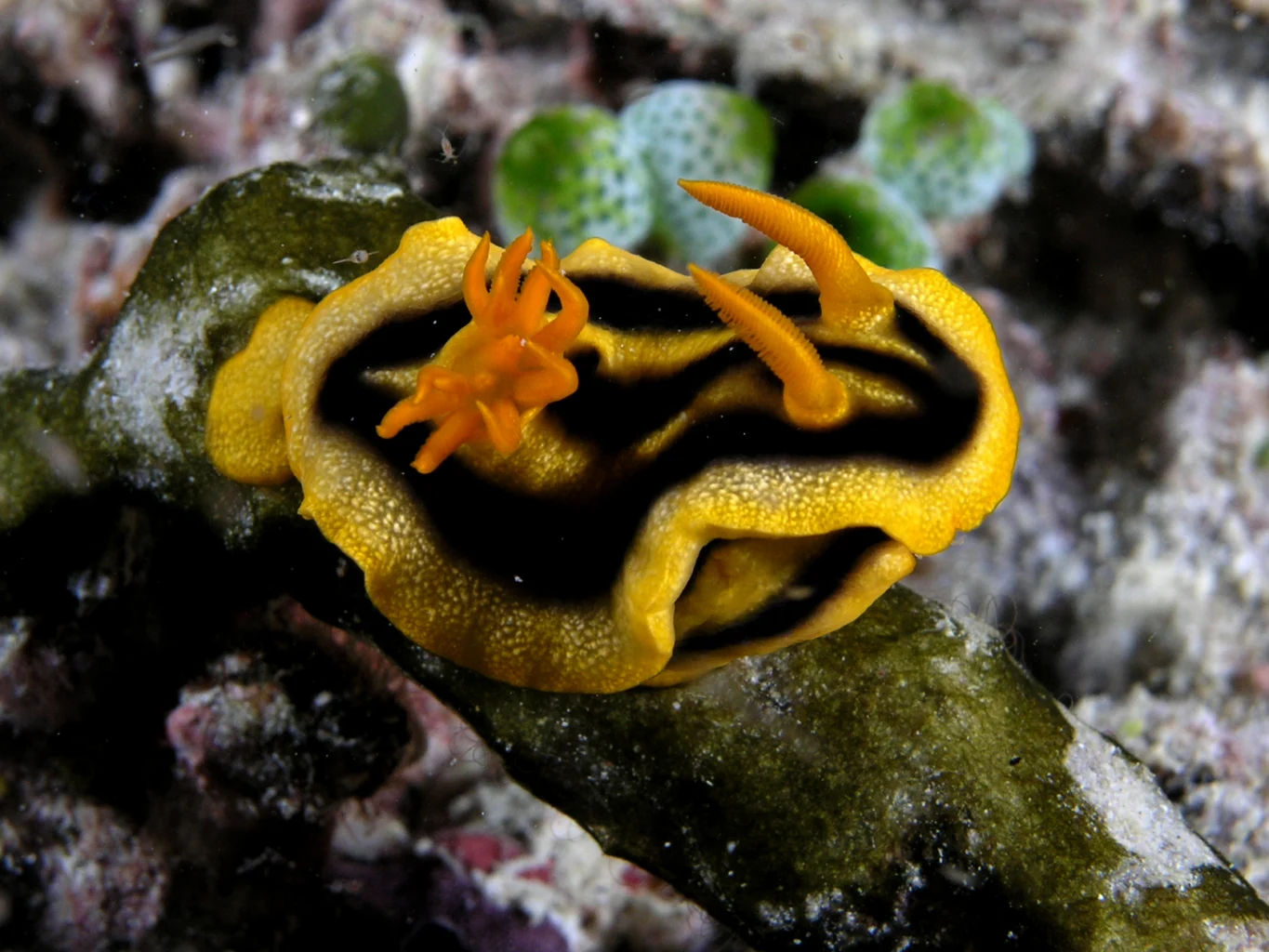
Wainilu dive site is a muck-diving stop near Rinca in Central Komodo, where the interest lies in small animals among sand and rubble. Choose it for patient observation and macro photography. Confirm the actual dive plan with your operator, including whether Wainilu is available on your departure.
The Dragon Dive Komodo site profile describes a sandy slope with coral rubble and scattered soft coral near Rinca. PADI lists the site as Wae Nilu. Use both spellings when discussing the stop with a dive centre.
Wainilu at a glance
| Planning point | What to know |
|---|---|
| Area | Central Komodo, near Rinca; reached by dive boat. |
| Main appeal | A slow search for small, camouflaged marine life. |
| Seafloor | Sand, rubble and patches of soft coral. |
| Dive profile | Agree depth, route and conditions with the guide; a listed site maximum is not your planned depth. |
| Timing | Ask separately about daytime, dusk or night availability. |
| Wildlife | Operator sighting lists describe possibilities, not a checklist every dive will deliver. |
Where is Wainilu? Read the map before choosing a boat
Wainilu sits off north Rinca near Nusa Wainatu. The map pairs the wider Labuan Bajo area with a closer view of the small islands around the site. The town marker shows where trips are organised; it does not identify your operator’s boarding dock.
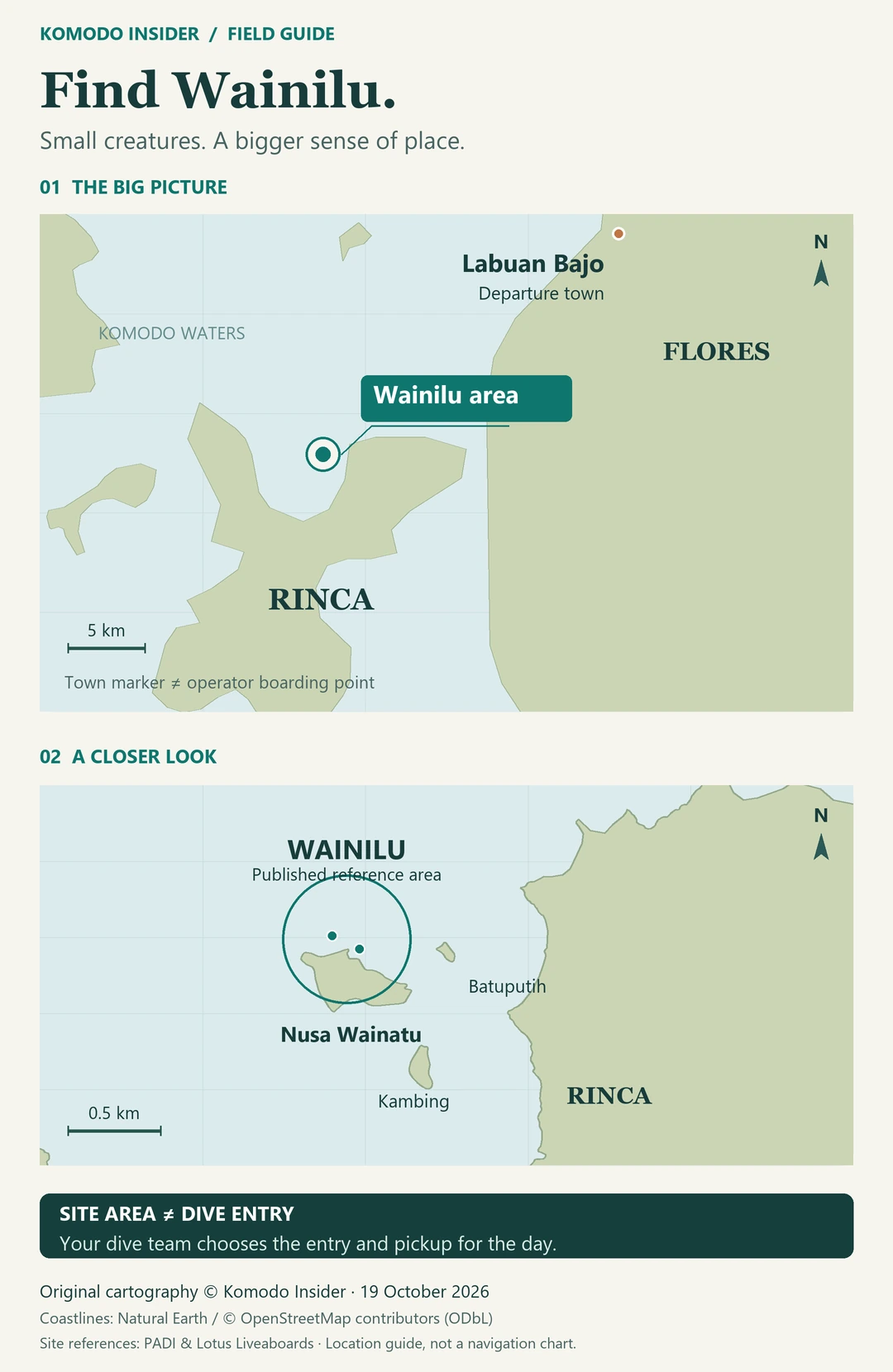
The two published site pins are approximately 160 metres apart. We therefore show a reference area rather than a surveyed entry point. Neither pin is a boarding location or an instruction for navigating a boat. Your dive team sets the actual entry and pickup after assessing the day.
What makes a muck dive worthwhile?
Muck diving rewards attention to a small area. A diver scanning the distance for large animals may miss the detail that makes the stop interesting. Tell the guide whether you enjoy finding subjects, watching behaviour or taking photographs: those priorities can call for different pacing.
Treat Wainilu as one option within a broader Komodo dive-site itinerary. If your main goal is expansive reef scenery or large animals, discuss that before accepting a macro-focused stop. For techniques that apply across several sites, use our macro diving guide; this page focuses on planning Wainilu itself.
Marine life: what operators report
Scuba Republic’s Wainilu description names harlequin shrimp, seamoths, frogfish and mandarinfish among the animals its guides look for. These are reported search targets. They do not establish a reliable sighting rate or confirm that a particular animal is currently present.
Ask what guides have seen recently, then keep the dive open to other discoveries. A useful briefing explains how the group will share a subject and move on. It should not turn the search for one animal into a reason to crowd or disturb it. Our frogfish guide explains camouflage and identification features without treating colour alone as a reliable species label.
What the published operator sources establish
We cross-checked the sources below on 19 October 2026. Their site descriptions support the habitat and planning context, but are not a live report of conditions or a personal review of this article by an instructor.
| Source | Evidence used | Scope and date |
|---|---|---|
| iDIVE Komodo | Central location; sandy slope and muck-diving terrain. | Site profile dated 5 November 2019; historical baseline, not today’s briefing. |
| Dragon Dive Komodo | Rinca-area site description and possible daytime/dusk use. | Profile displays 17 May 2026 as its update date; actual itinerary requires confirmation. |
| Lotus Liveaboards | Published reference coordinates and a 3–18 m depth range. | Undated site page, checked 19 October 2026; a profile range, not a required dive depth. |
| Scuba Republic | Wainilu search targets and a conditions-based site-selection policy. | Undated operator page, checked 19 October 2026; no guaranteed animal encounter. |
For a dated account from the water, Coral Reef Diagnostics’ Wainilu night-dive log records a visit on 26 January 2019, including small cuttlefish and a burrowing shrimp. It also describes that particular dive as less eventful than earlier ones. This is useful historical evidence of a variable muck-diving experience, not proof of current sightings or conditions.
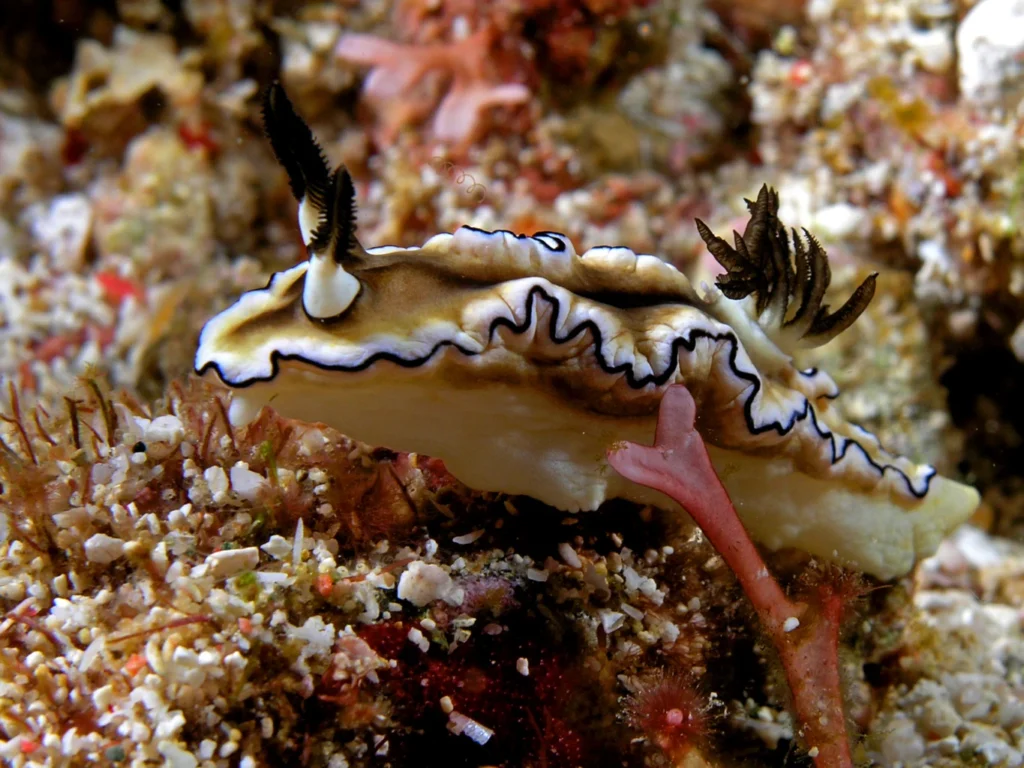
A field photograph from Wainilu

Depth, current and visibility need a daily briefing
Dragon Dive advertises a maximum depth of 30 metres for the site. That figure describes its site profile, not a requirement to descend that far. Ask the guide for the planned depth range and how the route fits your certification, recent experience and comfort.
Discuss conditions for the actual dive rather than relying on an all-levels label. Ask how the team checks current, chooses an entry and manages the return to the boat. The Komodo currents guide provides regional context, while the on-site assessment belongs to the dive team.
Silt disturbed by divers can reduce visibility at Wainilu. Leave room between photographers, keep track of the guide and agree what the group will do if the view deteriorates. A diver needing practice with buoyancy should tell the operator before booking a photography-focused dive; our beginner diving guide helps frame that conversation.
Photograph small animals without disturbing them
Green Fins’ underwater photography guidance puts buoyancy and animal welfare ahead of the photograph. Camera use can distract divers from their position, and manipulating wildlife for an image can cause harm.
- Establish a stable position before lifting the camera; leave the shot if you cannot hold it without contact.
- Keep fins and loose equipment away from the bottom.
- Do not move an animal, turn rubble over or ask a guide to stage a subject.
- Give other divers space and avoid fixing the whole dive around one species.
Choose a camera setup you can manage comfortably while maintaining awareness of your buddy and guide. Before entering, agree how to signal a find and take turns. A short, considerate encounter is more useful than an image obtained by damaging the habitat.
Daytime, dusk and night are different bookings
Dragon Dive describes Wainilu as a possible first or last itinerary stop and highlights dusk for mandarinfish. Ask whether your boat actually offers that timing. A daytime booking does not automatically include a dusk visit or a night dive.
For an evening plan, confirm the dive team’s requirements, torch provision, pickup arrangements and return time. If photography is the reason for staying later, explain that early so the operator can assess whether the boat programme suits it. Do not plan a tight onward connection around a hoped-for evening stop.
Can you combine Wainilu with Rinca?
Its location makes a combined day worth discussing, but the Rinca land visit needs its own confirmed arrangements. Ask the operator to distinguish time underwater from landing, ranger arrangements, walking and the boat journey. Proximity alone does not tell you what a package includes.
A day boat and a liveaboard may have different route flexibility. Scuba Republic states that its day-trip sites are selected according to conditions and diver experience. Request Wainilu as a preference, then understand the substitution policy rather than treating the name on an example itinerary as a guarantee.
Compare the complete dive quote
| Ask about | Detail to get in writing |
|---|---|
| Site and schedule | Is Wainilu a requested stop or a confirmed component? Is the visit daytime, dusk or night? |
| Diver grouping | Guide ratio, experience requirements and how photographers share subjects. |
| Equipment | Rental sizes, dive computer, camera arrangements and any torch requirement. |
| Total cost | Boat, guiding, equipment, park-related charges, meals and transfers; identify exclusions. |
| Changes | What happens if the site, evening programme or Rinca visit cannot proceed? |
Use the Komodo park-fees guide to understand the categories of charges, then obtain a dated total for your party. This guide does not assign a universal Wainilu entrance price. When comparing Komodo diving trips, send the same requirements to each provider so the inclusions are comparable.
Frequently asked questions
Is Wainilu the same dive site as Wae Nilu?
The Wainilu operator profile and PADI’s Wae Nilu listing use different spellings. Show the operator the listing you mean and confirm the planned stop near Rinca.
Is Wainilu suitable for beginners?
Suitability depends on the day’s conditions, the planned route, your experience and the support offered. Ask the dive team to assess those factors; a general site label cannot make that decision for an individual diver.
Are frogfish or mandarinfish guaranteed?
No. Operators report looking for these animals, but their presence and visibility vary. Ask about recent sightings and enjoy the wider search rather than booking around a guaranteed encounter.
Does a regular day trip include a Wainilu night dive?
Only if the operator explicitly includes it. Confirm timing, equipment, experience requirements and the boat’s return arrangements before booking.
Sources and verification
Editorial source check: 19 October 2026. This guide compares published operator information, mapped reference positions, a dated third-party dive log and Green Fins guidance. The location map is original Komodo Insider cartography. No instructor has personally reviewed this draft, and the editorial team does not claim a firsthand Wainilu dive log.
