
Lombok to Flores Boat Trip: The 4D3N Route, Real Costs, and What Nobody Tells You
A one-way 4D3N crossing from Lombok to Komodo National Park: Kayangan harbour logistics, two overnight legs, Saleh Bay whale shark timing, and berth costs normalised per night.
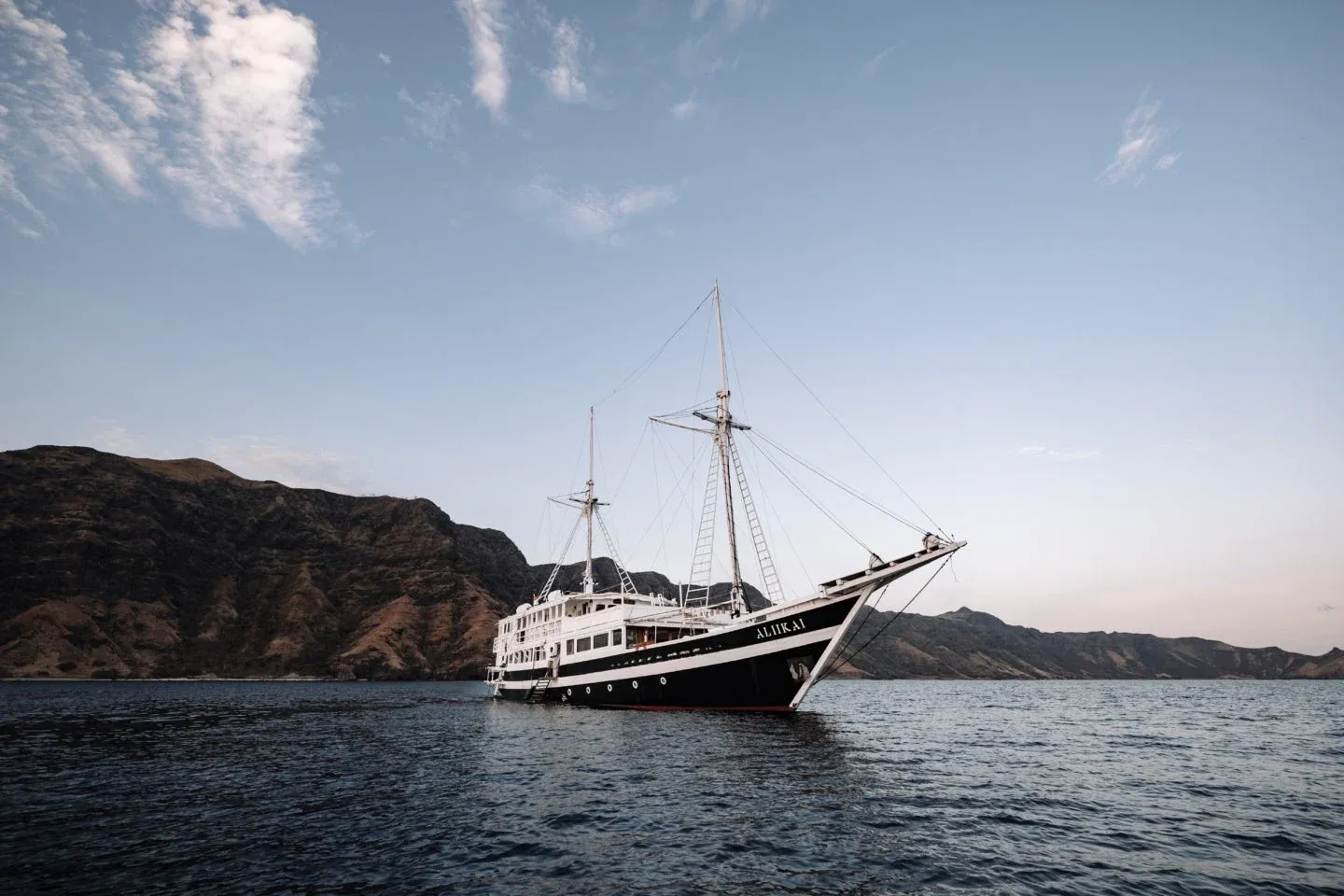
The Lombok to Flores boat trip is a one-way, 4 day 3 night crossing of roughly 380 nautical miles: Lombok to Sumbawa to Komodo National Park, finishing in Labuan Bajo. It is not a round trip and it is not a day tour. This guide covers the operational detail most listings skip: which harbour you actually board at, why your flights have to be booked one-way, the two overnight sailing legs, what a berth costs per night once you normalise the packages, and when the Saleh Bay whale sharks are realistically in reach.
This guide covers the eastbound crossing from a traveller’s perspective: boarding logistics, flight connections, nights at sea and questions to ask about the advertised route. For the boats, rate basis and itinerary offered for this direction, compare the Lombok to Komodo boat trip.
The route at a glance
This Komodo island trip from Lombok to Flores is built from four distinct legs. Understanding them is the difference between booking the right trip and being surprised on day two.
| Leg | Where | What happens | Sailing time |
|---|---|---|---|
| 1 | Kayangan Harbour to Kenawa Island | Departure, first snorkel stop, Mt Rinjani sunset view astern | 2 to 3 hours |
| 2 | Kenawa to Saleh Bay | Overnight crossing of the Alas Strait, dawn whale shark attempt | Overnight |
| 3 | Saleh Bay to Satonda, then Sangeang | Crater lake, volcanic coast, second overnight across the Sape Strait | Overnight |
| 4 | Komodo National Park | Padar, Pink Beach, Komodo Island, Manta Point, Taka Makassar | Short hops |
Everything people book this trip for sits in leg four. Legs two and three are the price you pay to get there, and they are the part worth planning around.
Is the Lombok to Flores boat trip safe? What the rumours get right
Search for the Lombok to Flores boat trip and you will find horror stories: overcrowded decks, thin safety standards, a captain asleep at the wheel, food that ran short. Some of it is true, some of it is a decade old, and telling the difference matters more than any itinerary.
What the rumours get right. This is open-water sailing on traditional wooden vessels, and the budget end of the market is genuinely thin. Boats at the lowest price point carry high passenger counts, sleep guests on open deck mats, and run minimal crew. In rough weather they anchor and wait, which is the correct call but can add a day to your trip. Nobody is lying when they describe that.
What they get wrong. Those accounts almost all come from one price tier, then get applied to the whole route. A cabin-class phinisi carrying 20 guests with a full crew is a different vessel and a different night at sea from a 40-berth deck boat, on the same water, on the same day.
You board at Kayangan, not Senggigi or Bangsal
This trips up more travellers than any other detail. The pickup points are in west Lombok (Senggigi, Kuta, or your hotel), but the vessel itself sails from Kayangan Harbour in Labuhan Lombok, on the far east coast. The shuttle between them is a real transfer, not a hop.
- Kuta Mandalika to Kayangan: roughly 2.5 hours by road
- Senggigi to Kayangan: roughly 2 hours
- Lombok International Airport (LOP) to Kayangan: roughly 2 hours
- Gili Trawangan to Kayangan: allow 3 hours or more, because you need the public boat back to Bangsal first
If you are staying on the Gili Islands the night before, take the earliest crossing to Bangsal you can get. A missed 07:30 meeting point is a missed departure, and the boat does not wait.
Book your flights one-way: into LOP, out of LBJ
The single most expensive mistake on this route is a return ticket to Lombok. The voyage ends in Labuan Bajo (LBJ), on Flores, roughly 250 km east of where you started. Plan it as an open-jaw:
- Fly into Lombok (LOP), ideally the day before departure
- Fly out of Komodo Airport, Labuan Bajo (LBJ), and leave at least one buffer night
The buffer night matters. Arrival at Labuan Bajo Harbour is scheduled around 13:00, but weather in the Sape Strait can move that. Booking an afternoon flight the same day is a gamble; a next-morning flight is not.
The two overnight crossings nobody warns you about
Marketing copy for this route tends to show Padar and Pink Beach. What it rarely shows is that you sleep at sea twice, on genuinely open water.
Night one: the Alas Strait
Between Lombok and Sumbawa. Currents run hard through the narrows and the boat is under way for most of the night. Short chop rather than long swell, which is the motion most people find hardest.
Night two: the Sape Strait
Between Sumbawa and the Komodo archipelago. This is the deeper, more exposed crossing, and the one where seasickness tablets earn their money. Take the first dose before you feel anything, not after.
Practical mitigation: choose a cabin low and amidships if you have the choice, stay on deck in fresh air rather than lying in the cabin, and eat something light before the crossing rather than nothing. If open-water nights are a hard no for you, a 3D2N or 4D3N departure from Labuan Bajo skips both and stays inside sheltered park waters.
Saleh Bay whale sharks: timing, odds, and the feeding question
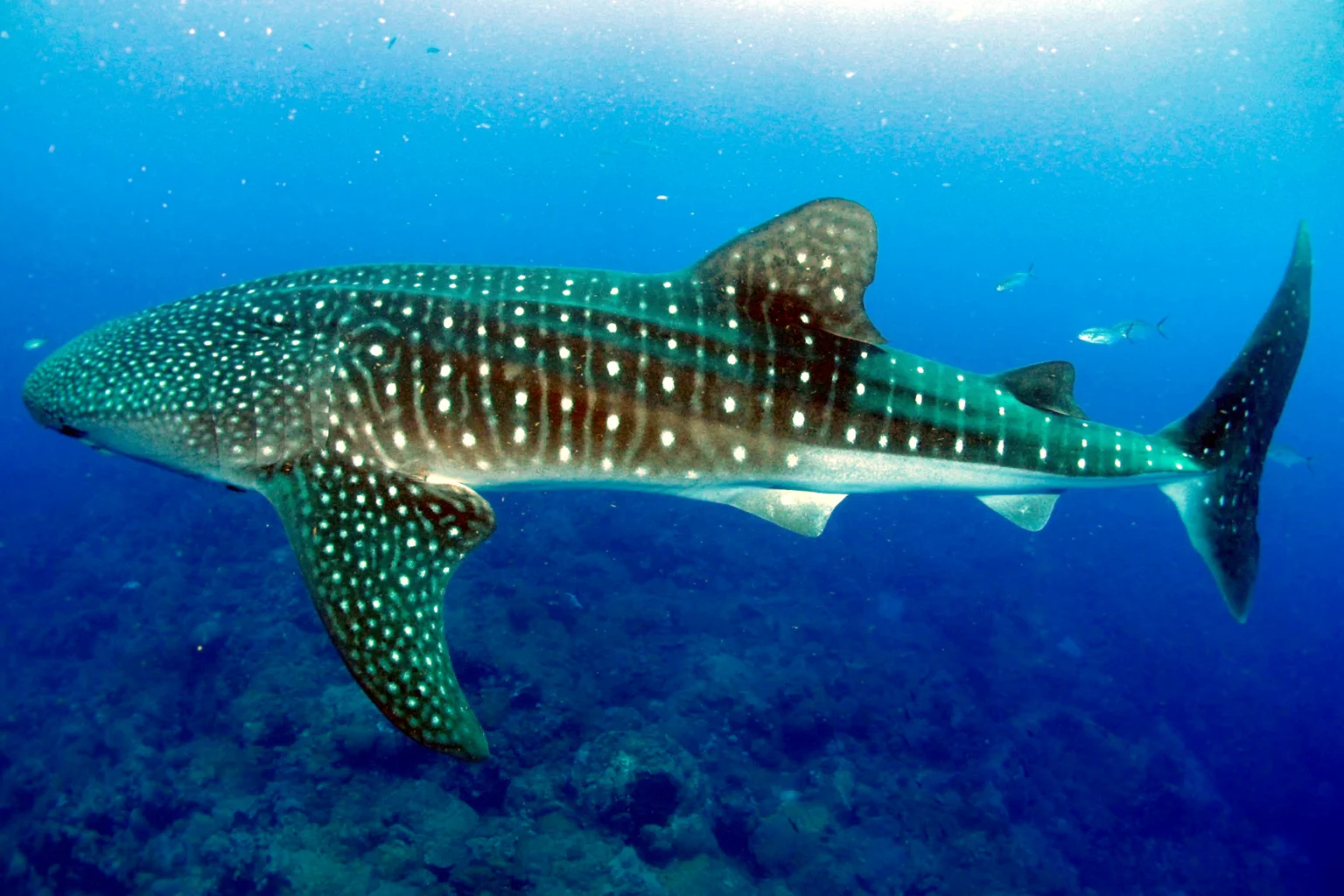
It is the single most talked-about stop on the Lombok to Flores boat trip, so start with the part most guides leave out. The whale sharks in Saleh Bay gather around bagan, the traditional lift-net fishing platforms, and they gather there because of the fish. Some operators and some fishermen actively feed them to hold them in place while boats arrive. That reliability is manufactured, and it is why several travel companies have stopped selling this stop altogether.
Decide how you feel about that before you book, not while you are in the water. If a near-certain sighting exists only because the animal has been conditioned to a feeding station, that is a fair reason to skip the swim. Skipping it is a legitimate choice, not a wasted morning.
If you do go in, the behaviour that matters: stay at least four metres from the body and further from the tail, never touch, never block the path of the animal, no chemical sunscreen before entering, no flash, and small groups in the water at a time rather than everyone at once. Ask your operator directly what they enforce. An operator who cannot answer that question has answered it.
On odds: sightings are common in the dawn window and never guaranteed. Any operator promising a guarantee is either feeding hard or overselling.
The whale sharks at Saleh Bay are the reason this route exists as a product. They congregate around the bagan, the floating platforms local fishermen use for baitfish, which is why encounters here are broadly year-round rather than seasonal.
What actually governs your odds:
- Time of day. Encounters happen at first light, typically 05:30 to 07:30, while the bagan crews are still hauling. This is why the wake-up call is 05:00 and why it is not negotiable.
- Sea state. A rough night across the Alas Strait can delay arrival and cost you the window.
- Luck. No operator can guarantee a sighting. Treat it as a strong probability, not a certainty, and the trip still holds up if it does not happen.
In-water etiquette, which good crews will brief and which you should follow regardless: no touching, keep at least 2 metres from the body and 3 metres from the tail, no flash photography, no diving down on top of the animal, and no chemical sunscreen before you get in.
Day by day: Lombok to Flores, 4D3N
Here is how the Lombok to Flores boat trip actually unfolds, with realistic timings rather than brochure ones.
Day 1: Lombok to Kenawa Island
07:30 meeting point in Kuta or Senggigi, shuttle east, board at Kayangan Harbour around 11:00. Afternoon snorkel and a shore walk at Kenawa, a bare grass islet with Rinjani filling the horizon behind you. The boat then runs overnight for Saleh Bay.
Day 2: Saleh Bay and Satonda
05:00 wake-up, dawn whale shark attempt at the bagan. Breakfast under way to Satonda Island, where a saltwater crater lake sits a short walk in from the beach. Late afternoon repositioning past Sangeang, an active volcano you sail directly beneath, then the overnight leg across the Sape Strait.
Day 3: Komodo National Park
The full park day. Manta Point for cleaning-station manta encounters, Taka Makassar sandbar, Pink Beach, and the ranger-guided walk on Komodo Island itself. Finish with the Padar Island hike for the three-bay viewpoint at sunset. This is the heaviest day of the trip.
Day 4: Kelor, Manjarite, Labuan Bajo
Breakfast, two final snorkel stops at Kelor and Manjarite on the way in, and arrival at Labuan Bajo Harbour around 13:00. Shuttle to your hotel or the airport.
The reverse direction: Flores to Lombok
Starting in Labuan Bajo instead? The westbound run is a genuinely different trip — Komodo on day one, then two sea days home. It has its own guide: the Flores to Lombok boat trip, covering the 4D3N versus 5D4N trap and the Kayangan arrival logistics.
The same vessels run the route westbound, and it is worth considering rather than defaulting to eastbound.
- Eastbound (Lombok start) puts the park on days three and four. You arrive at Padar with your sea legs already earned, and you finish in Labuan Bajo, which connects onward to Flores, Bali, and Jakarta.
- Westbound (Komodo start) front-loads the park on day one, while you are freshest and before any weather can interfere. You finish in Lombok, which suits anyone continuing to Bali or the Gilis by fast boat.
If the park is the non-negotiable part of your trip, westbound reduces the risk of losing it to a delay. If you want the trip to build, go eastbound.
What a berth actually costs
Package prices are quoted as a total, which makes vessels hard to compare. Normalised to cost per person per night, the picture is clearer.
| Vessel | From (per person, 4D3N) | Per person per night | Cabins | Capacity | Length |
|---|---|---|---|---|---|
| Alfathran 3 | IDR 6,000,000 | IDR 2,000,000 | 12 | 22–28; confirm manifest | 29.3 m |
| Sukha Sail 2 | IDR 7,000,000 | IDR 2,333,000 | 10 | 22 to 31 | 40 m |
| Sukha Sail 1 | IDR 7,750,000 | IDR 2,583,000 | 7 | 24 to 32 | 34 m |
| Lady Grace | IDR 8,350,000 | IDR 2,783,000 | 10 | 20 to 25 | 34 m |
Compare passengers per cabin, sleeping arrangements and deck space per guest alongside the fare. For Alfathran 3, PhinisiTrip publishes a 22–28 guest accommodation range, 12 cabins and a 29.3 m hull. Its 2026–2027 eastbound 4D3N fare starts at IDR 6,000,000 per person in Sumbawa shared accommodation; other cabin categories cost more and private categories require two guests. This is a one-way crossing fare, not a shared 3D2N Komodo loop or a whole-boat charter. The return sailing is a separate 5D4N product. Alfathran 3 source checked 16 October 2026; confirm the actual cabin, passenger manifest, departure and final quote.
Deck, cabin, or phinisi: what you are actually paying for
Prices quoted for the Lombok to Flores boat trip run from under two million rupiah to well over eight, and the listings rarely explain the spread. It is not the route. Everyone visits roughly the same islands. It is where you sleep, and how many people you sleep beside.
| Tier | Sleeping | Typical group | Best for |
|---|---|---|---|
| Deck class | Mattress on open or semi-open deck, shared | 25 to 40 | Backpackers, sociable travellers, tight budgets |
| Cabin class | Shared or private cabin, fan or AC, shared bathrooms | 20 to 32 | Couples, light sleepers, most travellers over 35 |
| Phinisi liveaboard | Private ensuite cabin, AC, sundeck | 10 to 25 | Privacy and rest through the two overnight legs |
Normalise before you compare. Four days and three nights means three nights on board, so divide any package price by three and compare cost per person per night. That one calculation makes a deck berth and a phinisi cabin directly comparable, and it usually shows the middle tier carrying the value. Rates move with season, fuel, and departure date, so treat every figure you read as a snapshot rather than a quote.
If you want the comfort tier without the crossing, the same class of vessel runs Lombok liveaboard itineraries and Komodo liveaboard departures on shorter loops.
The tier matters most on nights two and three. At a calm anchorage everyone sleeps. On open water, the difference between a deck mat and a cabin door is the difference between arriving rested and arriving wrecked.
Included, and specifically not included
Included
- Shuttle pickup from Senggigi, Kuta, or Bangsal, and drop-off to hotel or airport in Labuan Bajo
- Air-conditioned liveaboard accommodation for three nights
- Breakfast, lunch, and dinner daily, plus snacks, coffee, tea, and drinking water
- Chef, crew, and English-speaking local guide
- Snorkelling equipment and life jackets
- Tender boat, sundeck, and lazy chairs
- Trip documentation by drone, GoPro, and mirrorless camera
- All excursions listed in the itinerary
Not included
- Komodo National Park entrance and conservation fees. These are paid separately, per person, per trip, and are not part of the package price. Confirm the current rate at the time of booking, because the fee structure has been revised more than once.
- Flights and hotels either side of the voyage
- Travel or dive accident insurance
- Alcohol and personal expenses
- Crew and guide gratuities
Budget the park fees as a real line item, not a rounding error. For a couple they are a meaningful addition to the trip total. Use the guide to check a crossing quotation line by line to reconcile those exclusions with the named boat and your travel dates.
When to sail
| Period | Sea state on the crossings | Verdict |
|---|---|---|
| April to June | Settling, generally calm | Best balance of conditions and crowd levels |
| July to August | Calm, occasional strong afternoon wind | Peak season, book well ahead, park is busy |
| September to October | Calm, strongest underwater visibility | Excellent, and quieter than peak |
| November to December | Transitional, occasional swell | Workable, expect some itinerary flexing |
| January to February | Roughest, monsoon influence | Avoid for this route, many vessels pause |
| March | Improving | Shoulder, decent value |
The seasonal advice for this route is stricter than for departures out of Labuan Bajo, precisely because of the two open-water nights. A January crossing of the Sape Strait is a different experience from a January day trip inside the park.
Who this trip suits, and who should fly instead
Book the crossing if you want Sumbawa in the itinerary, you are already in Lombok or the Gilis, you have four days to give, and the journey is part of the appeal.
Fly to Labuan Bajo instead if you are short on time, you are travelling with young children or anyone prone to seasickness, or the only thing you actually want is Komodo National Park. A direct flight plus a 4D3N Komodo liveaboard from Labuan Bajo delivers more park time in the same number of days.
Packing for a crossing, not a day tour
- Seasickness tablets, taken preventively before each overnight leg
- Reef-safe sunscreen, and a rash guard, which works better than reapplying at sea
- A dry bag, because tender transfers are wet transfers
- Proper shoes with grip for Padar and the Komodo ranger walk, not flip-flops
- A light windproof layer for night deck watches
- A power bank, since onboard sockets are shared and often limited
- Cash in rupiah for park fees, tips, and anything ashore
Frequently asked questions
Is the Lombok to Flores boat trip safe?
It is a working open-water route, not a resort transfer, and safety varies far more by operator than by route. Check life raft capacity, passenger count against berth count, and whether the operator suspends sailings during the January to February weather window before you compare prices.
Do I need to book a return flight to Lombok?
No, and booking one is the most expensive mistake on this route. The voyage ends in Labuan Bajo on Flores, roughly 250 km east of where you boarded. Fly into Lombok, fly out of Komodo Airport, and leave a buffer night before your onward flight.
How long is the Lombok to Komodo boat trip?
Four days and three nights is the standard, and it is the shortest format that reaches Komodo National Park by sea from Lombok with time to actually stop. Shorter fast-boat itineraries exist but skip Saleh Bay and Satonda entirely.
Is it a round trip back to Lombok?
No. Eastbound departures end in Labuan Bajo and westbound departures end in Lombok. Book your flights accordingly.
Do I need to be able to swim?
You do not need to be a strong swimmer. Life jackets are provided and most snorkel stops are done wearing one, with crew in the water. You should be comfortable being in open water while floating.
Are the whale shark encounters guaranteed?
No operator can guarantee wildlife. Saleh Bay has resident whale sharks associated with the fishing platforms, so the odds are high at dawn, but a rough overnight leg or an early departure can cost the window.
Is the trip suitable for children?
It can be, on the calmer months and the larger vessels, but the two overnight legs and the 05:00 starts are demanding. Families wanting Komodo without the crossings are better served departing from Labuan Bajo.
What happens if the weather turns?
Captains reroute rather than cancel where possible, most commonly by shortening a stop or sheltering behind Sumbawa. The itinerary is a plan, not a contract, and conditions take precedence.
Can I dive on this route?
Standard departures are snorkel-based. Diving on the Komodo sites requires a dive-equipped charter and certified guides, which is arranged separately.
Booking this route
Every departure on the Lombok to Flores boat trip is a fixed one-way sailing, so seats move fast in the April to October window. Check the vessel name, the tier, and the boarding time before you pay a deposit.
Availability on the Lombok departures is thinner than on Labuan Bajo departures, because fewer vessels run the crossing and each one runs it on a fixed rotation. For peak months, four to eight weeks ahead is realistic.
Compare the boats that run this crossing on the lombok to komodo boat trip page and confirm live departure dates directly with the operator, or explore the wider fleet across Indonesia liveaboard routes and Komodo liveaboard departures.
For named-vessel comparisons, inspect Arumi and Menami and confirm the current eastbound programme and boarding details. These profiles do not make their routes interchangeable.
