
Komodo Island vs Rinca: Which Dragon Trek Is Best?
Compare Komodo and Rinca by visitor gateway, route, trail conditions, ranger guidance and suitability for your group.
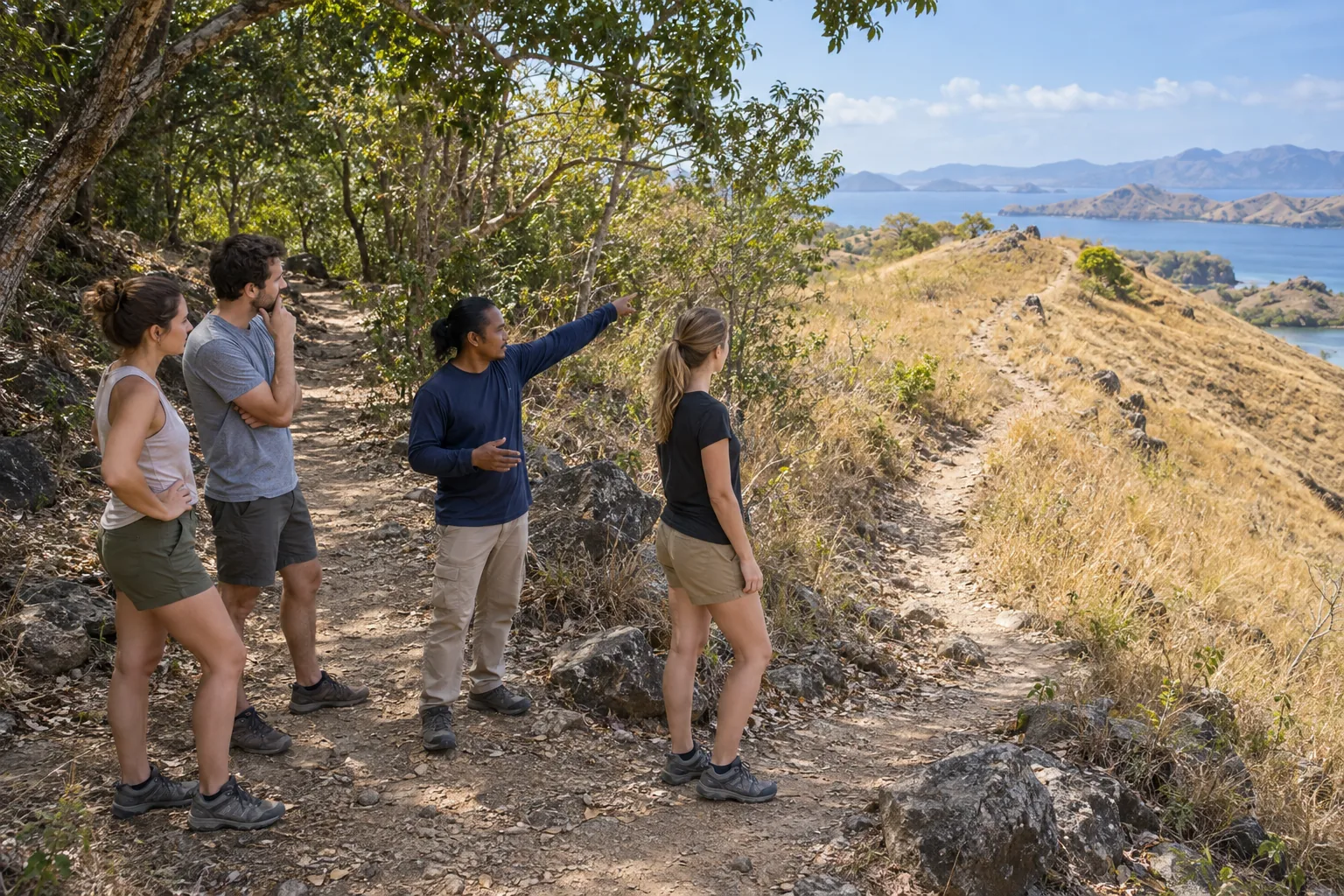
Choose Komodo Island at Loh Liang when its position fits a route with western or Komodo-side stops such as Pink Beach. Choose Rinca Island at Loh Buaya when the published itinerary is built around the eastern side of the park or shorter access from Labuan Bajo. Both are genuine Komodo dragon habitats, both require a naturalist guide, and neither can guarantee a sighting.
“Komodo Island or Rinca?” sounds like a wildlife-odds question, but route design is often the better way to decide. The dragons are wild, the visitor trail covers only a small area, and recent sightings can change. What a traveller can compare reliably is the visitor location, sailing route, facilities, trek offered that day and nearby stops.
For the wider protected area, see our Komodo National Park guide.
The two main visitor gateways are Loh Liang on Komodo Island and Loh Buaya on Rinca Island. They are not theme-park branches of the same attraction. Each sits inside a distinct island landscape and affects how the rest of the boat itinerary works.
Komodo Island vs Rinca Island: side-by-side
| Decision | Komodo Island, Loh Liang | Rinca Island, Loh Buaya |
|---|---|---|
| Main purpose | Ranger-guided wildlife trek in Komodo dragon habitat | Ranger-guided wildlife trek in Komodo dragon habitat |
| Guide requirement | Naturalis guide required | Naturalis guide required |
| Route position | Farther west in the national park | Closer to the Labuan Bajo side of the park |
| Common pairing | Often coordinated with Komodo-side beaches and central sites | Often coordinated with Rinca-side, central and near-Labuan-Bajo stops |
| Visitor gateway | Loh Liang | Loh Buaya |
| Trek duration | Depends on the currently offered route and park decision | Depends on the currently offered route and park decision |
| Dragon guarantee | No | No |
| Best for | Travellers whose actual itinerary already reaches the Komodo side | Travellers whose actual itinerary uses the Rinca side efficiently |
Do not choose from old claims that one island is “wild” and the other is “touristy.” Both are protected wild habitats with managed visitor access. Infrastructure, trail availability and visitor flow can change, so ask about the current experience rather than relying on a permanent label.
Komodo Island: what to expect at Loh Liang
Komodo Island is the largest of the park’s three major islands and gives the species its familiar English name. The visitor trek is accessed through Loh Liang, where a naturalist guide leads the group through an authorised route according to current conditions.
The island contains open savanna, monsoon forest and coastal valleys within a much larger habitat than visitors explore. The Ministry’s current Komodo dragon conservation plan says the species generally prefers coastal valleys with open deciduous monsoon forest bordered by savanna or near the coast. A short visitor trek is therefore a sample of habitat, not a survey of the island.
Why choose Komodo Island?
- You specifically want to visit the island that carries the species’ name.
- Your vessel’s published route already travels to Loh Liang.
- The itinerary pairs the trek with Komodo-side destinations.
- You are comfortable with the additional sailing implied by the complete route.
- The offered trek length fits your mobility and heat tolerance.
Pink Beach Komodo is on Komodo Island, so the two are often marketed together. That geographic connection does not guarantee they run on the same day or in a fixed order. Check the exact departure.
What should you verify?
Ask whether the itinerary names Loh Liang, how long the group is expected ashore, which trek is currently available, whether the route is suitable for children or limited mobility, and what happens if the ranger changes the plan. “Komodo Island included” is not enough detail by itself.
Rinca Island: what to expect at Loh Buaya
Rinca is another core Komodo dragon island, reached by the Loh Buaya visitor gateway. Its position is generally closer to Labuan Bajo than Loh Liang, but actual travel time depends on vessel, sea state, starting point and stops before arrival.
Loh Buaya has received significant visitor infrastructure and management attention. That can affect how the arrival and initial wildlife viewing feel, but Rinca remains a protected habitat. Visitors must not interpret an elevated path or developed gateway as permission to approach animals independently.
Why choose Rinca Island?
- Your itinerary is built around the eastern or central side of the park.
- You want to reduce total route distance compared with a western Komodo Island call.
- The current visitor facilities suit your group better.
- The offered trek length fits the available time.
- You value the wider Rinca landscape and wildlife, not only one dragon photograph.
Rinca also supports other Wallacean fauna. Wildlife encounters remain opportunistic. Do not select the island because a seller guarantees a buffalo, deer, macaque or dragon sighting.
What should you verify?
Ask whether the route names Loh Buaya, which sections are open, how the group moves from the arrival area to the trek, and what mobility support is actually available. Do not infer full accessibility from one photograph of a walkway.
Which island has better Komodo dragon sightings?
There is no responsible basis for guaranteeing better sightings at one island for every date. Both Komodo and Rinca support wild populations. The conservation action plan also records the species across Padar, Motang and Kode inside the park, plus parts of Flores, but visitor dragon treks are managed at designated locations.
Encounter results can change with:
- temperature and time of day;
- seasonal behaviour, including mating and nesting;
- prey distribution and individual territories;
- the currently authorised trail;
- recent ranger observations;
- visitor noise and group conduct;
- weather and park-management decisions.
Komodo dragons are ectothermic, so daily activity relates to environmental conditions, but “early morning always guarantees a dragon” is still false. The best operational question is: “What has the ranger team observed recently, and which visitor trail is open?”
The Ministry’s published conservation information places the mating period around May to August. Behaviour during that period can change where animals are seen. It does not mean the islands are empty, closed or guaranteed to show mating.
For month-level travel trade-offs, read the best time to visit Komodo guide.
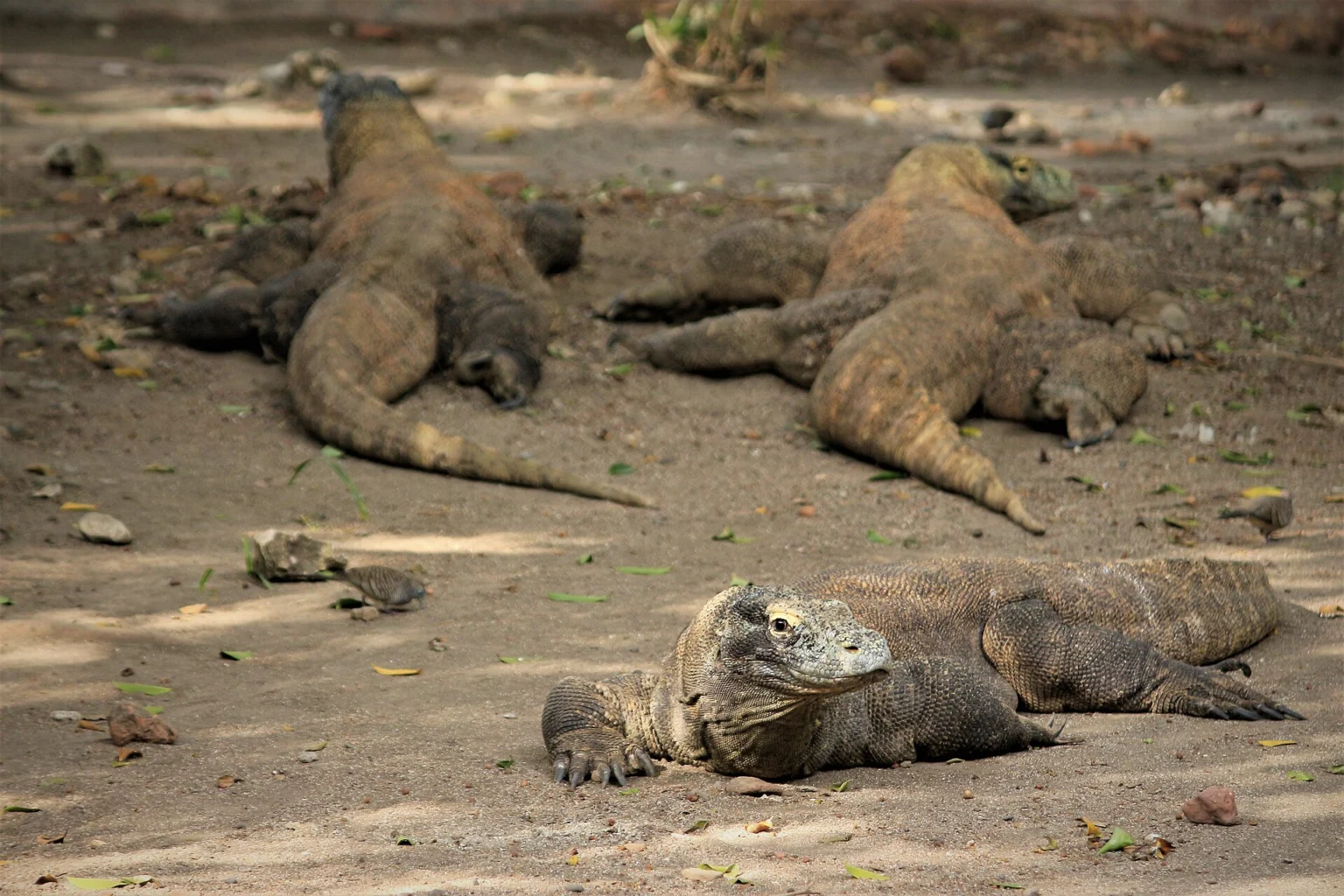
Safety rules on Komodo and Rinca
Official guidance requires visitors at Loh Liang and Loh Buaya to be accompanied by a naturalist guide. Treat that requirement as the start of the safety protocol, not the entire protocol.
- Stay with the assigned group and guide from start to finish.
- Follow the guide’s distance instruction for the exact animal and terrain.
- Do not crouch, pose beside, surround, feed, bait or touch wildlife.
- Do not leave the trail for a photograph or to avoid another group.
- Keep food sealed and follow local rules on what may be carried ashore.
- Supervise children directly and disclose mobility or medical limits before the trek.
- Do not approach a nest, carcass or resting animal.
- Stop and wait when instructed rather than trying to pass a dragon.
Online advice about menstruation is inconsistent and often sensationalised. Do not rely on folklore or disclose personal health information to an unverified seller. Ask the official naturalist guide for current park protocol and follow the instruction given at the visitor site.
Komodo dragons are capable predators and their bite is a medical emergency. That does not make an authorised ranger-led trek reckless. It means independent approach, wildlife manipulation and ignoring a guide are unacceptable.
Which island is better for families or limited mobility?
Neither island is automatically best for every family or access need. Choose from the current visitor route and support available on the departure.
Ask the operator:
- How is the tender or speedboat boarding handled?
- How far is the movement from landing to the visitor area?
- Are stairs, uneven ground or exposed sections involved?
- What is the shortest authorised experience that day?
- Can a guest wait in a safe designated area?
- Who supervises a child if one adult turns back?
- What heat and emergency support is carried ashore?
A shorter sail can reduce fatigue, while a better-timed multi-day route can reduce rushing. Confirm child supervision, boarding assistance and the shortest available trail before booking.
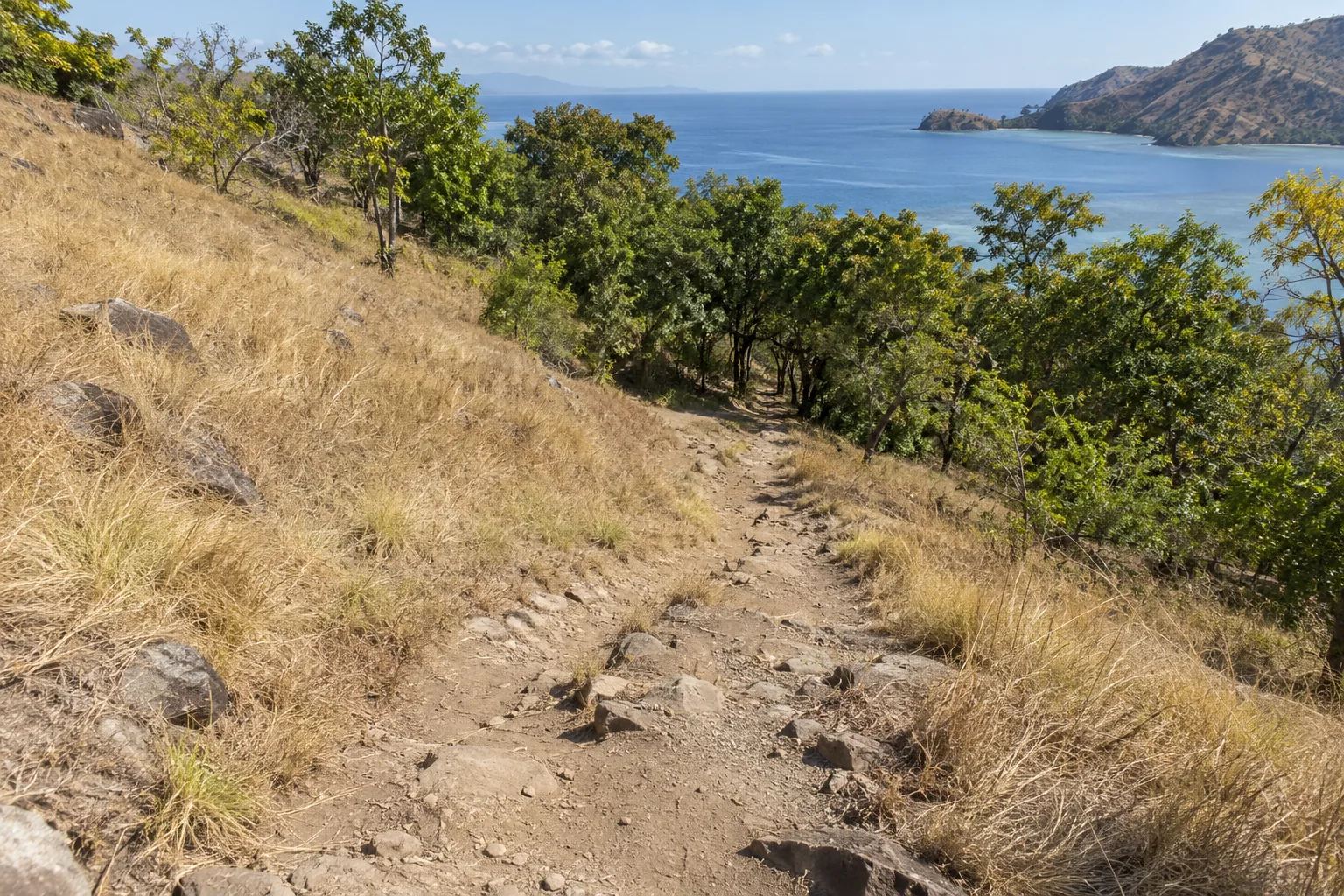
How the choice changes your itinerary
Komodo Island and Rinca are not isolated attractions. They occupy different points in a network of Padar, Pink Beach, Manta Point, Kalong and other stops. Routing one dragon trek can remove or reorder another stop.
| Trip format | Dragon-trek planning | What to verify |
|---|---|---|
| One-day Komodo tour | Route efficiency strongly affects which island is practical | Named gateway, first stop, total water time and return plan |
| Komodo 2D1N | More room than a day trip, but every stop still competes for time | Which day the trek occurs and which nearby stops are paired |
| Komodo 3D2N | Common duration for a balanced central and island route | Do not assume both dragon islands are included |
| Komodo 4D3N | More buffer and stop capacity | Longer still does not automatically include both islands |
| Private Komodo charter | More control over route request and group pace | Park access, quota, captain and guide decisions still apply |
The Komodo trip duration guide compares duration before you choose a specific boat. Compare available trip formats on our Komodo Island tour page.
Permits, quota and fees in 2026
From 1 April 2026, the Ministry of Forestry applies a daily quota of 1,000 visitors across Komodo, Rinca and Padar islands plus 23 dive sites. This is a combined access scope, not evidence of a separate 1,000-person quota for each island.
Government guidance recommends arranging SiOra access by H-1. Travellers still need to coordinate earlier when a preferred vessel, cabin or flight may sell. Ask the operator which visitor gateway is registered, whether a route change requires new handling, and what happens if one site becomes unavailable.
| What you pay | Amount | Basis |
|---|---|---|
| Park entrance, foreign visitor | Rp 250,000 ≈ $14 | per person, per day The statutory Class I entrance rate. The 150% holiday rule applies to Indonesian visitor and student rates, not this foreign visitor rate. |
| Park entrance, Indonesian visitor, normal day | Rp 50,000 ≈ $3 | per person, per day The normal-day Class I entrance rate. |
| Park entrance, Indonesian visitor, holiday or collective leave | Rp 75,000 ≈ $4 | per person, per day 150% of the normal Indonesian visitor rate on the dates covered by the statutory holiday rule. |
| Indonesian student group, normal day | Rp 25,000 ≈ $1 | per person, per day For Indonesian student groups of at least five people. |
| Indonesian student group, holiday or collective leave | Rp 37,500 ≈ $2 | per person, per day 150% of the normal student-group rate; the minimum group size remains five. |
| Scuba diving activity | Rp 25,000 ≈ $1 | per diver, per day A separate activity charge in addition to the applicable entrance fee. |
| Motorised vessel entry | Rp 100,000–200,000 per boat, per day | Rp 100,000 for 40–100 HP, Rp 150,000 for 101–500 HP, and Rp 200,000 above 500 HP. |
| Drone use | Rp 2,000,000 ≈ $112 | per unit, per day A separate special-use charge. Complete the required SiOra/SIMAKSI process before travel. |
- SiOra is the park’s e-ticketing and SIMAKSI system. Reserve before travel; Ministry guidance recommends completing the reservation by H-1. An operator can assist, and self-service is available at the Komodo Visitor Center and KP3 terminal.
- Payment is cashless through the methods available in SiOra, including BRIVA or bank transfer and supported e-wallets. Keep the e-ticket and ensure the traveller details are correct.
- A 1,000-visitor daily quota has applied since 1 April 2026 to the main visitor islands and 23 dive sites. Availability therefore depends on the travel date and registered itinerary.
- The final SiOra total can include entrance, activity, vessel and special-use charges. Ask the handling operator for an itemised total before issuance.
- Official public guidance does not state one universal refund or rescheduling rule for every reservation. Confirm the current SiOra terms in writing before the ticket is issued, including treatment of weather disruption.
Statutory fees under Peraturan Pemerintah No. 36 Tahun 2024, in force since 30 October 2024. Verified 31 August 2026 against the official PP 36/2024 schedule, the Ministry of Forestry SiOra notice and the Ministry’s 2026 quota notice. Amounts are payable in rupiah; dollar figures are courtesy estimates converted at Rp 17,900 and rounded.
Use the current fee components rather than a permanent “Komodo price” versus “Rinca price.” Check the park fee breakdown, and confirm registration details with your operator.
How to choose in 60 seconds
- Choose Komodo Island if Loh Liang is named in the best overall route for your desired stops.
- Choose Rinca Island if Loh Buaya creates a more efficient route or better current accessibility for your group.
- Choose either if your priority is a real ranger-led habitat experience and the rest of the itinerary matters more than the island name.
- Choose neither departure if the seller guarantees dragons, cannot name the visitor gateway or will not explain ranger accompaniment.
The most responsible choice is the trip that gives the naturalist guide authority, limits rushing, keeps visitors on the managed trail and avoids turning a wild animal into a staged photo. Read our Komodo travel safety guide when planning the wider trip.
Frequently asked questions
Which island is better for seeing Komodo dragons?
Both are genuine habitats with managed ranger-led visitor treks. Recent observations and conditions matter more than an evergreen claim that one always has better odds.
Is Rinca closer to Labuan Bajo?
Rinca is generally closer to the Labuan Bajo side of the park than Loh Liang on Komodo Island. Actual sailing time depends on the vessel, sea, starting point and complete route.
Can one trip visit both Komodo and Rinca?
It is possible, but not automatic even on a long itinerary. Verify both Loh Liang and Loh Buaya in the published stops and confirm the permit plan.
Are dragon sightings guaranteed?
No. Komodo dragons are wild animals. A naturalist guide improves safe interpretation and uses recent local knowledge but cannot guarantee a sighting.
Can visitors trek without a ranger?
No. Official guidance requires naturalist-guide accompaniment at Loh Liang and Loh Buaya.
Which island pairs with Pink Beach?
Pink Beach is on Komodo Island, so it often pairs geographically with a Loh Liang route. Confirm the actual sequence and landing because inclusion is not automatic.
Which island is better for children?
Choose from the shortest safe transfer, current trail, heat, facilities, guide ratio and the individual child. Rinca is not universally easier, and Komodo Island is not universally harder.
