
Pink Beach Komodo: Why It Is Pink, Snorkelling & Tips
What makes Pink Beach pink, the light and tide conditions that bring the colour out, and what the snorkelling is actually like.
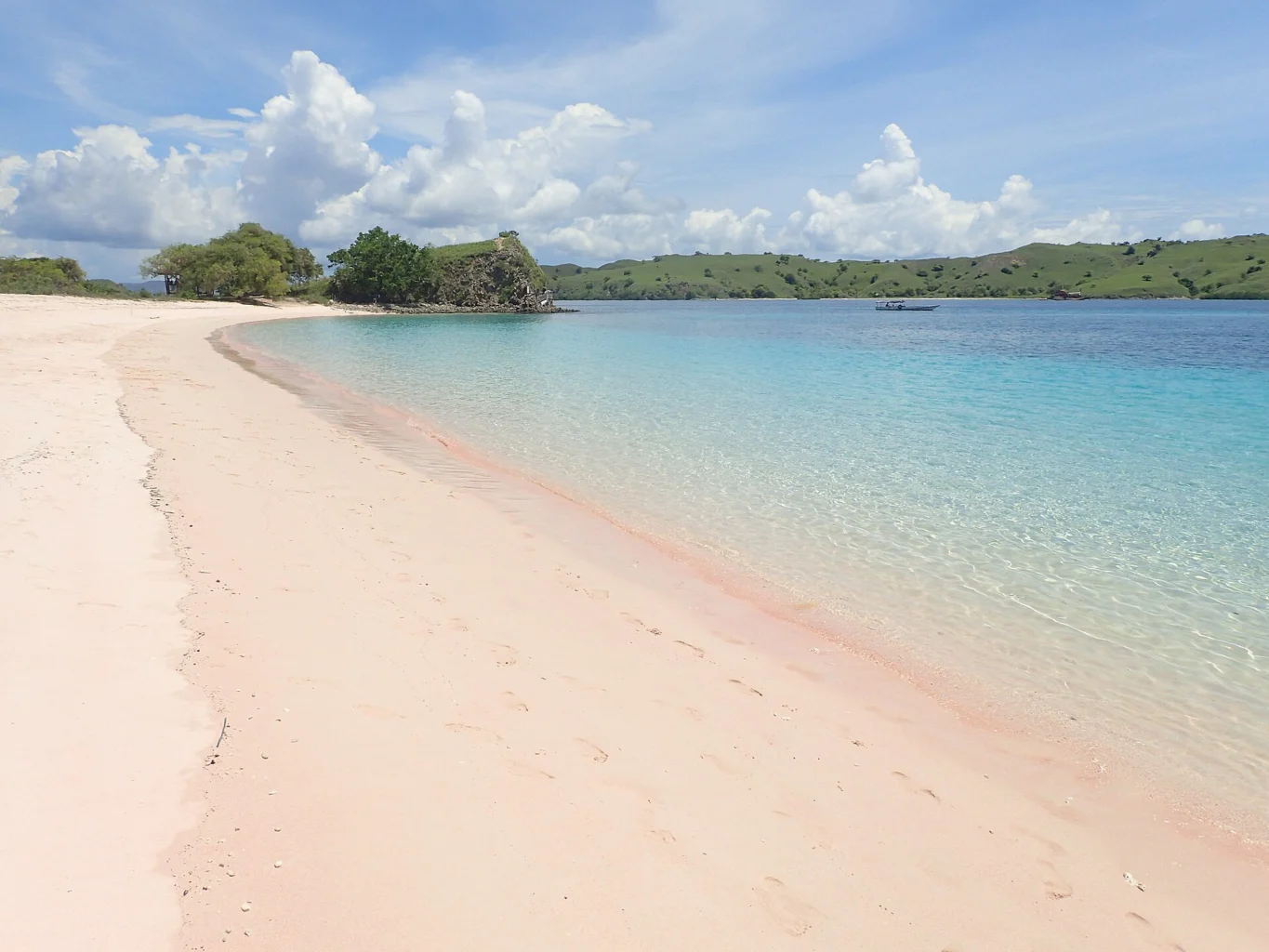
Pink Beach Komodo, also called Pantai Merah, has a natural blush created when reddish biogenic material from the reef mixes with pale sand. The colour is real but varies with moisture, light, waves and the section of shoreline. Visit for the complete beach and reef experience, not a guaranteed bubblegum-pink photograph.
Pink Beach is one of Komodo National Park’s most recognisable shorelines. Its value is bigger than the sand colour: a protected island setting, clear visual contrast between savanna and sea, and a reef that can support snorkelling when conditions are suitable.
The internet often reduces the stop to “Is it really pink?” A better guide should also answer which Pink Beach the itinerary means, whether a snorkelling entry is safe that day, how long the route allows, and how to leave the sediment and reef intact.
Pink Beach Komodo: quick planning guide
| Question | Practical answer |
|---|---|
| Is the sand naturally pink? | Yes. Reddish reef-derived particles mix with pale beach sediment to create a blush |
| Is it bright pink all day? | No. Colour varies with moisture, light, sediment distribution and camera processing |
| Where is the listed beach? | The Komodo Island stop commonly called Pantai Merah |
| Can visitors swim? | Only when the guide approves current, waves, traffic and the visitor’s ability |
| Can visitors snorkel? | Often, but the safe entry and reef area are condition-dependent |
| Can sand or coral be taken? | No. Leave sediment, shells and coral where they are |
| Is it on every itinerary? | No. Verify the named Pink Beach and activity in the published route |
| Does a pinker photo mean a better visit? | No. Editing, light and wet sand can change colour substantially |
Open the Pink Beach destination listing for the live location and access fields. This guide covers the colour, reef, safety and route decisions.
Why is Pink Beach Komodo pink?
Indonesia’s official tourism guidance explains the colour through microscopic marine organisms called foraminifera, reddish pigment on nearby reefs, and red coral fragments that mix with white sand. The practical result is a beach made from different biogenic particles rather than pink mineral dye.
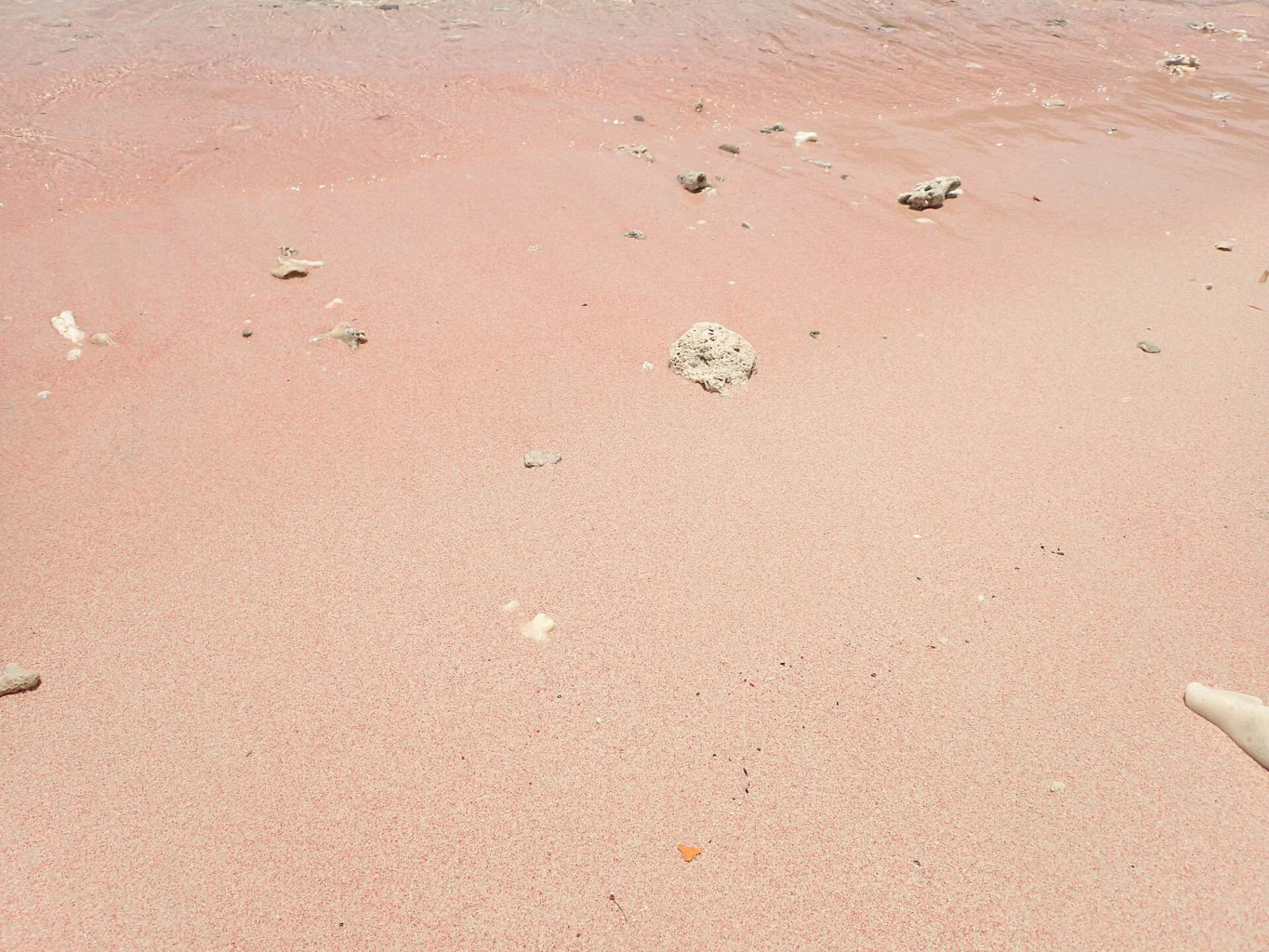
It is safer to describe this as a reef-derived sediment mixture than to claim one coral species explains every pink grain. Beaches are dynamic systems. Waves sort, move and expose particles differently along the shoreline and through time.
Why does the colour look different in photos?
- Wetness: wet grains often appear darker and more saturated than dry grains.
- Sun angle: directional light and overhead light create different contrast.
- Cloud: diffuse light can reduce glare but also flatten colour.
- Wave sorting: reddish particles may be more concentrated in one band than another.
- White balance: camera settings can push sand warmer or cooler.
- Editing: saturation, vibrance and selective colour can exaggerate the blush.
- Screen: display calibration changes how the same file looks.
The most honest expectation is a variable rose or blush tone, not a uniform pink carpet. A visitor can see a subtler beach than a marketing image without either view being fake.
Is wet sand always pinker?
It often photographs with stronger colour because water darkens and saturates the sediment. “Always” is too strong because glare, cloud, tide and local particle concentration still matter. Compare wet and dry zones with your eyes before deciding the beach has no colour.
Which Pink Beach does a Komodo itinerary mean?
Komodo itineraries and social posts can use “Pink Beach,” “Pantai Merah,” “Long Beach” or a general pink-beach label for different shorelines around the park. This article targets the established Komodo Island destination in the site’s published listing.
Before booking, request:
- the island or map location of the stop;
- the exact name used by the captain or guide;
- whether guests land on the beach or snorkel from a tender;
- the planned time window;
- the alternative if current, waves or visitor access change.
This prevents a traveller from comparing a photograph of one beach with a route that visits another.
Snorkelling at Pink Beach Komodo
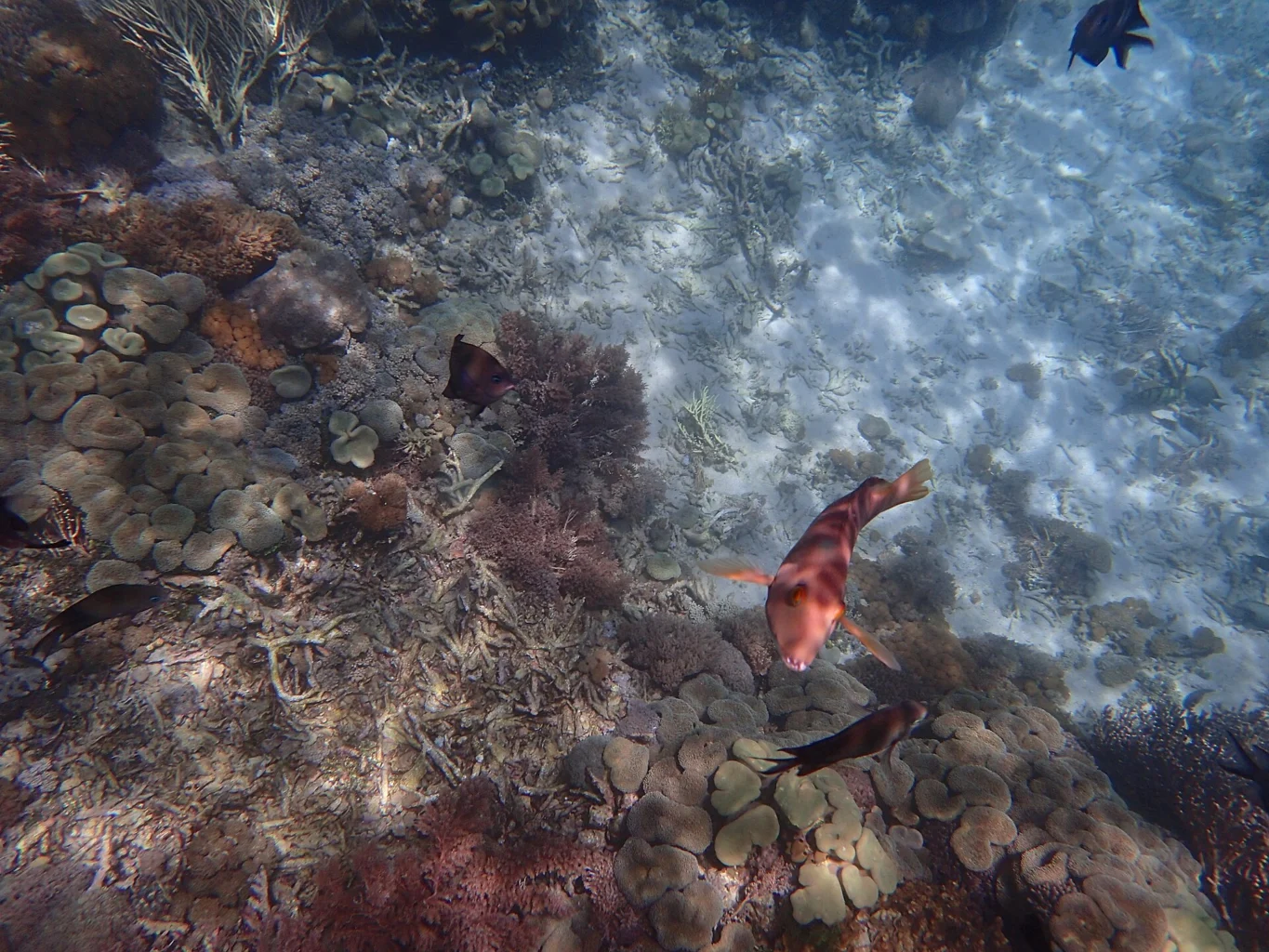
Official tourism material highlights coral and fish around Pink Beach, and snorkelling can be the strongest part of the stop. It is not automatically calm, shallow or beginner-safe every day. Komodo’s marine conditions are dynamic, and even a visually sheltered bay needs an in-water assessment.
What to ask before entering
- Where is the designated entry and exit?
- What is the current doing now?
- Is boat traffic crossing the snorkelling area?
- Where does the reef become shallow enough to damage with fins?
- Which flotation equipment is available?
- Does a guide enter the water with the group?
- How is a tired swimmer collected?
Use secure fins and maintain a horizontal position above the reef. Do not stand, kick, grab or rest on coral. If the entry is from the beach, follow the guide’s sandy corridor rather than creating a new route across living habitat.
Is Pink Beach suitable for beginners?
It can be, under a suitable tide and sea state with appropriate guide support. A beginner label should be issued by the crew after checking the conditions, not copied from a blog. Nervous swimmers should request flotation before entry and stay close to the assigned guide.
Compare the site with alternatives in the snorkelling sites near Labuan Bajo guide. For current-driven manta habitat, use the separate Manta Point Komodo guide.
Swimming, beach time and sun exposure
A beach stop can involve tender transfer, open sun, reflective water and limited shade. Wear sun-protective clothing, carry drinking water according to the vessel’s plan and keep footwear available for hot or rough surfaces.
Do not assume that clear-looking water is current-free. Children and non-swimmers need direct adult supervision even at the edge. A flotation vest is not a substitute for supervision, and an inflatable toy is not safety equipment.
Take every item back to the boat. Food scraps, cigarette ends, plastic ties and “biodegradable” packaging do not belong on the beach.
How to photograph the natural colour
An accurate Pink Beach image starts with restraint. The goal is to show the observed colour and environment, not to prove the destination name.
- Include wet and dry sand in one frame for comparison.
- Shoot along the waterline to show the coloured sediment band.
- Lock or check white balance before increasing saturation.
- Protect the camera from tender spray and windblown sand.
- Avoid crushing vegetation or coral for a lower angle.
- Do not ask another visitor to throw sand or disturb wildlife.
- Label the capture time if using the image as seasonal evidence.
Low-angle light can produce richer texture, but the itinerary may arrive at midday. A bright overhead visit still works for underwater colour, wide landscape contrast and honest documentary frames.
Do not fly a drone based on an old blog claim. Ask the park or operator for current written authorisation requirements and respect no-fly instructions.
Pink Beach conservation rules that matter
Official guidance is clear: do not take sand or shells, do not touch coral while snorkelling, and remove rubbish. A handful may feel insignificant, but repeated removal by many visitors changes a beach whose identity depends on its sediment.
- Leave sand, shells, coral fragments and living organisms in place.
- Do not buy souvenirs presented as material removed from the park.
- Use the designated landing and swimming areas.
- Keep fins and hands away from coral.
- Do not feed fish or bait wildlife for photographs.
- Avoid single-use items likely to blow into the sea.
- Report obvious reef contact or waste problems to the guide calmly.
Read the responsible tourism in Komodo guide for operator selection, waste, wildlife and community considerations across the complete trip.
When is the best time to visit Pink Beach?
Official tourism guidance presents April to November as a broad drier-season window. That can improve the probability of sunnier weather, but it does not guarantee calm water, clear visibility, vivid sand or an uncrowded beach.
Choose the period for the full Komodo route. Green hills, dry golden landscapes, manta plans, diving regions and visitor demand can point toward different months. The best time to visit Komodo month by month guide compares those trade-offs.
Which trips include Pink Beach Komodo?
Pink Beach can appear on day and multi-day routes when the complete schedule reaches the Komodo Island side. It is often coordinated with Loh Liang, but “dragon trek included” does not automatically prove which island or beach the boat visits.
| Trip | Pink Beach planning | Verify |
|---|---|---|
| Komodo one-day tour | Possible on a fast route with several fixed stops | Named beach, activity time and total water time |
| Komodo 2D1N | More scheduling room than a day trip | Which day, which dragon gateway and snorkel inclusion |
| Komodo 3D2N | Common duration for combining land and marine stops | Do not assume a fixed time or empty beach |
| Komodo 4D3N | More buffer and potential flexibility | Longer does not guarantee an early or late slot |
| Private Komodo charter | More control over requested timing and pace | Captain, park and weather decisions still govern access |
Compare the full route with the Komodo itinerary guide. If a dragon trek matters too, use Komodo Island vs Rinca Island before selecting the package.
Permits, quota and fees in 2026
The 1,000-person daily quota introduced from 1 April 2026 applies to Komodo, Rinca and Padar plus 23 dive sites. Pink Beach access can also be affected by the registered itinerary, park management, vessel operations and conditions even when the beach is not named separately in a quota headline.
Ask who handles SiOra, which activities are registered and how the operator manages a changed stop. Read the Komodo permit booking guide for the official process.
| What you pay | Amount | Basis |
|---|---|---|
| Park entrance, foreign visitor | Rp 250,000 ≈ $14 | per person, per day The statutory Class I entrance rate. The 150% holiday rule applies to Indonesian visitor and student rates, not this foreign visitor rate. |
| Park entrance, Indonesian visitor, normal day | Rp 50,000 ≈ $3 | per person, per day The normal-day Class I entrance rate. |
| Park entrance, Indonesian visitor, holiday or collective leave | Rp 75,000 ≈ $4 | per person, per day 150% of the normal Indonesian visitor rate on the dates covered by the statutory holiday rule. |
| Indonesian student group, normal day | Rp 25,000 ≈ $1 | per person, per day For Indonesian student groups of at least five people. |
| Indonesian student group, holiday or collective leave | Rp 37,500 ≈ $2 | per person, per day 150% of the normal student-group rate; the minimum group size remains five. |
| Scuba diving activity | Rp 25,000 ≈ $1 | per diver, per day A separate activity charge in addition to the applicable entrance fee. |
| Motorised vessel entry | Rp 100,000–200,000 per boat, per day | Rp 100,000 for 40–100 HP, Rp 150,000 for 101–500 HP, and Rp 200,000 above 500 HP. |
| Drone use | Rp 2,000,000 ≈ $112 | per unit, per day A separate special-use charge. Complete the required SiOra/SIMAKSI process before travel. |
- SiOra is the park’s e-ticketing and SIMAKSI system. Reserve before travel; Ministry guidance recommends completing the reservation by H-1. An operator can assist, and self-service is available at the Komodo Visitor Center and KP3 terminal.
- Payment is cashless through the methods available in SiOra, including BRIVA or bank transfer and supported e-wallets. Keep the e-ticket and ensure the traveller details are correct.
- A 1,000-visitor daily quota has applied since 1 April 2026 to the main visitor islands and 23 dive sites. Availability therefore depends on the travel date and registered itinerary.
- The final SiOra total can include entrance, activity, vessel and special-use charges. Ask the handling operator for an itemised total before issuance.
- Official public guidance does not state one universal refund or rescheduling rule for every reservation. Confirm the current SiOra terms in writing before the ticket is issued, including treatment of weather disruption.
Statutory fees under Peraturan Pemerintah No. 36 Tahun 2024, in force since 30 October 2024. Verified 31 August 2026 against the official PP 36/2024 schedule, the Ministry of Forestry SiOra notice and the Ministry’s 2026 quota notice. Amounts are payable in rupiah; dollar figures are courtesy estimates converted at Rp 17,900 and rounded.
Do not accept a hardcoded “all park fees included” claim without an itemised explanation of visitor category, day, activity and operator handling.
Frequently asked questions
Is Pink Beach Komodo really pink?
Yes, but the natural colour is variable. It often appears as a soft blush rather than the saturated pink seen in heavily edited images.
Why is the sand pink?
Official Indonesian tourism guidance attributes it to reddish material associated with foraminifera and coral fragments mixing with pale sand.
Can visitors swim at Pink Beach?
Often, when the guide approves the day’s current, waves, traffic and entry. Clear water does not guarantee safe conditions for every swimmer.
Is Pink Beach good for snorkelling?
It can offer coral and fish close to the beach, but reef access and beginner suitability depend on the daily briefing and visitor ability.
Can I take a small amount of pink sand?
No. Leave sand, shells and coral in the protected destination.
How long do tours stop at Pink Beach?
There is no universal duration. Ask for the published activity window and whether it includes tender transfer, beach time and snorkelling.
Is Pink Beach on Komodo Island?
The destination covered here is the established Komodo Island Pink Beach. Other pink shorelines and naming conventions exist, so verify the map location.
