
Before Diving in Komodo: Questions About Oxygen, Communications and Evacuation
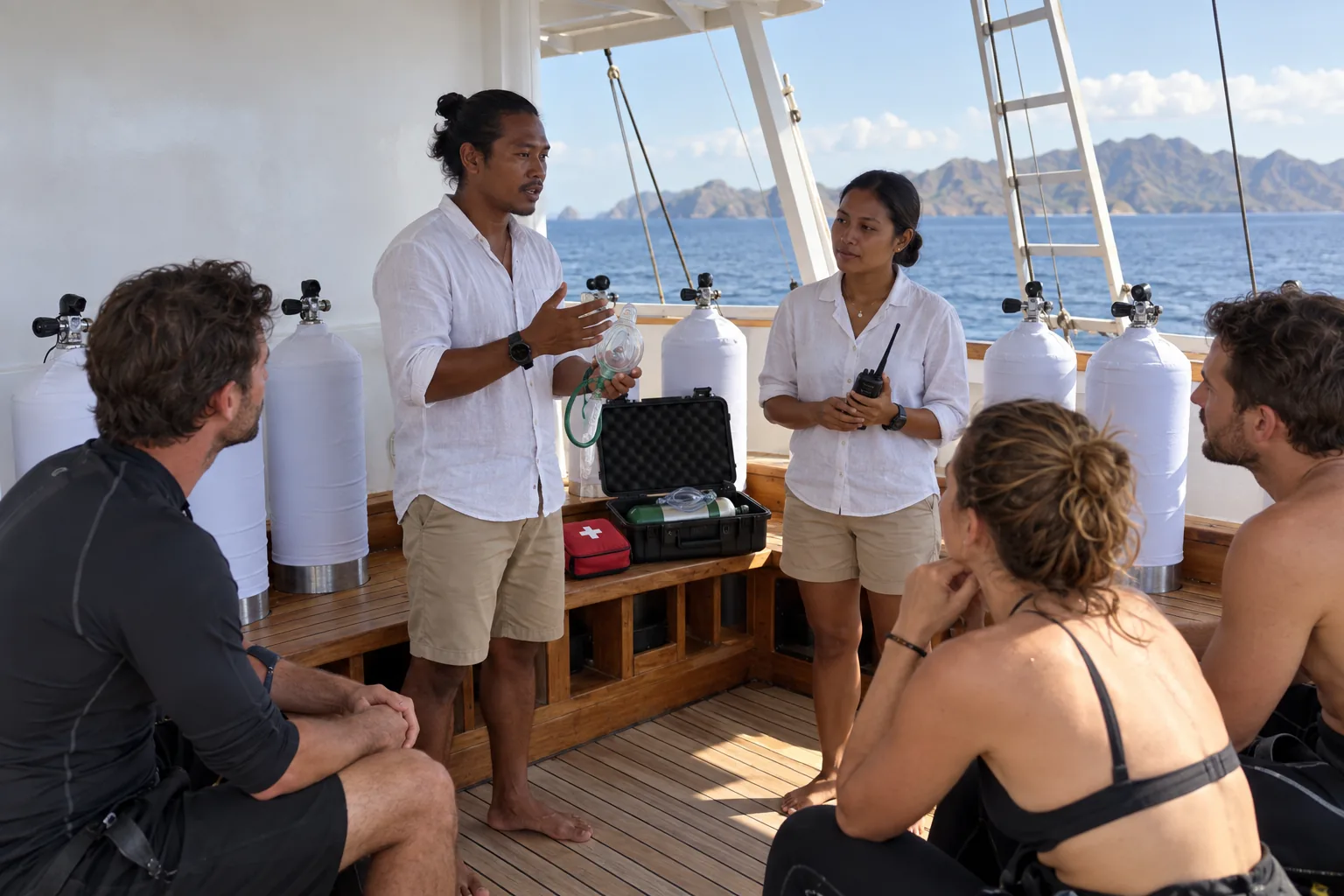
A useful Komodo diving emergency plan names the boat, site and people responsible. A claim that “oxygen is aboard” leaves unanswered how long it will last, who can use it and how a diver reaches care from a remote site. Ask the operator to describe the response chain before booking.
This checklist evaluates a named operator and vessel’s emergency readiness. For policy wording, activity exclusions and claims documentation, read our separate travel insurance for Komodo guide.
Where written answers help
Put the vessel name, departure date, crew contact and planned areas beside the operator’s emergency answers. A policy document for another boat in the fleet might not describe yours. Check what coverage and assistance contacts your insurer actually provides for scuba at the planned depth and location. A crew drill and a clear transfer route are more informative than a broad reassurance about “full safety equipment.”
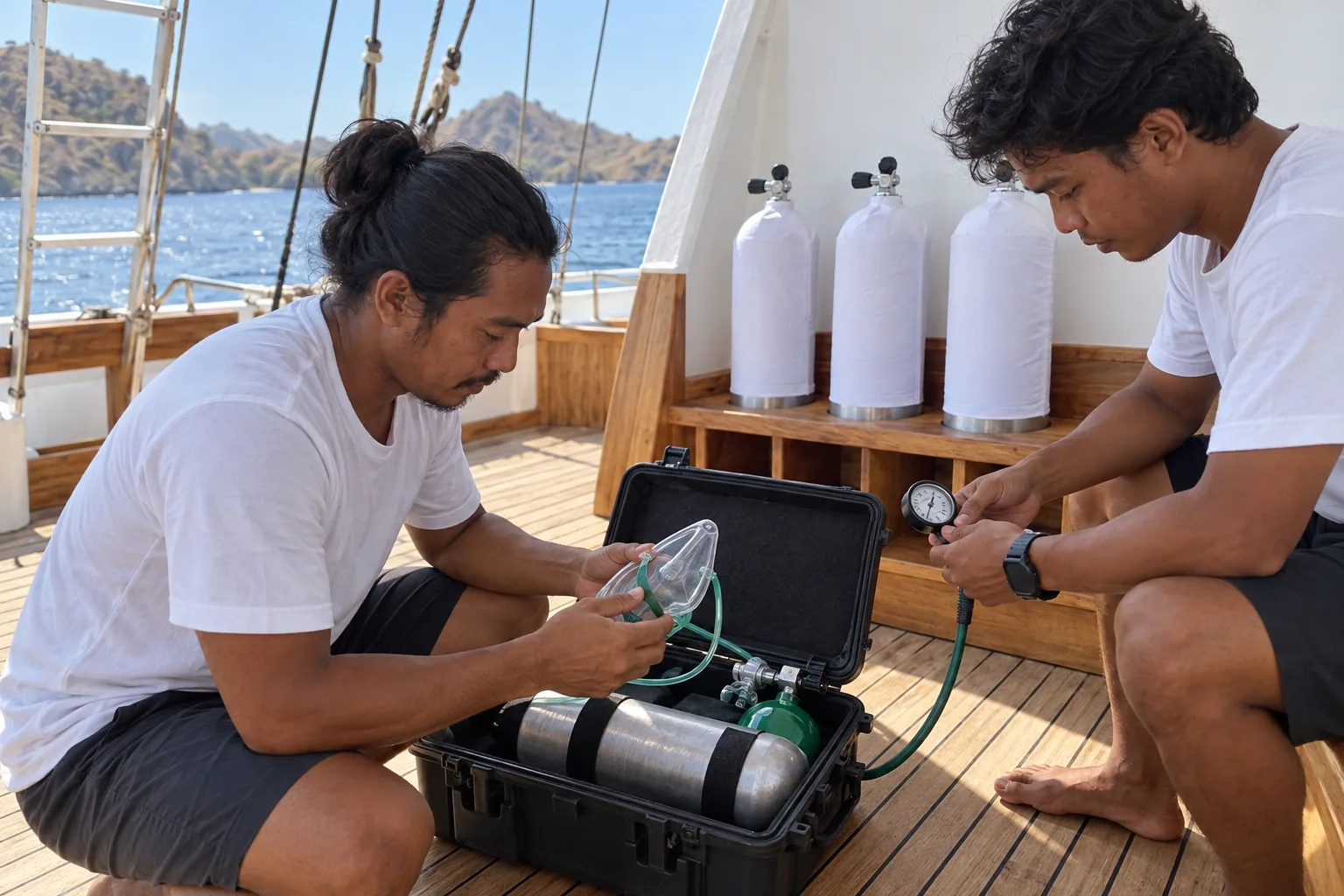
Make the plan specific to the named vessel
An emergency action plan should identify the captain, dive leader, oxygen provider, communicator and person responsible for guests who are not part of the incident. Ask how the crew confirms all divers have surfaced and how a missing diver search is coordinated without losing track of others. The amount of oxygen carried is only meaningful alongside delivery equipment, trained users and the likely transfer time.

Communications and geography
Coverage at a remote island can differ from coverage in Labuan Bajo. Ask what radio or other communication method is aboard, how the crew contacts medical advice and who coordinates a transfer with shore facilities. Wind and daylight can alter the route, so a prepared plan has alternatives. Avoid accepting a claim that a particular hyperbaric facility is always open; confirm current treatment access with the operator and medical providers.
Record information that helps clinicians
Before diving, share relevant medical screening answers and emergency contact details with the responsible professional. After any incident, the crew and clinicians need a reliable dive history and symptom timeline. Guests should not attempt to diagnose decompression sickness from an article or delay medical evaluation because symptoms seem mild. DAN’s resources explain the importance of rapid professional consultation and an organized response.
Ask for a drill, not a slogan
“Safety is our priority” is a statement of intent. Specific evidence is the date equipment was inspected, crew roles were rehearsed, oxygen can be reached, and the captain has an updated contact list. Ask the operator to explain a realistic example of an injured diver while other guests remain on the boat. If the answer is vague, seek clarification before committing to remote dives.
Follow the response chain
| Stage | Question |
|---|---|
| Recognise | How is the diver headcount maintained? |
| Retrieve | Who operates the tender and locates a group separated by current? |
| Stabilise | Is accessible oxygen maintained and sufficient for a plausible transfer? |
| Communicate | Which radio or phone methods reach shore and medical advice? |
| Transfer | Who coordinates transport if the usual route is unavailable? |
DAN boat-safety guidance describes first aid, accessible emergency oxygen and an emergency action plan; its EAP guidance explains clear roles and how to activate help. These are general standards to ask about, not an inspection of a Komodo boat.
Do not assume a chamber is available
Ask which medical facility is currently operating, who will contact it and what the backup is when weather delays a transfer. Do not rely on a named chamber without checking current staffing and access. An approximate distance is not an evacuation time.
What the traveler can prepare
Provide an emergency contact, formal medical screening information and the details of any dive and evacuation cover. Tell the guide about your recent experience so the site choice fits the group. Ask who looks after other guests if the boat diverts to help an injured diver.
Five questions before payment
- What is the vessel-specific missing-diver procedure?
- What oxygen and communication equipment is aboard today?
- Which crew members are trained for each role?
- What is the realistic evacuation route for the planned sites?
- When would the captain or guide cancel the dive?
One local operator FAQ is an example, not proof of fleet-wide practice. Compare dive komodo, then get the named boat’s current answer. This checklist does not replace emergency treatment from trained crew and clinicians.
Read the response plan as a chain of handovers
Walk through a hypothetical incident without prescribing treatment: who raises the alarm, who leads trained first aid, who contacts medical advice, who navigates to the agreed transfer point, and who remains responsible for the other guests? Ask which communication method still works when mobile coverage is absent.
A named hospital or chamber is not evidence that it is open, staffed, suitable or reachable for your departure. Ask who verifies the receiving facility and arranges transport under the operator’s emergency procedure. Carry your insurance details and relevant medical information, but do not assume an insurance policy supplies an operational rescue plan.
Does oxygen aboard prove the emergency plan is complete?
No. Equipment, trained users, usable supply, communications, transport and a verified receiving arrangement are separate parts of the response.
