
Returning to Diving Before Komodo: When to Arrange a Refresher
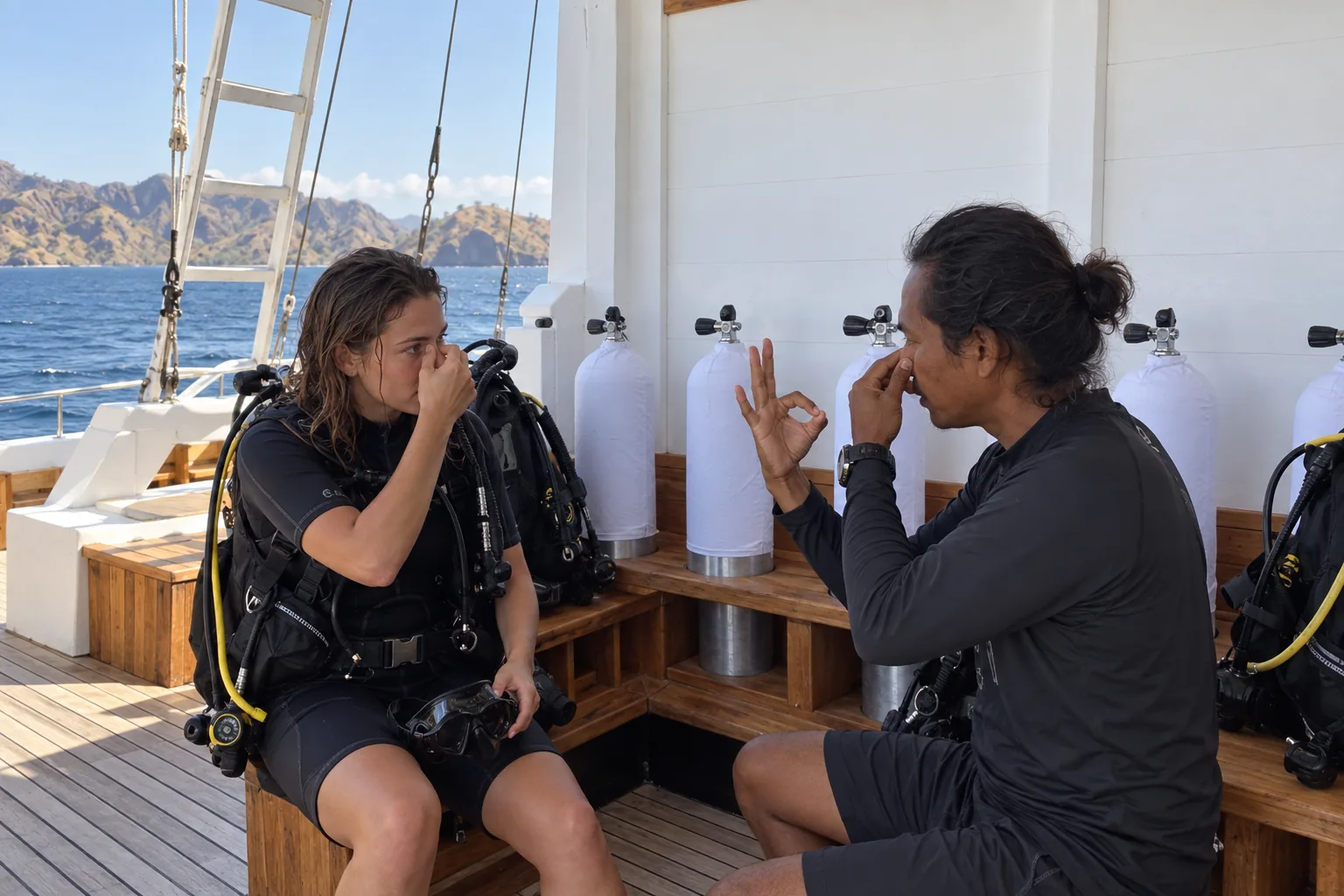
Book a diving refresher before Komodo if you are unsure of your equipment, buoyancy, emergency responses or comfort in moving water, regardless of how many years your certification card has existed. There is no single number of inactive months that proves everyone is ready or unready. Discuss your last dives and the actual itinerary with an instructor before accepting a demanding site.
A certificate and recent readiness answer different questions
A long-held certification card and a refresher booking cannot establish current readiness on their own. PADI’s ReActivate revisits knowledge and skills; tell your instructor when, where and in what conditions you last dived so they can assess what needs practice.
What a useful refresher looks like
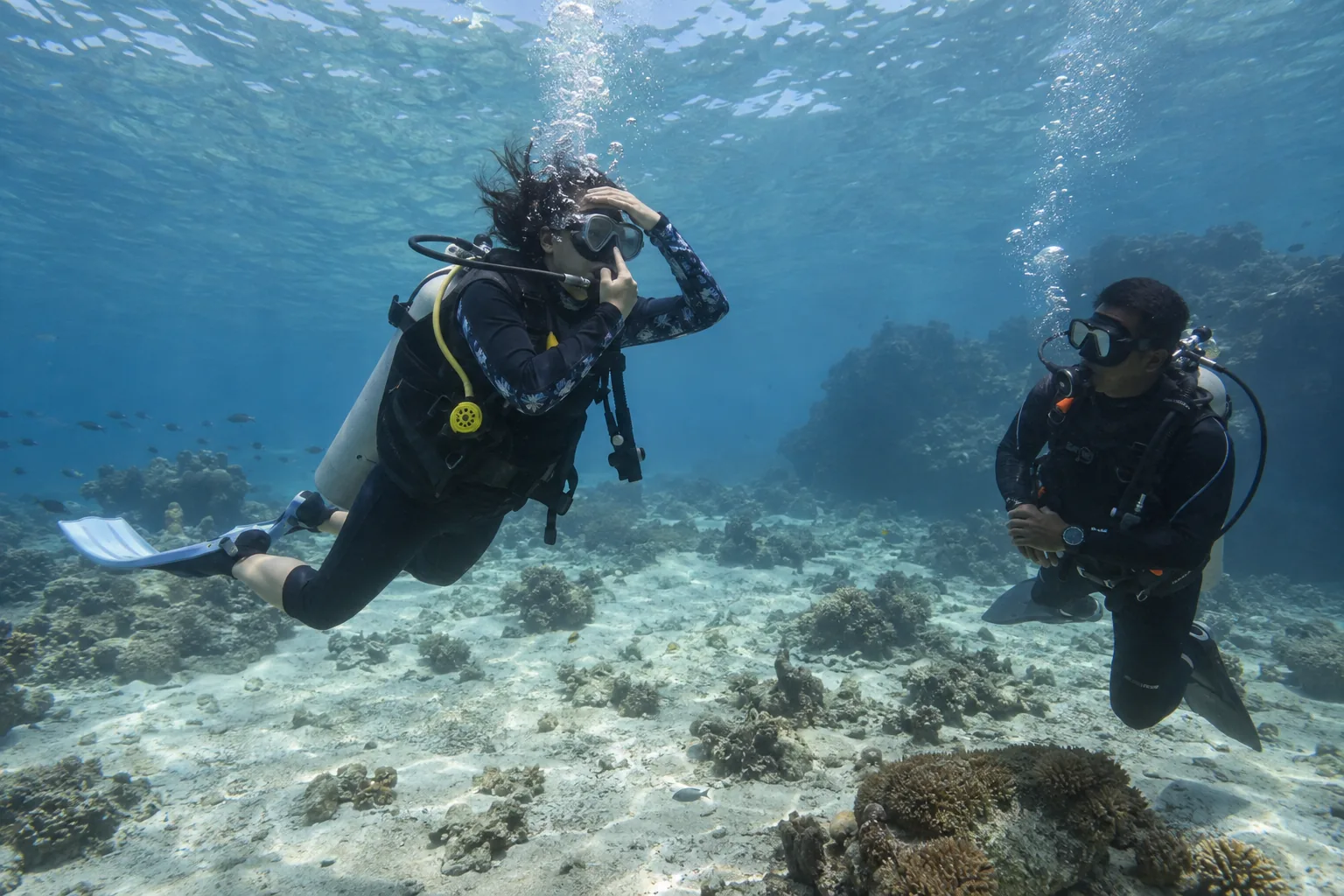
Ask a qualified instructor or divemaster what skills will be reviewed, where the session happens and how readiness is assessed before a planned current dive. A brief verbal recap on a crowded boat may be insufficient for someone who has forgotten equipment assembly or buoyancy control. Conversely, a regularly active diver may need a site-specific drift briefing rather than repeating a generic course.
Build enough time for the session before the ambitious part of the itinerary. If the instructor decides more practice is needed, change the dive plan. Recent experience and comfortable performance under supervision matter more than a certification card’s date alone.
| If you notice this before the trip | Useful next step | Why a generic first boat dive may not solve it |
|---|---|---|
| You cannot recall assembly or buddy checks confidently | Arrange equipment orientation and supervised practice. | A busy boat departure leaves little room to rediscover procedures. |
| Buoyancy or mask work still causes stress | Practise with an instructor in calm water before current exposure. | Adding current and a large group increases task load. |
| You last dived in a sheltered setting | Describe your experience honestly and request a suitable first site. | A similar dive count can hide very different conditions. |
| You changed gear or have health concerns | Get equipment fitting or appropriate medical assessment. | Neither a refresher nor a guide can guarantee medical fitness. |
Use the first Komodo dive as a check, not an exam
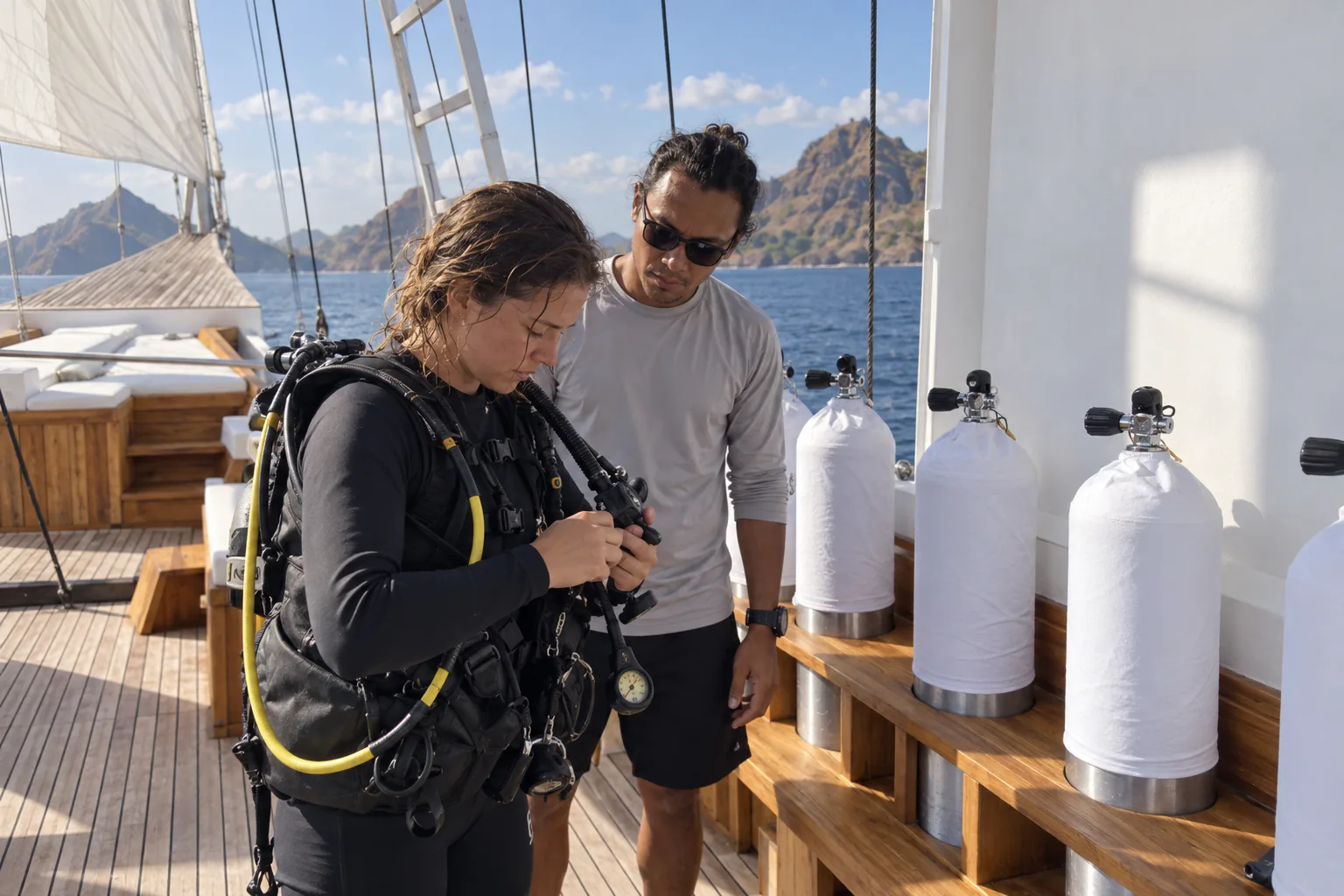
Ask whether the operator can offer a sheltered orientation dive, a smaller group and time to review signals, descent, ascent and surface pickup with the guide. Decide in advance that you can decline a site and still have a useful trip. If the only offered first dive is a fast-current pinnacle, explain your limits and request a different trip or provider.
At the briefing, confirm the entry method, expected current, buddy arrangement, route change signals and what happens if a diver surfaces early. Ask which staff member supervises the boat while the guide is underwater. The value of a refresher is that it reveals specific gaps while there is still time to adjust your plan.
Book with the right scope
Ask whether the price covers online review, actual water time, instructor assessment, rental equipment and any boat transfer. If a provider says “half-day”, ask what the clock includes. A quick classroom reminder without supervised in-water practice may be insufficient for a guest worried about buoyancy. If you already dive regularly but are new to drift conditions, ask instead for a guided progression in sites; a generic refresher does not automatically train you for currents.
Consider a Komodo liveaboard only after the operator confirms an appropriate first day for your recent experience. Ask separately whether a supervised refresher is available before the sailing; the vessel listing does not establish that service.
Before departure, send this note
“My last dive was [date/location]; I have [number] dives, mostly in [conditions]. I feel [comfortable/unsure] with buoyancy and current. Can you arrange a supervised refresher before the first demanding site, and what is included? Which initial site or alternative would be suitable if conditions change?” A concrete answer is more useful than a blanket claim that beginners are welcome.
Use our Komodo diving for beginners guide to compare site demands before choosing a refresher and departure.
Availability, prerequisites and scope require direct confirmation. Resolve them with the instructor before confirming the dive plan.
For a route-specific programme, compare dive komodo and ask the named operator which boat, guide and sites match your departure.
Distinguish an online review from an in-water assessment
An online knowledge review can refresh concepts; it does not demonstrate buoyancy, equipment handling or comfort in water. PADI’s ReActivate description separates knowledge review from in-water practice with a dive professional. Ask the provider which parts you are booking and how the result affects the first Komodo dive.
Send the professional your last dive date, recent experience and any equipment changes before choosing sites. If the first session shows a need for more practice, build that time into the programme rather than treating a refresher receipt as clearance for every current or depth.
Does completing an online refresher establish current diving ability?
It reviews knowledge. An in-water session with a professional addresses practical skills and helps inform the subsequent site plan.
The distinction between knowledge review and practical refresher work is described in PADI’s ReActivate course information.
