
Scuba Diving Courses in Labuan Bajo: Try Dive vs Open Water Certification
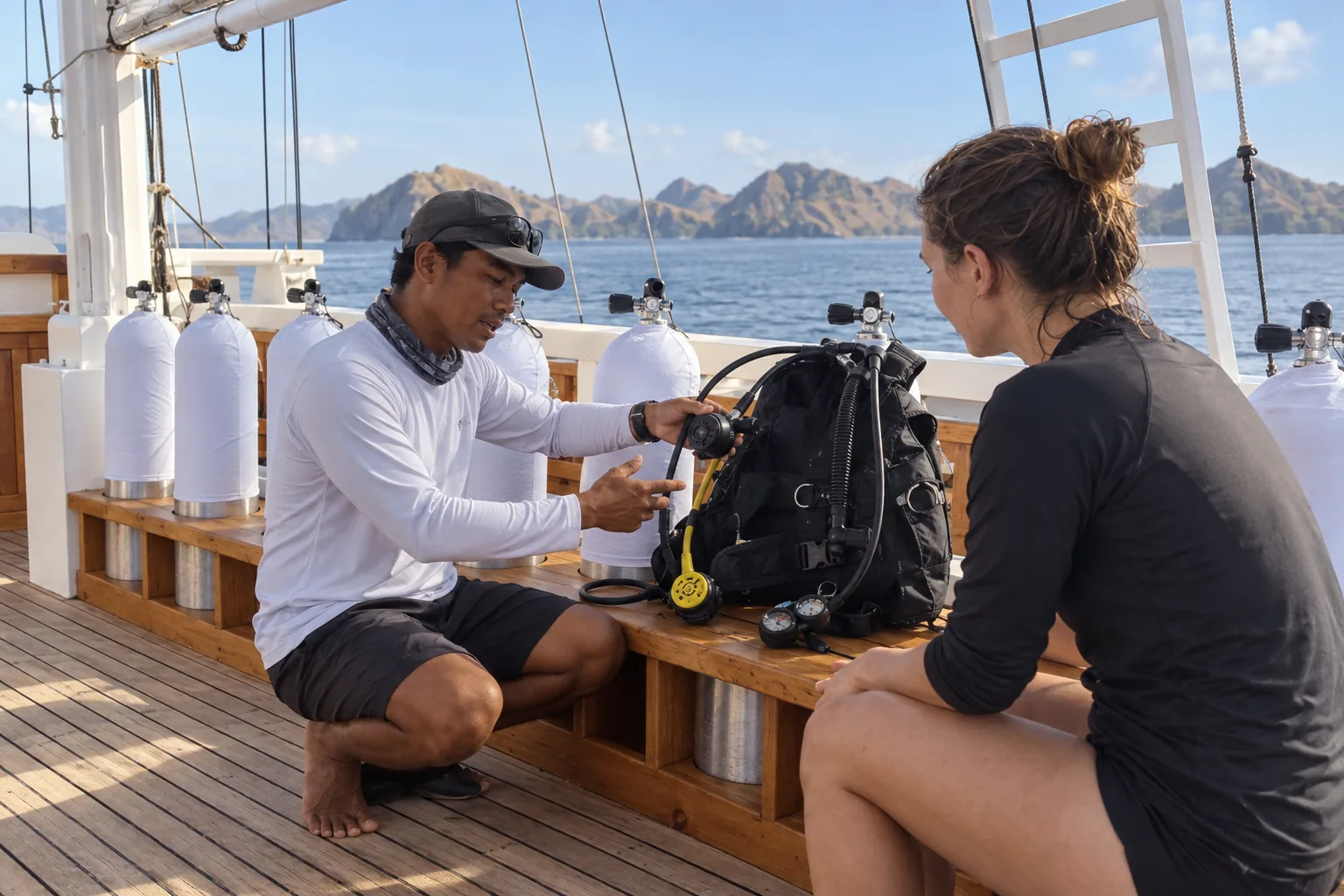
You can start a supervised try dive or an entry-level Open Water course in Labuan Bajo without holding a scuba certification. A try dive is an introductory experience under professional supervision. An Open Water course awards certification only after you successfully complete its required learning, water skills and assessments. Confirm age, water-skill and medical-screening requirements with the provider.
This guide is specifically about choosing an introductory experience or certification course. If you are already certified and deciding whether your skills and experience match Komodo conditions, read Komodo diving for beginners.
Check the training location. The national park visitor protocol prohibits diving without scuba certification at dive sites inside Komodo National Park. Discuss a pool or another authorised training location outside the park for your uncertified sessions. Enrolling in a course or booking a supervised try dive does not, by itself, exempt you from that park requirement.
Choose the product before you choose the photograph
Promotional pages often place a first scuba experience, full certification and certified diver trip beside the same manta photograph. Those products have different entry requirements and supervision. PADI describes Discover Scuba Diving as a supervised introduction in a pool or calm water; its Open Water certification requires skills and knowledge development. Ask the local operator which training agency, instructor and product they are selling, because names and inclusions vary.
Time and training are different commitments
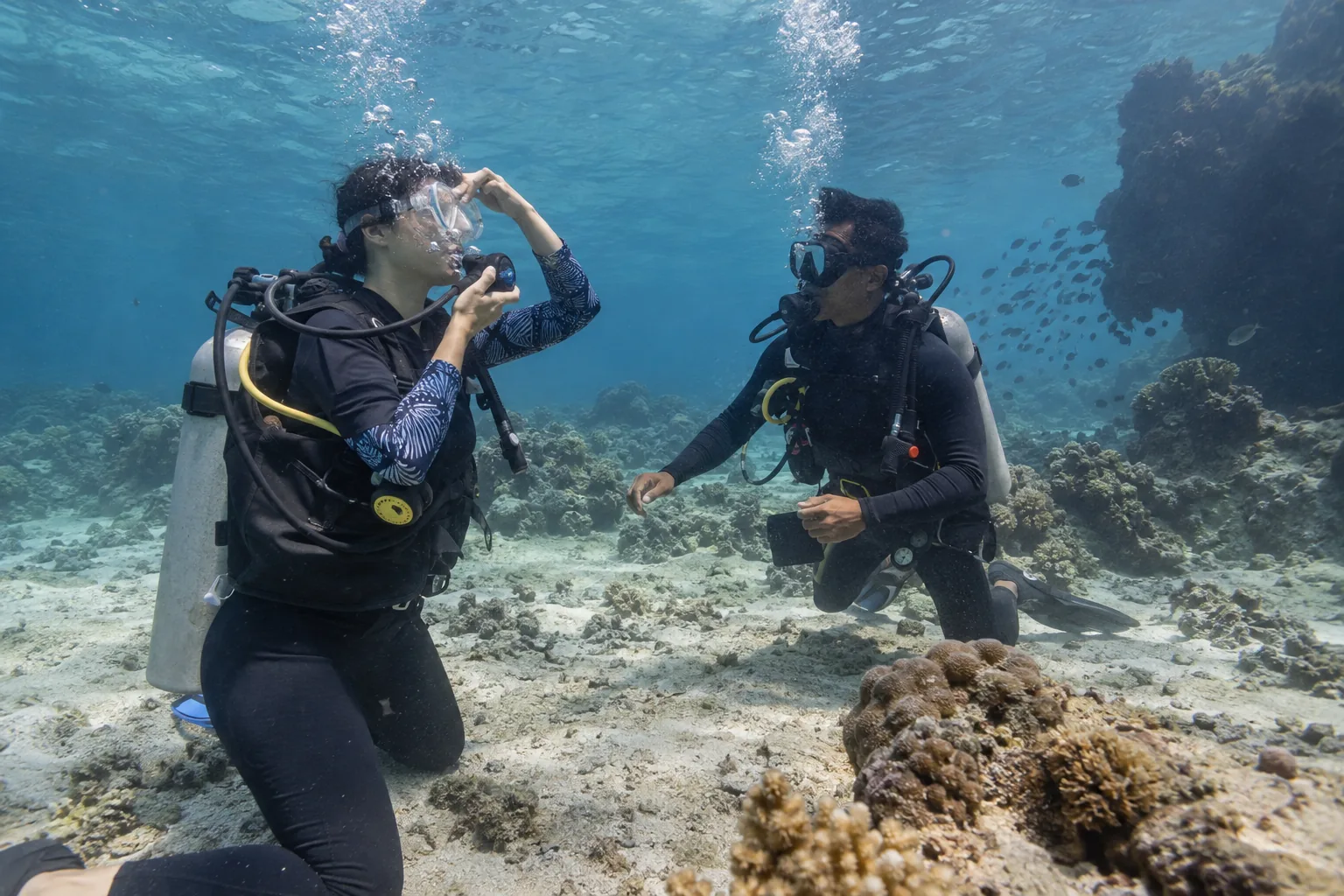
A try dive is a supervised introduction, not a certification to dive independently later. A full Open Water course requires knowledge development, confined-water practice and open-water assessments under an instructor. Check the agency, course prerequisites, language, medical screening process, minimum days and what happens if weather delays training. Someone who cannot complete every requirement should not be promised a card simply because the travel itinerary ends.
Ask whether pool or sheltered training is available before entering more demanding open water. If your goal is a single experience during a short visit, an introduction may fit; if you want to keep diving elsewhere, compare a full course with time left for review and rest. Neither choice guarantees a Komodo pinnacle as a first dive.
| Decision | Supervised try dive | Open Water course |
|---|---|---|
| Certification needed to start | No prior scuba certification for an eligible beginner; confirm the supervised programme and prerequisites. | No prior scuba certification; meet the course entry requirements and complete all assessments to qualify. |
| Goal | Find out whether scuba feels comfortable under direct supervision. | Train and demonstrate the required skills for an entry-level certification. |
| Time | Confirm the briefing, practice and water session for this operator. | Allow several training days; PADI says confined and open water portions can take three or four days after prior study, depending on progress. |
| Afterwards | One experience is not a licence to dive independently. | Certification gives a defined qualification, but conditions and recent ability still matter. |
| Cancellation | Ask what happens if you decide not to enter the water. | Ask about rescheduling if skills require more practice or sea conditions change. |
Make the first water session a real decision point
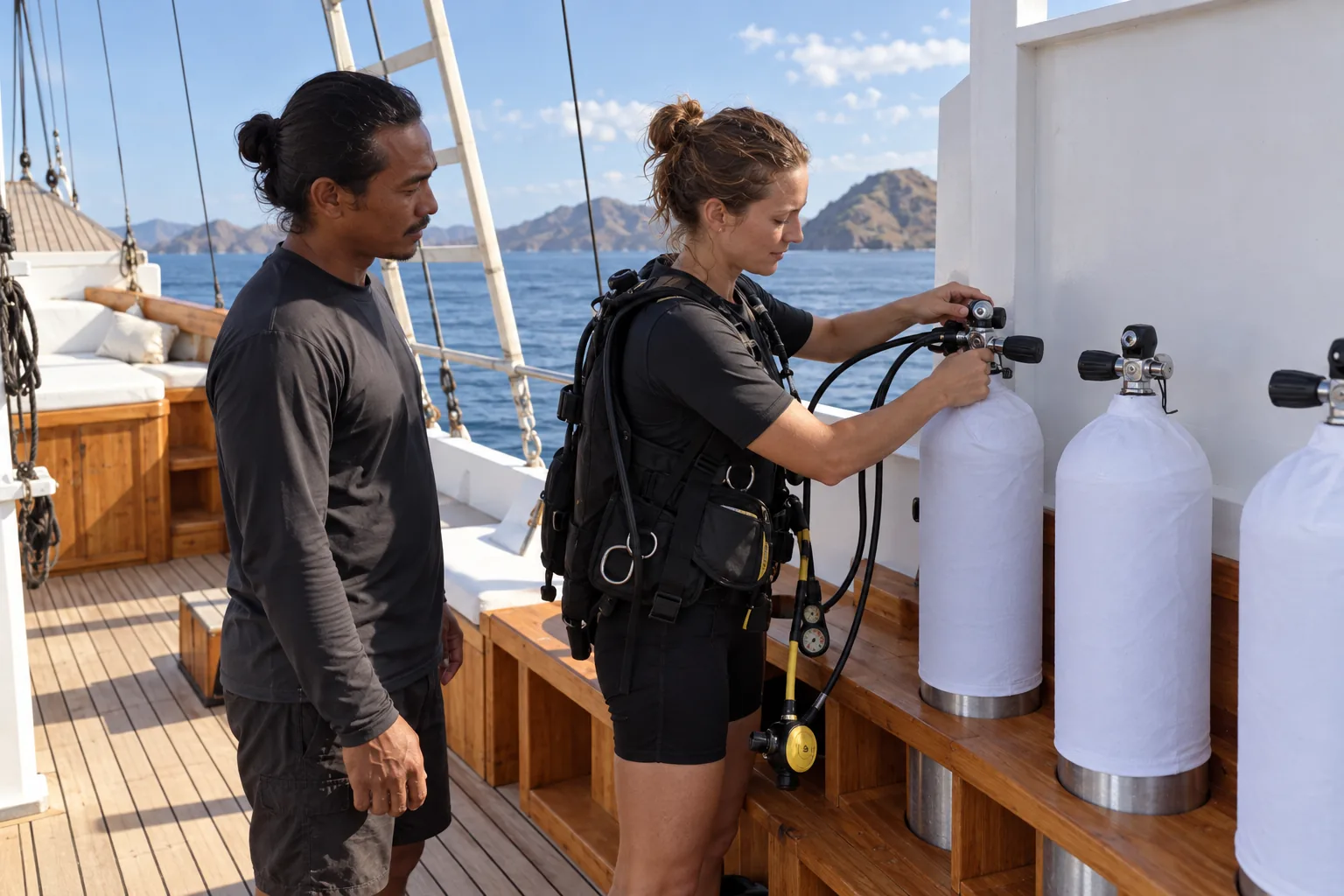
Before paying, tell the instructor whether you can swim, whether you are anxious with your face in water, when you last practised and whether you have a medical condition that may require assessment. Complete the provider’s medical questionnaire honestly and follow its referral instructions. Arrange a physician evaluation when the screening process requires it; certification and medical clearance are separate checks. Ask where practice happens, how you signal discomfort, who supervises and what happens if you stop. A travel companion’s confidence is not a substitute for your own.
A sensible introductory plan leaves space to practise breathing and mask comfort before a boat transfers to any outer site. If your provider uses a sea location, ask why it is suitable on that day and what sheltered alternative exists. An operator should be willing to move or cancel an entry when the conditions or guest readiness change.
Four questions a generic price list cannot answer
- Exactly what is included? Separate instruction, course materials, certification processing, equipment, boat, food, transfers and any required park access or activity fees. Compare the same product on both quotes.
- Where is the skills practice? A picturesque reef does not replace the required skill progression; ask about confined-water arrangements and sea dives.
- Who teaches and how many students? Request the instructor’s credential, maximum group size and who enters with you. A boat can carry both certified guests and trainees without giving them the same supervision.
- What happens if conditions change? Get the reschedule, refund or alternative-learning policy in writing. A course itinerary should not be represented as guaranteed dive sites.
Build a realistic Labuan Bajo schedule
Arrive with room to rest; finish any online theory your provider accepts; allow training days without a tight onward flight. If you scuba dive, plan the no-fly interval from your actual last dive and consult a dive professional and current DAN guidance. Do not fit a course into a timetable that makes you rush learning or board a flight too soon. Snorkelling and land activities remain options if a guest chooses not to dive.
After qualification, a separate Komodo trip with diving may be appropriate. Compare Komodo liveaboard options with a diving programme only after checking that a particular sailing accepts your certification, recent experience and desired sites. A “diving” label does not make a boat a training provider.
For the qualification requirements, see PADI’s certification FAQ and its explanation of Discover Scuba Diving versus Open Water certification. Follow DAN’s medical-screening guidance when completing the provider’s questionnaire.
For a route-specific programme, compare Dive Komodo and ask the named operator which boat, guide and sites match your departure.
