
What Wetsuit Do You Need in Komodo? Water Temperature and Repeated Dives
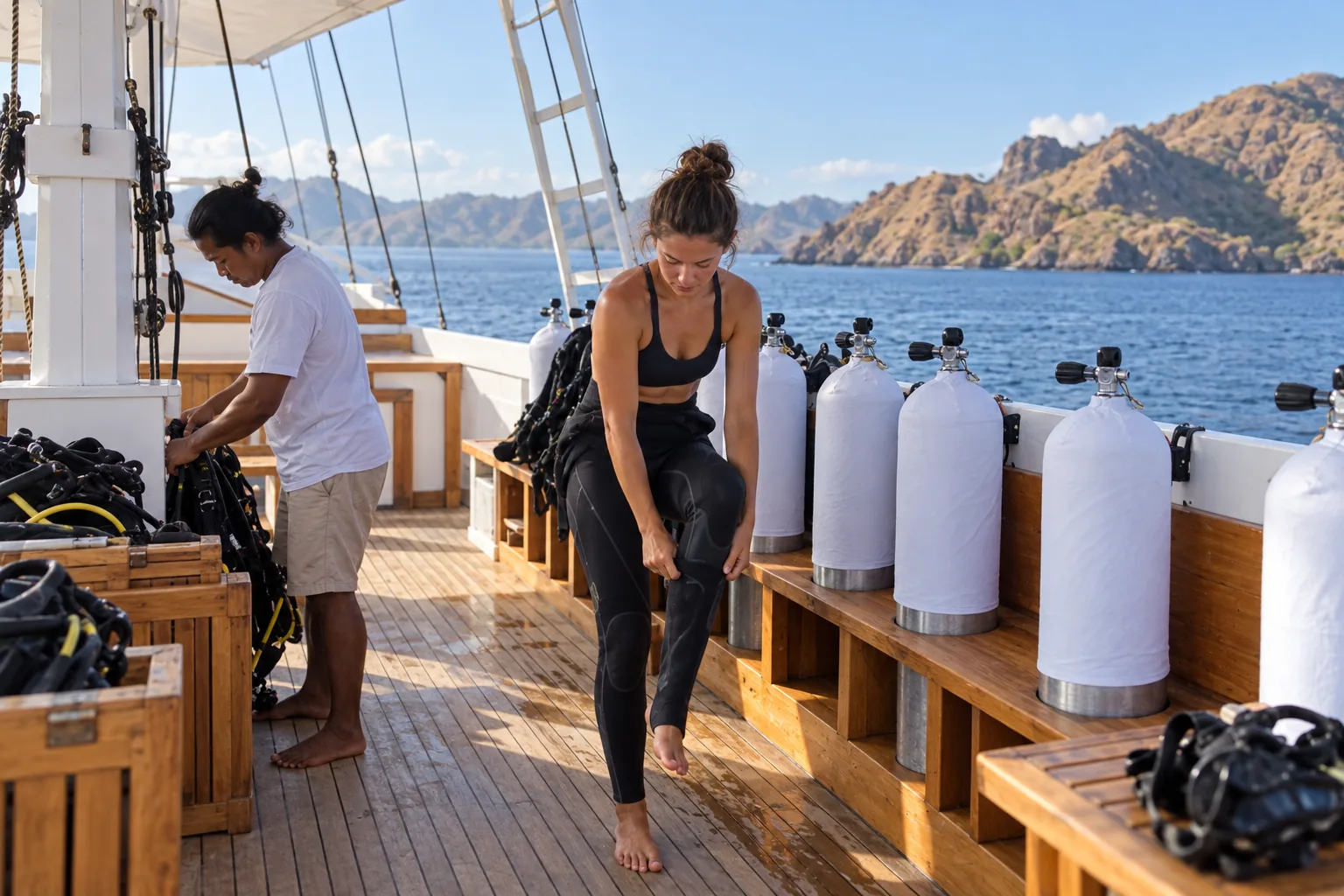
There is no single wetsuit thickness for every Komodo dive. Southern itineraries can feel much colder than northern or central ones, and three dives in a day can be colder than the first dive at the same temperature. Ask your operator for recent site temperatures, the planned zones and rental sizes before choosing your exposure protection.
First, find out where you will actually dive
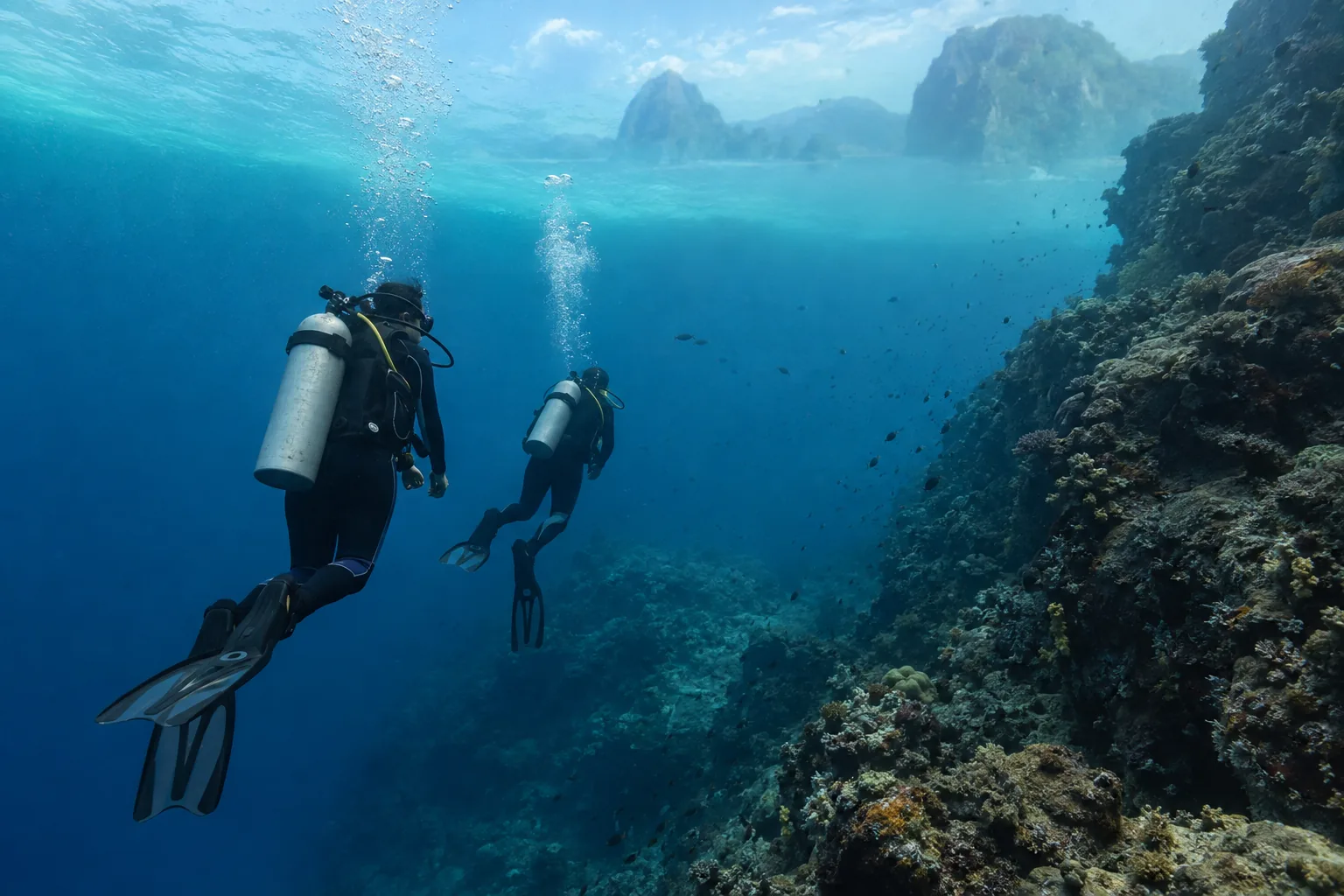
“Diving in Komodo” describes several water masses, not one pool. A local operator’s published guide reports typical northern and central temperatures near 27–29°C and southern water around 22–25°C during seasonal upwelling. Those are planning ranges from an operator, not a forecast or a reading for your specific dive. Depth, thermoclines, wind and the actual route can change what you feel. Ask for the recent temperature at the sites on your departure, measured at depth rather than just at the surface.
| Itinerary discussed with operator | First question | Packing implication |
|---|---|---|
| North or central only | What were temperatures at planned depths during the last few departures? | A fitted full-length 3 mm suit is a starting conversation, not a promise of warmth. |
| South, including cooler months | Are we actually going south and what did your recent dive logs record? | Discuss thicker protection or layers in your size before leaving town. |
| Multi-zone liveaboard | How many dives per day and which are the coolest? | Pack for the coolest planned dive and check how layers can be adjusted. |
This table is a decision aid, not a thermal standard. A diver who chills easily may need more insulation even in warm surface water. A suit that is too loose circulates water and may perform worse than its millimetre label suggests. Never buy a wetsuit from a monthly average alone.
Why the third dive can feel different from the first
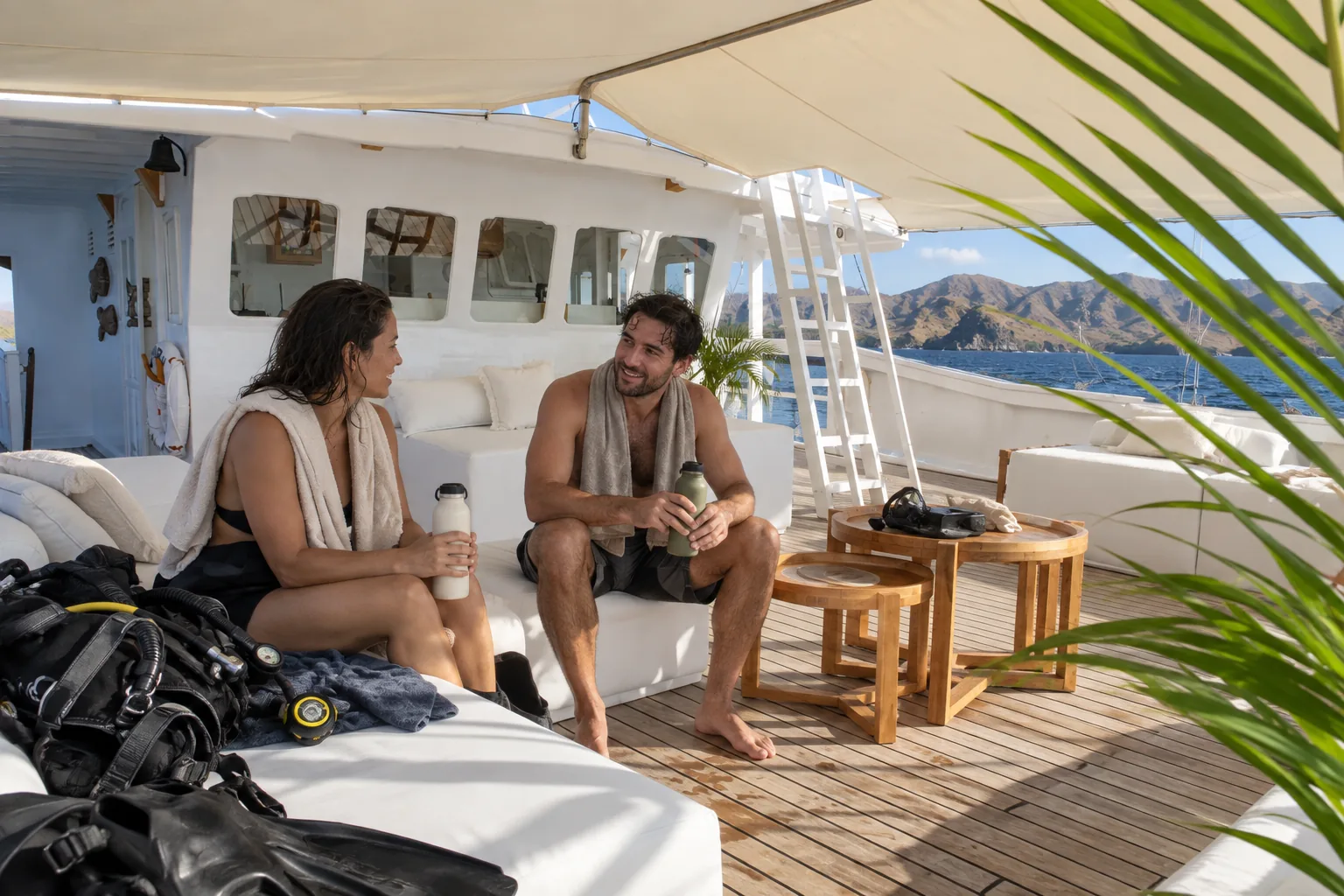
Between dives you are wet, exposed to wind on deck and sometimes unable to dry the suit. Heat loss accumulates across a long day. A photographer waiting motionless at a subject may feel colder than someone finning gently through the same water. Fatigue and cold also compete with attention you need for buoyancy and the guide’s instructions. DAN’s dive health resources recommend maintaining adequate thermal protection; they do not give a universal Komodo suit thickness.
Build a simple schedule before packing: site and expected depth → recent temperature → number of dives → time between dives → deck exposure → your cold tolerance. If the operator cannot say where the itinerary reaches, choose adaptable layers and ask them what rental inventory is available, rather than relying on a claimed seasonal “best suit”.
What to check when renting
- Size and seal: ask for your height and body measurements to be matched to the actual suit, then check movement at neck, wrists and ankles. A nominally thicker, baggy rental may be a poor choice.
- Inventory: ask whether a full suit, thicker suit, hood or vest is actually available in your size for your departure date. “Rental included” does not establish the available thickness.
- Condition: inspect zips, seams, compression and damage before the first boat departure. Agree in writing whether exchanges are possible.
- Buoyancy: changing to a thicker suit affects weighting. Discuss adjustments with your dive professional; do not improvise a weight change under pressure to join a dive.
- After the dive: ask where suits can dry and whether a second layer or dry top is sensible for the next entry. Keep drinking water available on a hot boat.
Three realistic packing decisions
First-time visitor on central day boats: confirm recent in-water temperatures and try a properly fitted full suit. Bring a compact dry layer for wind during surface intervals. If your past log shows you get cold at similar temperatures, ask about a vest before the trip.
Photographer booked for southern sites: ask about actual access to the south, recent depths and temperatures, and the likelihood of long stationary dives. Arrange the thicker fitted protection in advance and confirm camera work does not compromise the group plan.
Guest crossing north and south on a liveaboard: the same suit need not serve every dive unchanged. Ask whether separate layers can be carried and dried, and whether the operator can confirm the coldest proposed zone before boarding. Site changes because of current or weather should prompt a new decision.
Questions to send before you pay
- Which zones and depths are on our proposed route, and which can change?
- What did your guides actually measure on recent departures at those depths?
- How many dives in a day, and can I skip one if I get cold?
- What thickness and sizes can you reserve, and what is the rental or replacement cost?
- Who checks suit fit and weights on day one?
For a Komodo liveaboard with repeated dives, confirm the route, exposure-protection rental sizes and space to dry your suit. A diving tag alone does not confirm those services on your sailing.
Water temperature is only one part of exposure planning; read how Komodo diving currents affect site choice and dive timing.
Temperature, stock and route should be checked directly before departure.
For a route-specific programme, compare dive komodo and ask the named operator which boat, guide and sites match your departure.
Choose from a temperature record you can interpret
Ask whether a quoted temperature is a surface reading, a dive-computer minimum or a guide’s recollection, and at which site and date. A single minimum from a southern dive does not describe an entire northern itinerary. Use your own past comfort at comparable temperatures and dive duration when discussing layers.
If you change suit thickness after arrival, allow time to review fit and weighting with the dive professional. Also compare the whole day: time wet on deck, opportunities to dry, wind exposure and whether a dive can be skipped. More insulation is a choice within a complete plan, rather than a universal Komodo prescription.
Does the month alone determine wetsuit thickness?
No. Actual sites, recent temperatures, duration, repeat dives, fit and personal cold tolerance all affect the decision.
