
Macro Diving in Komodo: Habitats, Search Skills and Camera Preparation
A decision guide to Komodo macro diving, from habitat and site selection to critter expectations and responsible photography.
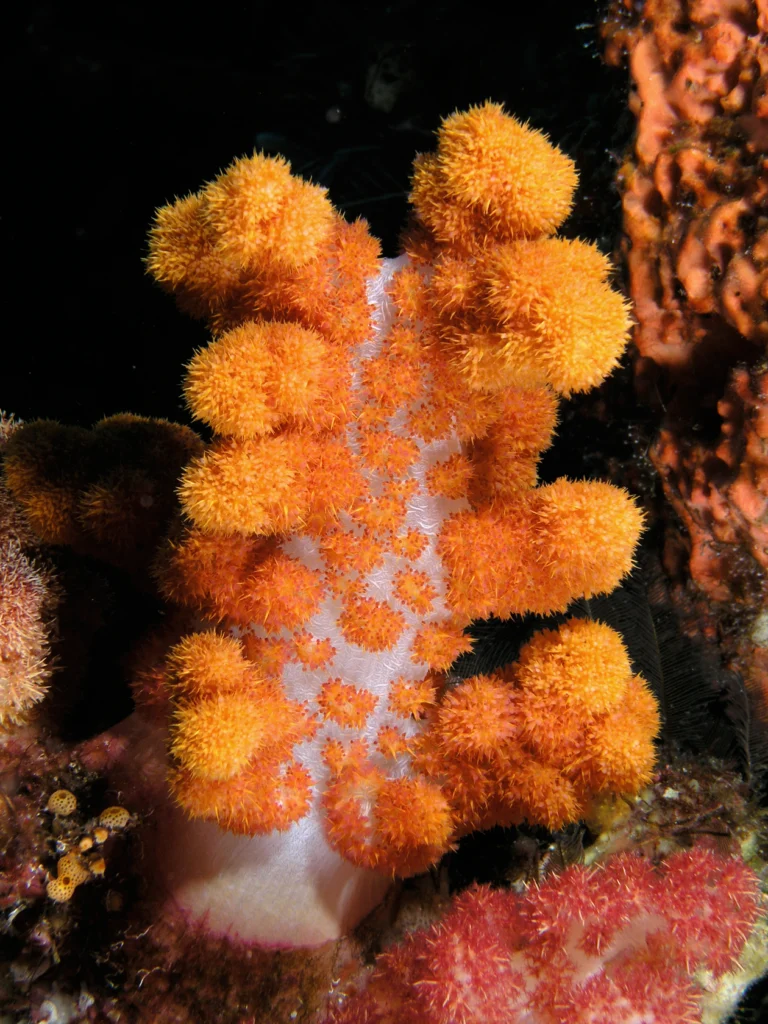
Macro diving in Komodo means choosing dives for small, camouflaged subjects rather than treating them as bonuses between manta and shark sites. Productive habitats include rubble, sand, sheltered slopes, gorgonians, hydroids, sponges and soft coral. A good macro plan needs a slow group, a guide who reads microhabitat, stable buoyancy and several suitable dives; no critter should be guaranteed.
Komodo Is Not Only a Wide-Angle Destination
Komodo’s public image is built around mantas, current and dramatic pinnacles. That is only one scale of the ecosystem. A diver who slows down can find animals measured in millimetres: nudibranchs on hydroids, pygmy seahorses on gorgonians, frogfish beside sponges and mantis shrimp at burrow entrances.
Planning a Komodo trip around macro diving involves more than using a macro lens on a normal itinerary. It changes site selection, group speed, positioning and the amount of reef covered. The most useful plan begins with habitat and guide expertise.
This guide focuses on small subjects, camera handling and macro dive planning. For broader site and trip planning, start with our Komodo diving guide, then confirm the programme and conditions with your operator.
Which Habitats Produce Which Subjects?
| Microhabitat | Possible subjects | Search clue |
|---|---|---|
| Gorgonian sea fans | Pygmy seahorses and small crustaceans | Host species, branch texture and an exposed eye |
| Sponges and encrusted reef | Frogfish, nudibranchs and shrimp | A shape or texture that breaks the sponge pattern |
| Hydroids and soft coral | Nudibranchs, eggs and tiny predators | Food colony, egg ribbon or moving rhinophores |
| Sand and rubble | Mantis shrimp, octopuses, pipefish and juveniles | Burrows, shell fragments and subtle movement |
| Protected coral slope | Cuttlefish, anemonefish and mixed reef macro | Edges, crevices and cleaning behaviour |
Where Is Macro Diving Reported in Komodo?
Wainilu is repeatedly described as a muck and rubble site, while Cannibal Rock and other southern reefs combine soft-coral scenery with small subjects. Gorgonian habitat at several central and southern sites supports pygmy-seahorse searches. Sheltered areas near Labuan Bajo can also provide slower profiles when the itinerary and conditions suit.
Do not reduce macro planning to one famous site. Sea conditions can remove a zone from the route, and small animals appear where their host or prey is healthy. Several habitat-diverse dives create a better plan than one promised stop.
What a Macro Guide Does Differently
An experienced macro guide recognises hosts, prey and disturbance signs. Instead of swimming until something colourful appears, the guide checks the right fan, sponge or rubble edge. They also manage the group so one animal is not surrounded by cameras.
- Sets a slow route and clear maximum distance.
- Uses signals for size, location and subject type.
- Points beside the animal without touching it.
- Limits photographer rotation when habitat is fragile.
- Leaves an animal when current or buoyancy makes the encounter unsafe.
Five Komodo Macro Subjects Worth Learning
Pygmy seahorses
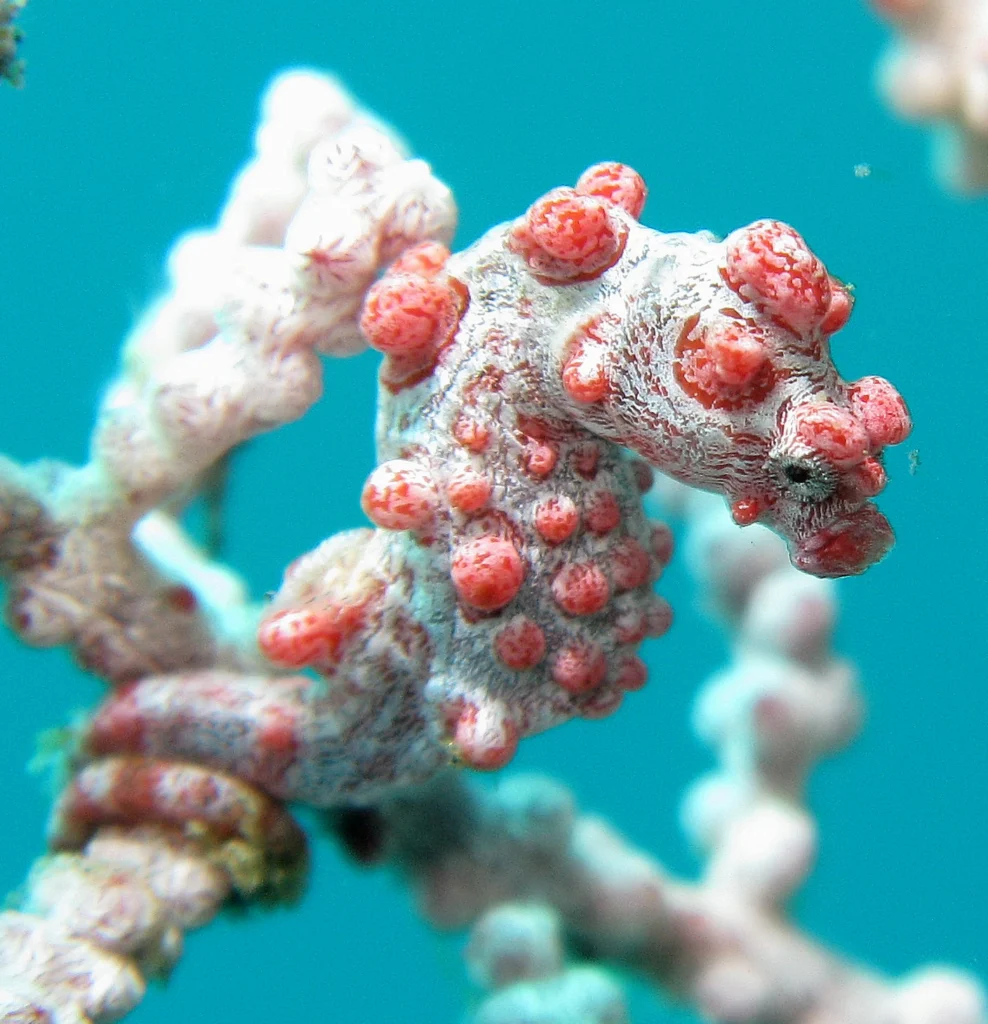
These tiny seahorses can be closely camouflaged against their host. Do not touch or move a gorgonian to improve the photograph. The guide to pygmy seahorses and their host fans explains what to look for without disturbing the host.
Nudibranchs
Colour alone is weak identification evidence for sea slugs. Record visible shape and features without moving the animal.
Frogfish
Frogfish can resemble sponges, rock or algae. Observe the outline, eye and any visible lure without prodding the animal.
Mantis shrimp
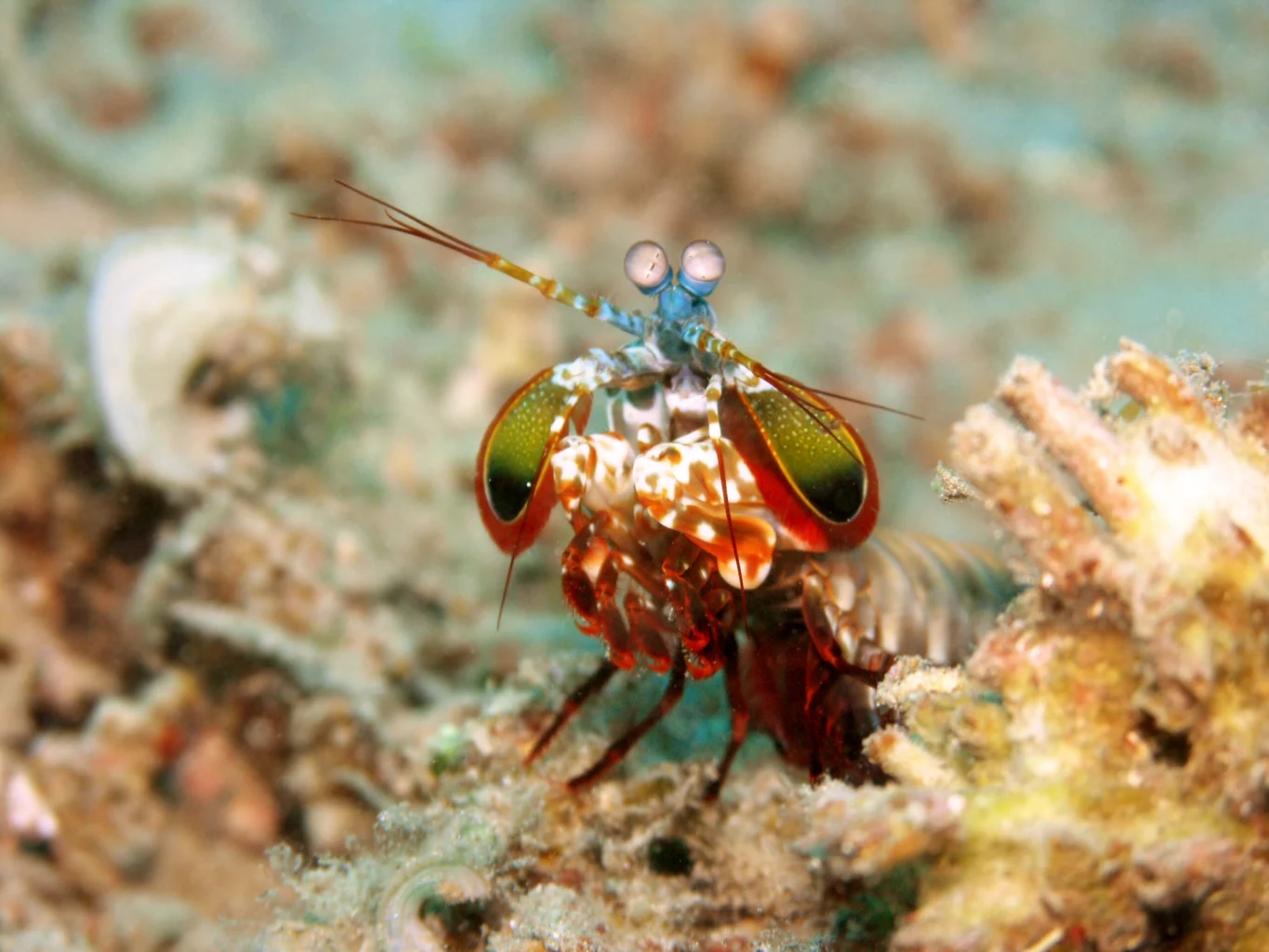
Mantis shrimp may first be noticed as moving eyes at a burrow. Keep hands and equipment clear of the entrance.
Blue-ringed octopus
Blue-ringed octopuses should never be handled or provoked. Back away from a warning display and alert the guide immediately after any suspected bite.
Camera Choice: 60 mm, 100 mm or Wet Lens?
A shorter macro focal length can be easier for larger subjects and limited visibility, but it requires a closer working distance. A longer macro lens gives more distance for small, shy subjects while magnifying camera shake and focus difficulty. Compact-camera wet lenses offer flexibility but should be practised before the trip.
The responsible choice is the setup you can control without contacting the reef. A more powerful lens does not help if task loading destroys buoyancy.
Buoyancy Before Magnification
Macro photography narrows attention. Divers stop reading depth and surroundings while looking through the housing, and fins can drop onto coral behind them. Practise a stable hover, controlled backward movement and a clean exit from the subject.
Never brace on living reef. If a sandy patch is available, the guide must still decide whether settling is appropriate; sediment can bury nearby animals and ruin visibility for the group.
How Many Macro Dives Do You Need?
One macro dive can be rewarding, but it is a weak basis for a target-species trip. Animals hide, sites change and the first dive may be used to assess the group. Three or more suitable profiles give the guide room to change habitat and timing.
A liveaboard can add remote zones and night dives, while a day operator may offer highly focused local guiding and flexible camera support. Compare format honestly rather than assuming the larger boat is automatically better.
What Changes on a Night Macro Dive?
At night, animals leave shelters, colours appear under torch light and the guide searches a smaller visual field. Navigation, buddy awareness and camera task loading also become harder. A night dive should not be added only to lengthen a species list.
Agree on light signals, maximum distance and lost-buddy procedure before entry. Keep the main beam away from another diver’s eyes, and do not trap a small animal between several lights. Review blue-ringed octopus observation and safety before entering a rubble habitat at night, and keep the same no-touch approach throughout the dive.
Current Can Make a Macro Site Unworkable
Small-subject photography needs stable position and time. A site that is biologically productive may still be unsuitable when current pushes divers into the reef or strips away the ability to observe without contact.
A conservative guide changes the site or abandons the photograph when conditions are unsuitable. Macro goals never override buoyancy, current or group controls.
Questions to Ask Before Booking
- How many dives are genuinely selected for macro subjects?
- Which habitats and zones does the route normally include?
- How many photographers share one guide?
- Does the guide have recent local macro experience?
- Are night dives possible and appropriate for the route?
- Does the vessel offer a safe camera table, charging policy and rinse setup?
Use the published Komodo diving comparison as the inventory layer, then confirm those details with the operator. A creature tag alone cannot prove the daily programme.
Frequently Asked Questions
Is Komodo good for muck diving?
Komodo includes rubble and sheltered macro habitat, but it is a mixed destination rather than a single-purpose muck-diving region.
Can beginners do macro dives?
Yes at suitable sites, but a diver should first demonstrate stable buoyancy and awareness while task-loaded with a camera.
Is a liveaboard required for Komodo macro diving?
No. Day boats can reach several productive areas. Liveaboards become useful for remote southern sites, repeated opportunities and night dives.
Can an operator guarantee pygmy seahorses or frogfish?
No. It can provide suitable habitat and an experienced guide, but wildlife is not guaranteed.
For a route-specific programme, compare dive komodo and ask the named operator which boat, guide and sites match your departure.
