
Why Is Diving in Komodo So Expensive? A Transparent Cost Guide
Komodo diving costs more because every dive day combines remote-boat logistics, fuel, trained guides, equipment, park access and safety systems.
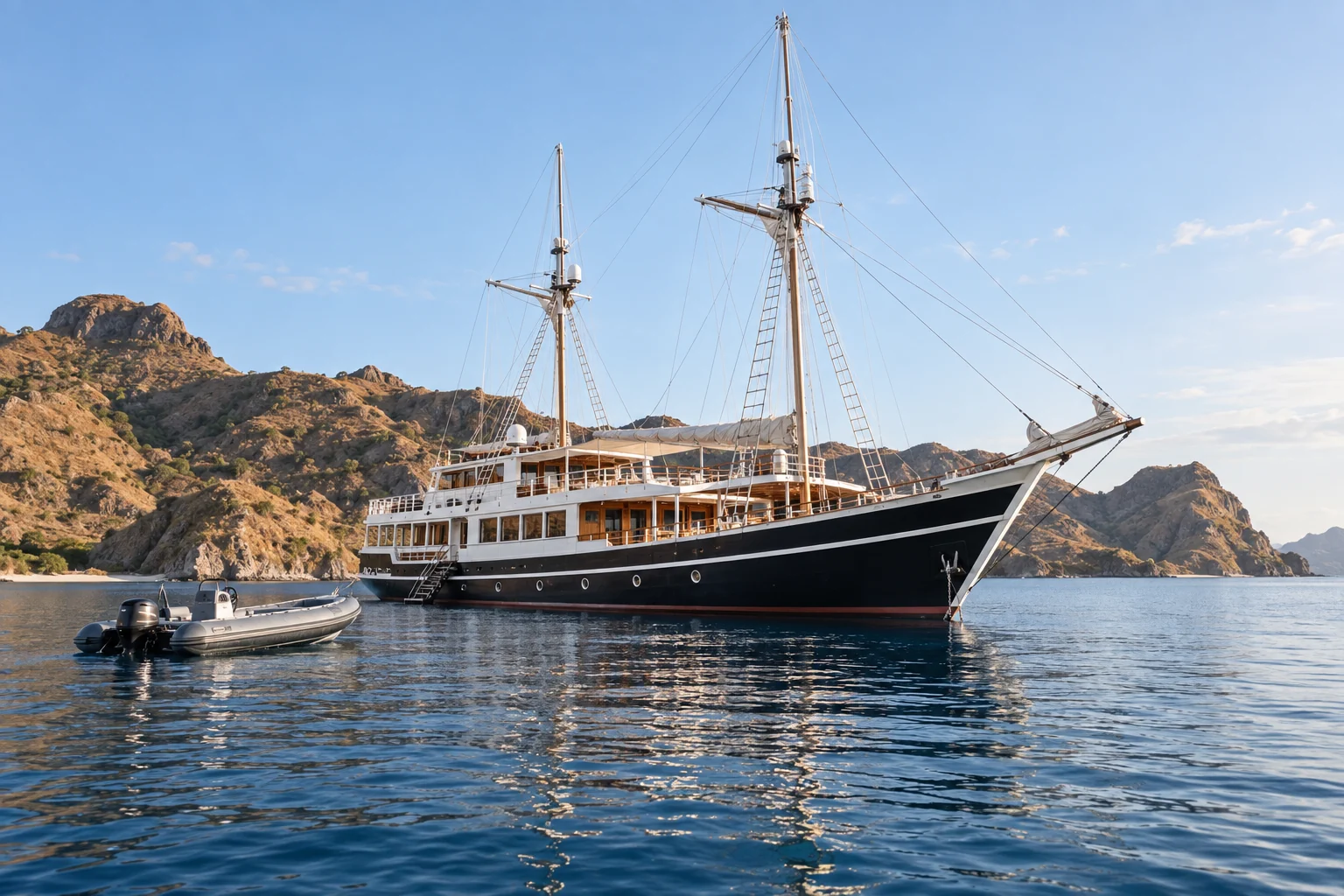
Why is diving in Komodo so expensive? Because the product is not just a tank and a guide. Each dive day depends on a licensed boat, fuel for long crossings, crew, trained dive staff, cylinders or a compressor, safety equipment, meals and park access. Liveaboards add accommodation and round-the-clock marine operations. Compare total cost per safe dive, not the cheapest headline price.
This guide helps certified divers compare trip quotes. For the wider choice of sites and trip formats, start with our Komodo diving guide.
Where the Money Actually Goes
| Cost layer | Why it matters in Komodo | What to verify |
|---|---|---|
| Boat and fuel | Many sites require long crossings from Labuan Bajo or repositioning inside the park | Boat type, route and number of dive days |
| Crew | Captain, engineers, deck crew, cooks and dive staff operate simultaneously | Crew size and whether dive guides are additional |
| Dive operation | Cylinders, compressors, weights, rental gear, tenders and maintenance add specialist costs | What equipment and fills are included |
| Safety systems | Current diving requires surface support, oxygen, communications and a clear retrieval plan | Ask for equipment and procedure, not a generic “safe” badge |
| Park access | Entry, activity and ranger charges can sit outside the advertised price | Current written fee breakdown for your exact route |
| Food and accommodation | Liveaboards include the hotel, restaurant and transport in one moving product | Cabin, meals, water and transfers |
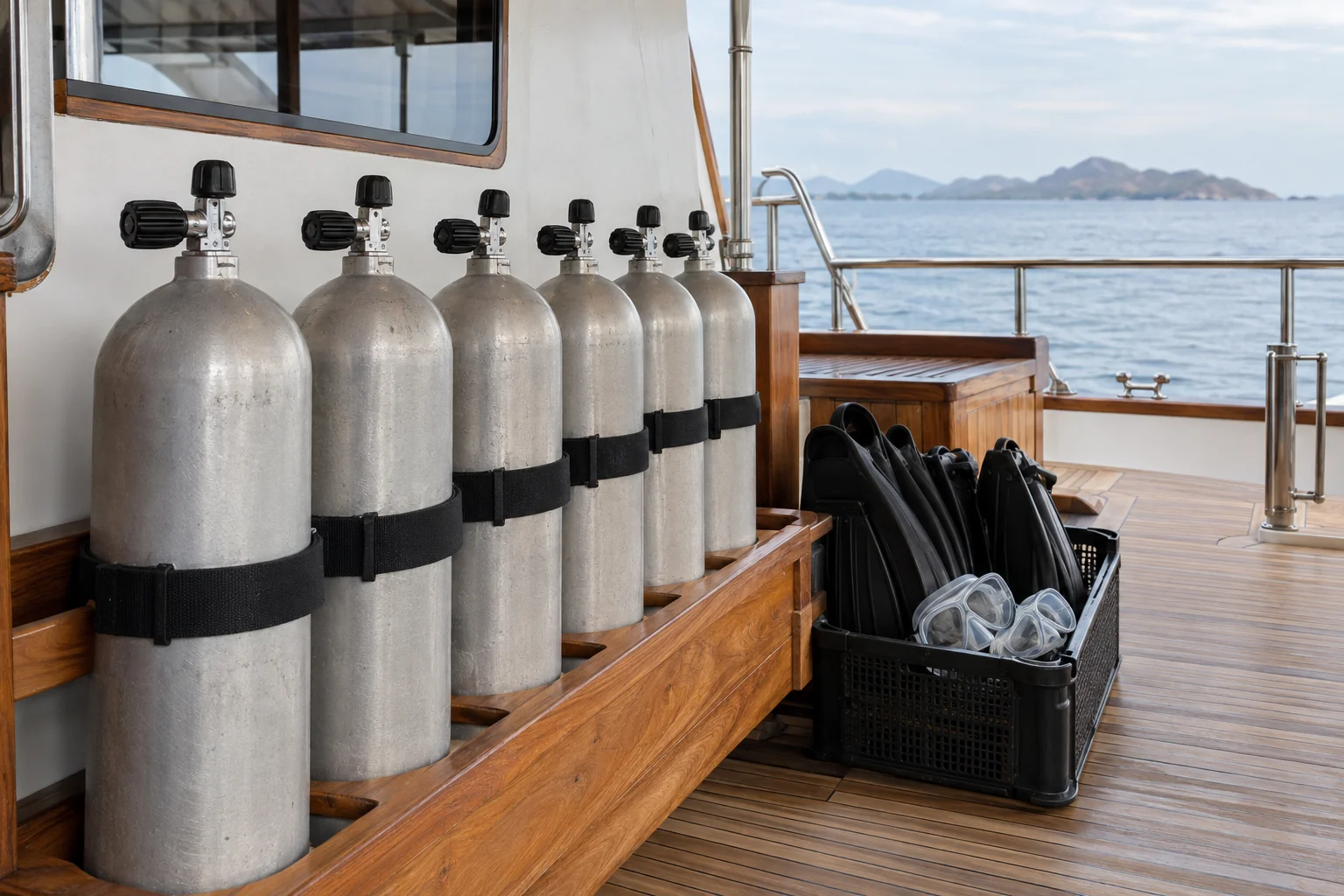
The first lesson is that two offers with the same number of nights may not contain the same number of dives, the same park zones or the same inclusions. A cheaper itinerary can be excellent value, but it may also be a sightseeing sailing with one optional dive rather than a dedicated dive trip.
Day Diving and Liveaboards Are Different Products
A day-diving quote may bundle the boat, cylinders, guide, lunch and more than one dive; check each inclusion in writing. Add your hotel and meals ashore when comparing it with a liveaboard. The useful saving depends on your chosen sites and how many days you plan to dive.
A dedicated dive liveaboard typically combines transport, a cabin, meals and a dive programme. Confirm the meal plan and dive schedule rather than assuming everything is included. Accommodation and overnight operations help explain the larger trip total; compare them with the equivalent hotel nights and day dives.
To compare vessel options and dive facilities, explore the Komodo diving liveaboard listings. Broader day and multi-day sightseeing options remain organized on the Komodo packages hub.
Why the Cheapest Quote May Not Be Comparable
Headline pricing is often shortened until important differences disappear. Before deciding that one offer costs too much, normalize the quote.
- Divide by the number of actual dive days, not calendar days.
- Count the stated dives and identify whether night dives are included or optional.
- Add rental equipment, Nitrox, park charges, hotel nights, meals and transfers.
- Check whether the trip reaches only central Komodo or also the north or south.
- Confirm the maximum guest count and divers per guide.
- Compare the cancellation and weather policy.
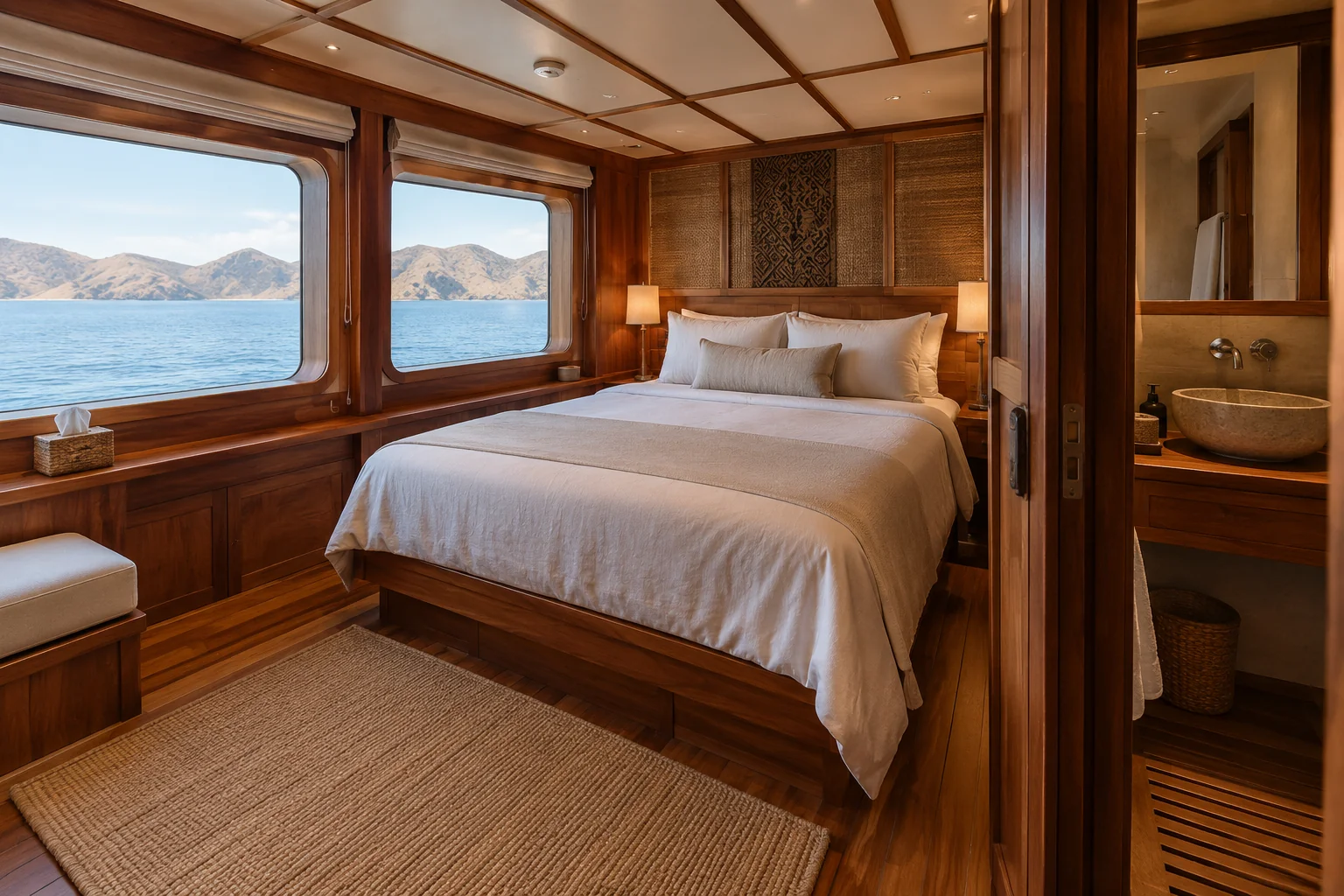
A low price can reflect a simple boat, fan-cooled cabin, shared bathroom or fewer dives. Those are legitimate budget choices when disclosed. The red flag is not “cheap”; it is a price that cannot be reconciled with a written list of inclusions and operating standards.
Park Fees Are a Moving Part
Komodo National Park charges and booking procedures can change, and different activities or routes may create different totals. Some operators bundle the current charges; others collect them separately. Do not rely on an undated fee quoted in a blog post, including this one.
Ask for a dated written breakdown attached to your departure. It should state what is included, what is paid locally and what can change. Use our Komodo National Park fees guide to distinguish official charges from operator charges, then confirm the total for your departure.
What a Higher Price Should Buy
Paying more does not automatically buy safer or better diving. It should buy something visible and auditable:
- A smaller guide group or private guide
- A dedicated dive tender and reliable surface support
- Well-maintained rental gear and appropriate cylinder options
- Nitrox or additional fills where offered
- A route with enough time to plan around tides
- More space, a better cabin or private bathroom
- Clear emergency, weather and lost-diver procedures
If the seller cannot explain what creates the premium, the price itself is not evidence of quality.
Where You Can Save
- Choose the right format: day diving can be better value when you only want central and northern sites.
- Compare inclusions: a larger headline price may become cheaper after equipment, meals and hotel nights are added.
- Share the correct cabin: do not pay for private-charter capacity your group will not use.
- Travel outside peak demand: vessel and hotel availability may improve, but conditions must still suit the intended zone.
- Bring familiar personal equipment: a mask and dive computer can improve fit and reduce selected rental costs.
Where You Should Not Save
Do not choose a weaker surface-support plan, overcrowded guide group, undocumented compressor practice or vague emergency equipment to reduce the price. Komodo’s current and distance from town make the operational layer essential rather than decorative.
DAN’s guidance for current diving emphasizes group tracking and visible surface-signalling procedures. Ask how the boat follows divers and what each diver carries. A confident answer should describe the process in concrete terms. Our Komodo travel safety guide adds questions to ask about transfers, communications and emergency planning.
A Practical Budget Worksheet
Build the trip total in the same currency before comparing two offers. Start with the dive package, then add every item below that is not explicitly included:
- Flights and transfers to Labuan Bajo
- Hotel nights before, during and after the dive programme
- Park and activity charges for the exact number of operating days
- Rental equipment, dive computer, larger cylinders or Nitrox
- Private-guide supplements
- Meals and drinking water not included
- Airport and harbour transfers
- Dive insurance and general travel insurance
- Any bank-transfer, card or foreign-exchange cost
Then divide by the planned number of dives. This does not turn the cheapest result into the best one, but it exposes offers that looked inexpensive only because necessary costs were moved outside the headline.
Three Quotes That Often Look Similar but Are Not
A sightseeing phinisi with optional dives may include the cabin and meals but charge separately for the guide, cylinders and equipment. Its daily route will still prioritise island stops.
A dedicated shared dive liveaboard may include several dives a day, dive staff and equipment infrastructure, but the cabin price can exclude park charges, Nitrox or rental gear.
A private charter advertised as dive-capable may have a compressor or tanks without including a complete dive team in the base charter. Ask whether guides, fills and the route are included for your group.
These are three different products even when all three pages contain the phrase “Komodo diving.”
Deposits, Weather and Cancellation Value
Price is also a risk allocation. Read what happens if weather changes the route, the park restricts access, a guest cannot dive, or the minimum shared departure is not reached. A lower non-refundable price can be worse value than a slightly higher offer with clear rescheduling terms.
Keep the written itinerary, inclusions, payment receipt and cancellation policy together. If the final invoice changes, you have a consistent record of what was originally sold.
Why This Guide Does Not Freeze a Single Price
Vessel rates, exchange rates, park procedures and trip inclusions move independently. Publishing one permanent “average” would create false precision and age quickly. KomodoInsider keeps the commercial numbers on the Komodo diving comparison, where they can be traced to individual vessel records, while this article explains how to read them.
On a vessel card, distinguish a shared per-person starting price from a whole-boat charter price. Neither number automatically includes a dedicated Komodo dive programme. Open the vessel record and confirm route, activity, equipment and departure terms before treating it as a comparable offer.
Frequently Asked Questions
How much should Komodo diving cost?
There is no responsible single price because day boats, shared liveaboards and private charters include different services. Compare total trip cost, number of dives, park zones, equipment, accommodation and guide ratio.
Are park fees included?
Sometimes. Require a dated written breakdown because charges and booking procedures can change. Never infer inclusion from the headline price.
Is a liveaboard cheaper than day diving?
Not automatically. Day diving is often efficient for central and northern sites. A liveaboard can offer better value for several consecutive days, remote areas and included accommodation, but only after like-for-like costs are compared.
Does luxury mean better diving?
Luxury usually describes cabin, space, food and service. Dive quality depends more directly on guide experience, group size, route planning, equipment and surface support.
Can I trust a very cheap Komodo dive package?
Judge the written inclusions and operating standards, not the price alone. A simple boat can be legitimate; an unitemized quote with unclear safety arrangements is not a useful comparison.
