
Coral Reef Health in Komodo: Bleaching, Damage and Monitoring
Distinguish bleaching, physical damage and mortality, and assess Komodo reef-health claims using dates, survey methods and monitoring limits.
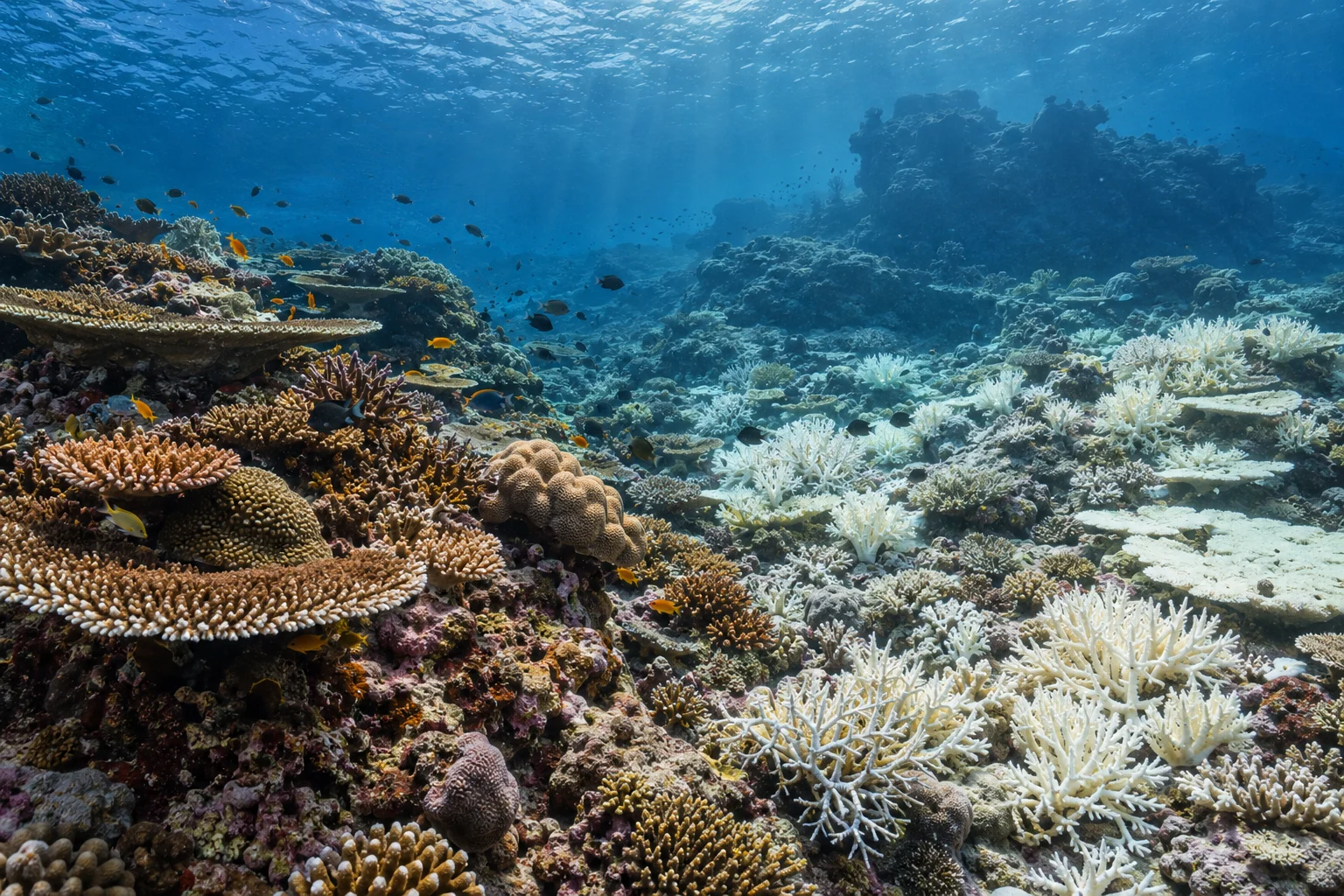
Coral bleaching, physical damage and coral mortality are different observations. In Komodo, an honest reef-health claim needs a named location, a date and a method. A white patch in a holiday photograph or a regional satellite alert cannot establish the condition of every reef in the park.
Bleached does not automatically mean dead
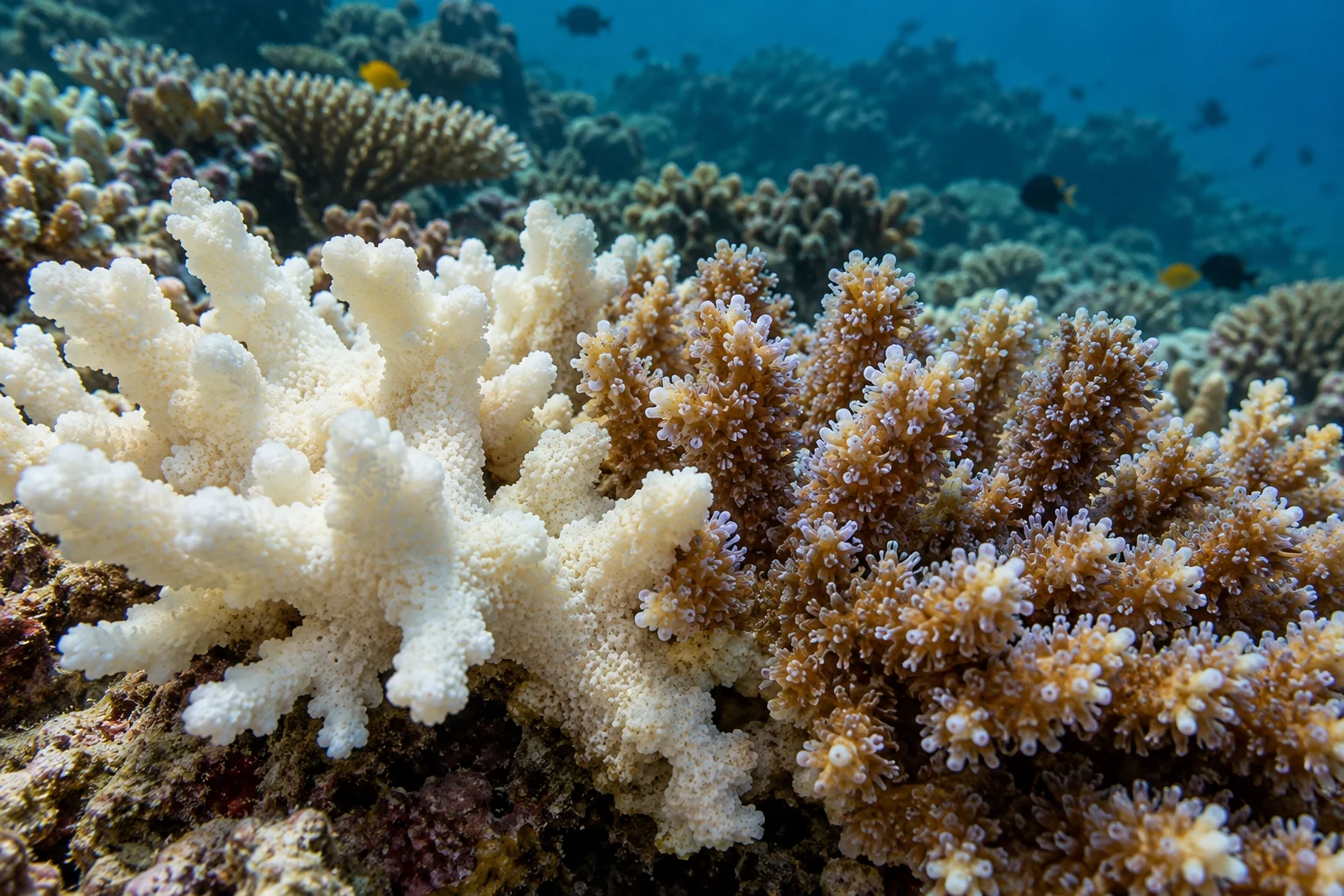
NOAA explains that heat stress can disrupt the relationship between coral and its symbiotic algae, producing bleaching. A bleached coral can still be alive, but prolonged or severe stress can lead to mortality. Satellite heat-stress monitoring identifies exposure and risk; it does not replace an underwater survey of living tissue at a particular site.
Physical breakage is another process. A broken branch or an abraded colony may be damaged without showing thermal bleaching. Pale sand, exposed skeleton, unusual natural colour and camera exposure can also confuse an image-based judgement. Describe what is visible before assigning a cause.
| Observation | What it may show | What remains unknown |
|---|---|---|
| Pale or white coral tissue | Possible bleaching | Cause, severity, recovery and extent beyond the frame |
| Freshly broken colony | Physical damage | Whether the cause was an anchor, storm or another event |
| Satellite heat-stress alert | Thermal exposure over a mapped area | Local mortality or the condition of every colony |
| Repeated standardised surveys | Change in measured indicators | Causes that the design did not test |
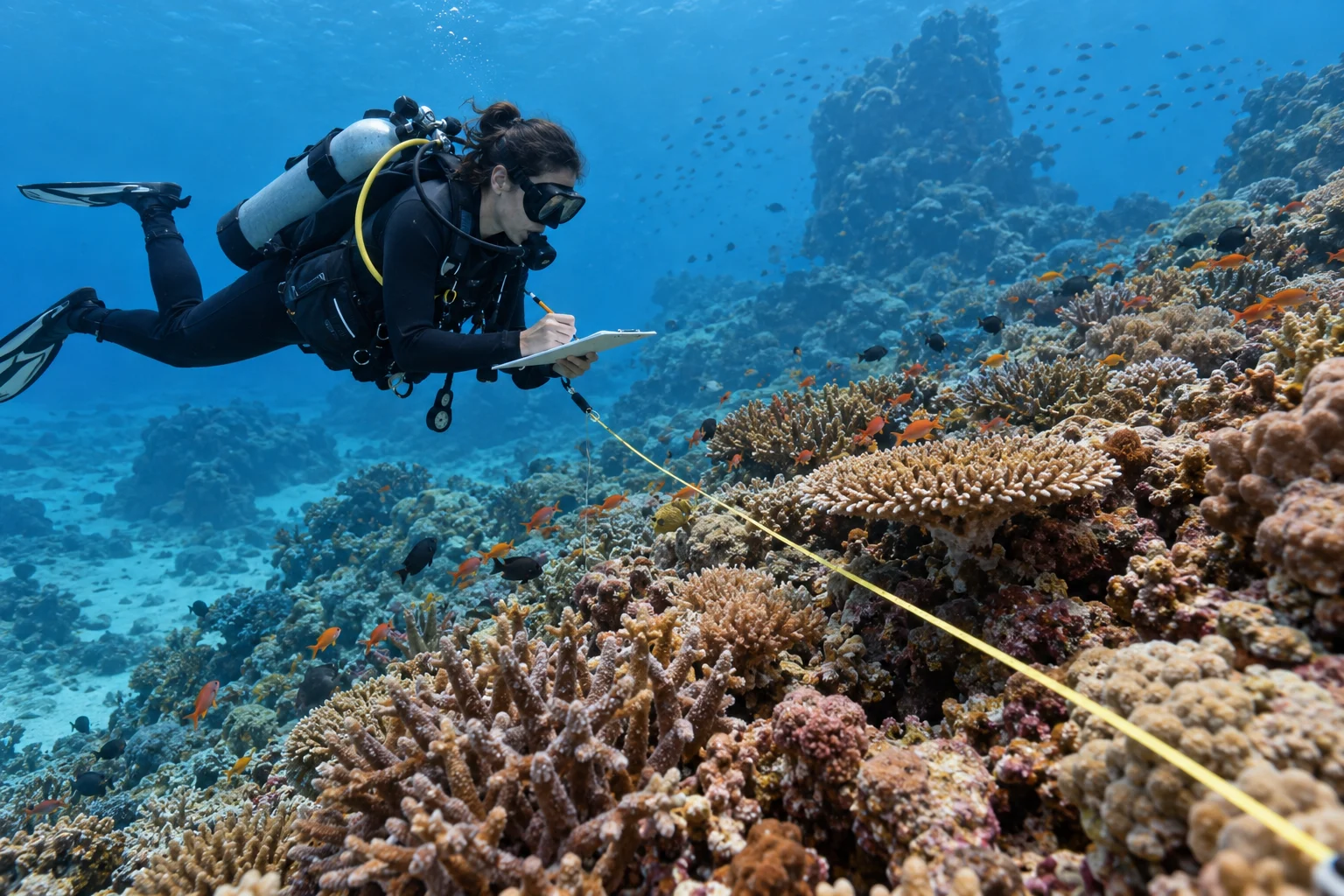
Reading a reef-health report
Look for survey sites, depth, date, sampling method and the measure reported. Live coral cover, bleaching prevalence, fish abundance and structural complexity describe different features. A reef can retain substantial coral cover while showing damage in a heavily used patch. Another can have lower cover for reasons unrelated to that week’s tourism.
Comparisons need similar methods and spatial coverage. A shallow snorkelling photograph should not be compared directly with a deeper transect as though they sampled the same habitat. Weather and visibility can affect what observers detect. The strongest report explains these limits.
Restoration needs outcomes as well as planting totals
SeaTrek describes community restoration work at Hatamin and Pimpe, alongside work in another Indonesian region. Those project accounts should remain tied to their actual locations; they are not evidence that every Komodo reef has been restored.
When evaluating any restoration claim, ask how long corals were followed, what survived, and whether the original pressure was reduced. The number of fragments installed is an activity measure. Survival, growth, habitat function and a realistic maintenance plan address outcomes. A colourful structure on installation day answers only part of the question.
How visitors can avoid adding damage
Keep fins, cameras and equipment clear of coral. Choose water activities appropriate to your control and ability, accept flotation and briefing support, and tell the guide if you are struggling. Avoid touching a colony to test whether it is alive. Do not collect fragments or join an informal transplant activity without a legitimate project and supervision.
Ask the operator about mooring decisions, group control and what guides do when guests make contact. These procedures are more useful than a promise of a perfectly healthy reef. If considering dive komodo options, discuss suitable sites and your experience before committing.
Recording a concern
Note the location, date, depth if known and what you actually observed. A photograph that shows the broader patch as well as a detail can provide context, if taken without disturbance. Share it through the operator or relevant research or park reporting route. Avoid posting a definitive damage accusation when the cause is unknown.
Is Komodo currently experiencing bleaching everywhere?
This article does not claim a current park-wide bleaching assessment. Such a statement would require recent local monitoring with representative coverage.
Can a reef recover?
Recovery depends on the stress, surviving organisms and subsequent conditions. A universal recovery time cannot be assigned from a tourist image.
Separate a warning from a measured impact
A satellite heat-stress alert is a reason to investigate, not a survey of coral mortality at every Komodo site. A pale colony can be alive, while a photograph of newly planted coral does not show whether it survived. Ask for site name, survey date, method and repeat observations before turning a local observation into a park-wide conclusion.
Select reef experiences with appropriate skills through Dive Komodo, then consult the Komodo diving guide for site conditions and low-impact practices.
Keep a bleaching alert separate from a measured loss
An environmental warning identifies risk under its stated model or observation conditions. A local survey records what was measured in a defined area. Neither should be relabelled as a park-wide mortality total without the evidence needed for that conclusion.
For a concerning observation, retain the date, site and an unedited image and tell the guide or appropriate programme. Avoid reef contact to improve the picture. A recovery claim needs repeat observations over time, rather than a before-and-after pair with unknown methods.
Historical park surveys and natural-history publications are indexed in the Komodo research archive; retain each publication’s date and sampling limits rather than treating it as a current service or wildlife inventory.
