
Flying Foxes in Komodo: Sunset Flights, Roosting and Ecology
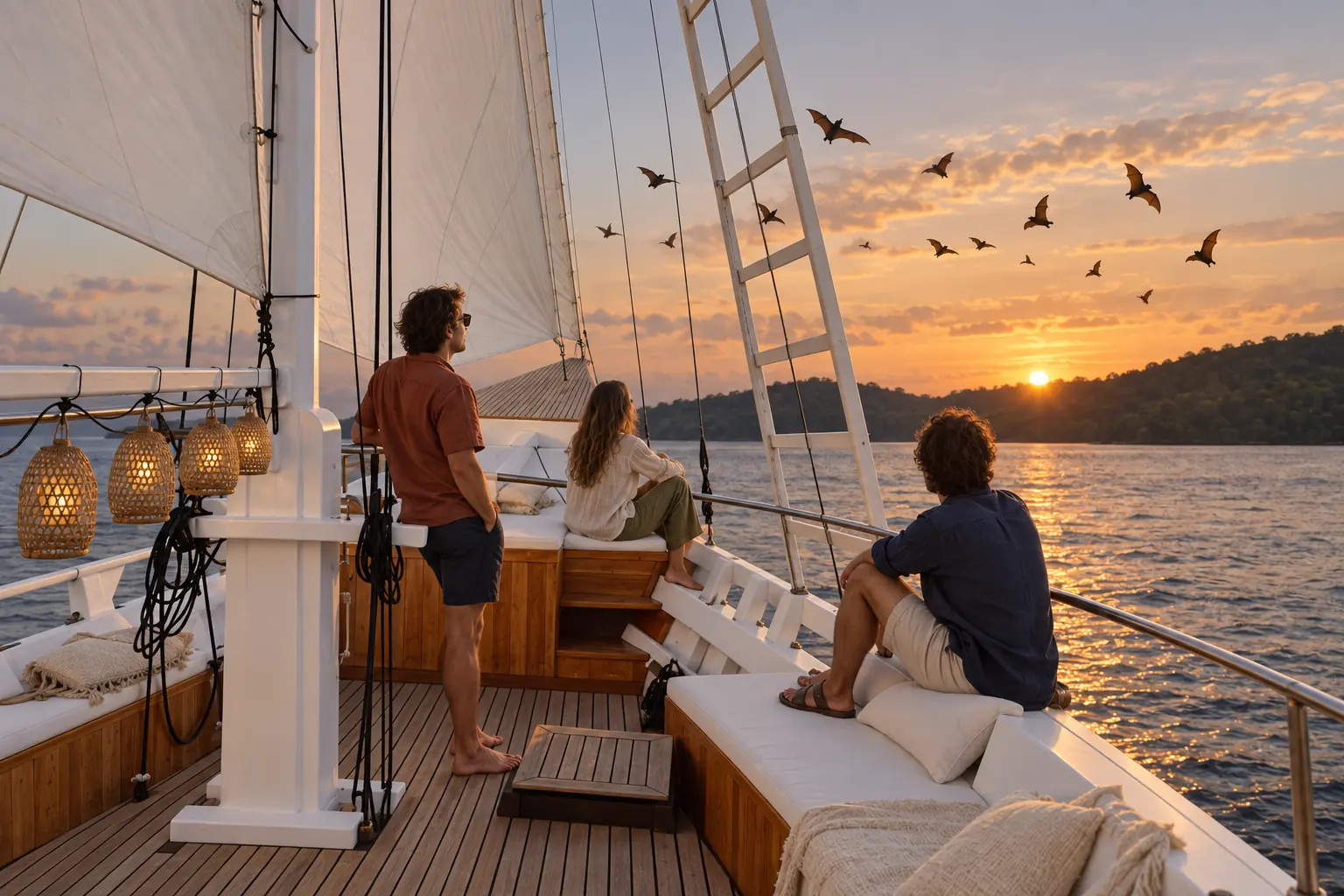
Flying foxes in Komodo are large fruit bats, and a dusk boat view of a roost can be remarkable. The park authority lists the large flying fox (Pteropus vampyrus) among park fauna. That record does not by itself identify every bat at every Kalong roost, establish a colony size or guarantee a sunset flight on a particular sailing.
What you see from a boat
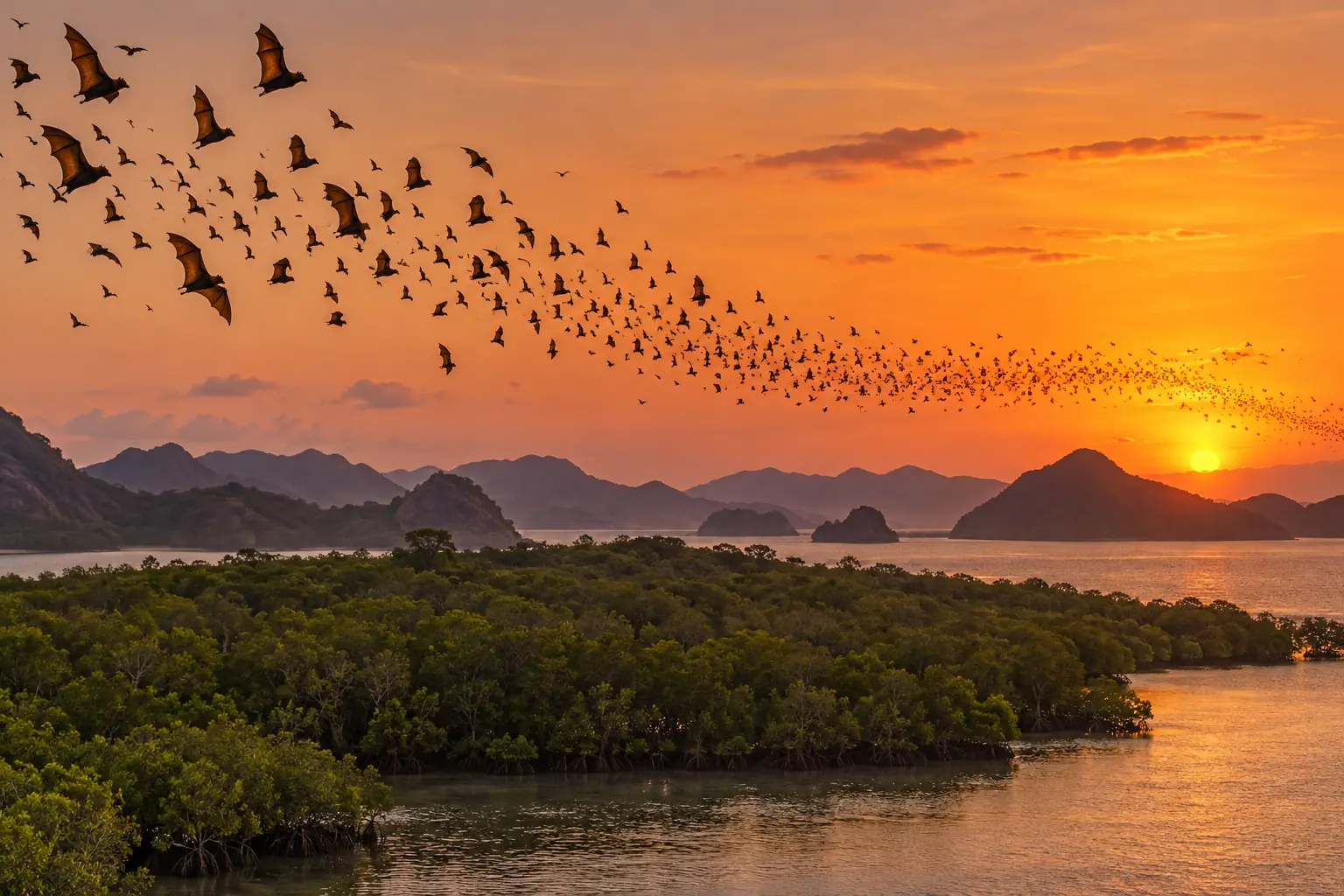
Near dusk, bats may leave a roost and cross the sky toward feeding areas. Boat operators often market this as a predictable “bat island” stop. A guest can safely distinguish a witnessed emergence from three claims the view alone cannot prove: a precise species ID, the number of animals in the colony and the reason that day’s flight began when it did. Wind, light and human disturbance can affect the experience. A count seen against the sky may include repeated passes and misses animals leaving elsewhere.
| Claim | Evidence to ask for |
|---|---|
| “This is Pteropus vampyrus” | Species identification specific to this roost by a qualified observer, not merely the park-wide list. |
| “Thousands live here” | Dated counts, observation method, coverage of the entire roost and possible double counting. |
| “They emerge at exactly 18:00” | Current season and on-site observation; sunset and emergence vary. |
| “This island is always on our route” | Written itinerary with weather, access and navigation contingencies. |
What local monitoring can tell us
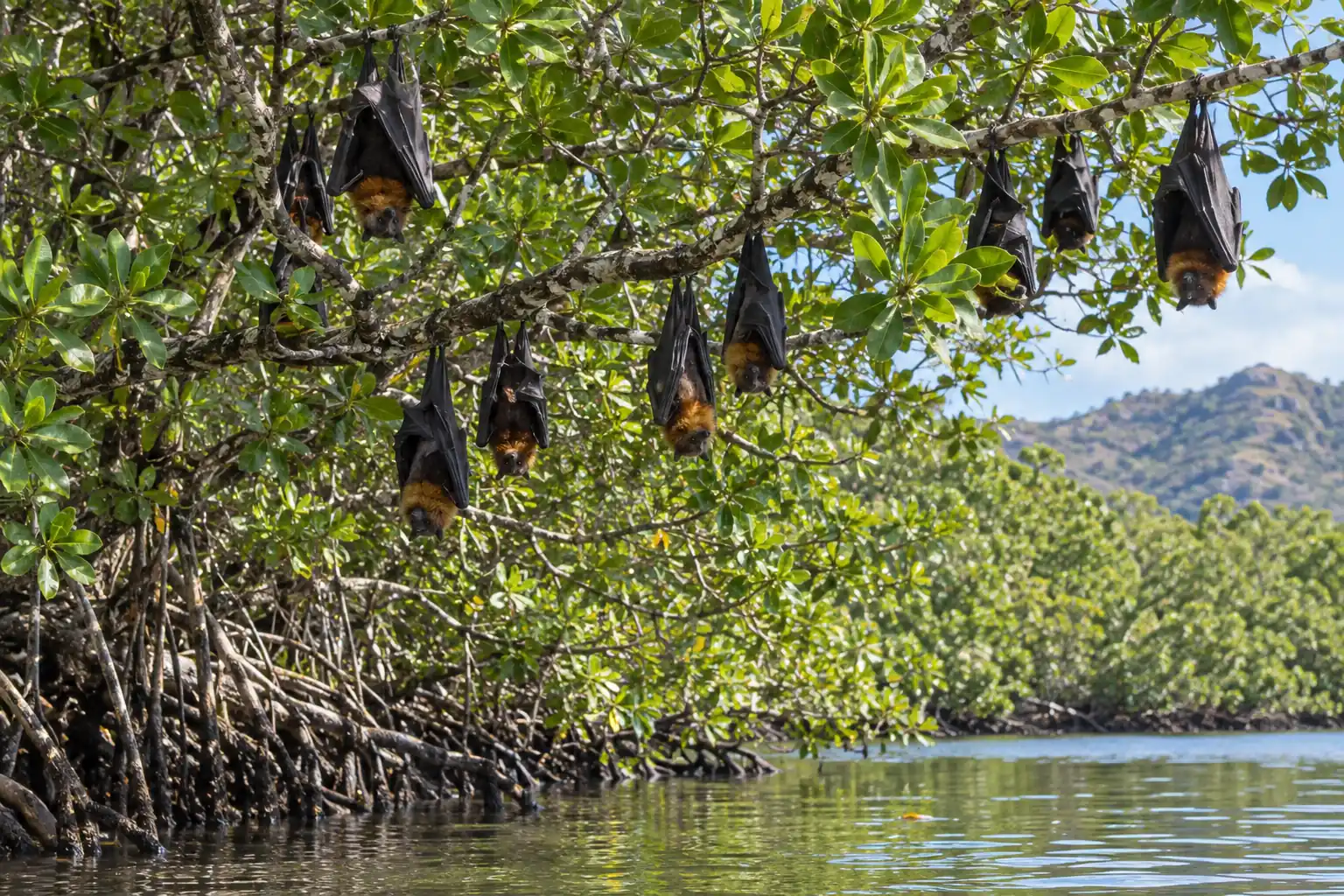
The park has documented monitoring of large flying foxes (Pteropus vampyrus) at Pulau Kalong Rinca. A monitored roost is stronger local species evidence than a general bat travel page. The counts described by the park are observations from particular surveys, not fixed numbers of bats a visitor will see at sunset. A shift in weather or route can change a boat’s view without proving a population change. See the park’s bat-monitoring account.
How to interpret a bat flight
A stream of animals leaving a roost tells you that the group is commuting, but it does not reveal the exact feeding destination. A late or dispersed flight can reflect weather and disturbance as well as light level. Estimating population size from a single boat’s view is unreliable because part of the flight may occur outside your field of vision or at a different height.
For a better observation, note the date, location, time relative to sunset, direction, wind and whether boat lights were on. Keep the boat at the approved viewing distance. Do not shine bright beams into a roost or use a drone to follow the bats.
What is a flying fox?
Flying foxes are fruit bats in the genus Pteropus. The Komodo National Park has identified Pteropus vampyrus in material discussing bats around Pulau Kalong and Rinca. Common names and silhouettes are insufficient for confident species identification elsewhere in the archipelago; other bats may also be present. A distant group on the wing should be described conservatively if species-level evidence is absent.
What do they eat?
Fruit bats use fruits, flowers and nectar depending on species and season. Feeding can move seeds away from a parent plant and transfer pollen among flowers. These are ecological functions, not proof that every individual bat pollinates a specific tree during a specific visitor outing. The availability of fruiting and flowering trees shapes where bats travel.
| Activity | Ecological connection | Visitor interpretation |
|---|---|---|
| Roosting by day | Shelter and social congregation | Keep distance; do not disturb trees |
| Leaving around dusk | Travel toward feeding areas | Numbers and timing vary |
| Feeding on plants | Potential seed dispersal and pollination | Specific plant links require local evidence |
Why fruit bats matter ecologically
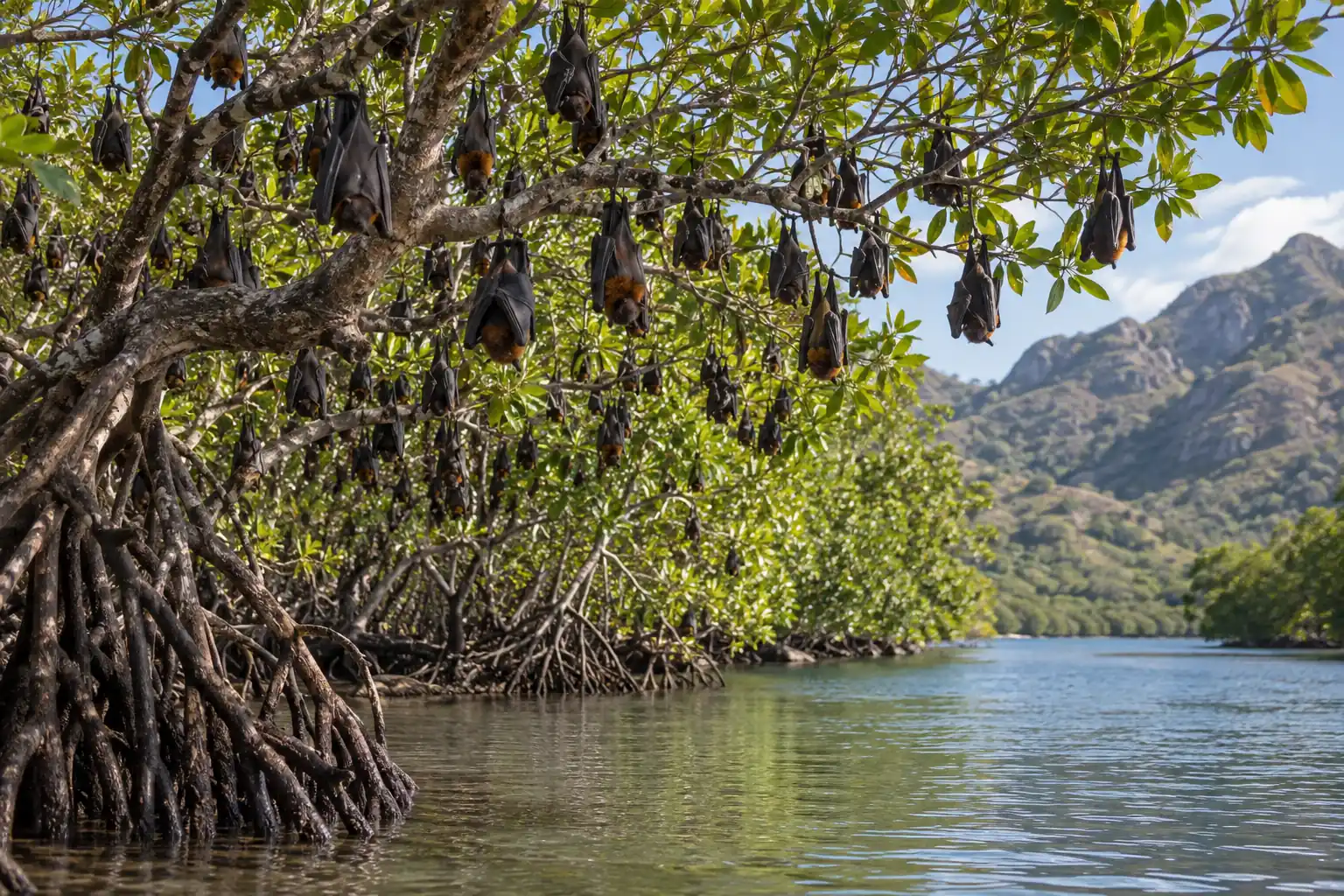
Fruit bats can move seeds and pollen between plants as they forage, an important ecological role for many flying-fox species. The specific diet and plant interactions of a particular Komodo roost require local study. Do not label the Kalong bats as pollinators of a named park plant unless a study or verified observation supports that connection. The park’s mangrove and terrestrial trees create a wider habitat picture than a dramatic silhouette at sunset.
Why do mangroves matter?
The park identifies mangroves as places where bats and seabirds can rest and reproduce. A roost is therefore habitat, not just a viewing point. Boat lights, noise and close approaches can disturb animals, especially when they are gathering or emerging. Follow the captain’s and park’s approach rules and keep drones away unless specifically permitted under current park rules.
Protect the vegetation behind the spectacle
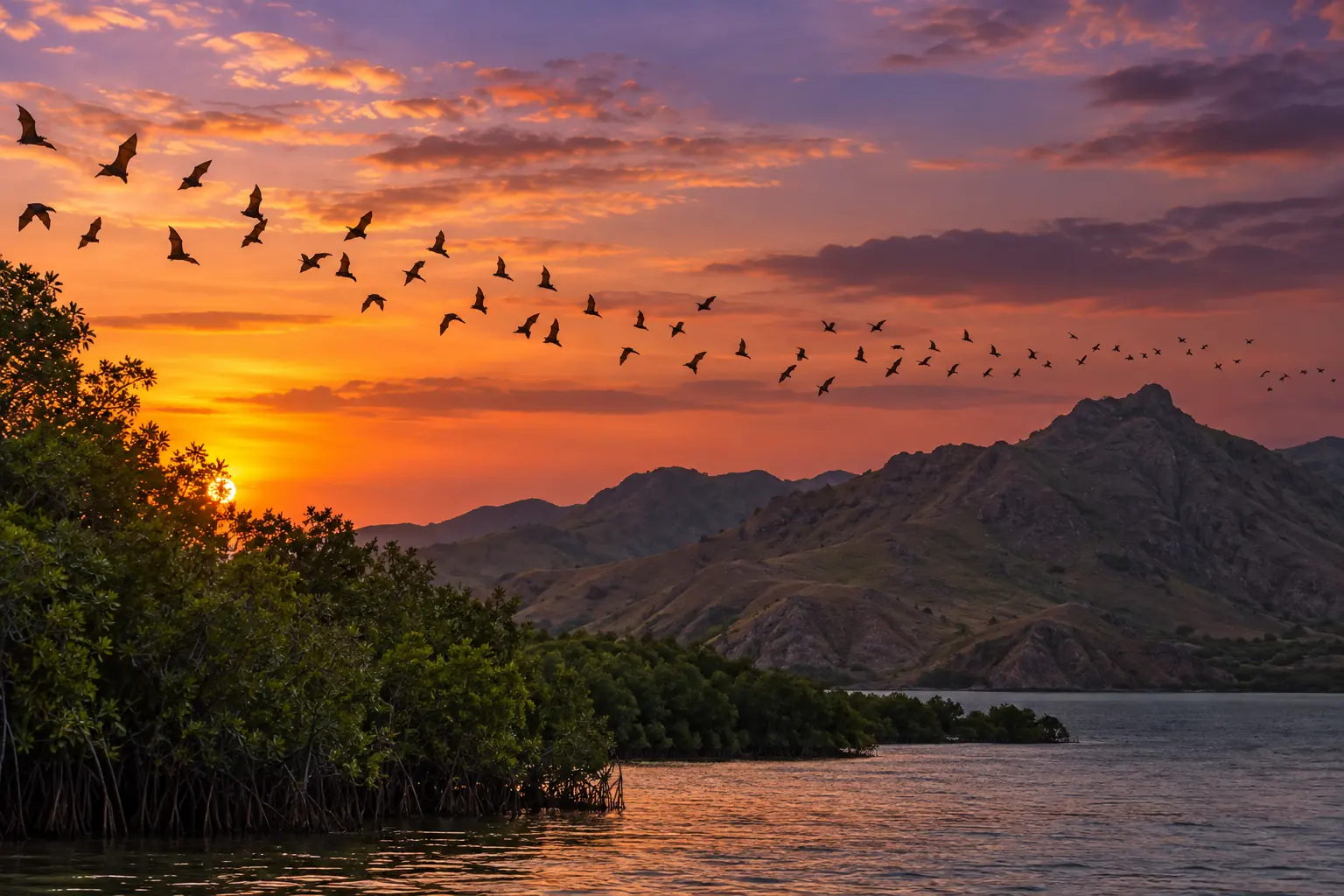
Roost trees provide shelter, while fruiting and flowering plants provide food elsewhere. Protecting only the visible roost would miss the broader landscape that supports the colony. Pollination and seed dispersal are plausible ecological services for flying foxes, but a specific plant-bat relationship at Komodo requires local observation. State the general role accurately without inventing a list of favored Komodo fruits.
Observe without changing the roost
Ask the skipper how the vessel avoids disturbing roosting animals, whether other boats share the viewing area and whether drones or bright lights are restricted. Do not encourage a crew to approach closer just for a social-media shot. Stay aboard where instructed and use a quiet wide view rather than aiming flash into the colony. If the island or viewing route is unavailable, a different sunset view is a legitimate substitute, not a failed bat count.
Can you predict the sunset flight?
No fixed minute, count or flight path is reliable. Weather, light, food availability and disturbance can all affect what a group does on a given evening. A tour schedule is an opportunity to observe, not a wildlife guarantee. Use the designated viewing position and avoid asking the captain to crowd a roost for a better photograph.
Make your own record useful
Write down the date, boat position at a broad scale, weather, approximate viewing interval and whether you saw bats leaving the roost or merely flying past. Do not publish a precise sensitive roost coordinate. For species-level identification or research use, ask a local bat specialist or the park authority to check the observation.
Compare Komodo tour packages by their planned dusk location, then ask whether a sunset roost stop is actually offered on your departure. The hub does not verify colony size or species at a specific viewing point.
Park species versus a named roost
The official fauna list identifies Pteropus vampyrus in the national park. Tour descriptions of “Kalong Island” rarely document who identified individual bats at that particular roost, on what date and by what method. It is reasonable to say “flying foxes were seen at dusk” from a boat; it is more demanding to identify a precise species or estimate population size. A silhouetted group in low light is especially poor material for measurements. Treat a boat operator’s count as an experience description unless it links to a proper roost survey.
Fruit bats can carry seeds beyond the parent tree and many species pollinate flowers, but the food plants used by a particular Komodo colony need local study. Similarly, a full moon, cloud or high wind might affect what a viewer perceives without establishing a predictable hourly rule. Plan a quiet viewing window with the skipper and an alternative sunset stop if access changes. If you record the event, note date and observation duration, not a precise sensitive roost coordinate.
The Komodo National Park guide places mangrove roosts within the wider mix of coastal and terrestrial habitats that support flying foxes.
Describe the flight without counting a colony from one image
A visible stream of flying foxes is an observation of movement during a period, not a complete colony census. Some animals may leave before or after the image, and identification and observation position matter. A date, viewing period, weather and method make a report more interpretable.
Keep the vessel in the skipper’s permitted observation position and avoid disturbing the roost for a better departure scene. A quieter evening or changed flight direction is not proof of a population decline. Repeated observations need comparable methods before supporting a trend.
Compare the komodo tour 3 days 2 nights format, then confirm the actual vessel, route, permissions and services with its operator.
