
Night Diving in Komodo: Experience, Briefings and What Changes After Dark
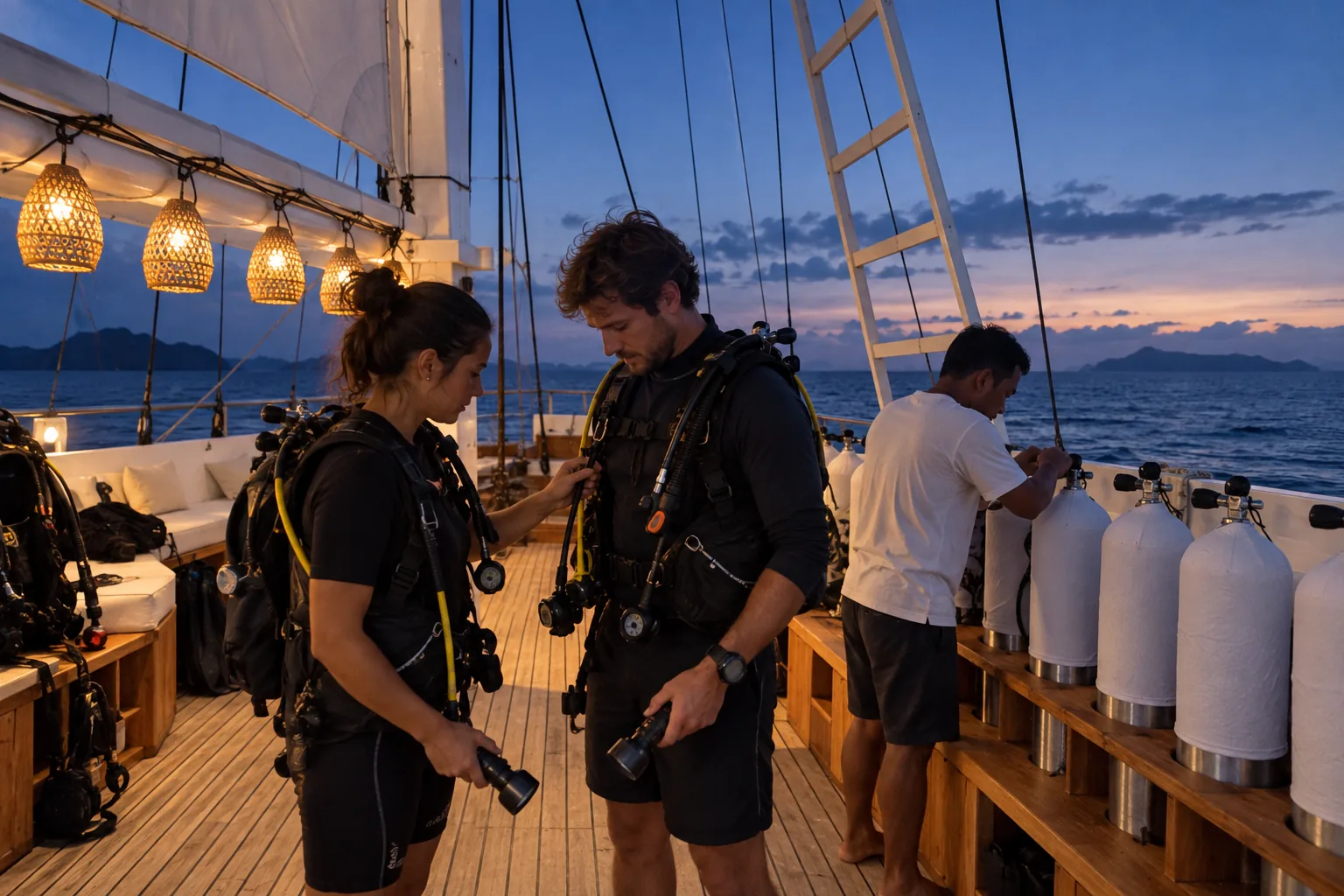
Night diving in Komodo changes how a diver navigates, communicates and finds the boat. A site visited safely by day does not automatically suit an after-dark entry. The operator should decide whether the specific conditions, group experience, staff and pickup plan support the dive on that night.
Review the exit in daylight
If possible, see the boat ladder, marker lights and surface pickup procedure while there is still light. Confirm what the guide will do if a buddy surfaces early and how the group avoids nearby boat traffic. Conditions that are comfortable for a daytime swim may feel different once visual references disappear. A trained night-dive guide should tailor the route to the least experienced participant rather than rely on a generic site description.
What to confirm about the site and guide
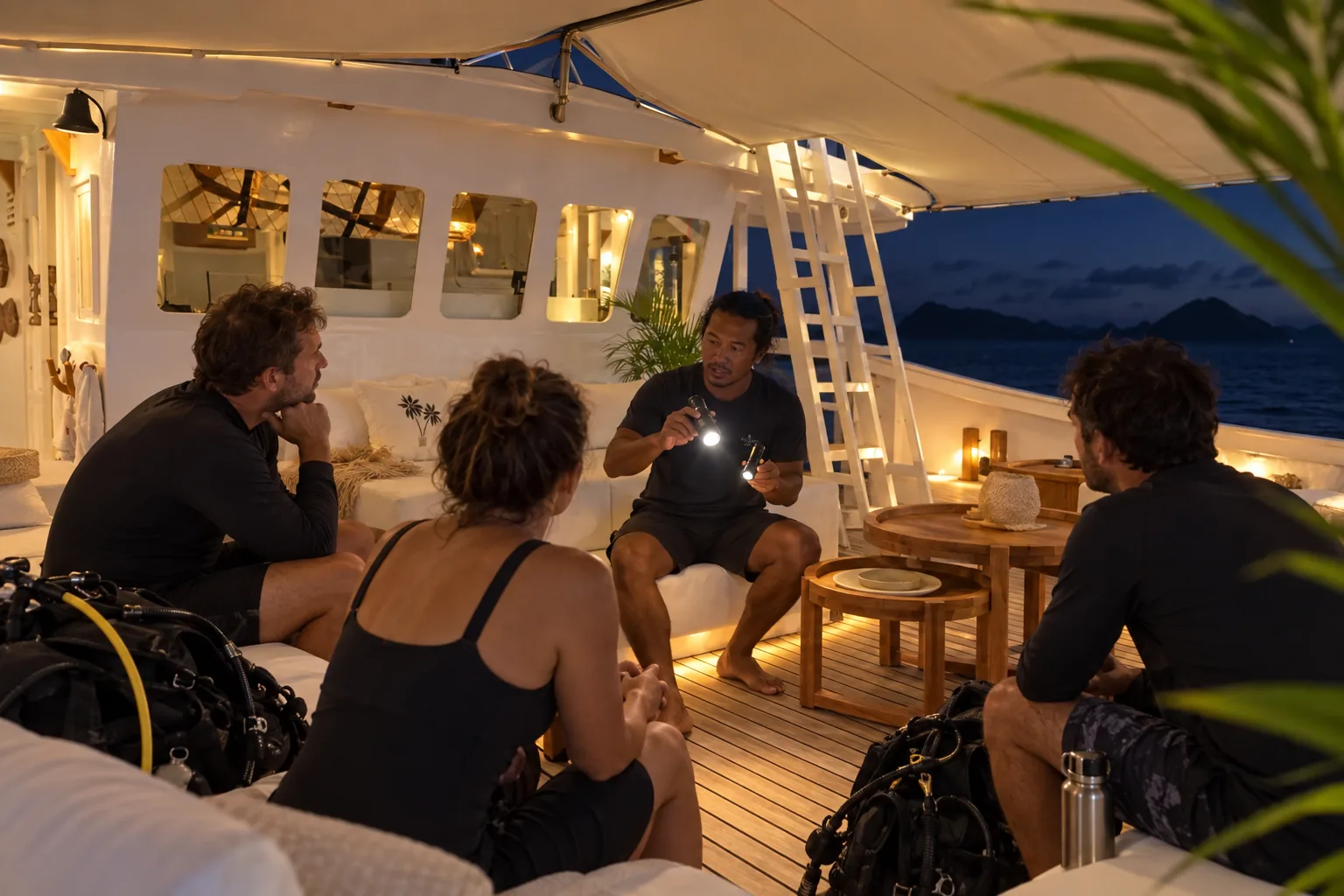
Night conditions are not simply daytime conditions with less light. The operator should describe the exact site, boat position, entry, maximum planned depth, buddy formation, turn and exit, and how the group will be found if a light fails. Ask whether the first night dive can be at a straightforward site with a recent daytime orientation. Do not treat a night dive as a default add-on to every Komodo itinerary.
Personal and backup lighting
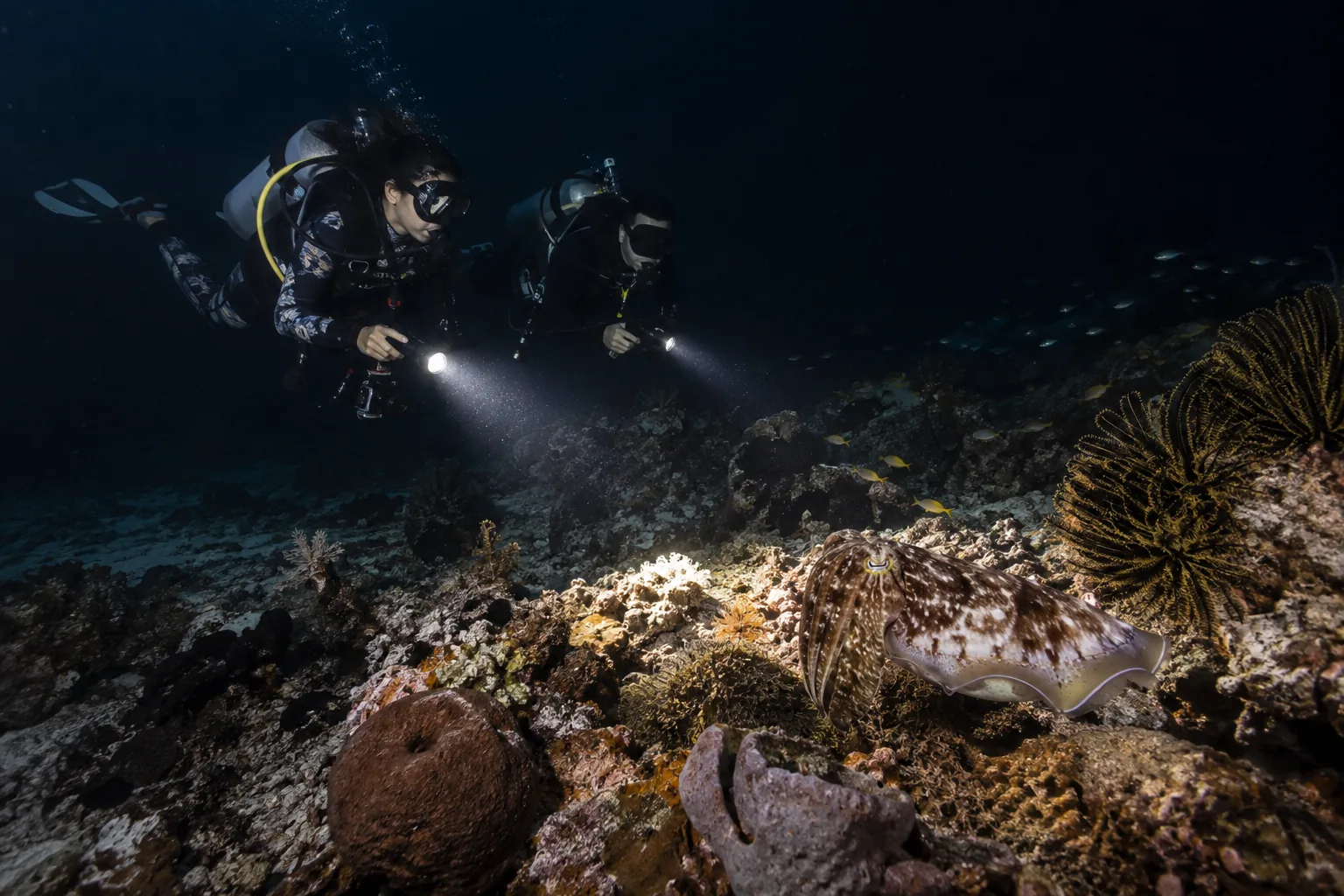
Confirm the primary light, backup light, charged batteries and an agreed signal system. Test the switch and beam before entering. A bright beam should not be aimed into another diver’s face or held continuously on a resting animal. If the crew supplies lights, verify the model and quantity for your departure. An underwater camera adds another task; a first night dive can be more rewarding without one.
Changes in perception and navigation
At night, landmarks and buddy distance are harder to judge, while current can still change. Agree on the guide’s pace and the action to take if visibility or light fails. Skills such as buoyancy, air awareness and close buddy contact should already be reliable in daylight. If you feel disoriented, signal promptly rather than continuing for the sake of the itinerary.
When to decline
Decline if you are fatigued, unwell, uncomfortable with the current, unsure of the equipment or unable to hear a complete briefing. Ask whether skipping the dive changes the price or leaves an alternative activity. A responsible operator can explain cancellation thresholds without promising a fixed site or sighting. The safest decision is sometimes to enjoy the night from the boat.
What actually changes at night?
| Daytime assumption | After-dark question |
|---|---|
| Visual reference to reef and boat | How will the group recognise the route and return point? |
| Easy awareness of buddies | What are the light, contact and separation signals? |
| Simple gear inspection | Where is the final check done, and what backup light is expected? |
| Visible surface pickup | How will the boat locate and identify surfacing divers? |
Ask whether the dive is offered on the named itinerary or only on selected departures. Confirm the site, instructor or guide, participant prerequisites, maximum group size, expected duration, charges and cancellation criteria. A good answer should describe a real briefing and boat crew, not simply “we have lights.”
Build readiness before adding a camera
Recent buoyancy control, calm equipment handling and familiarity with your buddy are more useful than a camera or a promise of rare nocturnal animals. If you have not dived recently, discuss a daytime assessment or refresher first. A new photographer should avoid stacking night navigation, current and unfamiliar housing controls on one first attempt.
Wildlife observation without disturbance
Shine only where needed for safe navigation and identification. Do not chase, touch or reposition animals for photos, or direct repeated bright light into an animal’s face. The purpose of a night dive is to observe what the guide can safely show, not to guarantee a species list. If weather or flow changes, substituting a different site or cancelling may be the responsible choice.
Before you pay
- Does the advertised product include a night dive, or is it an optional paid activity?
- Which light and backup-light standards does the operator apply?
- How are diver headcounts and the exit point managed?
- Where does the guide intend to dive, subject to conditions?
- Can a guest decline without losing the daytime programme?
A competing Komodo night-diving overview describes the appeal, but the named date and operator establish availability. Review dive komodo and request the actual night-dive briefing and inclusion list; the Tour listing alone does not certify a site or conditions.
Safety reference: DAN guidance on night-diving preparation. This general guidance does not replace a site-specific guide assessment.
Review how Komodo diving currents change site selection before adding a night dive to the plan.
Plan for a light failure before entering
Ask how the group signals a failed light, where the backup is carried and how the dive ends under the operator’s procedure. Keep the plan within your training and briefing. Darkness, a camera and unfamiliar gear can add tasks at the same time; reducing equipment may improve the dive more than adding another accessory.
If current, visibility or the exit differs from the agreed plan, the guide may change or cancel the activity. A paid night-dive supplement should have clear change terms, but a payment never requires a guest to enter. Review the route in daylight when the operator’s procedure allows.
Should I take a camera on my first night dive?
Discuss task load with the professional. Familiarity with the dive and lighting procedure should come before a photography objective.
For independent diving and water-safety reading, use DAN’s Safety & Prevention resources; these do not inspect or endorse a particular Komodo departure.
