
Snorkelling Gear for Komodo: Fit, Fins and Flotation Questions
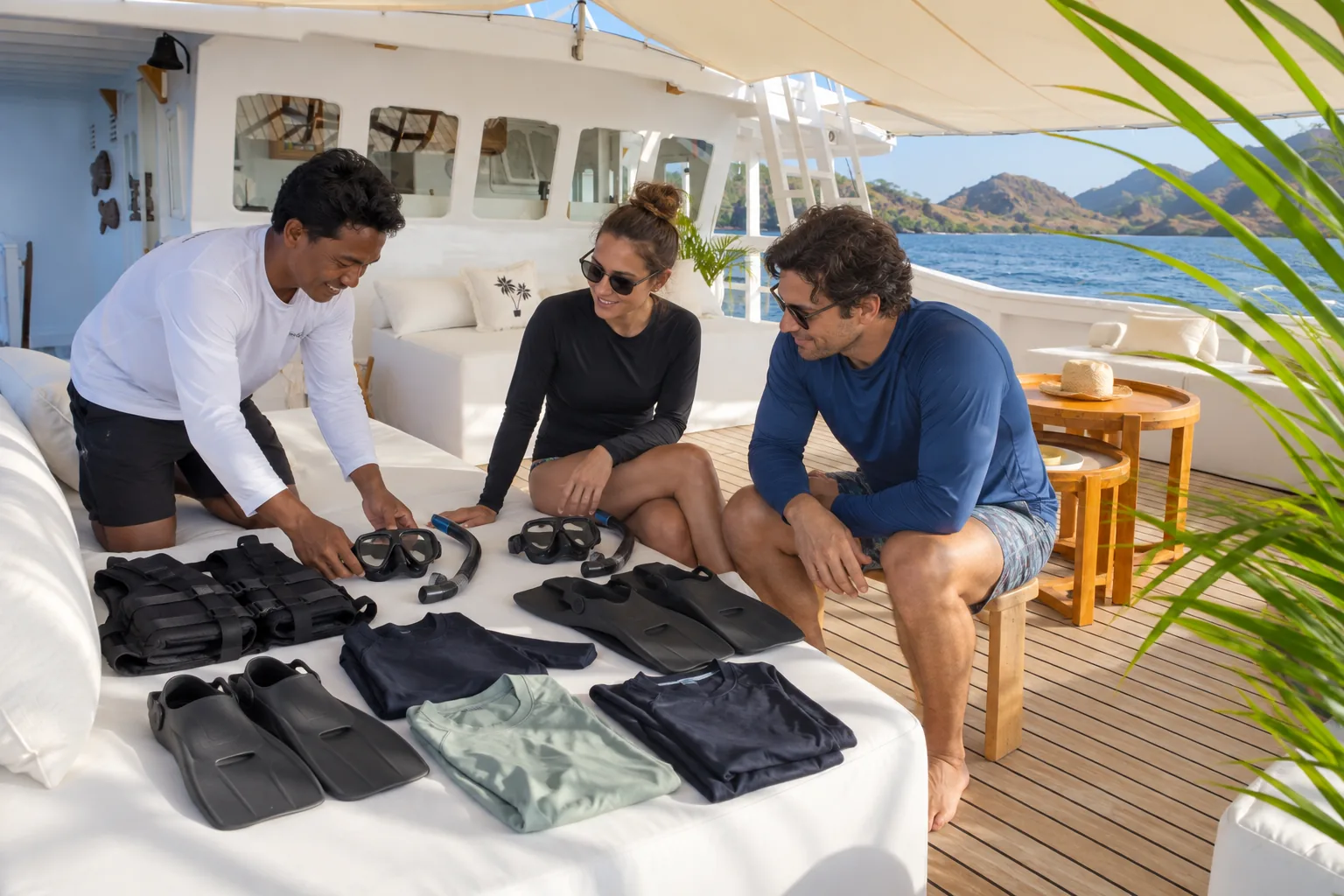
Snorkelling gear for Komodo needs to fit the guest and the day’s stop. A new mask does not compensate for an unsafe entry or absent supervision. Ask what the exact boat carries, how rentals are cleaned and who accompanies guests in the water.
Decide what to bring versus rent
A mask that already fits your face is often the most useful personal item. Fins are bulkier and can be rented if correct sizes and styles are confirmed in advance. Bring a spare strap if your equipment uses a proprietary fitting. Ask whether the vessel supplies snorkels, flotation and child sizes rather than assuming a photograph of gear represents current stock. If you use corrective lenses, clarify your plan before leaving town.
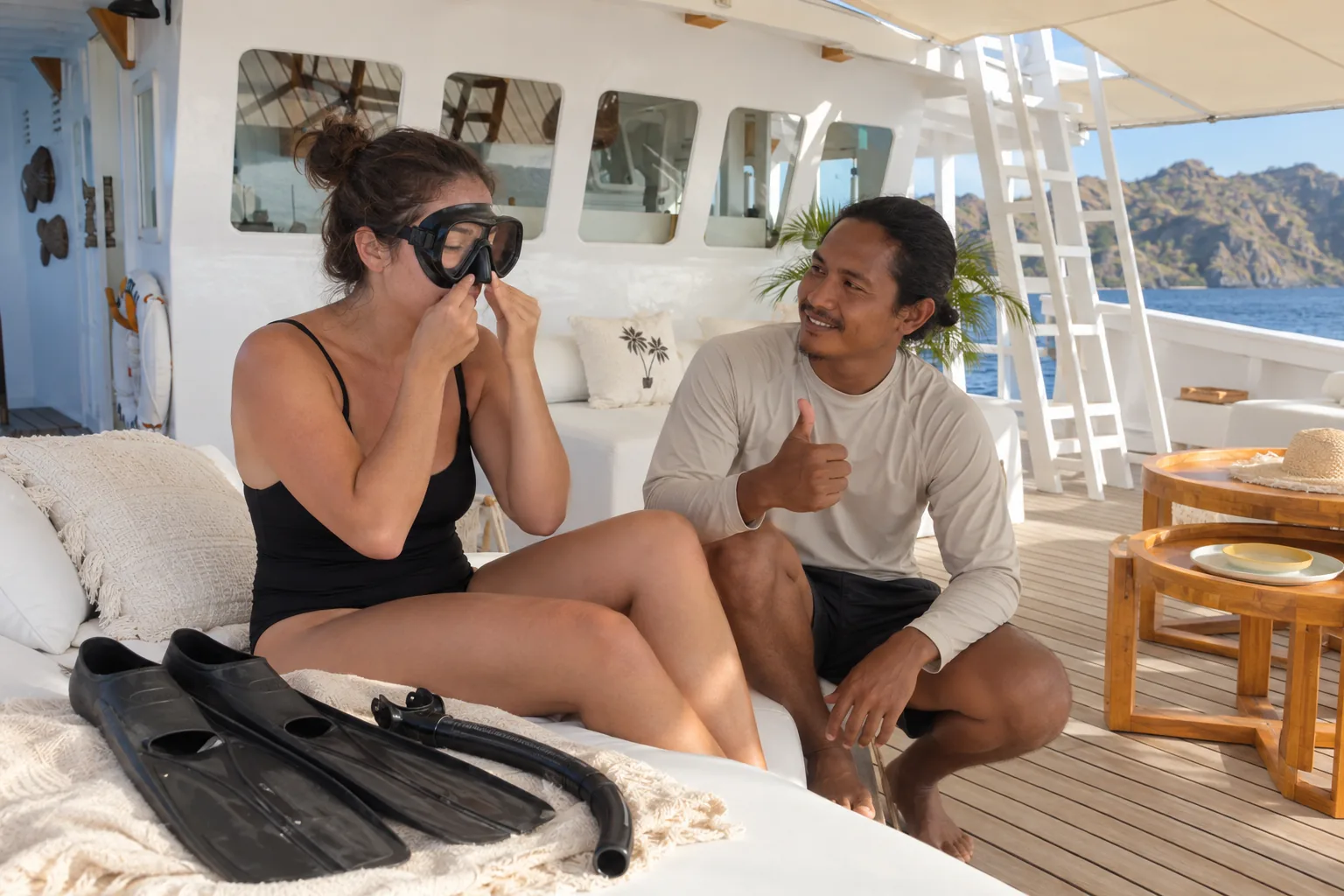
Do a practical fit check
A mask should seal comfortably without being painfully tight; straps hold it in place rather than compensating for an unsuitable shape. Check that the skirt does not fold against hair or a beard and that you can equalize gently if needed. Fins must stay on during a relaxed kick without rubbing. For prescription lenses, contact the operator early; rental sets rarely cover every prescription or face shape.
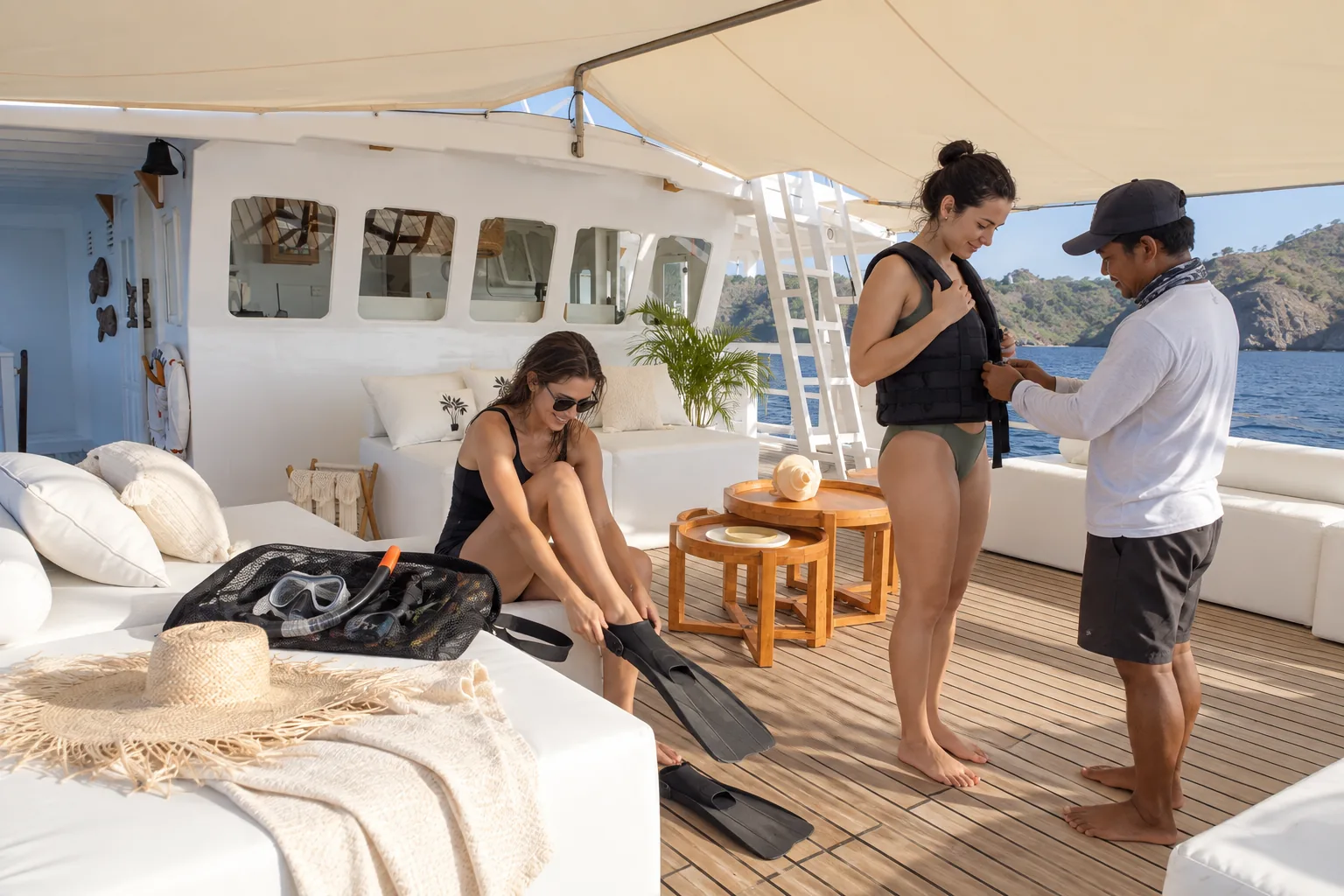
Inspect rental condition and hygiene
Look for cracked straps, damaged mouthpieces, loose fin buckles and clouded lenses before boarding or entering. Ask how shared equipment is cleaned and whether a poorly fitting unit can be swapped mid-trip. Pack a personal mask if you already know it fits, but avoid bringing a completely new setup that has never been tested. A dry bag protects prescription accessories and spare straps during transfers.
Protect skin and habitat
Sun exposure at the surface can be prolonged. A rash guard or suitable covering reduces exposed skin, while sun protection still needs to be reapplied according to its instructions. Check whether the water temperature and duration justify additional thermal protection for your comfort. Keep fins off coral and maintain enough distance that a kick cannot strike reef or another guest. Do not stand on living substrate to fix a mask.
Check flotation separately from the mask and fins
Have the crew check the flotation device’s fit and explain its use before the activity. Ask whether the correct adult or child size is available and what happens if it is not. Equipment supply is separate from an assessment of swimming ability; use the weak-swimmer guide for that decision.
Fit before brand
| Item | Check | Alternative |
|---|---|---|
| Mask | Seal, comfort and clear vision | Try another face shape or prescription option. |
| Snorkel | Mouthpiece comfort and clear breathing path | Exchange a damaged or awkward unit. |
| Fins | Heel security and correct size | Change size before leaving the boat. |
| Flotation | Correct fit and crew approval | Ask for a properly sized device or stay aboard. |
Test rentals where crew can help. Bring a familiar mask if fit is difficult; confirm the supplier has usable fins and flotation in your size. Inventory varies even among boats sold under the same tour name.
Match entry and clothing to the stop
A beach, tender and boat-ladder entry pose different footwear and fin questions. Ask when fins should be worn and whether the bottom is rocky. A rash guard can help with sun exposure; thermal needs depend on personal comfort and time in the water. Do not assume every boat carries wetsuits.
Finish the rental handover before leaving town
Try the assigned sizes, identify your set and ask who carries replacements. Confirm whether a leaking mask or broken strap can be exchanged on the boat and whether there is a rental deposit or loss charge. A photograph of equipment on the booking page does not establish the sizes or condition available for your departure.
Questions to send
- Are mask, snorkel, fins and correctly sized flotation included?
- What prescription and child sizes are available?
- Can a leaking mask be exchanged after the first stop?
- How is shared equipment cleaned?
- Who enters the water with the group?
Use the operator’s packing list to agree what is supplied and what you must bring; then check the assigned equipment. Compare the komodo one day tour and obtain the operator’s equipment and supervision details.
Safety reference: DAN guidance on water safety and flotation. This general guidance does not replace a site-specific guide assessment.
Compare current Komodo tour packages, then verify the water activities, supervision, vessel and alternative land stops before booking.
Rehearse the exit with the gear you will use
Before a session, check whether fins need to come off at the ladder, where the mask goes and how to keep hands free for boarding. The guide should explain the sequence for the actual boat or shore exit. A comfortable mask at the shop does not resolve the awkward final step onto a moving tender.
For shared rentals, identify your set and inspect it before the group separates. Ask how the operator cleans items and resolves leaks or missing sizes. If flotation is required, have its fit and use checked separately; do not treat it as a replacement for supervision, suitable conditions or the option to decline the water.
Is a full rental set enough to establish readiness?
No. Fit, breathing comfort, entry, exit, supervision and the conditions at the actual stop still need assessment.
For independent diving and water-safety reading, use DAN’s snorkelling guidance.
