
Komodo Snorkelling for Weak Swimmers: Limits and Questions to Ask
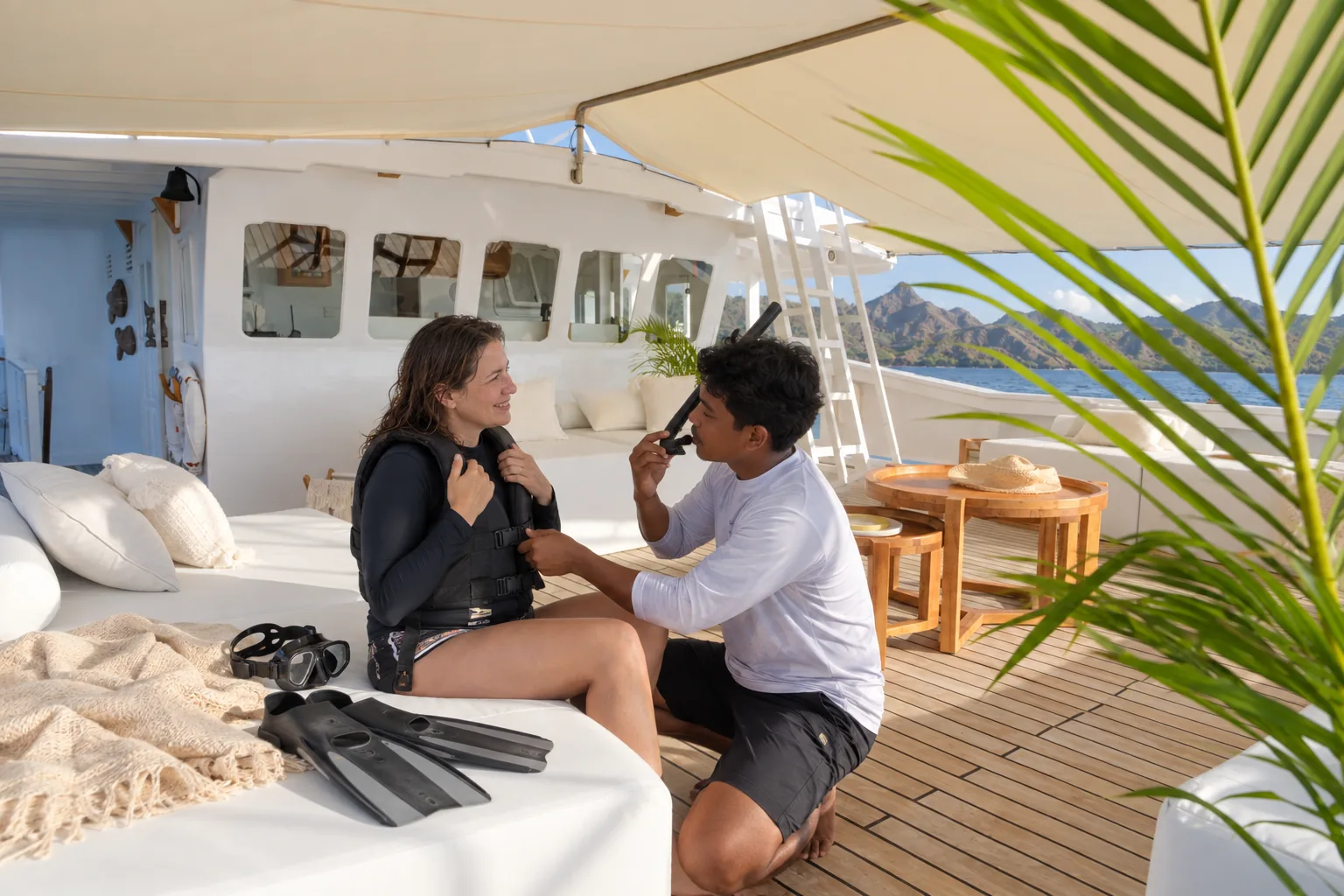
A non-swimmer can enjoy a Komodo boat trip without entering the water. Snorkelling itself requires an individual decision: a flotation aid and a calm-looking surface do not remove current, panic or exit risks. Tell the operator your actual ability before booking and ask for a specific supervision and alternative-activity plan.
Separate a boat holiday from a water activity
Some tour copy says “non-swimmers welcome” because guests can stay on deck, visit islands or join a short shore stop. That does not mean every guest can safely snorkel at every stop. DAN’s water-safety guidance calls for appropriate life jackets, understanding local hazards and not swimming unattended. A vest helps with flotation but cannot teach breathing through a snorkel, keep someone within a group or arrange rescue on its own.
Separate an island visit from entering the water
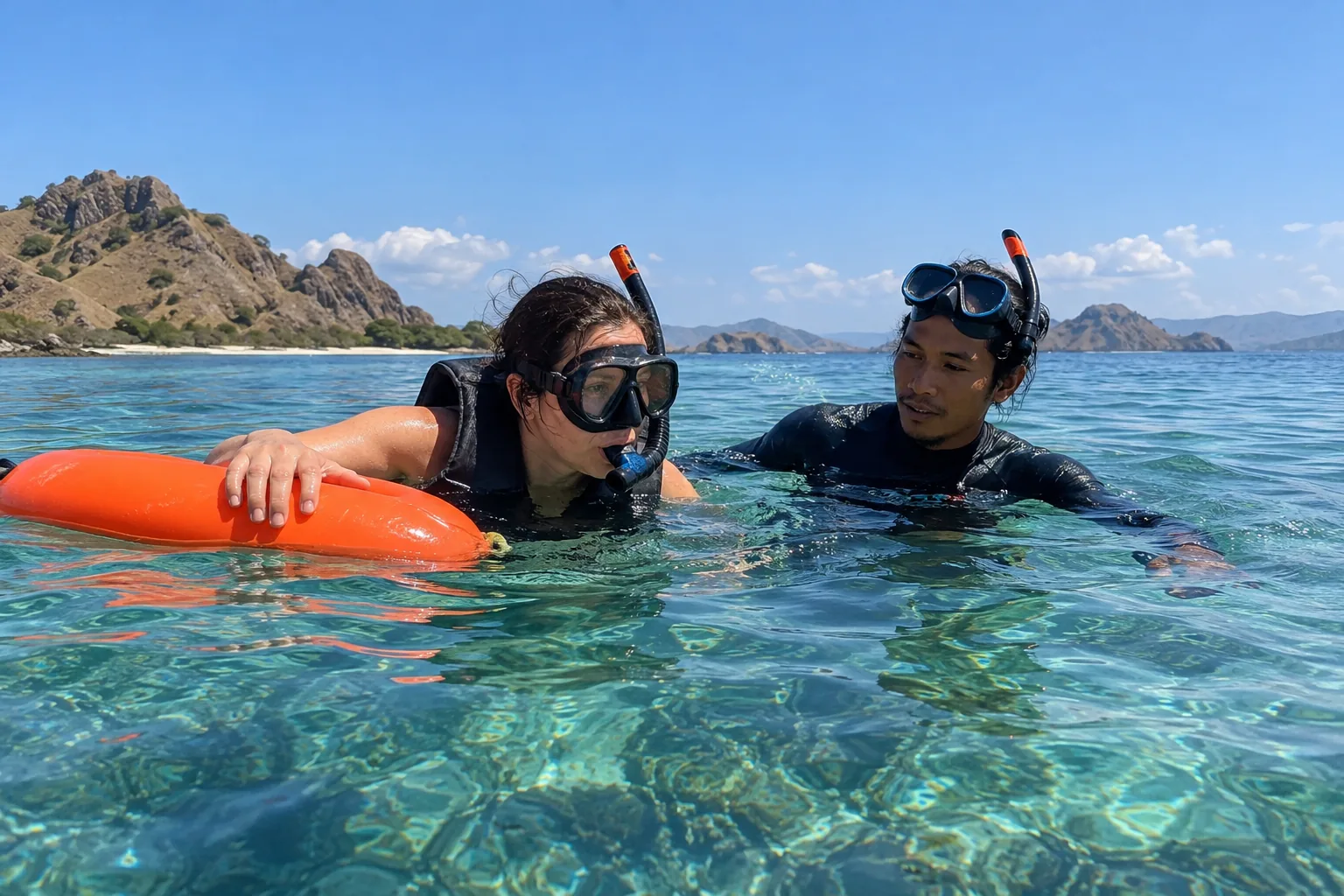
A guest can enjoy scenery, a beach or a ranger-led land visit without snorkelling, subject to the actual route and access. Ask the operator which activities remain possible if you decline the water and whether staff can assist with a boat transfer. Do not purchase a tour because every stop is described as “easy” and then feel required to enter. A flotation device keeps you afloat but does not teach breathing, orientation or safe movement in current.
For children, ask about correctly sized gear, supervision and a safe way to end a session early. The skipper should be willing to cancel a water entry when wind or current differs from the itinerary brochure.
| What the itinerary says | What you must ask |
|---|---|
| “Easy snorkeling” | Where exactly will we enter and exit, and what did the guide observe at that location today? |
| “Life jackets provided” | Are approved, properly fitting devices available for each adult and child? Who checks fit? |
| “Guide on board” | Will a trained guide enter the water with this guest, and how many guests is that person watching? |
| “Flexible route” | Can the guest skip the swim, stay on the boat or choose a land stop without pressure or a surprise charge? |
Conditions change at the entry point
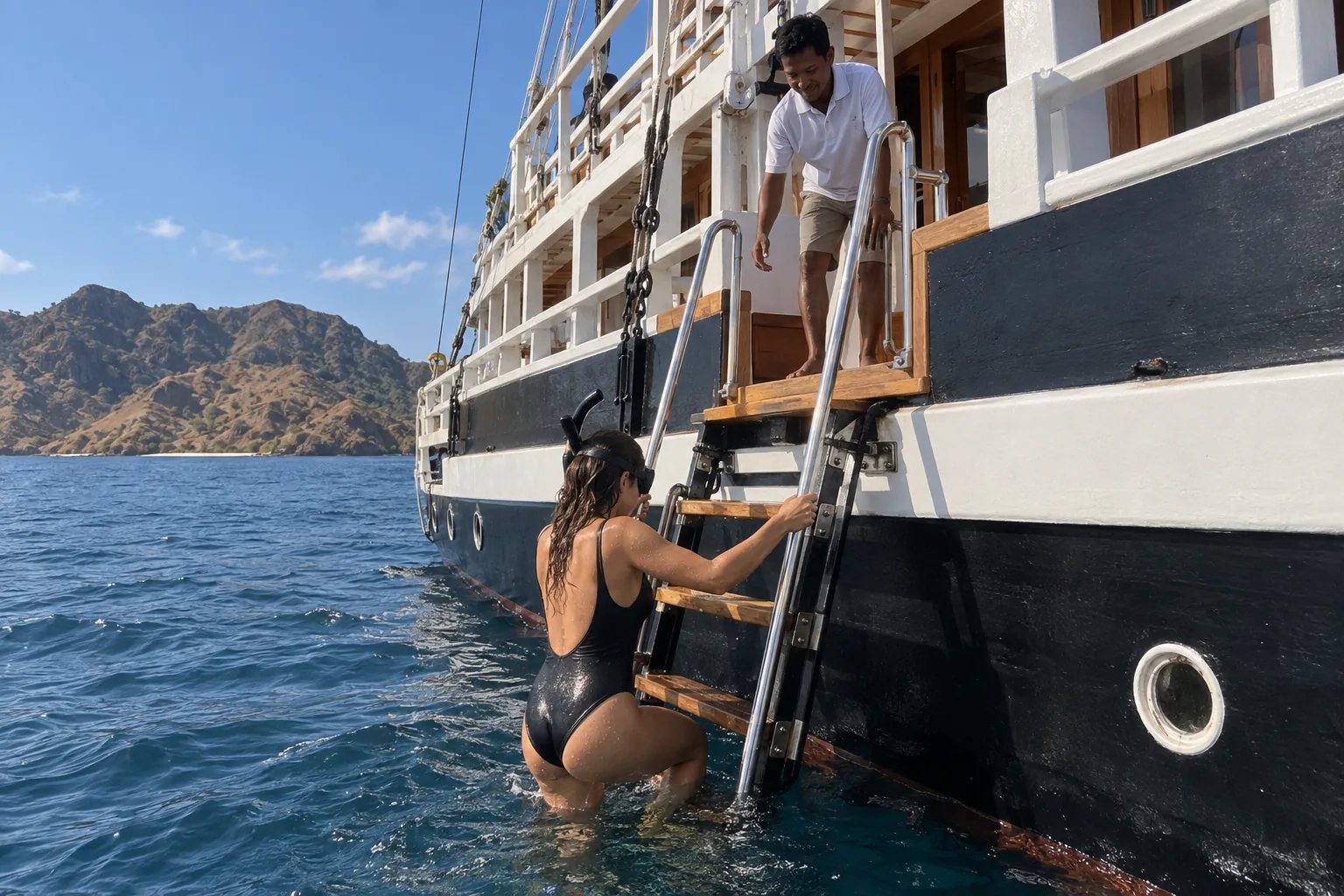
When choosing a Komodo island trip, do not infer safety from an island’s reputation or a photo of a sandbar. At a beach, ask about waves and the route back; at a tender drop, ask how guests reboard; at a drift site, ask about current and the pickup procedure. The same place can be different on another tide or windy day. If the boat cannot explain the exit and the person responsible for you, remain on board.
For someone who can swim but has little snorkelling experience, first test mask fit and snorkel breathing in genuinely sheltered water under direct supervision, with an agreed stop signal. If they are uncomfortable with their face in the water or repeatedly swallowing water, stop the activity. Never turn a wildlife sighting into a reason to enter conditions beyond your ability.
What a useful alternative plan looks like
A good operator tells the guest which island landings, viewpoint walks or deck observation are possible on the same route, and which require tender transfers or steep steps. Ask whether a guest who stays aboard has shade, drinking water, toilet access and staff contact while others swim. Plan a shore-based day if that better fits the group. This makes “you can still enjoy the trip” a checkable statement rather than a sales promise.
Send this before paying
“One guest cannot swim and may stay on board for every snorkeling stop. Which activities remain available, what flotation sizes do you carry, will a guide enter the water if the guest elects to try, and how is a guest retrieved if they signal distress? Please confirm any additional cost.” Ask again at the on-board briefing; the answer can change with conditions.
Browse a komodo tour 3 days 2 nights itinerary for the mix of land and sea activities, then verify each activity and supervision with the actual vessel operator. The existence of a stop on the itinerary is not a guarantee of a safe swim.
Compare current Komodo tour packages, then verify the water activities, supervision, vessel and alternative land stops before booking.
No island is labelled safe for every non-swimmer; a live guide assessment is essential.
Use an early stop decision rather than a rescue assumption
Agree the decision before anyone puts on a mask: the guest may decline, may end an attempt immediately, and has a specific way to reach the boat or shore with direct help. The plan should identify the person watching that guest, not merely the guide somewhere in the area. If a boat-only guest stays aboard while the group enters, establish staff contact, shade and safe movement on deck.
A useful first experience is brief and supervised in conditions the qualified guide considers suitable. It is not a promise that a later drift or wildlife stop will suit the same guest. If mask breathing or orientation is uncomfortable, stop and use the planned alternative instead of treating a successful float as proof of readiness.
Can I skip every snorkelling stop?
Ask the operator to confirm that choice and the available boat or authorised land activities. A swimming activity should not become an obligation because it appears in the itinerary.
For independent diving and water-safety reading, use DAN’s Safety & Prevention resources; these do not inspect or endorse a particular Komodo departure.
