
- Whole-boat charter from$14,400 / whole boat
- Check availability
- Leave a review
- Bookmark
- Report
- prev
- next
Cruising Areas
Raja Ampat cruises
Raja Ampat is the anchor of the calendar, sailing from Sorong.
Route details
Manta encounters, coral gardens and the heavy fish life of the Dampier Strait carry the central legs, with the northern karst on longer routes.
Guests reviewing the boat consistently name the mantas and the pygmy seahorses in the same breath, which is a fair summary of what the region gives you: big animals and macro on the same day.
Banda Sea cruises
The Banda Sea and the Forgotten Islands run out of Ambon on the crossing season.
Route details
Deep walls, volcanic slopes and hammerhead aggregations, with the Spice Islands history ashore.
These are long open-water passages, which is exactly the sea state the double keel and narrow beam were designed for.
Triton Bay cruises
Triton Bay and Etna Bay sit off Kaimana and are the soft-coral and whale-shark end of the range.
Route details
Few boats schedule them, and reaching them costs sailing time, so they only appear on the longer itineraries.
Visibility is lower than Raja Ampat and the colour is the compensation.
Cenderawasih Bay cruises
Cenderawasih Bay is the whale shark itinerary, built around the animals that gather at the fishing platforms.
Route details
Calm, shallow diving compared with the current-driven sites further west, and one of the few regions in Indonesia where an encounter is close to reliable rather than lucky.
Halmahera cruises
Halmahera is the least-travelled water on the schedule and the one the operator is most vocal about, citing fish counts in parts of the region that rival Raja Ampat.
Route details
Expect volcanic topography, macro subjects and anchorages with no other boat in sight.
Komodo cruises
Komodo and Flores appear on the western end of the calendar.
Route details
The same park most boats work, but reached by a vessel whose range normally runs several archipelagos further east, so Komodo tends to be one leg of a longer crossing rather than a standalone week.
Ambon cruises
Ambon is the departure port for the Banda Sea legs, and the diving in the bay is critter work rather than reef.
Route details
Shallow, silty, slow.
Four divers per guide keeps groups small enough for muck to be worth doing.
The crossings either side of Ambon are long, and beds that run lengthwise with the hull matter more on those nights than on a reef itinerary.
Who This Suits
Suits: divers who spend real time at sea. The double keel, the narrow beam, the absence of bunks and the lengthwise beds are all answers to the same problem, which is that this boat runs long crossings between archipelagos rather than looping one park. Suites from fifteen square metres with a writing desk suit anyone who logs dives or reviews photographs properly, and there is a separate camera room for the gear.
Also works for: technical divers. The operator carries nitrox and facilities aimed at tech diving, which most boats in this class do not.
Less suited to: non-divers and short-trip travellers. The range is the product here, so itineraries are long and remote, and there are no kayaks, paddleboards or other water toys listed to fill the surface intervals. Published length figures also disagree between sources, so confirm the vessel details with the operator before booking.
Vessel at a Glance
- Phinisi
- Built by traditional Bugis boat builders in Sulawesi. Under new ownership since; sources give the build year as 2018.
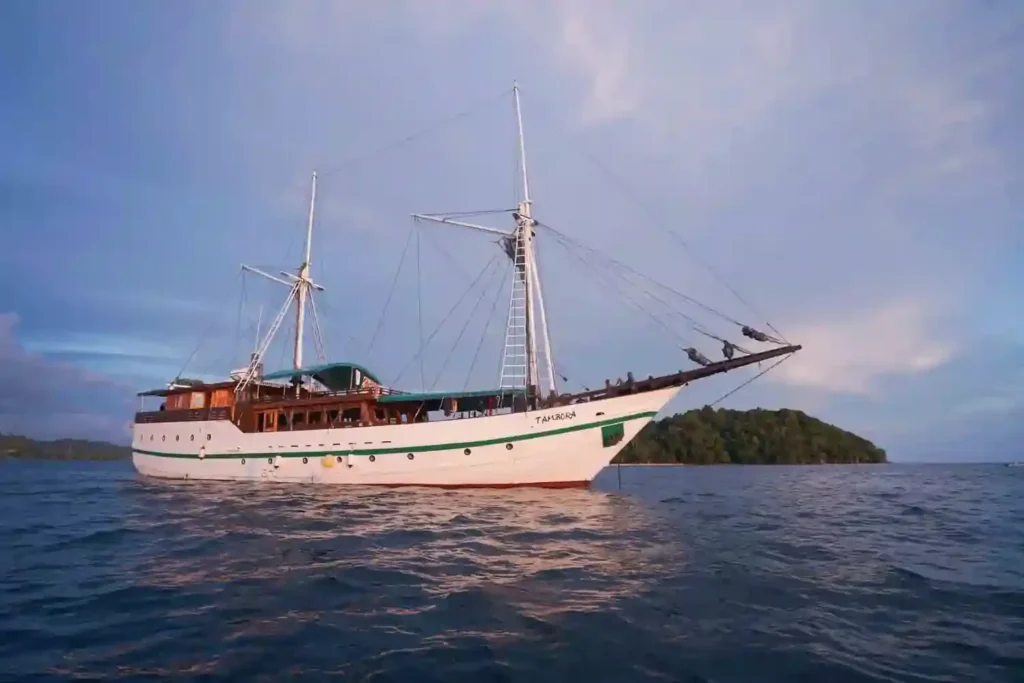
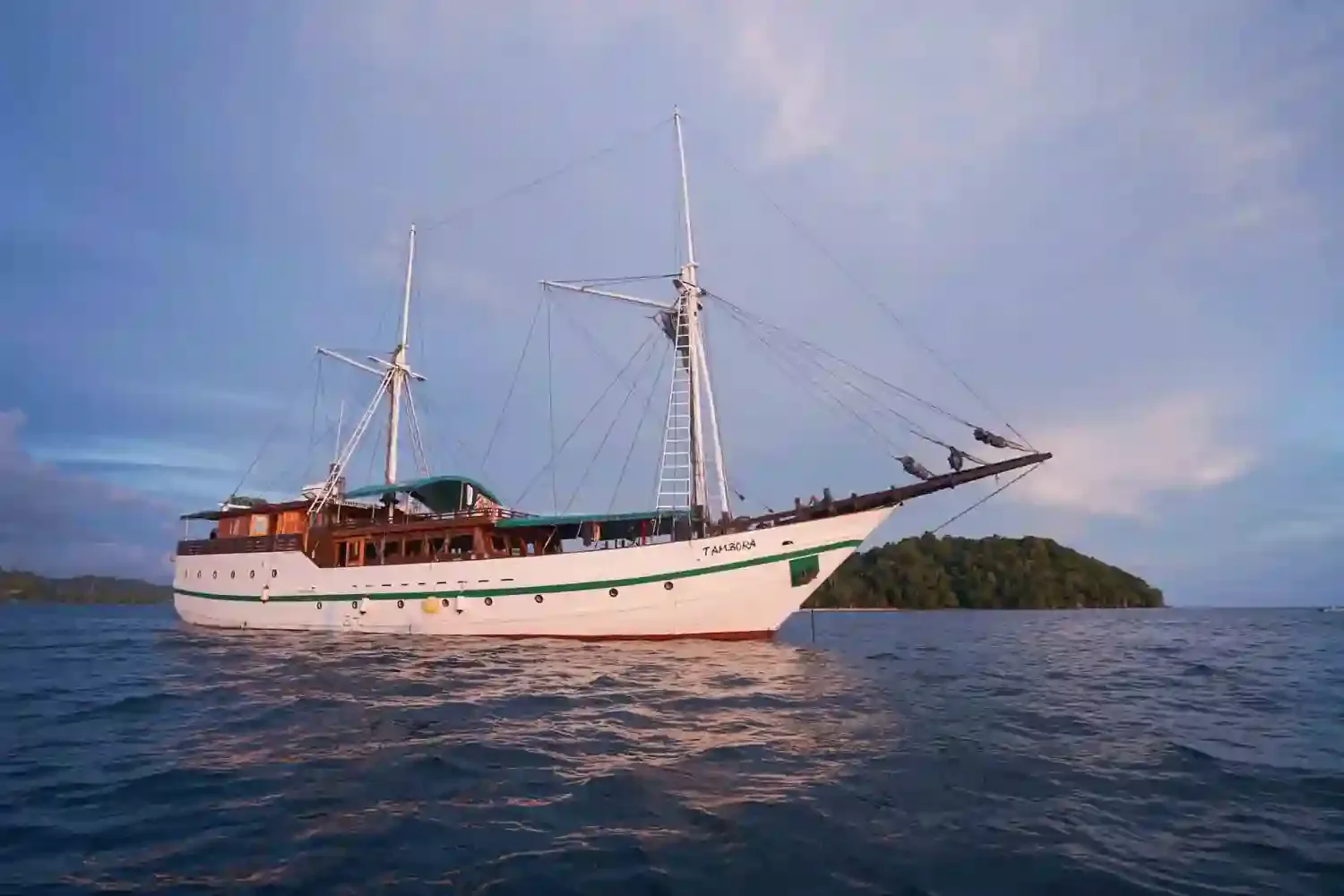
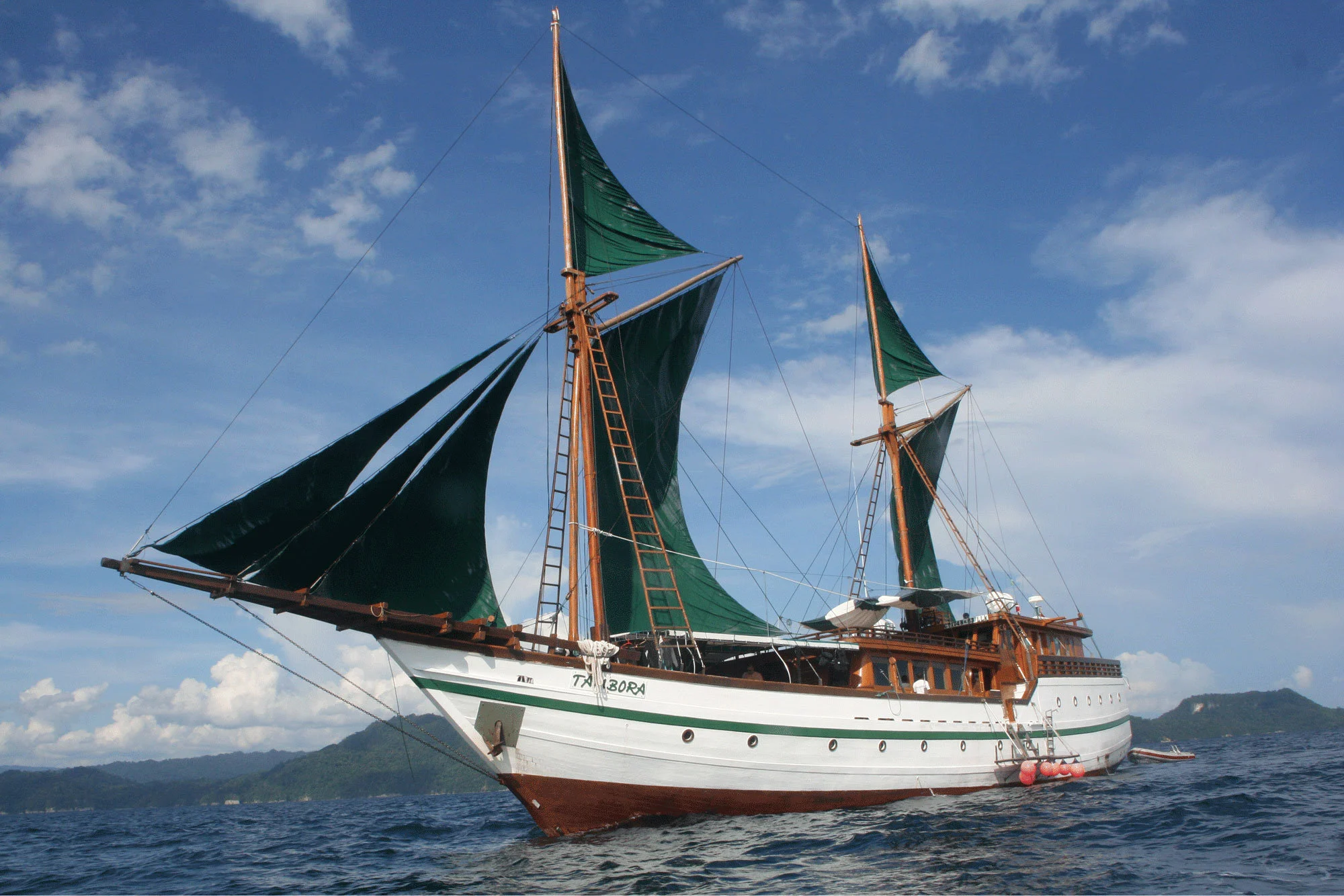
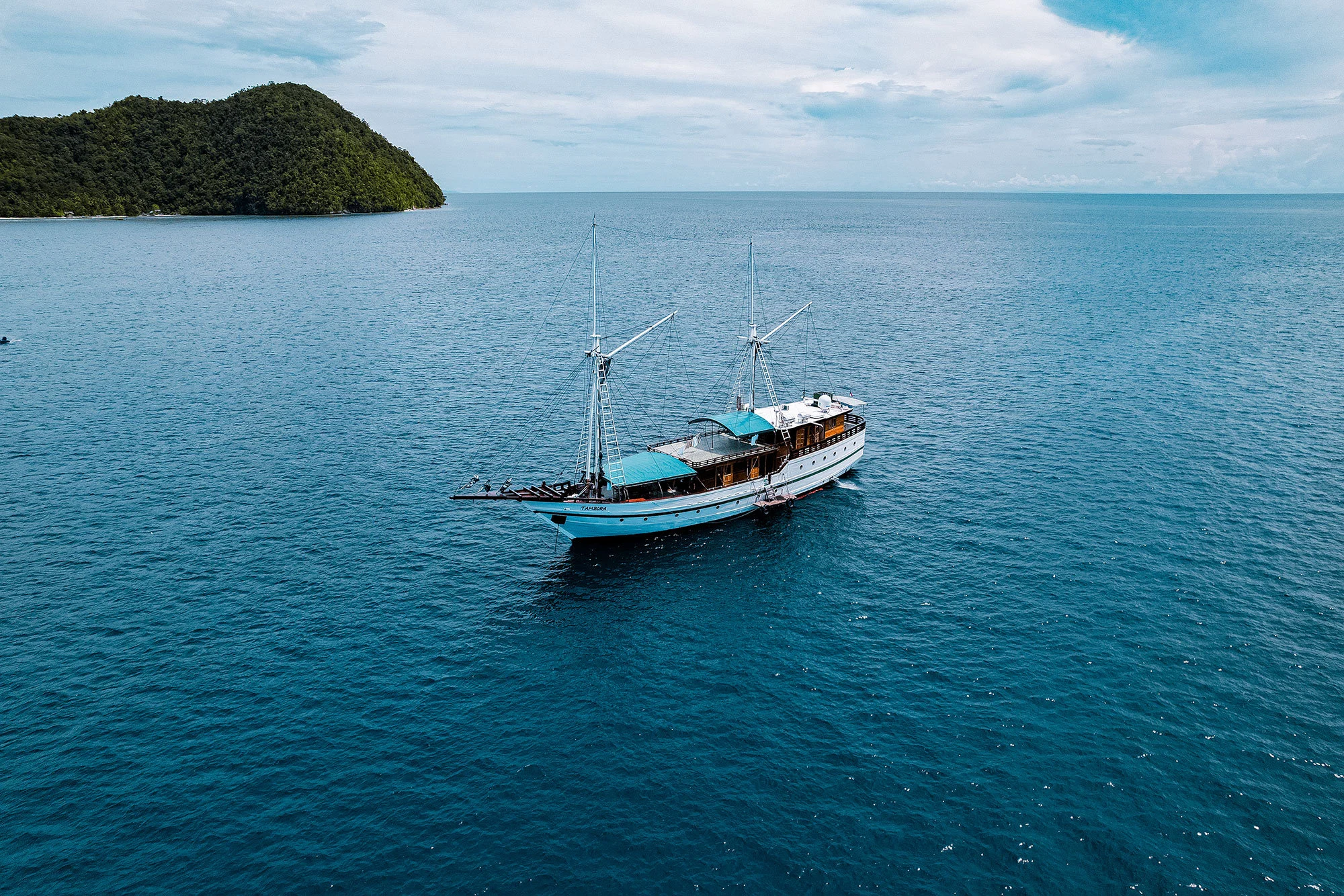
- 42 m (138 ft) length in most published listings, with one source giving 45 m by 9.5 m. Two-masted phinisi with a double keel and a narrower than usual beam to reduce rolling. Guest suites from 15 m2.
- 16 guests
- Private whole-boat charters; cabin enquiries require a separate offer
- 5D4N+
- Dive Resort
- Nitrox, Compressor, Dive Master
- Snorkeling Gear
About This Vessel
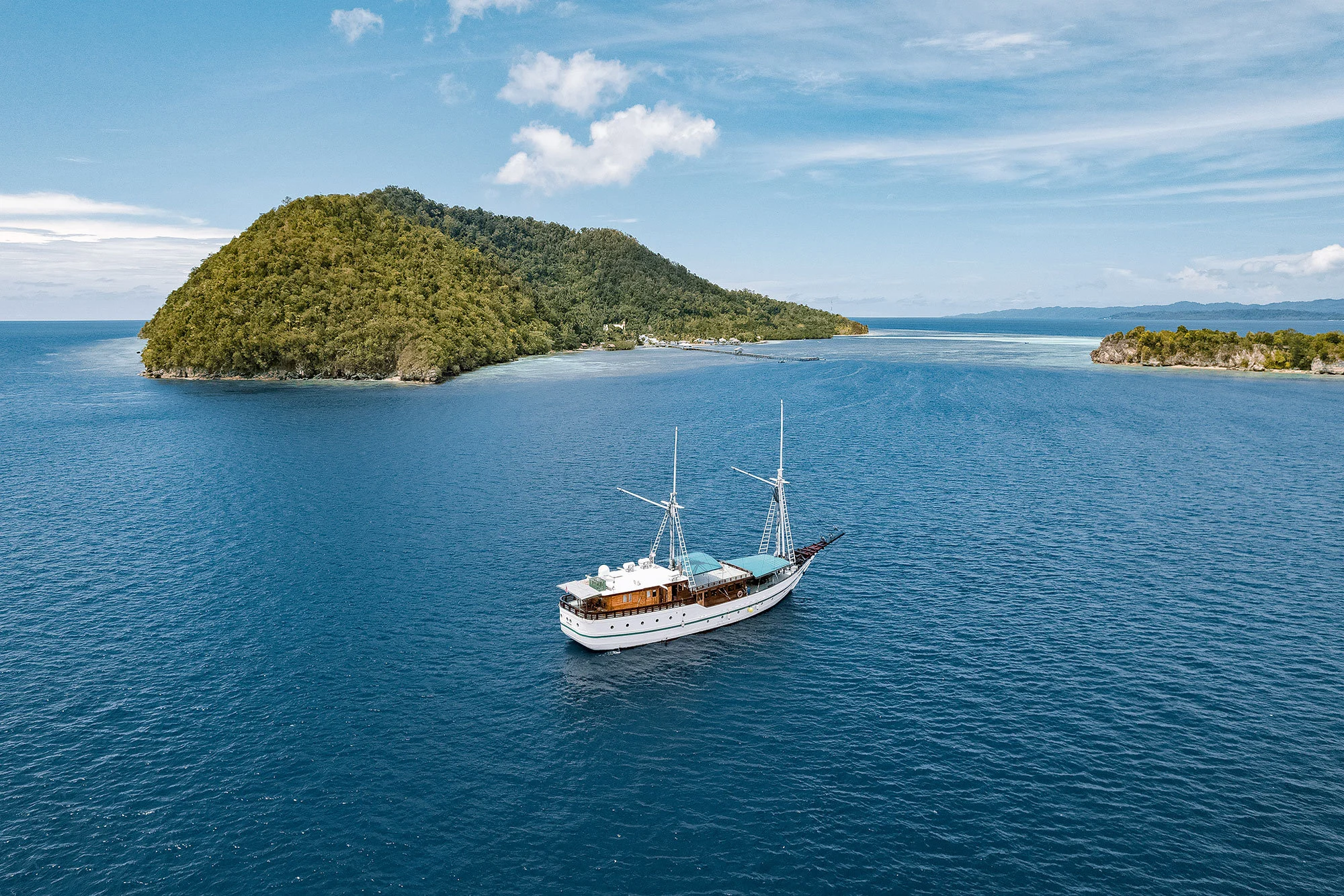
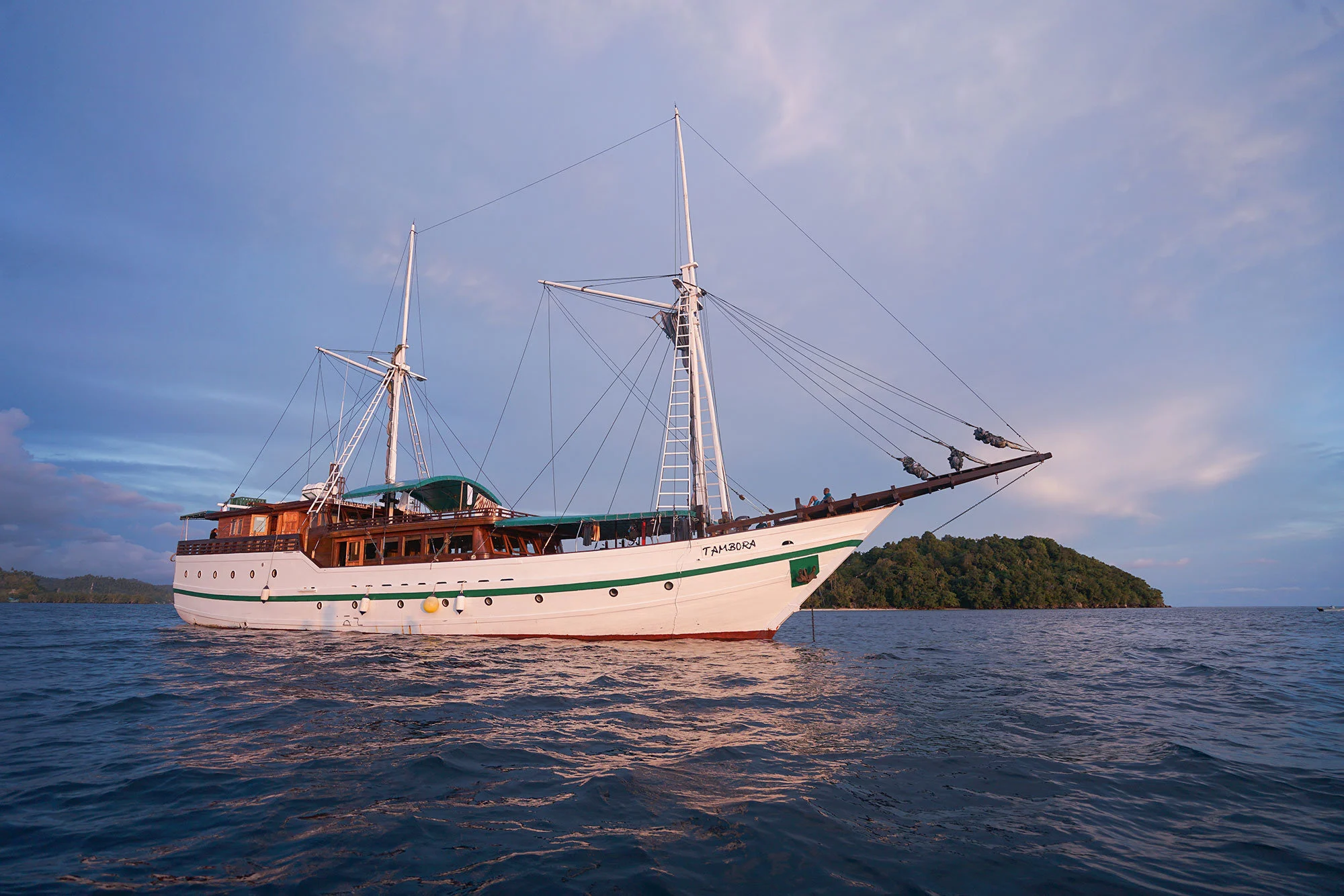
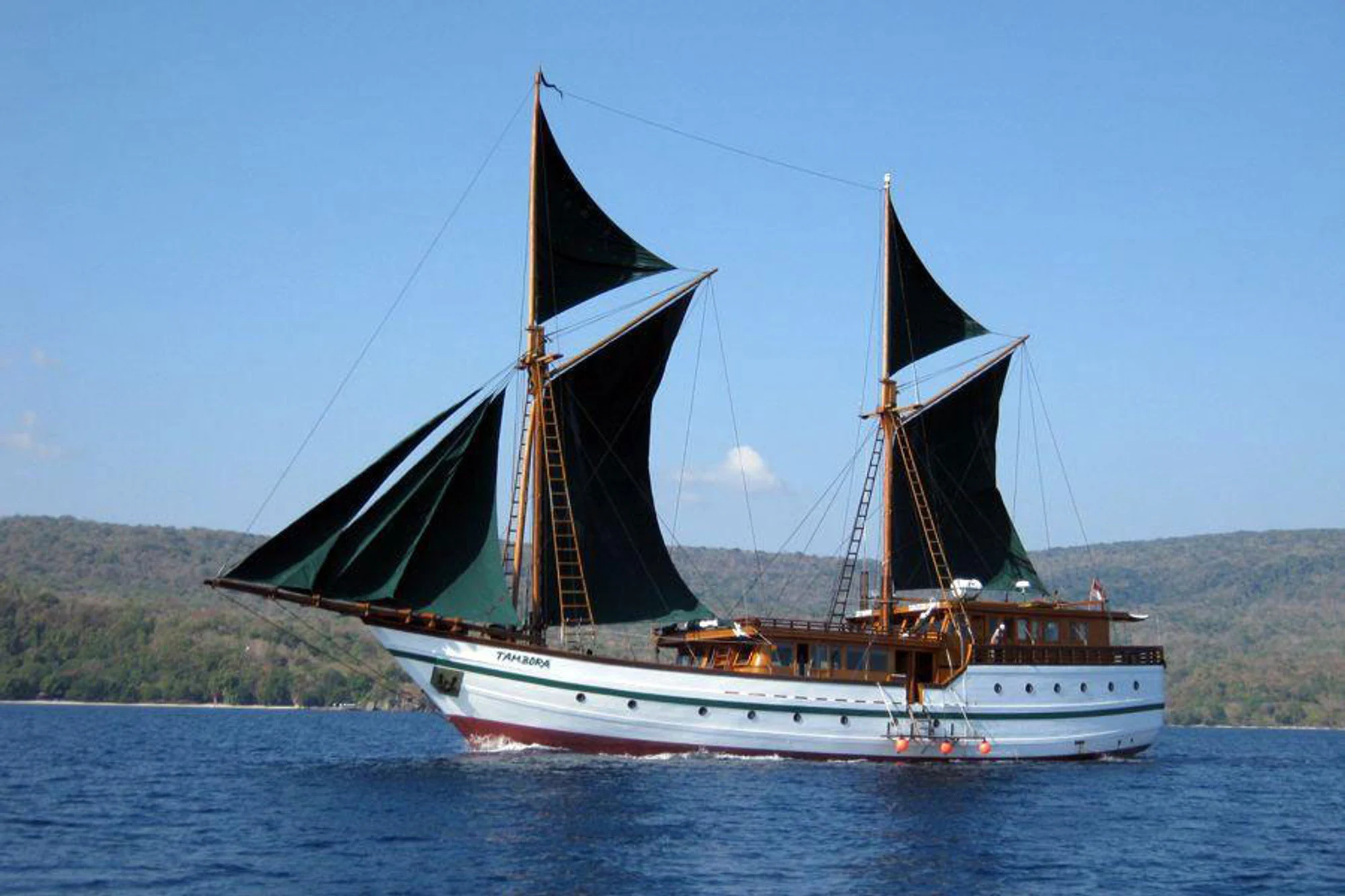
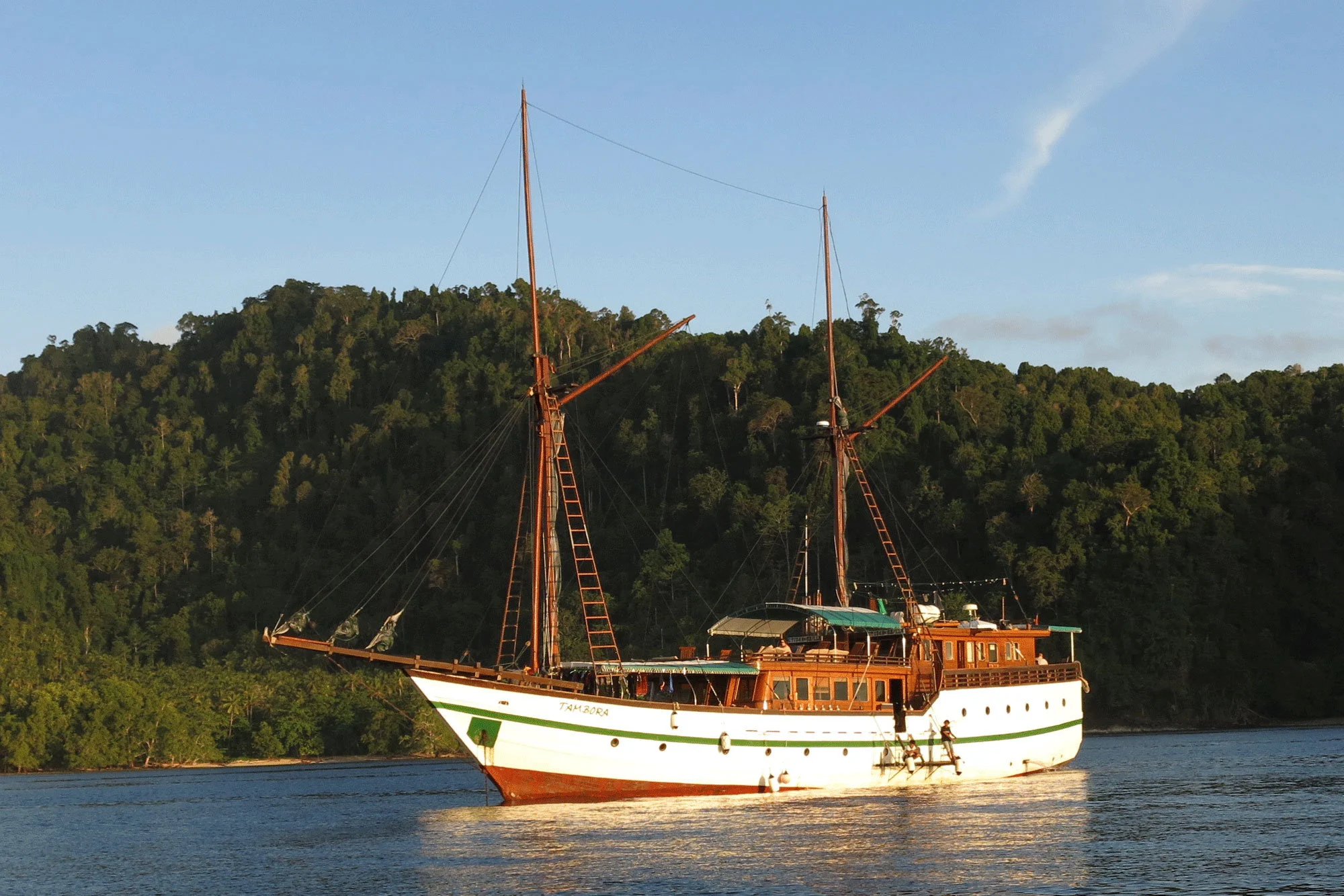
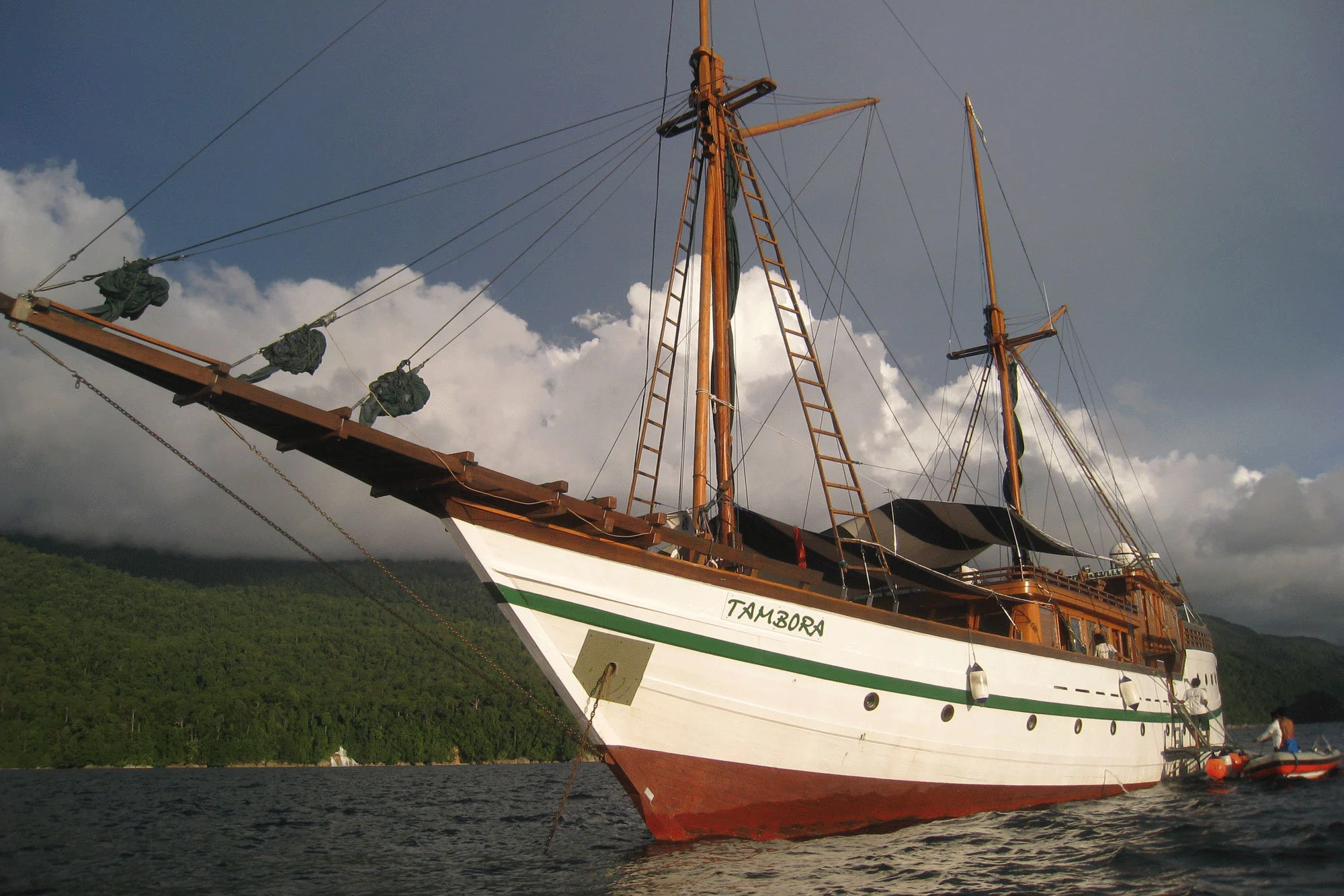
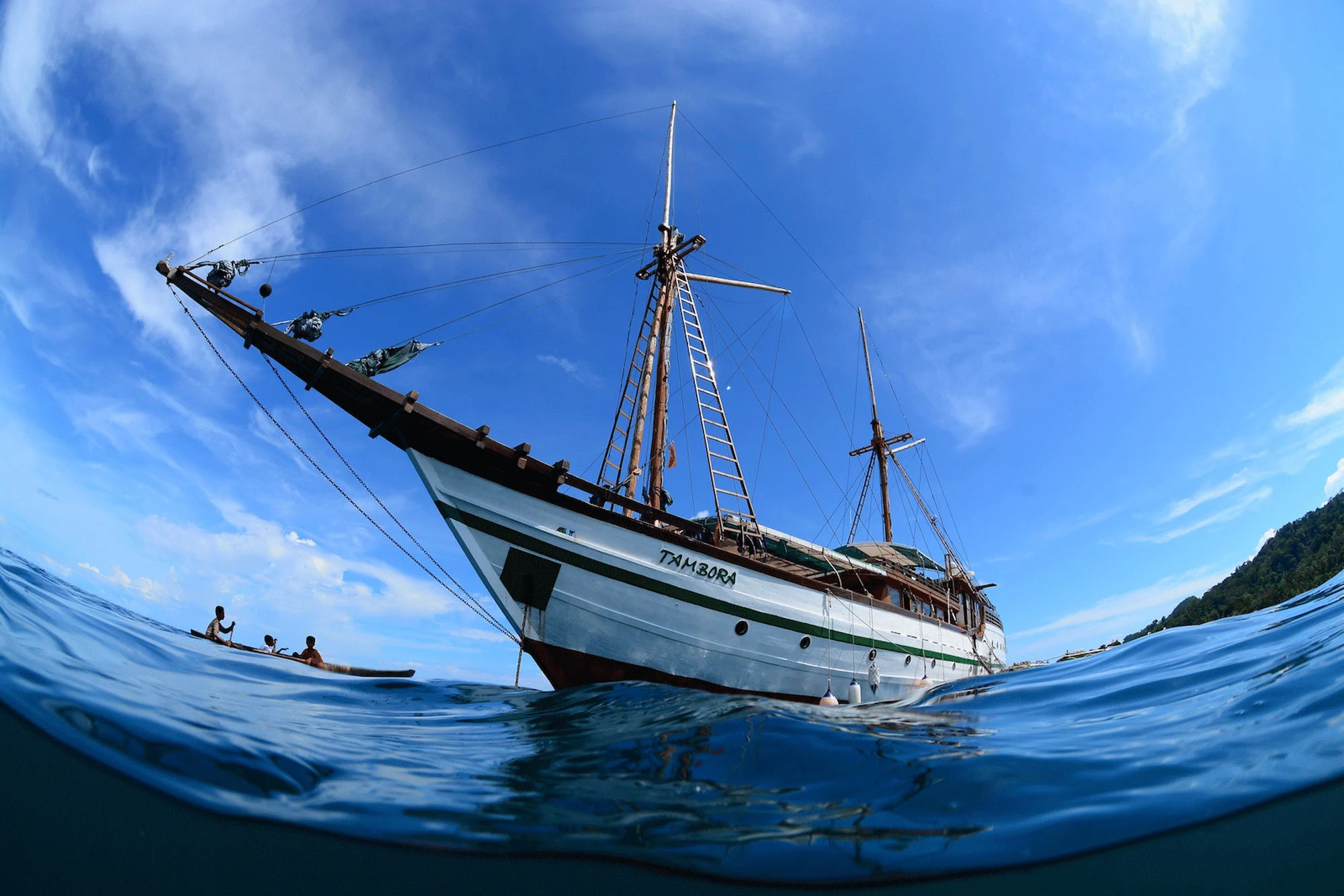
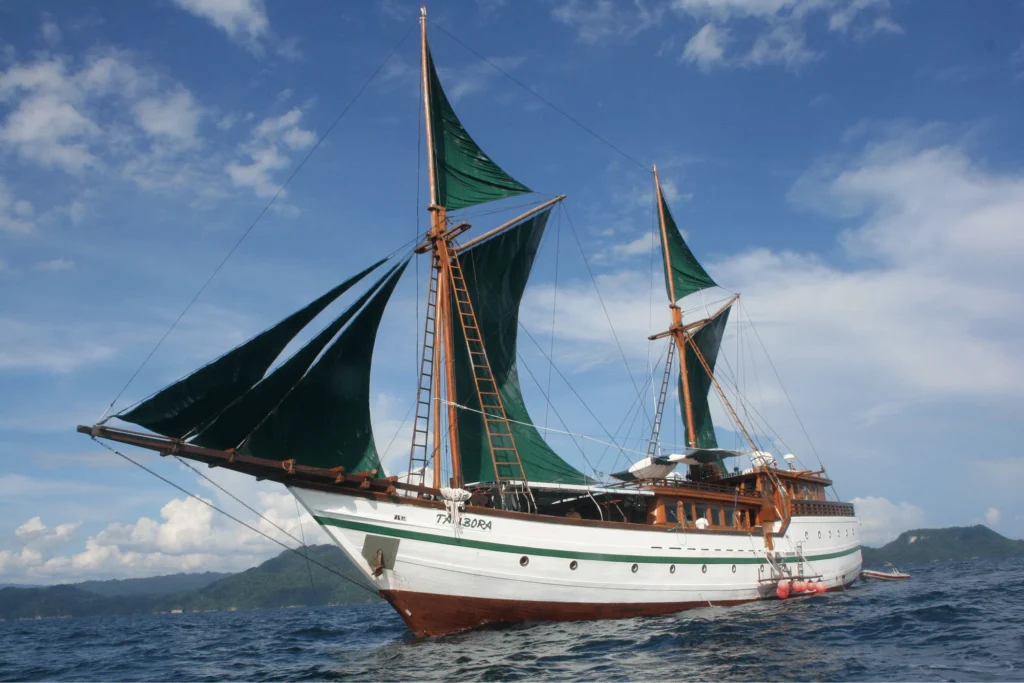
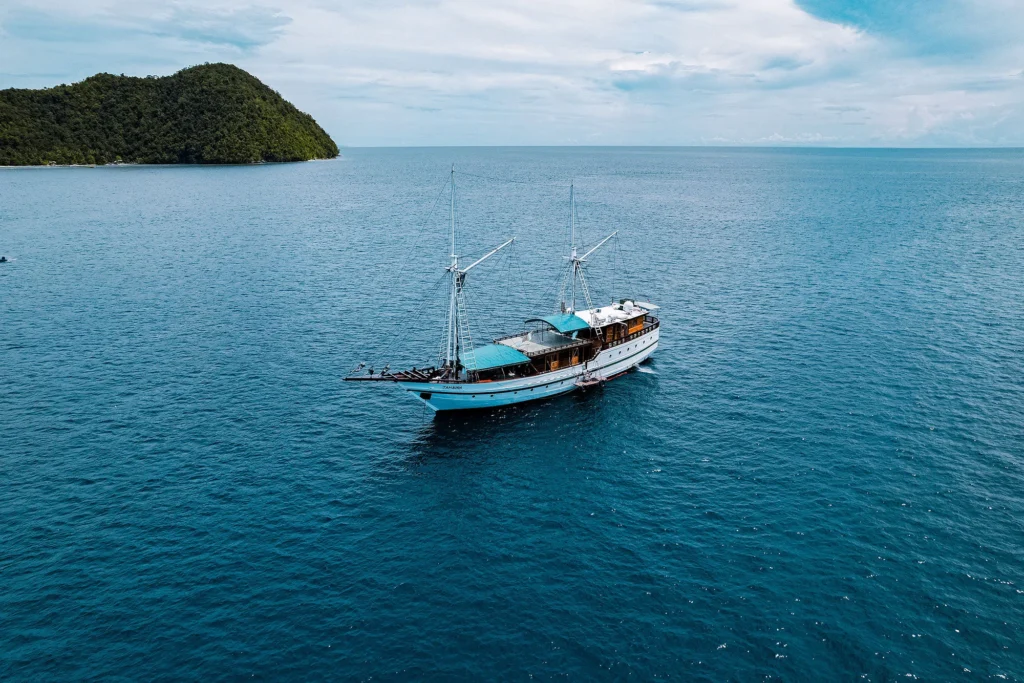
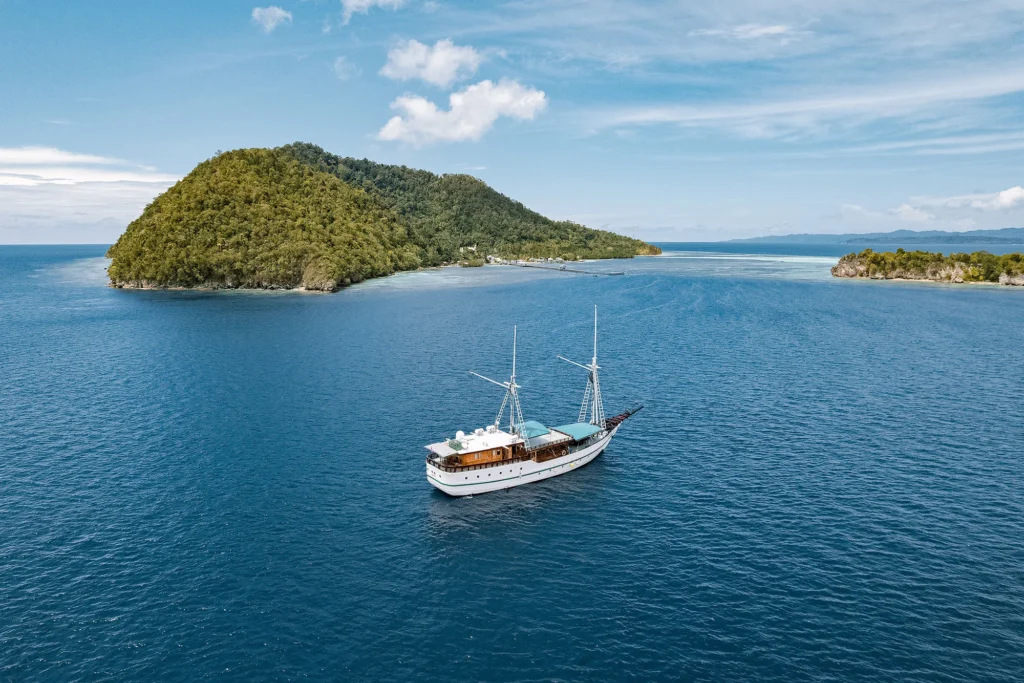
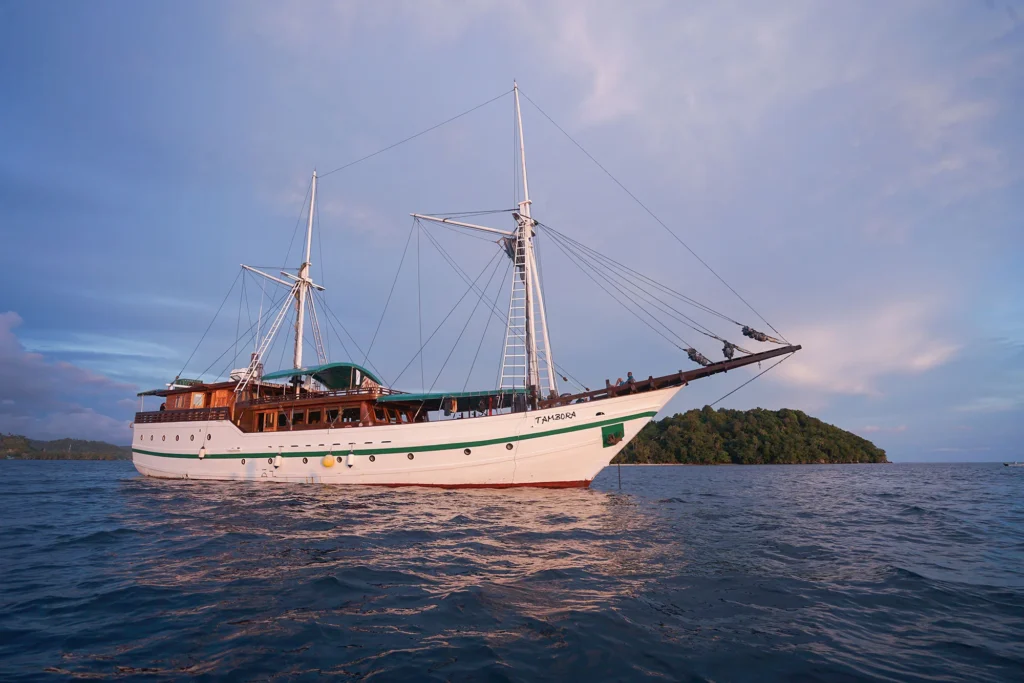
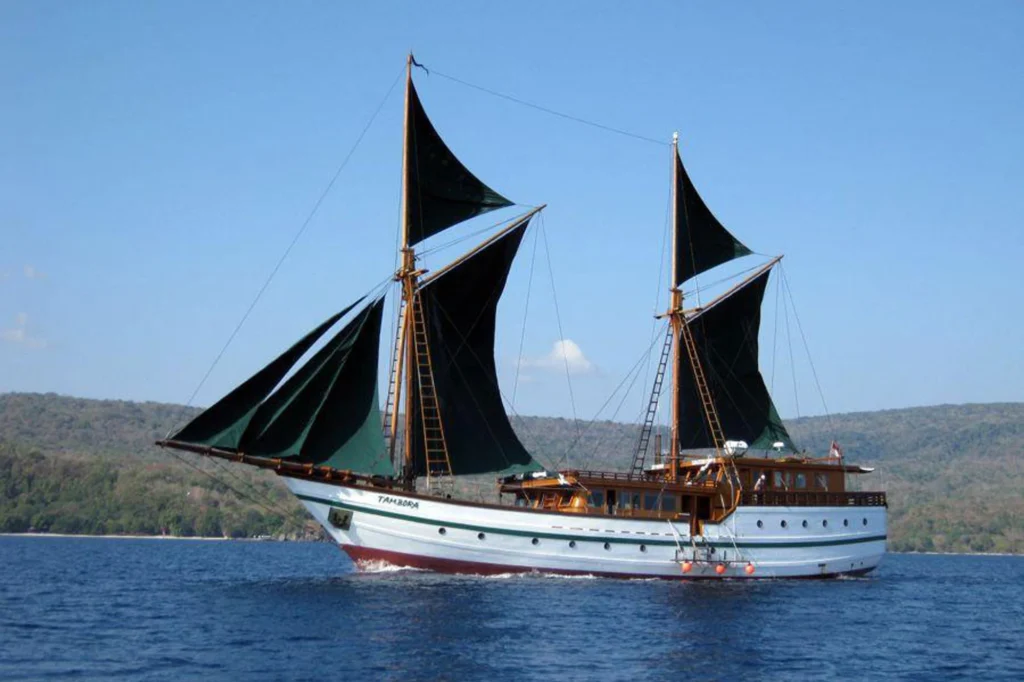
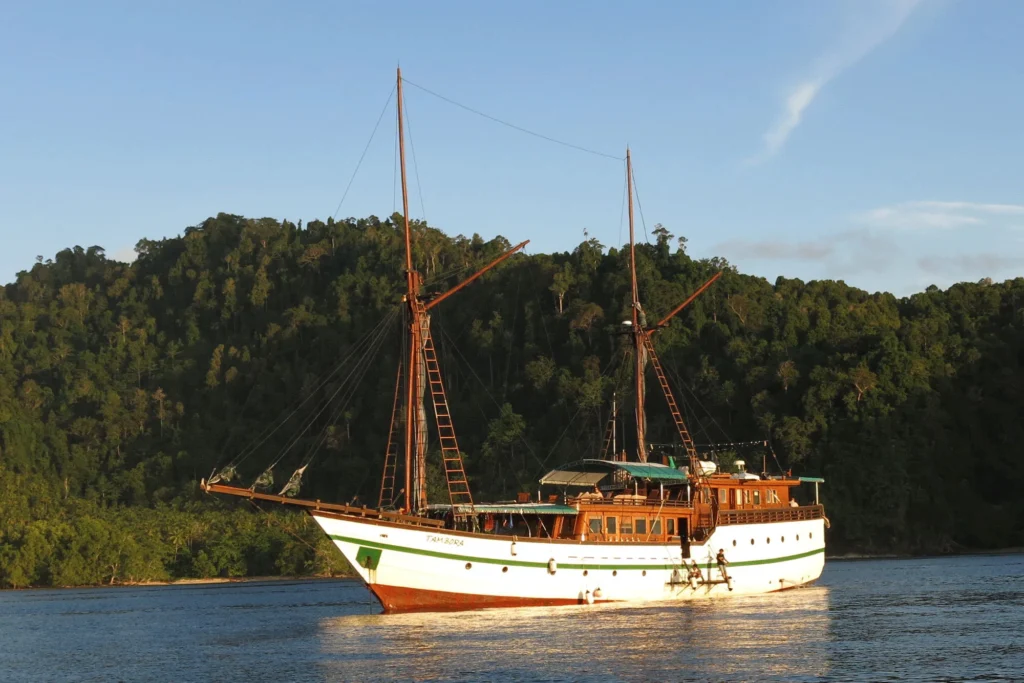
Tambora is a two-masted phinisi built by Bugis shipwrights in Sulawesi from Sulawesi ironwood and Javanese teak, and she was drawn for diving from the keel up rather than converted from something else. The traditional cargo design was adjusted in two ways that matter at sea: a double keel, and a beam narrower than the type usually carries, both to cut the rolling that makes a night passage miserable.
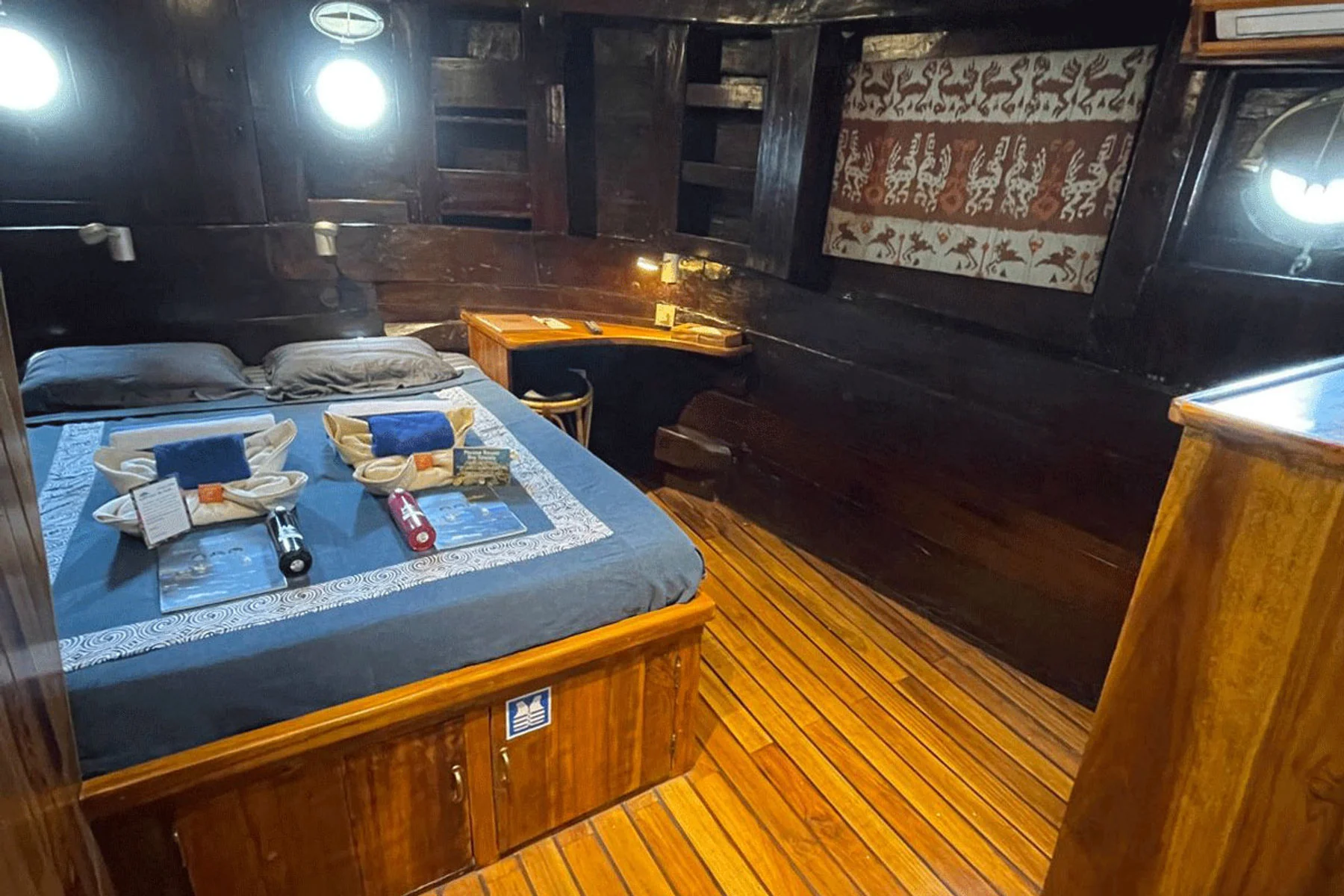
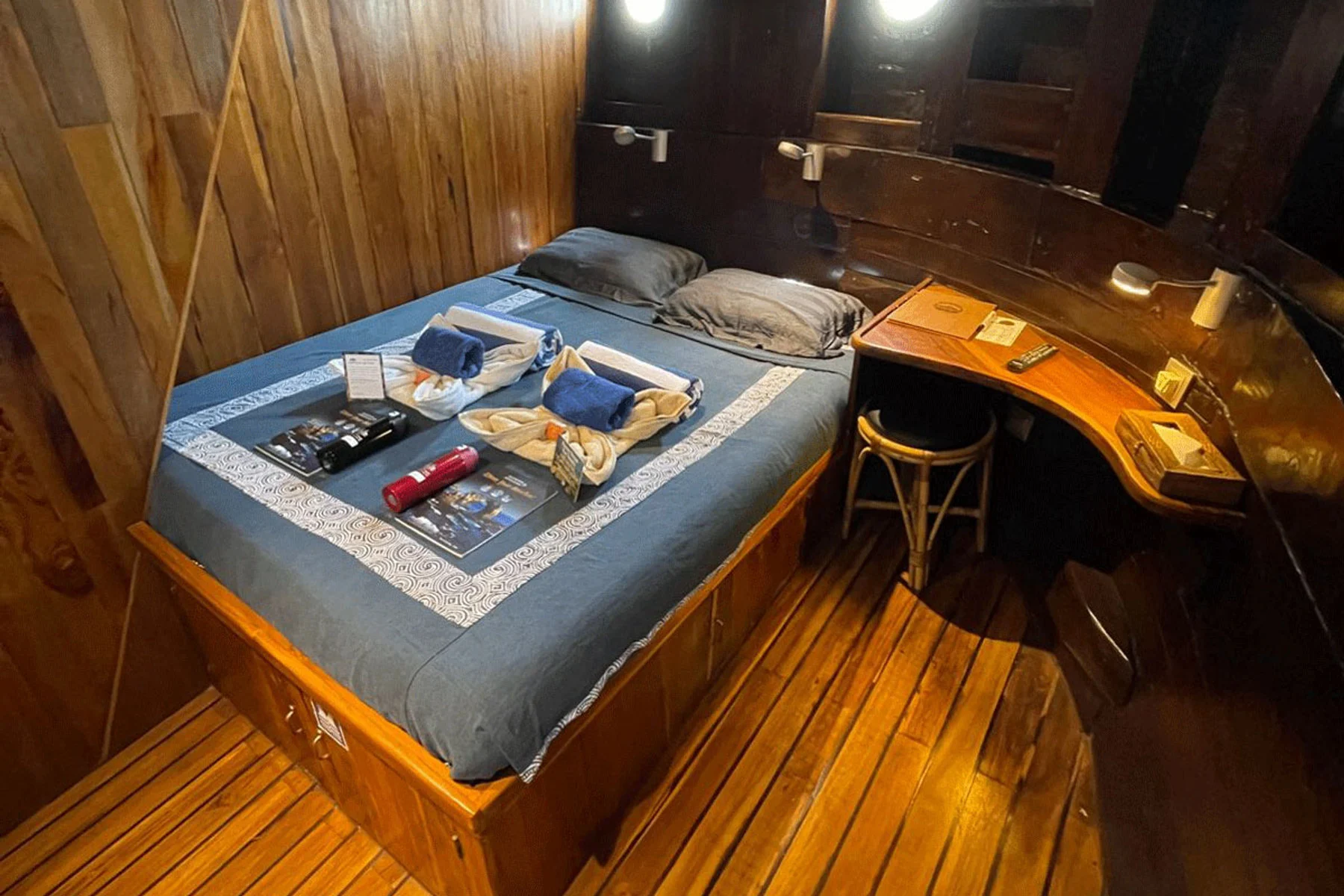
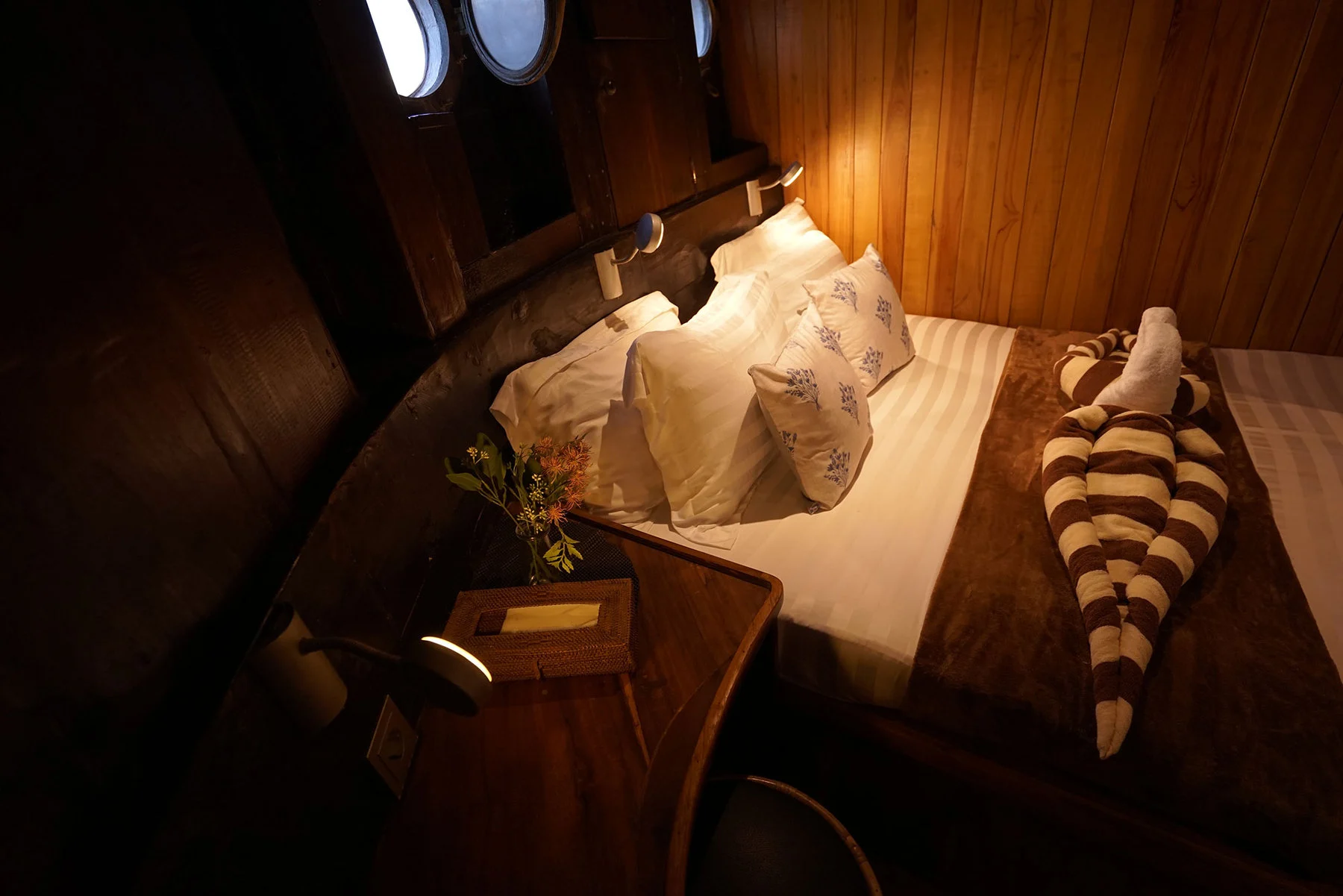
Sixteen divers in eight suites, none smaller than fifteen square metres, each with a large en-suite, individually controlled air conditioning, a writing desk and proper storage. Two are doubles and six are twins. There are no bunk beds anywhere on board, and every bed is aligned lengthwise with the hull, so guests sleep in the direction the boat is travelling instead of rolling shoulder to shoulder across it. Those two decisions are the clearest sign of who designed her.
The dive operation runs at four divers to a guide, off a dedicated dive tender, with nitrox and facilities for technical divers. Photographers get a camera room of their own for storing and working on equipment. Navigation and communication run to GPS, echo sounder, VHF and satellite calling, which is the fit-out a boat needs for the remote end of her range.
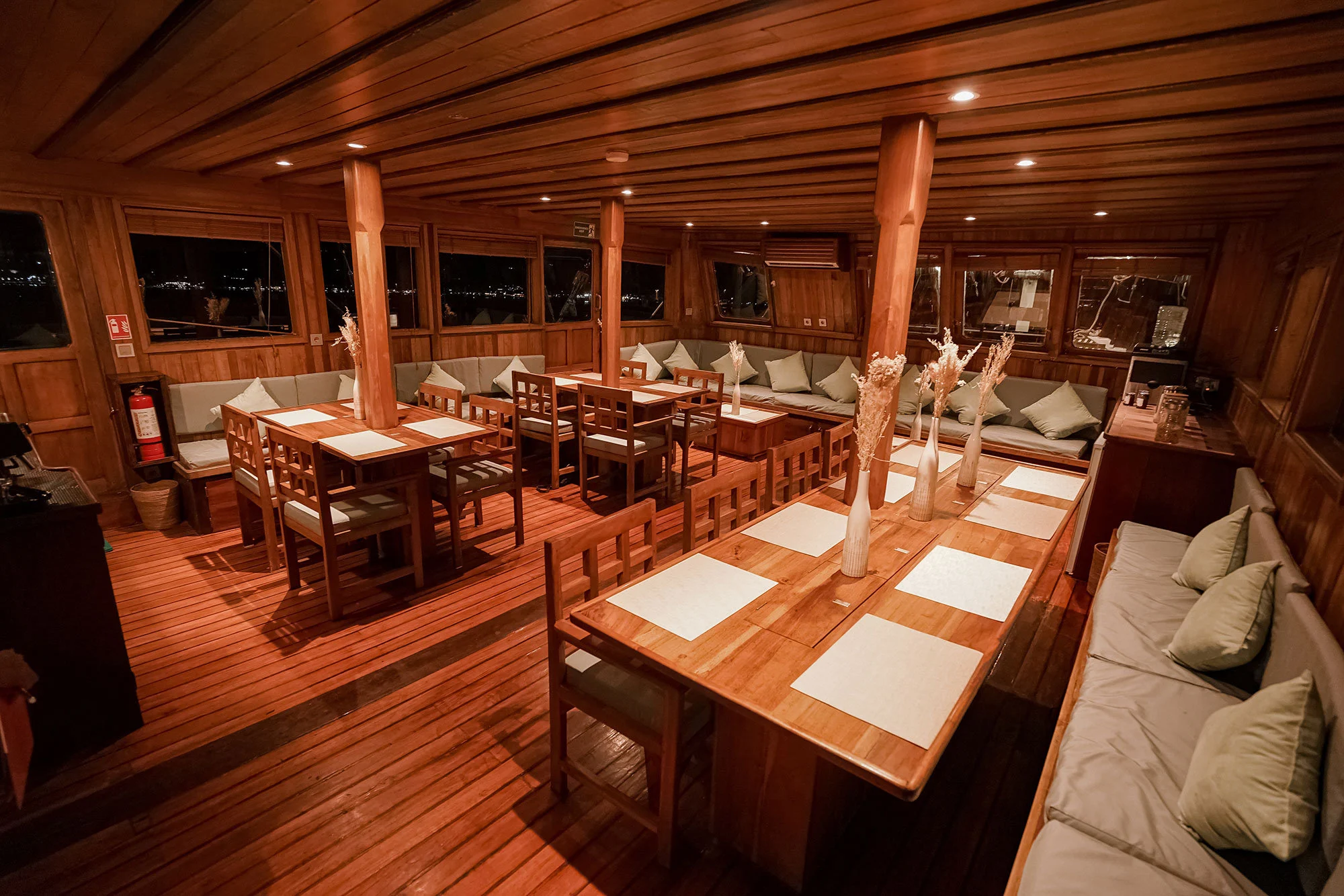
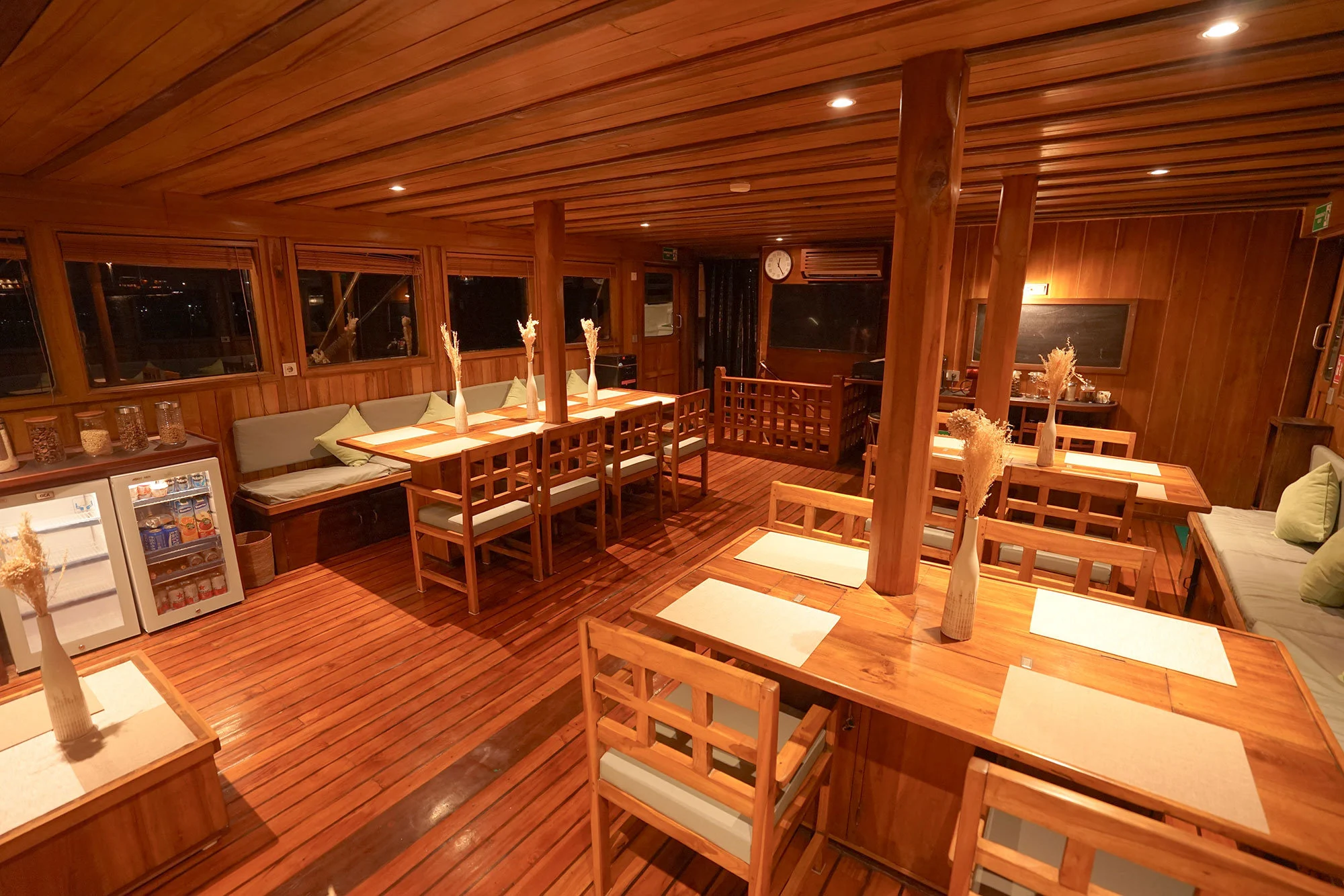
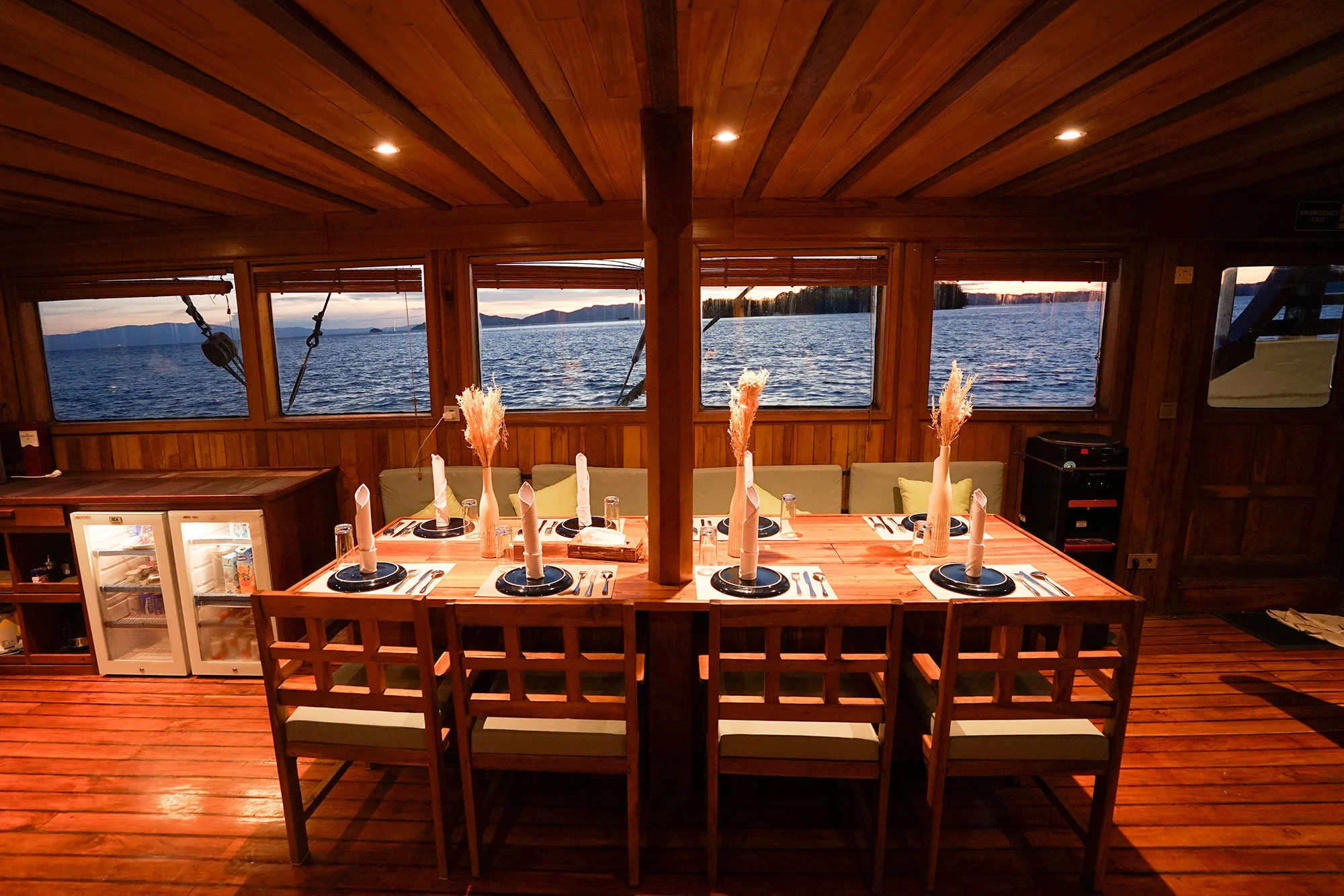
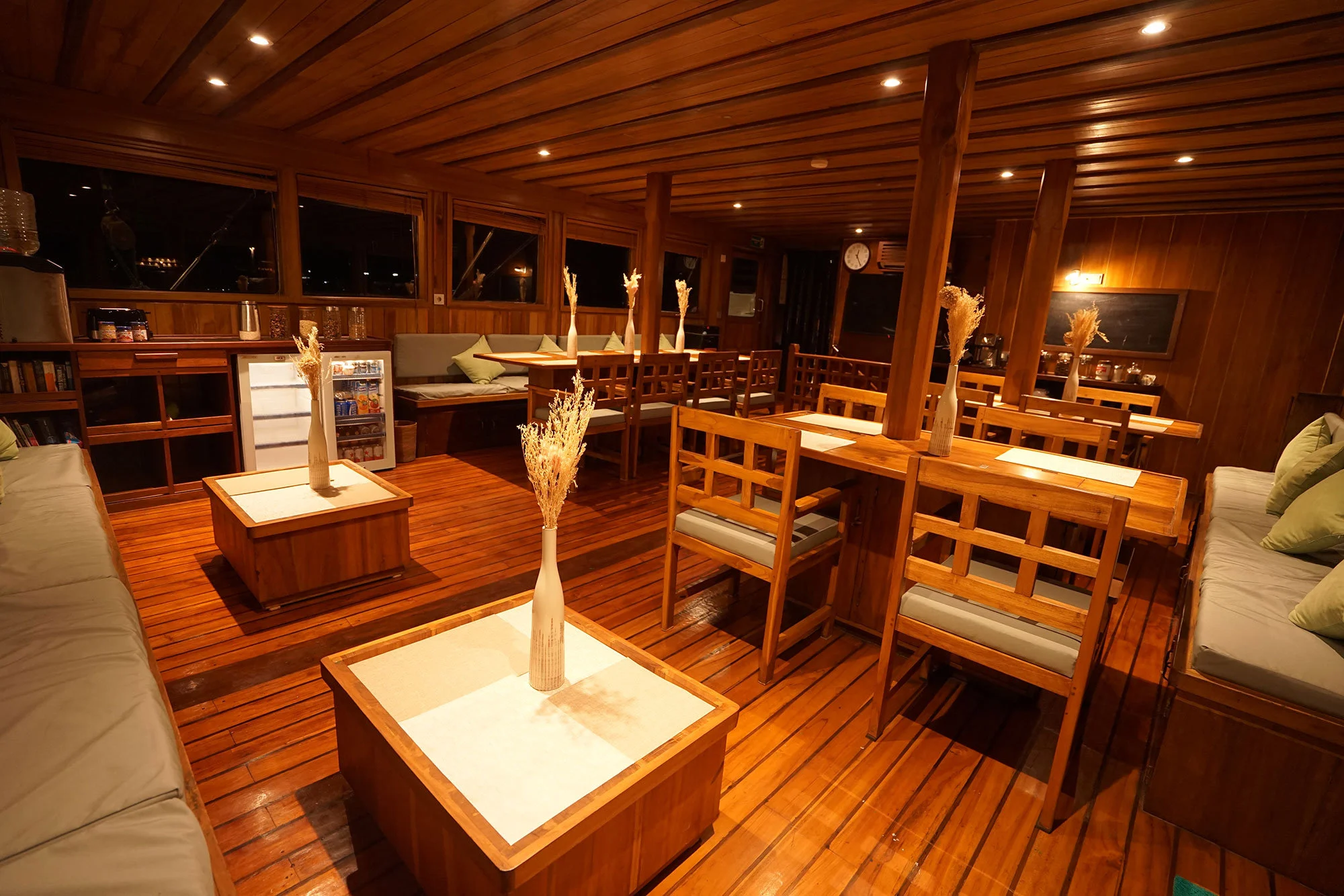
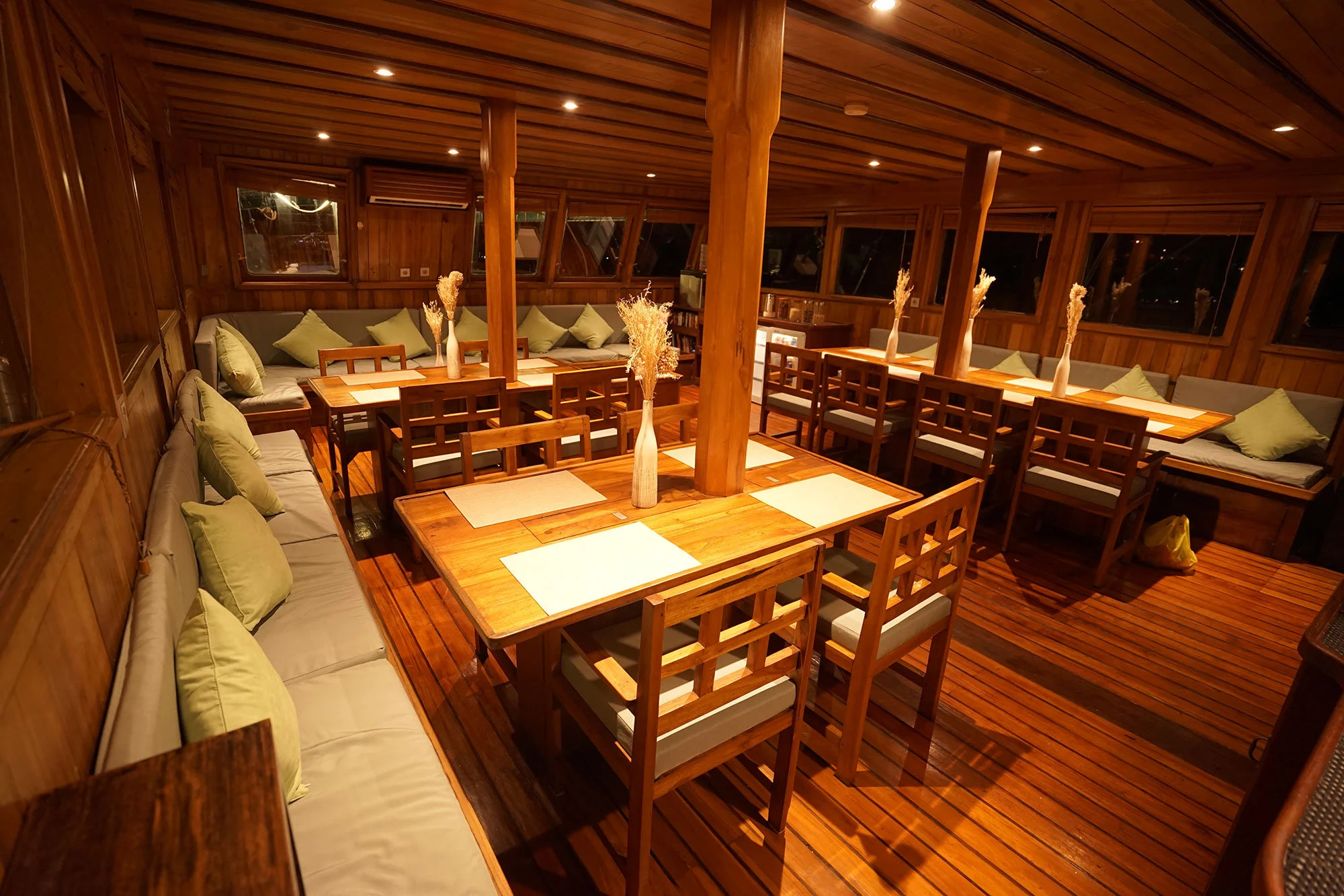
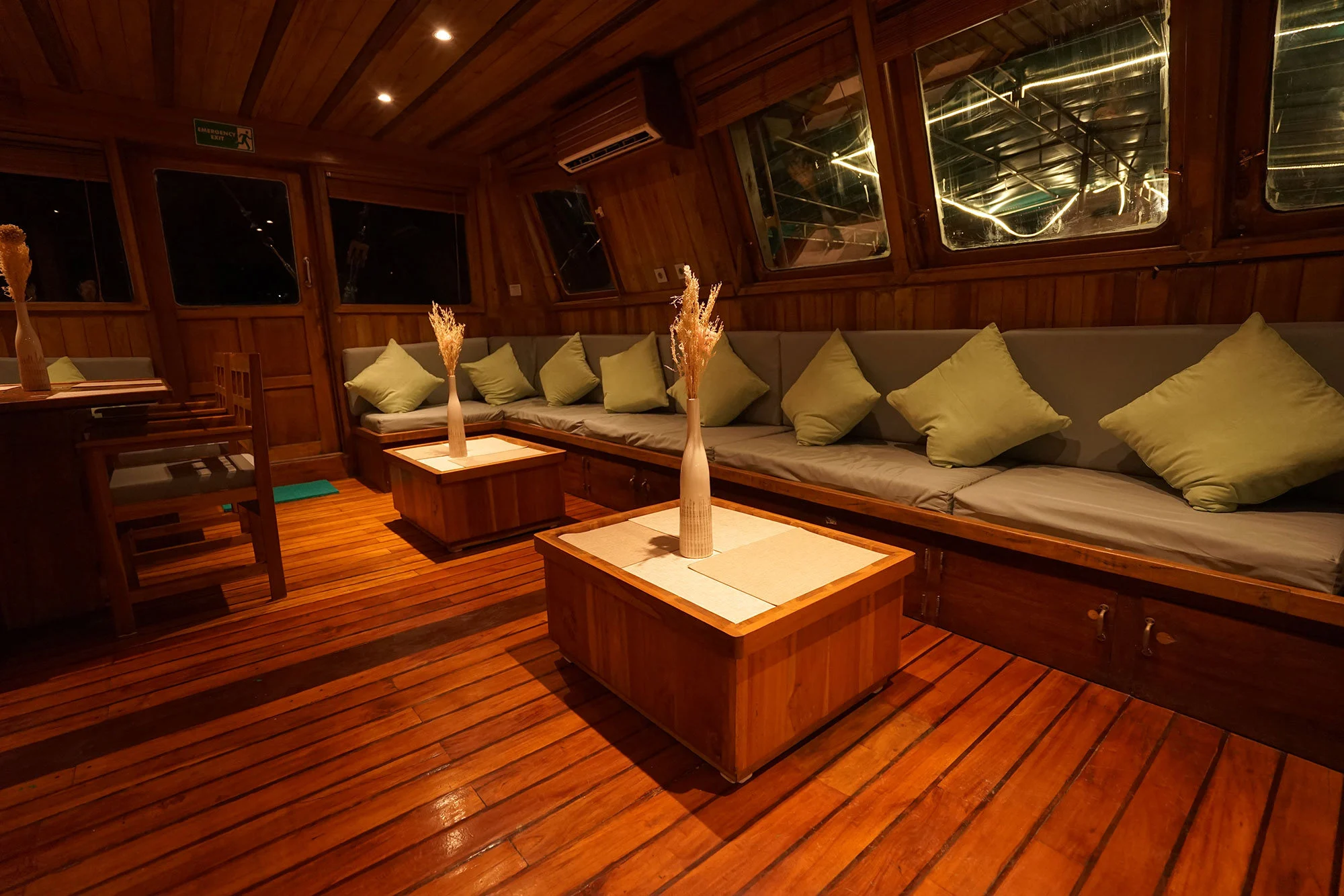
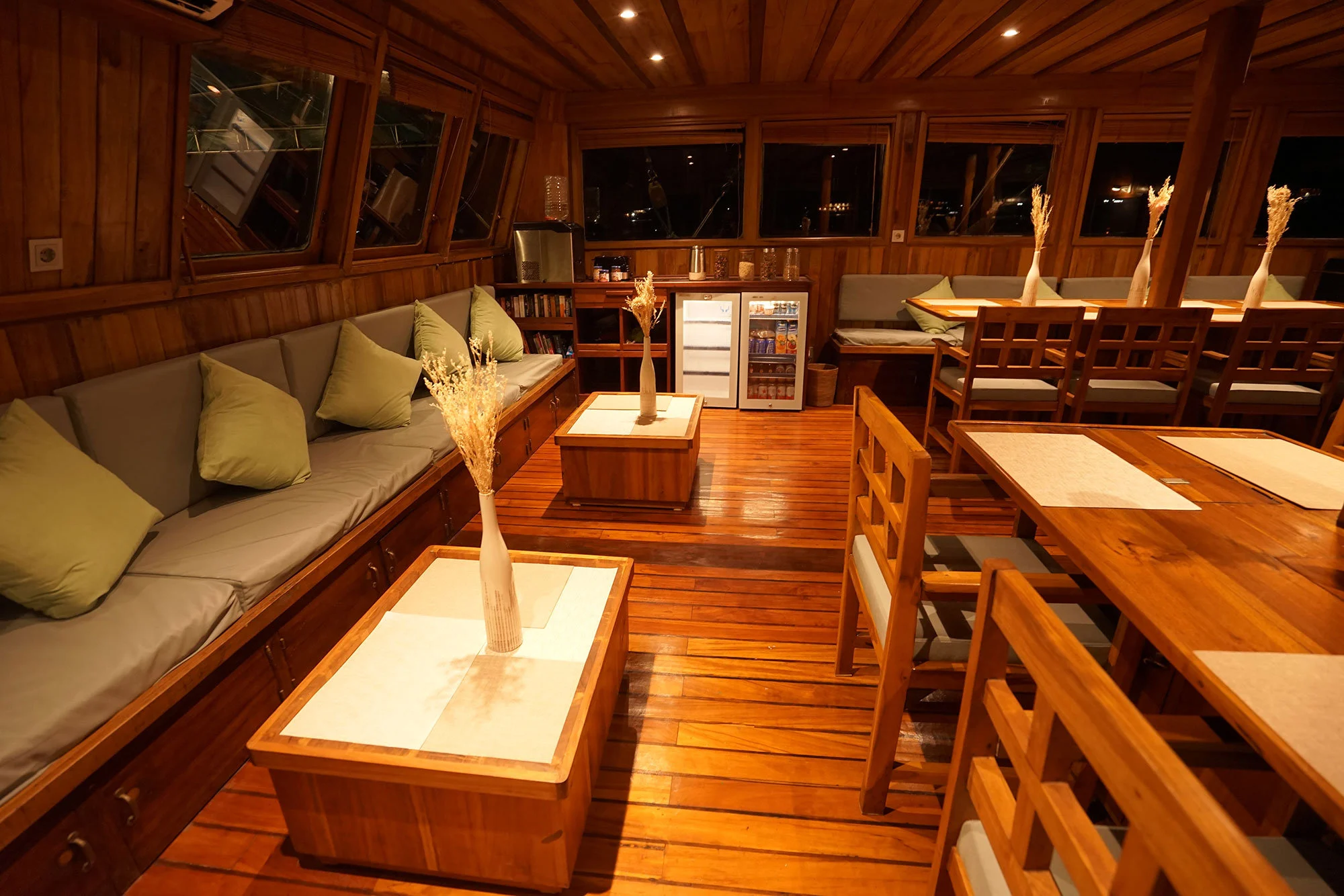
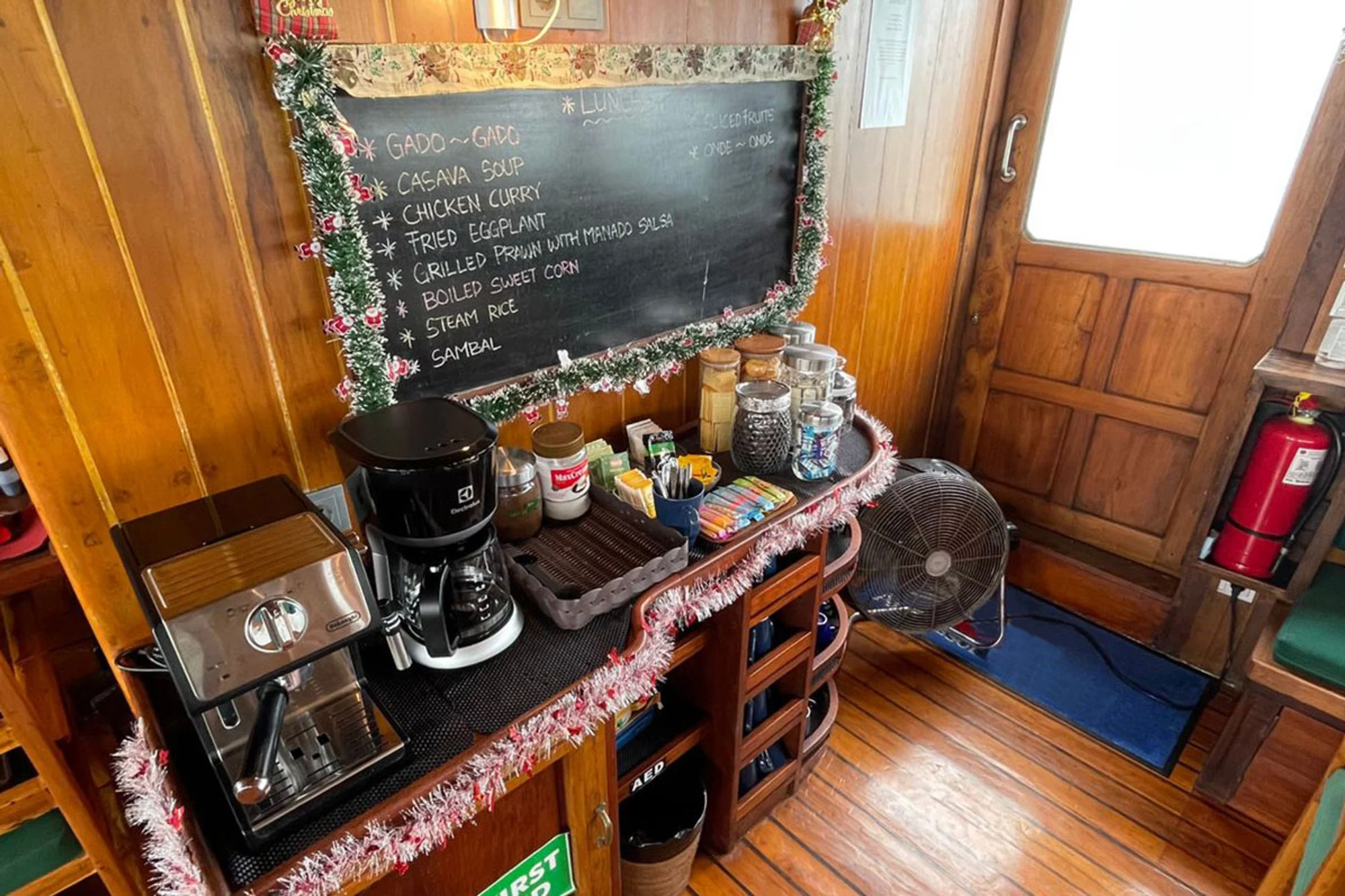
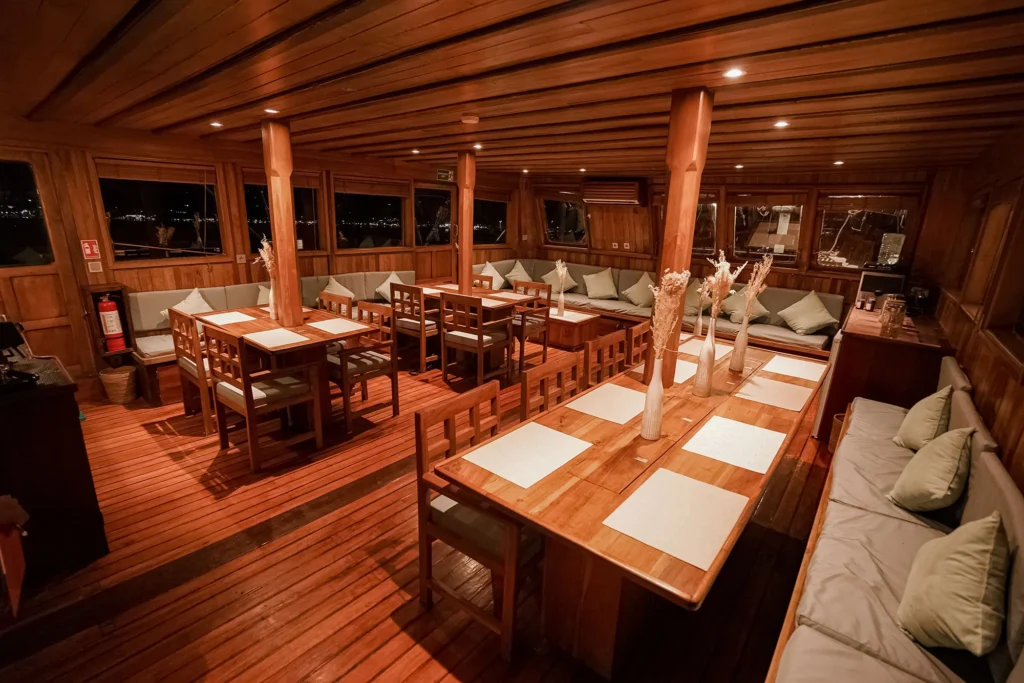
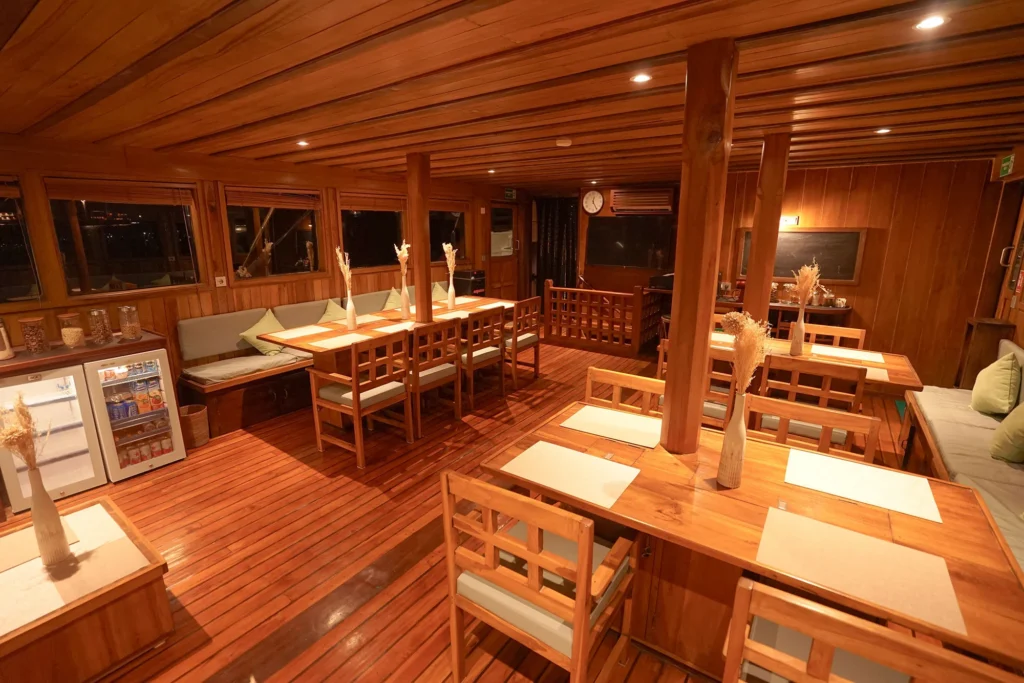
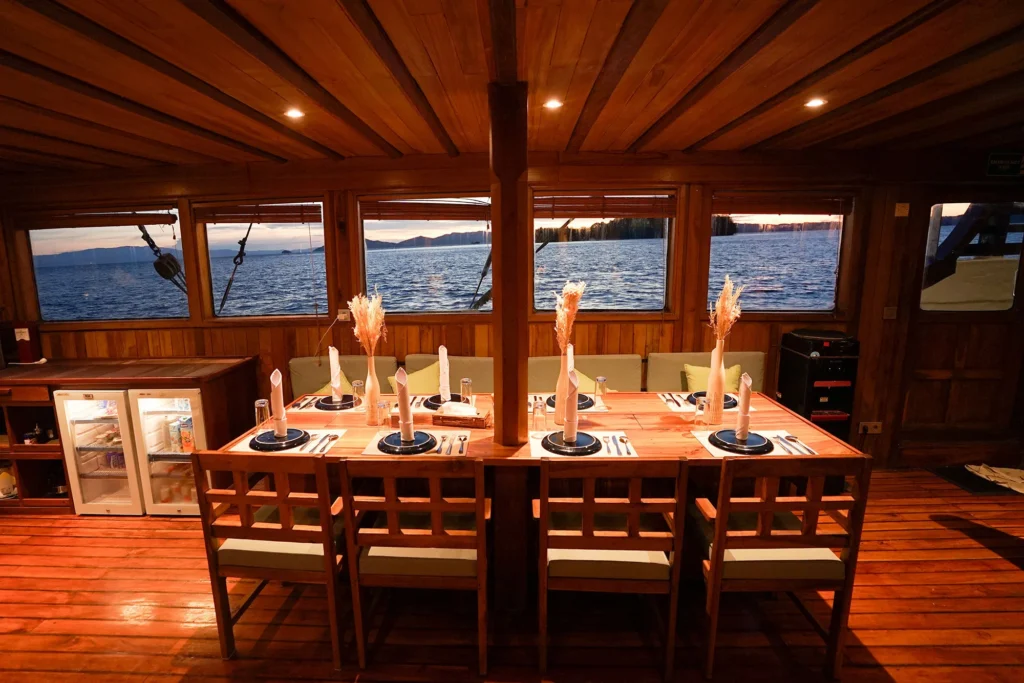
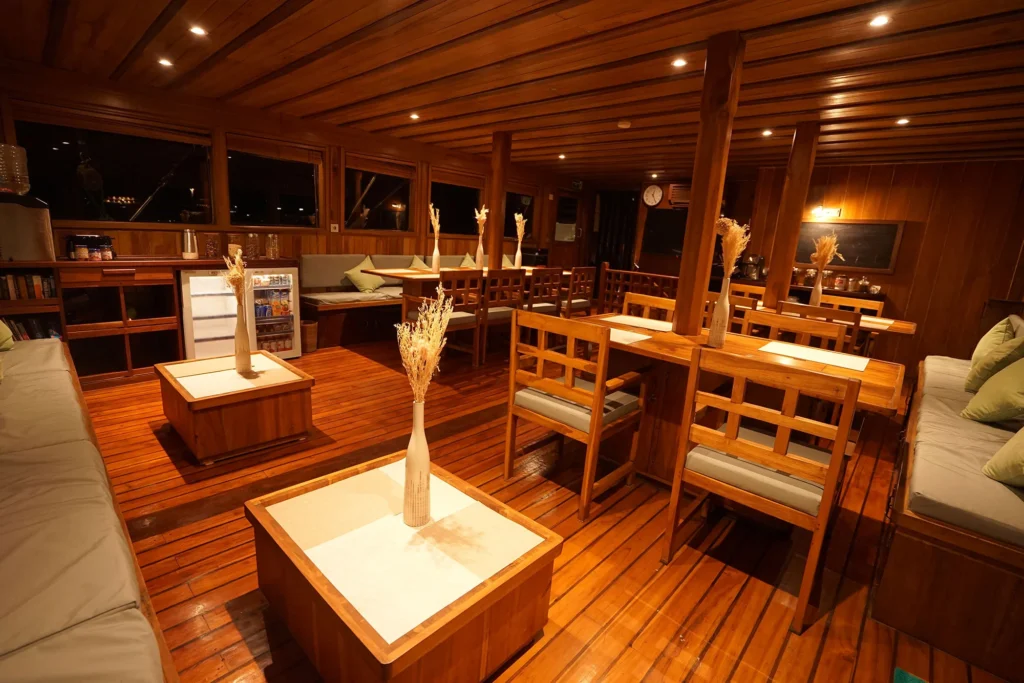
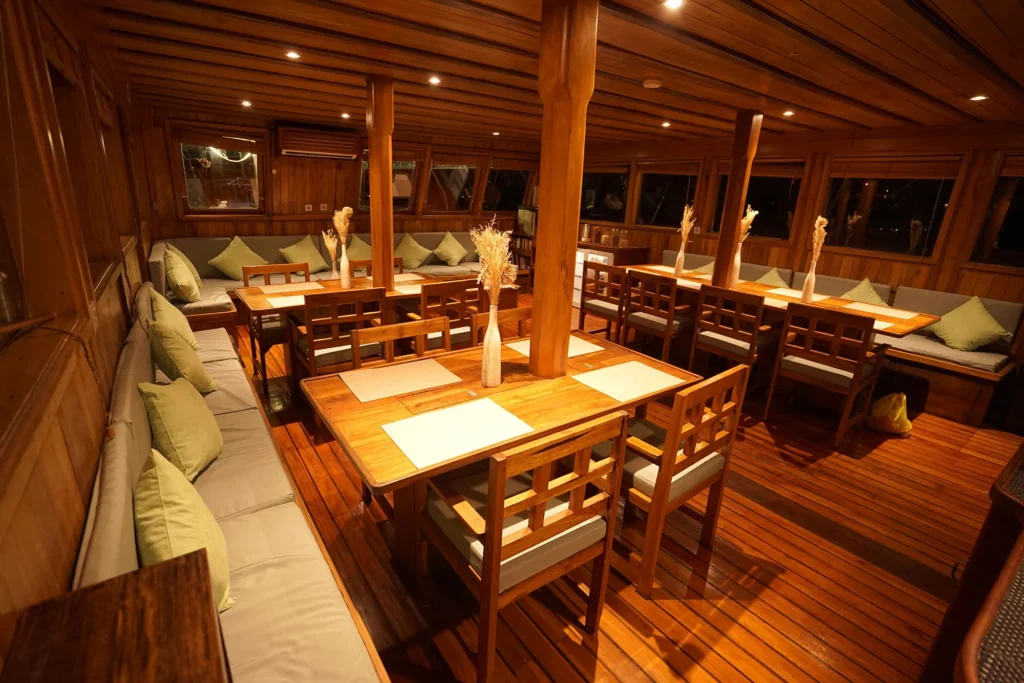
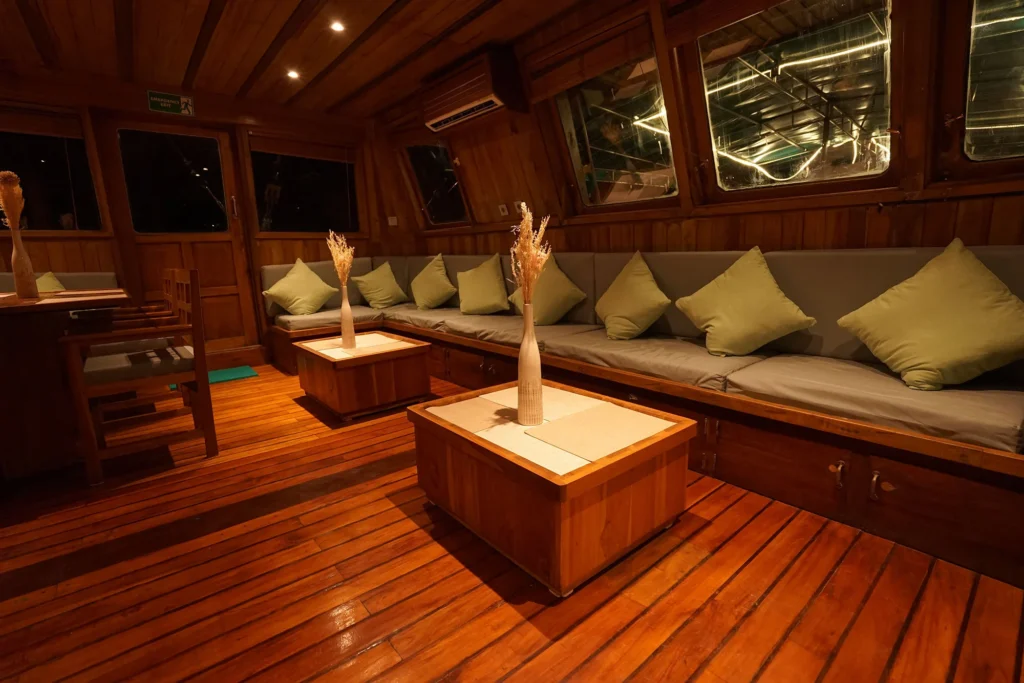
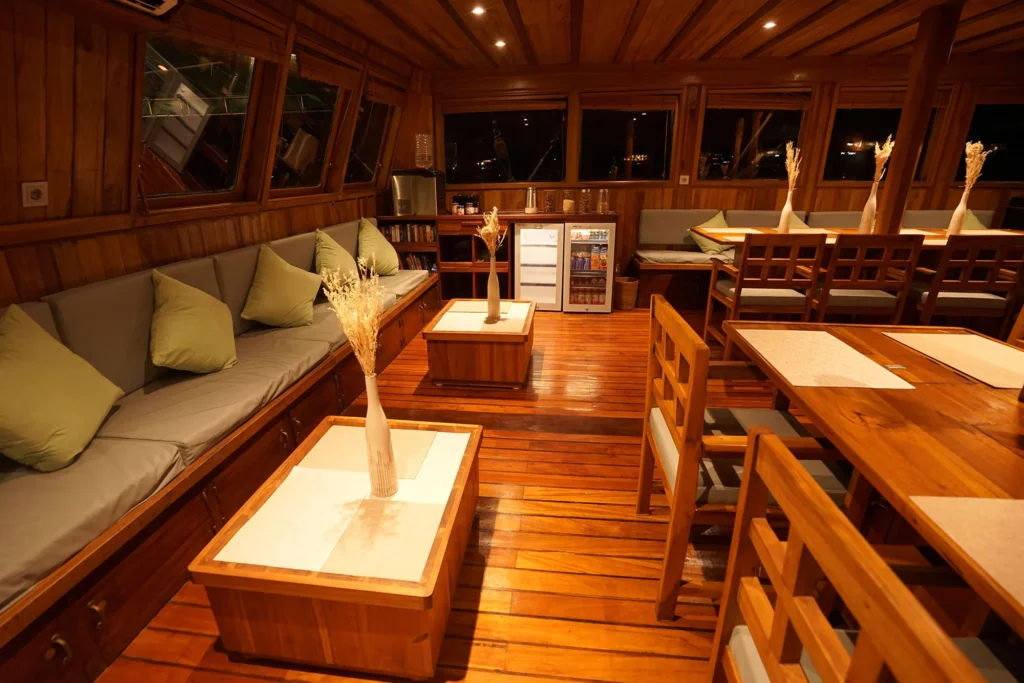
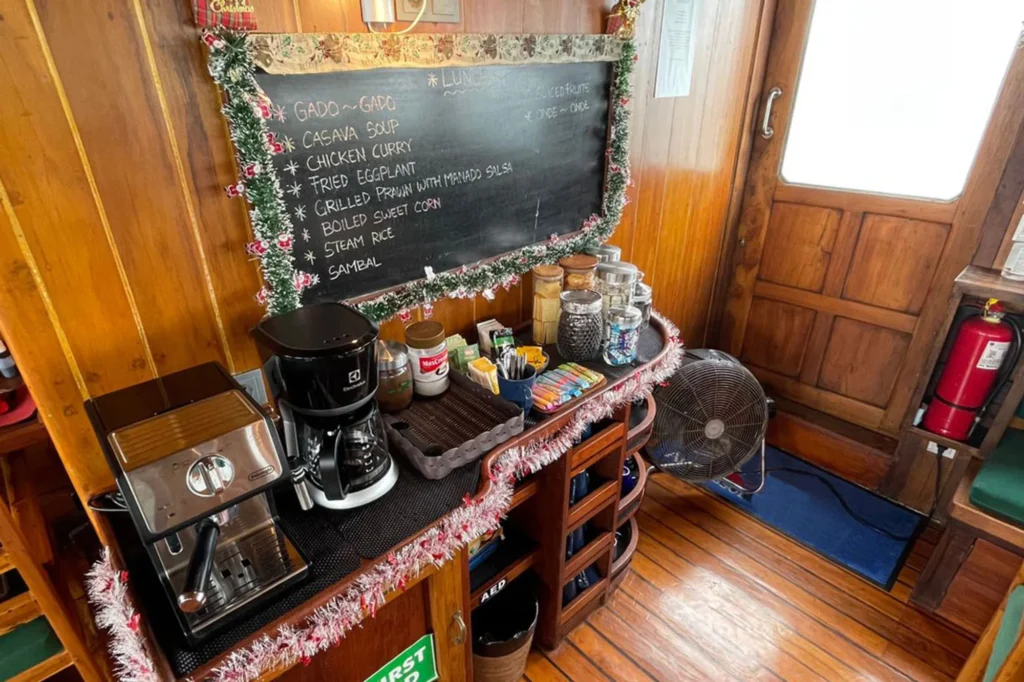
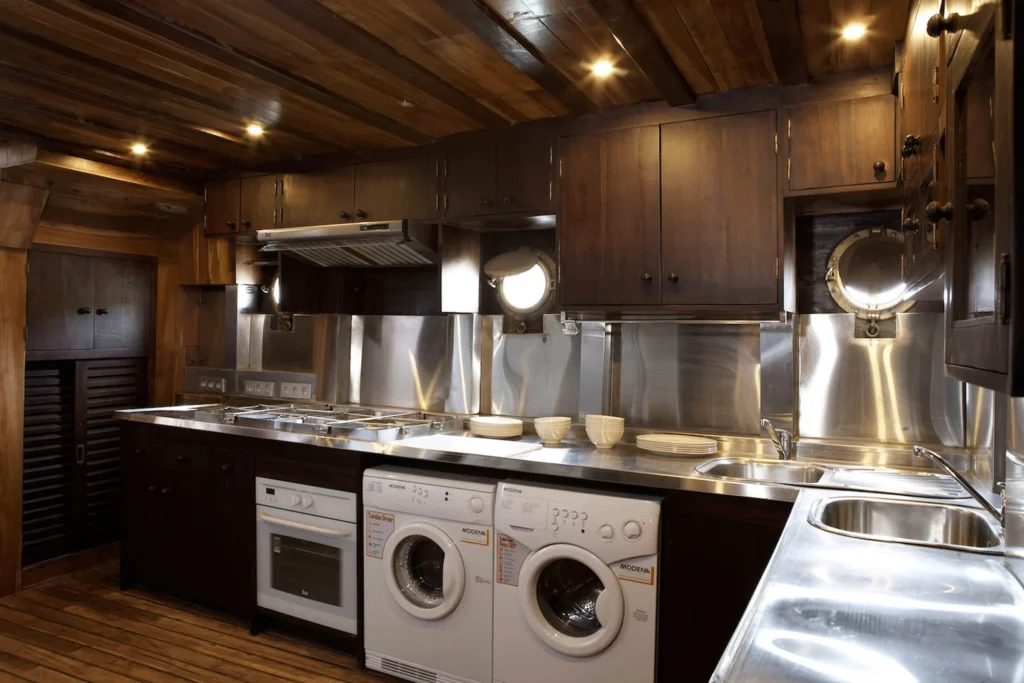
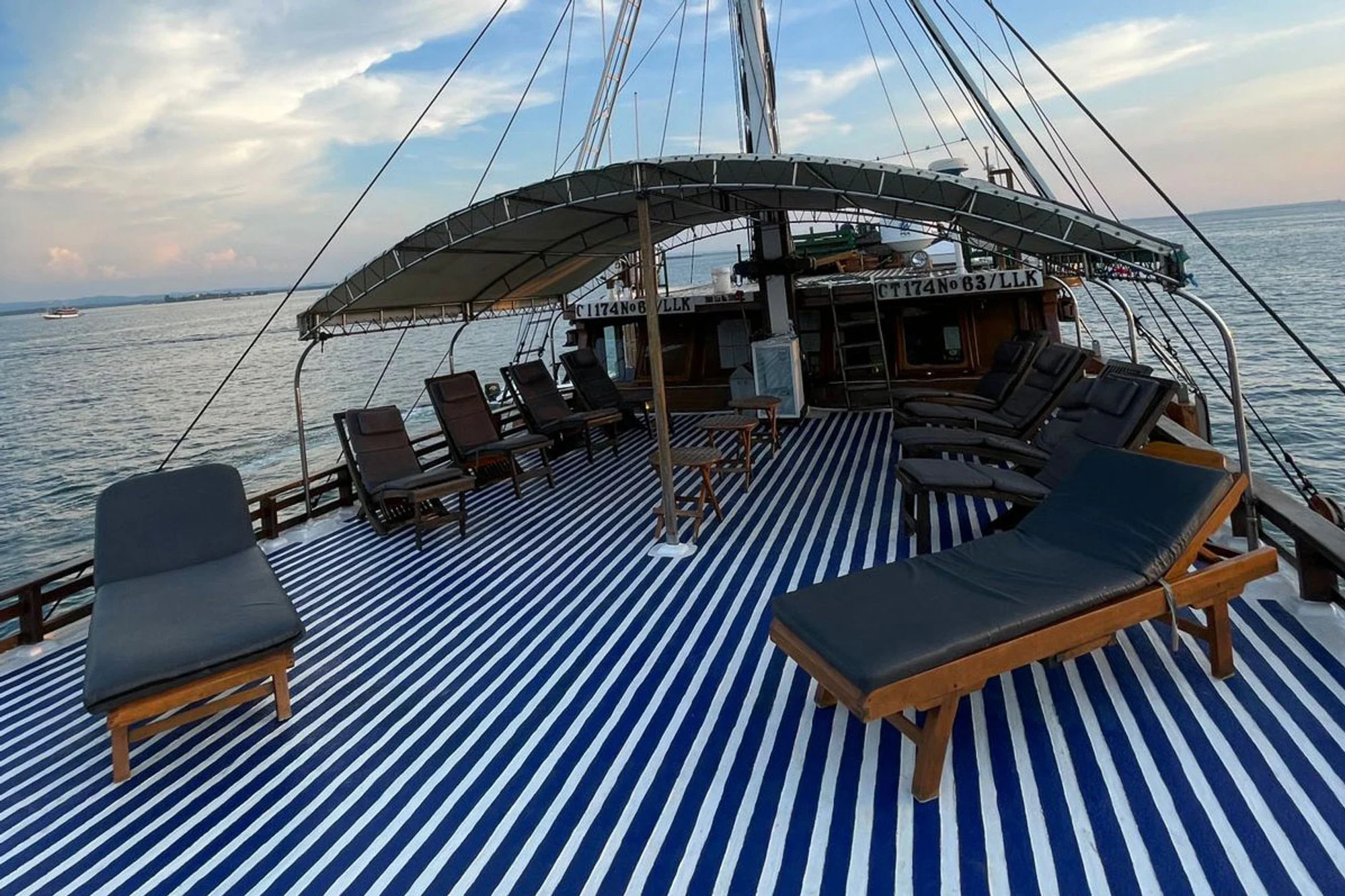
She works almost the whole archipelago across a year: Raja Ampat, Triton Bay and Etna Bay, Cenderawasih Bay, Halmahera, the Banda Sea and Forgotten Islands, Ambon, Lembeh and Bunaken, the Togean Islands, Komodo and Flores, and as far as Derawan and Kakaban off Borneo. Five meals a day are served in a salon split between dining and lounging, with three separate lounge decks at bow, stern and salon roof, all of which can be shaded. Drink inclusions vary across the available reference descriptions. Confirm water, soft drinks, beer, wine and spirits in the written quote for your selected departure.


Sun Deck & Outdoor
Amenities & Facilities
Dive & Snorkeling Sites
Destinations on These Itineraries
Activities
Marine Life
Crew & Diving
- 4
- Nitrox is advertised; ask the operator for the current surcharge and package basis.
Safety & Navigation
- NavigationGPS, VHF Radio, Depth Sounder
Area
The Cabins
Double Suite 1
- Private Bedroom
- Ensuite Bathroom
- Air Conditioning
- Hot and Cold Shower
- Wardrobe
- Desk / Vanity
- Towels and Toiletries
- Double Bed
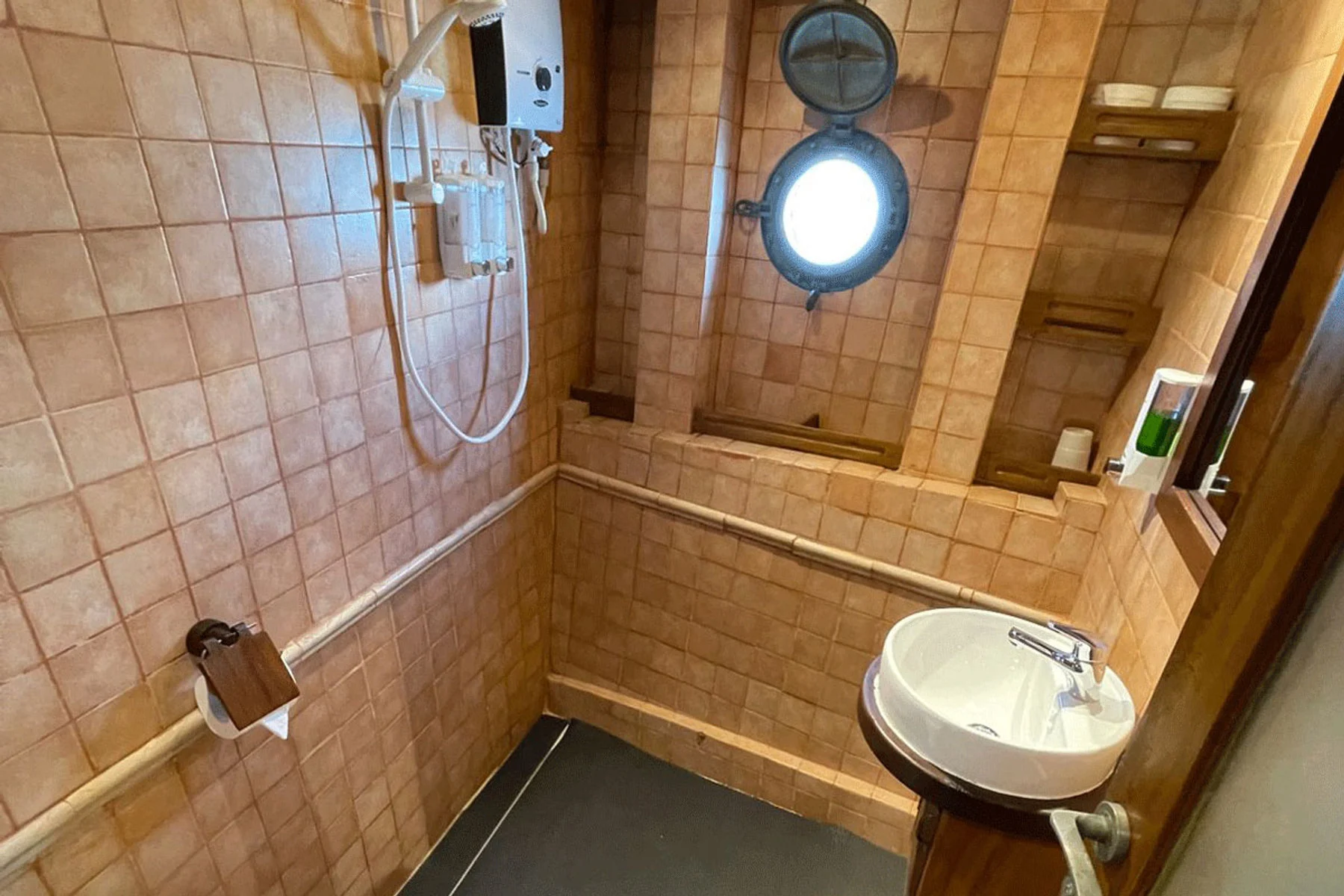
One of only two double-bed suites on board, on the main deck. At least fifteen square metres with a large en-suite, individually controlled air conditioning, a writing desk for logbooks and camera work, and storage sized for bags rather than just clothes. The bed runs lengthwise with the hull. Sleeps two.
Double Suite 2
- Private Bedroom
- Ensuite Bathroom
- Air Conditioning
- Hot and Cold Shower
- Wardrobe
- Desk / Vanity
- Towels and Toiletries
- Double Bed
The second and last double, matching the first in size and fit-out. Large en-suite bathroom, own air conditioning control, writing desk and lengthwise bed. Sleeps two.
Twin Suite 1
- Private Bedroom
- Ensuite Bathroom
- Air Conditioning
- Hot and Cold Shower
- Wardrobe
- Desk / Vanity
- Towels and Toiletries
- Twin Single Beds
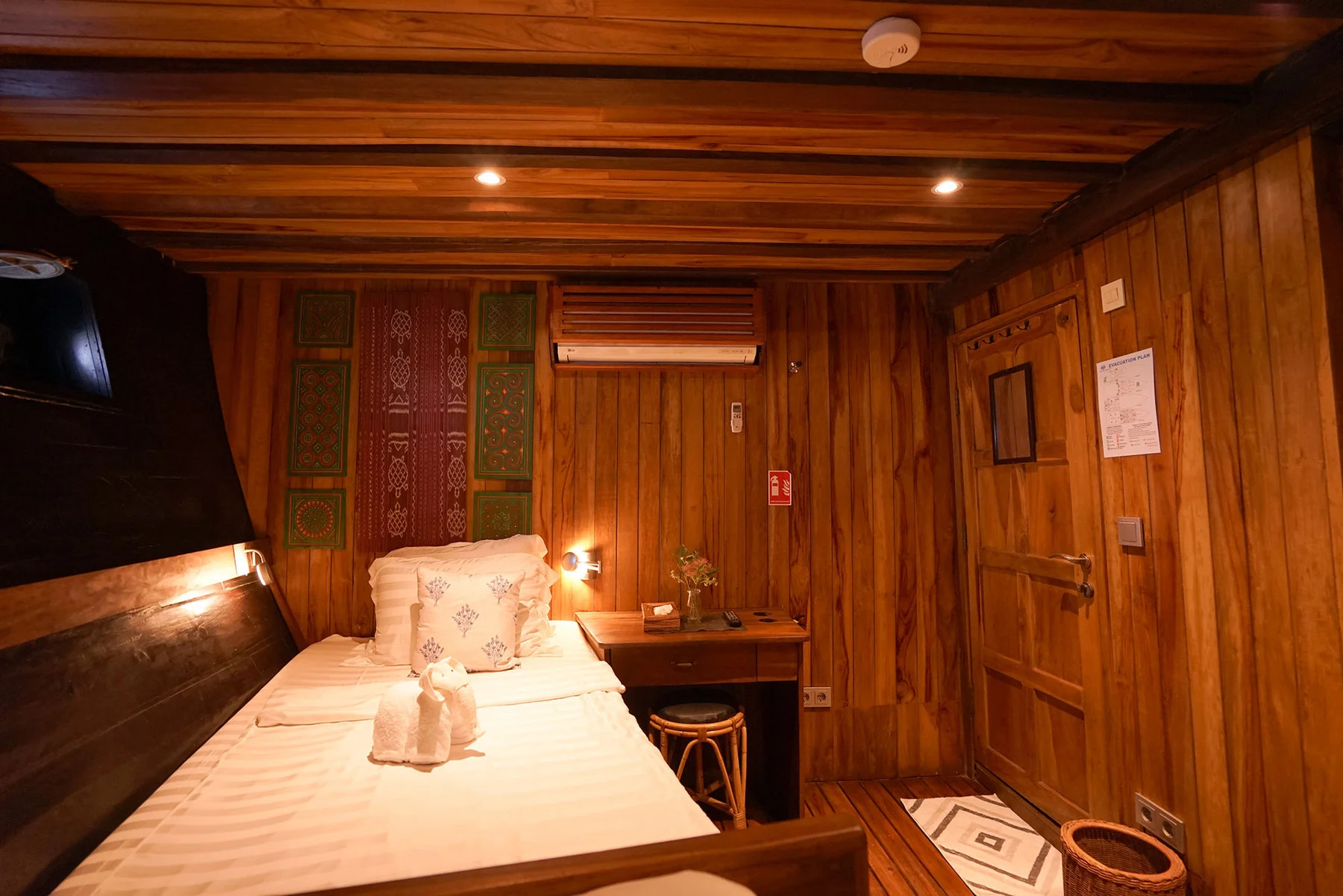
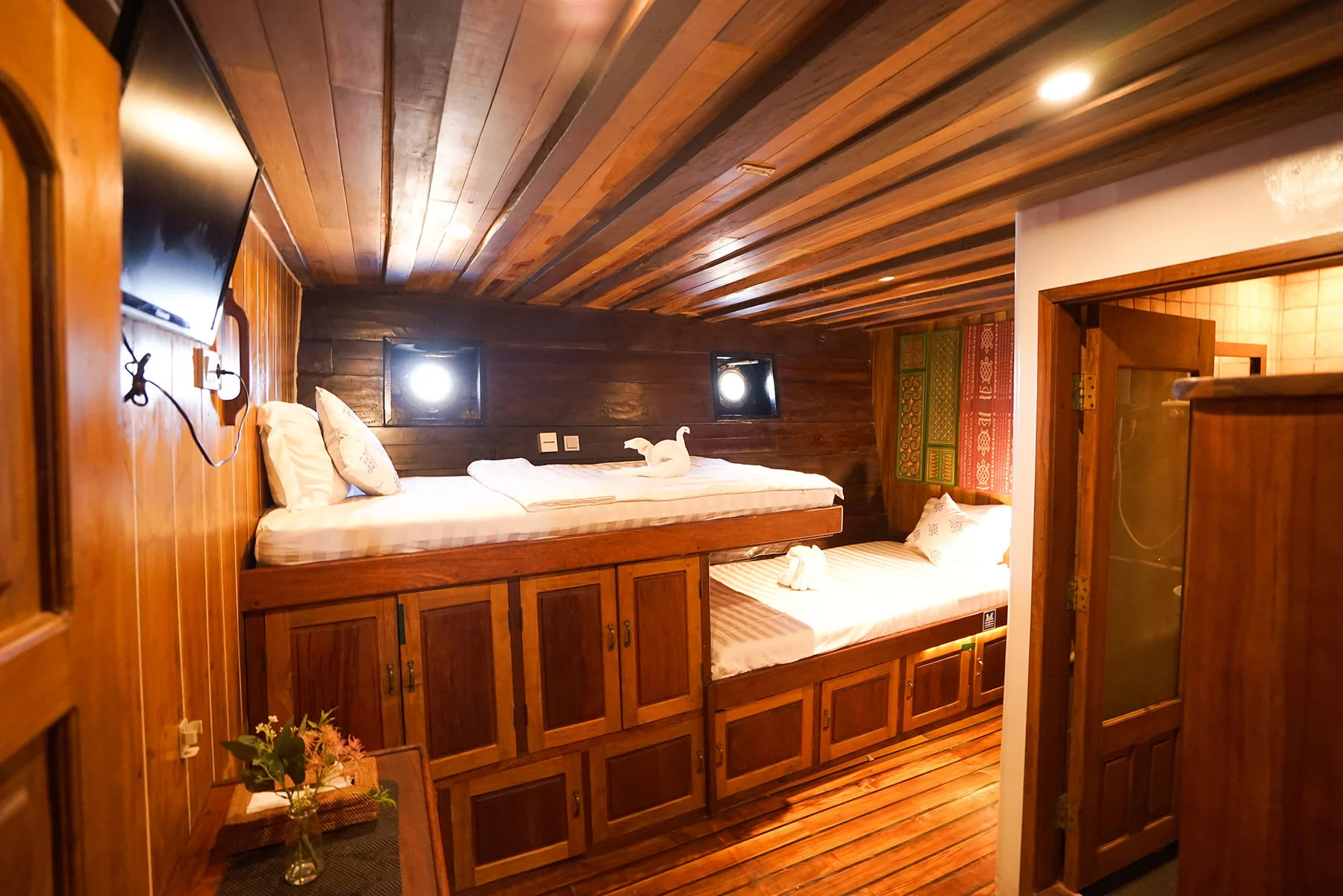
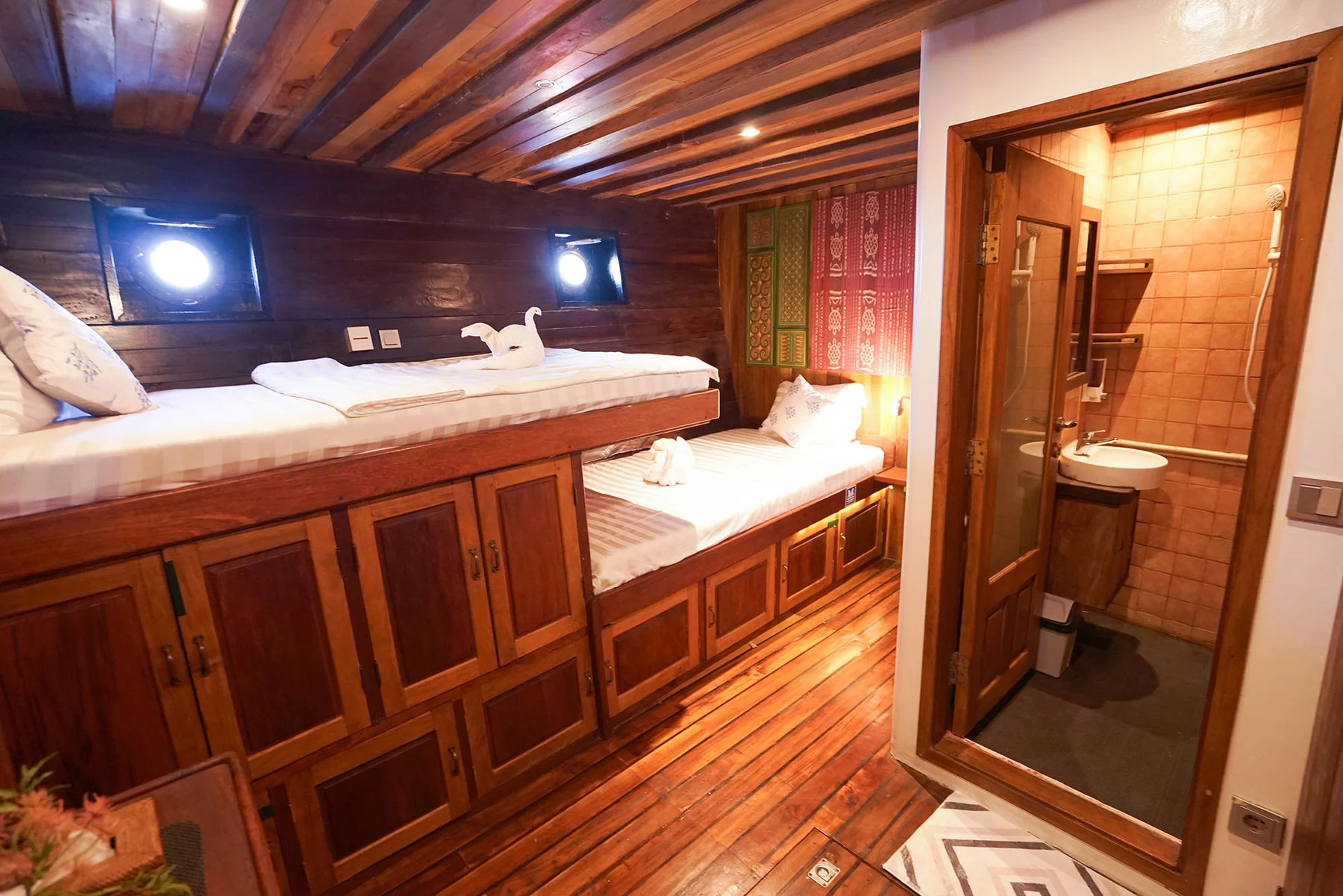
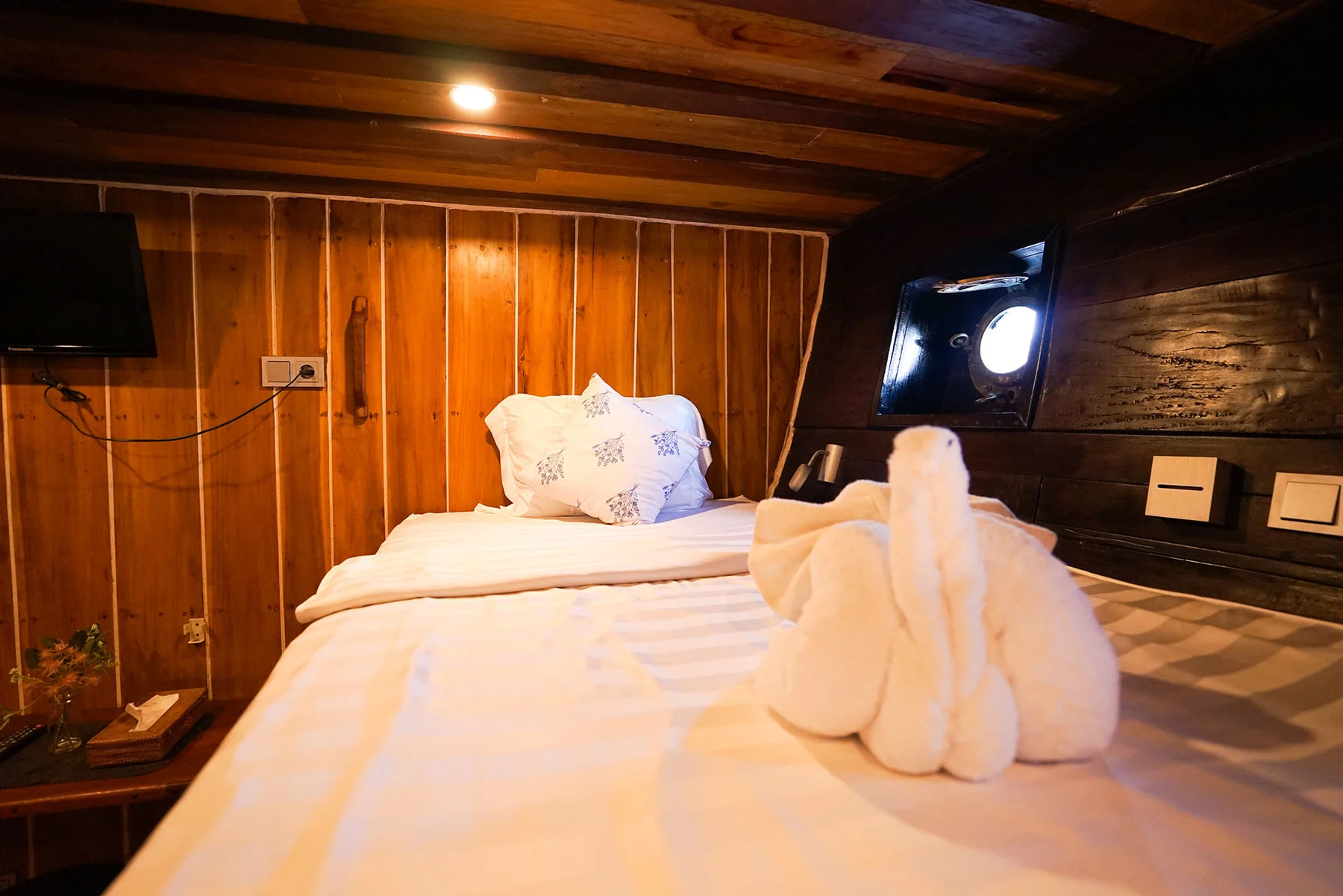
One of six twin suites, with two large single beds rather than bunks, because the boat carries no bunk beds at all. Fifteen square metres or more, large en-suite, individual air conditioning and a writing desk. Sleeps two.
Twin Suite 2
- Private Bedroom
- Ensuite Bathroom
- Air Conditioning
- Hot and Cold Shower
- Wardrobe
- Desk / Vanity
- Towels and Toiletries
- Twin Single Beds
The second twin suite, identical in grade to the rest. Two large singles aligned lengthwise, en-suite bathroom with hot water, air conditioning and a writing desk. Sleeps two.
Twin Suite 3
- Private Bedroom
- Ensuite Bathroom
- Air Conditioning
- Hot and Cold Shower
- Wardrobe
- Desk / Vanity
- Towels and Toiletries
- Twin Single Beds
The third twin, same size and fit-out as the others in the grade. Large en-suite, own air conditioning control, desk and storage. Sleeps two.
Twin Suite 4
- Private Bedroom
- Ensuite Bathroom
- Air Conditioning
- Hot and Cold Shower
- Wardrobe
- Desk / Vanity
- Towels and Toiletries
- Twin Single Beds
The fourth twin suite, again with two large single beds and no bunks. En-suite bathroom, individually controlled air conditioning, writing desk. Sleeps two.
Twin Suite 5
- Private Bedroom
- Ensuite Bathroom
- Air Conditioning
- Hot and Cold Shower
- Wardrobe
- Desk / Vanity
- Towels and Toiletries
- Twin Single Beds
The fifth twin, matching the rest of the grade at fifteen square metres or more with a large en-suite. Air conditioning on its own control, desk and ample storage. Sleeps two.
Twin Suite 6
- Private Bedroom
- Ensuite Bathroom
- Air Conditioning
- Hot and Cold Shower
- Wardrobe
- Desk / Vanity
- Towels and Toiletries
- Twin Single Beds
The sixth and final twin suite. Two large singles running fore and aft, large en-suite with hot water, individual air conditioning and a writing desk. Sleeps two.
Rates & Packages
Private Charter
From $14,400 per whole boat · 3D2N
Rates for 2026–2027 departures
| Duration | 1–16 guests |
|---|---|
| 2D1N | From $7,200 |
| 3D2N | $14,400 |
| 4D3N | $21,600 |
| 5D4N | $28,800 |
| 6D5N | $36,000 |
| 7D6N | $43,200 |
Whole-boat private charter · Indonesia · up to 16 guests
What’s included & extra costs
Current numeric planning estimate for a 3D2N private charter, based on 16-guest capacity and comparable expedition-liveaboard pricing.
Last verified 8 October 2026. Rates can change; confirm availability and the final invoice before payment.
Request a current quote
Send your travel date and group size. The final availability, inclusions, fees, and invoice must be confirmed before payment.
Not Included & Extra Costs
- Nitrox surchargeNitrox is advertised; ask the operator for the current surcharge and package basis.
- Solo traveller supplementSolo and extra-guest arrangements depend on the selected booking model, cabin allocation and permitted occupancy. Confirm any supplement in the operator quotation.
Book This Vessel
Availability and quotes for Tambora are handled by the operator directly. KomodoInsider does not take bookings or add a commission.
Check AvailabilityOpens instagram.com in a new tab
Last checked .
You May Also Be Interested In
Solitude Adventurer
36 m aluminium catamaran with eight above-deck cabins for 18 divers
- Up to 18 guests
- 8 cabins
- Dive Resort
$2,810 /person
Shared + Charter
Ombak Putih
42 m traditional pinisi for snorkeling, wildlife and cultural expeditions
- Up to 24 guests
- 12 cabins
- Leisure only
$6,320 /person
Shared + Charter
DUNE Aurora
42 m Sulawesi-built dive phinisi with nine ensuite cabins for up to 18 guests
- Up to 18 guests
- 9 cabins
- Dive Resort
$5,350 /person
Shared + Charter
Add a review