
- Shared trip from$2,730 / person
- Whole-boat charter from$14,040 / whole boat
- Check availability
- Leave a review
- Bookmark
- Report
- prev
- next
Cruising Areas
Raja Ampat cruises
Raja Ampat out of Sorong, split by the operator into North, Central and South itineraries, with a seven-night Central and North route as the flagship.
Route details
This is where the vessel worked as a patrol boat before her conversion, and where her first research voyage surveyed reef health across North Misool and Werur with YKAN and the University of Papua.
Cenderawasih Bay cruises
Run in both directions, Manokwari to Biak and Biak to Manokwari, on trips up to nine nights.
Route details
The draw is the resident whale sharks that gather at the fishing bagans, paired with WWII wreck diving near Manokwari.
Few operators schedule this bay at all.
Banda Sea cruises
Three routings: Saumlaki to Ambon, Ambon to Saumlaki, and Ambon round trip.
Route details
The Ring of Fire crossing through volcanic islands and historic nutmeg ports, with hammerheads the reason most divers book it.
Teon Nila Serua, an even less-visited group, is offered separately.
Ambon cruises
Ambon is a listed embarkation port for the Banda Sea legs, and the diving in the bay itself is muck rather than reef.
Route details
Silt, sponge and rubble, worked slowly.
It is a useful acclimatisation stop before the open-water crossings, and with eighteen guests running from two tenders the group can be split between critter hunters and everyone else.
Halmahera cruises
Halmahera sits in the Maluku half of the programme alongside the Banda Sea and Teon Nila Serua.
Route details
The operator also runs a Wallacea biodiversity and cultural expedition, which is closer to a field trip than a dive cruise and reflects what the boat was rebuilt to do.
Triton Bay cruises
Triton Bay is reached from Kaimana and is the most remote water on the schedule.
Route details
Soft coral cover is the point, visibility runs lower than Raja Ampat, and whale sharks gather around the fishing bagans.
Very few boats work this ground.
On a vessel where the charter fee funds conservation rather than an owner, this is the stretch where that argument is easiest to see.
Who This Suits
Suits: expedition divers and nature-focused travellers who value remote Papua and Maluku itineraries. EcoXplorer is operated by the EcoNusa Foundation, with profits reinvested into Indigenous-led conservation, healthcare and education programmes.
Also suits: guests looking beyond standard Raja Ampat circuits. Published routes include Mapia, Cenderawasih Bay, Halmahera, Banda Sea and Wallacea crossings, supported by EPIRB, SART, AIS, Navtex and an Iridium satellite phone.
Capacity note: the operator's facility page publishes six guest cabins and 18 guest beds. Its current named cabin layout accounts for 16 guest places (4 + 2 + 3 + 3 + 2 + 2), and states that Intsia is reserved for the Ship Master; scheduled shared departures often cap at 12. Groups above 16 should confirm the exact berthing allocation directly.
Less suited to: travellers wanting a short luxury-yacht stay. Most guest cabins are below deck and itineraries commonly run seven to eleven nights.
Vessel at a Glance
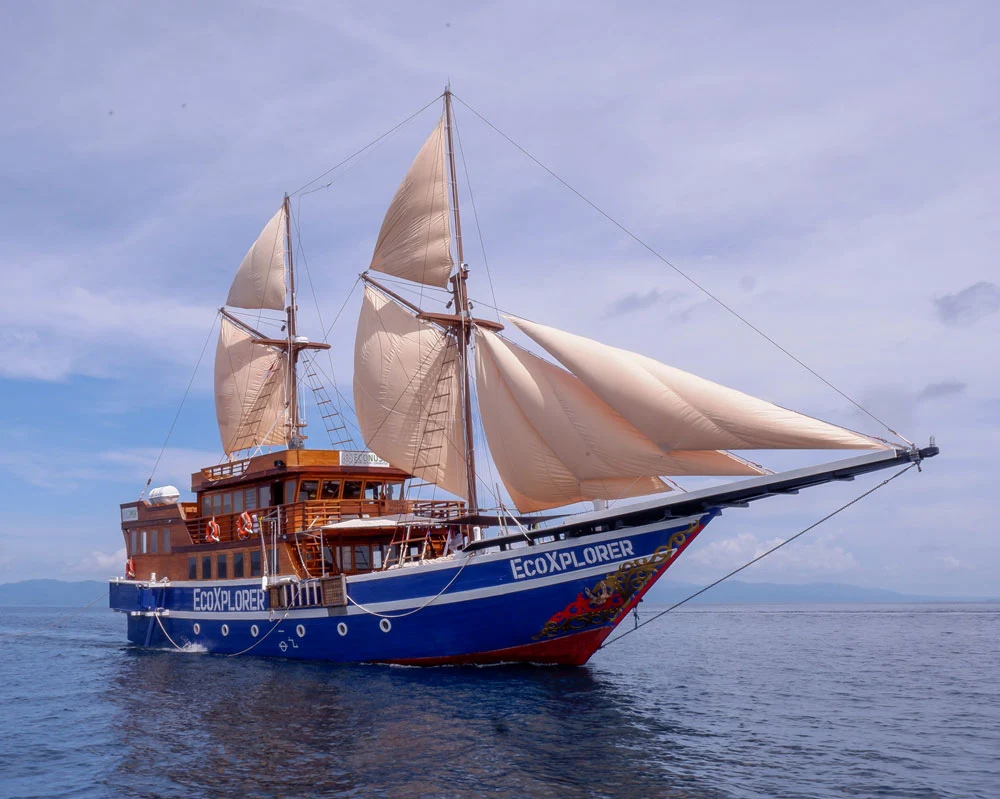
- Phinisi
- Rebuilt 2020 to 2022, operating since May 2022
- Ironwood
- 31.46 m length overall, 23.78 m length on deck, 6.49 m beam, 3.47 m draft; 6 sails
- 18 guests
- 6 knots cruising, 10 knots maximum
- Shared trips & private charters
- 5D4N+
- Dive Resort
- Compressor, Dive Master
- Kayak, Snorkeling Gear
- Starlink
About This Vessel
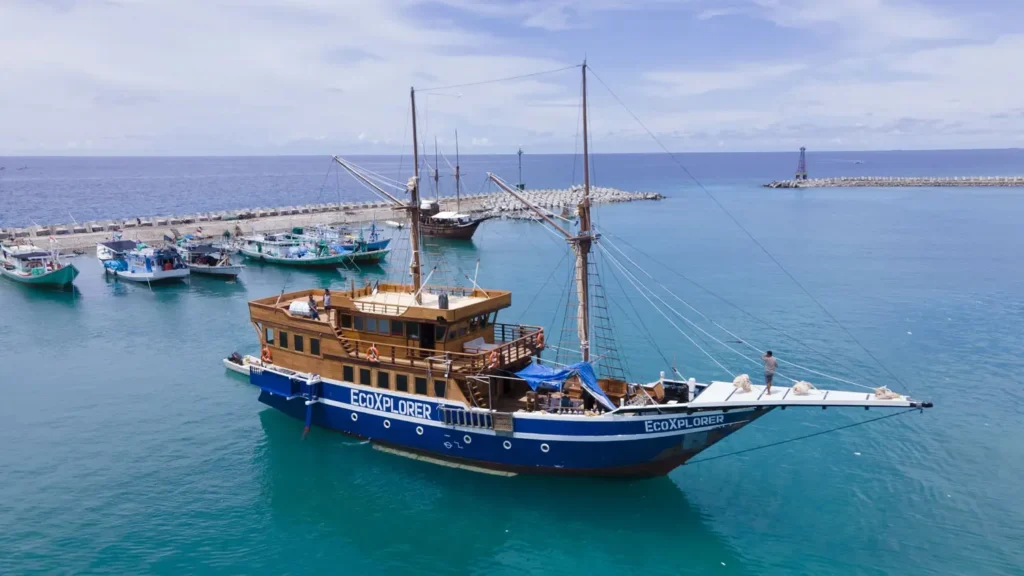
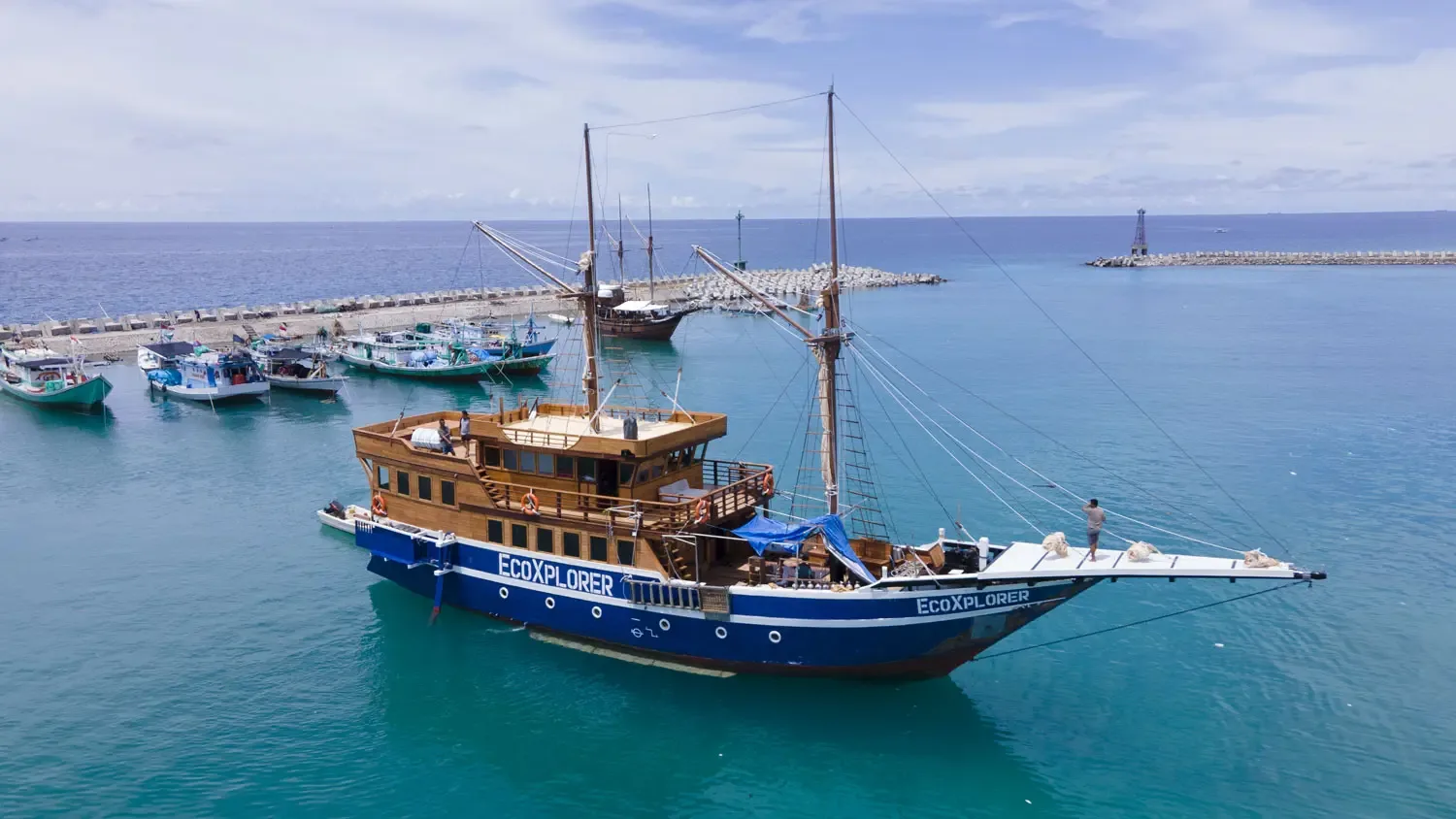
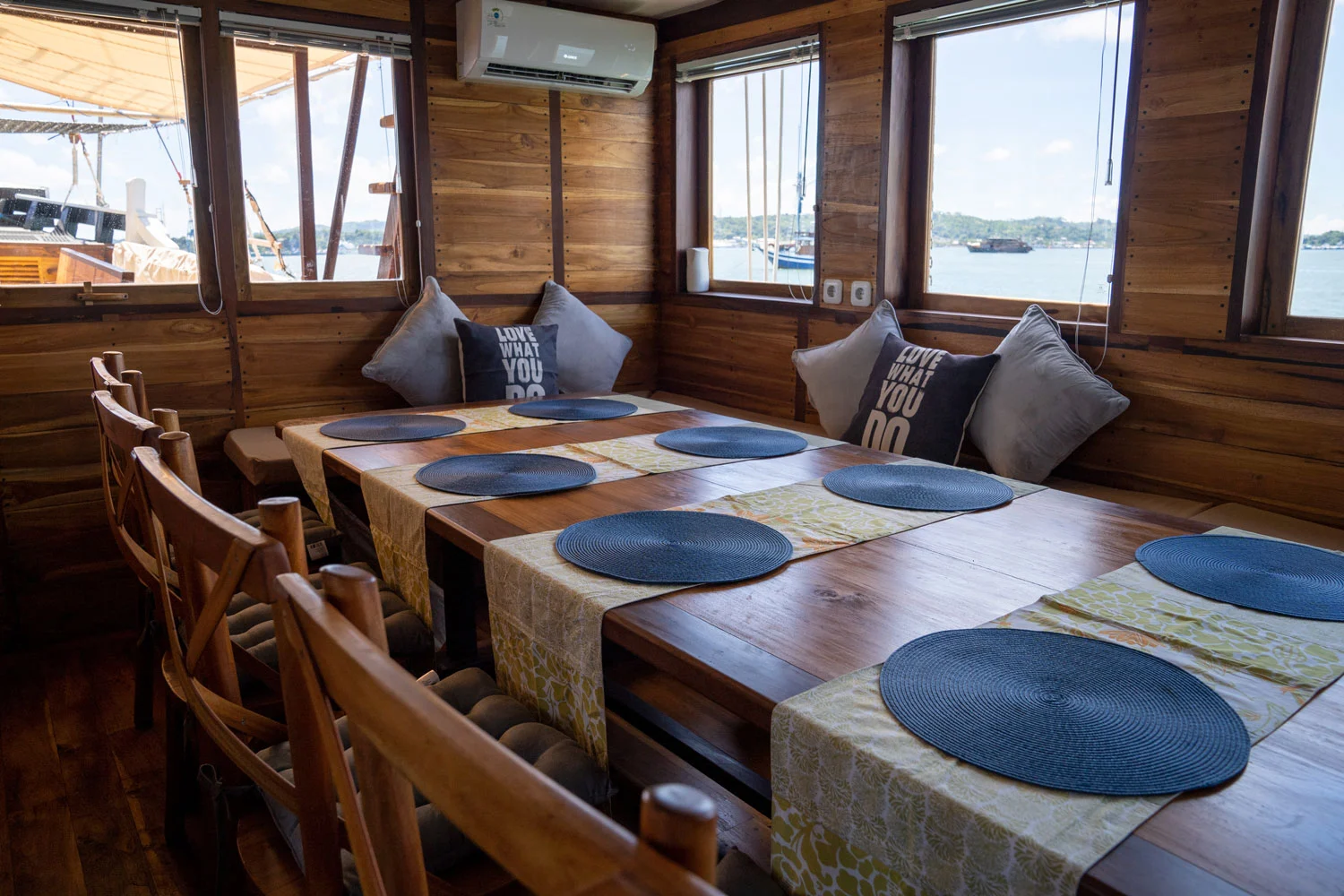
EcoXplorer is the only boat in this collection that exists to fund something other than itself. She began life as Inbekwan, a marine patrol vessel run by Conservation International and The Nature Conservancy in Raja Ampat. In 2020 she was handed to the EcoNusa Foundation, rebuilt over one year and seven months in Bira by Bugis shipwrights, blessed by Moi tribal elders, and returned to Sorong in May 2022. Every rupiah of profit goes back into EcoNusa programmes: Indigenous-led conservation, healthcare and education in remote Papua and Maluku.
That history shapes what she does. Her first voyage was not a charter but a fifteen-day reef health monitoring survey with YKAN and the University of Papua across North Misool and Werur. She still runs research and public-service trips alongside paying guests, and the operator also runs a network of village homestays and community dive centres.
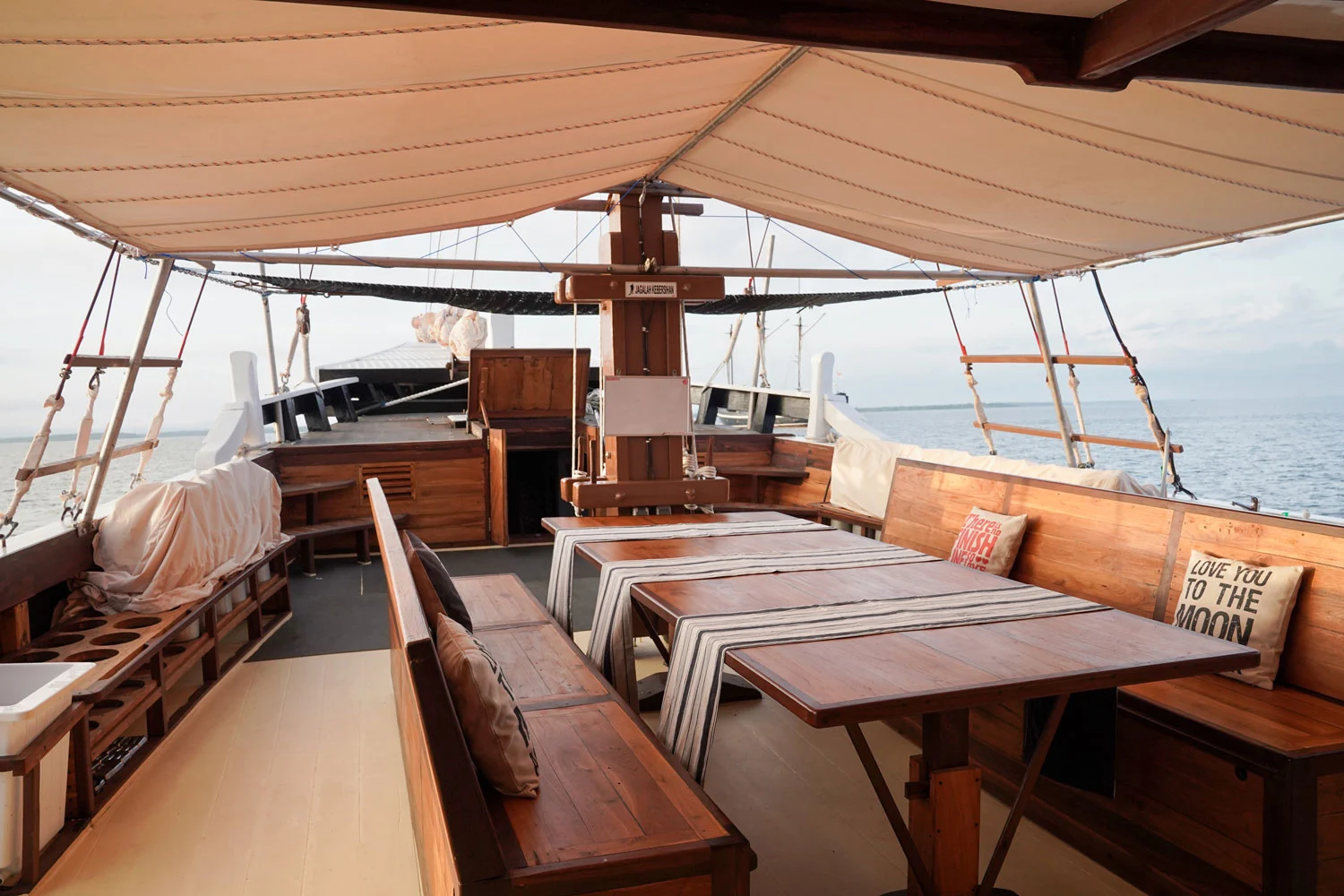
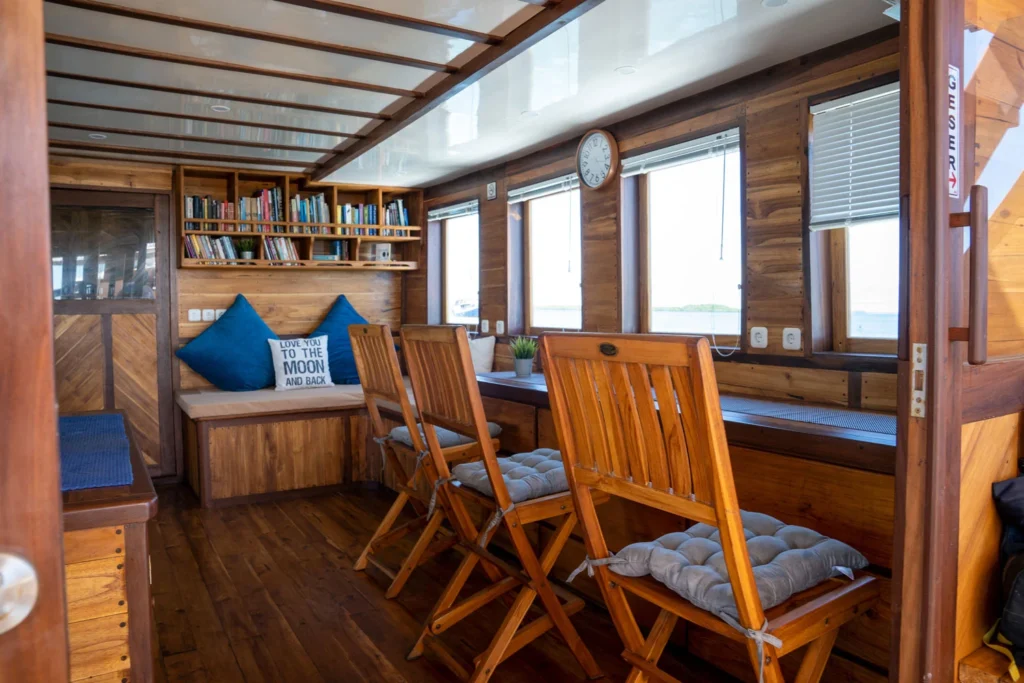
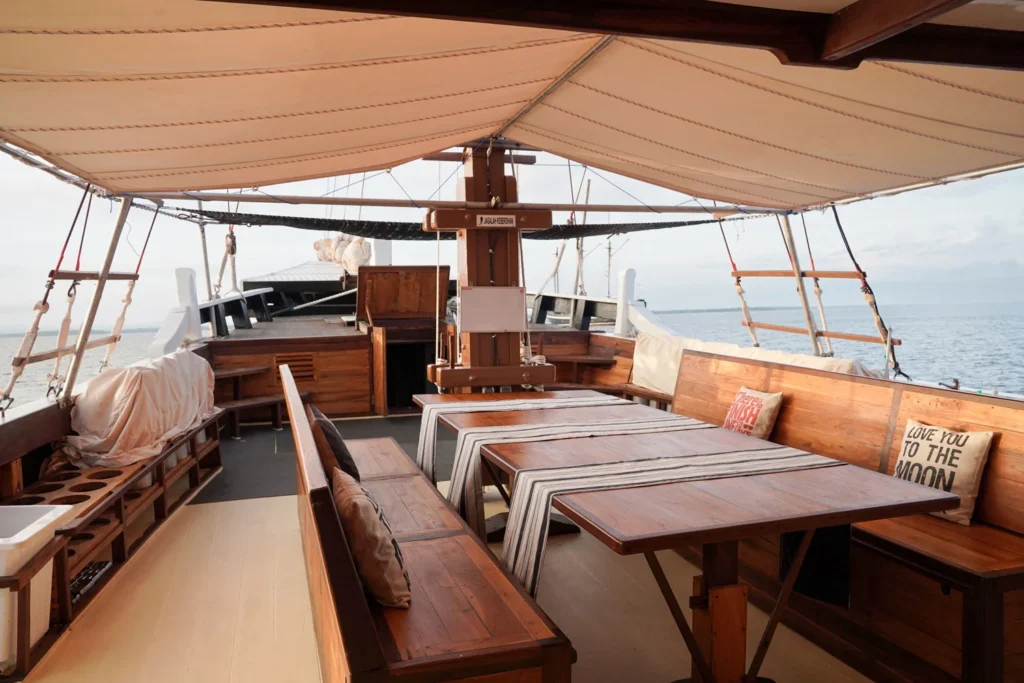
The boat is 31.46 metres overall on 23.78 on deck, six sails, a Mitsubishi 315 PK diesel, six knots cruising. Six guest cabins hold up to eighteen berths, named after the trees and creatures of the region: Metroxylon the family master with a private balcony, Intsia on the upper deck, then Myristica, Avicennia, Wallacei and Astrapia below.
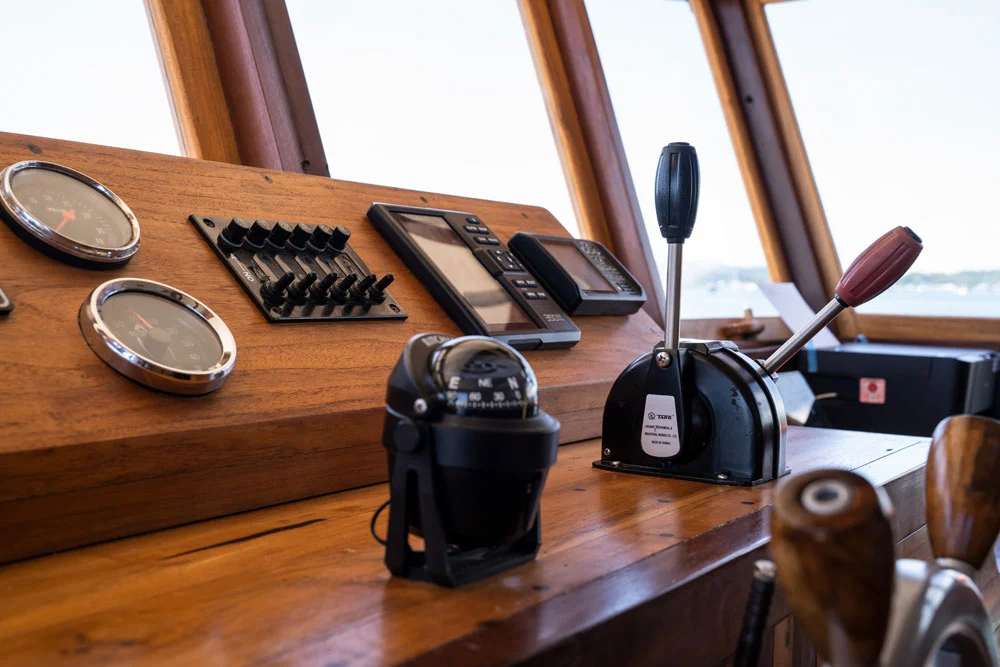
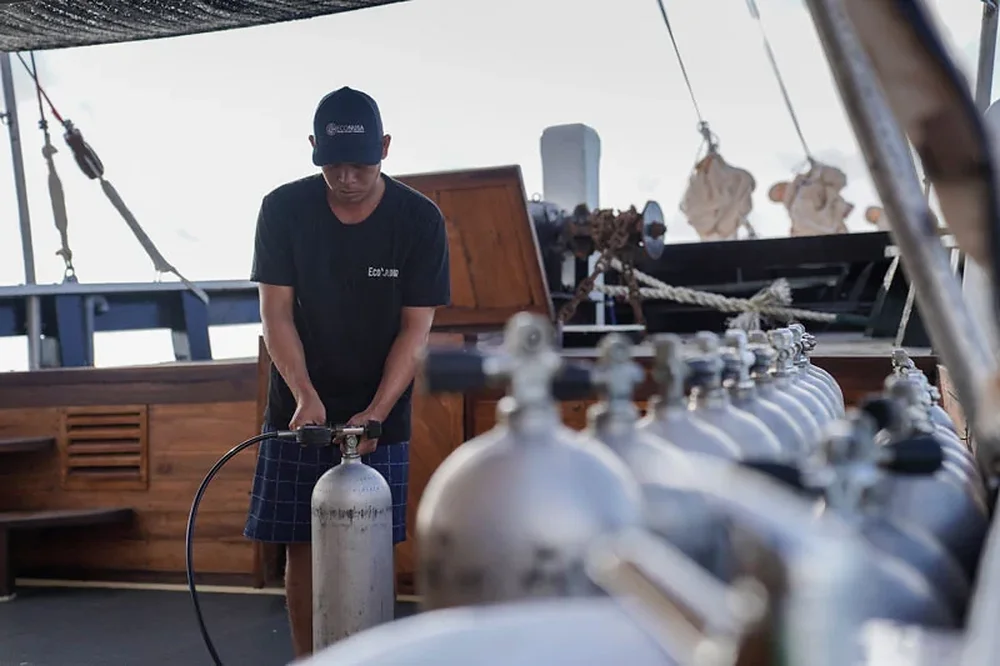
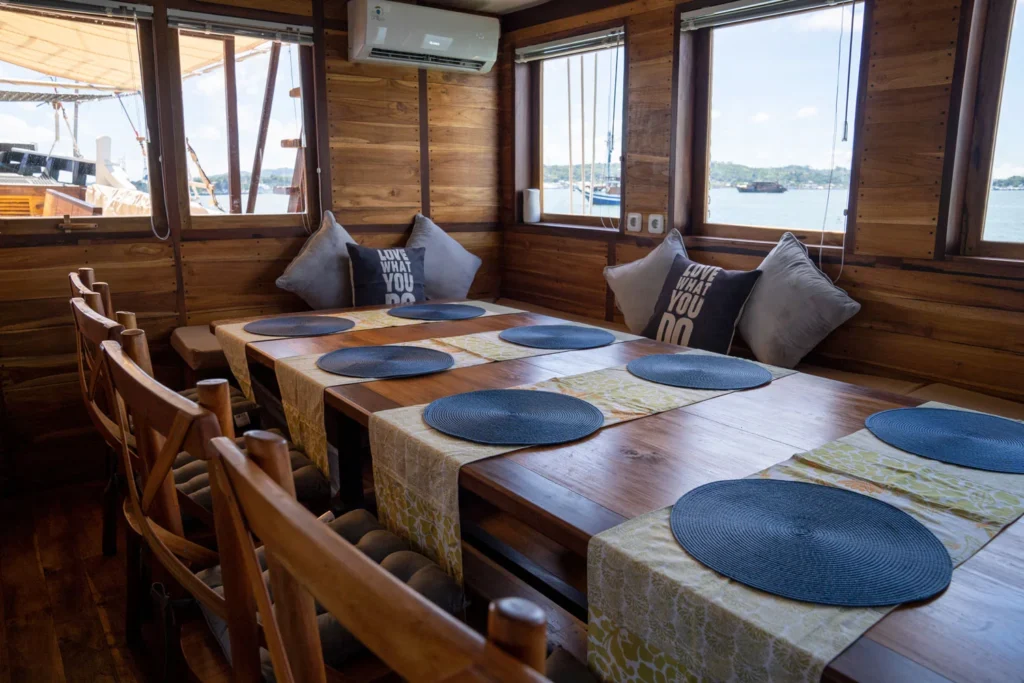
Her safety and comms fit-out is the most complete here: EPIRB, SART transponder, Iridium satellite phone, AIS, Navtex, Garmin radar and chartplotter, two inflatable liferafts for fifteen and twenty, two seven-metre fibreglass speedboats. Diving runs off a Bauer Mariner 2000 with thirty-eight tanks, 15-litre aluminium tanks and eight rental sets. Four meals a day, family-table service, vegan on notice.
Amenities & Facilities
Dive & Snorkeling Sites
Destinations on These Itineraries
Activities
Marine Life
Safety & Navigation
- Safety equipmentEPIRB, First Aid Kit, Smoke & Fire Alarm
- Life rafts2
- NavigationGPS, Radar, AIS, VHF Radio
- EngineMitsubishi 8-cylinder 315 PK diesel; generators 2 x 40 kVA Mitsubishi 4D34 plus 1 x 10 kVA Yanmar TF155
- Cruising speed6 knots cruising, 10 knots maximum
- Watermaker capacity2,000 L/day
The Cabins
Family Master Cabin — Metroxylon
- Private Bedroom
- Ensuite Bathroom
- Air Conditioning
- Hot and Cold Shower
- Private Balcony
- Panoramic Ocean View
- Towels and Toiletries
- Queen Bed
- Bunk Beds
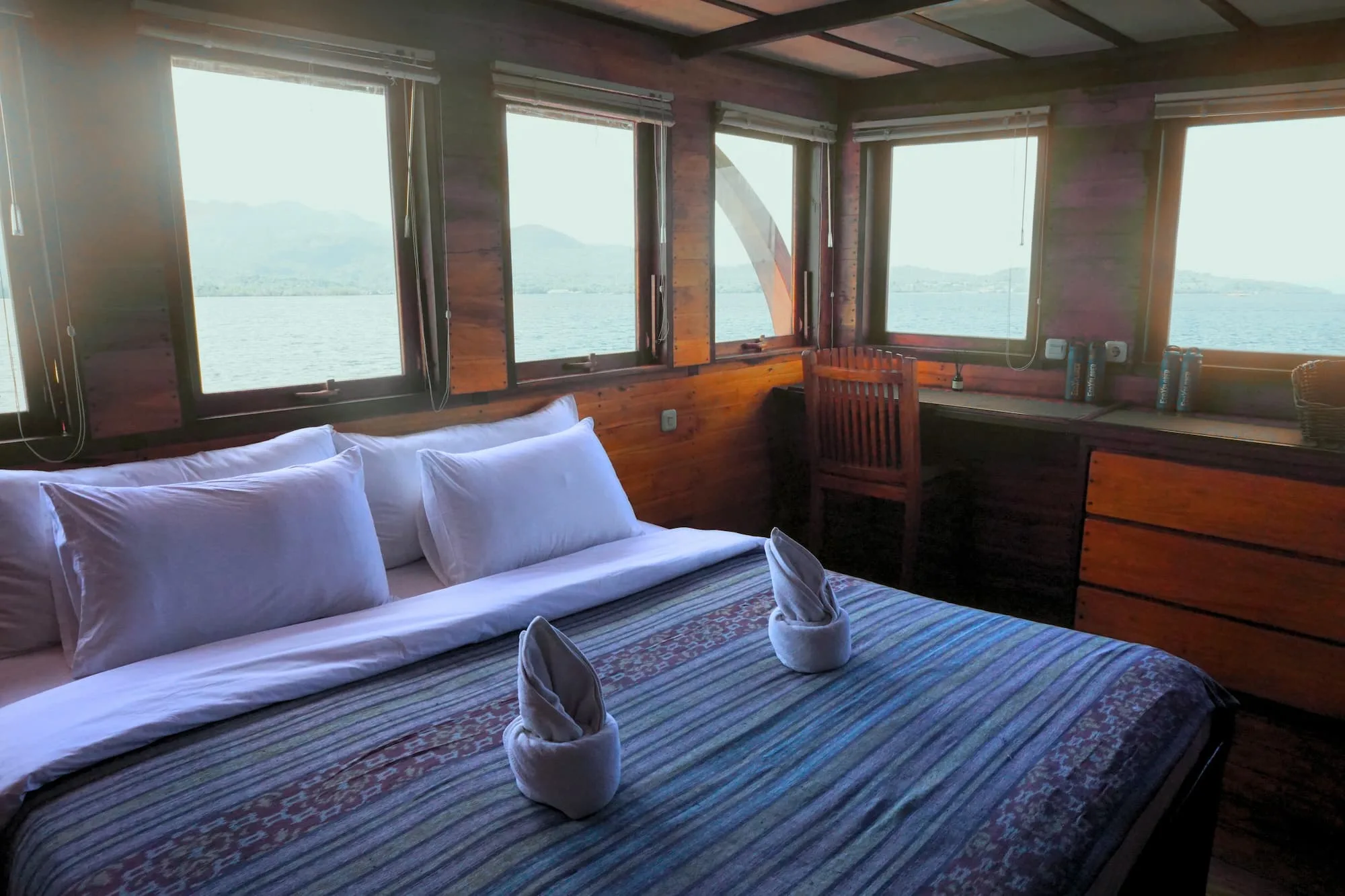
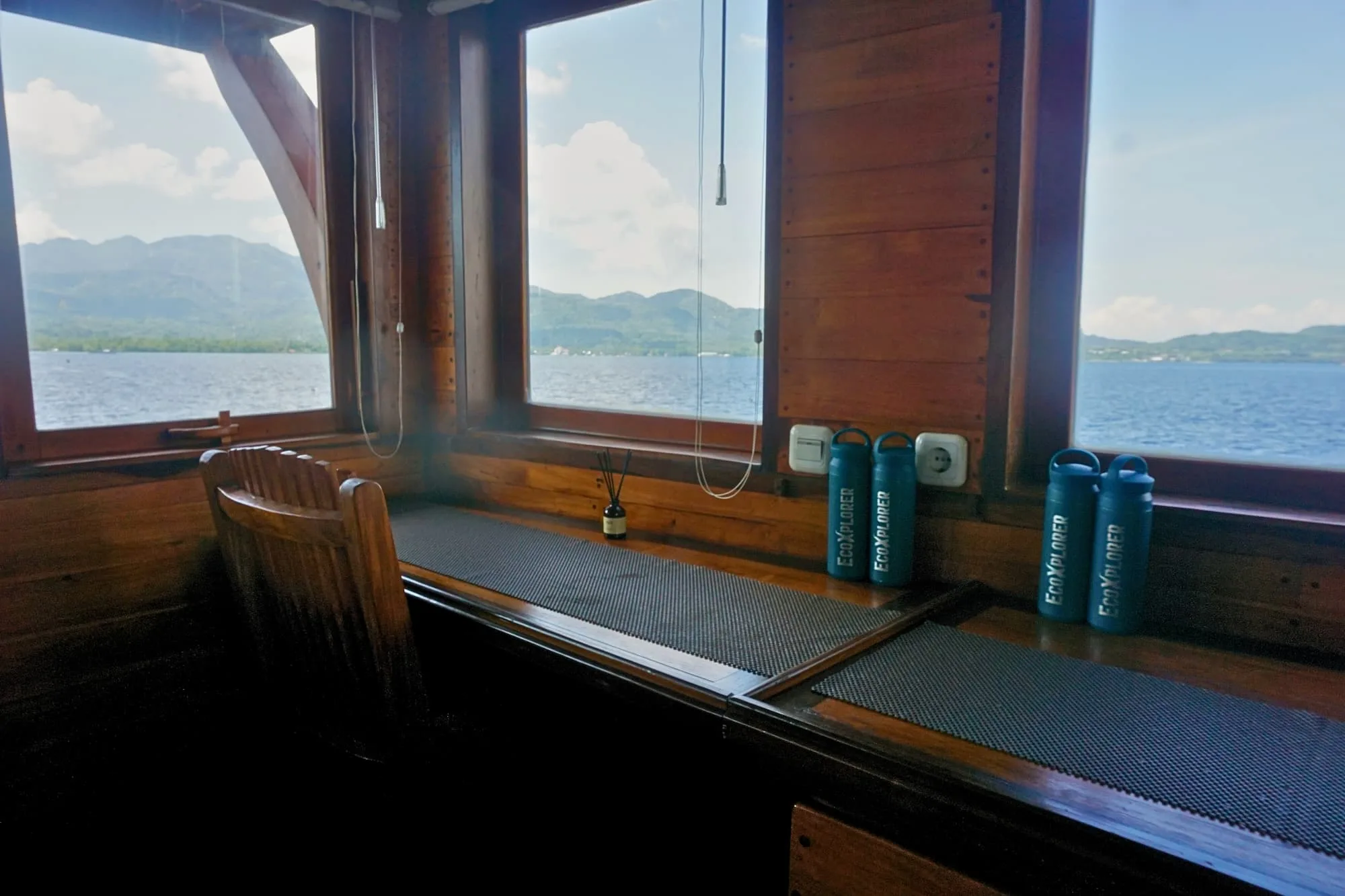
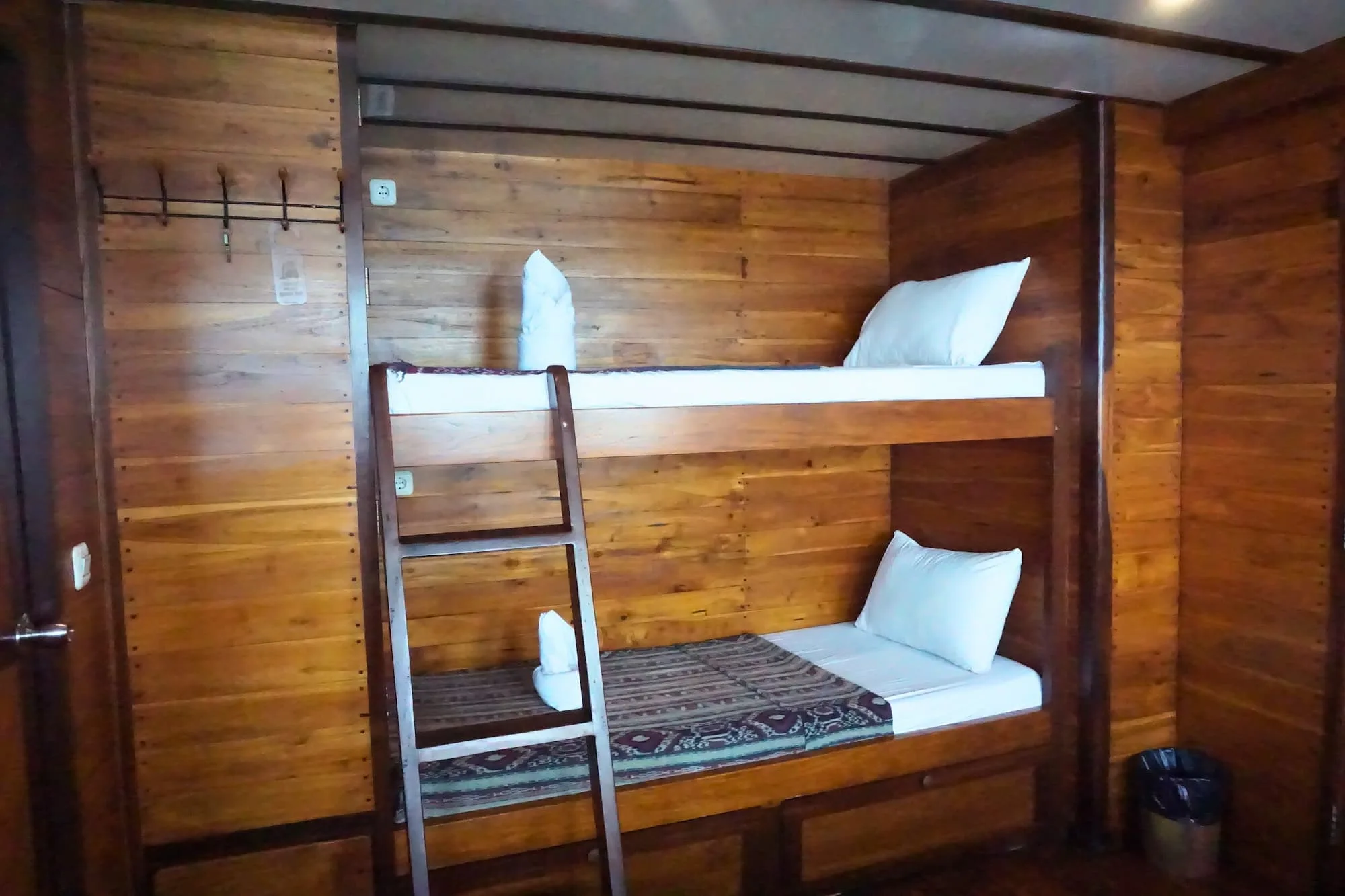
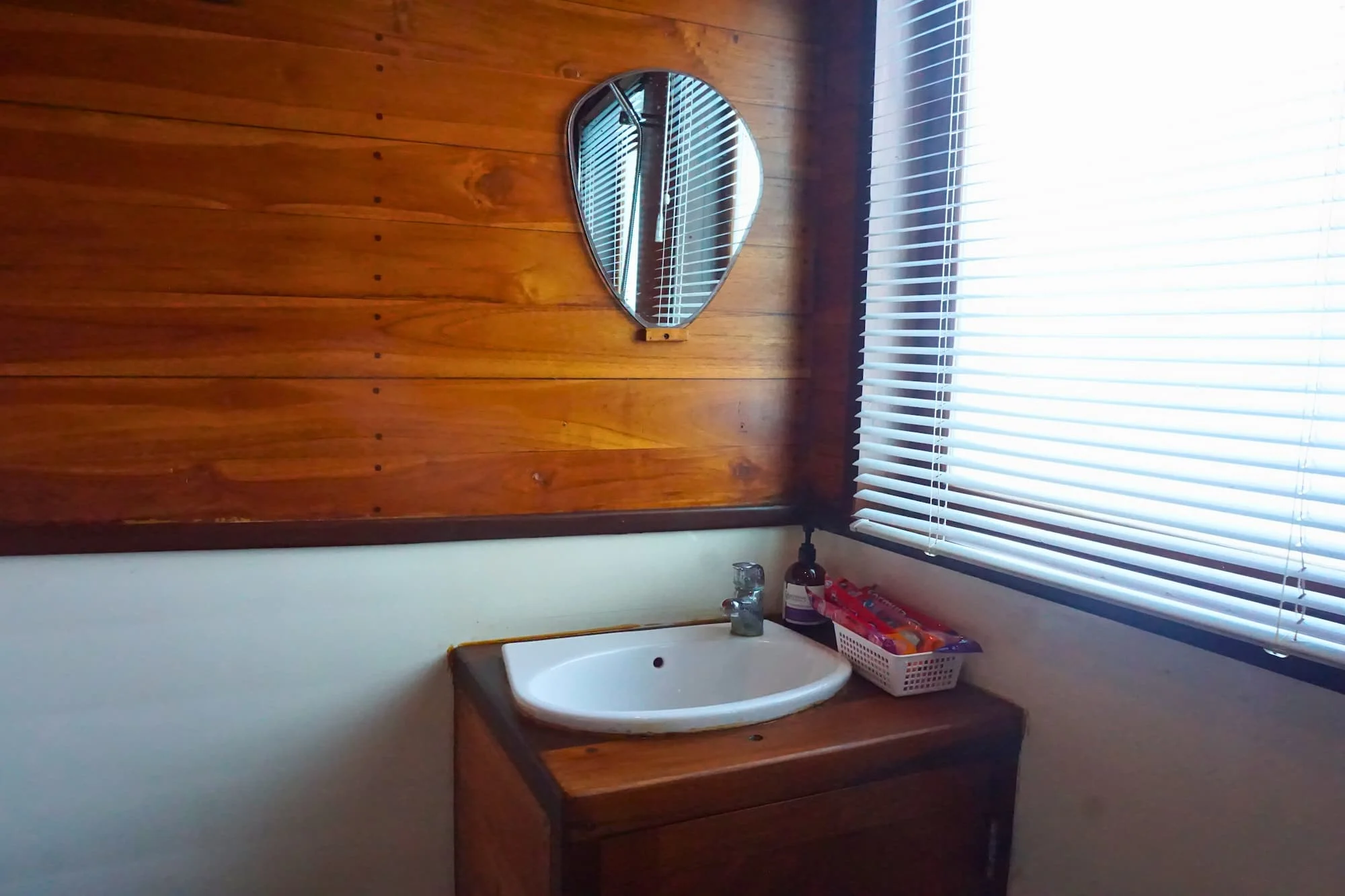
Main deck sea-view cabin with a private balcony and panoramic windows. One queen bed plus two single bunks accommodates up to four guests, with a spacious private ensuite bathroom.
Master Cabin — Intsia
- Private Bedroom
- Ensuite Bathroom
- Air Conditioning
- Hot and Cold Shower
- Panoramic Ocean View
- Towels and Toiletries
- Queen Bed
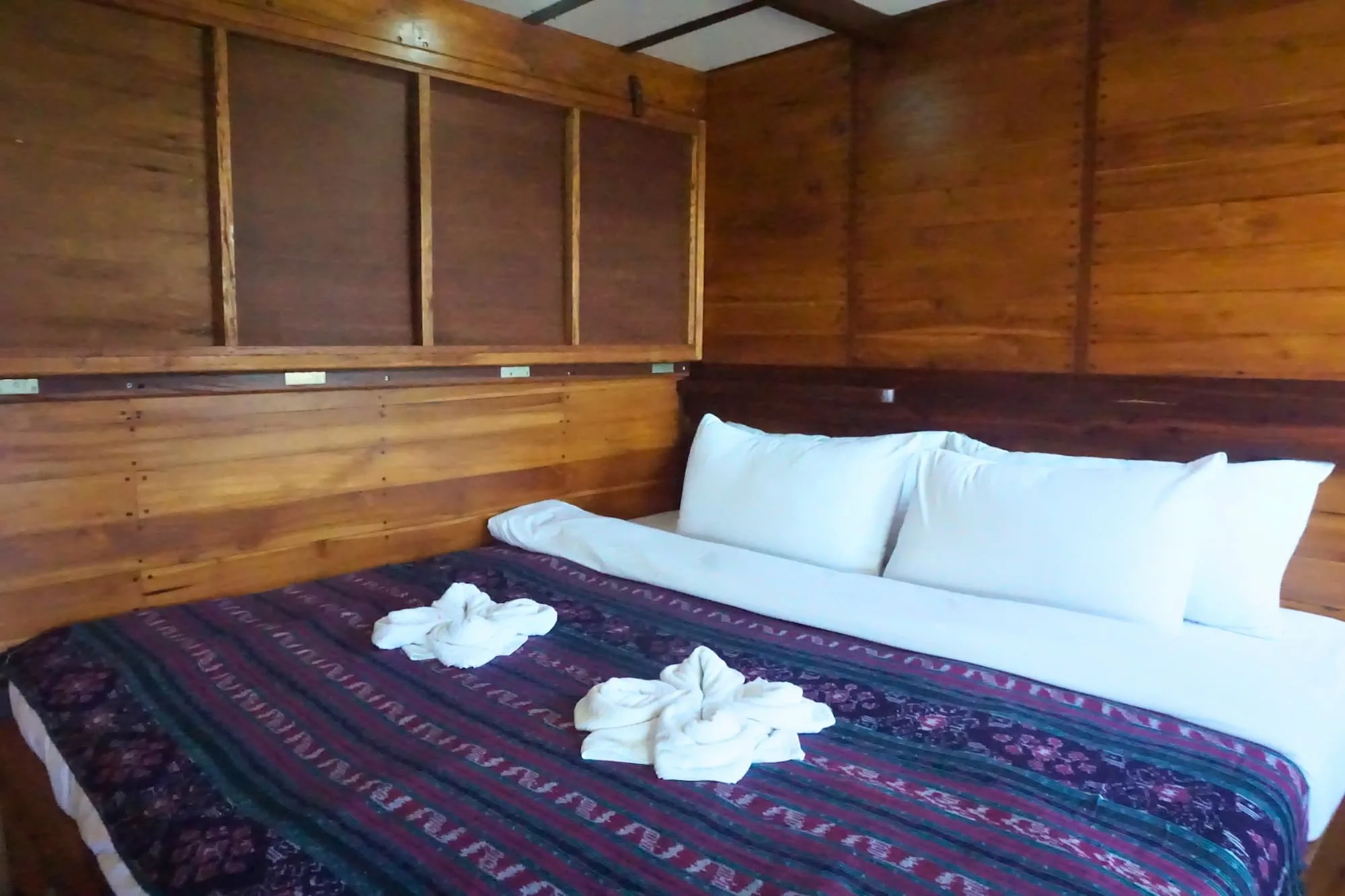
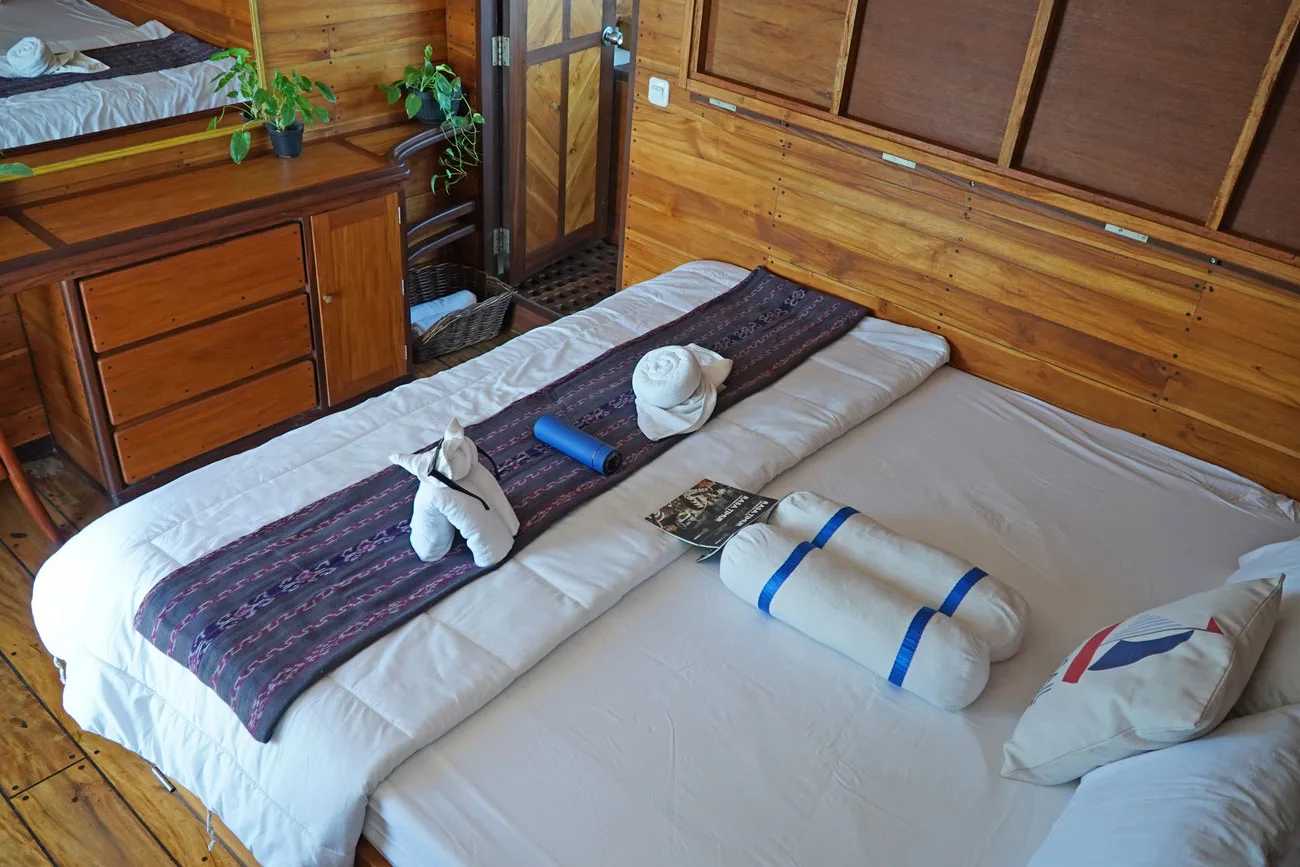
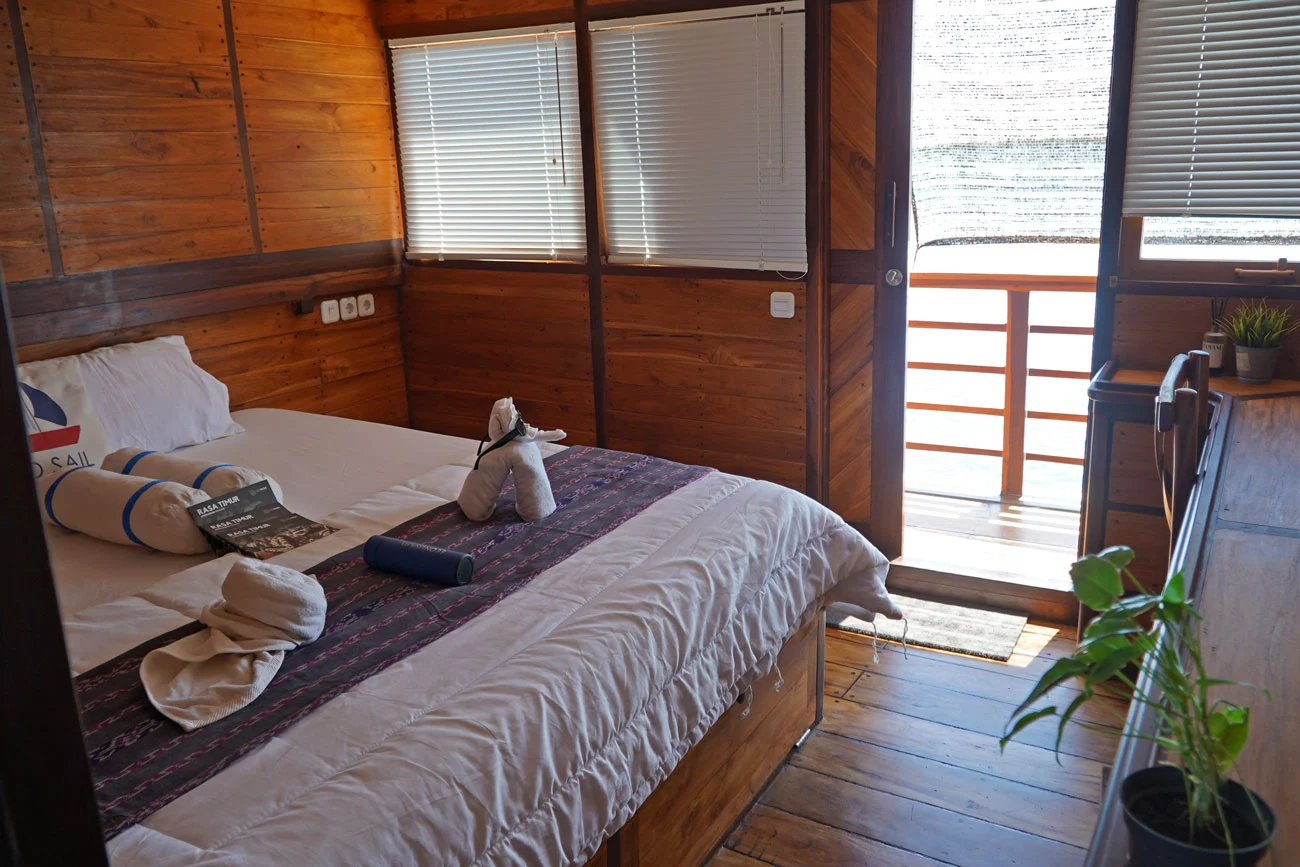
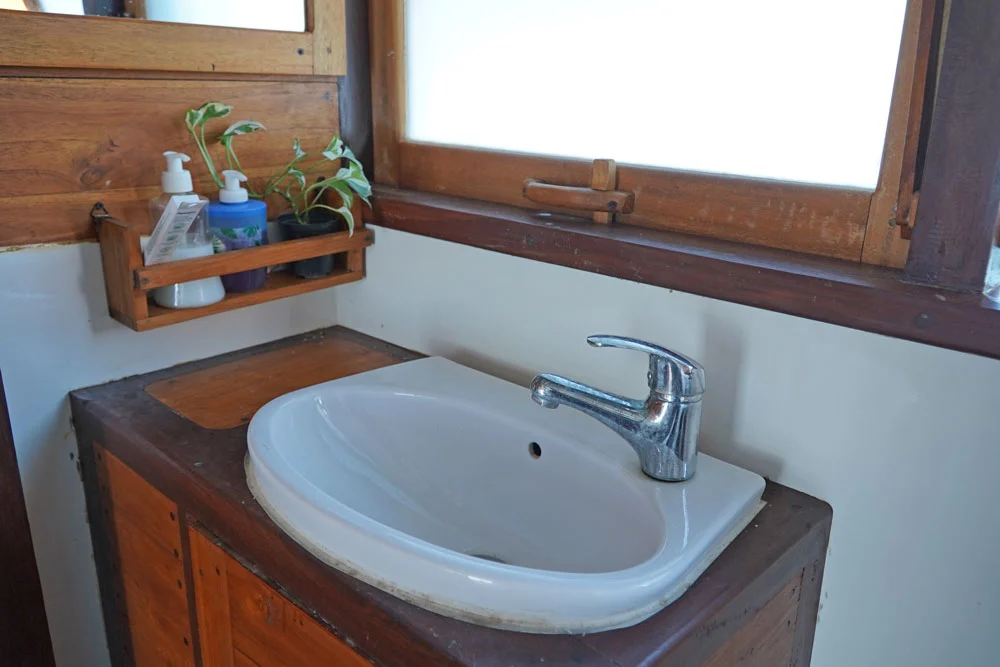
Upper-deck sea-view cabin with one queen bed, large windows, a workbench and private ensuite bathroom. The operator states that Intsia is reserved for the Ship Master, so guest availability must be confirmed.
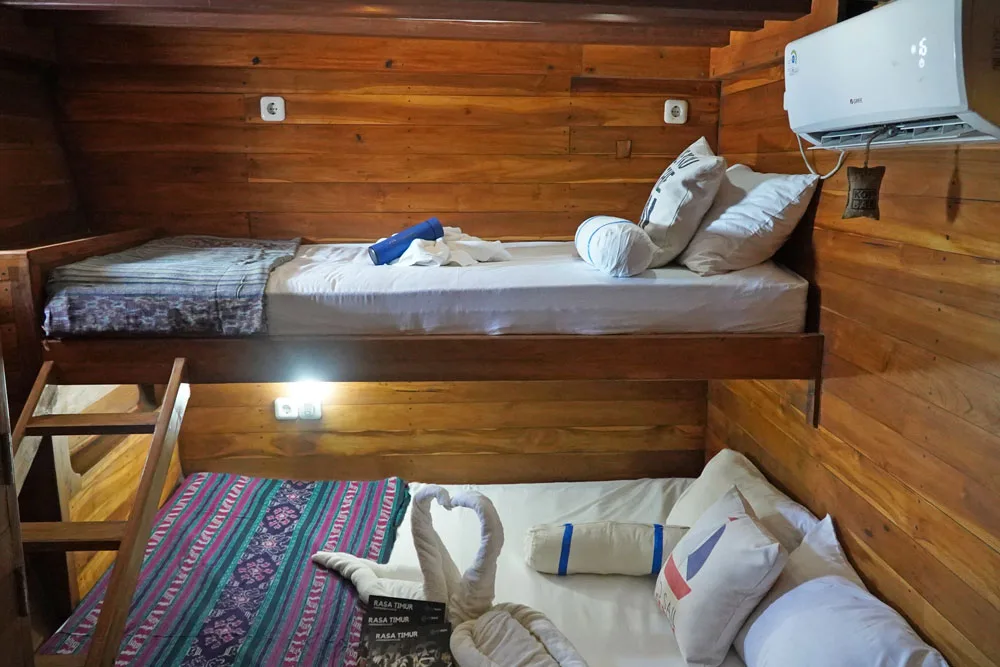
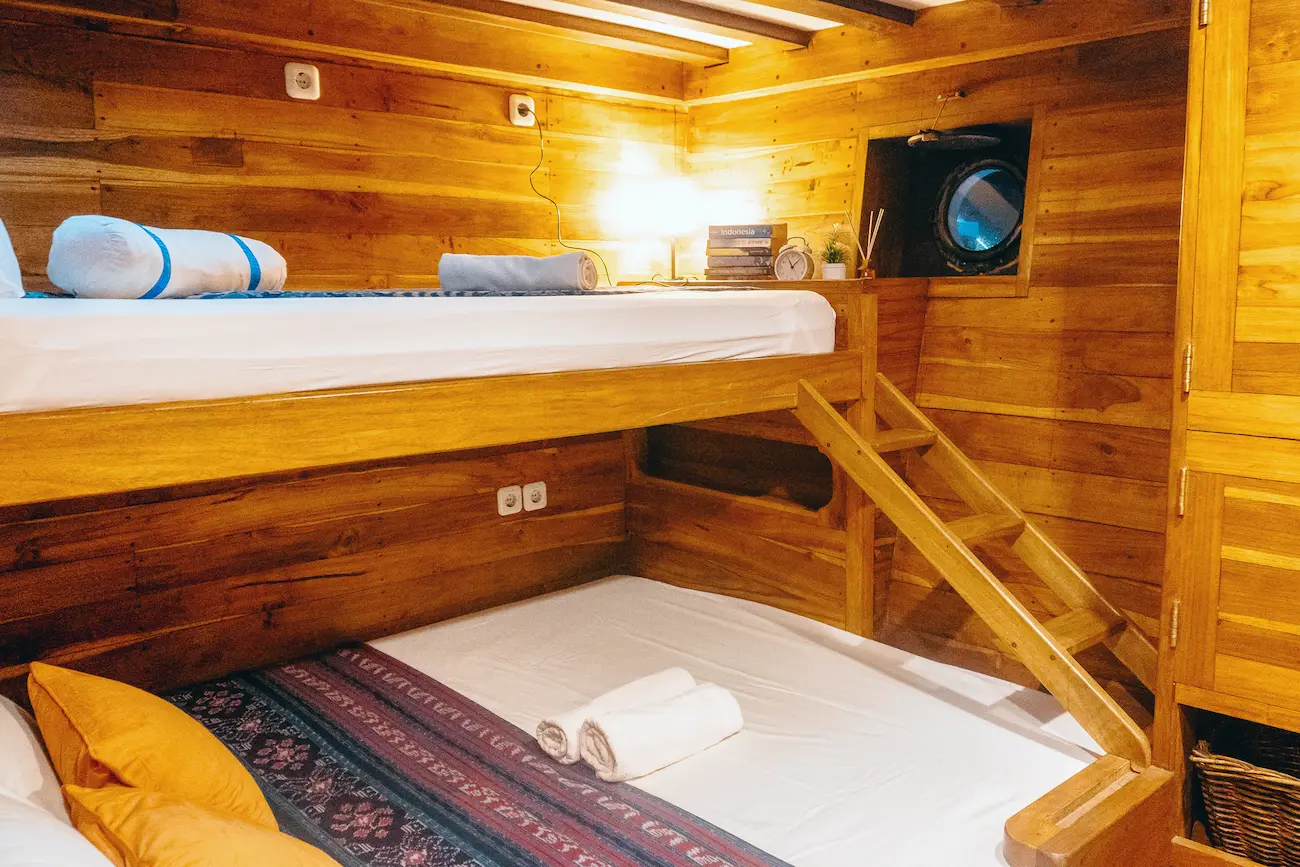
Deluxe Cabins — Myristica & Avicennia

- Private Bedroom
- Ensuite Bathroom
- Air Conditioning
- Hot and Cold Shower
- Towels and Toiletries
- Double Bed
- Bunk Beds
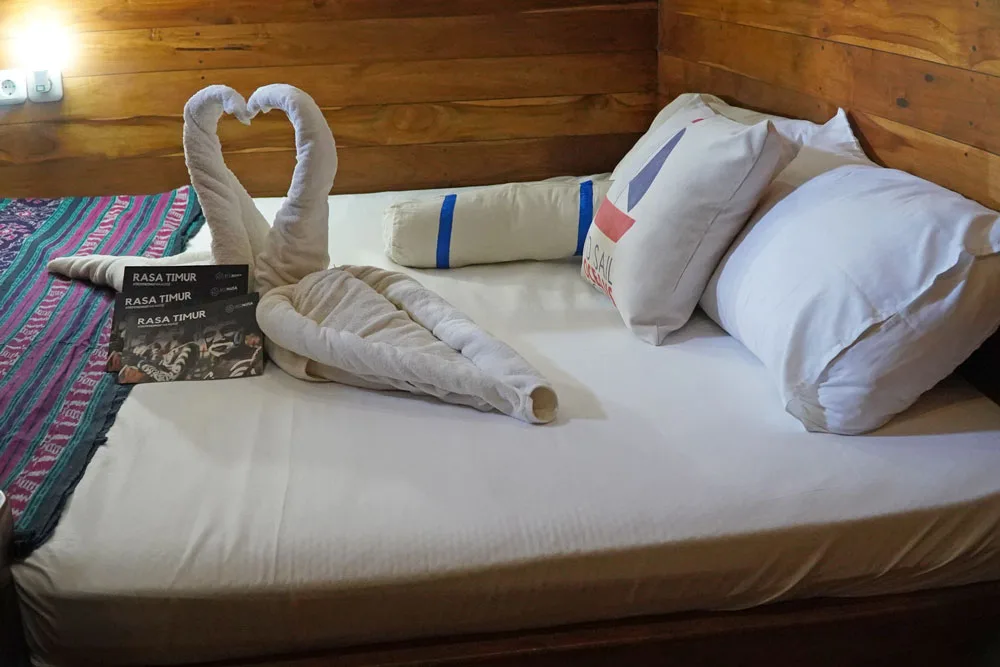
Two lower-deck cabins, each with one double bed plus one single bunk for up to three guests. Both have a private ensuite bathroom and porthole windows.
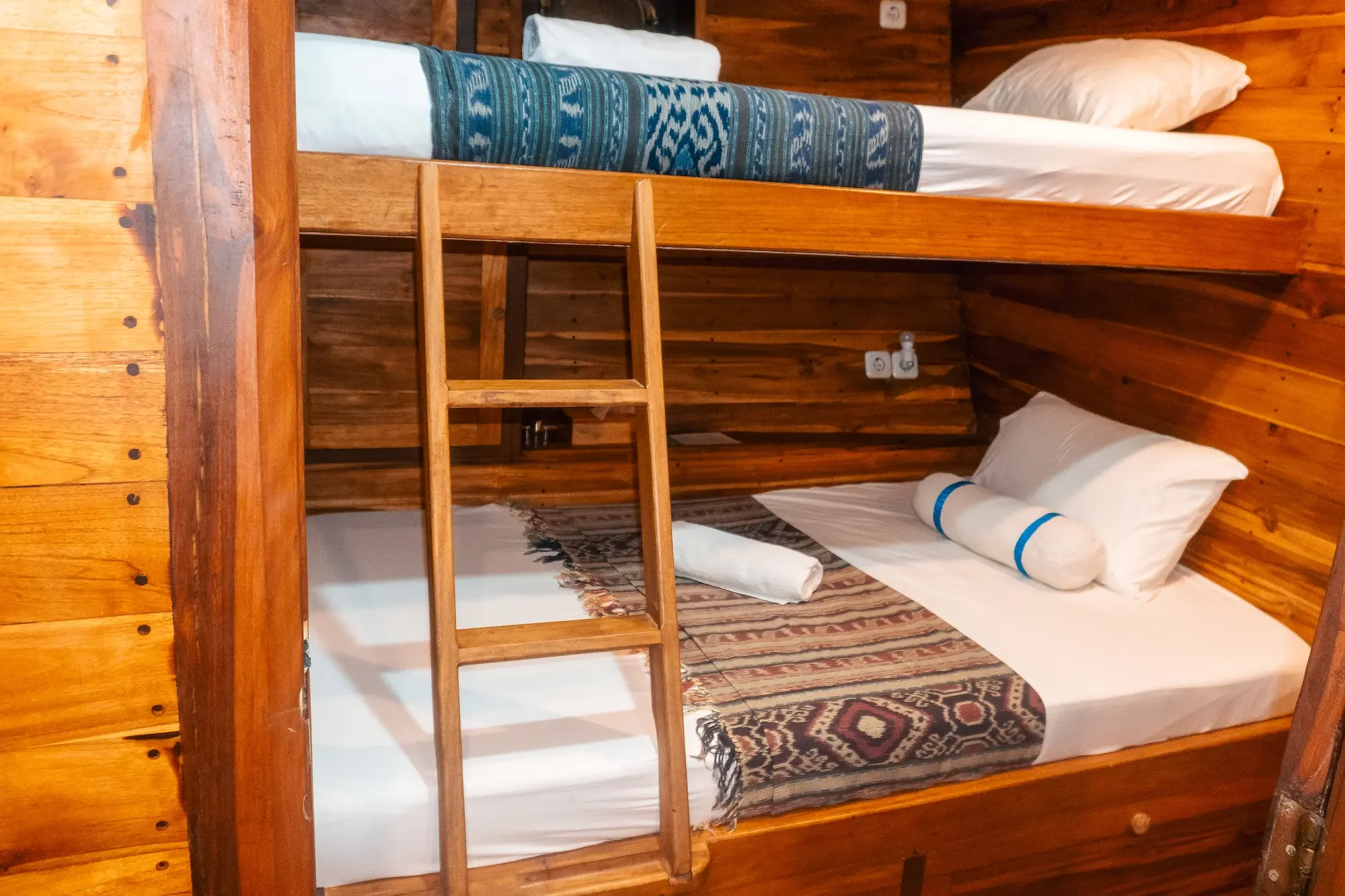
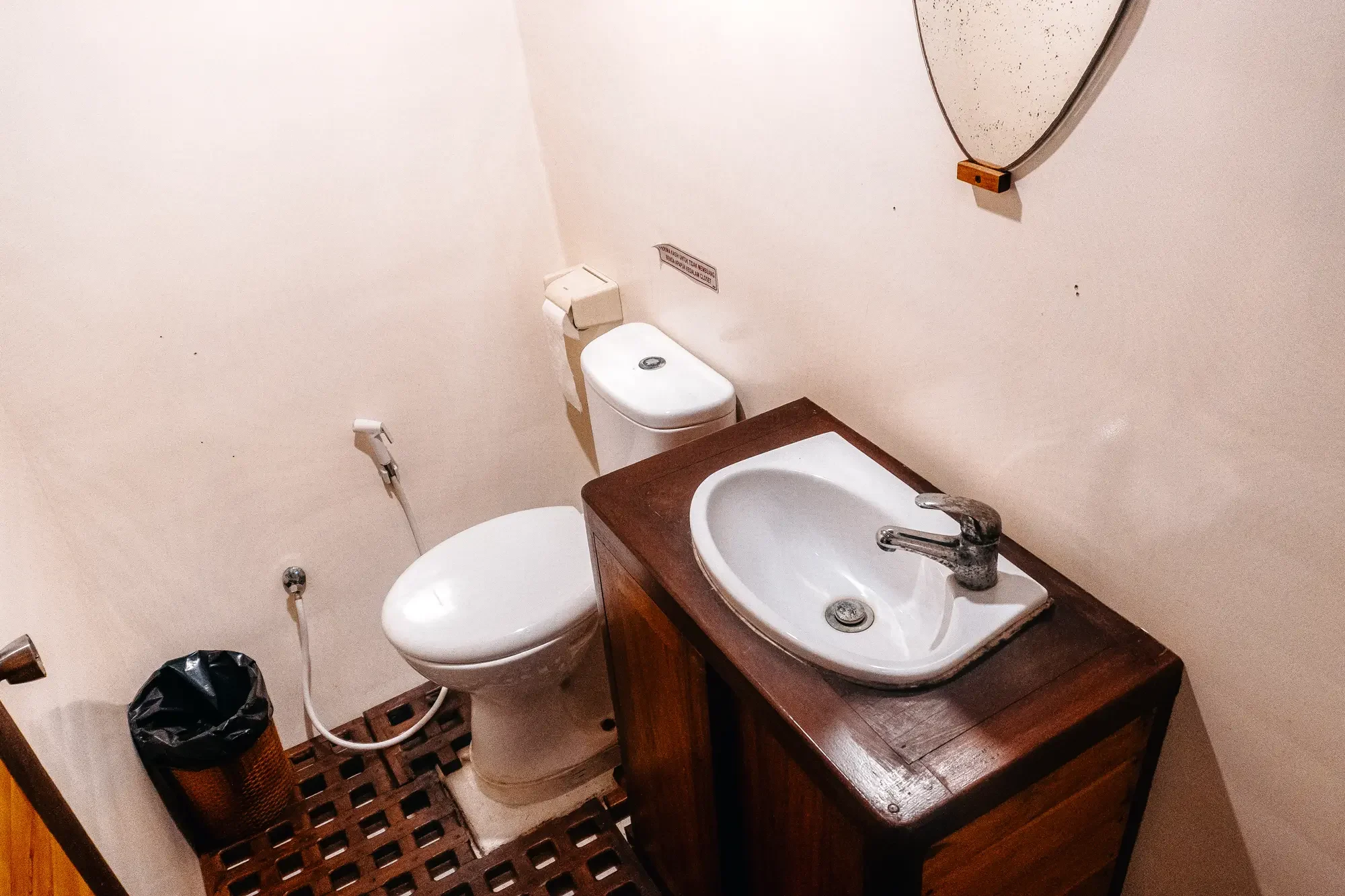
Standard Cabins — Wallacei & Astrapia

- Private Bedroom
- Ensuite Bathroom
- Air Conditioning
- Hot and Cold Shower
- Towels and Toiletries
- Twin Beds
- Bunk Beds
Two lower-deck twin-bunk cabins for up to two guests each. Both have a private ensuite bathroom and porthole windows; the official gallery currently uses Wallacei as the representative Standard Cabin.
Rates & Packages
From $2,730 per person / trip
Rates for 2026–2027 departures
| Cabin | 8D7N |
|---|---|
| Shared cabin | From $2,730 |
From $14,040 per whole boat · 3D2N
Rates for 2026–2027 departures
| Duration | 1–18 guests |
|---|---|
| 2D1N | From $7,020 |
| 3D2N | $14,040 |
| 4D3N | $21,060 |
| 5D4N | $28,080 |
| 6D5N | $35,100 |
| 7D6N | $42,120 |
Indonesia · up to 18 guests
What’s included & extra costs
- 2D1N, 3D2N, 4D3N, 5D4N, 6D5N, 7D6NCalculated 3D2N whole-boat benchmark from the published cabin package normalized over seven nights and 18 guests.
- 8D7NPublished shared-cabin package total per person for the stated duration.
Last verified 8 October 2026. Rates can change; confirm availability and the final invoice before payment.
Request a current quote
Send your travel date and group size. The final availability, inclusions, fees, and invoice must be confirmed before payment.
Included in Your Rate
- IncludedAirport Transfer, Hotel Pickup / Drop-off, Accommodation Onboard, 3 Meals Daily, Snacks, Coffee & Tea, Drinking Water, Dive Guide, Local Guide / Ranger, Towels & Toiletries
Not Included & Extra Costs
- Not includedCrew Gratuity, Dive Equipment Rental, Travel / Dive Insurance, Flights, Alcoholic Beverages, Soft Drinks, Laundry
- Komodo National Park feeNot included
Book This Vessel
Availability and quotes for EcoXplorer are handled by the operator directly. KomodoInsider does not take bookings or add a commission.
Check AvailabilityOpens ecoxplorer.id in a new tab
Last checked .
Cabins & Berths
- Total cabins6
- Master2
- Balcony1
- Twin2
- Bunk5
- Bed configurationQueen, Double, Twin Single
- En-suite bathroomAll cabins
- Hot showerYes
You May Also Be Interested In
Solitude Adventurer
36 m aluminium catamaran with eight above-deck cabins for 18 divers
- Up to 18 guests
- 8 cabins
- Dive Resort
$2,810 /person
Shared + Charter
Ombak Putih
42 m traditional pinisi for snorkeling, wildlife and cultural expeditions
- Up to 24 guests
- 12 cabins
- Leisure only
$6,320 /person
Shared + Charter
DUNE Aurora
42 m Sulawesi-built dive phinisi with nine ensuite cabins for up to 18 guests
- Up to 18 guests
- 9 cabins
- Dive Resort
$5,350 /person
Shared + Charter
Add a review