
Diving Equipment for Komodo: What to Bring and What to Check When Renting
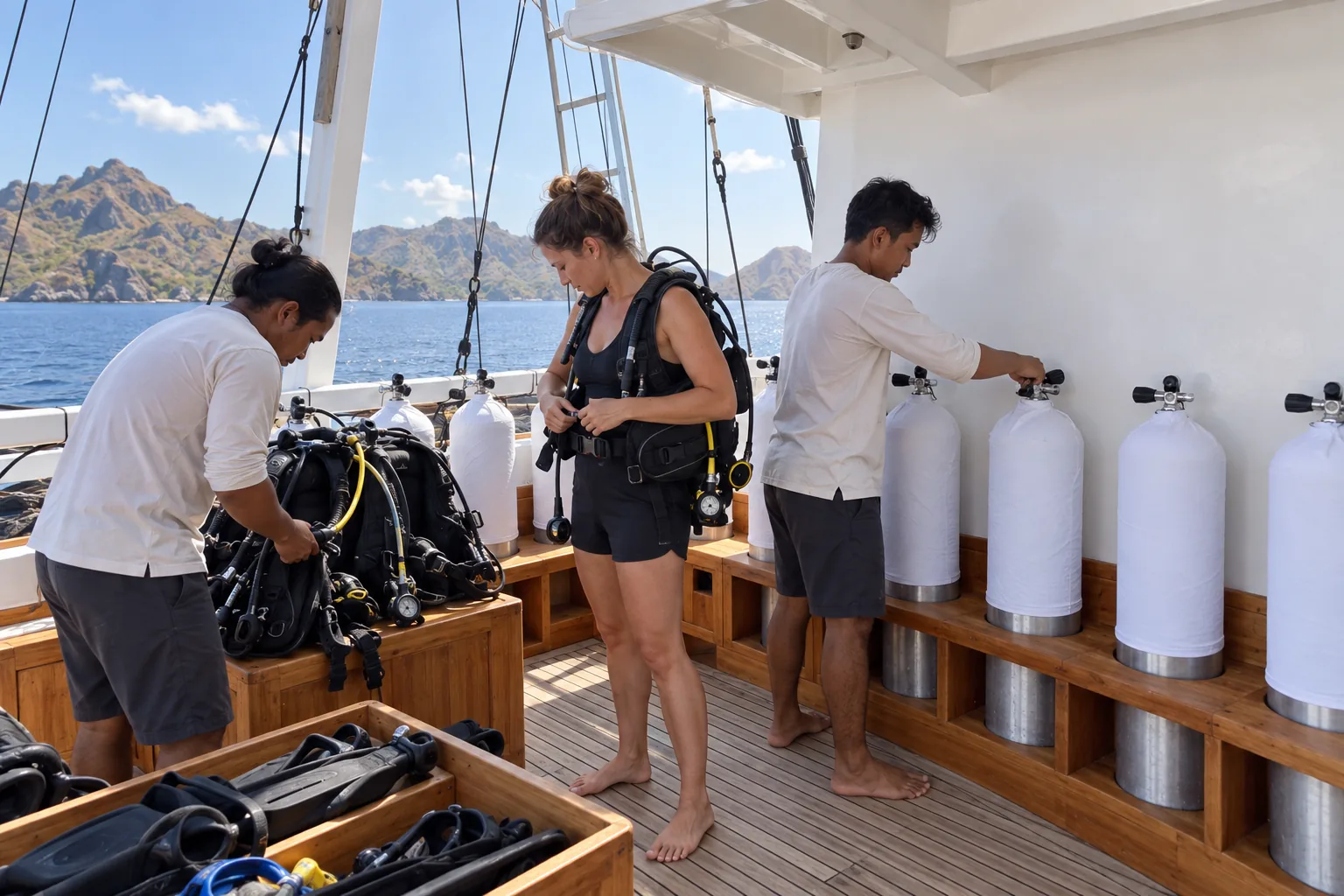
Bring personally fitted items you rely on, but confirm what the Komodo operator actually supplies before packing heavy scuba gear. Rental “included” can mean a basic set with limited sizes; it does not establish fit, service condition or whether lights, surface markers and thermal layers are available for your dives.
Start from your dive plan, not a generic suitcase list
A day boat with two guided dives and a multi-day programme crossing north and south have different equipment needs. Ask the operator for the planned sites, depth, number of dives, likely temperature, expected current and whether any night dive is proposed. Then match equipment to your training and the guide’s protocol. Do not buy a specialised tool simply because a packing list mentions it.
Test before you leave the dock
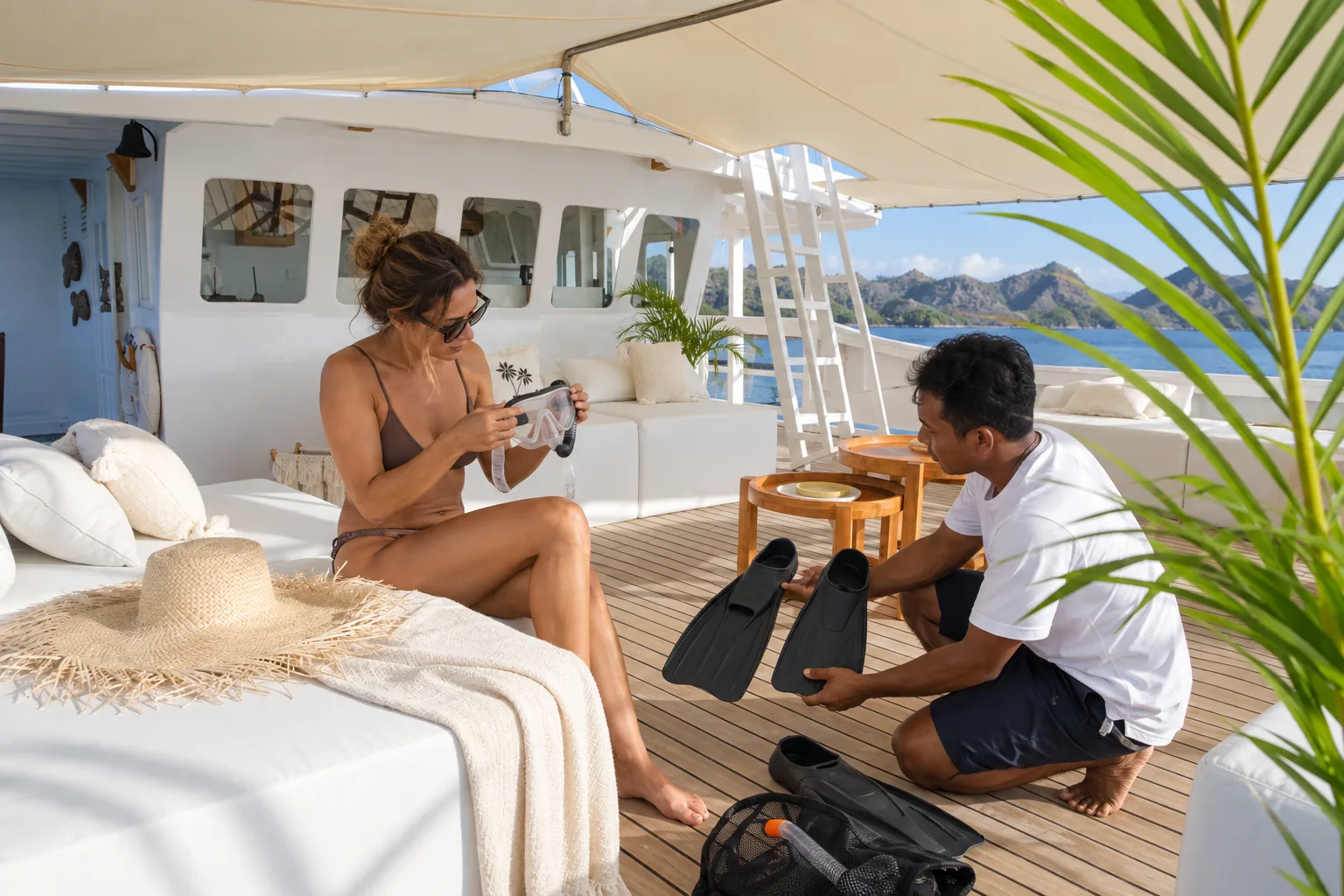
Confirm regulator servicing information, working gauges, an appropriately sized BCD and exposure protection that suits the planned depths. Ask what the operator carries as a spare and who will resolve a leaking mask or poor fit. A personal mouthpiece or mask can improve comfort, but rental cylinders and weights are normally handled by the dive operator; verify exactly what is included on the named departure.
Label personal gear and keep a checklist for camera batteries, logbook, certification proof and medication. Airline battery rules and luggage limits can change; confirm them with the carrier rather than assuming the dive packing list is a flight policy.
| Category | Ask the operator to confirm | Check yourself before departure |
|---|---|---|
| Mask, fins, exposure suit | Actual sizes and whether a thicker suit or prescription option is stocked. | Seal, comfortable fin fit, suit condition and warmth for the coldest planned dive. |
| BCD, regulator, gauges | What is included, service process, connection compatibility and spare gear. | Fit and operation with the instructor or dive guide before sailing. |
| Tank and weights | Gas, capacity, number of fills, weights and any specialist requests. | Only choose the gas and configuration for which you are qualified. |
| Surface and night equipment | SMB, whistle, lights, spares and their use in that operator’s procedures. | Familiarity and maintenance; ask for a briefing before use. |
| Camera | Charging and safe storage without crowding crew tasks. | Secure every part and put buoyancy ahead of a photograph. |
What should go in your bag?
Many divers prefer their own mask because a seal and lens choice are personal. Bring proof of certification, recent dive information, any medical clearance required by the provider, and a copy of the operator’s equipment confirmation. A compact dry layer for the windy surface interval can be more useful than a duplicate heavy item. If you are flying, confirm airline restrictions and baggage allowance for batteries and gear separately; the suitcase checklist should not assert airline policy.
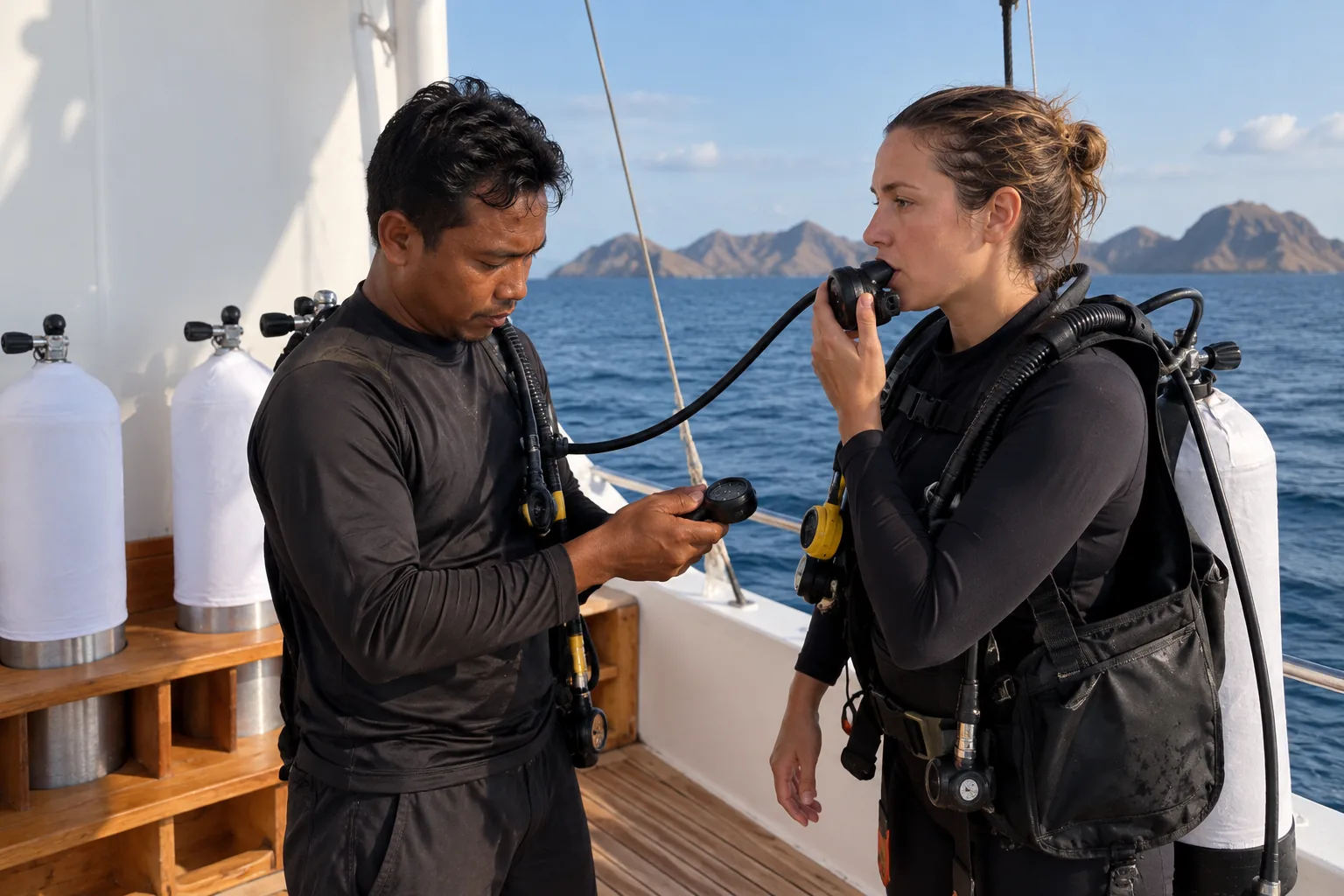
For rented gear, obtain your size reservation in writing. On arrival, give yourself time to inspect zips, buckles, inflator and breathing equipment with a qualified staff member. DAN emphasizes maintaining BCDs and regulators to prevent equipment faults. A customer looking at an unfamiliar rental cannot independently certify its service history, so ask the provider about inspection and service records.
Three common comparison mistakes
- “Full gear included” hides exceptions. Find out whether a computer, wetsuit, torch or nitrox is extra. Price the same number of dives and the same equipment on each quote.
- A better camera kit does not improve diver readiness. If your buoyancy and task load are uncertain, leave the camera behind on the first dive and build up with the guide.
- A thick wetsuit is not a temperature measurement. Choose protection using the actual route and your cold tolerance; see the temperature discussion separately rather than assuming that all south sites are on your tour.
The pre-boarding message
“I wear [sizes], use [qualification/gas], plan [number] dives, and need [specified items]. Please confirm the price and reserved sizes, whether spares and a surface marker are available, and who checks the rental kit before boarding.” Keep the reply with your booking. If your assigned equipment does not fit or work, raise it before leaving port rather than improvising offshore.
Compare Komodo diving liveaboard options as routes, then obtain the actual dive and rental inventory for your departure. A boat record tagged for diving does not by itself confirm a stocked gear locker or a qualified guide.
If you are still matching skills and sites, use our Komodo diving for beginners guide before deciding what specialist equipment to request.
This article is a booking checklist, not a hands-on inspection of any vessel or rental unit.
For a route-specific programme, compare dive komodo and ask the named operator which boat, guide and sites match your departure.
Resolve a failed fit before the vessel leaves
In an illustrative rental handover, the reserved medium BCD does not fit and only a large remains. The useful answer is an appropriate replacement or an agreed change to the activity, not reassurance that one size is close enough. Allow time on land for that decision and ask which spare sizes are physically on the departure.
Record personal gear and rental gear in separate columns with the price, size, connection and responsible person. Have a qualified professional explain unfamiliar equipment and the operator’s checks. A guest inspection can identify obvious problems but cannot replace the provider’s maintenance and servicing process.
Should I accept a different rental size at boarding?
Only after the equipment and fit have been assessed with the dive professional. A reservation or included-rental label does not make unsuitable equipment acceptable.
For independent diving and water-safety reading, use DAN’s Safety & Prevention resources; these do not inspect or endorse a particular Komodo departure.
