
Travel Insurance for Komodo: Questions About Boats, Diving and Evacuation
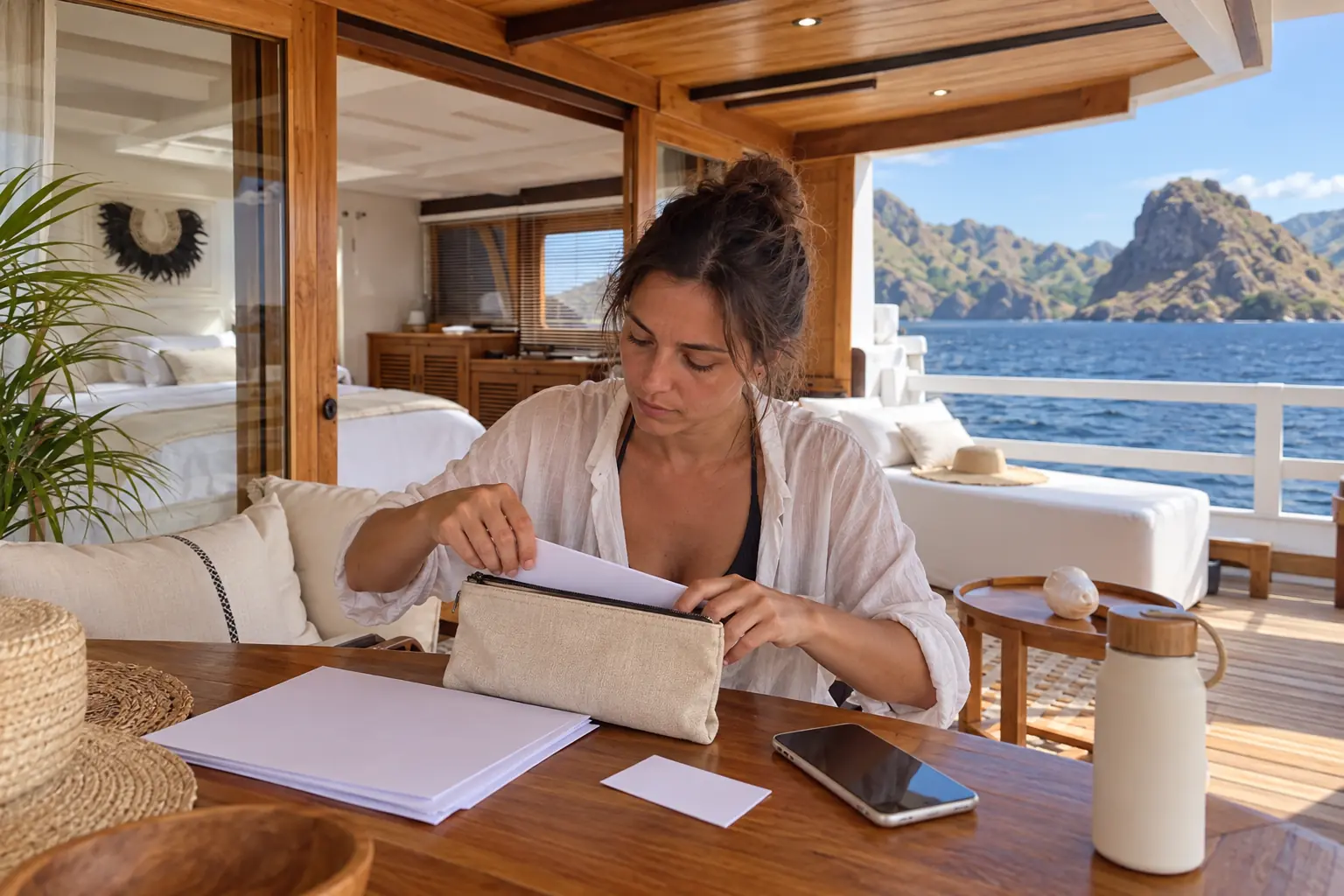
Travel insurance for your Komodo trip should be checked against your actual activities and itinerary, not just the word “Indonesia” on the policy. A cruise guest, a snorkeler and a scuba diver can need different cover. The important documents are your policy schedule, full wording, any adventure or dive endorsement, the operator’s cancellation terms, and the insurer’s emergency assistance instructions.
Reviewed 23 September 2026. This is a comparison checklist, not a policy recommendation, legal interpretation or confirmation that a particular claim is covered. Ask the insurer or a licensed adviser for written answers about your own policy.
Start with five real Komodo situations
| Situation | Policy section to inspect | Question to put to the insurer |
|---|---|---|
| Flight arrives after the boat leaves | Travel delay, missed departure, prepaid excursions | Does a separate boat departure qualify, and what delay evidence is required? |
| Harbourmaster stops sailing for weather | Trip disruption and specified weather events | Are unused boat nights or additional hotel nights covered, and who must issue the notice? |
| Illness or injury on a remote island | Emergency treatment and transport | Where does evacuation begin, who arranges it, and what approvals are required? |
| Snorkeling or scuba accident | Activity definitions and exclusions | Are the planned activity, depth, certification and dive setting within cover? |
| Lost or damaged equipment | Baggage and sports-equipment limits | Is the item covered while on the boat or in use, and what is its item limit? |
Do not assume that a park closure, strong wind, a changed itinerary and a canceled trip trigger the same benefit. Insurers often define distinct events and evidence requirements; boat operators also set separate refund terms. Read both before paying deposits.
Diving requires its own written check
If your trip includes scuba, ask whether cover applies to recreational diving at the sites and depths your operator may visit; whether certification, guide supervision or a maximum depth is stipulated; and whether decompression treatment, medical evacuation, repatriation and search costs are included. A standard travel policy may require an activity add-on. A specialist diving policy may have different benefits from general trip cancellation cover. Buying two policies does not automatically mean two insurers will each pay the same expense.
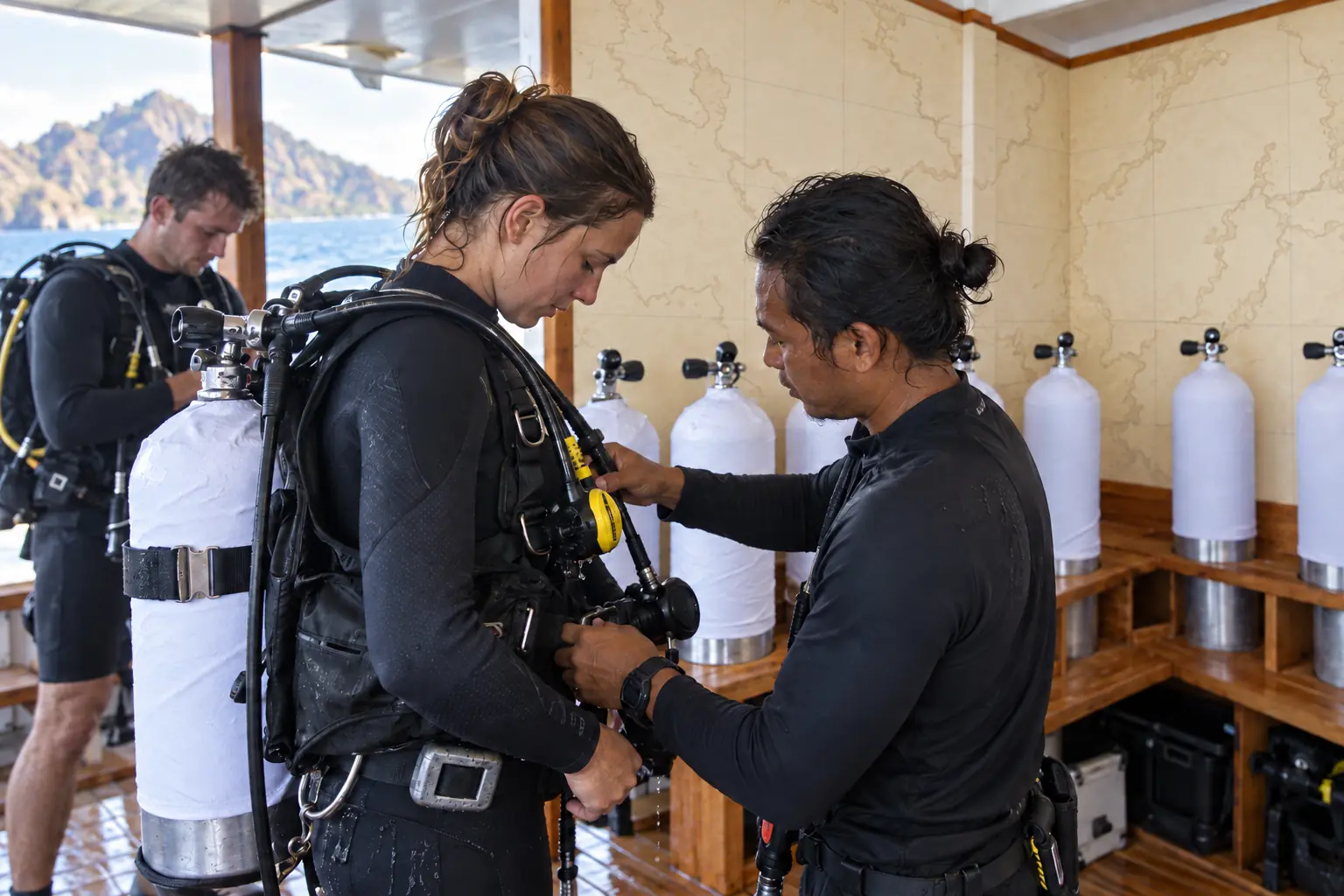
For a dive-focused sailing, the Dive Komodo listing is a starting point. Confirm the actual diving itinerary with the operating boat before comparing insurance. A diving itinerary does not certify the boat’s medical setup or establish your insurance coverage; confirm those details separately. Keep your certification and policy details accessible offline.
Evacuation means more than a large headline limit
Ask whether emergency transport from a boat or island to mainland care is included, whether a separate air transfer is possible under the terms, and who is authorised to arrange it. DAN’s own membership and insurance materials state that covered evacuation transport must be arranged by DAN for the fee to be paid under its conditions; the rule for another insurer may differ. A high monetary limit is less useful when an approval process is missed. Ask for the 24-hour assistance number, international dialing instructions and an alternate way for a crew member to call on your behalf.
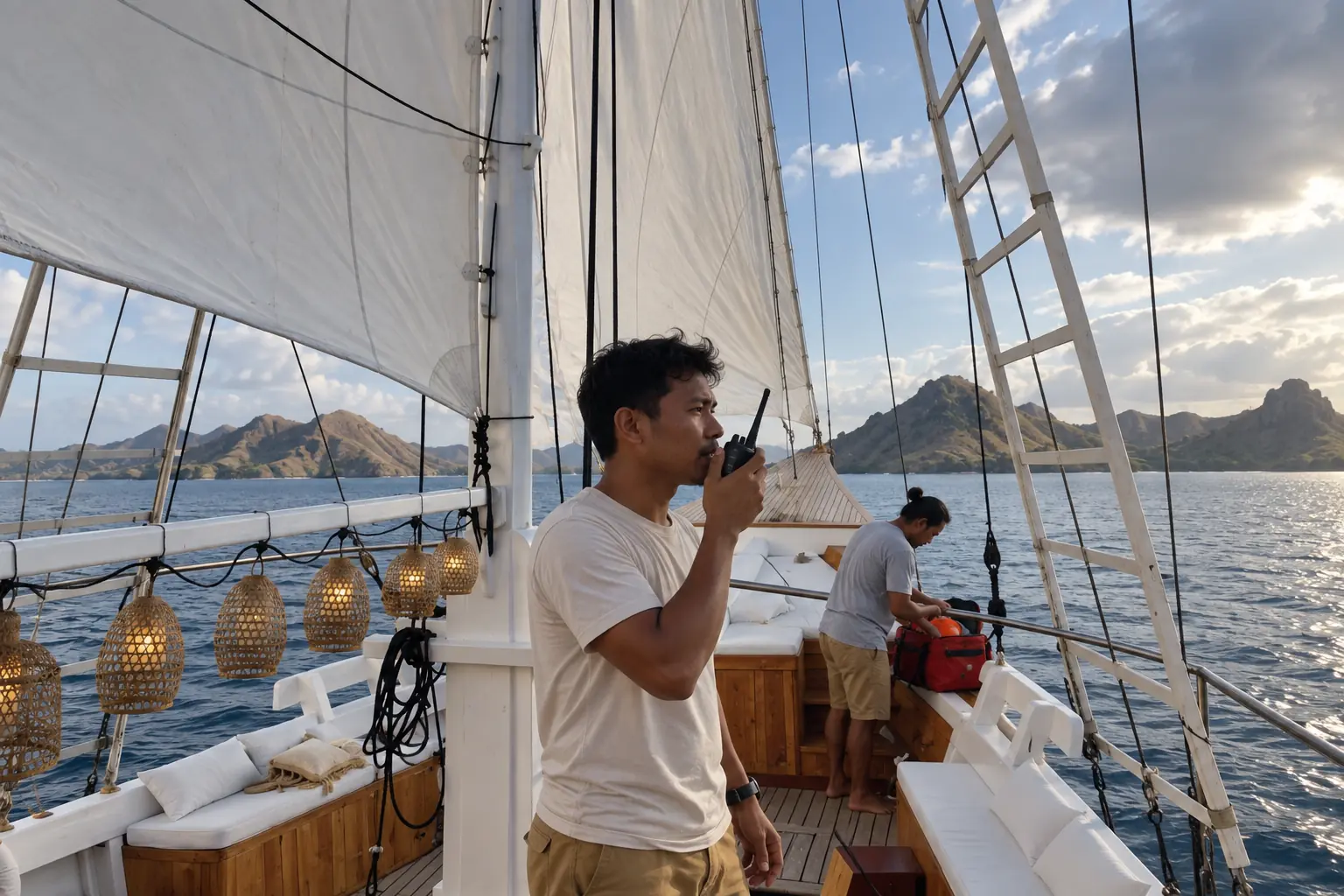
Do not rely on an online claim about chamber location, helicopter price or assurance of instant admission: facilities and medical decisions can change. An emergency should follow the captain’s and medical professionals’ directions first. Review our Komodo travel safety guide for how to ask about crew communications and response plans.
Match the policy to the booking timetable
Some benefits depend on when a policy was purchased, what was already known at purchase and when it starts. Before paying for flights, a cabin or a non-refundable charter, compare the dates, insured people, destination, planned water activities and the total prepaid amount. If a route changes after booking, ask whether your coverage still applies to the revised itinerary. Disclose any facts the policy asks for truthfully; do not assume a medical condition or activity is covered by silence.
Keep one usable document packet
- Policy schedule and full wording, plus any activity endorsement.
- Invoice for flights, hotel, boat and park charges showing payment dates.
- Boat cancellation terms and a written notice if the sailing changes.
- Insurer’s emergency contact and policy number, available offline and with a trusted contact.
- Receipts, incident reports and medical records where relevant; protect other travelers’ personal information.
Before leaving Labuan Bajo, ask the operator which communication method the crew uses where mobile service disappears and who coordinates shore assistance. A boat’s Wi-Fi is not a substitute for a marine emergency plan.
Ask the insurer these exact questions
“I will take a [shared/charter] Komodo boat trip from Labuan Bajo on [dates], with [snorkeling/scuba at the declared certification and depth]. Please identify the policy clauses covering medical treatment, evacuation from a vessel or island, weather-related sailing cancellation, missed departure after a flight delay, and any equipment loss. Who must authorise an evacuation, and what documentation is required?”
Compare wording with a simple evidence grid
For each activity write the policy clause number, limit, excess, exclusion, purchase date and assistance contact in a single sheet. Put “unknown” where the wording is unclear. Send the question to the insurer and save its written answer with the issued policy. An online article claiming a provider “covers Komodo diving” does not establish what your plan, residence, certification or activity includes.
Separate what the operator owes under the booking contract from what the insurer may reimburse. If the operator offers to reroute the trip, the insurer may assess a different loss from a complete cancellation. If a third party pays a refund, that may affect the reimbursable amount. Check the policy’s coordination and notification conditions with the insurer; do not assume that purchasing coverage transfers the decision-making responsibility away from you.
Read the exclusions as scenarios, not keywords
Search the actual policy for “scuba,” “snorkeling,” “watercraft,” “remote area,” “pre-existing condition,” “known event” and “reasonable care.” Then test the planned activity against the definitions. A policy can mention diving in one section and still limit depth or certification in another. Ask whether emergency transport begins at sea, on the island, at the nearest port, or only after hospital admission. If your question has multiple parts, request an answer referencing the relevant clause numbers.
Check who is insured when paying for a family or shared cabin. One invoice can include several people while a policy lists only one. The trip start and end dates should include necessary arrival and return buffers if you expect those expenses to be covered. A booking currency different from the policy limit may affect the amount you need; compare limits in the policy’s own currency rather than converting a competitor’s illustrative dollar figure.
What a claims-ready cancellation record looks like
If a sailing is suspended, retain the operator’s written notice with date, original itinerary, alternative offered and amount actually refunded. Save the flight delay or cancellation notice if that caused the missed boat. Keep paid invoices and separate unpaid quotes, so the insurer can distinguish a real loss from a proposed expense. Notify the insurer within its policy deadline; do not assume the boat operator’s WhatsApp message is enough to open a claim.
Short answers
Is one policy enough?
Only the wording and benefits of that actual policy can answer. Compare the travel-disruption and activity-medical sections separately.
Are boat trips and diving automatically included?
No universal rule applies. Ask about both explicitly and obtain written confirmation or an endorsed schedule.
Does bad weather always produce a payout?
No. A covered event, timing, evidence and any exclusions all matter; the operator’s commercial refund is a separate decision.
