

Deluxe vs Luxury vs VVIP at a glance
KomodoInsider keeps the three class labels because they help travelers narrow a large fleet. The comparison does not assume that a label guarantees a facility. It asks what evidence should become stronger as the positioning rises.
| Decision factor | Deluxe | Luxury | VVIP |
|---|---|---|---|
| Best starting point | Functional private-cabin comfort with disciplined comparison | Stronger emphasis on cabin finish, shared spaces and service balance | Highest scrutiny on privacy, suites, guest density and charter positioning |
| Cabin proof to request | Exact bed, deck, bathroom and air-conditioning details | Cabin dimensions or a clear plan, plus verified premium configurations | Individual suite specifications, deck position and any balcony evidence |
| Guest capacity | Check whether the layout feels practical at full occupancy | Check the balance between cabin count and common-space area | Check whether lower guest density is real, not only implied by marketing |
| Crew experience | Confirm total crew and core safety roles | Look for a service structure that matches guest count and activity plan | Verify the promised level of attention through crew roles and group size |
| Dining and common spaces | Confirm shaded seating, dining capacity and usable deck space | Expect clearer separation of dining, lounge and outdoor areas, then verify | Demand evidence of privacy, multiple usable zones and all-weather comfort |
| Activities | Check the exact included water equipment and tender setup | Look for broader verified equipment and stronger activity logistics | Verify premium claims one by one, including staff, tenders and equipment |
| Dive support | Class does not prove dive capability. Confirm the vessel’s dive focus, guides, tanks, compressor, equipment and operating plan separately. | ||
| Connectivity | Never assume reliable Wi-Fi or mobile coverage from class. Use only the vessel’s verified connectivity field and expect gaps at sea. | ||
The right class is the lowest label that still meets your non-negotiable needs on the actual boat. Paying for a higher label without verifying the features can produce a worse fit than choosing a well-documented vessel in a lower class.
Replace the marketing label with measurable questions
Start with the listing fields that describe physical reality. Cabin count, maximum guests, bed configuration, ensuite bathroom, balcony cabins, air conditioning, crew, dive guides, tenders and water activities are more useful than adjectives. A complete listing should also show representative images and state the booking capability and purchase unit clearly.
Ten attributes that matter
- Cabin size, deck and bed configuration
- Ensuite bathroom and hot-water arrangement
- Private balcony or direct outdoor access, when claimed
- Total cabins, maximum guests and normal occupancy
- Total crew and specialist activity roles
- Indoor lounge, dining and shaded outdoor space
- Cabin and common-area air conditioning
- Tender boats, snorkeling gear and water activities
- Dive support, when the trip is sold for diving
- Connectivity, power access and communication limits
Use the Komodo liveaboard directory to compare those fields across current listings. The class filter narrows the fleet, while the individual listing remains the source for boat-specific evidence.
Cabin quality is a configuration, not a photograph
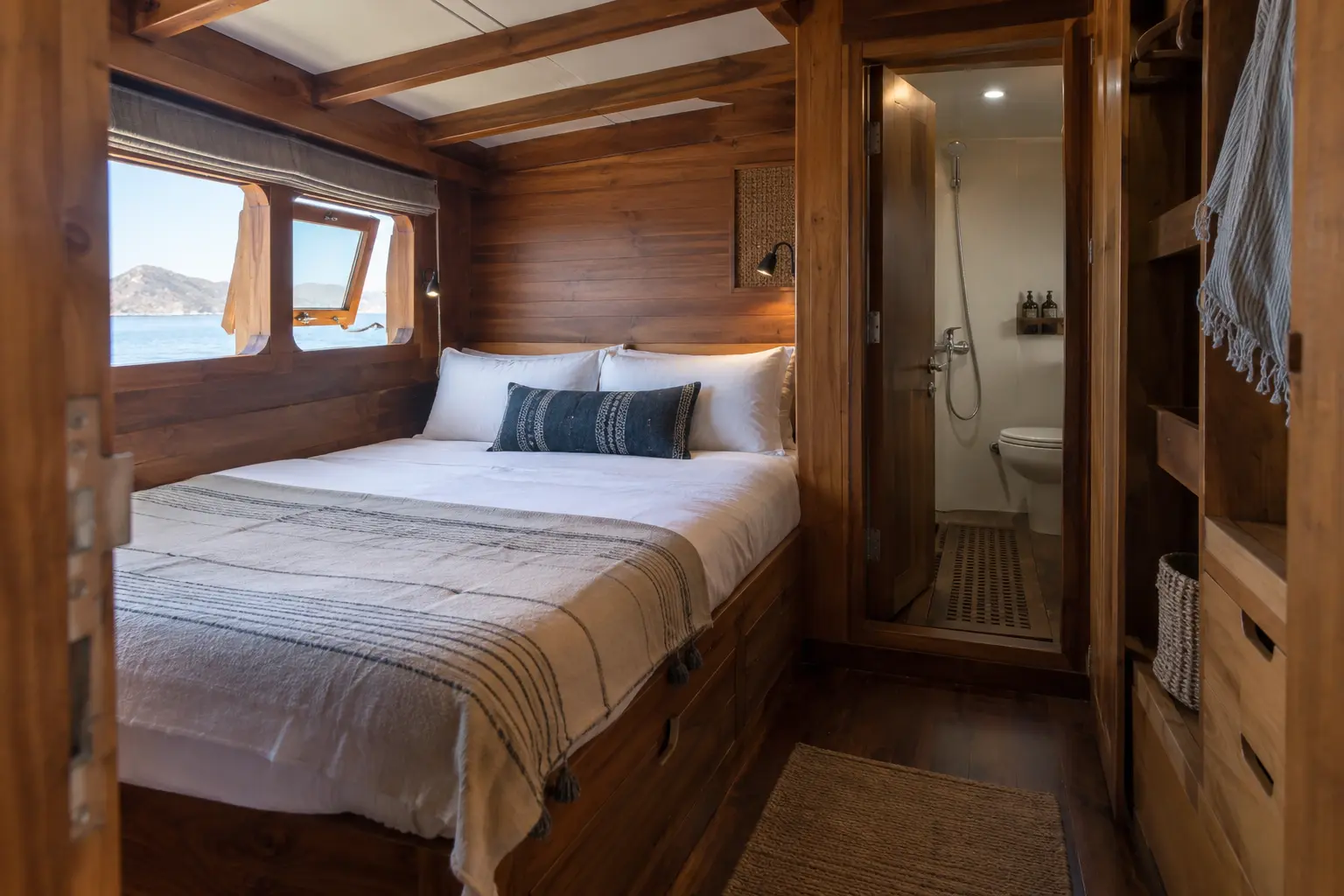
A wide-angle room image can hide the questions that affect sleep and privacy. Confirm the bed type, usable floor area, deck, window, storage, bathroom, ventilation, noise exposure and whether the pictured room is the cabin you can book. If a balcony is central to the choice, verify that the selected cabin has it rather than relying on a vessel-level claim.
Cabin count also changes the experience beyond the room. Two boats with similar length can carry very different guest numbers. Compare maximum guests with the number and size of common spaces, not only with the number of beds.
Verify for every class
- Exact cabin name and deck
- Bed dimensions and configuration
- Private or shared bathroom
- Air-conditioning schedule and controls
- Window, ventilation and storage
Verify for premium claims
- Published cabin or suite dimensions
- Balcony ownership and direct access
- Separation from engines and common areas
- Occupancy without temporary extra beds
- Images of the exact bookable category
Service level must match guest density and activities
Crew count is useful only with context. Ask how many guests the boat carries, which crew roles are dedicated to guiding, diving, food and tenders, and whether the published plan creates several simultaneous needs. A high class label cannot compensate for an activity program that the crew and equipment cannot support.
Shared spaces
Check that dining, shaded lounge and outdoor areas can support the normal guest load. Separate zones become more valuable on longer trips, in wet weather and when groups keep different hours.
Dining
Confirm dietary communication, meal format, drinking water and whether the dining area works at full occupancy. Plated presentation does not answer logistics.
Water activities
Verify tenders, snorkel equipment, kayaks or paddleboards individually. Availability, sizes and supervision can differ even within one class.
Dive support
Confirm guides, tanks, compressor, rental gear, tender operations and the actual dive itinerary. A leisure-focused VVIP boat can be a worse dive choice than a properly equipped vessel in another class.
Common spaces reveal how the vessel works
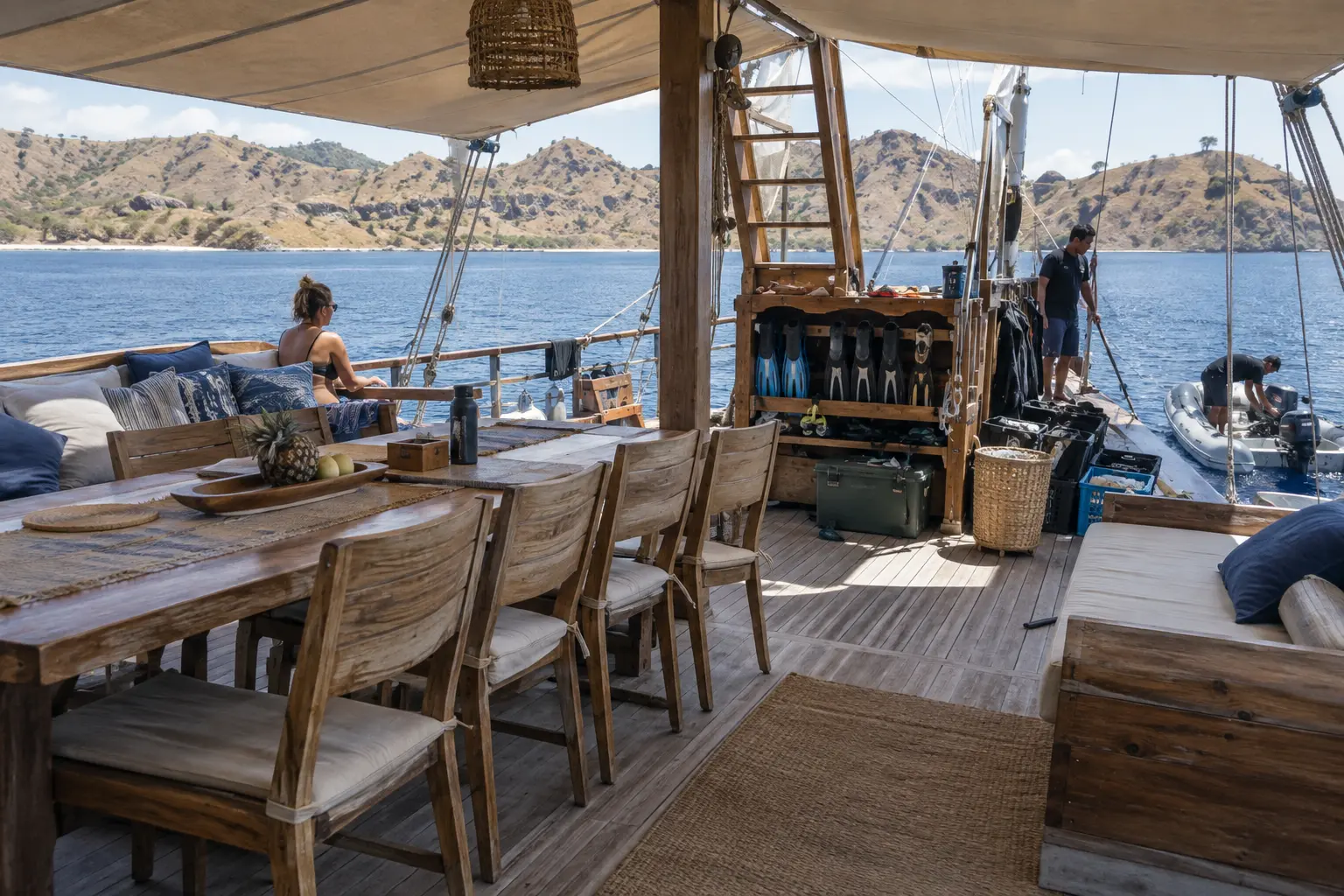
A useful deck supports real activities: meals, shade, quiet seating, gear storage, tender movement and safe circulation. Compare photographs against the guest capacity. If every seat is occupied at once, can people still move safely? Is snorkel or dive equipment stored without taking over the lounge? Can guests find shade outside?
Connectivity deserves the same honesty. Mobile coverage changes through the sailing area, and onboard Wi-Fi may depend on equipment, plan limits and line of sight. Treat connectivity as a verified facility with operating limits, not a class entitlement.
Choose the class by what can be verified
Choose Deluxe if
- Your priorities are a clear private-cabin setup and functional comfort.
- You would rather compare verified essentials than pay for a marketing tier.
- The actual boat meets your bathroom, air-conditioning, capacity and safety needs.
Choose Luxury if
- You value stronger cabin finish, more usable common space and service detail.
- You can verify the specific upgrades that matter on the selected vessel.
- You want a balance between a shared fleet product and a more refined stay.
Choose VVIP if
- Privacy, suites, guest density or charter positioning are central to the trip.
- The listing documents the premium claims with exact fields and current media.
- Your group will use the additional space, crew attention or specialist service.
Ignore the label if
- The cabin shown is not the cabin offered.
- Capacity, crew, bathroom or activity facts are missing.
- The operator cannot explain what the higher class changes.
Which class fits your traveler profile?
Solo traveler
Prioritize a confirmed shared departure, cabin-sharing rule and single supplement before class. A well-run Deluxe or Luxury boat with a social passenger mix may fit better than a charter-positioned VVIP vessel.
Couple
Decide whether an ensuite cabin is enough or whether balcony, suite size and quieter deck position matter. Verify the exact room instead of buying the vessel label.
Family
Guest capacity, connecting or adjacent cabins, railings, stairs, child policy and activity supervision matter more than decorative finish. Private charter can simplify coordination when the verified boat fits.
Group of friends
Compare shared-space capacity, cabin mix and charter positioning. A larger high-class vessel is not automatically more private if it also carries many more guests.
Diver
Choose verified dive capability first, then class. Use the Komodo diving hub to identify real dive departures and inspect guide and equipment fields.
Honeymoon or celebration
Verify cabin privacy, deck position, exclusive spaces and service expectations. If sharing common areas would change the trip, compare open trip and private charter before class.
Liveaboard class verification checklist
Ask for evidence, not adjectives
- Which class does the operator use, and what exact features support it?
- Which cabin category, deck and bed are included in the quote?
- Is the bathroom ensuite, and is hot water confirmed?
- Does the selected cabin have a private balcony or only shared outdoor access?
- What are total cabins, normal guests and maximum guests?
- How many crew and specialist guides operate at that guest load?
- Which indoor and outdoor common spaces remain usable at full occupancy?
- Which water activities and dive services are actually available on this departure?
- What are the limits of Wi-Fi, mobile coverage and onboard power?
- Is the offer shared by cabin, private charter, or both for the selected dates?
Then compare the route and duration. A highly specified vessel on the wrong itinerary is still the wrong product. Start with the Komodo Tour package hub, the trip-duration guide and the Komodo National Park pillar.
Frequently asked questions
Is VVIP always better than Luxury?
No. VVIP is a positioning label, not a universal specification. The better boat is the one whose verified cabin, capacity, spaces, service and activities match your trip.
Does Luxury guarantee a private balcony?
No. Balcony cabins must be confirmed at cabin level. A vessel can use a Luxury label without every room having direct outdoor space.
Does every Deluxe cabin have an ensuite bathroom?
Do not assume it. Check the selected cabin’s bathroom field and current images. Vessel-level wording can hide differences between cabin categories.
Is a VVIP liveaboard suitable for diving?
Only when the vessel’s dive facilities, guides, tanks, compressor, tenders and operating itinerary support diving. Class alone does not establish dive capability.
Which class is best for families?
The class matters less than cabin arrangement, guest load, child policy, railings, stairs, tender access and activity supervision. Verify those first.
How should I compare two boats with the same class?
Compare the exact cabin offered, maximum guests, crew roles, common spaces, air conditioning, tenders, activities, route, purchase unit and current verification date.
Methodology and freshness
KomodoInsider uses the current normalized class field to organize published Liveaboard inventory, then evaluates listings through measurable vessel and cabin attributes. Class counts, facilities and commercial offers can change. Filter results and individual listings remain the current source of truth.