
Stargazing in Komodo: Moonlight, Anchorages and Photography from a Boat
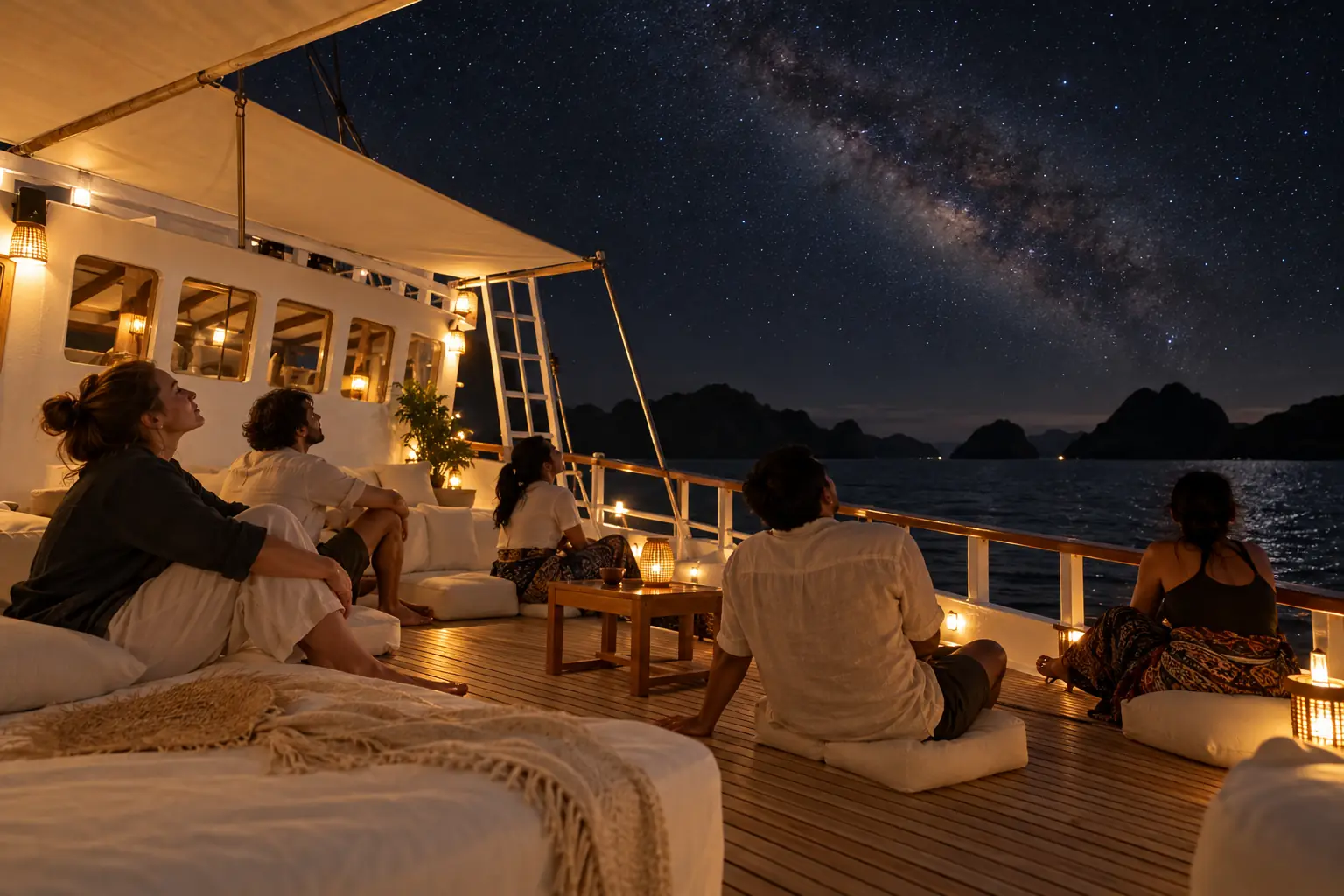
An overnight Komodo island trip aboard a liveaboard can put you away from much of Labuan Bajo’s town lighting, but it does not guarantee a clear, dark sky. Moon phase, clouds, the boat’s own deck lights and the direction of the anchorage all change the view. A “stargazing cruise” label tells you less than the actual overnight route and where guests are permitted to be on deck after dark.
Planning guidance checked 23 September 2026. No night-sky brightness or individual anchorage was measured for this article.
Check four conditions before you plan a night-sky photo
| Condition | What changes | How to verify |
|---|---|---|
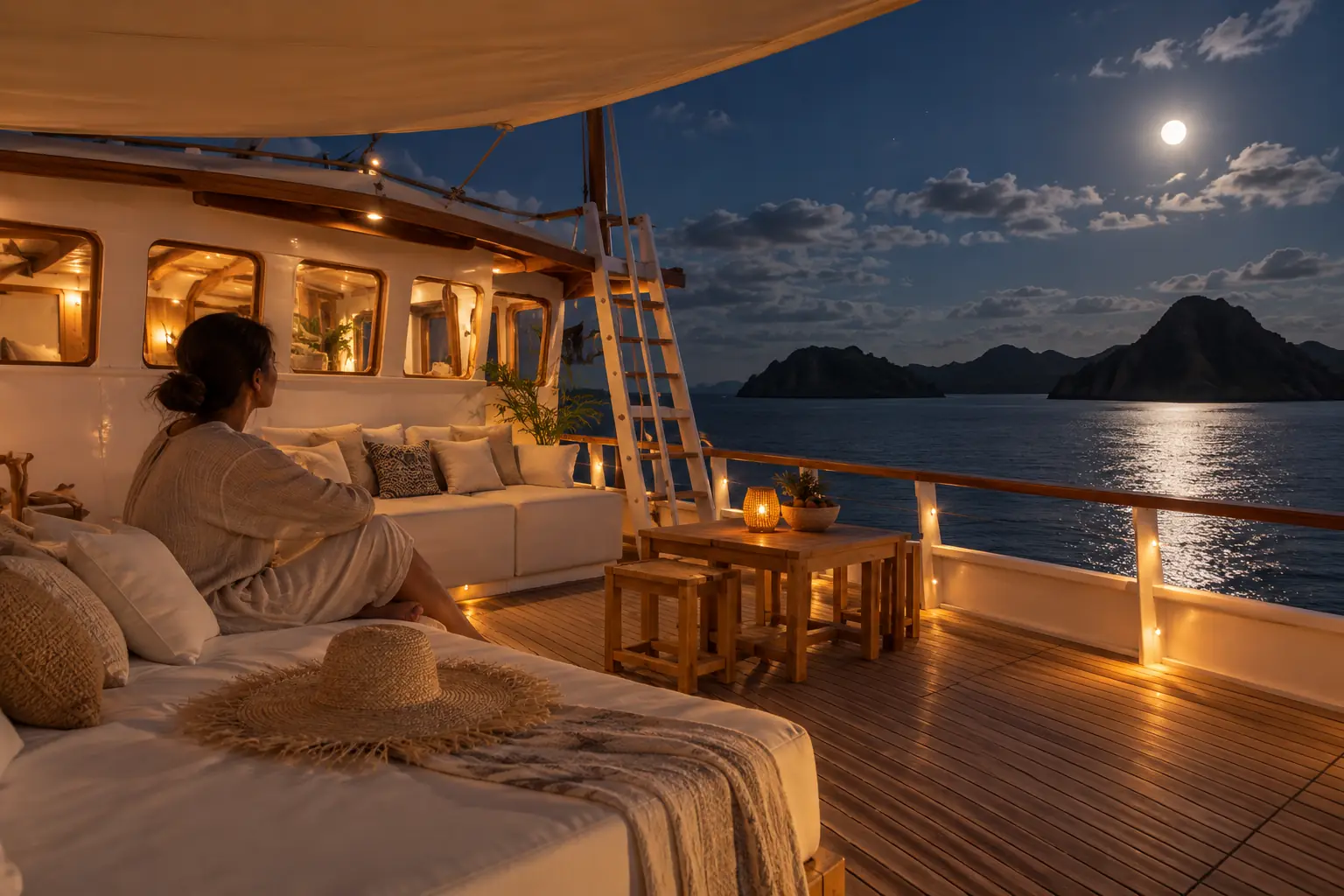
| Moon phase and moon position | A bright moon can wash out faint stars, while it may illuminate a useful boat or ridge foreground. | Consult the relevant date in BMKG’s almanac; check rise and set times for the location. |
| Clouds and rain | A dark-moon night can still be overcast. | Read the latest forecast and accept that a multi-day advance view is uncertain. |
| Boat lighting | Navigation and safety lights may remain on and affect eyes or long exposures. | Ask the crew what deck areas and lights can safely be used; never switch off safety lighting yourself. |
| Anchorage and movement | Motion, nearby boats and surrounding land change visibility and photography. | Ask the captain for the planned overnight area and safe deck access, with no promise of an exact position. |
Stargazing and photographing are different plans
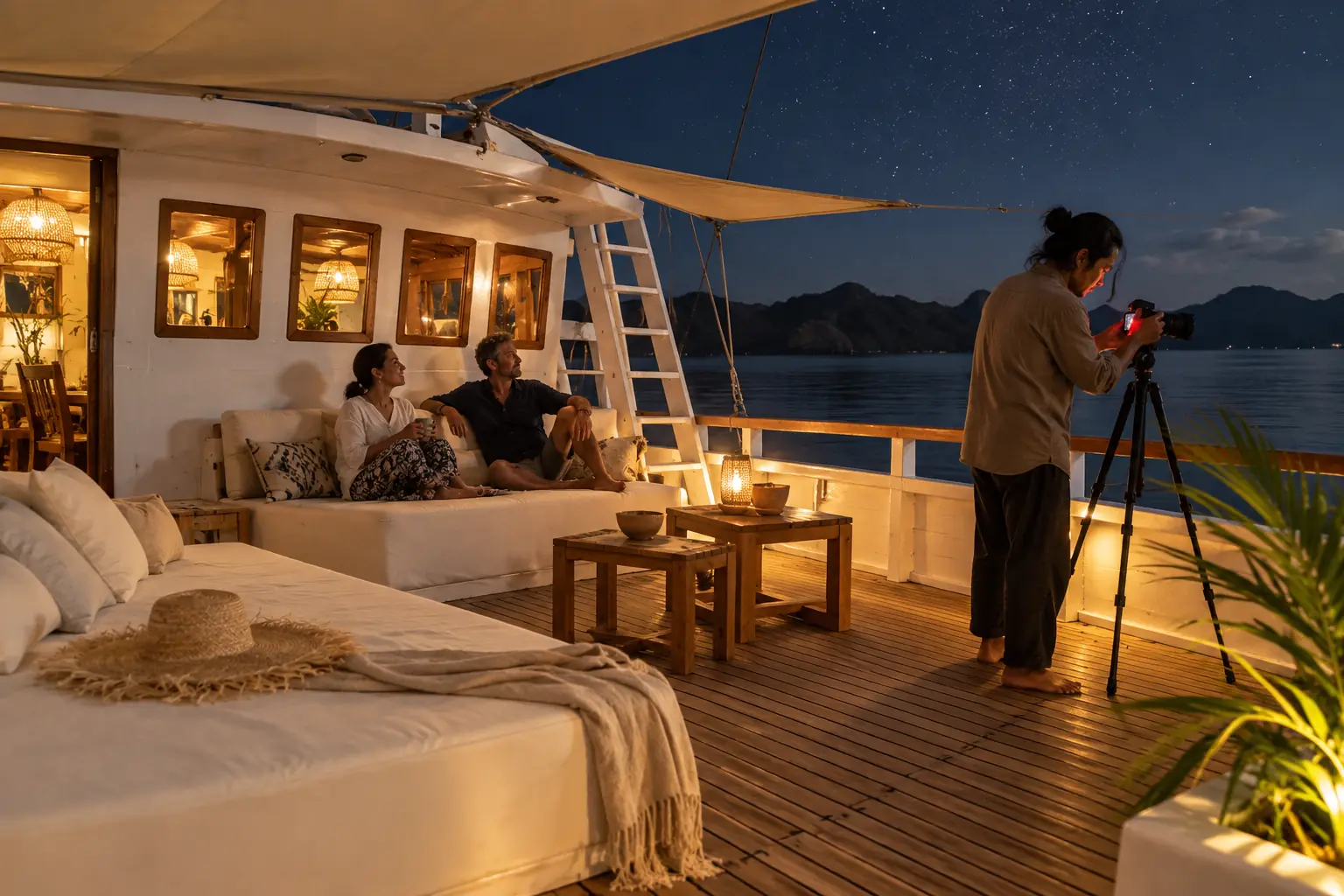
For simply looking up, let your eyes adapt to the available darkness and find a safe place on the deck indicated by crew. Avoid shining bright lights into another guest’s eyes or toward the bridge. For photography, a stable camera position, modest equipment and careful handling matter more than a preset exposure number. A moving hull can blur long exposures even when it is anchored. Secure the tripod only where allowed and do not block exits or crew paths.
Include a second scene in your plan: moonlit islands, silhouettes of the deck, or reflections can work when faint stars do not. Do not publish a composite image as a documentary view of that exact night without explaining what was combined. A drone is not an automatic alternative to a deck shot; the park’s drone permission is a separate issue.
Choose the itinerary for an overnight, not a promise of darkness
A same-day return to Labuan Bajo offers no full night on the vessel. A multi-night route offers at least one chance to ask about stars from an overnight anchorage, while weather and safety still decide what is possible. Compare the komodo tour 3 days 2 nights to the number of nights and actual boat offered. Ask where nights are planned, what lights must remain on, whether guests can use the open deck, and what happens if the anchorage changes. Nothing about booking a phinisi gives permission for a night landing on a closed island.
Make the night comfortable for other guests
- Carry a dim red or shielded light only if the crew allows it; safety instructions take priority.
- Check if a tender or rail is moving before looking through a camera.
- Keep music, flashes and light painting within the operator’s rules and respect neighboring boats.
- Tell the crew if a guest is going to be alone on deck, then follow their access restrictions.
FAQ
Is the Milky Way guaranteed?
No. A sighting depends on conditions and the viewing direction, and this article does not claim a measured dark-sky rating.
Should I book a new moon?
A darker moon phase often helps faint-star viewing, but a bright moon can improve the landscape foreground. Check your photographic goal and the actual forecast.
Can I go ashore to avoid boat movement?
Only if landing is permitted and the operator has arranged safe access. A night on a boat does not itself allow visitors onto an island after hours.
Use the Komodo packing guide to plan warm layers, a stable tripod and dry storage for nights on deck.
Choose observation before promising a long exposure
A traveller looking at the sky can enjoy a view under conditions that will not support a sharp long-exposure photograph. Vessel motion, lighting, cloud and moonlight affect the image differently. Ask whether the crew can provide a permitted stable viewing position without changing navigation or other guests’ safety.
Arrange light etiquette and a clear route on deck before darkness. Do not switch off operational lights or move into working areas for a darker frame. If the anchorage or sky changes, keep stargazing an optional part of an overnight rather than the condition on which the holiday succeeds.
Does an overnight boat guarantee a Milky Way photograph?
No. Moon, cloud, vessel motion, permitted deck access and lighting all affect the result.
Use the relevant date and location when checking conditions through BMKG; a forecast does not establish site access or permission.
