
Photographing Komodo: Light, Boat Movement and Landscape Composition
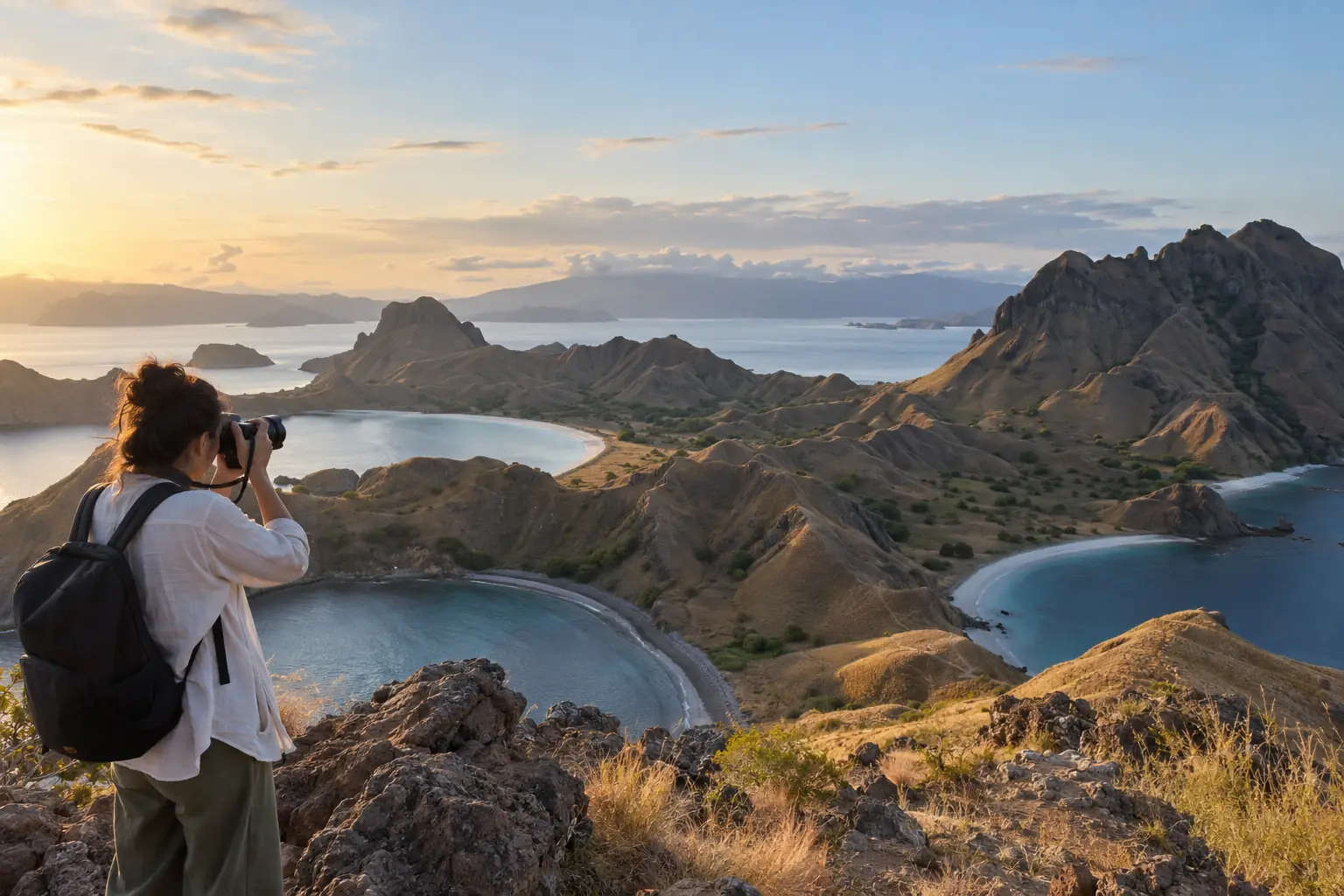
Komodo photography starts with where you are allowed to stand. A sunrise view from a managed trail, a moving boat and a ranger-led dragon visit have different constraints. When planning a Komodo island trip for photography, check the actual itinerary, available light and access before packing a lens around an imagined shot. A longer zoom can make wildlife framing easier without moving closer; a wider view can place the animal in its habitat rather than turning it into a forced close-up.
Editorial guidance checked 23 September 2026. Camera choices depend on the light, vessel and access actually available; these examples are planning guidance, not a field test.
Plan the frame around the place, not a fixed setting
| Scene | Likely problem | Practical response |
|---|---|---|
| Padar viewpoint | Bright sky and darker slopes, other guests using the trail | Arrive within authorized hours; compose around the bays without stepping off the path. |
| Moving boat | Deck vibration, spray and shifting horizon | Keep gear secured, use a suitable shutter speed for motion and protect electronics. |
| Ranger-led dragon visit | Changing distance and people between you and the animal | Listen to the ranger, use a lens suited to the allowed distance and never feed or position wildlife. |
| Beach or sunset | Glare, silhouettes and brief changes in color | Check the direction of light, take a safe position and expose for the element that matters. |
These are photographic decisions, not a universal exposure recipe. Light changes by season, weather and the boat’s bearing. A camera’s automatic stabilization does not compensate for stepping into an unsafe position or holding an unsecured lens over a tender transfer.
Photograph wildlife without crowding it
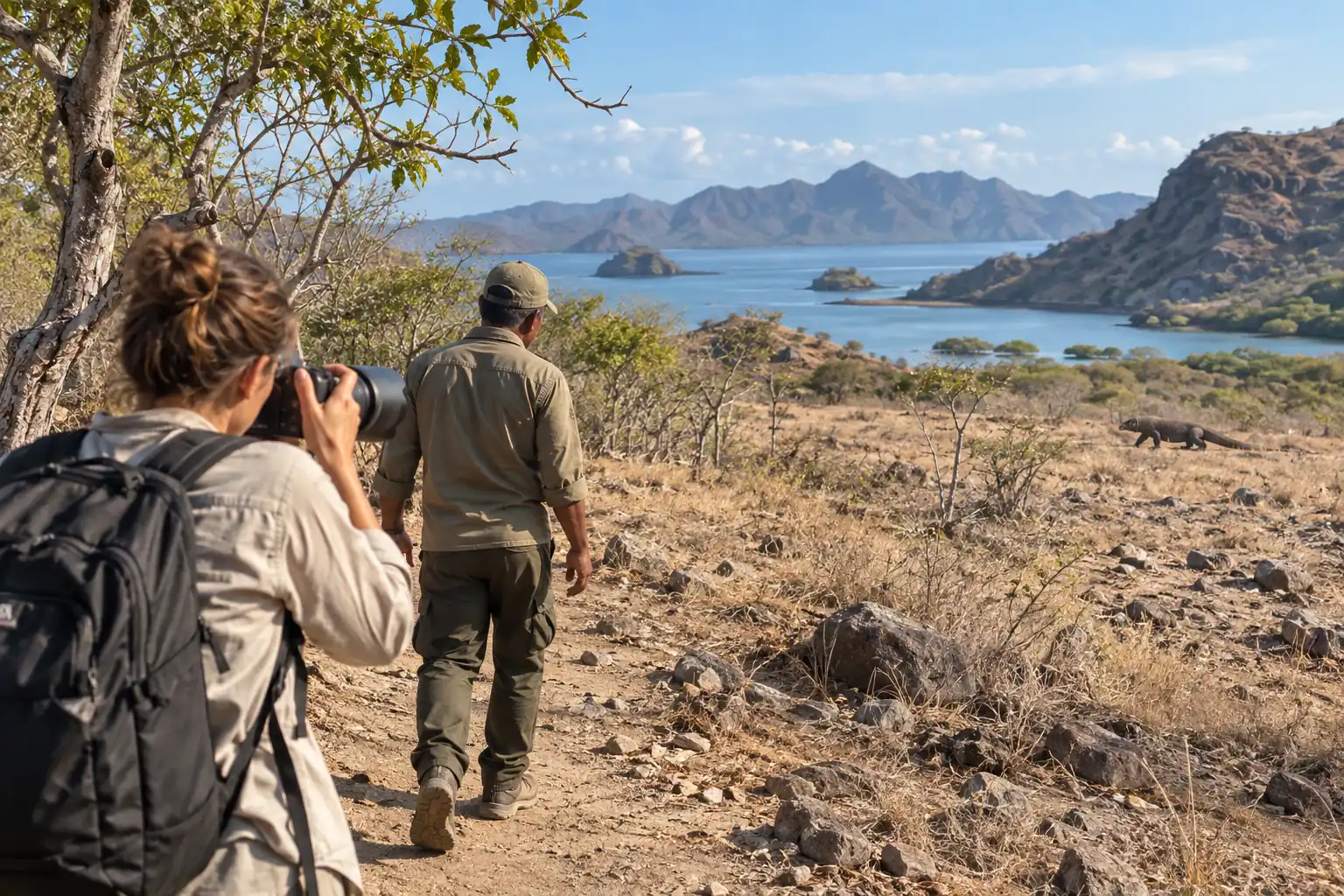
At Loh Liang or Loh Buaya, obey the naturalist guide and stay on the designated route. Do not ask someone to lure a dragon into the frame, set food out or reposition a group around an animal. Keep children and bags under control while photographing; a camera viewfinder can narrow your awareness of the surroundings. A wildlife encounter is possible, not guaranteed on a particular date.
For place-specific access and ranger arrangements, read the Komodo versus Rinca guide. Landscape photography at Padar is a different outing, with its own climb and return logistics. If your group wants extra time rather than a fixed shared stop, compare a komodo private charter with the exact route and park rules; a private boat does not grant off-trail permission.
Prepare for moving between vessel and shore
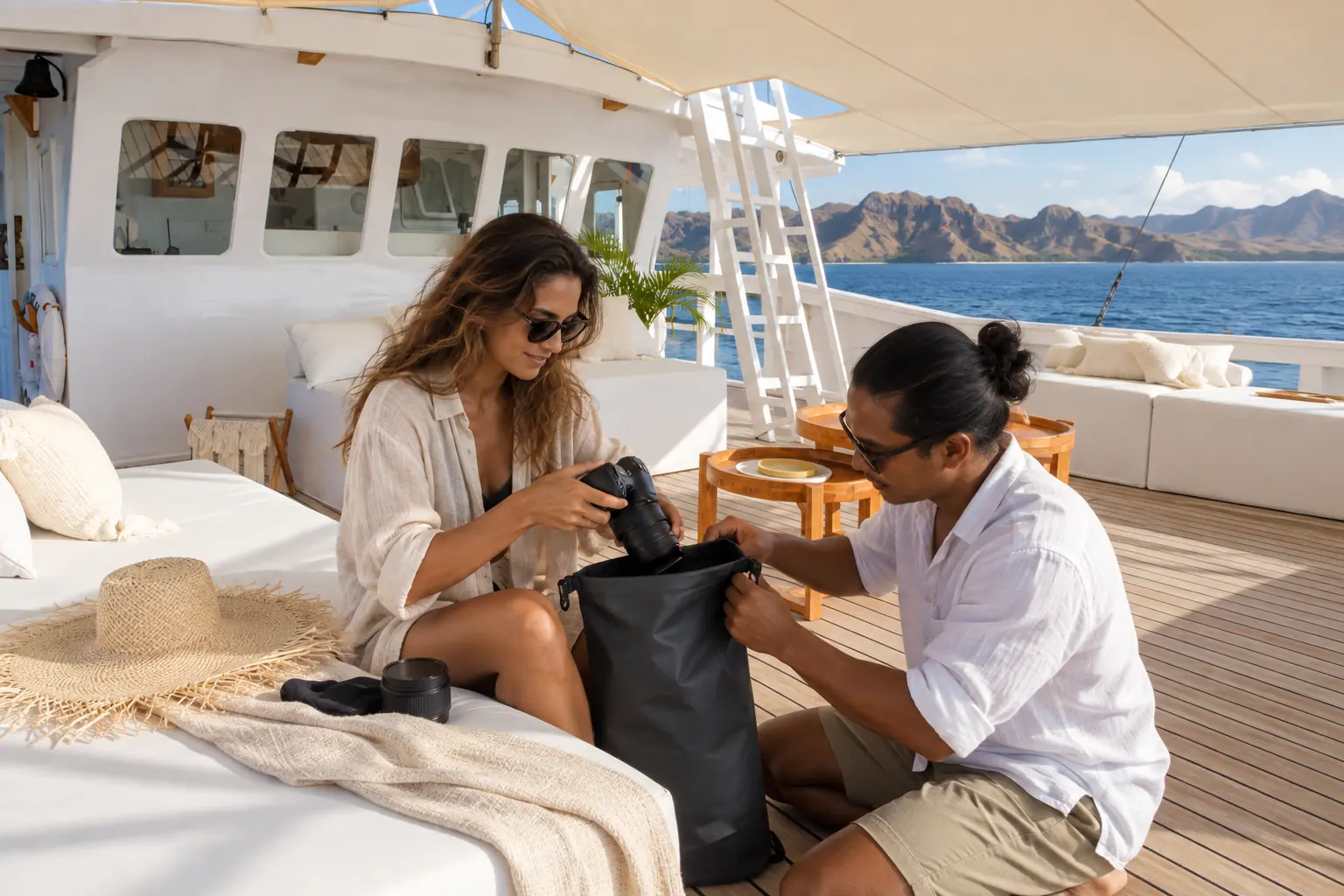
- Ask whether a tender transfer or wet beach landing is planned before deciding which camera case to bring.
- Use a sealed bag for vulnerable electronics and arrange how equipment is handed across, leaving hands free when boarding.
- Check boat charging points and fresh-water procedures on the named vessel; a generic “photographer friendly” label does not establish either.
- Back up important files when practical, but do not rely on an internet connection aboard.
- If flying with large lithium batteries, check the actual operating airline’s carriage rule separately from boat power arrangements.
A drone is a separate permit decision
The national park publishes an application path for small unmanned aircraft, with supporting documents and areas where operation is prohibited. An ordinary ticket, tour purchase or camera permit should not be treated as drone-flight approval. The park identifies Kalong (Rinca), Loh Buaya, Loh Liang and core zones among areas with explicit restrictions. Verify the current park approval and relevant aviation requirements before bringing a drone for a planned shoot.
For most travelers, a thoughtful photograph from the permitted trail or vessel is more realistic than assuming an aerial session can be added at the last minute. The dedicated drone rules guide handles the permit workflow without turning this article into legal advice.
Five questions that improve the photo plan
- Which stop, access route and time are actually booked?
- What position is permitted for guests while the vessel moves or anchors?
- What is the ranger’s required distance and group procedure at wildlife sites?
- Where will the equipment be dry and secured during transfers?
- Is the desired composition worth changing the itinerary, and can the operator actually do that?
Keep location evidence separate from the edit
Save the original frame and a private note of the named island or shoreline confirmed by the guide. Similar-looking bays can be mislabelled when images are selected later. Exposure and colour adjustments should not turn a landscape photograph into evidence of a permanently pink beach or a guaranteed wildlife encounter.
For portraits and community scenes, ask for personal permission rather than relying on general tour access. For wildlife, choose a longer lens or a wider composition instead of moving closer than the guide permits. A photograph worth keeping should not require disturbing the subject or leaving the group.
Does permission to visit include permission to photograph every person?
No. Ask the person and follow the host’s or site’s instructions, especially for private spaces, work and ceremonies.
Use the relevant date and location when checking conditions through BMKG; a forecast does not establish site access or permission.
