
Flying to Labuan Bajo with Dive and Camera Gear
Check airline rules for dive equipment, camera gear, batteries and sports baggage on flights to Labuan Bajo before booking and packing.
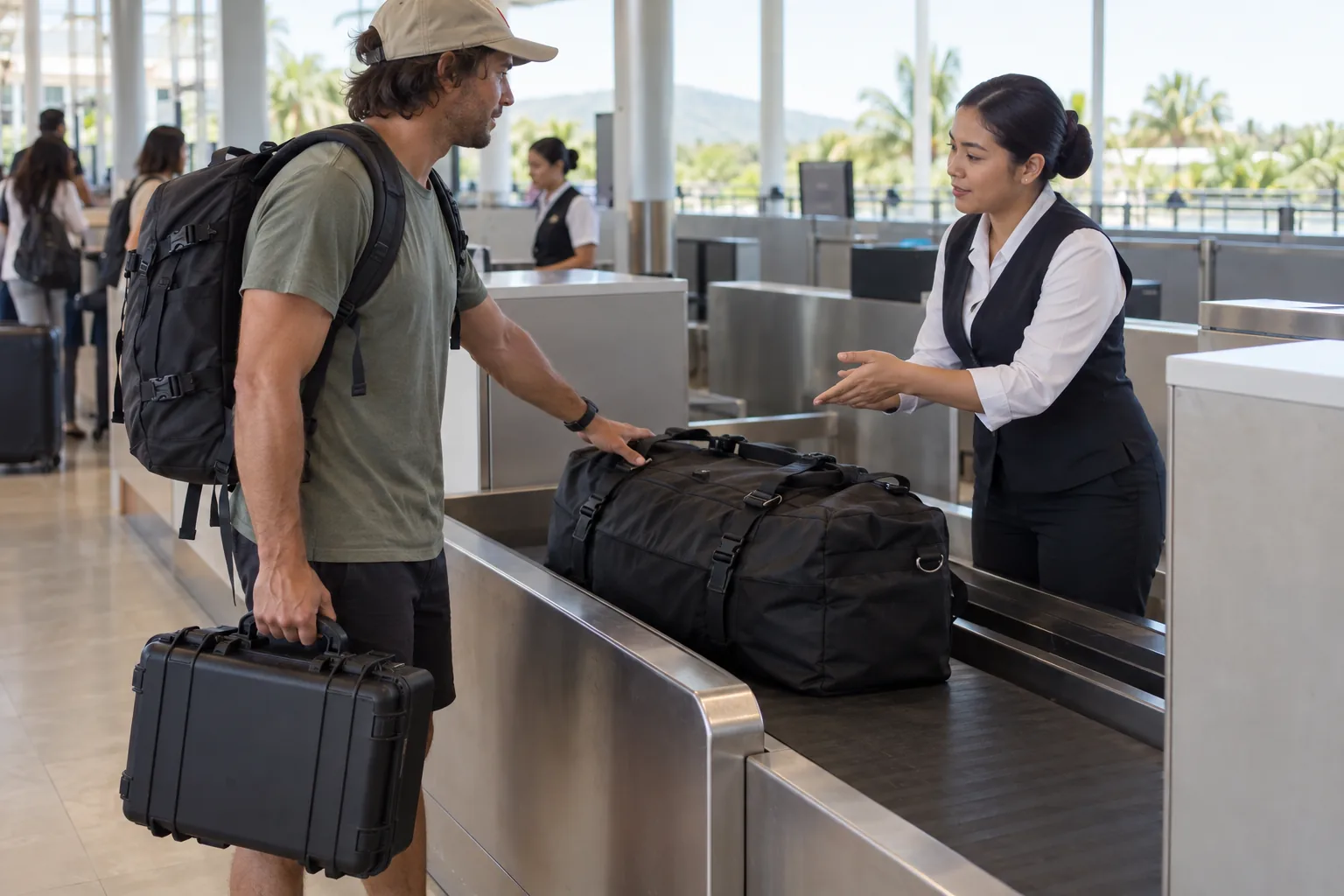
Flying into Labuan Bajo with fins, a regulator, camera housing and spare batteries is a packing problem and an airline-rules problem. Check both before buying the fare. Your suitcase may fit the permitted weight but a cylinder or battery can still be restricted; a device allowed by one airline may be refused by another. For your Komodo trip, plan from the actual operating airline on every flight segment, including a connection to Komodo Airport.
Separate ordinary equipment from regulated items
| Item group | Plan before the flight |
|---|---|
| Fins, mask, suit, regulator and housing | Measure and weigh the packed case. Compare your fare’s checked-bag and sports-equipment rules, including fees and dimensions. |
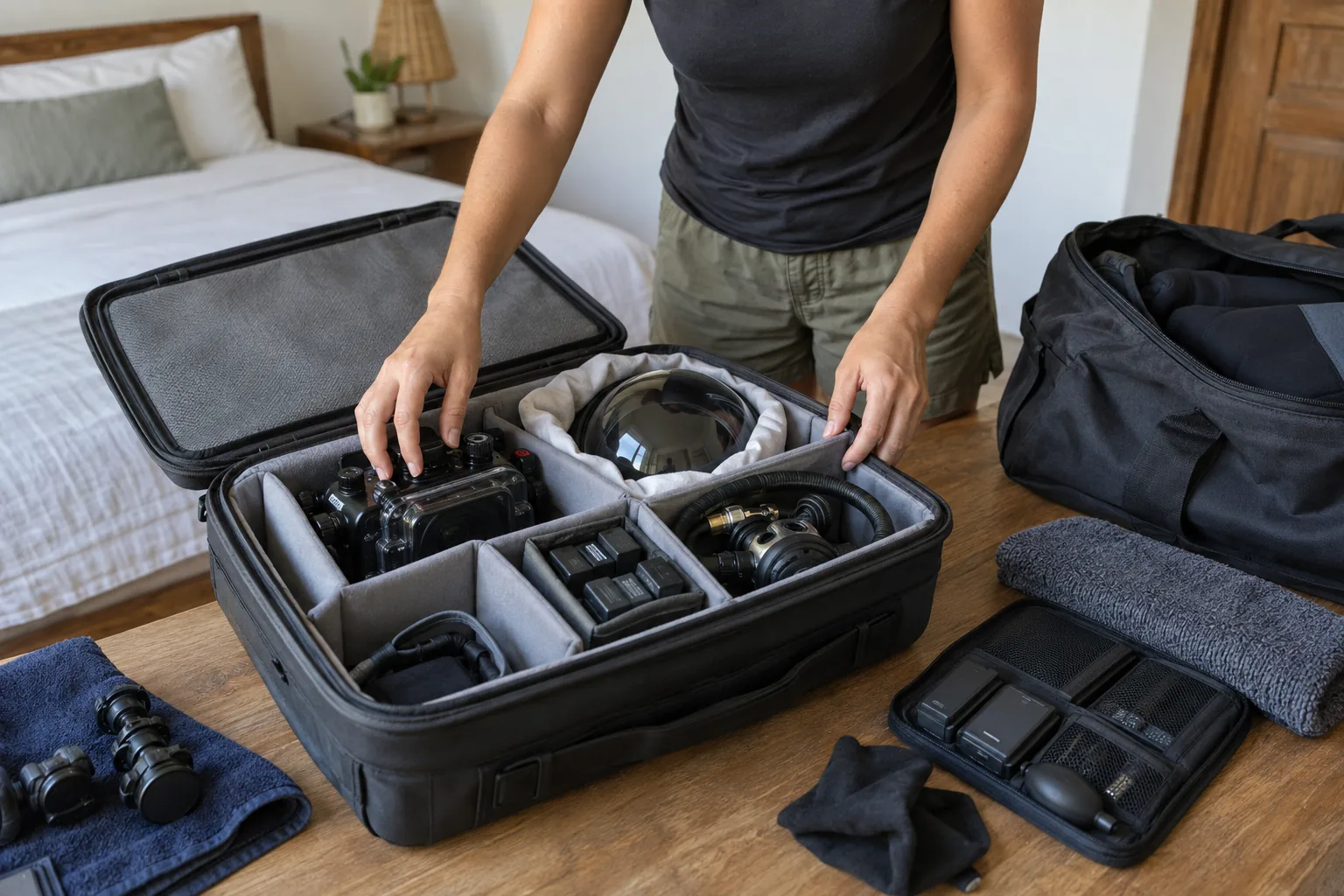
| Camera bodies and lenses | Pack fragile, valuable gear so that it stays protected; check cabin weight and dimensions before assuming it can all travel with you. |
| Loose camera batteries and power banks | Identify each battery’s watt-hour rating. Protect the terminals and carry spares in hand baggage, subject to the airline’s quantity and approval rules. |
| Dive cylinders, dive lights or unusual batteries | Ask the operating airline about the exact model and condition in writing before purchase; acceptance differs materially by carrier. |
IATA’s traveller battery guidance says spare lithium batteries and power banks belong in hand baggage with terminals protected from short circuit. It advises checking larger batteries with the airline. If a cabin bag is taken at the gate for the hold, remove those spares first. The airline’s current rule and staff instructions still determine acceptance on your flight.
Carrier policies are not interchangeable
The Citilink conditions of carriage state that compressed-gas dive cylinders are not accepted, whether full or empty. AirAsia’s sports-items guidance describes conditional acceptance of diving equipment under its sports allowance when it includes a tank, with its own restrictions. Garuda Indonesia has a separate baggage and sports-equipment policy. These are examples of why copying a generic “scuba gear is allowed” rule into your itinerary is unsafe. Check the operating airline, flight number, route, container and fare class; ask it to confirm a cylinder or nonstandard light before bringing either to the airport.
Sports-equipment charges and free baggage allowances can change with fare and carrier. Do not add weights from two tickets or airlines as though they were one allowance. For a connection, check both flights and whether the bag is through-checked or you must collect and recheck it.
A packing calculation that prevents surprise charges
- Make one list of items and weighed bags: ordinary checked suitcase, sport-equipment bag, cabin bag and personal item.
- Record each segment’s operating airline, fare allowance, sports item size/weight rule and prepaid extra-bag price on the day you book.
- Calculate the cost of carrying owned gear against renting it from the named dive operator in Labuan Bajo. Ask which sizes, brands and items the rental quote actually includes.
- Put documents, essential medication, electronics and permitted spare batteries where you can reach them if a checked bag is delayed.
- Keep a copy of any written airline approval and photographs/serial numbers of expensive equipment, then check the bag receipt and arrival carousel.
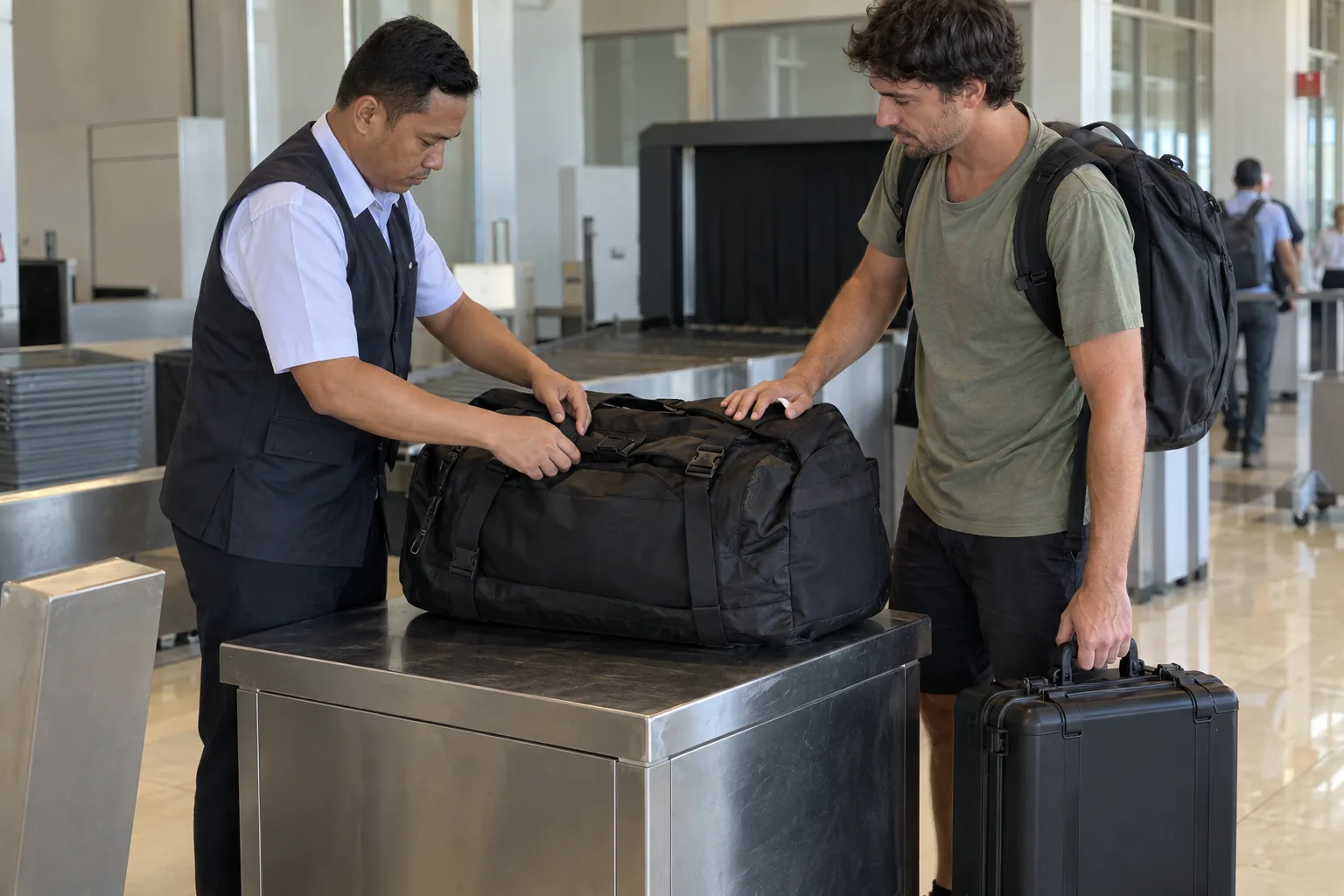
If equipment does not arrive, report the missing bag to the operating airline’s baggage desk before leaving the airport and keep the report reference. Tell the dive operator promptly if gear is needed for a scheduled departure. The general packing guide covers clothing and boat essentials; the diving hub helps identify the activity whose equipment you actually need.
Special questions for photographers
List camera and light batteries by their labelled Wh values. Keep spares individually protected; do not assume a large video-light battery qualifies under the same rule as a phone battery. If taking a drone, verify the airline’s carriage and battery rules separately from any park filming or flight permissions. An airline accepting the drone as baggage does not authorize its operation at Komodo National Park.
On the boat, ask about dry storage, charging points and opportunities to rinse a housing with fresh water. Do not promise yourself a particular power outlet or a safe place for hard cases unless your chosen vessel confirms it. The boat’s physical packing and the flight’s baggage policy are distinct checks.
Write one baggage line for each flight segment
| Record | Why it changes the packing decision |
|---|---|
| Operating airline and flight number | A codeshare seller’s baggage page may differ from the carrier handling the bag. |
| Fare class and included pieces | Weight and number of bags may both matter; confirm the actual ticket. |
| Sports-equipment booking | Prepaid sports space, size limits and handling can differ from ordinary checked baggage. |
| Battery Wh label and quantity | Airline permission may depend on the rating, condition and whether a battery is spare. |
| Where the bag is collected | A self-transfer can require baggage claim and recheck even when the itinerary looks connected. |
Ask your dive operator what specific equipment is available for rent and at what total cost for the dives you booked. If flying with heavy gear needs prepaid baggage on multiple sectors, compare that complete cost against renting just the bulky items and bringing your fitted essentials. Do not assume a rental regulator, wetsuit or camera housing in your size is available without confirmation.
Before buying a dive-specific itinerary, compare the dive komodo tour format to the gear and baggage you will actually carry. Boat charging and storage arrangements are vessel-specific; ask the named boat separately. This article covers transport rules, while dive fit and underwater use belong in the diving guides.
Make one baggage record for each operating segment
For each flight, record operating carrier, fare, checked allowance, cabin limit, specialist equipment acceptance and the confirmation source. A partner booking site or earlier domestic segment does not establish another carrier’s battery and baggage rules. Recheck when the operating carrier changes.
Then ask the boat about case size, dry storage and boarding method. A large hard case may be acceptable to the airline but awkward during a tender transfer. Pack essential documents and permitted personal items so you can reach them without opening the complete dive bag at the pier.
Does paying excess baggage settle boat storage?
No. Airline carriage and space aboard the named vessel are separate confirmations.
For the cited carrier example, check the operating airline and current trip details in AirAsia’s official service; another carrier’s terms may differ.
