
Komodo with Limited Mobility: Access Questions to Ask Before Booking
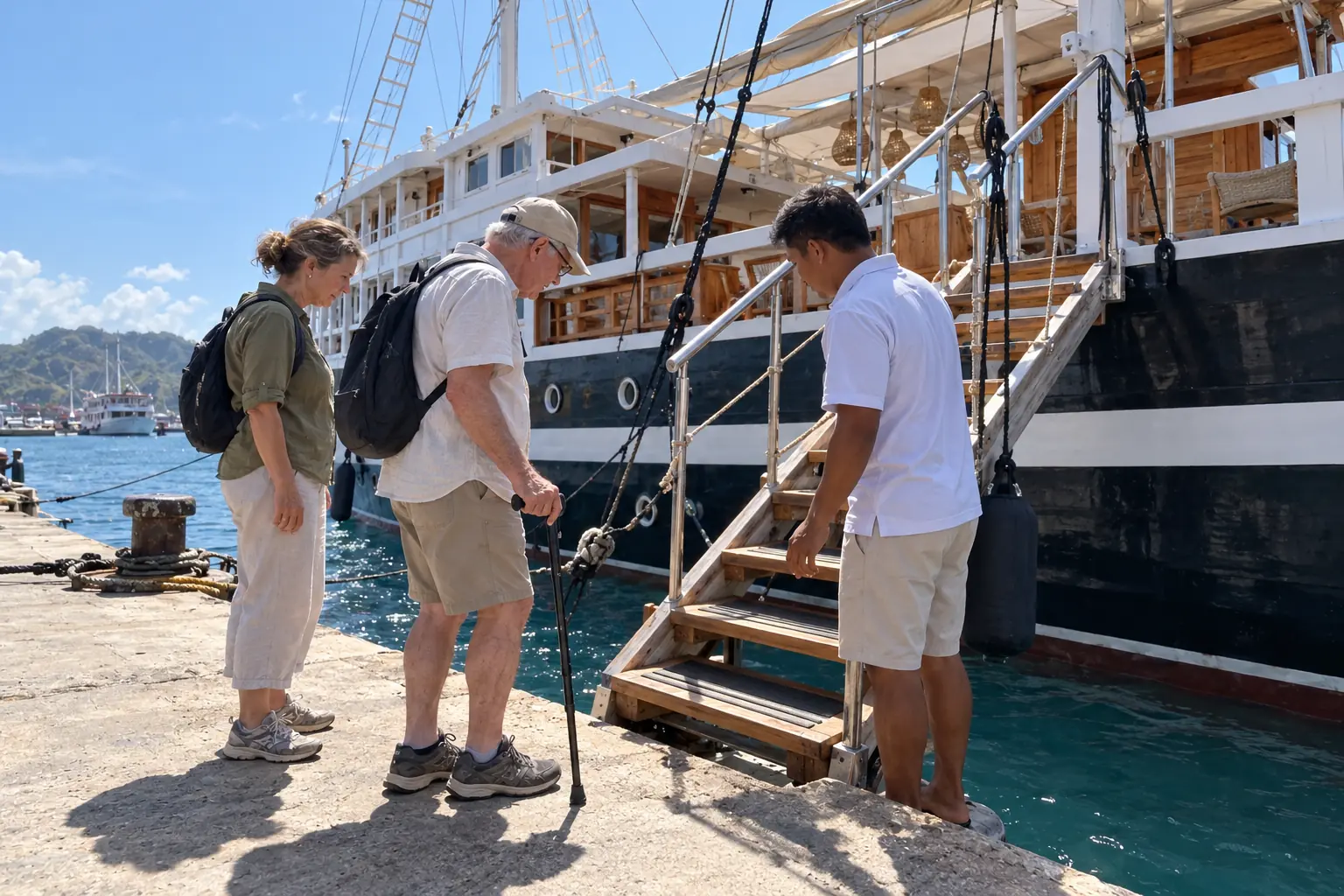
An accessible Komodo island trip involves a sequence of transfers, not a single badge on a tour listing. A hotel room may be step-free while the dock has a gap, the boat has a narrow gangway, and the island stop requires a tender or stairs. Ask for evidence at each stage of the exact route before paying. The ability to remain on board for a viewpoint is useful, but it is different from access to the island trail.
Editorial review: 23 September 2026. This article contains planning questions, not a verified accessibility certification for any vessel or site. Measurements, transfer assistance and alternative landings require confirmation for the named departure.
Map the trip from room to return
| Stage | What can block the journey? | Evidence to request |
|---|---|---|
| Hotel to departure point | Vehicle entry, drop-off distance, uneven path | Current vehicle and hotel access details. |
| Harbour to main boat | Floating jetty, tide-dependent step, gangway width | Photo or video of actual boarding at the scheduled port and the narrowest width. |
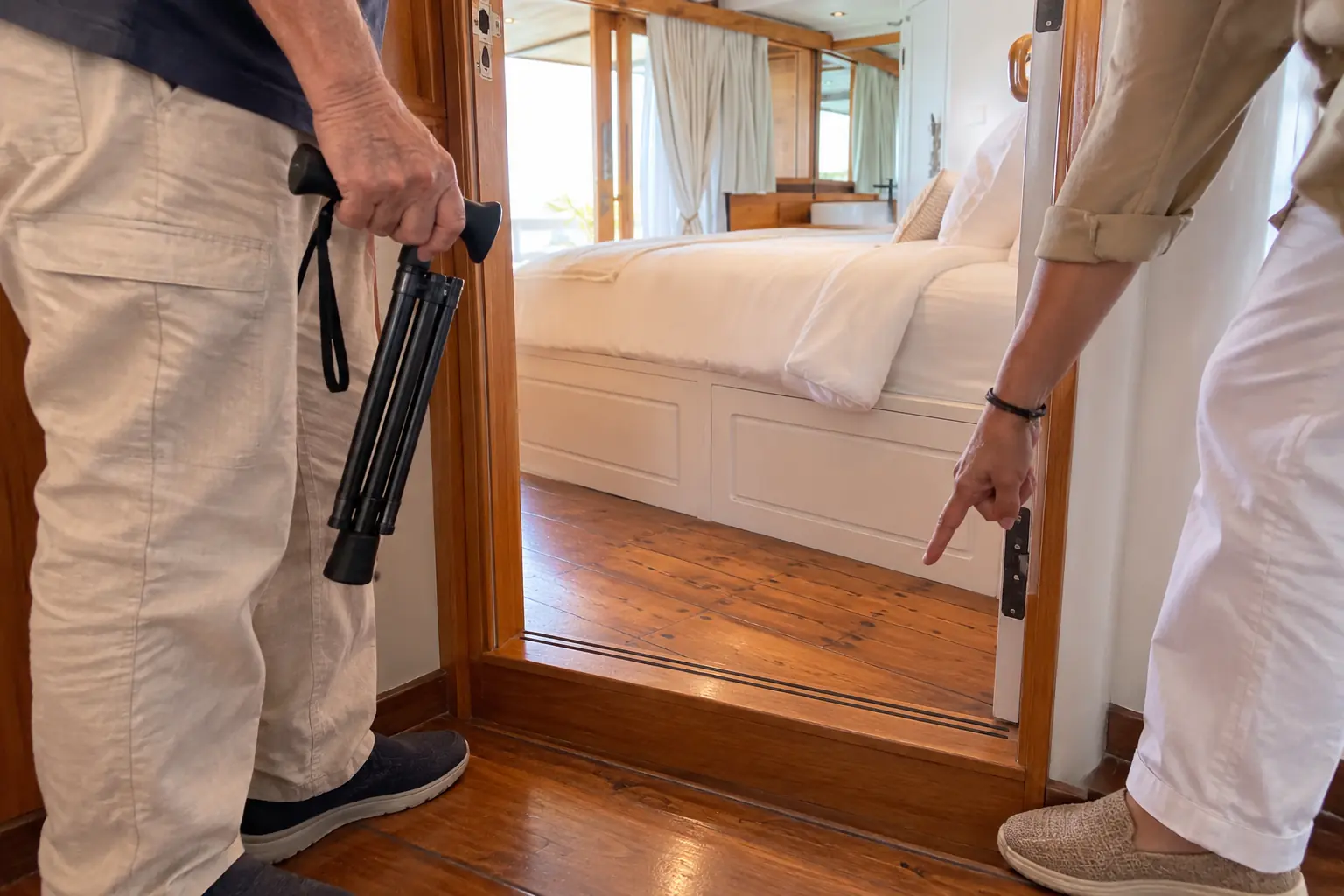
| Onboard | Deck stairs, cabin threshold, bathroom door and shower layout | Measurements and a continuous route from entry to sleeping and toilet. |
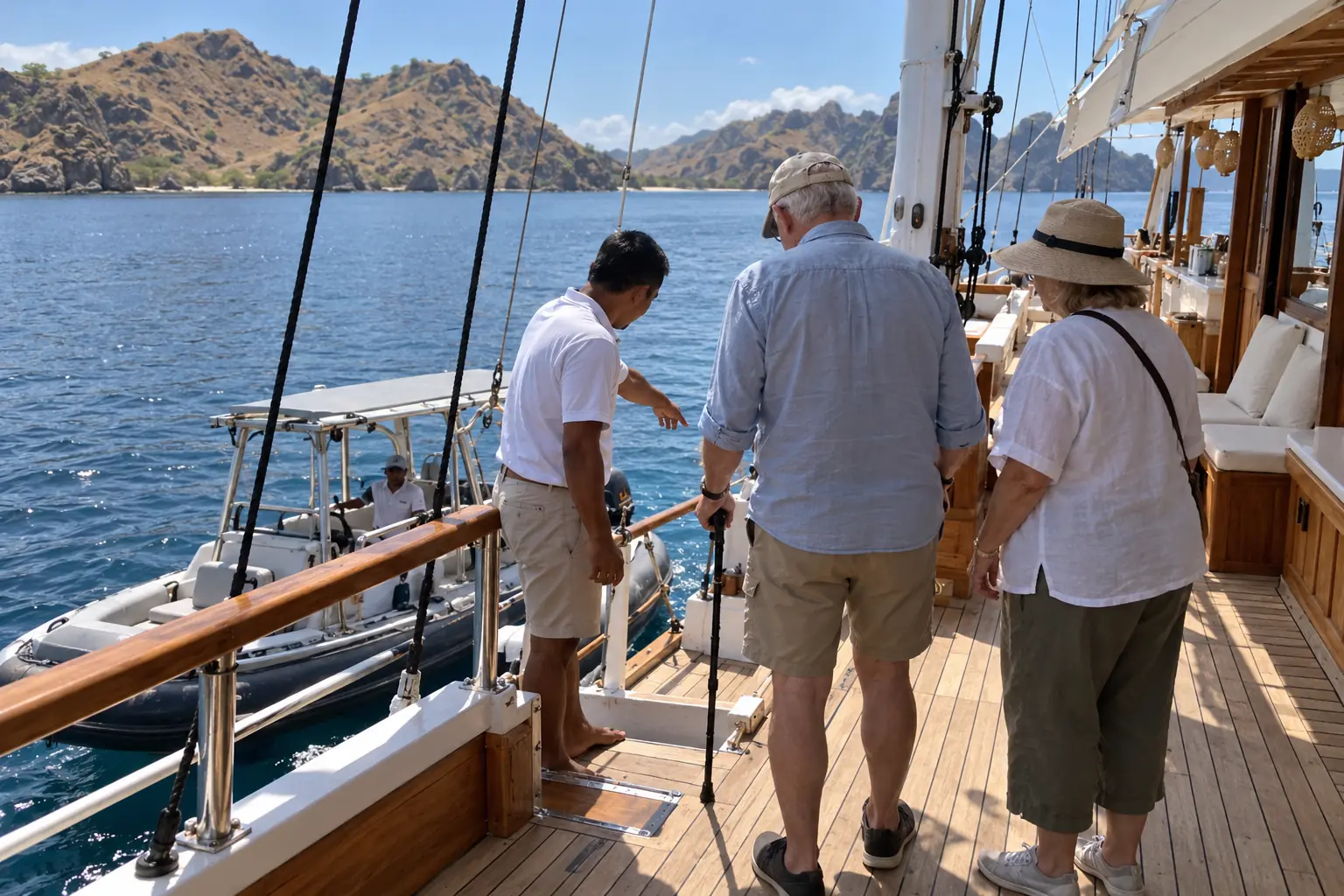
| Main boat to tender | Moving boats and no stable lift point | Written transfer method, crew roles, and safe alternative if transfer is declined. |
| Tender to shore | Beach landing or raised jetty, wet steps | Landing method for each named stop and likely tide window. |
| Island activity | Steps, gradient, surface, heat and distance | Route-specific confirmation from operator or park guide, with an option to skip. |
A photo labelled “wheelchair accessible” can show an airport transfer or a hotel rather than the boat and island activity. The spreadsheet’s GetYourGuide competitor page mixes transport and boat experiences under that filter. Treat each product’s accessibility description as a claim to verify, not proof of a continuous route.
Bring a useful access brief
Tell the operator what matters operationally: whether you use a manual or power chair, the chair’s width and weight, whether you can transfer independently or with assistance, how many steps you can manage, what sort of handhold is safe for you, and whether the chair may ever be separated from you. If you use a cane or walker, explain fatigue, uneven-surface and standing limits. You decide what personal information to share; a practical mobility brief is often more useful than a diagnosis.
Ask whether a komodo private charter can plan more time aboard and fewer landings for your group. Private use can allow schedule discussion, but it does not create a ramp, lift or accessible toilet on a boat that lacks one. Request the specific vessel and written access details before treating the route as suitable.
Which Komodo stops may change the decision?
The Padar viewpoint is a climb; do not buy a trip on the assumption that a wheelchair user can reach the summit. Ranger-led dragon routes on Komodo and Rinca must be assessed separately, since a shorter walk does not by itself establish an accessible surface or boat landing. Snorkeling may remove the trek while introducing a harder water entry. Remaining aboard may still offer a worthwhile landscape experience when the crew, deck access and vessel positioning suit the traveler. None of these alternatives is guaranteed on a fixed shared itinerary.
The park’s visit protocol requires following official guides and visiting within the permitted time windows. Do not arrange an independent shortcut across a restricted route to solve an access barrier.
Define the “no safe transfer” decision before departure
Ask the captain how the plan changes when tide, wind, swell or the landing make a transfer unsafe. Can you stay on the main boat with staff, is there a practical sheltered area, will the route substitute another stop, and are refunds or adjustments offered? If essential access features are unavailable when you arrive, the answer should come from agreed written terms, not a last-minute promise to lift you by hand.
Request these ten facts in one message
- Name and date of the actual operating boat.
- Boarding port and main gangway’s narrowest usable width.
- Number and height of unavoidable steps from jetty to cabin and toilet.
- Cabin entrance, bed access and bathroom door dimensions.
- Any lift, ramp or transfer device, with photos and staff training confirmation.
- Whether a wheelchair can be secured onboard.
- Which planned stops require a tender or wet landing.
- Independent decision on each trail, using current park access advice.
- Named contact for medical or access concerns and return options.
- Written change and cancellation terms when a stage proves inaccessible.
Send the dimensions of your mobility device and ask the operator to respond line by line. A vague “yes, accessible” cannot answer whether the narrowest doorway, tender transfer or bathroom works. Retain the exchange and photos with your booking confirmation.
Two sample plans, each with a different access limit
Aboard-first plan: agree on a vessel whose deck, toilet and overnight cabin can actually be used; schedule scenic sailing and optional shore stops. This can still fail at the harbour if the boarding gap is unsuitable, so the first transfer remains essential. Shore-focused plan: choose only landings and routes that the operating crew and authorized park guide have assessed with your mobility brief. A short trail may still be unsuitable because of sand, slope or an inaccessible tender.
With a power chair, ask about total device weight, battery type, available storage and reliable charging; airline and vessel requirements are separate. With a manual chair, ask whether a folded chair can be secured without preventing its user from reaching a safe place. Never assume a crew will manually lift a person or chair safely without equipment and a method agreed in advance.
Use a stage-by-stage go or pause decision
Mark every essential stage confirmed, unknown or unsuitable. A confirmed stage has measurements or an actual demonstration from the named boat; a marketing category is unknown. If the only accessible restroom is on an upper deck reached by stairs, an otherwise usable cabin does not complete the journey. If a shore stop is optional, it can be marked “skip” only when the staff and onboard supervision plan have been agreed.
Do not treat a request for manual lifting as a routine substitute for a boarding aid. Vessel motion, tide and equipment weight can change the risk at the moment of transfer. The traveler and operator need a method they both consider safe and a clear fallback for a condition that changes. If the access requirement is essential and still unknown at the deposit deadline, ask for evidence or different terms before committing.
Keep the trip rewarding without promising every stop
Discuss landscape viewing from a usable deck, stops that do not require a wet landing, and enough time for rest. Ask whether an accompanying person may board the same tender and whether the group can split temporarily. A traveler with limited mobility may be able to join some portions and skip others, but the actual boat, facilities and destination rules decide what is feasible. The goal is a complete travel plan the person can enjoy, not a checklist of attractions that becomes inaccessible after boarding.
Short answers
Is Komodo National Park wheelchair accessible?
There is no site-wide answer that establishes access for a specific boat and route. A traveler may be able to enjoy the sailing while some landings and trails are inaccessible. Confirm each stage.
Can I skip Padar and still join?
Possibly, depending on the vessel’s supervision plan and the rest of the itinerary. Ask who remains with you and whether any alternate stop can actually be confirmed.
Does a private tour solve the transfer problem?
It can change pacing and route choices, subject to conditions, but the vessel’s physical features and safe transfer method still control access.
