
Phinisi Nusantara: The 1986 Voyage from Jakarta to Vancouver
Explore Phinisi Nusantara’s 1986 Pacific voyage, its place in Indonesian boatbuilding history and how to distinguish the expedition from today’s Komodo boats.
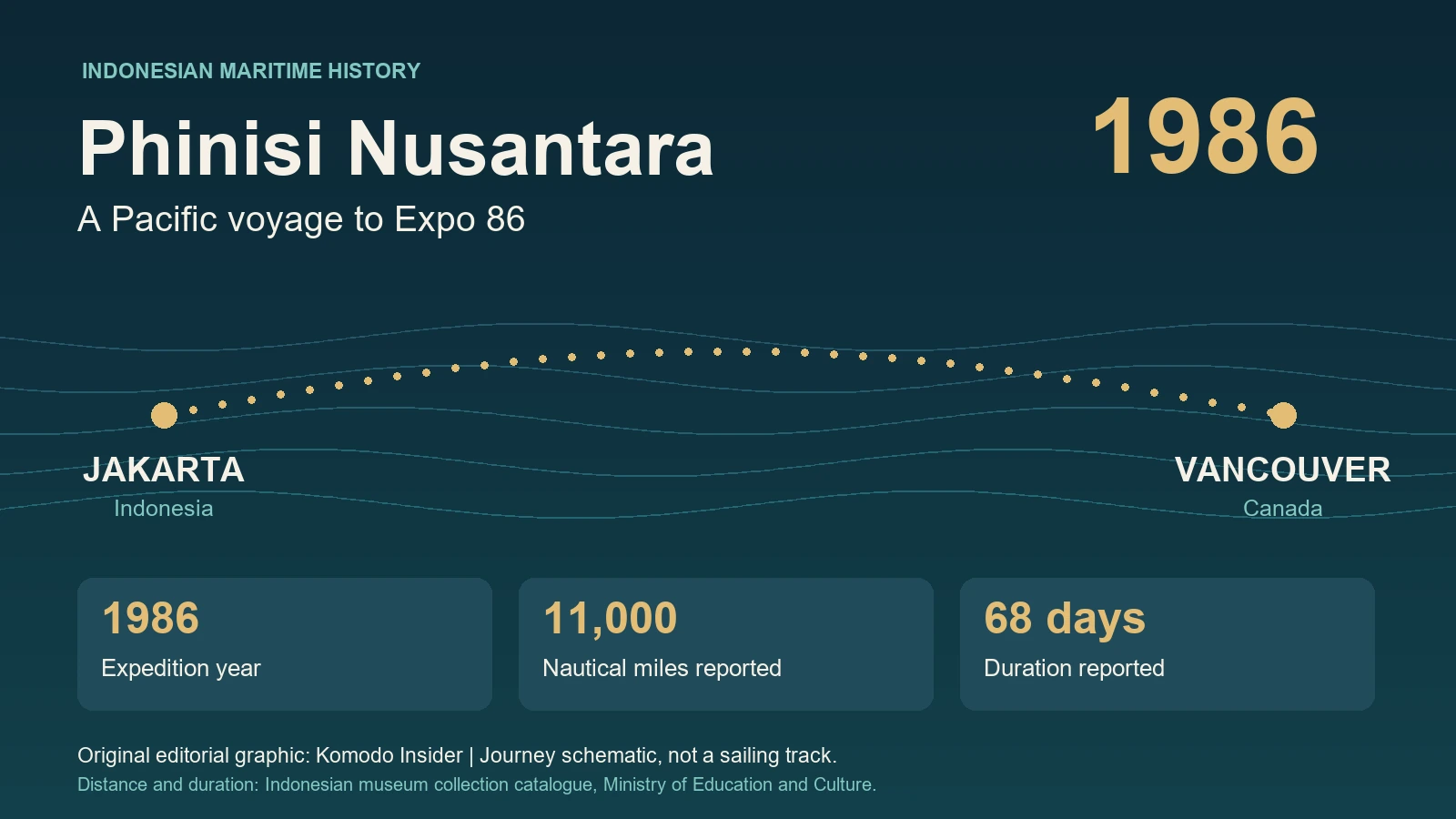
Phinisi Nusantara is remembered for its 1986 voyage from Jakarta to Vancouver, connecting an Indonesian wooden boatbuilding tradition with the international audience of Expo 86. It is a particular expedition vessel and story, rather than a generic name for today’s Komodo liveaboards.
The voyage offers a useful way into the wider heritage. Start with the people and skills behind the boat, follow the documented journey, and then look at modern tourism vessels with a clearer sense of what has continued and what has changed.
The voyage at a glance
| Question | What the sources support |
|---|---|
| When? | 1986. |
| Between which cities? | Jakarta, Indonesia, and Vancouver, Canada. |
| What distance and duration are reported? | An Indonesian museum collection catalogue records 11,000 nautical miles and 68 days. |
| How does Expo 86 enter the story? | A published boatbuilding study connects Phinisi Nusantara with Indonesia’s participation at the Vancouver Expo in 1986. |
| Who led the sailing mission? | The same study names Captain Gita; this article does not invent a crew interview. |
The distance and duration above follow Koleksi Pilihan 25 Museum di Indonesia, a catalogue available through the education ministry’s repository. The 2022 study by Andi Yurni Ulfa and colleagues provides the Expo context and names Captain Gita. Keep these reported facts attached to their sources rather than presenting a reconstructed logbook.
Why the 1986 crossing matters
A long voyage makes the work behind a vessel visible in a different way from a cabin photograph. Building, navigation, watchkeeping, maintenance and the organisation of a crew all become part of the story. The achievement belongs to people and their accumulated skills as much as to the silhouette of the boat.
It is also a reminder that a traditional craft can take part in a modern international event. Calling the vessel wooden or traditional should not make the people involved disappear into an anonymous past. An account that names its evidence leaves room for the builders and sailors to have specific histories.
The boatbuilding knowledge behind the story
The Ulfa study is an ethnographic case study of learning in a Tanah Lemo boatbuilding setting, with observation and interviews involving Syarifuddin. It describes technical learning through demonstration and practice alongside non-technical knowledge. Its principal subject is how skills are transmitted; it is not a day-by-day eyewitness record of the 1986 crossing.
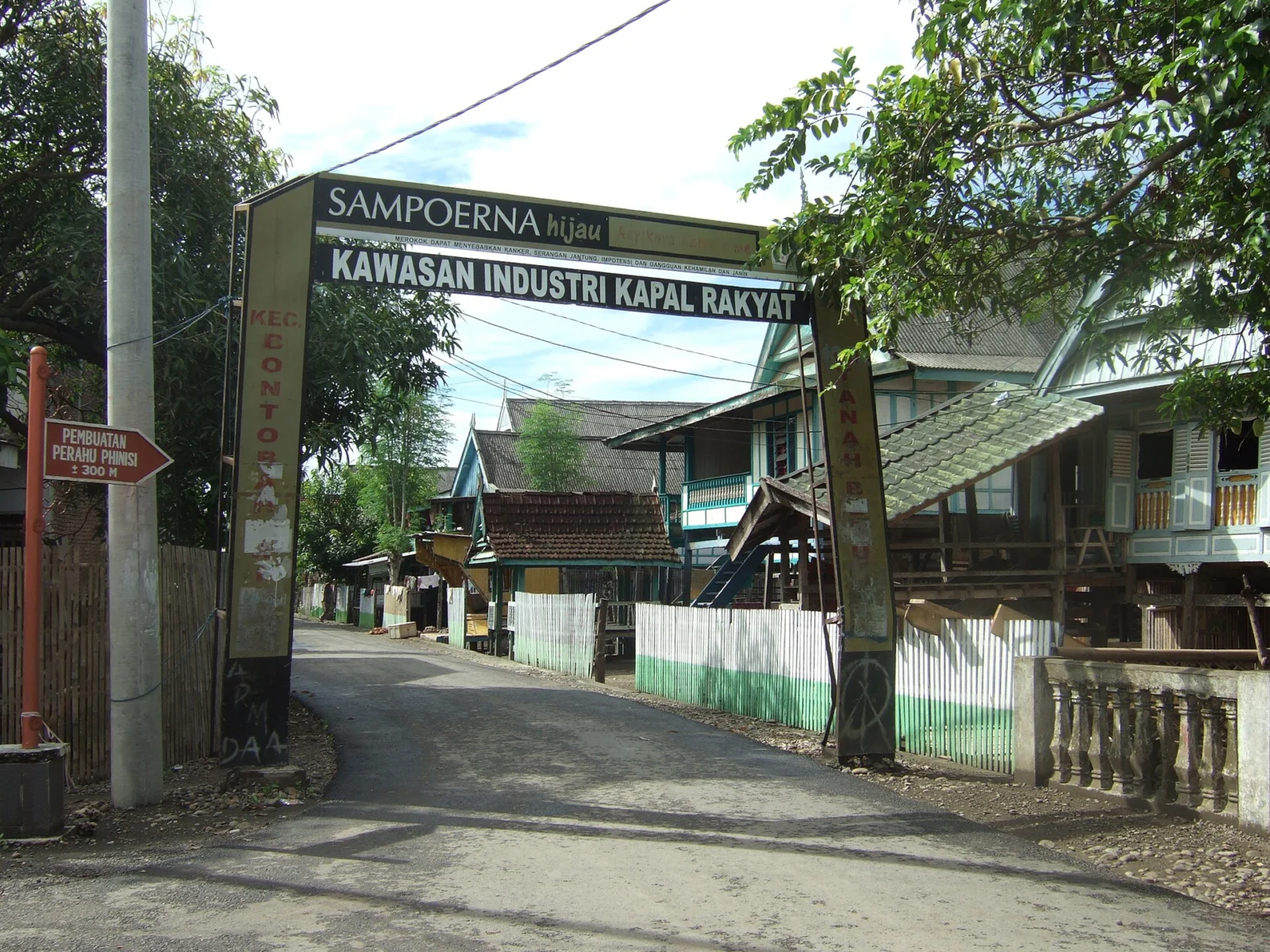
That distinction helps readers use the paper well. It connects the voyage with a living building tradition while keeping the scope of the fieldwork clear. A contemporary case study can explain how people learn a craft without proving every detail of an older expedition.
How Phinisi Nusantara relates to UNESCO recognition
UNESCO’s 2017 Pinisi inscription recognises South Sulawesi boatbuilding knowledge and practice. It is a separate, later milestone from the 1986 expedition. The inscription should not be described as an award received by Phinisi Nusantara at Expo 86.
For the design vocabulary, see the heritage and design of Komodo’s phinisi boats. That guide separates rig, hull terminology and modern tourism use, which helps avoid treating every vessel with a similar profile as the same boat.
Museum Bahari: a place to continue the research
The Indonesian museum registry’s Museum Bahari entry lists a miniature of Perahu Pinisi Nusantara among its collection items. A model, the historical vessel and a modern boat with a similar name are different objects. Use the collection label to establish what you are looking at before attaching the 1986 story to a photograph.
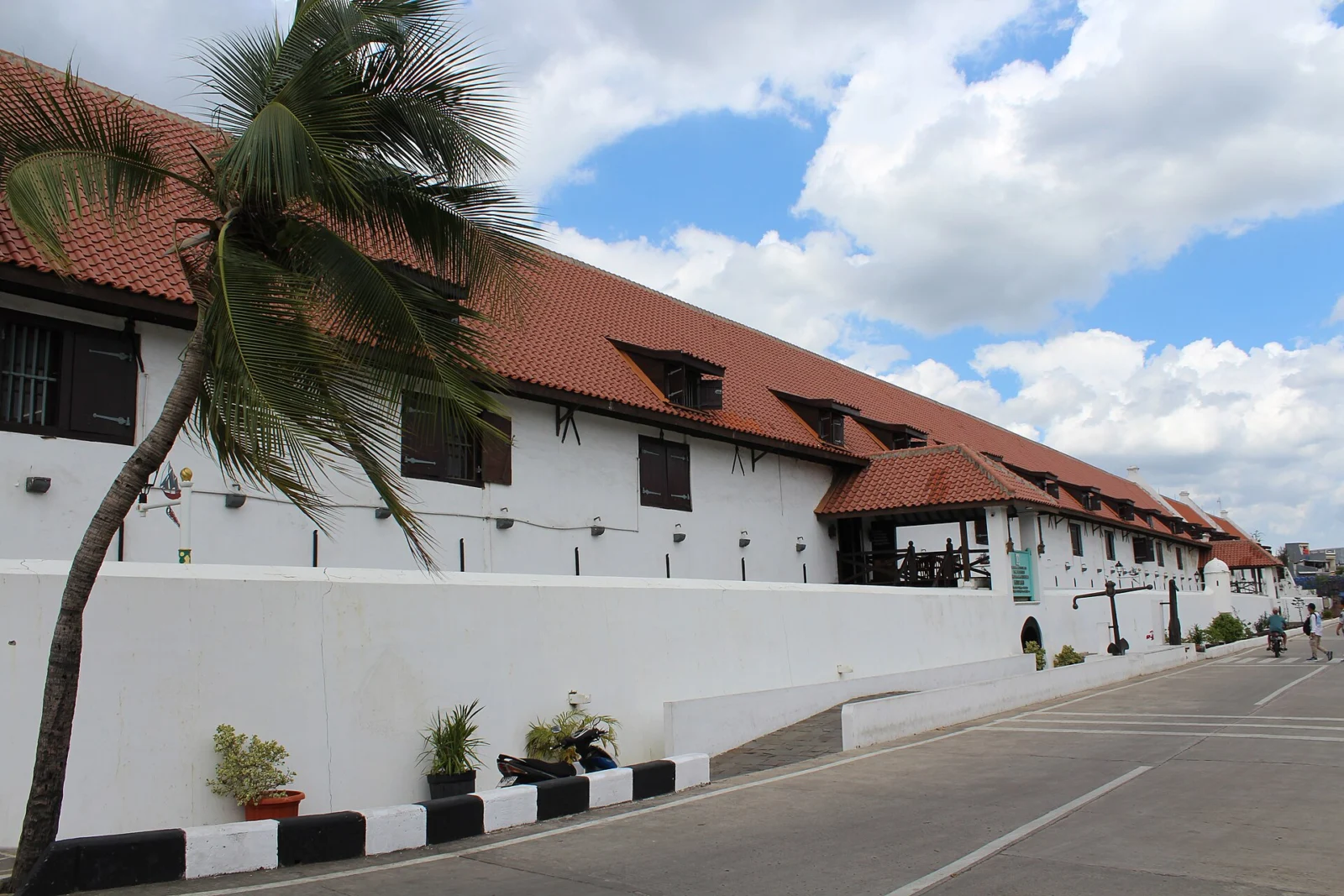
If planning a visit, check directly with the museum which displays can currently be seen and what access arrangements apply. A collection entry establishes that an item is recorded; it does not establish its present display location or the day’s opening arrangements.
Reading an expedition account without adding a legend
Different retellings may use different distance or day counts. Rather than blending them into a precise-looking average, identify the account and the period it measures. Departure, arrival, time at sea, stopovers and the whole expedition can describe different intervals. The figures in this guide retain the museum catalogue’s wording and scope.
Apply the same care to images. A present-day pinisi, a boatyard photograph or a museum model can add context, but none should be labelled as the original 1986 vessel without evidence. The original graphic at the top of this article is a schematic connection between the two cities, not a plotted track across the Pacific.
What a Komodo traveller can take from the story
When boarding a modern liveaboard, ask about that vessel’s own builder, construction date and later refits. A connection to a wider building tradition is interesting without claiming that every charter boat repeats Phinisi Nusantara’s expedition capabilities.
Use the Komodo liveaboard directory for the current vessel and service comparison. For a sailing-focused holiday, ask how the boat is normally propelled and whether sail use forms part of the actual departure programme. Historical achievement and a present-day booking answer different questions.
Frequently asked questions
What was Phinisi Nusantara’s famous voyage?
The 1986 journey from Jakarta to Vancouver, associated with the Vancouver Expo.
How far did it sail and how long did it take?
The Indonesian museum collection catalogue used here reports 11,000 nautical miles and 68 days. Those figures are attributed to that account.
Is Phinisi Nusantara the name of every phinisi boat?
No. This article concerns a particular expedition vessel. A shared word in a modern boat’s name does not establish that it is the same vessel.
Does this article show an original photograph from the expedition?
No. The lead graphic is an original editorial schematic. The supporting photographs show a boatbuilding context and Museum Bahari, with their subjects and dates stated.
Sources and verification
Published sources checked on 20 October 2026. The article distinguishes a museum catalogue, a modern ethnographic study and a collection registry. No new crew interview, archive discovery or direct inspection of the original vessel is claimed.
